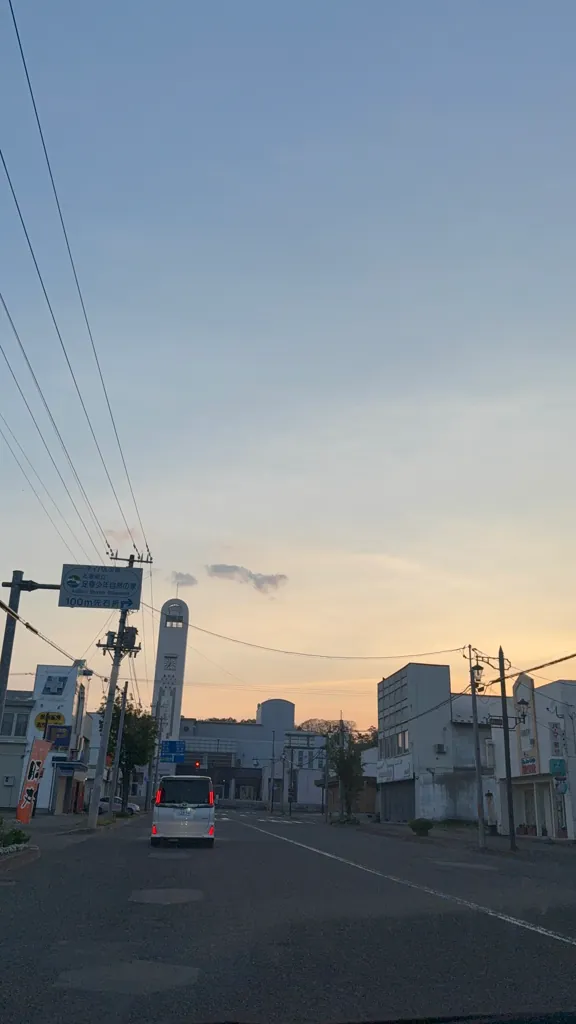
Ashoro 足寄町
あしょろちょう
Ashoro covers 1,408 km², more than any other town in Japan, and about 82% of it is forest. Its eastern edge reaches the volcano Meakan-dake and Lake Onneto, a lake whose colour keeps changing. The town is also known for Rawan butterbur, a giant plant that grows two to three metres tall, for its fossils of early marine mammals, and as the hometown of singer Chiharu Matsuyama.
- Population (2020 Census)
- 6,563
- Area
- 1,408.04 km²
- District
- Ashoro District (足寄郡)
- Official website
- www.town.ashoro.hokkaido.jp
Known for
- Largest town in Japan: 1,408.04 km² of land, mostly mountains and forest45.
- Lake Onneto (オンネトー): a 2.5 km lake at the western foot of Meakan-dake that changes between clear blue, emerald green and dark blue8. It is counted among Hokkaido's "three secret lakes" (北海道三大秘湖)9. It was the first sight in Tokachi to get two stars in the Michelin travel guide4.
- Onneto Yunotaki (オンネトー湯の滝): a hot-spring waterfall where microbes lay down manganese oxide. It became a national natural monument in 2000109.
- Rawan butterbur (ラワンぶき): a giant butterbur from the Rawan valley, 2–3 m tall, with stalks up to 10 cm thick. It has been selected as Hokkaido Heritage (北海道遺産)114.
- Fossils: the Ashoro Museum of Paleontology displays desmostylians such as Ashoroa laticosta and toothed baleen whales, all found in the town since 197612.
- Hometown of Chiharu Matsuyama (松山千春): the folk singer was born in Ashoro in 195513. The Michi-no-Eki has a gallery about him14.
- Pasture-based dairy and cattle: about 25,000 dairy and beef cattle4. The town declared itself a "town promoting pasture dairy farming" (放牧酪農推進のまち) in 200415. Local milk is made into natural cheese4.
- Meakan Onsen (雌阿寒温泉): a sulphur spring at the foot of the volcano, listed as a national health-resort spa (国民保養温泉地)5. It is linked with Masazō Nonaka, who ran the family inn there and was the world's oldest living man1617.
Sights & activities
Nature & scenery
- Lake Onneto: the Meakan Onsen–Onneto area is about 50 minutes by car from the town centre27. Four trails start here:
- the observation-deck climb (800 m);
- the east-shore course (1.6 km);
- the pure spruce forest / Meakan Onsen course (2.2 km);
- the Yunotaki course (1.4 km). In some years, when snowfall is light, the lake freezes clear between late November and early December8.
- Onneto Yunotaki: two falls 30 m high where algae and bacteria turn manganese in the water into black ore. This is described as the only place in the world where it happens on land. Bathing is banned to protect the deposit10.
- Nishikinuma (錦沼): a red-brown pond on prefectural road 949. Its colour contrasts with the pink rhododendrons (ハクサンシャクナゲ) in spring and the green spruce in summer28.
- Sakhalin-spruce forest (アカエゾマツ純林): an almost pure stand near Meakan Onsen. Some trees are about 250 years old, and many reach 30 m44.
- Rawan butterbur viewing field (ラワンぶき鑑賞圃場): a roadside plot at the Rawan-fuki-no-Sato building on Route 241, about 15 minutes towards Lake Akan from the town centre. The plants are at their best in June and July. A typhoon in 2016 damaged the Kami-Rawan patch, and visitors were allowed back into the field in 202111.
- Shirafuji Falls (白藤の滝): a 20 m waterfall that is cloudy all year from volcanic sulphur. It is reached by a gravel forest road off Route 241 and a steep 5-minute path45.
- Ashoro Town Large-scale Grassland Ranch (大規模草地育成牧場): a 1,300 ha pasture with views of Meakan-dake and Akan-Fuji4.
- Shiowakka (シオワッカ): a mound of mineral deposit that is still growing from groundwater. It was designated the town's first cultural property in 19924.
Onsen
- Yama-no-yado Nonaka Onsen (山の宿 野中温泉) at Meakan Onsen: now the only inn operating there. It has a strong hydrogen-sulphide spring. People call it the "longevity bath" because the world's oldest man lived here16. Masazō Nonaka ran the inn and died in January 2019 at 11317.
- Meto Onsen Hotel (芽登温泉ホテル): the spring rises naturally and flows unheated and unrecycled into the baths (自然湧出・源泉100%・かけ流し・加温なし)46.
- Ginga-no-yu Ashoro (銀河の湯あしょろ): the town's day-use bathhouse in Nishimachi46.
Museums & heritage
- Ashoro Museum of Paleontology (足寄動物化石博物館, "Fostory Ashoro"), at 1-29-25 Kōnan12. It opened in 19981247.
- Collection: fossils of the Late Oligocene "Ashoro fauna"47. These include the desmostylians Ashoroa laticosta (found in 1976) and Behemotops katsuiei (found in 1980 by the Yabuki brothers, local amateurs)12.
- Whales: about 20 fossil whales have been found since 1982, the first including Morawanocetus yabukii. In 1995 four Ashoro specimens of toothed baleen whales received new scientific names12.
- Hours: 9:30–16:30. Closed on Tuesdays (the next day if Tuesday is a holiday) and from 28 December to 4 January. It opens on Tuesdays during Golden Week and school summer holidays48.
- Admission: ¥400 for adults and ¥200 for elementary to high-school students and people 65 or older. Preschoolers and Ashoro schoolchildren get in free48.
- Activities: a mini fossil dig (¥200), plaster replicas (¥200) and model-making (¥400). No booking is needed for individuals49.
- Furusato Ginga Line display and Chiharu Matsuyama gallery at the Michi-no-Eki: see below42.
Outdoor & seasonal activities
- Climbing Meakan-dake: there are three routes:
- from Meakan Onsen: 3.0 km, 800 m of ascent;
- from Onneto: 4.4 km;
- from Lake Akan: 6.2 km. A round trip takes 4–6 hours. A side trip to Akan-Fuji adds about 1.5 hours. Alpine flowers bloom from June to August, including Meakan-fusuma and Meakan-kinbai, which were both first found on Meakan-dake26.
- Onneto National Campground (オンネトー国設野営場): open 1 June–31 October. It costs ¥1,000 per adult per night, and individuals cannot book. It has showers and Wi-Fi in the rest house and parking for 80 cars50.
- Satomigaoka Park (里見が丘公園):
- Winter: the Onneto road is closed, but you can snowshoe in to the lake27.
Food experiences
Roadside stations (Michi-no-Eki)
Ashoro Ginga Hall 21 (道の駅あしょろ銀河ホール21)
- Location: Kita 1-jō 1-chōme 3, Ashoro. It is at the junction of National Routes 241 and 242, which link Kitami–Abashiri, Kushiro and Tokachi, and is 5 km from the Ashoro IC on the Dōtō Expressway14. The building was the former Ashoro Station of the Furusato Ginga Line: the new station building was completed in December 1994, and Ginga Hall 21 opened on 1 April 199520. (The town's tourism page says it was built in 200442.) Tel. 0156-25-613114.
- Hours (as of September 2026 — check before visiting):
- The official Hokkaido Michi-no-Eki site lists the station as open 8:00–18:00 from May to September and 8:00–17:00 from October to April. The shop opens 10:00–18:00 (May–September) or 10:00–17:00 (October–April), and the restaurant 11:00–15:00. It closes on Thursdays except in July and August, and from 30 December to 3 January14.
- The town's own page gives 9:00–18:00 from late April to mid-October and 9:00–17:00 in the off-season. It says the shop and restaurant have closed on Thursdays since April 2025, except during Golden Week and summer42.
- Shops & products:
- Local cheeses, including Ashoro's matured mozzarella Koro, Rawan-butterbur products, cheesecake and other local products1442.
- A bakery with fresh bread42.
- Wood candles and kindling35.
- On the south side of the site are JA Ashoro's farm shop Yotte Bisai (9:00–16:00, closed Tuesdays), which sells strawberries grown in the town, and two small "challenge shop" eateries. A branch of the long-established Kappō Kumanoko (割烹熊の子) serves its butadon and closes in winter4231.
- Food: Restaurant Ashoro serves Chinese dishes such as tantanmen and gomoku ankake yakisoba. It also serves the Ashoro bento with Rawan butterbur14. A takeout counter sells croquettes and soft-serve, and the signature flavour is Rawan-butterbur soft-serve (ラワンぶきソフト)4214.
- Facilities:
- Parking for 10 large vehicles and 82 cars.
- 24-hour toilets, including an accessible toilet with an ostomate fitting.
- An EV charger and Wi-Fi.
- A tourist information desk, a nursing room and a kids' space14.
- It is also the town's bus terminal, where Tokachi Bus services stop2053. The bus stop is in front of a multipurpose building in the transport plaza on the north side, which recreates the old wooden station building in local larch. It holds the bus waiting room and the Ashigata Kōbō footprint workshop (¥3,000 for non-residents, 10:00–16:00, closed Mondays and in winter)1420.
- The NPO Ashoro Tourism Association has its office in the building2054.
- Inside are a hall and meeting rooms42.
- Notes:
- Former station: Michi-no-Eki Ashoro-ko (足寄湖) on Route 241 at Nakaya was registered on 22 April 1993 as No. 10. It had a park and a 1.6 ha dog run. Its registration was cancelled on 31 January 2022 at the town's request, to merge its role into Ginga Hall 21, so it no longer counts as a Michi-no-Eki245523. The dog run, parking and toilets stayed open23.
Getting there & around
- Rail: there has been no passenger railway since the Furusato Ginga Line closed in April 2006620. The nearest JR station is Ikeda on the Nemuro Line5. Tokachi Bus takes about 1 hour 15 minutes from Ashoro to Ikeda Station56.
- Bus:
- Tokachi Bus route 17, the Obihiro–Rikubetsu Line, runs through Ashoro53. As of April 2026 there were nine trips each way on weekdays, with a few fewer at weekends and on holidays, and Ashoro to Obihiro Station bus terminal took about 2 hours 12 minutes56.
- Hokkaido Kitami Bus runs Kitami–Oketo–Rikubetsu and connects with it at Rikubetsu56.
- A community bus, Ashi-bus (あしバス), has served the town centre since 20144.
- Road:
- Driving distances, according to the town profile4:
- Sapporo: about 245 km, 3 hours 20 minutes.
- Obihiro: 65 km, 1 hour 5 minutes.
- Kushiro: 90 km, 1 hour 35 minutes.
- Kitami: 85 km, 1 hour 25 minutes.
- Asahikawa: 180 km, 3 hours.
- Air: the town profile lists four nearby airports: Tokachi-Obihiro, New Chitose, Kushiro and Memanbetsu. Flights from Tokyo to each take about 1½ hours4.
Practical tips
- Best seasons:
- Winter access:
- Volcano: Meakan-dake is active and its alert level has moved between 1 and 2 since 2008. Check the current level before climbing26.
- Wildlife:
- Opening days: the Michi-no-Eki closes on most Thursdays14, and the fossil museum on Tuesdays48.
- Camping rules: the Onneto campground does not take bookings from individuals50. Satomigaoka campground does not allow pets or sleeping in vehicles52.
- Tourist information: NPO Ashoro Tourism Association (NPO法人あしょろ観光協会), tel. 0156-25-613154.
Photos
-
 May 2026
More about Ashoro
At a glance
| Field | Details |
|---|---|
| Type | Town (町) |
| Subprefecture | Tokachi (十勝総合振興局) |
| District | Ashoro District (足寄郡) |
| Population | 6,563 at the 2020 Census (3,215 men, 3,348 women; 3,097 households). This was down 6.1% from 6,990 in 20151. The town counted 5,642 on its resident register on 31 August 2026 (2,795 men, 2,847 women; 3,104 households)2. The prefectural figure for 1 January 2026 was 5,7753 |
| Area | 1,408.04 km²14. Ashoro is the largest town (町) in Japan by area5. It was also the largest municipality of any kind in Japan until February 2005, when Takayama in Gifu Prefecture absorbed its neighbours5. (The town profile gives the end date as January 20064.) It measures 66.5 km east–west and 48.2 km north–south4 |
| Density | 4.7 people/km² at the 2020 Census1. About 4.0/km² on the August 2026 register, calculated from the figures above |
| Municipal history | Ashoro dates its founding (開基) to 1908, when an administrative office was set up for Ashoro and three other villages. Rikubetsu and Toshibetsu split off in 1919. Nishi-Ashoro Village (西足寄村) split from Honbetsu in 1921. Ashoro became a second-class village in 1923, and Nishi-Ashoro became a town in 1950. The two merged on 1 April 1955 to form the present Ashoro Town46 |
| Neighboring municipalities | Honbetsu, Rikubetsu and Kamishihoro in Tokachi; Kushiro and Shiranuka in Kushiro; Oketo and Tsubetsu in Okhotsk4 |
| Symbols | Tree: Sakhalin spruce (アカエゾマツ). Flower: Rhododendron dauricum (エゾムラサキツツジ). Bird: hazel grouse (エゾライチョウ). All three were chosen on 20 October 1978, the town's 70th anniversary74. The emblem (1 October 1965) combines the kana ア and シ. Its wings stand for the prosperity of "Japan's widest town", and its circle stands for residents' unity4 |
| Mascot | Ayumi-chan (アユミちゃん), created in 19894 |
| Official website | https://www.town.ashoro.hokkaido.jp/ |
Name origin
- Ashoro (足寄) comes from the Ainu esoro-pet (エソロペッ), "river that goes down along (it)". People travelling from the Kushiro side crossed Akan and followed this river down to Tokachi or Kitami. The Hokkaido Government's Ainu place-name list rates this explanation as confident (level A)18. The town's Wikipedia entry gives the same derivation5. No competing theory turned up in the sources consulted.
- Rawan (螺湾): an old Matsuura map already shows the river as Rawan. Place-name scholar Yamada Hidezō tentatively reads it as raw-an (ラウアン), "there is a deep or low place". He compares it with ram, raune and raushi, which all mean "low", and suggests the name may be short for Rawan-pet. The list rates this reading as uncertain (level C)19.
- Onneto (オンネトー) is usually explained as "old lake" or "large lake" (年老いた沼・大きな沼)9.
- Other Ainu place names in the town are covered under Ainu heritage below.
History
- Ainu era: the town's name records an Ainu travel route from Kushiro across Akan and down the Ashoro River18. Ainu people bathed in the hot springs at the western foot of Meakan-dake long before any inn was built there16.
- 1869: Ezo was renamed Hokkaido. The later Nishi-Ashoro area fell in Nakagawa District of Tokachi Province, and Ashoro Village in Ashoro District of Kushiro Province4.
- 1874: Ōmori Yūzō (大森勇蔵) went to Inaushi (稲牛) to trade in deer hides4.
- 1879: Hosokawa Shigetarō and his wife En moved from Shiranuka to Naka-Ashoro. They are counted as the first settlers46.
- 1897–1899: the Ashoro-buto plain was surveyed into lots, which were let out from the following year. A road was opened from Honbetsu in 18994.
- 1901: Itō Shigeki (伊東重記) found the Meto hot spring at Kitoushi (喜登牛)4.
- 1908: an administrative office for Ashoro and three other villages was set up. The town counts its anniversaries from this year and held centenary events in 20084.
- 1910: the railway from Ikeda to Rikubetsu (then written 淕別) opened. Ashoro Station opened on 22 September 1910420. The line later became part of the Abashiri Main Line and, from 1961, the Chihoku Line20.
- 1914: the Nonaka family opened the first hot-spring inn at Meakan16. (English Wikipedia's article on Masazō Nonaka gives the inn's opening as 190517.)
- 1919–1923: Rikubetsu and Toshibetsu split off in 1919, and a typhoon flooded the Ashoro area that year. Nishi-Ashoro Village split from Honbetsu in 1921. Ashoro became a second-class village in 19234.
- 1925: a forest railway reached Kami-Ashoro 37-sen4.
- 1948–1949: Ashoro District moved from the Kushiro to the Tokachi branch office in 1948. Kyushu University opened its Hokkaido research forest in the town in 19494.
- 1955: Nishi-Ashoro (a town since 1950) and Ashoro Village merged on 1 April to form Ashoro Town46.
- 1960s–1970s: Senbiri Dam (仙美里ダム) was finished in 1962. National Route 242 was upgraded in 1963. The town was designated a depopulated area in 1971. The national large-scale grassland ranch was completed in 19734.
- 1976: a Hokkaido University graduate student found the first desmostylian skeleton in the bed of the Moraawan River on 31 July21. It was later named Ashoroa laticosta12.
- 1981: Snow Brand Milk Products closed its Ashoro plant4.
- 1989: the JR Chihoku Line became the third-sector Furusato Ginga Line (ふるさと銀河線)420.
- 1990: the town became a sister city of Wetaskiwin, Canada22.
- 1993–1998: a cheese factory and the Edelkäse-kan (エーデルケーゼ館) opened in 1993, and Ashoro-ko was registered as a Michi-no-Eki the same year. The Ginga Hall 21 building was finished in 1995. The fossil museum opened in 1998420.
- 2000: Onneto Yunotaki's manganese-oxide deposit was designated a national natural monument49.
- 2003–2004: the Ashoro IC on the Dōtō Expressway opened in 20034. In 2004 the town adopted its pasture-dairy declaration and Ashoro Ginga Hall 21 was registered as a Michi-no-Eki415.
- 2006: Meakan-dake erupted4. The Furusato Ginga Line closed on 21 April20. A new town hall was completed4.
- 2012–2021: the Ministry of Economy, Trade and Industry named Ashoro a "Next-Generation Energy Park" in 2012. The JA Ashoro Biomass Center opened in 20194. The town declared itself a "Zero Carbon City" on 1 September 202115.
- 2022: Michi-no-Eki Ashoro-ko lost its registration on 31 January. The town had asked for it to be removed so that its Michi-no-Eki role could be merged into Ashoro Ginga Hall 212324.
- 2026: the fossil museum marked 50 years since Ashoroa was found25.
- No sources consulted named the prefectures that Meiji-era settlers came from, or any organised group migrations. No Edo-period trading post (場所) is documented within the town in those sources either.
Geography & climate
- Setting: Ashoro is in north-eastern Tokachi. It borders Kushiro City and Shiranuka to the east across Meakan-dake, Honbetsu to the south, Kamishihoro to the west, and Oketo, Rikubetsu and Tsubetsu to the north. Most of the land is mountainous4.
- Forest: about 82% of the town is forest4, and English Wikipedia gives about 83%6. By land-use category there are 1,090.72 km² of forest, 121.18 km² of fields, 21.71 km² of pasture and 6.57 km² of residential land (fixed-asset tax data, 1 January 2019)4.
- Mountains and volcano: Meakan-dake (雌阿寒岳, 1,499 m) is an active stratovolcano made up of about ten peaks. It had a major eruption in 1955 and a small one in 200826. The town timeline also records an eruption in 20064. Akan-Fuji (阿寒富士) is its neighbouring cone26.
- National parks: Lake Onneto, Meakan-dake and Meakan Onsen are in Akan-Mashu National Park27. The town profile also counts Daisetsuzan National Park among the scenery around Ashoro4.
- Lakes and wetlands: Lake Onneto is 2.5 km around, 0.23 km² in area, 623 m above sea level and up to 9.8 m deep. Its water is acidic9. Nearby Nishikinuma (錦沼) is red-brown from iron-rich sediment and drains into Onneto28. There are also the Ashoro and Shimo-Ashoro reservoirs4.
- Rivers: the Toshibetsu (利別川), Ashoro (足寄川) and Rawan (螺湾川) rivers run through the town. Rawan butterbur grows along the Rawan, where the soil is sandy and wet114.
- Climate: Ashoro has an inland Tokachi climate, with a very wide range between summer and winter, little rain and snow, and long hours of sunshine4. At the Ashoro weather station, the 1991–2020 averages are:
- Mean annual temperature 6.2 °C.
- January mean −9.1 °C, with a mean daily low of −16.3 °C.
- August mean 20.1 °C.
- Annual precipitation 833.5 mm.
- 1,953.9 hours of sunshine a year29.
- Record temperatures: the highest reading is 38.8 °C, on 26 May 2019. The lowest is −29.4 °C, on 27 January 200030.
Economy & industry
- Farming and forestry are the town's main industries. Wheat, sugar beet and beans are the chief crops, and more kinds of vegetables have been grown in recent years4.
- Land use: JA Ashoro reported 9,867 ha of farmland in July 2019. Feed crops took 76.3% of it, wheat 9.2%, beans 5.7%, sugar beet 4.6% and vegetables 2.8%4.
- Livestock: in February 2018 there were 26,016 head. Dairy cattle made up 42%, Wagyu 26%, Holstein beef cattle 15% and other beef cattle (F1 crosses and others) 13%. Japanese Black cattle numbered more than 6,8004.
- Pasture dairy: the 2004 declaration (放牧酪農推進のまち宣言) backs dairy farms that graze the hill pastures154. The town's large-scale grassland ranch covers about 1,300 ha, roughly 270 times the size of Tokyo Dome4.
- Forestry and wood: local larch was used for the town hall and the Musuvillage care complex. A wood-pellet plant in Meto has run since 20054.
- Energy: Ashoro was named a Next-Generation Energy Park in 2012. The JA Ashoro Biomass Center in Meto opened in 2019. It turns manure from about 1,000 dairy cows (about 80 tonnes a day) into biogas for power and heat4. In Shinmachi, natural gas separated from hot-spring water heats and powers a strawberry greenhouse431.
- Manufacturing: the town has factories for farm machinery and for table-tennis tables, which are used at international tournaments4. Wikipedia lists San-Ei's TTF plant (三英 TTF事業所) and J-Power's Ashoro hydroelectric station among local businesses5. Other processed products include natural cheese, Rawan-butterbur foods and wood pellets4.
- Population: the town had 15,172 people in 1970 and 6,563 in 202061. At the 2020 Census, 40.0% of residents were 65 or older and 11.2% were under 151.
- Local policy: free childcare and free school meals are among the settlement incentives32. Furusato nozei donations go into a fund for town projects32.
- Tourism: no municipal visitor count for tourists was found in the sources consulted.
Local specialties
| Specialty | Category | Details & where to get it |
|---|---|---|
| Rawan butterbur (ラワンぶき) | Wild vegetable | Harvested in June. JA Ashoro holds the trademark, and seeds and seedlings may not be taken out of town11. Production had fallen at one point, but a propagation method that JA Ashoro worked out in 1988 has kept it steady since33. Fresh stalks are sold at harvest time, and it is also sold boiled (水煮) or salted. It is eaten as tempura or in stews, salads and curries11 |
| Rawan butterbur soft-serve (ラワンぶきソフト) | Sweets | The signature soft-serve at Michi-no-Eki Ashoro Ginga Hall 2114 |
| Ashoro bento (足寄弁当) | Local dish | A lunch box containing Rawan butterbur, served at Restaurant Ashoro in the Michi-no-Eki14 |
| Natural cheese | Dairy | Made from local pasture milk4. Ashoro Cheese Kōbō (合同会社あしょろチーズ工房) makes aged-cheese assortments and a matured mozzarella, Koro (熟モッツァレラ「ころ」)34. Koro is also sold at the Michi-no-Eki14. The town profile shows raclette-style cheeses such as Shiawase Raclette4 |
| Strawberries | Fruit | Grown all year using the cool climate and hot-spring heat. Sold at JA Ashoro's farm shop Yotte Bisai (寄って美菜), just south of the Michi-no-Eki31 |
| Beef and lamb | Meat | Beef and lamb are among the main furusato nozei categories, and the gift list features Kita-Tokachi Farm's lean Japanese Shorthorn (短角牛) beef34. Japanese Black cattle number more than 6,8004 |
| Wood candles (ウッドキャンドル) | Craft / forest product | Swedish-torch logs made from offcuts left after thinning. They are sold with kindling (あしょろの焚きつけ) at the Michi-no-Eki35 |
| Rawan-butterbur skincare | Furusato nozei gift | A SHIRO-brand Rawan-butterbur lotion is offered as a furusato nozei gift34 |
| Furusato nozei gifts | Various | Popular gifts include a five-cheese aged assortment, a 500 g pack of the hard cheese Sachi (幸), and a 10 kg box of potatoes and pumpkin34 |
Culture & festivals
| Event | When | Highlights |
|---|---|---|
| Wood Candle Night (ウッドキャンドルナイト) | January | An evening of burning log candles, using the town's own wood candles435 |
| Ashoro Furusato Rawan Butterbur Festival (足寄ふるさとラワンぶきまつり) | June (21 June 2026) | Held in the Michi-no-Eki event plaza. It has charity sales of fresh butterbur from 9:00, stage shows including drums, brass band and dance, food stalls and a prize draw36 |
| Ashoro Furusato Bon Odori and Ryōgoku Fireworks (足寄ふるさと盆踊り・両国花火大会) | August | The town's summer bon dance and fireworks display4 |
| Onneto Story (オンネトー物語) | Autumn | An annual event at the Onneto campground37 |
| Onneto Photo Contest (オンネトーフォトコンテスト) | Yearly | A photo contest for pictures of the lake. The tourism association lists contests for each year from 2018 to 202438 |
| Chiharu Nodo-jiman (千春のど自慢大会) | (unverified) | An amateur singing contest named after Chiharu Matsuyama. It is listed among the tourism association's events, but its page gave no date or details in September 202639 |
| Rally Hokkaido (ラリー北海道) | September | The Saturday special stages are run mainly around Rikubetsu and Ashoro, as in past years40. It was held without spectators in 202141 |
- Fossil museum events: the museum runs a Night Museum, fossil classes, a winter programme and Baroque concerts25.
- Chiharu Matsuyama: the former station holds a gallery of his stage costumes and records42. A monument there carries the lyrics of his song Ōzora to Daichi no Naka de (大空と大地の中で)20. His 1979 autobiographical book Ashoro Yori (足寄より) was made into a 2008 film about his youth13, Tabidachi: Ashoro Yori (旅立ち〜足寄より〜)5.
- Film location: besides Tabidachi, Yamada Yōji's film The Yellow Handkerchief (幸福の黄色いハンカチ) used Ashoro as a location5.
- Footprint pavement (足形歩道): residents' and visitors' footprints are set into the pavements around the station square. They are made at the Ashigata Kōbō (足型工房) workshop next to the Michi-no-Eki514.
- Library: the Ashoro Town Library, Ruika (ルイカ), opened in 20184.
Ainu heritage
- Ainu people bathed in the hot springs at the western foot of Meakan-dake before the first inn opened in 191416.
- Several place names in the town come from Ainu travel and ritual:
- Ashoro (esoro-pet) records the old route down from Akan18.
- Aikappu (愛冠) comes from aykap. In place names it refers to a great cliff, and stories usually say that "an arrow was shot but did not reach it". The source is a large cliff on the Toshibetsu River. The Ashoro Town History gives the original form as aykap-pira, "the cliff the arrow could not reach". It explains that Ainu hunters and warriors shot arrows at rocks and cliffs to test their luck before setting out18. Aikappu was also a station on the Furusato Ginga Line5.
- Inaushi (稲牛) is explained by Yamada Hidezō as inaw-us-i, "the place where inau (whittled wooden offerings) stand". The stream was the main route over the hills to Shiranuka. Sarashina Genzō gives inaw-us-nay, "stream with an altar", and says it was where inau were offered on Mt. Ukotaki-nupuri, a mountain with many deer43.
- No dedicated Ainu museum or cultural facility in Ashoro turned up in the sources consulted.
Sister & friendship cities
- Wetaskiwin, Alberta, Canada: sister city since 1990.
- Exchanges began with a citizens' delegation in September 1986. A "Friends of Ashoro" group was then set up in Wetaskiwin, led by a city councillor who had visited Ashoro in 198722.
- Wetaskiwin is a farming city of about 12,000 people, some 70 km south of Edmonton4.
- Ashoro High School students visit every year (since 2013), and a coordinator from Wetaskiwin works in local schools224.
- No domestic partner cities were found.
Notable people
- Chiharu Matsuyama (松山千春): folk singer-songwriter, born in Ashoro on 16 December 1955. He debuted in 1977 with Tabidachi13.
- Muneo Suzuki (鈴木宗男): politician, born in Ashoro on 31 January 1948. He was Minister of State for Okinawa and Northern Territories Affairs from 1997 to 1998, founded New Party Daichi, and has sat in the House of Councillors since July 202558.
- Masazō Nonaka (野中正造): ran the Nonaka Onsen inn at Meakan. He was the world's oldest living man from January 2018 until he died on 20 January 2019, aged 11317.
Sources
Numbers in the text link to these sources. Figures as of 23 September 2026
- 令和2年国勢調査結果統計表(第1表・第2表 市区町村別人口・面積・年齢3区分) — Hokkaido Government JA accessed 2026-09-23
- くらし・行政(人口・世帯数 令和8年8月31日現在) — Ashoro Town JA accessed 2026-09-23
- 住民基本台帳人口・世帯数(令和8年1月1日現在 市区町村別) — Hokkaido Government JA accessed 2026-09-23
- 足寄町 町勢要覧2020 (Town of Ashoro Outline 2020, PDF) — Ashoro Town JA/EN accessed 2026-09-23
- 足寄町 — Wikipedia JA accessed 2026-09-23
- Ashoro, Hokkaido — Wikipedia EN accessed 2026-09-23
- 町章・町の木・町の花・町の鳥・町民憲章 — Ashoro Town JA accessed 2026-09-23
- オンネトー — Ashoro Town JA accessed 2026-09-23
- オンネトー — Wikipedia JA accessed 2026-09-23
- オンネトー湯の滝 — Ashoro Town JA accessed 2026-09-23
- ラワンぶき — Ashoro Town JA accessed 2026-09-23
- 施設概要(沿革) — Ashoro Museum of Paleontology JA accessed 2026-09-23
- Chiharu Matsuyama — Wikipedia EN accessed 2026-09-23
- あしょろ銀河ホール21 — 北海道の道の駅 (Hokkaido Michi-no-Eki Liaison Council) JA accessed 2026-09-23
- 足寄町について(各種宣言) — Ashoro Town JA accessed 2026-09-23
- 雌阿寒温泉 — Ashoro Town JA accessed 2026-09-23
- Masazō Nonaka — Wikipedia EN accessed 2026-09-23
- アイヌ語地名リスト(ア〜 P1–10、archived copy) — Hokkaido Government, via Internet Archive JA accessed 2026-09-23
- アイヌ語地名リスト(P131–140、archived copy) — Hokkaido Government, via Internet Archive JA accessed 2026-09-23
- 足寄駅 — Wikipedia JA accessed 2026-09-23
- 足寄動物化石群研究の歴史 — Ashoro Museum of Paleontology JA accessed 2026-09-23
- 国際交流(ウェタスキウィン市) — Ashoro Town JA accessed 2026-09-23
- 道の駅「足寄湖」登録廃止に関するお知らせ — 北海道の道の駅 JA accessed 2026-09-23
- 足寄湖(登録取消) — 北海道の道の駅 JA accessed 2026-09-23
- 足寄動物化石博物館 ホーム — Ashoro Museum of Paleontology JA accessed 2026-09-23
- 雌阿寒岳 — Ashoro Town JA accessed 2026-09-23
- オンネトーエリア — Ashoro Town JA accessed 2026-09-23
- 錦沼 — Ashoro Town JA accessed 2026-09-23
- 平年値(足寄 年・月ごとの値) — Japan Meteorological Agency JA accessed 2026-09-23
- 観測史上1〜10位の値(足寄) — Japan Meteorological Agency JA accessed 2026-09-23
- イチゴ — Ashoro Town JA accessed 2026-09-23
- 移住・定住 ふるさと納税 — Ashoro Town JA accessed 2026-09-23
- ラワンブキ(アキタブキ) — Wikipedia JA accessed 2026-09-23
- 北海道足寄町のふるさと納税 返礼品一覧 — ふるさとチョイス JA accessed 2026-09-23
- ウッドキャンドル — Ashoro Town JA accessed 2026-09-23
- 足寄ふるさとラワンぶきまつり — Ashoro Town JA accessed 2026-09-23
- オンネトー物語 — Ashoro Town JA accessed 2026-09-23
- オンネトーフォトコンテスト — Ashoro Town JA accessed 2026-09-23
- 千春のど自慢大会 — Ashoro Town JA accessed 2026-09-23
- 2026年もありがとうございました(ラリー北海道 公式サイト) — Rally Hokkaido JA accessed 2026-09-23
- ラリー北海道 — Ashoro Town JA accessed 2026-09-23
- 道の駅 あしょろ銀河ホール21 — Ashoro Town JA accessed 2026-09-23
- アイヌ語地名リスト(P11–20、archived copy) — Hokkaido Government, via Internet Archive JA accessed 2026-09-23
- アカエゾマツ純林 — Ashoro Town JA accessed 2026-09-23
- 白藤の滝 — Ashoro Town JA accessed 2026-09-23
- 宿泊施設 — Ashoro Town JA accessed 2026-09-23
- 足寄動物化石博物館 — Wikipedia JA accessed 2026-09-23
- 開館時間・料金 — Ashoro Museum of Paleontology JA accessed 2026-09-23
- 体験メニュー — Ashoro Museum of Paleontology JA accessed 2026-09-23
- オンネトー国設野営場 — Ashoro Town JA accessed 2026-09-23
- 里見が丘公園 — Ashoro Town JA accessed 2026-09-23
- 里見が丘公園キャンプ場 — Ashoro Town JA accessed 2026-09-23
- 路線バス 時刻表(17 帯広・陸別線) — Tokachi Bus JA accessed 2026-09-23
- 観光 — Ashoro Town / NPO Ashoro Tourism Association JA accessed 2026-09-23
- 住所等一覧 — 北海道の道の駅 JA accessed 2026-09-23
- バス運行時刻表【北見〜陸別〜帯広】(令和8年4月1日改定, PDF) — Tokachi Bus / Hokkaido Kitami Bus JA accessed 2026-09-23
- 足寄町ホームページ(トップページ) — Ashoro Town JA accessed 2026-09-23
- Muneo Suzuki — Wikipedia EN accessed 2026-09-23