Town Hidaka Subprefecture
Niikappu 新冠町
にいかっぷちょう
A small Pacific-coast town in central Hidaka, and one of Japan's best-known racehorse-breeding areas: Haiseiko, Narita Brian and Contrail were all bred here. It also has a town-run museum that has received more than a million donated vinyl records, and its green peppers are billed as Hokkaido's largest by shipments.
- Population (2020 Census)
- 5,309
- Area
- 585.71 km²
- District
- Niikappu District (新冠郡)
- Official website
- www.niikappu.jp
Known for
- Racehorses (軽種馬). The town's farms have bred Haiseiko (ハイセイコー), Tokai Teio (トウカイテイオー), the 1994 Triple Crown winner Narita Brian (ナリタブライアン), and Contrail (コントレイル), who won the 2020 Triple Crown unbeaten91. About 8 km of farms line the road known as "Thoroughbred Ginza" (サラブレッド銀座)1.
- Record Hall (新冠町レ・コード館). This town facility had received 1,024,986 donated records by March 20251. It includes a museum of early phonographs, a concert hall with horn speakers, and the 36 m Yushun Tower (優駿の塔), which is the town's landmark1.
- Niikappu green peppers (にいかっぷピーマン). Hokkaido's official roadside-station site describes the town's peppers as the largest by shipments in Hokkaido10. Growers shipped 2,450 t in 2025, worth ¥1.41 billion1.
- Pepper soft-serve and horse-dung buns. The roadside station sells a green-pepper soft-serve (ピーマンソフト) and bafun manjū (ばふん饅頭), buns shaped like horse droppings and filled with pumpkin bean paste1011.
- Hidaka Mountains and dams. Poroshiri-dake (幌尻岳, 2,052 m) stands on the town's northern border with Biratori112. Four hydroelectric dams sit on the Niikappu River (新冠川)6.
- Niikappu Mud Volcano (新冠泥火山). These mud mounds are a Hokkaido-designated natural monument, and they erupt mud during large earthquakes1.
- Mild, low-snow climate. The town calls itself warm and low in snow by Hokkaido standards1314.
Sights & activities
Nature & scenery
- Hangandate Forest Park (判官館森林公園). A 66 ha park of old-growth broadleaf forest on the Hangandate headland at the mouth of the Niikappu River, along Route 235. It has trails, a field-athletics course and Pacific views. In spring, great white trilliums bloom, and the park is known for the rare kumagaisō orchid151. Legend says Yoshitsune built a fort here15.
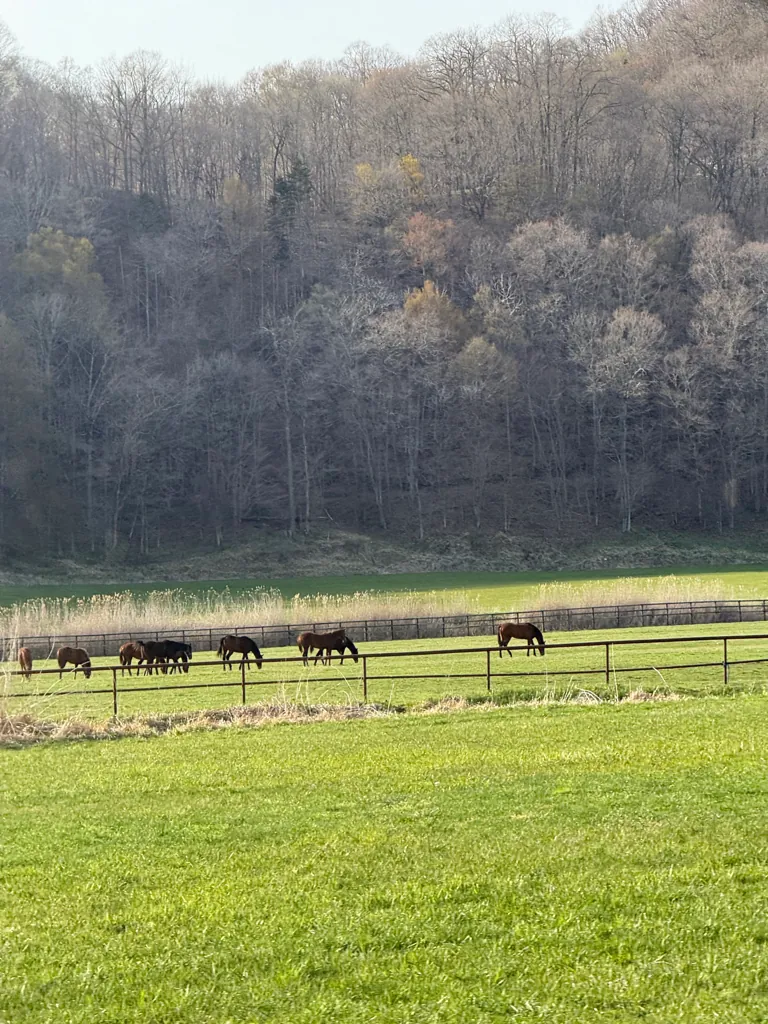
- Thoroughbred Ginza (サラブレッド銀座). An 8 km road of horse farms running from Takae to Midorioka1, on Prefectural Road 2096. The Thoroughbred Ginza parking park, with an observation deck, is about 3 minutes by car from the roadside station3334. Mares and foals are out in early summer33.
- Thoroughbred mural (サラブレッド大壁画). A large painting of galloping horses beside the national highway at Setsupu, painted in 1990 and renewed in 20151.
- Niikappu Mud Volcano (新冠泥火山). In Takae (see Geography)1.
Onsen
- Niikappu Onsen Hotel Hills (新冠温泉ホテルヒルズ, the "Re-Cord no Yu"). A log-lodge hotel on a hill at Nishi-Hakutsu, with an open-air bath that faces the Pacific sunset. Day bathing costs ¥500 for adults and ¥300 for elementary pupils. Hours are 5:00–8:00 and 10:00–22:00. The water is a sodium-chloride cold mineral spring. A private family bath costs ¥2,500 per hour2535. Tattooed guests are not admitted35. A free shuttle runs from the roadside station36.
Museums & heritage
- Record Hall (新冠町レ・コード館). At Chūō-machi 1-4. The tour course covers the museum, the Re-Cord Hall and the listening booths, 10:00–17:00. Admission is ¥300 for adults, ¥200 for high-school students and ¥100 for elementary and junior-high students; preschoolers are free3738. The Yushun Tower observation deck is in the free area38; the deck and the Cloud9 café are open 10:00–17:0037.
- Yushun Memorial Hall (優駿記念館). In Yushun Memorial Park, Asahi, with a life-size bronze of Oguri Cap and monuments to Narita Brian and others. Admission is free. In 2026 it opens 28 March–8 November, 10:00–16:00, closed Thursdays39.
- Stallion viewing at Yushun Stallion Station. From 1 August to 31 October 2026 (except Thursdays), staff lead a stallion viewing from 15:00 to 15:30. Sign up at the Yushun Memorial Hall between 10:00 and 15:00 on the day39.
- Haiseiko statue and Yushun monuments. At the roadside station stand a statue of Haiseiko and 62 record-shaped monuments to Niikappu-bred G1 winners1.
- Taiyō no Mori DiMaccio Art Museum (太陽の森ディマシオ美術館). In the Taiyō district1. Hours and admission are unverified; check locally.
Outdoor & seasonal activities
- Niikappu Horoshiri Riding Club (にいかっぷホロシリ乗馬クラブ). At Nishi-Hakutsu 26, about 6 minutes from Niikappu IC. Most of its horses are retired racehorses. Beginners can take a 50-minute forest trek for ¥9,000. Open 8:45–17:0040.
- Nishi-Hakutsu Hills Park (西泊津ヒルズパーク). A free 36-hole park-golf course next to the onsen, open 15 April–15 November 202641.
- Camping. Hangandate Forest Park Campground has 20 tent sites (first come, first served) and 9 bookable bungalows. In 2026 it is open 18 April–30 October. A tent pitch costs ¥600 and a bungalow ¥5,600 a night, plus a new accommodation tax of ¥100 per person per night15.
- Poroshiri-dake via Niikappu. This approach is long. Forest-road gates past Niikappu Dam open from early June to mid-October. The town's route guide (last updated 2017) gives about 1 h 50 min by car from town to the gate in front of the power station, then about 5 hours on foot to the Niikappu Poroshiri Hut. Parts of the road have been weakened by typhoons since 2003, and the town asks hikers to check gate closures with the town or the Hidaka-Nanbu forest office first42. The town's 2026 statistics give 6 hours for the 17.7 km walk from the Oku-Niikappu Power Station to the hut1. The walking section is a Hokkaido Electric Power dam-access road that hikers may use by courtesy; bicycles and motorbikes are not allowed, and the huts are unstaffed shelters run by a local alpine club12.
- Farm visits. Visits are allowed only at farms that accept visitors. Arrange them through the Racehorse Hometown Information Office (競走馬のふるさと案内所); never contact farms directly43.
Food experiences
Roadside stations (Michi-no-Eki)
Thoroughbred Road Niikappu (道の駅サラブレッドロード新冠)
- Location: Chūō-machi 1-20, Niikappu, on National Route 23510. It stands next to the Record Hall and its 36 m Yushun Tower, in the town center101. The town gives the address as Chūō-machi 1-4, which is the Record Hall's lot11. Tel. 0146-45-7070.
- Hours: 9:00–18:00 during Golden Week and July–September; 10:00–17:00 from November to February; 10:00–18:00 at other times. Closed Mondays from November to March (the next day if Monday is a holiday) and 30 December–3 January1044. As of September 2026; check before visiting.
- Shops & products: The products hall sells horse goods and local brands. Items include bafun manjū, Re-Cord Kuchen, pepper yōkan, chips and miso, tunnel wine, Horoshiri Milk and cheeses, venison in oil, salmon toba, used racehorse horseshoes, G1-horse straps and station T-shirts1011. There is also a flower shop10.
- Food: The fast-food counter sells soft-serve in milk and green-pepper flavors (¥350) and fries1011. Pepper soft-serve and pepper dorayaki went back on sale in July 202610. Restaurant Jurin (レストラン樹林) serves set meals, rice bowls (the big shrimp tempura bowl is popular) and ramen, including the ¥900 record ramen. It is open 11:00–14:30 and closed Mondays and Thursdays (as listed by the tourism association)24.
- Facilities: Parking for 116 cars and 2 large vehicles. Toilets include an accessible toilet, an ostomate toilet and baby-changing facilities. There is free Wi-Fi, a tourist information counter, an observation deck (in the adjacent tower), a museum (the Record Hall) and credit-card payment10. An EV quick charger works 24 hours with a 30-minute limit per charge11. The toilets were briefly closed after heavy rain in July 2026 and reopened on 20 July10.
- Notes: Registered on 11 April 1997 as Hokkaido registration No. 43. The stamp is available during opening hours only10. The station doubles as the tourist information desk for the town10, and Hotel Hills' free shuttle starts here36.
Getting there & around
- Rail: No railway runs through the town today. The JR Hidaka Main Line had stations at Ōkaribe, Setsupu and Niikappu. High waves cut the line in 2015, trains never returned, and the section was formally abolished on 1 April 202161. The nearest JR stations are now at Tomakomai and Mukawa.
- Bus: Dōnan Bus runs routes to Shizunai; to Tomikawa, Mukawa and Tomakomai; to Biratori; and the "Pegasus" express to Sapporo, with a stop in Niikappu town center611345. JR Hokkaido Bus's coastal service runs only east of Shizunai, toward Samani, Erimo and Hiroo. The reservation-only "Tomamo" limited express (特急とまも号) is not in the April 2026 regional timetable45, but it does run: JR Hokkaido Bus operates it between Tomakomai and Erimo by the Hidaka Expressway on Saturdays, Sundays and holidays only, with a stop at Niikappu (Tomakomai Station 14:00 → Niikappu 15:35; Niikappu 7:48 → Tomakomai Station 9:30)46. The Hidaka regional public bus network replaced the railway in 20211.
- Car: Take the Hidaka Expressway (E63) to Niikappu IC. The IC opened on 28 February 2026, when the toll-free 9.1 km section from Hidaka-Atsuga was completed17. The town says this cut summer driving time to the Sapporo area by 7 minutes1. The main coastal road is National Route 2356. By car it is about 126 km (about 2 h) from Sapporo Station, 84 km (about 1 h 30 min) from New Chitose Airport and 79 km (about 1 h 10 min) from Tomakomai Station1.
- Nearest airport: New Chitose Airport (see above).
- Getting around: Buses are infrequent, so a car is the practical way to reach Thoroughbred Ginza, the Yushun Memorial Hall and the onsen. Hotel Hills runs a free shuttle from the roadside station36. A local taxi company, Niikappu Hire (新冠ハイヤー), operates in town6.
Practical tips
- Best seasons: From late spring to early summer, foals are in the paddocks and Hangandate's wildflowers bloom3315. July brings the Furusato Festival26. The park-golf course stays open until mid-November and the campground until the end of October4115. Winters are relatively low in snow, but inland temperatures can fall below −25 °C16.
- Horse-farm etiquette: The farms are working farms, not tourist attractions, and are closed to outsiders to prevent disease and accidents. Do not enter a farm without permission, and follow the "nine rules for farm visits" linked from the town's page. Arrange visits through the Racehorse Hometown Information Office, and drive carefully along Thoroughbred Ginza4333.
- Brown bears: The town had logged 27 bear sightings or signs in FY2026 as of 23 September 2026, including near the Niikappu River in Takae and on town roads at Nishi-Hakutsu47. The park-golf course may close if a bear is seen41.
- Seasonal closures: The Yushun Memorial Hall opens late March–early November, the campground mid-April–end of October, and the park-golf course mid-April–mid-November391541. The mountain forest roads open only from about June to October42.
- Visitor information: Ask at the roadside station's information desk (0146-45-7070) or the Niikappu Tourism Association (0146-45-7300)10.
Photos
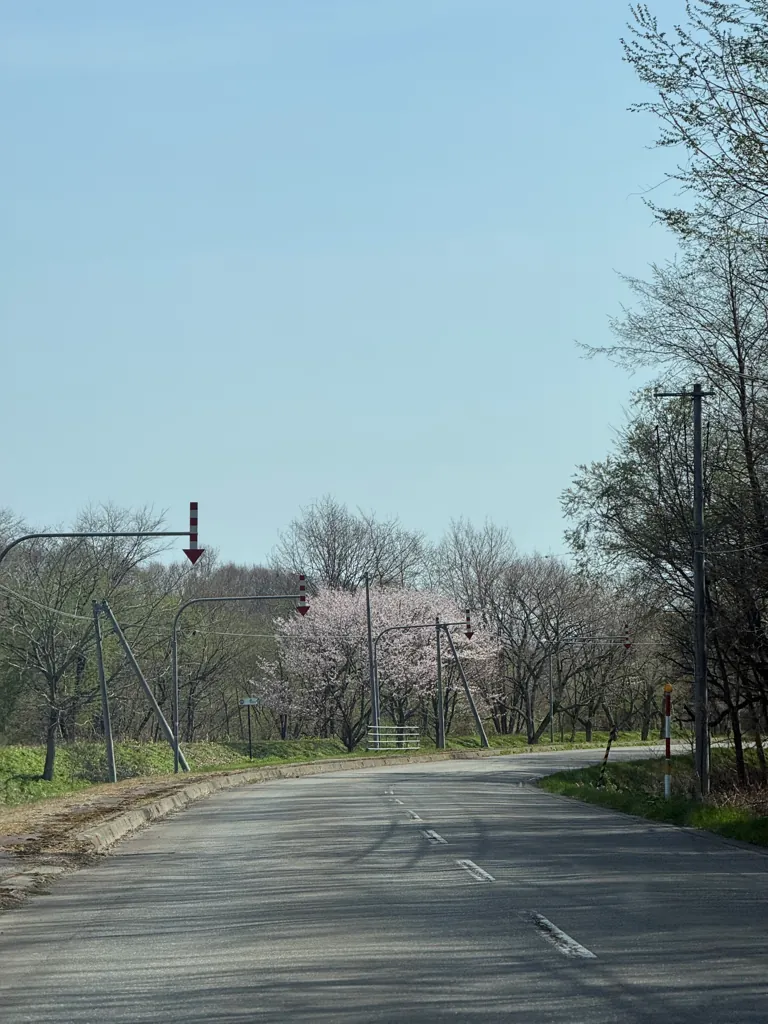
-
 Apr 2026
 -
 Apr 2026
More about Niikappu
At a glance
| Field | Details |
|---|---|
| Type | Town (町) |
| Subprefecture | Hidaka (日高振興局) |
| District | Niikappu District (新冠郡) |
| Population | 5,309 (2020 Census, 令和2年国勢調査)1; 4,948 on the resident register, including 333 foreign residents, in 2,811 households, as of 1 January 20262. The town's own table gives 4,966 as of 31 March 20253. |
| Area | 585.71 km² (GSI, as of 1 April 2026)4. The town's statistics give 585.81 km², from the fixed-asset land survey1. |
| Density | About 8.4 people/km² (2026 register figure); about 9.1/km² (2020 Census) |
| Municipal history | A village office for Takae and 10 other villages (高江村外10ヵ村戸長役場) opened in 1881, which the town counts as its founding year5. In 1923 the 11 villages merged as Takae Village, renamed Niikappu Village (新冠村) the same day. It became a town on 1 September 19616. Merger talks with Shizunai and Mitsuishi were suspended at Niikappu's request, and those two towns merged alone as Shinhidaka in 20066. |
| Neighboring municipalities | Hidaka, Biratori, Shinhidaka, Obihiro, Nakasatsunai6 |
| Symbols | Tree: higatsura (ヒガツラ), which the town describes as a rare local tree prized as timber, with round, fragrant leaves. Flower: azalea (ツツジ). Both were adopted in 19761. No town bird is designated6. The emblem and flag date from 19681. |
| Mascot | Niikappun (にいかっぷん), a racehorse superhero with green-pepper ears, azalea ear ornaments, a record-shaped belt buckle and an asparagus baton. It was chosen in 2017 as the character of the town's community watch program (地域見守り見回り活動事業)7. |
| Mayor | Yamamoto Masatsugu (山本政嗣) (reading of the given name unverified)8, elected in 20251 |
| Official website | https://www.niikappu.jp/ |
Name origin
- The name comes from the Ainu word ni-kap (ニカㇷ゚), meaning "tree bark" or "tree skin." The scholar Nagata Hōsei (永田方正) explained that the local Ainu wore clothing made from elm bark (ニレ), and that its color set them apart from Ainu in other districts6. The town's own summary says nikap meant "elm tree," and that the brownish color of the bark garments gave the place its name1.
- A second account says the headland at the river mouth (today's Hangandate Cape, 判官館) was first called Pipok (ピポㇰ, "below the rocks"). According to Matsuura Takeshirō's Higashi-Ezo Nisshi (東蝦夷日誌), the trading post was renamed from "Bibok" to "Niikappu" in 1809 because the old name "did not sound good." It resembled a local dialect word for smuggling61.
- The name was written down much earlier, though. "Nikabu" (にかぶ) appears in the 1700 Matsumae-tō Gōchō (松前島郷帳), and "Niikappu" appears around 1739. Before the characters 新冠 became standard, the name was sometimes written 新勝府6.
History
- Ainu era. The river mouth at Pipok is linked to the 1669 Shakushain's War. The town's records say the Shibechari leader Shakushain (シャクシャイン) was killed there by treachery, and that a shogunate trading post (会所) stood at the site late in the Edo period115. No archaeological surveys were found for this entry.
- Matsumae and Edo contact. The Niikappu trading post (新冠場所) was established in the Keichō era (early 1600s). In 1798 the explorer Kondō Jūzō (近藤重蔵) enshrined Minamoto no Yoshitsune at Hangandate. The post became a kaisho (会所) in 1799, and the Nanbu domain took control of the area in 18071.
- Early Meiji and the horse ranch. In 1869 the area became Niikappu District of Hidaka Province. In 1871 it was placed briefly under Inada Kunitane (稲田邦植), the lord of Awaji, and then under direct control of the Kaitakushi (開拓使). In 1872 officials set aside more than 200 million tsubo (about 660 km²) for a ranch. In 1877 the American Edwin Dun (エドウィン・ダン) camped on site for half a month to design the Niikappu Horse Ranch (新冠牧馬場)1. Its horses raced in Yokohama by 18805.
- Settlement. A few families of former Inada retainers moved here from Awaji (now Hyōgo Prefecture) in 1878, which began full-scale settlement. The founding office opened at Takae in 1881. The ranch became the Imperial Niikappu Ranch (新冠御料牧場) in 1888, and the population passed 1,000 in 18981.
- Taishō and early Shōwa. Niikappu Village was formed in 1923. The Hidaka Takushoku Railway opened Takae (later Niikappu) and Setsupu stations in 1926. Dairy cattle arrived in 1936 and laid the foundation for local dairy farming1.
- Postwar. In 1947 the Imperial ranch was transferred to the Ministry of Agriculture as the Niikappu Livestock Farm, and the released land was opened to settlers15. The 1952 Tokachi-oki earthquake opened fresh vents in the Takae mud volcanoes. A 1955 flood of the Niikappu River killed 27 people. In the same year the population passed 10,000 (10,110)1. On 5 April 1961 an avalanche hit a hydro-construction camp and killed 22 people6.
- Town and hydropower. Niikappu became a town in 1961. The Oku-Niikappu Power Station was completed in 1963. In 1974 came the Niikappu Power Station, fed by a rock-fill dam with an output of 200,000 kW, then the largest in Hokkaido1.
- Horse-town identity. The popular idol horse Haiseiko returned to Niikappu as a stallion in 1975. The first Horse Festival (駒まつり) was held in 1976, and Narita Brian became the first Niikappu-bred Triple Crown winner in 19941.
- Revitalization. A hot spring was struck at Nishi-Hakutsu in 1996, the first in Hidaka. The Record Hall and the roadside station opened in 1997, and the Re-Cord no Yu onsen opened in 19981.
- Disasters. Typhoon No. 10 in August 2003 killed four people in the Atsubetsu River basin. The JMA station at Shinwa (新和) recorded 317 mm of rain on 9 August 2003, its highest daily total116. The September 2003 Tokachi-oki earthquake registered shindo 6-lower in the town, and the 2011 tsunami exceeded 2 m here1.
- Railway loss. High waves damaged the JR Hidaka Line in 2015 and cut service. The Mukawa–Samani section, which served Niikappu's three stations, was formally abolished on 1 April 2021 and replaced by buses16.
- Recent years. In 2008 the town's nine elementary schools were consolidated into two, Niikappu and Asahi51. Asahi Elementary closed in 2024, leaving one elementary school1. Pepper sales hit a record ¥1.45 billion in 20241. The Hidaka Expressway reached the new Niikappu IC on 28 February 202617.
Geography & climate
- Location and size. The town lies in central Hidaka on the Pacific. It measures about 45 km east–west and 44 km north–south, with 13 km of coastline13. Forest covers about 71% of the land by land-use category13. The town's forestry page counts forest at 46,794 ha, about 81% of the total, 80% of it national forest18.
- Mountains. The northern peaks lie inside the Hidaka-sanmyaku Erimo Tokachi National Park (日高山脈襟裳十勝国立公園). They include Poroshiri-dake (幌尻岳, 2,052 m), Tottabetsu-dake (トッタベツ岳, 1,959 m), Esaoman-tottabetsu-dake (エサオマントッタベツ岳, 1,902 m) and Idonnappu-dake (イドンナップ岳, 1,752 m)1. Poroshiri straddles the border with Biratori. The Niikappu Wikipedia article's 2,053 m is an older survey value; GSI set the height back to 2,052 m in 2014612.
- Rivers and lakes. The main rivers are the Niikappu (新冠川) and the Atsubetsu (厚別川). Four dams stand on the Niikappu: Oku-Niikappu, Niikappu, Shimo-Niikappu and Iwashimizu6. Their reservoirs include Lake Horoshiri (幌尻湖; 33 ha at 726 m) and Lake Niikappu (にいかっぷ湖; 435 ha at 320 m)1. The Nanatsunuma Cirque (七ツ沼カール) and the Iwashimizu Gorge (岩清水渓谷) are listed as scenic spots1.
- Mud volcano. The Niikappu Mud Volcano in Takae is a group of eight mud mounds. Mounds 7 and 8 were designated a Hokkaido natural monument on 18 January 1968. The mounds cracked and spouted mud during the earthquakes of 1982, 2003, 2008 and 20181.
- Climate. The town gives its annual mean temperature as 8.4 °C and describes snowfall as light13. At the inland JMA station at Shinwa (新和, 60 m elevation)6, the 1991–2020 means are −7.1 °C in January, 20.7 °C in August and 6.9 °C for the year, with 1,300.6 mm of precipitation19. That station's extremes are 36.0 °C (13 August 2007) and −29.2 °C (7 February 1984)16. Snow is light: at the nearby Shizunai station, the deepest snow in winter 2024–25 was 15 cm1.
Economy & industry
- Thoroughbreds. In February 2025 the town had 116 light-horse farms holding 3,007 horses1. At auction in FY2025, 422 of 525 Niikappu-bred thoroughbreds sold, for ¥3.41 billion in total1. Well-known farms and stallion stations include Big Red Farm (ビッグレッドファーム, Meiwa), Yushun Stallion Station (優駿スタリオンステーション, Asahi) and the Hidaka Light Horse Joint Training Center (日高軽種馬共同育成センター, Setsupu)1. Recent Grade 1 winners bred in the town include Contrail (North Hills), Uberleben (2021 Oaks) and Win Carnelian (2025 Sprinters Stakes)9.
- Green peppers. In 2025, 50 farms grew 25.5 ha of peppers and shipped 2,450.5 t worth ¥1.41 billion. In 2024, sales set a record of ¥1.4516 billion1.
- Other crops. Rice brought in ¥185 million in 2025 (383 t). Asparagus, spinach and melons are grown on a smaller scale1. Total crop sales in 2025 were ¥1.65 billion1.
- Dairy and beef. In FY2025, 26 dairy farms shipped 10,581 t of milk worth ¥1.22 billion. Beef farms sold 927 Japanese Black (黒毛和牛) calves for ¥627 million1. The town-run pasture at Higashikawa (683.3 ha) takes in about 250 young cattle each summer and fattens Wagyu20.
- Fisheries. Setsupu Fishing Port (節婦漁港) is a Class 1 port with 18 co-op members and 26 boats. It landed 428.2 t worth ¥179 million in 202421. The main catches are octopus, autumn salmon, shellfish and surf clam (ほっき). The salmon catch fell from 281 t in FY2019 to 27 t in FY20241.
- Forestry and energy. Forestry produced about 35,000 m³ of timber in FY20241. The Niikappu River hydro chain, including the 200,000 kW Niikappu Power Station, was built between 1959 and 19741.
- Workforce and demographics. Of the 2,962 workers counted in the 2020 Census, 1,065 (36%) worked in agriculture, forestry or fishing1. The population fell from 11,166 in 1960 to 5,309 in 20201. The share aged 65 and over was 34.1% in March 20251. Deaths outnumber births more than four to one; in FY2024 there were 18 births and 84 deaths1.
- Revitalization. Furusato nōzei donations are directed to preserving analog records, supporting "fast racehorse" breeding, and general town-building14. The 2026 expressway extension was built partly to speed the transport of racehorses and farm produce to central Hokkaido17.
Local specialties
| Specialty | Category | Details & where to get it |
|---|---|---|
| Niikappu green peppers (にいかっぷピーマン) | Crop | Billed as Hokkaido's top pepper shipper; harvested May–November110. The town's recipe collection comes from a 2009 pepper cooking contest22. |
| Pepper soft-serve (ピーマンソフト) | Sweets | Sold only at the roadside station; ¥350, alongside a milk (vanilla) flavor1110 |
| Pepper yōkan, pepper chips, pepper miso, pepper dorayaki (ピーマンようかん・ピーマンチップス・ピーマン味噌・ピーマンどら焼き) | Brand products | Station shop. Yōkan ¥560, chips ¥400, miso ¥55011. Pepper dorayaki went back on sale in July 202610. |
| Bafun manjū (ばふん饅頭) | Sweets | Buns shaped like horse droppings, filled with pumpkin bean paste; ¥1,512 for 911 |
| Re-Cord Kuchen (レ・コードクーヘン) | Sweets | Record-shaped baumkuchen made with Hokkaido wheat and butter; ¥1,08011 |
| Tunnel wine (トンネルワイン) | Wine | Wine aged deep inside a hydroelectric power-station tunnel under the Hidaka Mountains; from ¥2,200 at the station11. Tunnel-aged Napa Valley and Bordeaux (Margaux) bottles are top furusato nōzei gifts23. |
| Horoshiri Milk (ホロシリ牛乳) and cheeses | Dairy | Milk at ¥270/¥600, plus "Daichi no Hatsuyuki" mozzarella (大地の初雪) and "Milk no Sasayaki" string cheese (ミルクのささやき); sold at the station11 |
| Japanese Black beef (黒毛和牛) | Meat | Mostly sold as calves to other regions; the town runs a Wagyu center for breeding improvement120 |
| Venison in oil (鹿肉のオイル煮) | Meat | Herb, ethnic-spice or yuzu-kosho flavors; ¥810 at the station11 |
| Record ramen (レコードラーメン) | Local dish | ¥900 ramen topped with record-sized chashu, at Restaurant Jurin inside the station24 |
| Local-octopus rice bowl (前浜産タコ丼) | Local dish | Signature dish at Chaya Yūgure (茶屋ゆうぐれ) in Hotel Hills, which also serves Crown Pork from Hidaka25 |
| Salmon toba (鮭トバ) and Niikappu senbei (新冠煎餅) | Snacks | ¥980 and ¥324 at the station11 |
| Used racehorse horseshoes (蹄鉄) and G1-horse straps | Crafts/souvenirs | Real horseshoes worn by racehorses, ¥560; the ¥600 G1-horse straps are the top seller in the station's goods section11 |
| Furusato nōzei gifts | Gifts | Tunnel-aged wines, a one-night stay with two meals at Hotel Hills, and a premium gelato set are among the top-ranked gifts23 |
Culture & festivals
| Event | When | Highlights |
|---|---|---|
| Niikappu Furusato Festival (にいかっぷふるさと祭り) | Mid-July; the 30th edition ran 18–19 July 2026 | Held around the former JR Niikappu Station plaza. Highlights are an Edo-style mikoshi with a horse-and-emblem crest, carried by the Hikawa Wakashu-kai (氷川若衆会); a 400 m rice-bale relay with 50 kg bales for men and 10 kg for women; Hangan Taiko drumming; and a beer garden. In 2026, strong wind and rain forced the cancellation of most outdoor events on the 19th, including the beer garden and the mikoshi procession26 |
| Record concerts (レコードコンサート) | Monthly on the third Saturday (fourth Saturday in August), 15:30–17:00 | Themed programs played from donated records in the Record Hall's horn-speaker hall. ¥300, free for junior-high students and younger; limited to 20 people2728 |
| Candle Night & Record Concert | Nightly, 20:00–22:00 | In the onsen lobby of Hotel Hills25 |
| Horse Festival (駒まつり) | Historically September | First held in 19761. Wikipedia lists it for September6; whether it is still held is unverified. |
- Hangan Taiko (判官太鼓). This drumming tradition began in 1970, and a troupe traveled to West Germany in 19781. A children's troupe still performs; for example, it is scheduled to play at Hotel Hills on 26 September 2026, 17:00–17:3029.
- Hikawa Shrine (氷川神社). A new main hall was built for the shrine in 19771. Its festival takes place in July, alongside the Furusato Festival6.
- Museums. The Niikappu Local History Museum (新冠町郷土資料館) opened in 1981 for the town's centenary. It is free and open 9:00–16:30; closed Sundays, Mondays and public holidays30. The Record Hall's museum shows early machines, including an 1878 Edison tinfoil phonograph described as one of five surviving worldwide1.
- Record culture. The town began collecting and preserving analog records in 199114, and it had entered data for 540,474 records by March 20251.
Ainu heritage
- Niikappu has an Ainu community organization, the Niikappu Ainu Association (新冠アイヌ協会), a branch of the Ainu Association of Hokkaido31. Wikipedia lists the Niikappu Ethnic Culture Preservation Society (新冠民族文化保存会) as a holder of Ainu traditional dance, an Important Intangible Folk Cultural Property6.
- The Poroshiri Seikatsukan (多機能型交流施設ポロシㇼ生活館) was completed on 1 September 2022 as a multi-purpose center for promoting Ainu culture. It displays many Ainu cultural materials. General viewing is free from spring to autumn, 10:00–16:00 on Fridays to Sundays (2023 schedule)32.
- The town name, the old headland name Pipok, and the story of Shakushain's death at the river mouth in 1669 all tie Niikappu to Ainu history615. Before 1954, many small place names (小字) were written in katakana, such as ウラリ (Urari), ポロセツプ (Porosetsupu) and オニセペツ (Onisepetsu), and appear to be Ainu in origin. They were reorganized in 19546.
Sister & friendship cities
- No formal sister-city agreement was found.
- Nalaikh (ナライハ市), Mongolia: The two towns signed an international exchange agreement in 2001 (平成13年). A Niikappu youth delegation visited Nalaikh in 2002, and 13 Mongolian children visited Niikappu in 20051.
Notable people
- Matoba Hitoshi (的場均), jockey and later trainer, from the Shinwa district. The town gave him its Citizen's Honor Award in 199416.
- Fujita Shinji (藤田伸二), former JRA jockey6.
- Kotokanyū Gensei (琴冠佑源正), sumo wrestler61.
- Tanaka Shōtarō (田中正太郎), politician and the first mayor of Tomakomai6.
- Kyūma Jūgi (久間十義), novelist6.
Sources
Numbers in the text link to these sources. Figures as of 23 September 2026
- 町勢要覧・資料編 2026(統計でみる にいかっぷ) — 新冠町 JA accessed 2026-09-23
- 令和8年住民基本台帳人口・世帯数(令和8年1月1日現在) — 北海道 総合政策部計画局統計課 JA accessed 2026-09-23
- 人口・世帯数 — 新冠町 JA accessed 2026-09-23
- 全国都道府県市区町村別面積調(令和8年4月1日時点) — 国土地理院 JA accessed 2026-09-23
- 町の歴史 — 新冠町 JA accessed 2026-09-23
- 新冠町 — Wikipedia JA accessed 2026-09-23
- 新冠町地域見守り見回り活動事業 見守り隊員募集(キャラクター「にいかっぷん」決定) — 新冠町 JA accessed 2026-09-23
- まちの概要 — 新冠町 JA accessed 2026-09-23
- 競走馬の活躍 — 新冠町 JA accessed 2026-09-23
- サラブレッドロード新冠 — 北の道の駅(北海道「道の駅」公式総合情報サイト) JA accessed 2026-09-23
- 道の駅サラブレッドロード新冠 — 新冠町 JA accessed 2026-09-23
- 幌尻岳 — Wikipedia JA accessed 2026-09-23
- 位置と面積 — 新冠町 JA accessed 2026-09-23
- ふるさとづくり応援サイト — 新冠町 JA accessed 2026-09-23
- 判官館森林公園 — 新冠町 JA accessed 2026-09-23
- 観測史上1~10位の値(新和) — 気象庁 JA accessed 2026-09-23
- 日高自動車道「日高厚賀IC~新冠IC」が令和8年2月28日(土)15時に開通します — 国土交通省 北海道開発局 室蘭開発建設部 JA accessed 2026-09-23
- 林業 — 新冠町 JA accessed 2026-09-23
- 平年値(年・月ごとの値)(新和) — 気象庁 JA accessed 2026-09-23
- 牧野の概要 — 新冠町 JA accessed 2026-09-23
- 漁港一覧 — 新冠町 JA accessed 2026-09-23
- にいかっぷピーマンレシピ集 — 新冠町 JA accessed 2026-09-23
- 北海道新冠町のふるさと納税 お礼の品ランキング — ふるさとチョイス JA accessed 2026-09-23
- レストラン樹林 — にいかっぷ三昧(新冠町商工会/新冠町観光協会) JA accessed 2026-09-23
- 日帰り — 新冠温泉ホテルヒルズ JA accessed 2026-09-23
- にいかっぷふるさとまつり — 新冠町 JA accessed 2026-09-23
- 2026年度レコードコンサートのお知らせ — 新冠町 JA accessed 2026-09-23
- 令和8年度 レコードコンサート開催日程(チラシ) — 新冠町 JA accessed 2026-09-23
- 新冠町の郷土芸能【判官太鼓】演奏のお知らせ — 新冠温泉ホテルヒルズ JA accessed 2026-09-23
- 郷土資料館 — 新冠町 JA accessed 2026-09-23
- 公益社団法人 北海道アイヌ協会 支部一覧 — 北海道アイヌ協会 JA accessed 2026-09-23
- 多機能型交流施設ポロシㇼ生活館 — 新冠町 JA accessed 2026-09-23
- サラブレット銀座 — にいかっぷ三昧(新冠町商工会/新冠町観光協会) JA accessed 2026-09-23
- にいかっぷ三昧 — 新冠町商工会/新冠町観光協会 JA accessed 2026-09-23
- 温泉 — 新冠温泉ホテルヒルズ JA accessed 2026-09-23
- 宿泊ガイド — 新冠町 JA accessed 2026-09-23
- レ・コード館 — 新冠町 JA accessed 2026-09-23
- 入場料について(レ・コード館) — 新冠町 JA accessed 2026-09-23
- 優駿記念館 — 株式会社優駿 JA accessed 2026-09-23
- にいかっぷホロシリ乗馬クラブ 公式サイト — 有限会社にいかっぷホロシリ乗馬クラブ JA accessed 2026-09-23
- パークゴルフ — 新冠町 JA accessed 2026-09-23
- 登山の道案内 — 新冠町 JA accessed 2026-09-23
- 牧場見学について — 新冠町 JA accessed 2026-09-23
- 【営業時間変更のお知らせ】サラブレッドロード新冠 — 北の道の駅 JA accessed 2026-09-23
- 日高地域広域バス時刻表(2026年4月1日) — ジェイ・アール北海道バス JA accessed 2026-09-23
- 高速乗合バス|特急とまも号|時刻表・路線図 — ジェイ・アール北海道バス JA accessed 2026-09-23
- 新冠町ヒグマ出没情報 — 新冠町 JA accessed 2026-09-23