Town Hidaka Subprefecture
Shinhidaka 新ひだか町
しんひだかちょう
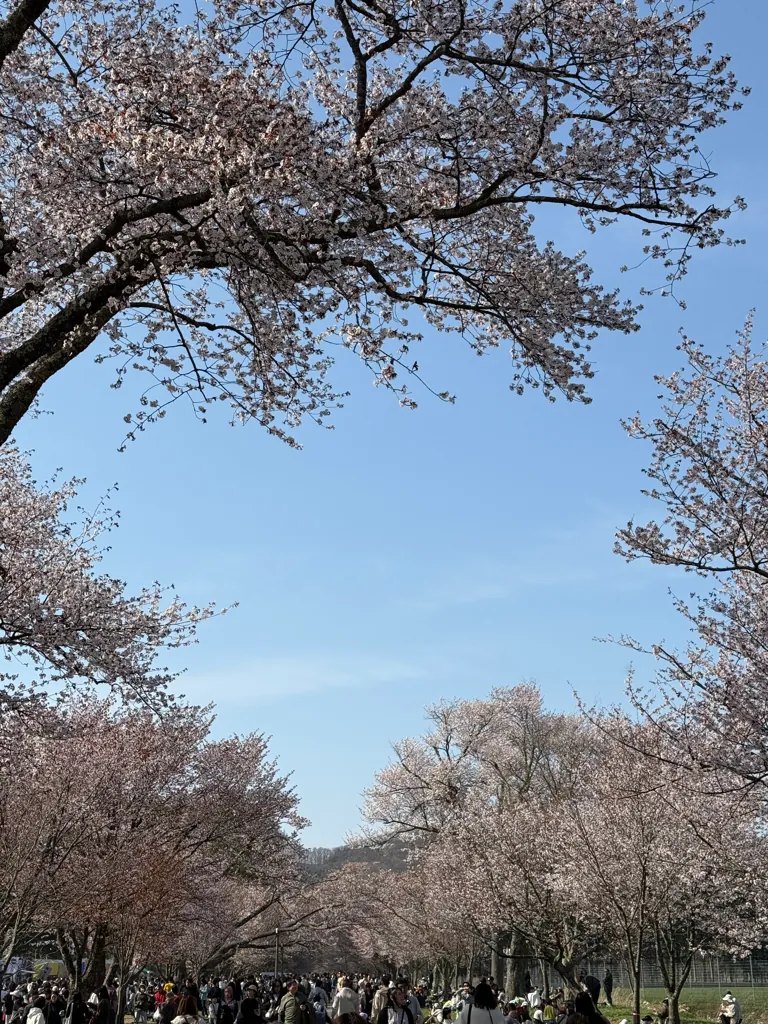
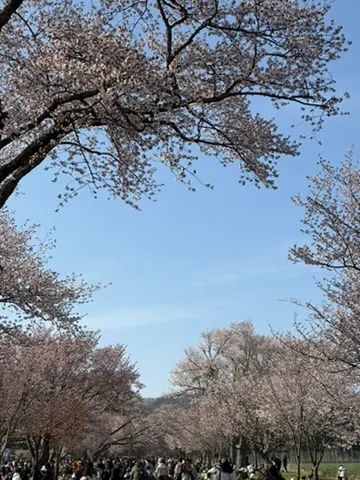
Shinhidaka is the largest town on the Hidaka coast and the region's shopping and services hub. It breeds more thoroughbreds each year than any other town in Japan, and in early May a dead-straight, 7 km avenue of more than 2,000 cherry trees blooms between the stud farms.1 The Shizunai River valley was also the base of the Ainu leader Shakushain, whose 1669 uprising against the Matsumae domain is remembered at the hilltop fort site above town.2
- Population (2020 Census)
- 21,517
- Area
- 1,147.55 km²
- District
- Hidaka District (日高郡)
- Official website
- www.shinhidaka-hokkaido.jp
Known for
- Thoroughbreds. Hidaka produces about 80% of Japan's thoroughbred foals (6,242 of 7,925 in 2024).10 Shinhidaka has about 30% of Hidaka's output and the largest annual thoroughbred production of any town in Japan.1 The Hokkaido Market (北海道市場) in town is the country's biggest thoroughbred auction.10 Stallion stations here stand horses such as the US Triple Crown winner American Pharoah.11
- Famous racehorses. Local farms bred Tosho Boy, Oguri Cap, Winning Ticket and Lord Kanaloa, among many others.3 Recent G1 winners with ties to the town include Vodka, Roger Barows and Titleholder.12
- Nijukken Road cherry avenue (二十間道路桜並木). More than 2,000 Ezo mountain cherries and other trees line a straight 7 km road. It is one of Japan's Top 100 Cherry Blossom Sites and a Hokkaido Heritage site.1314
- Hidaka kombu (日高昆布). The kelp sold as "Mitsuishi kombu" is sun-dried on the gravel beaches along Route 235 and shipped to high-end restaurants and specialist shops in the Kantō and Kansai regions.15
- Shakushain and the Ainu forts. Five chashi (Ainu hilltop forts) in town linked to Shakushain's War of 1669 are part of a National Historic Site.16 A new Ainu Culture Exchange Center opened beside the Shibechari chashi in 2025.17
- Seaside onsen and camping in Mitsuishi. Michi-no-Eki Mitsuishi has an auto-campground, bungalows and the Kurazo kombu hot spring next to the Pacific.1819
- Mitsuishi yōkan and kombu shōchū. Yagi Kashiho has made Mitsuishi yōkan (三石羊羹) since 1910, and a local shōchū flavoured with kombu extract has been sold since 1985.2021
- Mitsuishi beef (みついし牛). A Kuroge Wagyu brand raised mainly for the Tokyo market.22
Sights & activities
Nature & scenery
- Nijukken Road cherry avenue (二十間道路桜並木) in Shizunai-Tahara runs 7 km in a straight line. It is one of Japan's 100 Best Roads, one of the Top 100 Cherry Blossom Sites and a Hokkaido Heritage site. The trees bloom in early May, and the road is worth seeing in other seasons too.13 The neighbouring farms are working farms, not tourist ranches.13
- Mauta Park observation deck (真歌公園展望台), renovated in FY2019, looks over Shizunai town and the sea. It is about 10 minutes by car from the old Shizunai Station.51
- Hōraisan (蓬莱山), Mitsuishi Higashi-Hōrai. This 66 m rock hill, left standing as the Mitsuishi River wore away the land around it, is a town-designated scenic site. More than 300 kinds of higher plants, including the Hidaka endemic Hidaka-iwazakura, and over 100 kinds of moss grow on it.2
- Takami Dam and Lake (高見ダム・高見湖) lie far up the Shizunai River valley.29
- Petegari-dake (ペテガリ岳, 1,736 m) is a climb for experienced mountaineers. Prefectural Road 111 from the Shinhidaka side is closed indefinitely because of rockfall, and walking in is not allowed either. The usual route starts at Kamui Sansō in Urakawa, reached by a forest road open June–September. It is about 17 km each way over three days and two nights, with nights at the town-built Petekari Sansō hut (unstaffed, ¥500).53
Onsen
- Shizunai Onsen (静内温泉), Shizunai-Urawa, is known as the "skin-beautifying bath". Locals found it in 1899 while building a ranch. The soft brown water is a sodium-bicarbonate spring (11 °C at source, heated). Open 10:00–22:00; adults ¥550.54 It closes on Mondays.55
- Mitsuishi Kombu Onsen Kurazo (みついし昆布温泉 蔵三), at Michi-no-Eki Mitsuishi. Its boat-shaped outdoor bath faces the Pacific, and there is a kombu bath (昆布湯) indoors. The water is a cold mineral spring (10.4 °C at source). Day bathing costs ¥550 for adults, 5:00–9:00 and 11:00–21:00.56
Museums & heritage
- Mauta Park: the Ainu Culture Exchange Center (9:00–17:00, closed Mondays, free) and the Shibechari chashi site1751
- Shinhidaka Town Museum (10:00–18:00, closed Mondays, free)50
- Oh My Horse Park (桜舞馬公園) at the Shizunai end of the Nijukken Road (Shizunai-Tahara 712). It has memorial stones for famous horses, including Tamamo Cross, Tesco Gaby and Brian's Time.5712
- Gotenyama stone-cairn cemetery (静内御殿山墳墓群), Shizunai-Mena, a Hokkaido Historic Site2
Outdoor & seasonal activities
- Stud-farm visits (牧場見学). From 15 July to 31 October 2026 you must first sign in at the farm information desk in the Nijukken Road Entrance Plaza. It is open 9:00–12:00 and 13:00–16:00.39
- Arrow Stud allows visits from 16 July, 15:00–16:00.39
- Rex Stud allows visits from 1 August, 14:30–15:30. No video is allowed, and photos should not be posted on social media.39
- The JBBA Shizunai Stallion Station never accepts visitors.37
- Questions go to the Horse Country Hidaka information office (競走馬のふるさと日高案内所) at Shizunai-Kamimori 175-2, not to the farms.3958
- Riding Hills Shizunai (ライディングヒルズ静内), Mauta 7-1, is a town riding centre that opened in 2001. A 3-minute led ride on a thoroughbred or Dosanko costs ¥660 for adults, with no booking. Lessons and a guided trek on the "Ocean Course" need a reservation. Open 10:00–16:30; closed Mondays.5960
- Camping.
- Onsen-no-Mori Campground (温泉の森キャンプ場) is a six-minute walk from Shizunai Onsen. It has cabins and free sites and is open 25 April – 31 October 2026.55
- Mitsuishi Seaside Park Auto Campground is described below.
- Hidaka Mountains trekking is for experienced climbers only. File a climbing plan before you go.53
Food experiences
- Barbecue at the Hōraisan Festival (July), with Mitsuishi beef and other local food26
- Shizunai lunches. The tourism association's lunch map lists:48
- Kombu-soup ramen at Shizuō, in the station building
- Fried rice, "Shinhidaka's soul food", at Dairyū (中華料理 大龍)
- Shrimp tempura bowls and "iso" ramen at Drive-in Asarihama on Route 235
- The Hidaka Tsubu-meshi bentō at the Shizunai Eclipse Hotel's top-floor restaurant
- Kurazo's restaurant serves Mitsuishi-beef dishes and local seafood, such as matsukawa flounder, the "king of flatfish".6146
Roadside stations (Michi-no-Eki)
Mitsuishi (道の駅みついし)
- Location:
- Hours (as of September 2026; check before visiting):
- station building: 8:45–22:00 from April to September, 8:45–17:30 from October to March. Goods sales end at 17:00.1918
- closed 31 December – 5 January; toilets open 24 hours18
- special products centre: 9:00–18:00 from April to September, 9:00–17:00 from October to March, closed Wednesdays18
- Kurazo restaurant: 11:30–14:00 and 17:00–19:30 (last orders)46
- Kurazo baths: 5:00–9:00 and 11:00–21:0056
- From 1 May 2026, Kurazo is closed every Wednesday (Thursday when Wednesday is a holiday). On Wednesdays you cannot bathe, eat or buy souvenirs at the park.5618
- Shops & products:
- Food:
- Facilities:
- Parking: 266 cars and 14 large vehicles according to the Hokkaido Michi-no-Eki site. The town says about 350 spaces, including large-vehicle parking.1918
- 24-hour toilets, an accessible toilet, a baby bed, a free rest area and an AED1918
- An EV charger and Wi-Fi19
- An onsen hotel with 16 rooms (Kurazo)61
- An observation deck and a park19
- Auto campground (open from the 4th Saturday of April to 30 September; phone bookings from the 2nd Wednesday of April). There are 30 sites, each with AC power and water (¥6,280 a night). There are 16 bungalows: four for 8 people (¥20,710), eleven for 4 people (¥13,340) and one step-free unit for 4 people. Pets are allowed except in bungalows.18
- Fureai Beach: barbecue, rock-pool play and day camping (¥930 a site). Overnight guests can try kombu harvesting. Fishing, swimming and drones are not allowed.18
- Notes:
- Registered on 11 April 1995 as Hokkaido registration No. 18.1962
- The station building also serves as the campground's centre house and reception.19
- The stamp can be pressed during opening hours but not on closed days.19
- 171,000 users in FY2025, up 2.3%.42
- The station posts campground news on Instagram (@MICHINOEKI_MITSUISHI).18
- The next Michi-no-Eki to the west is Thoroughbred Road Niikappu (道の駅サラブレッドロード新冠) in Niikappu. It had 223,100 users in FY2025.42
- There is no Michi-no-Eki in the Shizunai area.62 The Poppo tourist centre in the old station building has souvenirs and travel information (see Practical tips).63
Getting there & around
- Rail. There are no trains in town. The JR Hidaka Line from Mukawa to Samani, with Shizunai, Higashi-Shizunai, Harutachi, Hidaka-Tōbetsu, Hidaka-Mitsuishi, Hōei and Honkiri stations, closed on 1 April 2021.309 The nearest station is Mukawa, at the end of the line's remaining section from Tomakomai. JR Hokkaido publishes connecting bus–train timetables for Hidaka.3064
- Long-distance buses leave from the Shizunai bus terminal in the old Shizunai Station.26 All three need reservations:49
- Local buses. Dōnan Bus runs local routes to Tomakomai, Urakawa and Biratori, and JR Hokkaido Bus runs toward Urakawa, Samani and Erimo.3 For Mitsuishi Seaside Park, get off at "Mitsuishi Onsen". From the Pegasus stop at Honkiri-iriguchi it is a 10-minute walk.18
- By car. Take the Dō-Ō Expressway to Tomakomai-Higashi, then the Hidaka Expressway to Niikappu IC, then Route 235.18 The Hidaka-Atsuga–Niikappu section opened on 28 February 2026. Shizunai IC and Higashi-Shizunai IC are under construction.33 Approximate times:
- Air and sea. New Chitose Airport is the nearest airport. From 4 August to 30 November 2026, the reservation-only "Nanapaka" shared shuttle (ナナパカ号) links the airport with Hidaka's towns. Book by noon the day before.66 Ferries serve Tomakomai.65
- Getting around. The Poppo tourist centre in the old station rents two electric-assist bicycles from April to November (¥800 an hour or ¥5,000 a day).63 Toyota and Nissan rental-car offices are linked from the tourism association's site.65
Practical tips
- When to go.
- Tourist information. Poppo (観光情報センターぽっぽ, Shizunai Honmachi 5-1-21, tel. 0146-42-1000) is in the old JR Shizunai Station and opened in 2002. It has information on all of Hidaka, one of the town's largest souvenir selections and a Dōnan Bus ticket office. It is closed on Wednesdays (Thursday when Wednesday is a holiday) and from 29 December to 5 January.63
- Closing days.
- Farm etiquette.
- Mountains and wildlife. Brown bears live in the Hidaka range.32 Nearly all routes in the national park are for advanced climbers. Submit a climbing plan, and do not feed or approach wild animals.53 Ezo deer are hunted and farmed locally for meat.47 Watch for them on Route 235 and inland roads at dusk (general advice).
- Camping rules. Open fires are banned at the town campgrounds; use a fire stand. Generators and karaoke are not allowed. The Mitsuishi campground does not allow fishing or swimming.1855
Photos
-
 Apr 2026
More about Shinhidaka
At a glance
| Field | Details |
|---|---|
| Type | Town (町) |
| Subprefecture | Hidaka (日高振興局). The town sits in the middle of the Hidaka coast and calls itself the region's administrative, industrial and cultural core.1 |
| District | Hidaka District (日高郡). The district was newly created at the 2006 merger; the old Shizunai District (静内郡) and Mitsuishi District (三石郡) were abolished at the same time.3 |
| Population | 21,517 at the 2020 Census (18,041 in the Shizunai area and 3,476 in the Mitsuishi area), in 10,176 households. It ranked 5th among Hokkaido's towns and villages.1 The preliminary 2025 Census count was 19,573, down 1,944 (−9.0%).4 The resident register showed 19,528 people (9,657 men, 9,871 women) in 11,226 households on 31 July 2026, including foreign residents.5 |
| Area | 1,147.55 km², about 23.9% of Hidaka Subprefecture. Forest covers 83.8% of the town.1 |
| Density | About 17.0 people/km² (19,528 residents); 18.8/km² at the 2020 Census. Both are calculated from the figures above. |
| Municipal history | Shizunai Village (静内村) was formed in 1909 from 16 villages and became Shizunai Town in 1931.6 Mitsuishi Village (三石村) was formed in 1906 from six villages and became Mitsuishi Town in 1951.7 The two towns merged as Shinhidaka on 31 March 2006.1 |
| Neighboring municipalities | Niikappu (west) and Urakawa (east) in Hidaka; Taiki and Nakasatsunai across the Hidaka Mountains in Tokachi3 |
| Symbols | Trees: Ezo mountain cherry (エゾヤマザクラ, from Shizunai) and aodamo ash (アオダモ, from Mitsuishi). Flowers: Ezo mountain azalea (エゾヤマツツジ, Shizunai) and rugosa rose (ハマナス, Mitsuishi). All were adopted on 14 July 2006, together with the town emblem.1 No town bird is designated.3 |
| Mascot | Konbu-man (こんぶマン), created in 1991 by the Chamber of Commerce youth division to promote Mitsuishi kombu, and his younger sister Kobune-chan (こぶねちゃん), added in 2013. Together they serve as the town's "support ambassadors".89 |
| Official website | https://www.shinhidaka-hokkaido.jp/ |
Name origin
The town name is new. Shinhidaka (新ひだか, "New Hidaka") was chosen in 2005 from seven shortlisted candidates. The others were Mikoma (美駒), Makiba (まきば, "pasture"), Amami (天見), Takuhoku (拓北), Yayoi (弥生) and Taihei (大平).3 An earlier plan for a three-town merger with Niikappu, as "Hidaka City" (ひだか市), had been suspended in 2004.3 Both old town names come from Ainu.
Shizunai (静内). The Hokkaido Government's Ainu place-name list rates this name "C": there are several theories and none can be pinned down.23
- Si-huci-nay (シフチナイ), literally "big–grandmother–river". According to Uehara, the wife of the Ainu ancestor deity once lived in this valley.23
- Sutu-nay (ストゥナイ), "grapevine valley", according to Nagata. Nagata also gives Hutchinay, "place where the Ainu ancestor lived".23
- Sut-nay (スッナイ), "river at the foot (of the ridge)", from the station-name guide. A ridge on the right bank of the Moto-Shizunai River runs out to the sea there.23
The name first belonged to Moto-Shizunai (元静内), about 10 km east of today's town centre. It moved west together with the trading-post office (会所).23 Japanese Wikipedia sums up the two main readings as "grandmother's stream" and "grapevine stream".6 The Shizunai River and its basin were also known as Shibechari or Shibuchari (シベチャリ/シブチャリ). The name lives on in the chashi sites along the river.1624
Mitsuishi (三石). The same list gives several theories, also rated "C":25
- Mitus or nitus, "birch-bark bucket". Matsuura Takeshirō wrote that the Ainu had always called the place "Nitoshi". He also recorded a story that the name came from three large reefs offshore.25
- Uehara says a rocky hill in the Mitsuishi River looked like a nitus.25
- I-ma-nit-us-i (イマニトゥシ), "place where the (meat-)roasting skewer stands". Nagata records a large rock called Emanit-ushi standing in the river. The legend says a creator deity's whale-roasting skewer flew off and turned into rock. The list's editor thinks a shortened Nitushi became "Mitsuishi".25
The skewer legend is attached to Hōraisan (蓬莱山), a 66 m rock hill in Mitsuishi. Matsuura heard it from local Ainu.26 Japanese Wikipedia adds a further theory, pit-o-us-i, "place with many pebbles".7 The district name Honkiri (本桐) comes from pon-kerimap, "the lesser Kerimap River".25
History
-
Jōmon era. Shizunai Nakano-type pottery (静内中野式土器) is the type specimen of an Early Jōmon pottery style; its clay is full of plant fibre or twisted cord.2 At Gotenyama (御殿山) in Shizunai-Mena there is a cemetery of about 80 stone-cairn graves from the end of the Late Jōmon to the start of the Final Jōmon, about 3,000 years ago. Shizunai High School students found it in 1952. Lacquered combs, clay figurines and stone rods have come out of the graves.2 The town gives the Hokkaido designation date as 24 December 1963, but its own text says 1964.2
-
Ainu chashi, 16th–18th centuries. The Ainu built chashi (forts cut off by moats and palisades) along the Shibechari (Shizunai) River in this period.2 The Shibechari chashi stands on a bluff 83 m above sea level and 77 m above the river flats. It is said to have once had three moats. Digs in 1963, 1969, 1987 and 2003 turned up iron tools, lacquerware, porcelain, deer bones, a swordfish bill and salmon vertebrae.27
-
Shakushain's War, 1669. Two Ainu groups fought over fishing and hunting rights in the Shibechari area. They were the Menashikur, who lived east of Shibechari, and the Shumkur, who lived to the west. Their feud is recorded as far back as 1648.24 Shakushain became chief of the Menashikur after Kamokutain was killed in 1653. He later killed the Shumkur chief Onibishi.24 A false rumour spread that the Matsumae had poisoned an Ainu envoy. In June 1669 Shakushain called Ainu groups across much of Hokkaido to rise against the Matsumae domain. They killed 356 Japanese (wajin): 213 in eastern Ezo and 143 in the west.24 The Matsumae later offered peace. On 16 November 1669 Shakushain was killed at the peace banquet at Pipok, in present-day Niikappu. The Shibechari chashi fell the next day. Afterwards the Matsumae took firm control of trade with the Ainu.24
-
Edo period. The Shizunai name moved west from Moto-Shizunai together with the trading-post office (会所).23 The explorer Matsuura Takeshirō (1818–1888) described and sketched the "chashi-kotsu" at the mouth of the Mitsuishi River. It is now the town-designated Shoppu chashi site.2
-
Meiji settlement from Awaji and Awa. In 1870 the Kōgo Incident (庚午事変, also called the Inada Disturbance) broke out in Sumoto on Awaji Island. Afterwards Inada Kunitane, the Sumoto castle warden, and his former retainers were ordered to move to Hokkaido. On 2 May 1871 a party of 546 landed at Harutachi (Moto-Shizunai) and began clearing Shizunai.28 Many of Shizunai's pioneers came from around Waki in Awa (now Mima, Tokushima), home of the main Inada line.28 In 1885 a Nichiren Buddhist group of 53 households (168 people), led by Watanabe Ihei, sailed from Sumoto and settled at Toyohata.28 Shizunai counted 1870 as its founding year and held its centenary in 1970.6
-
Meiji settlement in Mitsuishi. In the early and middle Meiji years, settlers came to Mitsuishi from four places:28
- Kuzumaki (Iwate) to Toyooka and Tomisawa
- Nō (Niigata) to the port districts
- Ōno (Fukui) to Utafue and Kawakami
- Nandan on Awaji (Hyōgo) to Honkiri
The Awaji and Echizen folk dances that settlers brought are still performed.2
-
Imperial horse ranch. Kaitakushi chief Kuroda Kiyotaka proposed a large ranch to breed bigger Japanese horses. The Niikappu Imperial Ranch (新冠御料牧場) that followed spread from Shizunai into Niikappu. The 36 m-wide Nijukken Road was built inside it in 1903.14 Starting in 1916, over three years, Ezo mountain cherries and other trees were brought from the nearby hills and planted along the road for visiting members of the imperial family.13 The ranch guest house Ryūunkaku (龍雲閣) hosted the future Emperors Taishō and Shōwa while they were crown princes.14
-
Villages and towns. A Shizunai village office (戸長役場) opened in 1881. Shizunai Village was formed in 1909 and became a town in 1931.6 Mitsuishi Village was formed in 1906 from six villages and became a town in 1951. It counted 1875 as its founding year.728
-
Floods, dams and horses. Floods hit the Shizunai River in 1955, 1956 and 1966. After them, the prefecture and Hokkaido Electric built Takami Dam, completed in 1983, as part of the Hidaka power-development scheme. No comparable flood has struck the old Shizunai town area since.29 Shizunai became a sister city of Lexington, Kentucky, in 1988, after some 800 residents signed a petition for it.28
-
Merger, 2006. Three-town merger talks with Niikappu were suspended in 2004. In the March 2005 referendums, 69.5% in Shizunai and 55.8% in Mitsuishi voted yes to a two-town merger. Shinhidaka was created on 31 March 2006.3
-
Railway lost. Storm waves washed out the JR Hidaka Line in January 2015, and no trains ran south of Mukawa after that. The Mukawa–Samani section, which included seven stations in town, was formally closed on 1 April 2021 and replaced by buses.309
-
Recent events.
- In September 2018 the town removed the original 1970 Shakushain statue in Mauta Park as unsafe, over the objections of the group that had erected it. A new statue was unveiled on 23 September 2018.31
- The Hidaka Mountains became part of Hidaka-sanmyaku Erimo Tokachi National Park on 25 June 2024.32
- The Ainu Culture Exchange Center opened on 1 May 2025.17
- The Hidaka Expressway reached Niikappu IC, just west of town, on 28 February 2026.33
Geography & climate
- Setting. The town runs from the Pacific coast in the southwest up to the crest of the Hidaka Mountains in the northeast. Most people live along the lower rivers and the coast.1 Apart from the valleys of the 静内川, 有良川, 捫別川, 布辻川, 三石川 and 鳧舞川 rivers, the land is mostly hills. These rivers rise in the Hidaka range and flow south across the town to the Pacific.1 The main town, Shizunai, spreads around the mouth of the Shizunai River.3
- Mountains and national park. About a third of the town lies in Hidaka-sanmyaku Erimo Tokachi National Park. At 245,668 ha of land, it is Japan's largest national park.32 The highest peak is Kamuiekuuchikaushi (カムイエクウチカウシ山, 1,979 m). Other peaks include Petegari (ペテガリ岳, 1,736 m) and Pyramid Peak (1,853 m).332
- Lakes and dams. Every lake in town is a reservoir. They include Takami Lake, the Shizunai, Futagawa, Higashi-no-sawa and Shunbetsu reservoirs, and Mitsuishi Dam.3 Takami Dam (高見ダム) is a 120 m rockfill dam. It is the tallest completed dam in Hokkaido and holds 229 million m³.29
- Climate. Shinhidaka is mild and snow-light for Hokkaido. It is called "the land of cool summers and little snow" (涼夏少雪の郷). Even in February, a day's snowfall rarely tops about 20 cm.34
- At the Shizunai AMeDAS station (1991–2020 normals), the annual mean temperature is 8.2 °C. January averages −3.4 °C and August 20.7 °C.35
- Annual precipitation is 1,043.3 mm and total snowfall 188 cm. The normal deepest snow cover is only 21 cm.35
- Records: 33.9 °C on 12 August 2024 and −19.8 °C on 4 March 1986. The deepest snow was 43 cm, on 6 February 2018.36
- The Mitsuishi station (三石美野和) is colder in winter, with a record low of −25.9 °C.3
Economy & industry
-
Thoroughbred breeding. Horse breeding is by far the main farm industry. It makes up about 60% of the town's farm output.1 Hidaka bred 6,242 of Japan's 7,925 thoroughbred foals in 2024 (78.8%).10 Shinhidaka accounts for about 30% of Hidaka's output and has Japan's largest annual thoroughbred production.1
- The Hokkaido Market (北海道市場) is run jointly by the horse-breeders' cooperatives of Hidaka, Iburi and Tokachi. It holds auctions from May to October and sells more than 2,000 horses a year, the most in Japan. Sales topped ¥10 billion every year from 2017 to 2025.10
- Stallion stations in town include the Japan Bloodhorse Breeders' Association's Shizunai Stallion Station (JBBA静内種馬場)37 and Arrow Stud and Rex Stud along the Nijukken Road.3839 In 2026 JBBA leased American Pharoah, the 2015 US Triple Crown winner. He covered 218 mares, and in June 2026 his stay was extended into 2027.11
-
Other farming. The town brands three main products:1
- Wagyu as "Mitsuishi beef". About 20 farms, mostly JA Mitsuishi members, raise each animal from birth for about 30 months. More than 70% of carcasses grade 4 or higher.22
- Mini tomatoes as "Taiyō no Hitomi" (太陽の瞳), among Hokkaido's top producers
- Delphiniums as "Mitsuishi Hanadayori" (みついし花だより), among Japan's top producers
Local Nanatsuboshi rice is grown with horse-manure compost and sold under racing names: "Manbaken" (万馬券) and "Tokinominoru" (トキノミノル).1
-
Fisheries. Hidaka kombu is the pride of the local catch. Salmon (including silver autumn salmon, 銀毛) and octopus are also landed. Fishers release flounder, rockfish, sea urchin, sea cucumber and surf clam to rebuild stocks.1 Across Hidaka, kombu brought in ¥3.12 billion in 2024. That was 31.4% of the region's catch value and 17.9% of Hokkaido's kombu value.40
-
Forestry and energy. More than 80% of the town is forest, mostly Todo fir and larch. Local mills produce lumber and chips.1 Hokkaido Electric's Shizunai hydro centre manages the Takami, Shizunai, Futagawa, Higashi-no-sawa and Shunbetsu power stations.3 Takami is a 200 MW pumped-storage plant.29
-
Commerce and companies. The town's retail sales are among the larger in Hokkaido. Shoppers come in from neighbouring towns at weekends.1 The logistics firm Shizunai Logos started here in 1952 as Shizunai Motor Transport and moved its head office to Sapporo in 2002.3 Eclipse Hidaka (エクリプス日高), maker of the Hidaka Tsubu-meshi bentō, is also based here.341
-
Tourism. Hidaka Subprefecture counted 281,700 visits to Shinhidaka in FY2025, about the same as the year before.42 Michi-no-Eki Mitsuishi had 171,000 users and the Kurazo onsen 104,000. The cherry festival drew 75,300, up from 67,800 but well below 130,100 in FY2019.42
-
Population. The town's population peaked at 35,754 around 1965. It fell below 30,000 by about 1995 (29,225).43 Deaths have outnumbered births since 2005. The National Institute of Population and Social Security Research's 2023 projection gives 14,866 people in 2040, about 31% fewer than today.43
-
Revitalisation. A 2008 ordinance set up the town's furusato nōzei programme. Donations pay for Nijukken Road upkeep, the horse industry, tourism, welfare and schooling.44
Local specialties
| Specialty | Category | Details & where to get it |
|---|---|---|
| Hidaka kombu / Mitsuishi kombu (日高昆布・みついし昆布) | Seafood | The standard Japanese name of the species is Mitsuishi-kombu. It is dried in the sun on beach gravel and shipped to restaurants and shops in Kantō and Kansai.15 Buy it at the special products centre at Michi-no-Eki Mitsuishi.19 |
| Kombu seasonings | Processed seafood | Isogai Kaichi Shōten grills and grinds its own kombu for "Konbu Desho" (こんぶでしょ, kombu salt) and "Mitsuishi Konbu Ichimi" (kombu chilli pepper). Mitsuishi Konbu Co. makes a kombu dressing and the furikake "Mazete Manten".45 |
| Mitsuishi Kombu Shōchū (三石こんぶ焼酎) | Spirits | Sold since July 1985. It contains an extract distilled from Mitsuishi kombu and has a mellow kombu aroma.21 It is a best-seller at the Michi-no-Eki shop.18 |
| Ganso Mitsuishi Yōkan (元祖三石羊羹) | Sweets | Yagi Kashiho was founded in 1910. It makes the yōkan only from Tokachi azuki, refined sugar and Ina kanten. Other versions include "Sakura Saku", a two-layer cherry yōkan sold every spring at the cherry festival, and kombu yōkan.20 Sold at the Michi-no-Eki.18 |
| Shizunai Sakura Namiki, Riding Shizunai (しずないさくら並木・ライディングしずない) | Sweets | Baked sweets from Sweet Masuya. The first is modelled on the Nijukken cherries and dates from 1984. The second is an almond biscuit named after horse riding. Sakura manjū from Work Center Minori is the cherry-festival classic.20 |
| Mitsuishi beef (みついし牛) | Meat | A Kuroge Wagyu brand raised by about 20 farms over about 30 months.22 Kurazo serves A5 Mitsuishi beef tagliata and sukiyaki.4619 |
| Kobu-guro (こぶ黒), whey pork (ホエー豚) | Meat | Kobu-guro is Wagyu raised on Hidaka kombu.3 Matsumoto Farm sells 100% Kuroge Wagyu Kobu-guro hamburgers. Hidaka Pork makes "Kōō" bologna from pasture-raised, whey-fed pork.47 |
| Ezo deer "Yukkam" products (ユッカム) | Game | The Utari cooperative for deer farming and processing (ウタリ共同養鹿加工組合) makes deer jerky, sausages, canned deer (miso, soy and curry flavours) and deer Jingisukan. The Jingisukan uses only Shinhidaka deer.47 |
| Salmon roe, salt-cured salmon, tarako | Seafood | Marusei Suisan makes aged yamazuke salted salmon and soy-marinated ikura. Tominaga Suisan sells aramaki salmon and ikura, and two Ikeda Suisan firms make tarako.41 |
| Hidaka Tsubu-meshi Bentō (日高つぶめし弁当) | Bentō | Whelk and kombu rice from Eclipse Hidaka41 |
| Hidaka kombu ramen | Dish | Shizuō (静王) is a ramen shop inside the old Shizunai Station building. Its soup is made with Hidaka kombu. Open 11:00–15:00, closed Wednesdays.48 |
| Manbaken and Tokinominoru rice (万馬券・トキノミノル) | Crop | Nanatsuboshi rice grown with horse-manure compost1 |
| Taiyō no Hitomi mini tomatoes; Mitsuishi Hanadayori delphiniums | Crops & flowers | The town's brand-name greenhouse produce1 |
| Furusato nōzei gifts | — | Recommended products marked as return gifts include Mitsuishi yōkan, Sakura Saku, Shizunai Sakura Namiki, Riding Shizunai, sakura manjū, Kōō bologna, deer jerky, miso-flavoured canned deer and deer Jingisukan.2047 Current gifts are listed on the portal sites.44 |
Culture & festivals
| Event | When | Highlights |
|---|---|---|
| Stallion parades (種牡馬展示会) | February (5 February in 2026) | Breeders come to inspect the season's stallions at JBBA and Arrow Stud.1137 In 2024 the new sires shown included Panthalassa and Cafe Pharoah.38 |
| Shizunai Cherry Blossom Festival (しずない桜まつり) | Early May | Held along the Nijukken Road. The 60th festival in 2023 added a one-day light-up and hot-air-balloon rides. Ryūunkaku is open to visitors only during the festival.13 It drew 75,300 visitors in FY2025.42 |
| Hokkaido Market thoroughbred auctions (北海道市場) | May–October | Japan's largest thoroughbred market, with more than 2,000 horses a year.10 The Selection Sale is held in July.3 |
| Mitsuishi Hōraisan Festival (みついし蓬莱山まつり) | Early July (5 July in 2026) | Held at Hōraisan Park. Visitors buy Mitsuishi beef and other local food to grill themselves. There are stage shows (Shizunai Shibechari Taiko and school brass bands), ice-hockey shooting with the Red Eagles and a water slide.26 |
| Shinhidaka Summer Festival (新ひだか夏まつり) | Late July – mid-August | In 2026, the 20th festival:49 • 25 July: main day, with Awa-odori and a taiko festival on car-free Miyuki-dōri (御幸通り) and 静宝通り • 8 August: a starlight beer garden • 11 August: Shizunai River fireworks (19:30), with a beer garden and bon-odori • 15 August: Mitsuishi fishing port fireworks (20:00) |
| Shakushain memorial ceremony (シャクシャイン法要祭) | September | Ainu people from across Hokkaido gather each year at the Shakushain statue in Mauta Park.31 |
| Winter De-Light (ウインターデ・ライト) | Winter (dates unverified) | A winter illumination organised by the Chamber of Commerce youth division3 |
- Awa-odori. The Tokushima dance is the town's summer fixture.49 That fits a town whose first settlers came from the Inada family's lands on Awaji and in Awa.28
- Folk dances. Two settler dances are town-designated intangible cultural properties:2
- Awaji Hōnen Masu-odori (淡路豊年桝踊り), brought by settlers from Awaji to Toyooka and Tomisawa in Mitsuishi and performed since 1885. Its parts include a rain dance and a rice-bale dance.
- Utafue Echizen-odori (歌笛越前踊り), brought from Ōno in Fukui to Utafue and Kawakami and performed since 1890
- Ainu dance. Ainu traditional dance (アイヌ古式舞踊) is a national Important Intangible Folk Cultural Property. It is kept alive by the Shizunai society (designated 1984) and the Mitsuishi society (1994).2
- Temples. Ryūtokuji (静澄山龍徳寺) and Enshōji (三石山円昌寺) are stops No. 29 and No. 31 on the Hokkaido 33 Kannon pilgrimage.3
- Museums.
Ainu heritage
Shinhidaka is one of Hokkaido's most important places for Ainu history.
- Shibechari chashi and Mauta Park (真歌公園). The Shibechari chashi (シベチャリチャシ跡), said to be Shakushain's fort, stands on a bluff above the Shizunai River with views of the town, the Pacific and the Hidaka range. One 50 m moat and an enclosure of about 1,300 m² can still be seen.27 Together with the Hoinashiri, Mena, Ochirishi and Ruiopira chashi, and the Appetsu chashi in Hidaka Town, it was made a National Historic Site on 2 December 1997. The Shibechari and Hoinashiri forts are thought to have been Shakushain's, and the Mena, Ochirishi and Appetsu forts those of Onibishi's side.16 In FY2021 the town removed later additions from the site to show its original form. Its Ainu policy plans aim to develop the Mauta area as a hub for Ainu culture.51
- Ainu Culture Exchange Center (新ひだか町アイヌ文化交流センター). It opened on 1 May 2025, paid for with national Ainu-policy grants. It combines the Shakushain Memorial Hall, the Ainu Folk Museum and a multi-purpose hall for ceremonies and hands-on activities. Admission is free.17 The Folk Museum has an Ezo wolf skull with a hole in the left side of the head. It shows the wolf was used in an Ainu ritual, and it may be the only such specimen in Japan.2
- The Shakushain statues. A statue designed by Takenaka Toshihiro was put up in Mauta Park in 1970, paid for by donations from both Ainu and wajin. The town removed it in 2018 as unsafe. The Shinhidaka Ainu Association's calmer new statue, showing Shakushain in prayer (onkami), was unveiled at the memorial ceremony on 23 September 2018. Supporters had the old statue recast in bronze. Since 2022 it has stood on a hilltop of private land in the Hanazono district across the river, visible only from a distance.31
- Living traditions. The Shizunai and Mitsuishi preservation societies keep up the nationally designated Ainu traditional dances.2 The town's list of culture groups has a section for traditional-culture circles in Ainu embroidery and folk performing arts.52 The Utari cooperative's Ezo deer products carry the Ainu name "Yukkam" (Ainu for "deer meat", unverified).47
- Hōraisan. This small rock hill in Mitsuishi is the setting of many Ainu legends. It is a town-designated scenic site.262
Sister & friendship cities
Sister cities
- Lexington, Kentucky, USA. Signed with Shizunai on 21 July 1988. Both are world-famous horse-breeding centres, and 800 residents petitioned for the tie in 1987.28 The town sends friendship delegations to Lexington and short-term language students to the University of Kentucky.67
- Sumoto, Hyōgo. Signed with Shizunai on 2 May 1986 and renewed with Shinhidaka on 6 May 2007. The Inada retainers came from Sumoto.281
- Mima, Tokushima (formerly Waki). Signed with Shizunai on 9 September 1990, marking 120 years since the Inada settlement, and renewed on 25 November 2011.28
- Minamiawaji, Hyōgo. Former Seidan signed with Shizunai on 9 September 1990.281
Friendship towns (友好市町). All were signed with Mitsuishi on 3 June 1983, after the settlers' home towns were invited to Mitsuishi's centenary in 1975:281
- Kuzumaki, Iwate
- Itoigawa, Niigata (formerly Nō)
- Ōno, Fukui
- Minamiawaji, Hyōgo (formerly Nandan)
Notable people
- Shakushain (シャクシャイン, d. 1669), Ainu chief of Shibechari and leader of the 1669 uprising243
- Kuzuno Tatsujirō (葛野辰次郎), who passed on Ainu culture3
- Koike Sōkō (小池聰行), businessman and founder of Oricon3
- Shimokawa Mikuni (下川みくに), singer and the town's hometown ambassador3
- Shimada Isao (嶋田功) and Tanaka Katsuharu (田中勝春), JRA jockeys who later became trainers3
- Hiura Ichirō (日浦市郎), professional shōgi player3
Sources
Numbers in the text link to these sources. Figures as of 23 September 2026
- 新ひだか町について — Shinhidaka Town JA accessed 2026-09-23
- 新ひだか町の指定文化財 — Shinhidaka Town Board of Education JA accessed 2026-09-23
- 新ひだか町 — Wikipedia JA accessed 2026-09-23
- 令和7年国勢調査速報 北海道の人口・世帯数(要計表に基づく人口・世帯数の集計) — Hokkaido Government, Statistics Division JA accessed 2026-09-23
- 北海道新ひだか町(トップページ「新ひだか町の人口と世帯数」2026年7月31日現在) — Shinhidaka Town JA accessed 2026-09-23
- 静内町 — Wikipedia JA accessed 2026-09-23
- 三石町 (北海道) — Wikipedia JA accessed 2026-09-23
- ひだか管内概要2026「ひだかの概況・管内ご当地キャラクター一覧」 — Hokkaido Government, Hidaka Subprefectural Bureau JA accessed 2026-09-23
- Shinhidaka, Hokkaido — Wikipedia EN accessed 2026-09-23
- ひだか管内概要2026「農業」 — Hokkaido Government, Hidaka Subprefectural Bureau JA accessed 2026-09-23
- アメリカンファラオを訪ねて~JBBA静内種馬場 — 競走馬のふるさと案内所 (Japan Bloodhorse Breeders' Association) JA accessed 2026-09-23
- 優駿・競走馬に会えるまち — Shinhidaka Town JA accessed 2026-09-23
- 二十間道路桜並木 — Shinhidaka Town JA accessed 2026-09-23
- ひだか管内概要2026「北海道遺産、ひだかのNo.1」 — Hokkaido Government, Hidaka Subprefectural Bureau JA accessed 2026-09-23
- みついし昆布 — Shinhidaka Town JA accessed 2026-09-23
- 史跡シベチャリ川流域チャシ跡群及びアッペツチャシ跡とは — Shinhidaka Town Board of Education JA accessed 2026-09-23
- 新ひだか町アイヌ文化交流センター利用案内 — Shinhidaka Town JA accessed 2026-09-23
- 三石海浜公園(道の駅みついし・オートキャンプ場ほか) — Shinhidaka Town JA accessed 2026-09-23
- みついし — 北の道の駅 (Hokkaido Michi-no-Eki Liaison Council) JA accessed 2026-09-23
- 新ひだか推奨品「お菓子」 — Shinhidaka Town JA accessed 2026-09-23
- 新ひだか推奨品「お酒」 — Shinhidaka Town JA accessed 2026-09-23
- みついし牛 — JAみついし (Mitsuishi Agricultural Cooperative) JA accessed 2026-09-23
- アイヌ語地名リスト(シ〜ス、p.59「静内」)[2014年アーカイブ] — Hokkaido Government, Ainu Policy Promotion Office, via Internet Archive JA accessed 2026-09-23
- シャクシャインの戦い — Wikipedia JA accessed 2026-09-23
- アイヌ語地名リスト(ホ〜ム、「三石」「本桐」)[2021年アーカイブ] — Hokkaido Government, Ainu Policy Promotion Office, via Internet Archive JA accessed 2026-09-23
- 新ひだか町みついし蓬莱山まつり2026 — Shinhidaka Town JA accessed 2026-09-23
- シベチャリチャシ跡とは — Shinhidaka Town Board of Education JA accessed 2026-09-23
- 新ひだか町における姉妹都市・友好市町交流の現状 (PDF) — Shinhidaka Town JA accessed 2026-09-23
- 高見ダム — Wikipedia JA accessed 2026-09-23
- 日高本線 — Wikipedia JA accessed 2026-09-23
- シャクシャイン — Wikipedia JA accessed 2026-09-23
- 日高山脈襟裳十勝国立公園誕生! — Shinhidaka Town JA accessed 2026-09-23
- 日高自動車道 — Wikipedia JA accessed 2026-09-23
- 気候 — 新ひだか町滞在・移住ナビ, Shinhidaka Town JA accessed 2026-09-23
- 静内(日高地方) 平年値(年・月ごとの値) — Japan Meteorological Agency JA accessed 2026-09-23
- 静内(日高地方) 観測史上1~10位の値(年間を通じての値) — Japan Meteorological Agency JA accessed 2026-09-23
- 海外の名馬が勢揃い!JBBA2024年種牡馬展示会 — Shinhidaka Town JA accessed 2026-09-23
- 2024年アロースタッド種牡馬展示会で5頭のニューフェイスがお披露目 — Shinhidaka Town JA accessed 2026-09-23
- 牧場見学を希望される方へ — Shinhidaka Town JA accessed 2026-09-23
- ひだか管内概要2026「林業、水産業」 — Hokkaido Government, Hidaka Subprefectural Bureau JA accessed 2026-09-23
- 新ひだか推奨品「水産加工品」 — Shinhidaka Town JA accessed 2026-09-23
- 令和7年度日高管内観光入込客数について — Hokkaido Government, Hidaka Subprefectural Bureau JA accessed 2026-09-23
- 新ひだか町人口ビジョン(2024年度改訂版)・第3期新ひだか町創生総合戦略 (PDF) — Shinhidaka Town JA accessed 2026-09-23
- 北海道新ひだか町ふるさと納税|馬と桜のまちを未来へつなぐふるさと応援寄附【公式】 — Shinhidaka Town JA accessed 2026-09-23
- 新ひだか推奨品「昆布加工品」 — Shinhidaka Town JA accessed 2026-09-23
- お食事 — みついし昆布温泉 蔵三 JA accessed 2026-09-23
- 新ひだか推奨品「肉加工品」 — Shinhidaka Town JA accessed 2026-09-23
- 食べる — 新ひだか観光協会 (Shinhidaka Tourism Association) JA accessed 2026-09-23
- 第20回新ひだか夏まつり — Shinhidaka Town JA accessed 2026-09-23
- 新ひだか町博物館利用案内 — Shinhidaka Town JA accessed 2026-09-23
- シベチャリチャシ跡のご案内 — Shinhidaka Town Board of Education JA accessed 2026-09-23
- 伝統文化サークル(アイヌ刺繍・郷土芸能) — Shinhidaka Town JA accessed 2026-09-23
- ペテガリ岳登山情報 — Shinhidaka Town JA accessed 2026-09-23
- 北海道新ひだか町|天然温泉・静内温泉ホームページ — 静内温泉 JA accessed 2026-09-23
- 緑のふるさと 温泉の森キャンプ場 — Shinhidaka Town JA accessed 2026-09-23
- 温泉 — みついし昆布温泉 蔵三 JA accessed 2026-09-23
- 競走馬祈念碑 — 北海道ひだか観光ナビ JA accessed 2026-09-23
- 日高案内所 — 競走馬のふるさと案内所 JA accessed 2026-09-23
- ライディングヒルズ静内について — Shinhidaka Town JA accessed 2026-09-23
- ライディングヒルズ静内ご利用のご案内 — Shinhidaka Town JA accessed 2026-09-23
- 【公式】みついし昆布温泉蔵三(くらぞう) — みついし昆布温泉 蔵三 JA accessed 2026-09-23
- 道の駅一覧 — 北の道の駅 JA accessed 2026-09-23
- 観光情報センターぽっぽ — 新ひだか観光協会 JA accessed 2026-09-23
- 日高地域広域公共交通 各種時刻表など — Shinhidaka Town JA accessed 2026-09-23
- 【公式】新ひだか観光協会 — 新ひだか観光協会 JA accessed 2026-09-23
- 新千歳空港-日高管内各町を結ぶ乗合便「ナナパカ号」の運行期間について — Hokkaido Government, Hidaka Subprefectural Bureau JA accessed 2026-09-23
- 姉妹都市・友好市町との交流について — Shinhidaka Town JA accessed 2026-09-23