Sapporo 札幌市
さっぽろし
Hokkaido's capital and Japan's fourth-largest city: a grid-planned Meiji "frontier capital" of almost two million people that holds more than a third of the island's population, yet still reaches deep into mountain forest, hot-spring valleys and Shikotsu-Toya National Park within its own boundaries.
- Population (2020 Census)
- 1,973,395
- Area
- 1,121.26 km²
- Official website
- www.city.sapporo.jp
Known for
- Sapporo Snow Festival (さっぽろ雪まつり): eight days of snow and ice sculptures every February. The 2026 edition drew 2,539,000 visitors, the most since the pandemic10.
- Beer: the Kaitakushi Brewery (開拓使麦酒醸造所) opened on 23 September 187611. It is billed as "Japan's first beer made by Japanese hands"12, and it is the origin of the Sapporo beer brand13. It is paired locally with jingisukan (grilled mutton and lamb)14.
- Ramen and soup curry: Sapporo is where miso ramen developed1516, and it is also the home of soup curry (スープカレー)17.
- A planned Meiji capital: the grid of 60-ken blocks laid out by the Kaitakushi, the Clock Tower (時計台, 1878) and the Red Brick former Hokkaido Government Office (赤れんが庁舎, 1888)181920.
- 1972 Winter Olympics: the Games' legacy includes the Okurayama ski jump (大倉山), which is still in use, and the Sapporo Olympic Museum21.
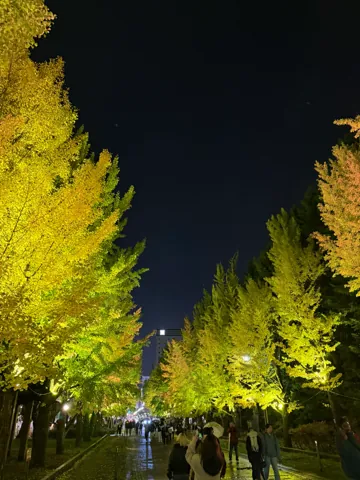
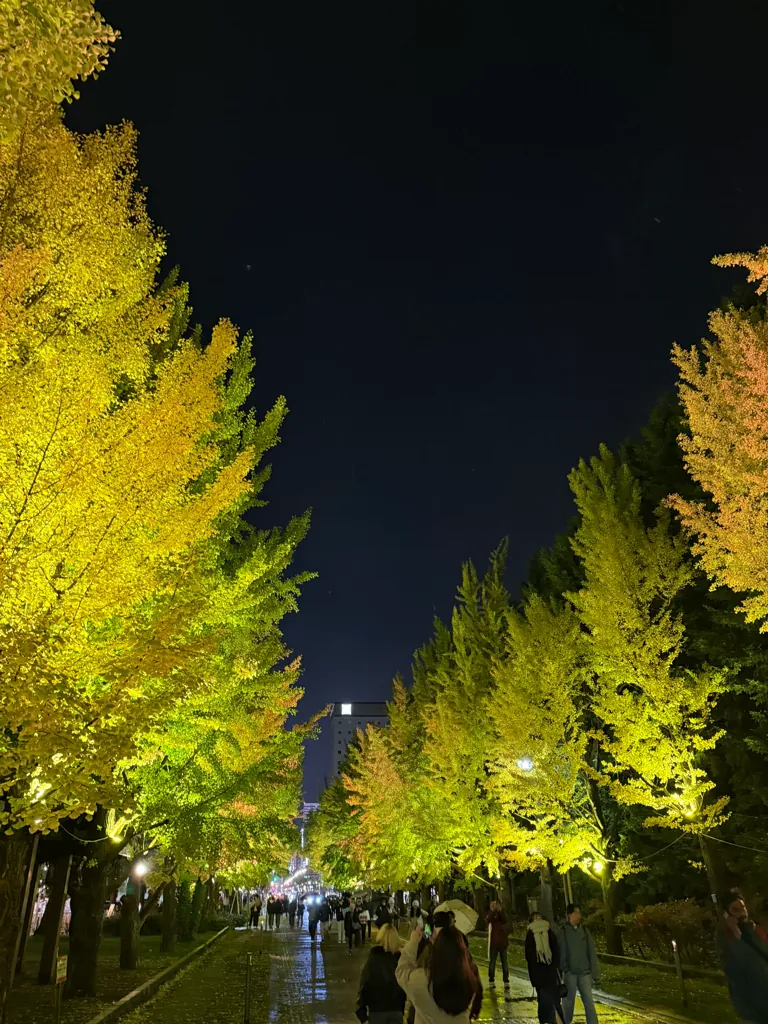
- Odori Park (大通公園): a 1.5 km green strip through downtown that hosts festivals in every season, from lilacs and YOSAKOI Soran to beer gardens and illuminations22.
- Jozankei Onsen (定山渓温泉): a hot-spring resort inside Shikotsu-Toya National Park, about an hour from Sapporo Station232425.
- Night views from Mt. Moiwa (藻岩山): the 531 m summit has three times been named one of Japan's "New Three Great Night Views" (日本新三大夜景)26.
Sights & activities
Nature & scenery
- Mt. Moiwa (藻岩山): a 531 m peak reached by ropeway to the mid-slope station and then a two-minute mini cable car ride to the summit82. Its night view has three times been named one of Japan's "New Three Great Night Views"26.
- Odori Park (大通公園): about 1.5 km long and 7.8 ha, with about 4,700 trees of 90 species. It holds major events all year22.
- Moerenuma Park (モエレ沼公園, Higashi Ward): a 188.8 ha park designed by Isamu Noguchi as "one sculpture" on a former waste-disposal site. Built from 1982 and fully opened in 2005. Features include the Glass Pyramid "HIDAMARI", which opened in 2003 and is cooled with stored snow, as well as Mt. Moere, the Sea Fountain and Moere Beach83.
- Hokkaido University Botanic Garden (北大植物園): opened in 1886. 13.3 ha with about 4,000 plant kinds, and museum buildings designated Important Cultural Properties in 198981.
- Takino Suzuran Hillside National Government Park (Minami Ward): flower fields, a forest area, and winter tube-sledding. Ashiribetsu Falls is here47.
- Hitsujigaoka Observation Hill (羊ヶ丘展望台, Toyohira Ward): pastures and the William S. Clark statue, erected in 197684.
- Sapporo Maruyama Zoo (札幌市円山動物園, Chuo Ward): opened on 5 May 1951, the Hokkaido zoo with the longest history. About 22 ha and about 140 species, including polar bears, Asian elephants, orangutans and snow leopards85.
Onsen
- Jozankei Onsen (Minami Ward): sodium-chloride springs that yield about 8,600 liters per minute. Unusually, every inn has its own spring source. The historic "Shika no Yu" (deer spring) takes its name from wounded deer said to have healed there23. Nearby are the smaller Koganeyu and Toyohira-kyō springs23.
Museums & heritage
- Sapporo Clock Tower (札幌市時計台): built in 1878 as the Sapporo Agricultural College drill hall and designated an Important Cultural Property on 17 June 197019. Open 8:45–17:10; adults ¥350; free for residents on the 16th of each month. Note that it has no air conditioning86.
- Former Hokkaido Government Office "Red Brick" (北海道庁旧本庁舎): a Neo-Baroque building of 1888, reopened on 25 July 202520.
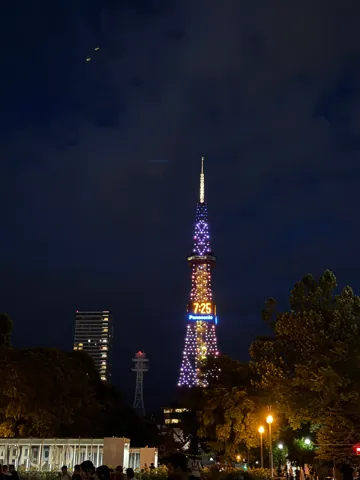
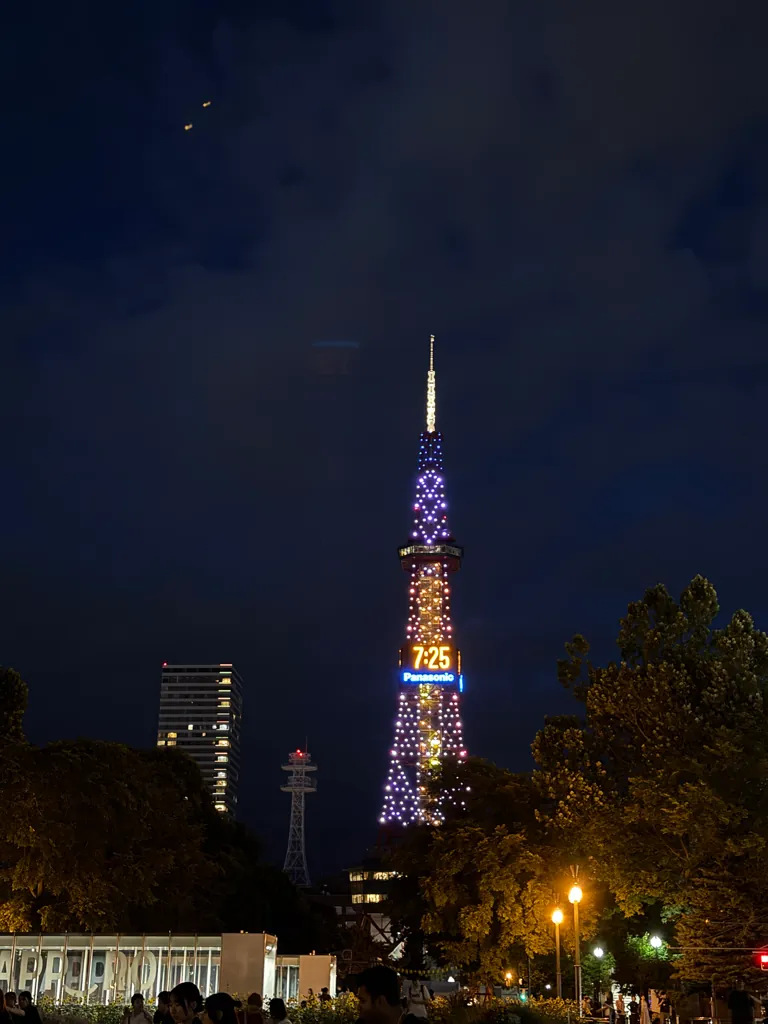
- Sapporo TV Tower (さっぽろテレビ塔): opened 24 August 1957, with an observation deck about 90 m above ground. It has stood 144 m tall since part of the NHK antenna was removed in 2005; older guides give the original 147.2 m89. It was registered as a Tangible Cultural Property on 13 March 2025, with its height listed as 144 m44.
- Okurayama Ski Jump Stadium (大倉山ジャンプ競技場): first built in 1931–32 with funding from Baron Ōkura Kishichirō. A lift takes visitors to a 307 m viewpoint over the Ishikari Plain. The Sapporo Olympic Museum opened in 2000 as a winter-sports museum and took its present name in 201721.
- Historical Village of Hokkaido (北海道開拓の村): an open-air museum opened in April 1983 on a 54.2 ha site70 in Nopporo Forest Park, with 52 relocated or reconstructed buildings from the Meiji to early Shōwa periods90.
- Kotoni Tondenhei house (琴似屯田兵村兵屋跡, Nishi Ward): an 1874 farmer-soldier house. Free entry, 9:00–16:00, 3 minutes' walk from Kotoni subway station91.
Outdoor & seasonal activities
- Winter sports: the 1972 Olympic venues were grouped in three areas: Makomanai, Okurayama and Miyanomori, and Teine92. Japan's "Hinomaru Flying Squad" (日の丸飛行隊) swept the medals in the normal-hill (70 m) jump at Miyanomori on 6 February 197221.
- Spectator sports: the Sapporo Dome (札幌ドーム, Toyohira Ward), known since 1 August 2024 by the naming-rights name Daiwa House Premist Dome93, opened in 2001 and is the home of J.League club Hokkaido Consadole Sapporo. Its movable natural-grass "Hovering Soccer Stage" lets it switch between football, baseball and concerts94.
- Snow Festival, White Illumination and Autumn Fest (see the festival table above).
Food experiences
Roadside stations (Michi-no-Eki)
No Michi-no-Eki is located in Sapporo. The official list of Hokkaido roadside stations has none inside the city96. The nearest ones are just over the city line:
- Hokuō no Kaze Michi-no-Eki Tōbetsu (北欧の風 道の駅とうべつ), Tobetsu, National Route 337. It bills itself as the Michi-no-Eki closest to central Sapporo97.
- Café Terzina, overseen by chef Horikawa Hideki, the originator of "Hokkaido Italian" cooking.
- JA farm stand "Hana Pocket", selling local vegetables, rice and cut flowers, and fresh-pounded mochi and dango made from Tōbetsu rice.
- A 24-hour convenience store (since 2023).
- Closed Wednesdays from December to February and 30 December–3 January; the farm stand closes in winter. EV charger.
- Registered on 21 April 201797.
- Ishikari "Airōdo Atsuta" (石狩「あいろーど厚田」), Ishikari, National Route 231 on the Sea of Japan coast.
- Soba made with Atsuta buckwheat, nishin soba (herring soba), and herring sashimi rice bowls.
- Shako- and hatahata-shaped monaka sweets.
- About 200 parking spaces, EV charging, 24-hour toilets, and a campground with a zipline.
- All tenants close for winter, from early November to late March. Registered on 17 November 201798.
- Hana Road Eniwa (花ロードえにわ), Eniwa, National Route 36 toward New Chitose Airport. 402 car spaces; registered in 200599.
- Salmon Park Chitose (サーモンパーク千歳), Chitose, National Route 337, open all year100.
- Bōyō Nakayama (望羊中山), Kimobetsu, National Route 230 at Nakayama Pass, the next stop after Jozankei on the way to Lake Toya. Known for "age-imo" (deep-fried potato dumplings), soft-serve and fresh "pass soba"101.
- Other stations in the surrounding area: Shinshinotsu (Shinshinotsu), Maoi-no-Oka Kōen (Naganuma), Akaigawa (Akaigawa) and Mikasa (Mikasa)96.
Getting there & around
- By air
- New Chitose Airport is in Chitose. JR Rapid "Airport" trains reach Sapporo Station in 37 minutes at fastest, and the Special Rapid in 33 minutes. The fare is ¥1,230, with 163 trains a day102.
- Okadama Airport (丘珠空港, Higashi Ward), in the city itself, is served by three airlines (as of March 2026; check current schedules)103:
- HAC: Hakodate, Kushiro, Memanbetsu, Okushiri, Rishiri and Misawa.
- FDA: Shizuoka, Matsumoto and Nagoya-Komaki, partly seasonal.
- Toki Air: Niigata, Nagoya-Chubu and Kobe.
- By rail: Sapporo Station is the hub for JR Hokkaido's lines to Otaru, Asahikawa, New Chitose Airport and Tomakomai, and toward Hakodate. The Hokkaido Shinkansen extension to Sapporo is now expected around the end of FY203846.
- Subway: three lines (Namboku 14.3 km, Tōzai 20.1 km, Tōhō 13.6 km) with 49 stations over 48.0 km in total. It was the world's first full-scale use of rubber-tyred trains on a central guide rail38. The streetcar line became a loop on 20 December 2015104.
- Buses: the reservation-only Jōtetsu "Kappa Liner" (かっぱライナー号) runs from Sapporo Station (stop 27) to Jozankei in about 60 minutes. The fare is ¥1,700, or ¥1,460 with online prepayment25. The alternative is the subway to Makomanai and then a local bus, about 70 minutes in total. Some bus stops have moved during redevelopment of the Sapporo Station bus terminal (the former ESTA building)105.
- By road: the Sasson Expressway (E5A, toward Otaru) meets the Hokkaido Expressway (E5, toward Asahikawa and toward Chitose and Tomakomai) at Sapporo JCT106. Main national routes out of the city include Route 36 (south to Eniwa and Chitose), Route 230 (southwest through Jozankei to Nakayama Pass) and Route 231 (north along the coast to Ishikari)9910198.
Practical tips
- When to go:
- February is Snow Festival month. Hotels fill early, and the 2027 festival is planned for 4–11 February59.
- Late May brings lilacs60, and June has YOSAKOI61 and the shrine festival62.
- Summer means the beer gardens65; mid-September to early October is Autumn Fest66.
- May is cherry-blossom time at Hokkaido Jingu68.
- Winter: expect an average of 479 cm of snowfall a season, and daily lows around −6 °C in January49. Wear boots with grip. The subway and the underground walkways around Sapporo and Odori stations make it possible to move around downtown without going outside. Drive in winter only with winter tires, and allow extra time.
- Brown bears: in FY2025, 363 bear sightings and signs were reported, more than three times the previous year45. Check the city's bear-sighting page before hiking on Mt. Moiwa, Maruyama, in Minami Ward or other forest edges, and carry a bell107.
- Tourist information: the renovated Red Brick office has information on every Hokkaido municipality88. The Minapa space in the subway's Sapporo Station gives a free introduction to Ainu culture79.
- Admission changes: the Sapporo Beer Museum has charged admission since 1 July 202656, and the Clock Tower now costs ¥35086. Some older guides still list lower or free prices.
- Disasters: Sapporo experienced shindo 6-lower shaking and an island-wide blackout in 201840. Know your hotel's evacuation route and keep a charged power bank.
Photos
-
 Oct 2025
 -
 Sept 2024
 -
 Oct 2024
 -
 Oct 2024
 -
 Jul 2025
 -
 Aug 2025
 -
 Oct 2025
 -
 Aug 2026
More about Sapporo
At a glance
| Field | Details |
|---|---|
| Type | City. Ordinance-designated city (政令指定都市) since 1 April 1972, divided into 10 wards (区)1. Seat of the Hokkaido Government and of the Ishikari Subprefecture office2 |
| Subprefecture | Ishikari (石狩振興局) |
| District | None (city) |
| Population | 1,973,395 (2020 Census), up 21,039 (1.1%) from 2015, the smallest five-year gain since the war3. Resident register: 1,953,468 people in 1,129,768 households as of 1 September 2026, including 25,580 foreign residents4. The city's census-based estimate for the same date is 1,961,8905. Fourth-largest municipality in Japan, after Yokohama, Osaka and Nagoya6, and 37.8% of Hokkaido's population in 20203 |
| Area | 1,121.26 km²6. Minami Ward alone covers 657.48 km², about 59% of the city3 |
| Density | About 1,760/km² (2020 Census) and about 1,742/km² (September 2026 register). The densely inhabited district covers 239.69 km², or 21.4% of the city's area3 |
| Municipal history | Kaitakushi (開拓使, Hokkaido Development Commission) began building its headquarters here in 1869. Became Sapporo Ward (札幌区) in 1899 and a city on 1 August 1922. Merged with Maruyama Town (1941), Shiroishi Village (1950), Kotoni Town, Sapporo Village and Shinoro Village (1955), Toyohira Town (1961) and Teine Town (1967)76. Designated city with 7 wards from 1972; Atsubetsu and Teine wards split off in 1989 and Kiyota Ward in 19971 |
| Neighboring municipalities | Ishikari Subprefecture: Ishikari, Tobetsu, Ebetsu, Kitahiroshima, Eniwa, Chitose. Shiribeshi: Otaru, Akaigawa, Kimobetsu, Kyogoku. Iburi: Date2 |
| Symbols | Tree: lilac (ライラック). Flower: lily of the valley (スズラン). Bird: common cuckoo (カッコウ). All three were chosen by a citizens' vote in 19608 |
| Mascot | No single city-wide yuru-chara was found. Wards and districts have their own, for example Chuo Ward's "Chū-walk-n" (中ウォークん)9 |
| Official website | https://www.city.sapporo.jp/ |
Name origin
The name comes from Ainu. The city gives two competing etymologies68:
- Sat-poro-pet (サッ・ポロ・ペッ): "dry, large river" (sat = dry, poro = large, pet = river). This is the more widely cited reading: the Hokkaido Development Bureau calls it the accepted theory7, and Hokkaido's official Ainu place-name list, as reported by Kyodo, gives it and takes it to describe the Toyohira River (豊平川), which runs through the city27.
- Sari-poro-pet (サリ・ポロ・ペッ): "a river with a large reedy plain" (sari = reed marsh)6.
Many district names inside the city are also Ainu in origin (see Ainu heritage below). The main exception is Shiroishi (白石), which was named after the Miyagi castle town that its first settlers came from28.
History
- Prehistory: the Sapporo campus of Hokkaido University and its Botanic Garden are registered archaeological sites (K39, K435 and C44). The university has run its own excavation unit since 198029. Excavations show the ground has been used since the middle Jōmon period, about 5,000 years ago, as fishing grounds, campsites, settlements and burial grounds30.
- Ainu era: before Japanese settlement, the spring-fed lowland north of the Toyohira River fan was crossed by salmon-rich streams such as the Sakushukotoni (サクシュコトニ川), and Ainu kotan (villages) stood along them31. A Tsugaru-domain report on Shakushain's War (1669) is often cited as the earliest written mention of "Sapporo"2.
- Late Edo period (1866): Ōtomo Kametarō (大友亀太郎), a Hakodate magistrate official, began an irrigation ditch of about 4 km for a shogunate model farm (御手作場) in present-day Higashi Ward. The "Ōtomo-bori" (大友堀) later became the Sōsei River (創成川) and the east-west dividing line of the city grid18. In the same year the monk Miizumi Jōzan (美泉定山) began developing the hot springs that now bear his name23.
- Kaitakushi capital (1869–1882): in 1869 the Meiji government created the Kaitakushi, and its official (開拓判官) Shima Yoshitake (島義勇) began building its headquarters (札幌本府). Shima was recalled in February 1870, but his plan shaped the city326. His successor Iwamura Michitoshi (岩村通俊) used the broad firebreak that is now Odori Park as the base line. Government offices went to the north of it and shops and houses to the south, in square blocks 60 ken (about 109 m) on a side18.
- Early settlers: in November 1871, retainers of the Katakura family, lords of Shiroishi Castle in the Sendai domain (now Miyagi Prefecture), founded Shiroishi Village28. In 1875 the first tondenhei (屯田兵, farmer-soldiers) arrived at Kotoni. With the 1876 settlement at neighboring Hassamu, the Kotoni farmer-soldier village took in 240 households from 20 prefectures, including Miyagi633.
- Institutions and industry: the Sapporo Agricultural College, forerunner of Hokkaido University, opened in 1876, with the American educator William S. Clark in charge of teaching. Clark left Sapporo in 187734. The Kaitakushi Brewery opened on 23 September 1876, on the site of today's Sapporo Factory11. Around 1880, Sapporo Village farmers succeeded in growing Western onions under the guidance of the foreign adviser William Brooks. This led to the "Sapporo-ki" (札幌黄) variety, which was later exported to Russia1835. The Naebo district east of the Sōsei River grew into an industrial quarter of breweries and factories36.
- Ward to city (1899–1967): Sapporo became a ward in 1899 and a city in 1922. Five rounds of mergers between 1941 and 1967 brought it close to its present size7.
- Post-war boom: the Snow Festival began in 1950 with six snow statues built by local students37. The population passed 1 million in 19706. The first subway line opened on 16 December 197138. In 1972 the city hosted the Winter Olympics, with the large-hill jump at Okurayama on 11 February2139, and it became a designated city on 1 April1.
- Ward reorganization: Atsubetsu and Teine wards were created in 1989 and Kiyota Ward in 19971.
- 2018 Hokkaido Eastern Iburi Earthquake (6 September): Higashi Ward recorded shindo 6-lower. In Sapporo 2 people died; the initial count was 95 homes destroyed and 684 half-destroyed, revised to 101 and 818 by September 2020. Liquefaction badly damaged the landfill housing estate of Satozuka in Kiyota Ward. A total blackout across Hokkaido, the first area-wide blackout in Japan, left up to about 2.95 million households without power4041.
- Recent years: the city's population has been falling since 202142. In October 2023 the city and the JOC dropped the bid for the 2030 Winter Olympics43. The Red Brick office reopened after renovation on 25 July 202520, and the TV Tower was registered as a national Tangible Cultural Property in March 202544. Brown-bear sightings reached a record 363 in FY202545. The Hokkaido Shinkansen extension to Sapporo is now expected around the end of FY2038, about eight years later than planned46. Hokkaido University marks its 150th anniversary in 202634.
Geography & climate
Sapporo lies at the southwestern edge of the Ishikari Plain. It measures 42.30 km east to west and 45.40 km north to south, and its elevation ranges from 1.9 m to 1,487.9 m6. The city center sits on the alluvial fan of the Toyohira River. Groundwater from the fan resurfaces in the lowland to the north as a network of spring-fed streams (Sakushukotoni, Kotoni and others), which drew both Ainu settlement and early Japanese industry3136.
The city splits into two very different halves:
- The urban north and east. Most of the population lives here. Shiroishi and Atsubetsu wards are about 70% densely inhabited district3.
- The mountainous south and west. Minami Ward covers 58.6% of Sapporo's area, but only 3.0% of it is densely inhabited; the rest is mostly forest3. This half includes the Jozankei area, which lies in Shikotsu-Toya National Park (支笏洞爺国立公園; designated 1949, 99,473 ha)24. It also holds Takino Suzuran Hillside National Government Park (国営滝野すずらん丘陵公園), the only national government park in Hokkaido. That park covers about 400 ha and includes Ashiribetsu Falls (アシリベツの滝), one of Japan's "100 Best Waterfalls"47. Sapporo soft stone (札幌軟石), a welded tuff from a Shikotsu eruption about 40,000 years ago, is still quarried in Minami Ward, and the old quarry at Ishiyama is now a park (Ishiyama Ryokuchi, 石山緑地)48.
Climate. The city describes its climate as Sea of Japan type: cool summers, and heavy snow with a peak depth of about 1 m and about 5 m of snowfall a season6. The JMA 1991–2020 normals for the Sapporo station are49:
| Measure | Value |
|---|---|
| Annual mean temperature | 9.2 °C |
| January mean | −3.2 °C (mean daily low −6.4 °C) |
| August mean | 22.3 °C (mean daily high 26.4 °C) |
| Annual precipitation | 1,146.1 mm |
| Annual snowfall | 479 cm |
| Mean annual maximum snow depth | 97 cm |
Records are 36.3 °C (23 August 2023), −28.5 °C (1 February 1929), and a snow depth of 169 cm (13 February 1939)50.
Economy & industry
- Structure: Sapporo's economy is dominated by services. Wholesale and retail alone account for 23.5% of business establishments (2021). Wholesale and retail, medical and welfare, and accommodation and food service together make up nearly half of all establishments and workers42. Nominal city GDP was about ¥7.61 trillion in FY20192. Per-capita output was ¥3.86 million, below the national average of ¥4.59 million and the lowest of the designated cities compared42.
- Trade balance: in 2015 commerce and services earned a surplus with the rest of Japan, but manufacturing ran a large deficit, leaving an overall deficit of ¥396.9 billion42. The city's industrial strategy targets tourism and food, and IT and content companies have clustered here422.
- Agriculture: farming is small-scale and serves nearby consumers. Kita Ward grows vegetables, wheat and rice and has dairy farms. Minami Ward grows orchard fruit (apples, cherries, plums, pears, grapes), strawberries, rice and flowers, and raises pigs. Teine Ward is known for pumpkins, watermelons and melons51. The heirloom Sapporo-ki onion covers only about 3% of the city's roughly 300 ha of onion fields35.
- Tourism: FY2025 was a record year, with 16.047 million visitors (+5.2%). Foreign overnight guests numbered 2.488 million (+14.1%), led by South Korea (692,711), Taiwan (468,692) and China (409,682)5253. Total tourism spending was a record ¥761.7 billion53.
- Demographics: in the 2020 Census, people aged 65 and over made up 27.8% of the population, up 2.9 points in five years, and the average age was 47.73. The population has been declining since 2021, and young people leaving Hokkaido remains a concern42. By contrast, the number of foreign residents is rising: 13,872 in the 2020 Census and 25,580 on the register by September 202634.
- Notable local brands: Ishiya (石屋製菓, maker of Shiroi Koibito)54, Nippon Seishu (日本清酒, maker of Chitosetsuru sake)55, and Sapporo Breweries, whose roots are in the Kaitakushi brewery13.
Local specialties
| Specialty | Category | Details & where to get it |
|---|---|---|
| Miso ramen (味噌ラーメン) | Signature dish | Aji no Sanpei (味の三平) is credited with developing miso ramen in the 1950s and with popularizing the curly noodles and bean-sprout topping15. Ganso Sapporo Ramen Yokocho (元祖さっぽろラーメン横丁), a lane of about 17 ramen shops at Minami 5-jō Nishi 3-chōme in Susukino, dates back to a ramen street founded in 195116 |
| Soup curry (スープカレー) | Signature dish | A thin, spiced curry broth with large pieces of chicken and vegetables. Ajanta (アジャンタ), which began serving its curry in 1971, is credited with the prototype, a medicinal "yakuzen curry" that uses about 30 spices and 15 herbal ingredients17 |
| Jingisukan (ジンギスカン) | Local dish | Mutton and lamb grilled on a domed pan, and one of the "Hokkaido Heritage" items. The Sapporo Beer Garden (サッポロビール園) has served it with draft beer since 1 July 1966, in an 1890 red-brick former sugar factory14 |
| Sapporo beer | Beer | The Kaitakushi Brewery opened in 1876. BREWERY 1876 in the Sapporo Factory Brick Building (中央区北2条東4丁目) serves beer brewed on site13. The Sapporo Beer Museum (Higashi Ward) started charging admission on 1 July 202656 |
| Chitosetsuru (千歳鶴) sake | Sake | Sapporo's only sake brewery, founded in 1872. Its Sake Museum (中央区南3条東5丁目, 10:00–18:00) sells museum-only unpasteurized junmai ginjō and sake-lees soft-serve55 |
| Sapporo-ki onion (札幌黄) | Heirloom crop | Descended from "Yellow Globe Danvers" seed. It is thick-fleshed and very sweet when cooked. Listed on Slow Food's Ark of Taste (味の箱舟) in 2007. It is rarely sold in ordinary markets and is best used in stews and soup curry35 |
| Seafood donburi and crab | Seafood | Nijo Market (二条市場, 中央区南3条東1–2丁目, about 7:00–17:00): about 25 fishmongers selling crab, salmon and roe, plus donburi restaurants57 |
| Orchard fruit | Produce | Apples, cherries, plums, pears and grapes from Minami Ward, and watermelon and melon from Teine Ward51 |
| Shiroi Koibito (白い恋人) | Confectionery | Langue-de-chat cookies with white chocolate, made by Ishiya since December 1976. The factory and theme park Shiroi Koibito Park (白い恋人パーク) is at Miyanosawa, Nishi Ward54 |
| Sapporo soft stone (札幌軟石) | Building stone and craft goods | A fire-resistant tuff used in Sapporo buildings since early Meiji. Old stone warehouses now house cafés, and small decorative goods are made from the stone48 |
| Furusato nozei gifts | Hometown tax | More than 2,600 gift options, including large peeled shrimp, thick-cut black cod from the Central Wholesale Market, pie manjū and cheesecake, as well as travel and experience vouchers58 |
Culture & festivals
| Event | When | Highlights |
|---|---|---|
| Sapporo Snow Festival (さっぽろ雪まつり) | Early February (2026: 4–11 Feb; 2027: 4–11 Feb planned) | Sites at Odori Park, Tsudome and Susukino (ice sculptures)59. Began in 1950 with six statues built by students. The Self-Defense Forces have built giant statues since 1955, and an international sculpture contest has run since 197437. 2.539 million visitors in 202610 |
| Sapporo Lilac Festival (さっぽろライラックまつり) | Late May (2026: 20–31 May) | About 400 lilacs at Odori West 5–7. Kawashimo Park in Shiroishi Ward has 1,700 trees of 200 varieties. The 2026 festival was the 68th60 |
| YOSAKOI Soran Festival (YOSAKOIソーラン祭り) | Early to mid June (2026: 10–14 June) | 275 teams and about 27,000 dancers at 17 venues, with 2.2857 million spectators in 202661 |
| Hokkaido Jingu Grand Festival (Sapporo Matsuri, 北海道神宮例祭) | 14–16 June | On 16 June about 1,000 people parade through the city with 4 portable shrines and 9 floats. Food stalls at the shrine and Nakajima Park62 |
| Pacific Music Festival (PMF) | July (2026: 7–27 July) | International academy and festival for young orchestral musicians63, founded by Leonard Bernstein in 199064 |
| Sapporo Summer Festival (さっぽろ夏まつり) | Late July to mid August | 2026 dates: Odori Beer Garden, billed as Japan's largest (23 July–18 August); Susukino Festival (6–8 August); Hokkai Bon Odori dance (13–16 August)65 |
| Sapporo Autumn Fest (さっぽろオータムフェスト) | September to early October (2026: 11 Sept–3 Oct) | Food festival across seven blocks of Odori Park, including ramen, local specialties, sake, wine and chef pop-ups66 |
| Sapporo White Illumination (さっぽろホワイトイルミネーション) | Late November to March | 45th edition in 2025–26: 21 November to 25 December at Odori, and later at other sites (Ekimae-dōri until 11 February, the Kita 3-jō plaza until 14 March)67 |
| Munich Christmas Market in Sapporo (ミュンヘン・クリスマス市) | Late November to 25 December | 24th edition in 2025 at Odori West 2, with 32 stalls selling Glühwein, German food and ornaments. Named for the Munich sister-city tie67 |
Shrines and traditions. Hokkaido Jingu (北海道神宮) in Maruyama is Hokkaido's leading shrine. Its three "pioneer deities" were enshrined in 1869, and it was renamed from Sapporo Shrine in 1964 when Emperor Meiji was added. Its 18 ha grounds are a noted cherry-blossom spot in May68. The Okadama lion dance (丘珠獅子舞), first offered in thanks for onion harvests, was Sapporo's first intangible cultural property18.
Museums. Useful museums for understanding the city:
- Sapporo Beer Museum: beer history56.
- Naebo factory and museum cluster: a Hokkaido Heritage site that includes the Hokkaido Railway Technical Museum and the Chitosetsuru Sake Museum36.
- Hokkaido Museum (北海道博物館): Hokkaido-wide history and Ainu culture69.
- Historical Village of Hokkaido (北海道開拓の村): relocated pioneer buildings70.
- Sapporo Olympic Museum at Okurayama21.
- Sapporo Village Local Museum (札幌村郷土記念館): Ōtomo Kametarō and the onion story18.
Ainu heritage
About eight in ten of Hokkaido's municipality names come from Ainu71. Many Sapporo district names do too. The original Kotoni (コトニ, from kot-ne-i, "hollow place") referred to the spring-fed hollow where Hokkaido University and the Botanic Garden now stand. Settlers later moved the name west to today's Kotoni31. A local place-name guide gives further Ainu readings: Toyohira (tuy-pira, "crumbling cliff"), Makomanai (mak-oma-nay, "stream lying at the back"), Teine (teyne-i, "wet place"), Naebo (nay-po, "little stream") and Moere-numa (moyre-to, "still lake"). The same guide notes that "Moiwa" (mo-iwa, "small mountain") originally referred to today's Maruyama72.
Places to learn about Ainu culture:
- Sapporo Pirka Kotan (サッポロピㇼカコタン, Sapporo Ainu Culture Promotion Center): 小金湯27, Minami Ward, next to Koganeyu Onsen73.
- Opened in December 200374 and passed 1 million cumulative visitors in November 202575.
- About 300 items, many of which visitors may handle, plus a reconstructed kotan with a poro cise (large house) outdoors76.
- Embroidery and woodcarving workshops and costume photos are available. Exhibits are open 9:00–17:00. Closed Mondays, national holidays, the last Tuesday of each month and 29 December–3 January. Free parking for 40 cars77.
- Hokkaido Ainu Center (北海道立アイヌ総合センター): 7th floor of the Kaderu 2·7 building, Kita 2-jō Nishi 7-chōme. Exhibition room and library, free, 9:00–17:00, closed Sundays and holidays78.
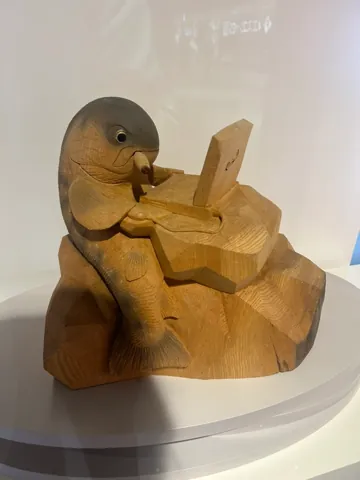
- Minapa (ミナパ): a free Ainu culture space inside the Namboku Line's Sapporo Station, between the north and south ticket gates. Opened 21 March 2019; open 9:00–22:00. It has a 2.5 m Blakiston's fish owl sculpture carved with Ainu patterns and CG table theaters showing 18th-century kotan life, and it shows the time and weather forecast in Ainu79.
- Hokkaido Museum (Atsubetsu Ward): opened in April 2015, formed by merging the Historical Museum of Hokkaido and the prefectural Ainu Culture Research Center. "The World of Ainu Culture" is one of its five permanent themes6980.
- Hokkaido University Botanic Garden: has a Northern Peoples materials room81.
Wards
Population and area figures are from the 2020 Census3.
| Ward | 2020 pop. | Area (km²) | Character |
|---|---|---|---|
| Chuo (中央区) | 248,680 | 46.42 | Downtown: Odori, Susukino, Clock Tower, Mt. Moiwa, Maruyama and Hokkaido Jingu, Okurayama. Grew by 11,053 people from 2015 to 2020, the only ward to gain more than 10,000 |
| Kita (北区) | 289,323 | 63.57 | Most populous ward: Hokkaido University, the north side of Sapporo Station, farmland in the far north |
| Higashi (東区) | 265,379 | 56.97 | Moerenuma Park, Sapporo Beer Garden, Okadama Airport, Sapporo-ki onion country35 |
| Shiroishi (白石区) | 211,835 | 34.47 | Named after Shiroishi in Miyagi28. Kawashimo Park lilac garden60 |
| Atsubetsu (厚別区) | 125,083 | 24.38 | Shin-Sapporo sub-center, Hokkaido Museum, Historical Village69 |
| Toyohira (豊平区) | 225,298 | 46.23 | Hitsujigaoka Observation Hill84. Residential areas along the Toyohira River |
| Kiyota (清田区) | 112,355 | 59.87 | Split from Toyohira in 19971. Site of the 2018 liquefaction at Satozuka40 |
| Minami (南区) | 135,777 | 657.48 | Jozankei, Makomanai, Takino, Pirka Kotan, soft-stone quarrying and the Ishiyama quarry park48. Population fell 3.8% from 2015 to 2020 |
| Nishi (西区) | 217,040 | 75.10 | Kotoni tondenhei heritage91, Shiroi Koibito Park54 |
| Teine (手稲区) | 142,625 | 56.77 | Split from Nishi in 19891. One of the three 1972 Olympic venue areas92 |
Sister & friendship cities
- Portland, Oregon, USA: sister city, November 1959 (17 November). This was Sapporo's first sister-city tie and the first for any Hokkaido city.
- Munich, Germany: 1972 (28 August).
- Shenyang, China: friendship city, 1980 (18 November).
- Novosibirsk, Russia: 1990 (13 June).
- Daejeon, South Korea: 2010 (22 October).
- Kaohsiung, Taiwan: memorandum on tourism exchange, 18 December 2017, renewed 16 March 2023110.
Domestic (exchange agreements)110
- Hamamatsu, Shizuoka: music-culture city exchange declaration, 14 May 2009.
- Matsumoto, Nagano: tourism and culture exchange agreement, 6 September 2010.
- Kagoshima, Kagoshima: tourism and culture exchange agreement, 16 November 2013.
- Shiroishi Ward also has a friendship tie with Shiroishi City, Miyagi2.
Notable people
- Ōtomo Kametarō (大友亀太郎): shogunate official whose 1866 canal became the Sōsei River and the axis of the city grid18.
- Miizumi Jōzan (美泉定山): monk from Okayama who founded Jozankei Onsen in 186623.
- Shima Yoshitake (島義勇, 1822–1874): Saga samurai and Kaitakushi official (開拓判官) who planned the Sapporo headquarters in 1869–7032.
- William S. Clark: American educator who headed teaching at the Sapporo Agricultural College when it opened in 1876, and left Sapporo in 187734.
- Miyuki Nakajima (中島みゆき, b. 1952): singer-songwriter born in Sapporo111.
Sources
Numbers in the text link to these sources. Figures as of 23 September 2026
- 区(行政区)の概要 — 札幌市 JA accessed 2026-09-23
- 札幌市 — Wikipedia JA accessed 2026-09-23
- 令和2年「国勢調査」人口等基本集計 結果の概要(令和3年12月) — 札幌市まちづくり政策局政策企画部企画課 JA accessed 2026-09-23
- 札幌市の人口・世帯数(住民基本台帳人口)令和8年各月1日現在 — 札幌市 JA accessed 2026-09-23
- 札幌市の人口・世帯数(推計人口)令和8年各月1日現在 — 札幌市 JA accessed 2026-09-23
- 札幌市のあらまし — 札幌市 JA accessed 2026-09-23
- 札幌市 — 国土交通省 北海道開発局 札幌開発建設部 JA accessed 2026-09-23
- さっぽろのあらまし — 札幌市(キッズページ) JA accessed 2026-09-23
- 中央区マスコットキャラクター「中ウォークん」のへや — 札幌市中央区 JA accessed 2026-09-23
- さっぽろ雪まつり閉幕 253万人来場 コロナ禍以降最多 — 北海道新聞デジタル JA accessed 2026-09-23
- 開拓使麦酒醸造所 | 開拓使麦酒醸造所ものがたり 03章 — サッポロファクトリー JA accessed 2026-09-23
- 開拓使麦酒醸造所 | 開拓使麦酒醸造所ものがたり 00章 — サッポロファクトリー JA accessed 2026-09-23
- 札幌開拓使麦酒醸造所 | 工場見学とミュージアム — サッポロビール JA accessed 2026-09-23
- ビール園の歴史 — サッポロビール園 JA accessed 2026-09-23
- 味の三平 — Wikipedia JA accessed 2026-09-23
- ラーメン横丁について — 元祖さっぽろラーメン横丁公式サイト JA accessed 2026-09-23
- 薬膳カリィ本舗アジャンタ総本家について — 札幌スープカレー アジャンタ総本家 JA accessed 2026-09-23
- 札幌の都市軸となった慶応2年のインフラ「大友堀」―亀太郎の精神と「札幌黄」の隆盛 — 札幌市 JA accessed 2026-09-23
- 旧札幌農学校演武場(時計台) — 札幌市(文化財) JA accessed 2026-09-23
- 北海道庁旧本庁舎(赤れんが庁舎)改修事業ポータルサイト — 北海道 総務部 JA accessed 2026-09-23
- 大倉山の歴史 — 大倉山ジャンプ競技場 JA accessed 2026-09-23
- 大通公園とは — 公益財団法人 札幌市公園緑化協会 JA accessed 2026-09-23
- 定山渓の温泉 — 定山渓観光協会 JA accessed 2026-09-23
- 概要・計画書_支笏洞爺国立公園 — 環境省 JA accessed 2026-09-23
- 定山渓温泉かっぱライナー号 — じょうてつバス JA accessed 2026-09-23
- もいわ山の夜景・絶景 — 札幌もいわ山ロープウェイ JA accessed 2026-09-23
- アイヌ語地名の由来を解説/北海道がリストを発行 — 四国新聞社(共同通信配信) JA accessed 2026-09-23
- 地名の由来 — 札幌市白石区 JA accessed 2026-09-23
- 北海道大学埋蔵文化財調査室 — 北海道大学 JA accessed 2026-09-23
- 夏季企画展示「K39:考古学からみた北大キャンパスの5,000年」 — 北海道大学総合博物館 JA accessed 2026-09-23
- B-2 コトニ — 脱植民地化のためのポータル JA accessed 2026-09-23
- 島 義勇 | 先人アーカイブ — 赤れんが庁舎 展示ガイド(北海道) JA accessed 2026-09-23
- 屯田兵村の姿:琴似 — 北海道屯田倶楽部 JA accessed 2026-09-23
- 北大150年の歩み — 北海道大学創基150周年記念ウェブサイト JA accessed 2026-09-23
- 札幌黄とは — 札幌市東区 JA accessed 2026-09-23
- 札幌苗穂地区の工場・記念館群 | 各地の北海道遺産 — 北海道遺産協議会 JA accessed 2026-09-23
- さっぽろ雪まつりの歴史 — さっぽろ雪まつり実行委員会 JA accessed 2026-09-23
- 地下鉄(高速電車)の概要 — 札幌市交通局 JA accessed 2026-09-23
- 1972年札幌オリンピックのスキージャンプ競技 — Wikipedia JA accessed 2026-09-23
- 2018年(平成30年)北海道胆振東部地震(事例コード201802) — 内閣府(防災担当) JA accessed 2026-09-23
- 北海道胆振東部地震 — 気象庁 札幌管区気象台 JA accessed 2026-09-23
- 札幌市産業振興ビジョン 第2章 札幌市の現状 — 札幌市経済観光局 JA accessed 2026-09-23
- 2030年札幌オリンピック招致を断念 34年以降へ仕切り直し — 日本経済新聞 JA accessed 2026-09-23
- さっぽろテレビ塔 — 文化遺産オンライン(文化庁) JA accessed 2026-09-23
- 札幌のヒグマ出没過去最多 25年度、前年度比3倍超 — 共同通信(琉球新報掲載) JA accessed 2026-09-23
- 北海道新幹線の札幌延伸2038年度末に、大きく遅れる3つのトンネル工事 — 日経クロステック JA accessed 2026-09-23
- 滝野すずらん丘陵公園 — Wikipedia JA accessed 2026-09-23
- 札幌軟石 | 各地の北海道遺産 — 北海道遺産協議会 JA accessed 2026-09-23
- 平年値(年・月ごとの値)札幌 — 気象庁 JA accessed 2026-09-23
- 観測史上1~10位の値 札幌 — 気象庁 JA accessed 2026-09-23
- 札幌農業の概要 — JAさっぽろ JA accessed 2026-09-23
- 観光統計データ — 札幌市 JA accessed 2026-09-23
- 札幌市、観光客数・消費額ともに過去最高 外国人宿泊者数はピーク時の92%まで回復 — 訪日ラボ JA accessed 2026-09-23
- 白い恋人 — Wikipedia JA accessed 2026-09-23
- 千歳鶴酒ミュージアム — HOKKAIDO LOVE!(北海道観光振興機構) JA accessed 2026-09-23
- サッポロビール博物館 — サッポロビール園 JA accessed 2026-09-23
- 二条市場 — HOKKAIDO LOVE!(北海道観光振興機構) JA accessed 2026-09-23
- 北海道札幌市のふるさと納税 お礼の品ランキング — ふるさとチョイス JA accessed 2026-09-23
- 2026さっぽろ雪まつり(第76回)の開催結果と次回会期について — さっぽろ雪まつり実行委員会 JA accessed 2026-09-23
- 2026さっぽろライラックまつり(第68回) — ぐうたび北海道 JA accessed 2026-09-23
- 第35回YOSAKOIソーラン祭り 開催結果 — YOSAKOIソーラン祭り組織委員会 JA accessed 2026-09-23
- 北海道神宮例祭(札幌まつり)開催のお知らせ — ようこそさっぽろ(札幌観光協会) JA accessed 2026-09-23
- 「PMF2026」概要のご案内 — PMF組織委員会 JA accessed 2026-09-23
- Pacific Music Festival — Wikipedia EN accessed 2026-09-23
- 2026さっぽろ夏まつり(第73回) — ぐうたび北海道 JA accessed 2026-09-23
- 2026さっぽろオータムフェスト — ぐうたび北海道 JA accessed 2026-09-23
- 「2025さっぽろホワイトイルミネーション(第45回)」「2025ミュンヘン・クリスマス市 in Sapporo(第24回)」について(定例市長記者会見資料 2025年11月14日) — 札幌市 JA accessed 2026-09-23
- 北海道神宮 | 全国観光資源台帳 — 公益財団法人日本交通公社 JA accessed 2026-09-23
- 北海道博物館について — 北海道博物館 JA accessed 2026-09-23
- 開拓の村とは — 北海道開拓の村 JA accessed 2026-09-23
- アイヌ語の地名 | 道央圏 | アイヌ文化情報検索 — 赤れんが庁舎 展示ガイド(北海道) JA accessed 2026-09-23
- 札幌市内のアイヌ語由来地名 — 蝦夷島紀行 JA accessed 2026-09-23
- 「サッポロピリカコタン」札幌・小金湯温泉隣接のアイヌ文化・歴史が学べるスポット — たびらい JA accessed 2026-09-23
- 札幌市アイヌ文化交流センター — Wikipedia JA accessed 2026-09-23
- アイヌ文化交流センター(サッポロピリカコタン) — 札幌市 JA accessed 2026-09-23
- 札幌市アイヌ文化交流センター(サッポロピㇼカコタン) | 道央圏 | アイヌ文化情報検索 — 赤れんが庁舎 展示ガイド(北海道) JA accessed 2026-09-23
- アイヌ文化交流センター(サッポロピリカコタン) — HOKKAIDO LOVE!(北海道観光振興機構) JA accessed 2026-09-23
- 北海道立アイヌ総合センター — 北海道 環境生活部アイヌ政策推進局アイヌ政策課 JA accessed 2026-09-23
- アイヌ文化を発信する空間「ミナパ」 — 札幌市 JA accessed 2026-09-23
- 北海道博物館 | 道央圏 | アイヌ文化情報検索 — 赤れんが庁舎 展示ガイド(北海道) JA accessed 2026-09-23
- 概要・沿革 — 北海道大学植物園 JA accessed 2026-09-23
- ミニケーブルカー — 札幌もいわ山ロープウェイ JA accessed 2026-09-23
- モエレ沼公園について — モエレ沼公園 JA accessed 2026-09-23
- さっぽろ羊ヶ丘展望台 — Wikipedia JA accessed 2026-09-23
- 円山動物園の紹介 — 札幌市円山動物園 JA accessed 2026-09-23
- 札幌市時計台:入館案内 — 札幌市時計台 JA accessed 2026-09-23
- 赤れんが庁舎(公式サイト) — 北海道庁旧本庁舎(赤れんが庁舎) JA accessed 2026-09-23
- 札幌観光の新名所! 2025年にリニューアルした『赤れんが庁舎』最新見学ガイド — るるぶ&more.(JTBパブリッシング) JA accessed 2026-09-23
- さっぽろテレビ塔 — Wikipedia JA accessed 2026-09-23
- 北海道開拓の村 — HOKKAIDO LOVE!(北海道観光振興機構) JA accessed 2026-09-23
- 琴似屯田兵村兵屋跡 — 札幌市(文化財) JA accessed 2026-09-23
- 1972年札幌オリンピックの会場 — Wikipedia JA accessed 2026-09-23
- 「札幌ドーム」のネーミングライツ契約締結 「札幌ドーム」の愛称が「大和ハウス プレミストドーム」に決定 — 大和ハウス プレミストドーム JA accessed 2026-09-23
- 大和ハウス プレミストドームとは — 大和ハウス プレミストドーム(株式会社札幌ドーム) JA accessed 2026-09-23
- 札幌狸小路商店街を知る — 札幌狸小路商店街 JA accessed 2026-09-23
- 住所等一覧 — 北の道の駅(北海道道の駅連絡会) JA accessed 2026-09-23
- 北欧の風 道の駅とうべつ — 北の道の駅 JA accessed 2026-09-23
- 石狩「あいろーど厚田」 — 北の道の駅 JA accessed 2026-09-23
- 花ロードえにわ — 北の道の駅 JA accessed 2026-09-23
- サーモンパーク千歳 — 北の道の駅 JA accessed 2026-09-23
- 望羊中山 — 北の道の駅 JA accessed 2026-09-23
- 札幌↔新千歳空港間 快速「エアポート」最速37分/特別快速「エアポート」最速33分 — JR北海道 JA accessed 2026-09-23
- 丘珠空港に就航している航空会社 — 札幌市 JA accessed 2026-09-23
- 2015年の重大鉄道ニュース:札幌市電がループ化、運行形態が変更 — 鉄道コム JA accessed 2026-09-23
- 定山渓へのアクセスがより便利になります — ようこそさっぽろ(札幌観光協会) JA accessed 2026-09-23
- 札樽自動車道 — Wikipedia JA accessed 2026-09-23
- 札幌市ヒグマ出没情報 — 札幌市 JA accessed 2026-09-23
- 姉妹都市交流のあらまし — 札幌市国際部 JA accessed 2026-09-23
- 姉妹都市 — 札幌市 JA accessed 2026-09-23
- 交流協定等締結都市 — 札幌市 JA accessed 2026-09-23
- 中島みゆき — Wikipedia JA accessed 2026-09-23