Town Soya Subprefecture
Toyotomi 豊富町
とよとみちょう
Toyotomi calls itself the town of "dairy, onsen and wetland" (酪農・温泉・湿原のまち), and it covers part of the Sarobetsu Plain, whose raised bog is the largest in Japan.12 Toyotomi Onsen is Japan's northernmost hot-spring village, and its oil-bearing water draws people with psoriasis and atopic dermatitis from all over Japan.34
- Population (2020 Census)
- 3,974
- Area
- 520.69 km²
- District
- Teshio District (天塩郡)
- Official website
- www.town.toyotomi.hokkaido.jp
Known for
- Toyotomi Onsen (豊富温泉). It was found in 1926 while drilling for oil. Its yellowish, oil-scented water is called the "miracle water" (奇跡の湯) for skin conditions.153 The town says it is the only oil-bearing hot spring in Japan and one of two in the world.4 It turned 100 in May 2026.17
- The Sarobetsu Wetland. About 6,700 ha in all, with the largest area of raised bog in Japan. It is part of a national park, and 2,560 ha are a Ramsar site.2
- Dairy. About 11,100 dairy cattle in FY2024.5 Local milk is sold as Hokkaido Toyotomi (Sarobetsu) Milk (北海道豊富(サロベツ)牛乳) at Seicomart stores.1819
- The Large-Scale Grassland Pasture (大規模草地牧場). About 1,500 ha of summer grazing for some 1,300 young dairy cattle.1820
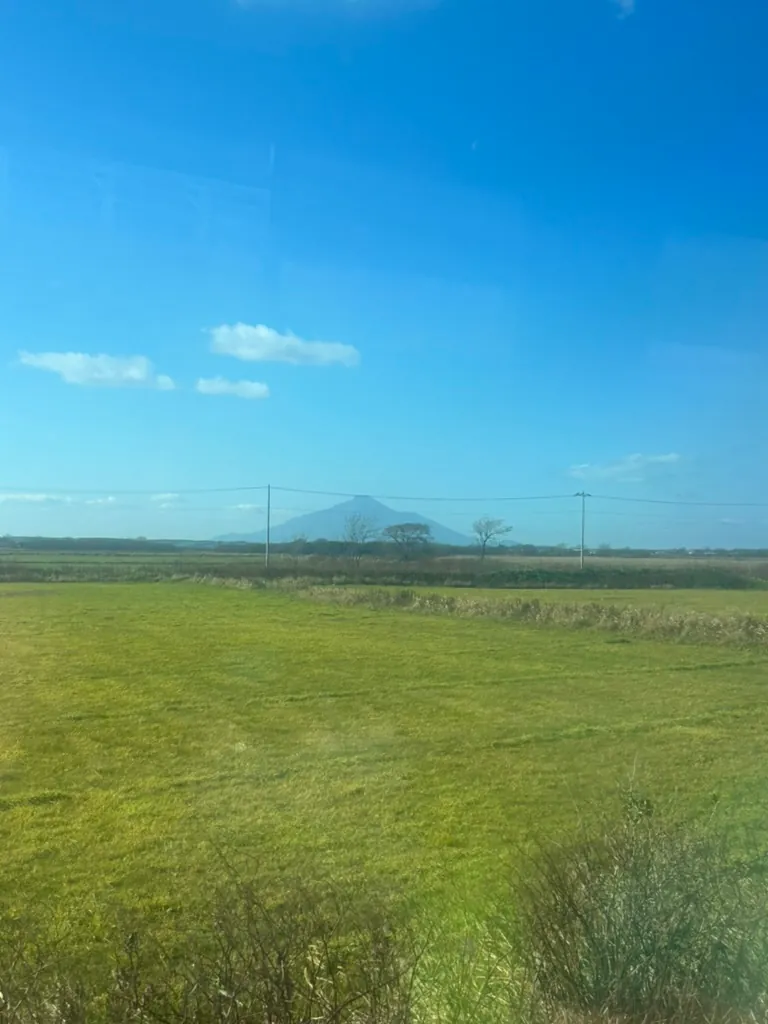
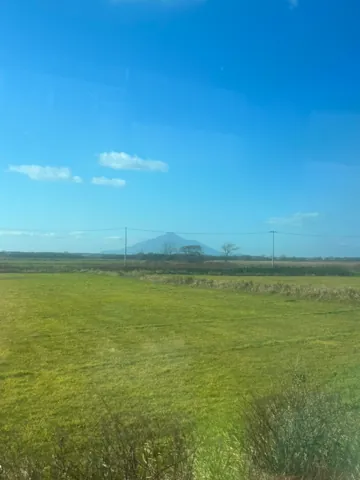
- Rishiri-Fuji views. Mount Rishiri rises across the sea from the Wakasakanai coast. In April and August the setting sun can line up with its summit ("Diamond Rishiri-Fuji").21
- Natural gas. In 2017 Toyotomi became Japan's first municipal gas retailer. A plant that makes hydrogen from local gas was finished in 2025.155
- Cycling. In 1991 Toyotomi was the first town in Japan to declare itself a "bicycle health city" (自転車健康都市).5
Sights & activities
Nature & scenery
- Sarobetsu Wetland Center (サロベツ湿原センター), Kami-Sarobetsu 8662. A Ministry of the Environment visitor center run by the NPO Sarobetsu Eco Network. Its displays cover how the wetland formed, its wildlife and the peat-mining era.26
- A 1 km barrier-free boardwalk loop starts at the center and is open 24 hours.47 Pets are not allowed on it.26
- The Ezo daylily is the wetland's signature flower. Each bloom lasts a single day, and the best time to see them is late June to early July.2
- Bean geese and tundra swans stop here in spring and autumn, and Steller's sea eagles and white-tailed eagles come in winter. The endangered yellow-breasted bunting (シマアオジ) also lives here.2
- Wakasakanai coast (稚咲内海岸). Part of the coastal Oronon Line, looking out to Mount Rishiri and the sunset. Salmon are landed at the fishing port in autumn.21
- Large-Scale Grassland Pasture (上福永). Rolling hills with grazing cattle from May to October, and a good place for stargazing. The roads are steep, so an e-bike helps.20
- Kabutonuma (兜沼). A lake where waterfowl stop on migration, with Kabutonuma Park on its shore.48 Near the park stands the Kototoi-no-Matsu (言問の松), a yew said to be over 1,200 years old.6
Onsen
- Toyotomi Onsen (豊富温泉) lies about 6 km east of the town center. The main water is an iodine-bearing sodium chloride spring. It is 34.2 °C at the source, pale yellow and cloudy, and smells of oil. Hotel Toyotomi uses a second, sodium chloride–bicarbonate source (27.7 °C).3
- The town-run Fureai Center (ふれあいセンター) has an ordinary bath and a cooler bath for long cure soaks. Admission is ¥510 for adults and ¥300 for those 65 and over. It is open 10:00–21:00 (last entry 20:30) and closes on 1 January and for five maintenance days in the second week of April (as of September 2026; check before visiting).49
- Hotel Toyotomi, New Onsenkaku Hotel and Kawashima Ryokan also take day bathers.50
- The Concierge Desk (0162-82-3782) helps guests plan long stays for the hot-spring cure (tōji).51 The town-run Yukaijuku (湯快宿) offers low-cost self-catering stays.52
Museums & heritage
- Peat Industry Hall (泥炭産業館) at the Sarobetsu Wetland Center displays peat-processing machinery. An old dredger that dug the peat and a washing separator stand outside.44
- Onsen centennial website. It has a timeline and old photos of the onsen village.15
- Local history rooms (郷土資料室). The town lists two, the Kabutonuma room and the Toyotomi room at Kami-Sarobetsu 2010 (the same address as the town community center, 豊富町町民センター). The Toyotomi room shares its phone number with the Board of Education (0162-82-1355). Opening hours were not found; call ahead.5
Outdoor & seasonal activities
- Kabutonuma Park campground and auto-campground, open 1 May–30 September. It has about 300 tent sites, 29 powered sites, 5 RV sites, bungalows, cottages, showers and a park-golf course.48 The 2026 rates are ¥830–1,040 per tent a night (¥520 for riders), ¥2,090 for a powered site and ¥2,610 for an RV site.5354
- Toyotomi Onsen Ski Area (豊富温泉スキー場) has three courses with views of Mount Rishiri and is open about mid-December to mid-March. Night skiing runs 17:30–20:30 on Tuesdays, Thursdays and Saturdays.5041
- Sarobetsu Country Club is an 18-hole, par-72 course facing Rishiri-Fuji.50
- Guided tours and bikes. Polaris Nature Guides & Consultants runs kayak and cycling tours. Bikes and e-bikes can be rented at the tourist information center, Yunomori Pokke and the Sarobetsu Wetland Center.50
Food experiences
- Sausage making at Sarobetsu Farm, for two or more people, by reservation (0162-84-2377).50
- Where to eat. The Fureai Center's restaurant Ajisai (味彩) serves Sarobetsu Farm lamb.37 Restaurant House Sarobetsu (レストハウスサロベツ) at the wetland opens May–October.55 The tourism association lists 14 other eateries, including two sushi bars, several izakaya, a bakery and cafés.56
Roadside stations (Michi-no-Eki)
No Michi-no-Eki is located in Toyotomi.57 For shops and information, use the Toyotomi Tourist Information Center (豊富町観光情報センター) next to JR Toyotomi Station. It opens 9:00–17:00 from April to November and 9:00–15:00 from December to March, and closes 30 December–3 January.58 Yunomori Pokke (湯の杜ぽっけ) in the onsen district opens 9:00–18:00. It closes Mondays from November to March and 31 December–3 January.59
Nearest Michi-no-Eki:
- Michi-no-Eki Wakkanai (道の駅わっかない), Wakkanai. Kaiun 2-chōme, in the Kitakara building by JR Wakkanai Station, at the end point of National Route 40. It calls itself Japan's northernmost Michi-no-Eki.5760
- Michi-no-Eki Teshio (道の駅てしお), Teshio. On National Route 232 to the south. It is known for shijimi clams.5761
- Michi-no-Eki Sarufutsu Kōen (道の駅さるふつ公園), Sarufutsu. On the Sea of Okhotsk side.57
Getting there & around
- Rail. The JR Soya Main Line has two stations in the town, Toyotomi (豊富) and Kabutonuma (兜沼).6 The limited expresses Sōya and Sarobetsu stop at Toyotomi, which is unstaffed.24 Journey times:62
- From Sapporo: about 4 h 30 min by limited express
- From Asahikawa: about 3 hours
- From Wakkanai: about 50 minutes by local train
- Bus. A local bus runs from Toyotomi Station to the onsen in about 10 minutes.63 It is Engan Bus route 32 (豊富幌延線). The tourism association's pages give fares of ¥330 or ¥340, but Engan Bus revised its fares on 1 October 2025, so check the current fare.64633 When no bus runs, the town operates a reservation-only shared taxi between the station and the onsen. No scheduled bus links Wakkanai and Toyotomi.65 Engan Bus's Tokkyū Haboro leaves Sapporo Station (stop 32) at 13:00, 15:00 and 17:30. It reaches Toyotomi Onsen about 5 hours later. The fare is ¥7,100 and seats must be reserved. The timetable from 1 October 2026 keeps these departure times, with arrivals 5 minutes later.66
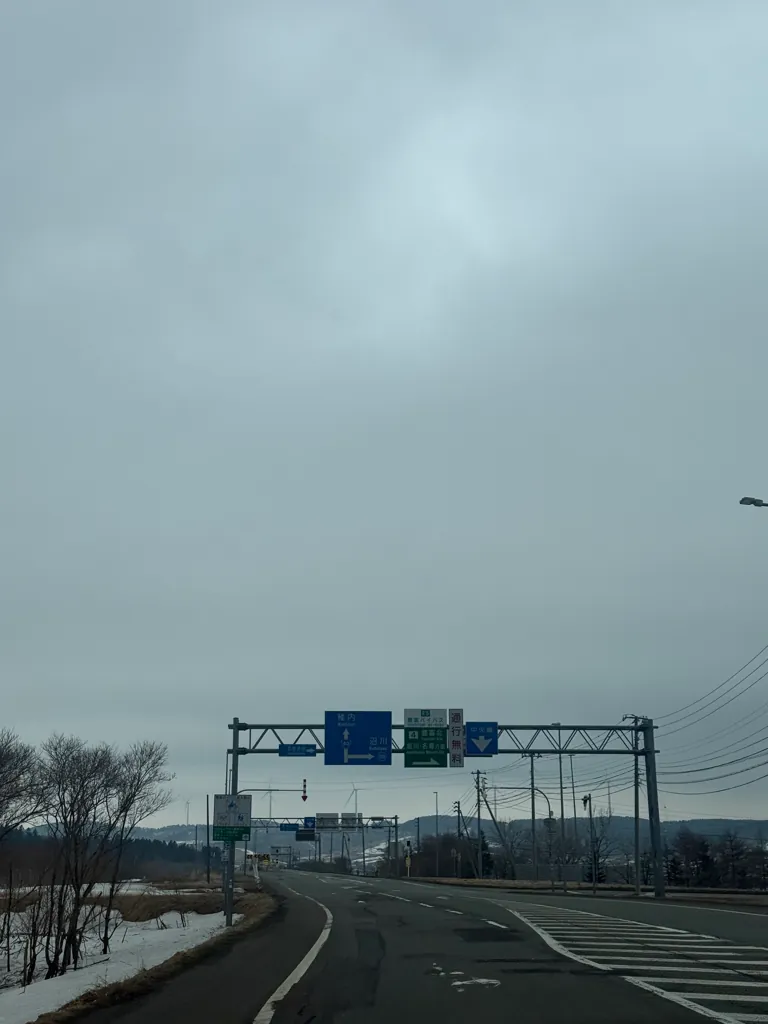
- Road. National Route 40 runs through the town. The free Horotomi Bypass (幌富バイパス) opened in 2010 and runs 10.9 km from Horonobe IC to Toyotomi Sarobetsu IC.67 It joins the Toyotomi Bypass (豊富バイパス), which opened in November 2004.675
- Air. The nearest airport is Wakkanai, about 2 hours from Haneda and 1 hour from New Chitose.62 Sōya Bus's airport bus into Wakkanai takes about 35 minutes and costs a flat ¥800.68
- Ferries. Heart Land Ferry boats to Rishiri, Rishirifuji and Rebun leave from Wakkanai.63
- Getting around. Rental cars and bikes are available at Yunomori Pokke.59 A car is the easiest way to link the wetland, the coast, Kabutonuma and the onsen.
Practical tips
- When to go. Late June to early July for Ezo daylilies, and spring or autumn for migrating geese and swans.2 The pasture has cattle from May to October,20 and the ski area opens mid-December to mid-March.41
- Seasonal hours. The Sarobetsu Wetland Center opens 9:00–17:00 daily from May to October. From November to April it opens 10:00–16:00 and closes on Mondays and over New Year.26 The campgrounds are open only from 1 May to 30 September.48
- Hot-spring cures. Contact the Concierge Desk before a long stay.51 A 1998 study by the Hokkaido Institute of Public Health reported healing effects.15 The onsen pamphlet says the effects are not guaranteed for everyone.69
- Winter. Expect strong northwest winds and snow from mid-November to mid-April.31 Check road reports before crossing the open plain.
- Wildlife. Ezo deer live in the area, so drive carefully at dusk.38 Carry a bear bell in the hills, as elsewhere in northern Hokkaido.
- Accommodation tax. Since 1 April 2026 Hokkaido has charged ¥100–500 per person per night. At the town-run Yukaijuku and the Kabutonuma cabins it is ¥100, and tent and RV sites are exempt.70
Photos
-
 Oct 2024
 -
 Mar 2026
More about Toyotomi
At a glance
| Field | Details |
|---|---|
| Type | Town (町) |
| Subprefecture | Soya (宗谷総合振興局), since 1948; before that Rumoi5 |
| District | Teshio District (天塩郡)6 |
| Population | 3,974 at the 2020 Census (2,098 men, 1,876 women, 1,951 households), down 2.0% from 4,054 in 2015.7 The preliminary 2025 Census count is 3,431, down 13.7% from 2020.8 The resident register showed 3,327 people (1,720 men, 1,607 women) in 1,864 households at the end of August 2026.9 |
| Area | 520.69 km² (GSI, 1 April 2026).10 The town is 28.5 km east to west and 17.8 km north to south, with 17.1 km of coastline.11 |
| Density | About 6.4 people/km² (August 2026 register ÷ GSI area); 7.6/km² at the 2020 Census7 |
| Municipal history | Saru Village (沙流村) created 1878. Merged into Horonobe Village 1919. Split off as Toyotomi Village in September 1940. Town status January 1959.56 |
| Neighboring municipalities | Wakkanai (north), Sarufutsu (east), Horonobe (south); Sea of Japan to the west11 |
| Symbols | Tree: Japanese yew (イチイ, also called onko オンコ). Flower: Ezo daylily (エゾカンゾウ).6 No town bird was found. The emblem combines a pickaxe (underground resources), a leaf (forests) and a ring (the Sarobetsu River).12 |
| Mascot | Toyotomi-kun (とよとみ君), a calf, introduced in 1989.131 Toyotomi Miyu (豊富水由), the "Onsen Musume" character for Toyotomi Onsen, since September 2022.1415 |
| Official website | https://www.town.toyotomi.hokkaido.jp/ (Japanese)16 |
Name origin
- The name is a loose translation of the Ainu river name Ebekorobetsu (エベコロベツ). The Ainu form is ipe-kor-pet (イペコロペッ), "river that has food (fish)".22
- In 1908 the subprefecture asked for a proper name for the new town site. Wikipedia calls it the Rumoi Subprefecture, but in 1908 the office was still the Mashike Subprefecture; it moved to Rumoi and took that name in 1914.65 The residents' association took ipe-kor-pet to mean "plenty of food" and chose 豊富, which means "abundance".6
- Place-name scholar Yamada Shūzō noted that two Ebekorobetsu rivers, the Panke (lower) and Penke (upper), flow through the area. He called them muddy rivers in the marsh and recorded a local driver's comment that they hold few fish. The Hokkaido Government's Ainu place-name list rates this derivation at level B.22
- The kanji 豊富 are usually read hōfu ("abundant"), and the town uses this in its slogan いいとこ"ほうふ"豊富町.1
History
- Ainu era. The sources checked record no archaeological sites here. Ainu names survive in the rivers and marshes (see Ainu heritage).
- 1869–1878. In 1869 the area was placed under the Mito domain. In 1870 a government lodging house was built at "Wakkasakunai" (ワッカサクナイ), today's Wakasakanai. Saru Village (沙流村) was created in 1878.5
- 1903–1919. Umemura Shōjirō brought a group of 12 households from Gifu Prefecture to settle at Kabutonuma in 1903. Saru still had only 614 people in 1909. In 1919 it merged into Horonobe Village.5
- 1924–1935. Kabutonuma Station opened in 1924.23 Murai Mining began drilling for oil in 1925. On the night of 17 May 1926, hot water burst out of the test well with natural gas from 960 m down. The Soya Main Line was completed that September, and Toyotomi Station opened on 25 September.1524 Locals first bathed in a thatched hut by the well, and eight inns soon opened.3 A gas-engine power plant brought electricity to the town in 1932.15
- 1937–1972: coal. Nisso Mining (日曹鉱業) opened a coal mine. The town handbook gives 1937 for the opening, and Wikipedia gives November 1936.56 A private railway ran from the mine to Toyotomi Station from 1940 to 1972.24 Mitsubishi Mining started a second mine in 1947. The Nisso mine closed in July 1972.5
- 1940–1959. In September 1940 the old Saru area split from Horonobe and became Toyotomi Village. It had 1,291 households and 7,521 people. The village moved to Soya Subprefecture in 1948 and gave its Tenkō and Akebono districts to Wakkanai in 1950. It became a town in January 1959.5
- 1962–1974. A land-improvement project on the Sarobetsu Plain began in 1962, and a large-scale pasture project in the western Tenpoku region in 1966. The area became a quasi-national park in 1965 and Rishiri-Rebun-Sarobetsu National Park on 20 September 1974.525
- 1983. The town set up a liaison office in September for the Korean Air Lines Flight 007 disaster.5
- 1988–2011. The Fureai Center bathhouse opened in 1988. Toyotomi Onsen was designated a National Health Resort Hot Spring (国民保養温泉地) in 1992.15 The Sarobetsu Plain became a Ramsar site in November 2005,6 and the Sarobetsu Wetland Center opened in 2011.26
- 2015–2021. Toyotomi Onsen joined the "100 Best Hot Springs of Japan" (日本の名湯百選) in 2015. In 2017 the town opened the Yunomori Pokke visitor center and registered as a gas retailer.15 Tokumitsu Station closed on 13 March 2021.27
- 2023–2026. Air Water and Toda Kogyo began a project in 2023 to make hydrogen from the town's unused natural gas. Their plant was finished in September 2025.155 Toyotomi Onsen marked its centennial with a ceremony on 16 May 2026 and a festival the next day.15
Geography & climate
- Setting. Toyotomi lies on the Sea of Japan coast south of Wakkanai; Toyotomi Onsen is about 40 km south of Wakkanai city.113 Its hills are low. Only Poroshiri-yama (ポロシリ山, 426 m) and 恵丹臼山 (313 m) rise above 260 m.11
- Rivers and wetland. The Sarobetsu River meanders across the town. It is joined by the Menashibetsu and Shimo-Ebekorobetsu rivers, then turns along the coast to the Teshio River. Its basin forms a wide plain.11 About 10,000 years ago the area was a lagoon open to the sea. The wetland grew from peat that has built up over more than 6,000 years. It is the third-largest wetland in Japan.2 Penke-numa lake (ペンケ沼, 1.27 km²) is shared with Horonobe.10
- Land use. Forest covers 32.1% of the town, fields 20.2%, wilderness 19.1% and pasture 11.5%.5
- Protected areas. Rishiri-Rebun-Sarobetsu National Park covers 24,512 ha in total.25 The Wakasakanai coastal dune forest (稚咲内海岸砂丘林) is a Hokkaido natural monument.6
- Climate. 1991–2020 normals at the JMA Toyotomi station:28
- Mean temperature 6.3 °C (January −6.1 °C, August 19.4 °C)
- Precipitation 1,030.8 mm a year
- Snowfall 703 cm a year; average deepest snow 91 cm
- Records (temperature since 1977, precipitation since 1976, snow depth since 1982):2930
- Highest temperature 33.1 °C (1 August 2000); lowest −28.8 °C (8 February 2014)
- Deepest snow 143 cm (23 February 1985)
- Wettest day 196.0 mm (26 August 2025)
- Seasons. Snow falls from mid-November to mid-April, and strong, dry northwest winds blow in winter.31
Economy & industry
- Dairy. Dairy farming is the main industry. It is based on grazing across about 13,000 ha of grassland.18
- In FY2024 there were 109 dairy farms with 11,100 dairy cattle, plus 2,337 beef cattle.5
- Raw-milk sales through the local farm co-op were 58,128 t in FY2024, down from 67,580 t in FY2017, the highest year in the handbook's FY2015–2024 table.5
- Farm output was worth ¥9.21 billion in 2023, and ¥7.72 billion of that was raw milk.5
- Older figures run higher: 16,000 cows and 72,000 t on Wikipedia, 13,000–15,000 cows on some town pages.6432
- A cow from the Satō Farm (佐藤牧場) set a national record of 96 points in the Holstein Association of Japan's classification.32
- Milk processing. The town dairy, Toyotomi Gyūnyū Kōsha (豊富牛乳公社), supplies Seicomart with "Toyotomi Shibori" (とよとみしぼり) milk and plain yogurt.18
- Grassland pasture. The town-owned pasture covers 1,416 ha, and local farmers leave their cattle there. It has room for about 1,500 head on summer pasture and 900 in its winter barns.33
- Other industries. Six factories employed 106 people in 2021 and shipped ¥9.21 billion in goods.5 Fishing is small: the 2024 catch was 130 t (¥81.3 million), mostly salmon, octopus and hokki surf clams.5
- Energy. Hokkaido Electric ran a gas-turbine power station in the town from 1957 to 1975. The town became sole holder of the mining rights in 2013. Since 2017 it has sold gas to a yogurt factory in the industrial park.15
- Tourism. The town counted 183,438 visitors in FY2024, down from 316,238 in FY2013, the highest year in the handbook's FY2011–2024 table. Toyotomi Onsen drew 142,756 of them.5 Hokkaido's survey counted 197,900 visitors in FY2025, up 7.8%. They included 44,000 from outside Hokkaido.34 The town has 14 lodgings with room for 598 guests.5
- Population. The population fell 13.7% between 2020 and 2025 (preliminary census count).8 In 2020 about 34% of residents (1,357 people) were 65 or older.5
- Revitalization. Recent efforts include:
Local specialties
| Specialty | Category | Details & where to get it |
|---|---|---|
| Hokkaido Toyotomi (Sarobetsu) Milk (北海道豊富(サロベツ)牛乳) | Dairy | Made by Toyotomi Gyūnyū Kōsha. Sold at Seicomart stores and local supermarkets.3719 |
| Toyotomi Milk soft-serve (とよとみ牛乳ソフトクリーム) | Sweets | From milk café & zakka ferme, run by a dairy farmer. It won the Hokkaido Soft Cream Grand Prix 2019. Also sold at the tourist information center and Yunomori Pokke.38 |
| Handmade cheese and gelato | Dairy | Kōbō Letier (工房レティエ), Fukunaga. Additive-free, from its own farm's milk. Irregular opening; call first (0162-82-1300).38 |
| "Ōsama no Jingisukan" lamb, ham and sausages | Meat | Sarobetsu Farm (サロベツファーム), Ashikawa, in a former school. Its sausages include one with wild garlic (gyōja-ninniku).386 |
| Ezo deer venison (えぞシカ肉) | Meat | Sarobetsu Venison processes deer caught in the town at a local plant.38 |
| Yuagari Onsen Pudding (湯あがり温泉プリン) | Sweets | Made with Sarobetsu milk by Kawashima Ryokan. Sold at the inn and the tourist information center.3738 |
| Flavor butter, clotted cream | Dairy | Listed among the town's specialties.1 Kawashima Ryokan's flavor butter and its scone-and-clotted-cream set are furusato nozei gifts.39 |
| Toyotomi Catalana (とよとみカタラーナ), butter sandwich cookies | Sweets | Catalana by Harapeko mucca, butter sandwich by ferme. Sold at the tourist information center, New Onsenkaku Hotel and Pokke.38 |
| Sarobetsu Daichi Keisen (サロベツ大地恵泉) | Onsen products | Concentrated onsen water, soap and skin cream from I・C Corporation. Sold at the Fureai Center, Pokke and the tourist information center.3738 |
| Hokki surf clam, autumn salmon | Seafood | The main local catch. Salmon are landed at Wakasakanai port in autumn.521 |
| Furusato nozei (ふるさと納税) gifts | Various | Ice cream and gelato, desserts, cheese and butter, lamb and venison, salmon, onsen-water care sets, and a subsidy for stays at Toyotomi Onsen.4039 |
Culture & festivals
| Event | When | Highlights |
|---|---|---|
| Toyotomi Hachiman Shrine summer festival (豊富八幡神社夏季例大祭) | Mid-June | Annual shrine festival6 |
| Sarobetsu Flower Festival (サロベツ花まつり) | Early July | First held in July 1975; timed for the wetland's flower season56 |
| Sarobetsu 100-mile road race (cycling) | Early August | Road cycling race; also run as the "Sarobetsu Time Trial / Sarobetsu 100 Mile" event632 |
| Shōkō Summer Festival fireworks (商工夏まつり納涼花火大会) | 15 August | Fireworks at Toyotomi Nature Park (豊富町自然公園, Higashi-Toyotomi), held on 15 August in 2024, 2025 and 2026. An English-language Gundam manhole card was handed out at the 2026 festival.3641 |
| All-Hokkaido Pony Banba contest (全道ポニーばんば大会) | September | Ponies pull weighted sleds6 |
| "Pokasanpo" Onsen Musume fan event (ぽかさんぽ) | 3–4 October 2026 | Fan event in the onsen district, first held in July 20234215 |
| Toyotomi Onsen Yukiakari (豊富温泉 雪あかり) | February | Snow-lantern event, first held in 200815 |
- Onsen centennial (2026). Events run through the year. They include a photo contest (1 June–31 October) and a tie-in with Toyotomi Station's own centennial.42
- Onsen Musume. Toyotomi Miyu (voiced by Hanai Miharu) is presented as a spirit born of the oil-bearing spring.14 Life-size panels of her stand at Pokke, the Sarobetsu Wetland Center and other spots around town.35
- Town charter. The town charter was adopted on 22 October 1991.43
- Heritage displays. The town has two local history rooms (豊富町郷土資料室), one in Kabutonuma and one at the town community center's address; the handbook records a local history room opening in September 1984.5 The Sarobetsu Wetland Center shows the peat industry that once worked the plain (see Sights & activities).44
Ainu heritage
Little is documented about Ainu history within today's town. No archaeological sites or Ainu cultural facilities were found in the sources checked. What remains is mainly place names:
- Sarobetsu (サロベツ). From sar-o-pet, "river in the reed marsh". Yamada notes that the river still flows through wide, low marshland full of reeds. The list rates this derivation at level A.45
- Ebekorobetsu → Toyotomi. From ipe-kor-pet, "river that has food (fish)"; see Name origin.22
- Penke-numa and Panke-numa. Two large lakes east of the Sarobetsu River. Their names come from penke-to ("upper lake") and panke-to ("lower lake"). Panke-numa and the nearby station name Shimonuma lie in Horonobe.4610
- Wakasakanai (稚咲内). Written ワッカサクナイ in 1870 records, which points to an Ainu origin.5 A common reading is wakka-sak-nay, "river without drinking water" (unverified).
Sister & friendship cities
No formal sister city was found. The town has these partnerships:
- Taketa (Ōita) and Semboku (Akita). On 22 July 2015 the three municipalities signed a "Hot-Spring Power Regional Cooperation Agreement" (温泉力地域協力協定). All three have hot springs known for cure bathing.32
- Minato City, Tokyo. An exchange partnership since 2016, shared with the other Soya towns and villages. Events include Toyotomi Onsen bathing weeks at Minato's public bathhouses.532
- Hokkai-Gakuen University. A comprehensive partnership agreement signed in June 2021.5
Sources
Numbers in the text link to these sources. Figures as of 23 September 2026
- 令和8年度 管内概要「宗谷」 P23〜P27 市町村の姿(PDF) — 北海道宗谷総合振興局 JA accessed 2026-09-23
- サロベツ湿原とは — サロベツ湿原センター(認定NPO法人サロベツ・エコ・ネットワーク) JA accessed 2026-09-23
- 豊富温泉 — 北海道豊富町観光協会 JA accessed 2026-09-23
- 豊富町長あいさつ — 豊富町 JA accessed 2026-09-23
- 豊富町勢要覧 資料編 令和7年版(PDF) — 豊富町 JA accessed 2026-09-23
- 豊富町 — Wikipedia JA accessed 2026-09-23
- 令和2年国勢調査結果 統計表(第1表 男女別人口、面積、人口密度及び世帯数) — 北海道総合政策部計画局統計課 JA accessed 2026-09-23
- 令和7年国勢調査速報 北海道の人口・世帯数(PDF) — 北海道総合政策部計画局統計課 JA accessed 2026-09-23
- 豊富町の人口(各月末現在の人口 一覧表) — 豊富町 JA accessed 2026-09-23
- 令和8年全国都道府県市区町村別面積調(4月1日時点)(PDF) — 国土地理院 JA accessed 2026-09-23
- 地勢・位置・広ぼう — 豊富町 JA accessed 2026-09-23
- 町章の由来 — 豊富町 JA accessed 2026-09-23
- Toyotomi, Hokkaido — Wikipedia EN accessed 2026-09-23
- 「温泉むすめ」が豊富温泉にデビューしました! — 豊富町 JA accessed 2026-09-23
- 温泉の歴史(年表 〜豊富温泉100年の軌跡〜) — 豊富温泉100周年事業実行委員会 JA accessed 2026-09-23
- 北海道豊富町 公式ウェブサイト(トップページ) — 豊富町 JA accessed 2026-09-23
- 豊富温泉開湯100周年特設サイト(トップページ) — 豊富温泉100周年事業実行委員会 JA accessed 2026-09-23
- 豊富町の酪農 — 豊富町 JA accessed 2026-09-23
- サロベツ牛乳 — 北海道豊富町観光協会 JA accessed 2026-09-23
- 大規模草地牧場 — 北海道豊富町観光協会 JA accessed 2026-09-23
- 稚咲内海岸 — 北海道豊富町観光協会 JA accessed 2026-09-23
- アイヌ語地名リスト P91-100(「豊富」の項)(archived) — 北海道環境生活部アイヌ政策推進室 via Internet Archive JA accessed 2026-09-23
- 兜沼駅 — Wikipedia JA accessed 2026-09-23
- 豊富駅 — Wikipedia JA accessed 2026-09-23
- 利尻礼文サロベツ国立公園 概要・計画書 — 環境省 JA accessed 2026-09-23
- サロベツ湿原センター(施設について) — サロベツ湿原センター(認定NPO法人サロベツ・エコ・ネットワーク) JA accessed 2026-09-23
- 徳満駅 — Wikipedia JA accessed 2026-09-23
- 過去の気象データ検索 豊富(宗谷地方) 平年値(年・月ごとの値) — 気象庁 JA accessed 2026-09-23
- 過去の気象データ検索 豊富(宗谷地方) 観測史上1~10位の値 — 気象庁 JA accessed 2026-09-23
- 過去の気象データ検索 豊富(宗谷地方) 観測史上1~10位の値(積雪) — 気象庁 JA accessed 2026-09-23
- 豊富町の気候 — 豊富町 JA accessed 2026-09-23
- 自治体間連携特設ページ — 豊富町 JA accessed 2026-09-23
- 豊富町大規模草地育成牧場 — 豊富町 JA accessed 2026-09-23
- 北海道観光入込客数調査報告書(令和7年度 資料編, XLSM) — 北海道経済部観光局 JA accessed 2026-09-23
- 豊富水由イベント・お知らせについて — 豊富町 JA accessed 2026-09-23
- マンホールカードについて — 豊富町 JA accessed 2026-09-23
- 特産品 — 豊富町 JA accessed 2026-09-23
- お土産 — 北海道豊富町観光協会 JA accessed 2026-09-23
- 北海道豊富町のお礼の品一覧 — ふるさとチョイス JA accessed 2026-09-23
- 楽天市場 | 北海道豊富町(ふるさと納税) — 楽天市場 JA accessed 2026-09-23
- 令和8年度 管内概要「宗谷」 P28〜P34 施設開館情報・イベントカレンダー(PDF) — 北海道宗谷総合振興局 JA accessed 2026-09-23
- イベント(豊富温泉開湯100周年特設サイト) — 豊富温泉100周年事業実行委員会 JA accessed 2026-09-23
- 豊富町民憲章について — 豊富町 JA accessed 2026-09-23
- 施設について(泥炭産業館・浚渫船) — サロベツ湿原センター(認定NPO法人サロベツ・エコ・ネットワーク) JA accessed 2026-09-23
- アイヌ語地名リスト P51-60(「サロベツ」の項)(archived) — 北海道環境生活部アイヌ政策推進室 via Internet Archive JA accessed 2026-09-23
- アイヌ語地名リスト P61-70(「下沼」の項)(archived) — 北海道環境生活部アイヌ政策推進室 via Internet Archive JA accessed 2026-09-23
- 木道 — サロベツ湿原センター(認定NPO法人サロベツ・エコ・ネットワーク) JA accessed 2026-09-23
- 兜沼公園 — 豊富町 JA accessed 2026-09-23
- ふれあいセンター — 豊富温泉 ミライノトウジ JA accessed 2026-09-23
- あそぶ・体験する — 北海道豊富町観光協会 JA accessed 2026-09-23
- 豊富温泉 ミライノトウジ(トップページ) — 豊富温泉 ミライノトウジ JA accessed 2026-09-23
- 豊富温泉 — 豊富町 JA accessed 2026-09-23
- 兜沼公園キャンプ場 公式サイト — カブト沼観光ビレッジ JA accessed 2026-09-23
- 兜沼オートキャンプ場 公式サイト — カブト沼観光ビレッジ JA accessed 2026-09-23
- サロベツ湿原 — 豊富町 JA accessed 2026-09-23
- 食べる — 北海道豊富町観光協会 JA accessed 2026-09-23
- 住所等一覧 — 北海道の道の駅(北海道道の駅連絡会) JA accessed 2026-09-23
- 豊富町観光情報センター — 北海道豊富町観光協会 JA accessed 2026-09-23
- 湯の杜ぽっけ — 北海道豊富町観光協会 JA accessed 2026-09-23
- わっかない — 北海道の道の駅(北海道道の駅連絡会) JA accessed 2026-09-23
- てしお — 北海道の道の駅(北海道道の駅連絡会) JA accessed 2026-09-23
- 豊富町へのアクセス — 豊富町 JA accessed 2026-09-23
- 行く(アクセス) — 北海道豊富町観光協会 JA accessed 2026-09-23
- 普通旅客運賃表 32 豊富幌延線(令和7年10月1日改正, PDF) — 沿岸バス株式会社 JA accessed 2026-09-23
- 幌延留萌線等 時刻表 — 沿岸バス株式会社 JA accessed 2026-09-23
- 特急はぼろ号(高速乗合バス時刻表) — 沿岸バス株式会社 JA accessed 2026-09-23
- 幌富バイパス — Wikipedia JA accessed 2026-09-23
- 空港連絡バス — 宗谷バス株式会社 JA accessed 2026-09-23
- 最北の温泉郷 とよとみ温泉(観光パンフレット, PDF) — 北海道豊富町観光協会 JA accessed 2026-09-23
- 北海道宿泊税の導入について — 豊富町 JA accessed 2026-09-23