City Soya Subprefecture
Wakkanai 稚内市
わっかないし
Wakkanai is Japan's northernmost city, facing both the Sea of Japan and the Sea of Okhotsk. From Cape Soya (宗谷岬), the northern tip of Hokkaido, you can see Sakhalin 43 km away.1 While Japan held South Sakhalin (Karafuto, 1905–1945), Wakkanai grew as the gateway to it, with a regular ferry from 1923.2 Today it is the administrative and economic centre of the Soya region, living on fishing, dairy farming and tourism.12
- Population (2020 Census)
- 33,563
- Area
- 761.42 km²
- Official website
- www.city.wakkanai.hokkaido.jp
Known for
- Cape Soya (宗谷岬), the northern tip of Hokkaido.
- The former gateway to Karafuto (樺太, South Sakhalin).
- Octopus and scallops.
- Soya Hills and the White Road.
- Wind and solar power. The Soya Misaki Wind Farm, with 57 turbines, began operating in 2005. At the time it was Japan's largest.2 Japanese Wikipedia says renewable sources can now produce about 90% of the city's electricity use.3
- Taro, Jiro and the Antarctic.
- Chāmen (チャーメン). This is the city's soul food: boiled Chinese noodles fried until crisp and covered with a seafood-and-vegetable sauce.27
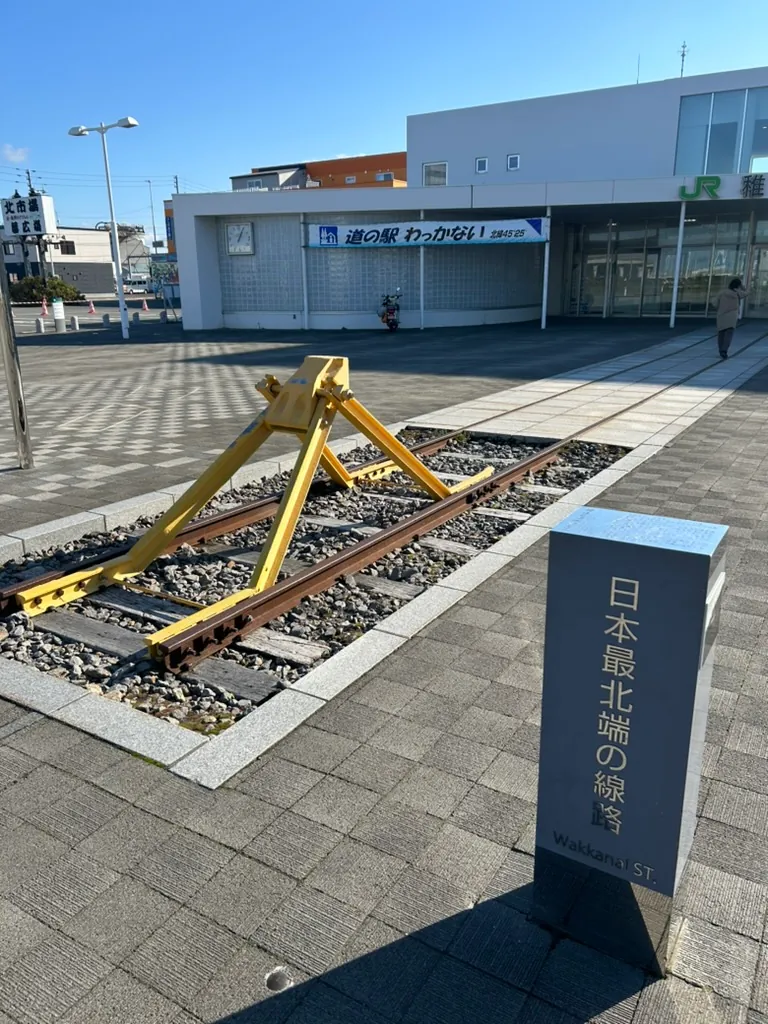
- The end of the line. Wakkanai Station is the northern terminus of the JR Soya Main Line and Japan's northernmost station. Ferries from the port go to Rishiri and Rebun islands.288
Sights & activities
Nature & scenery
- Cape Soya (宗谷岬) and Soya Misaki Park.
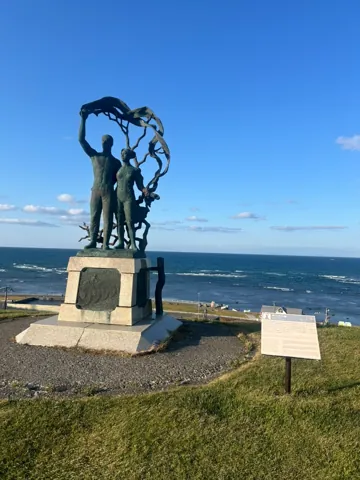
- The park holds the Northernmost Point monument (the third version, 1988), a statue of Mamiya Rinzō looking out to sea (1980), and a former Navy watchtower from 1902.382
- It also has the Tower of Prayer for the KAL 007 victims, and the World Peace Bell, cast from coins and medals from 81 countries (1988).38
- There is a Peace Monument, put up jointly by Japan and the US in 1995, for the crew of the US submarine Wahoo and the Japanese merchant sailors lost off the cape in 1943.38
- Soya Misaki Lighthouse stands 120 m south of the tip.38
- Parking: 72 spaces, free. Bus: about 50 minutes from Wakkanai Station.13
- Soya Hills (宗谷丘陵) and the White Road (白い道).
- Noshappu Cape (ノシャップ岬).
- Wakkanai Park (稚内公園).
- A 45.2 ha hillside park above the town. Its view has been recognised as a Japan Night View Heritage site.24
- It holds the 8 m Gate of Ice and Snow (氷雪の門, 1963) by sculptor Hongō Shin (本郷新), with Sakhalin visible beyond it on clear days.17
- Nearby is the Nine Maidens monument (九人の乙女の碑) to the nine telephone operators of Maoka post office who took their own lives on 20 August 1945.18
- The Antarctic sled-dog training monument is also in the park.24
- The monuments are closed from mid-November to mid-April.17
- Ōnuma (大沼) and Ōnuma Bird House.
Onsen
- Wakkanai Onsen Dōmu (稚内温泉「童夢」, Fujimi 4-1487).
- Yamwakkanai Onsen Minato-no-Yu (ヤムワッカナイ温泉 港のゆ).
Museums & heritage
- North Breakwater Dome (稚内港北防波堤ドーム).
- A 427 m arcade of 70 columns, 13.6 m high, built 1931–36. Tsuchiya Minoru (土谷実), a 26-year-old Hokkaido Government engineer, designed it. It was fully restored between 1978 and 1980.21
- About 5 minutes on foot from the station.16
- Nearby, a monument marks where the future yokozuna Taihō (大鵬) came ashore as a boy evacuated from Karafuto. It was put up in 2020.67
- Hoppō Kinenkan and Centennial Tower (北方記念館・開基百年記念塔).
- Wakkanai Fukkō Ichiba (稚内副港市場, Minato 1-6-28).
- Noshappu Kanryū Aquarium (ノシャップ寒流水族館).
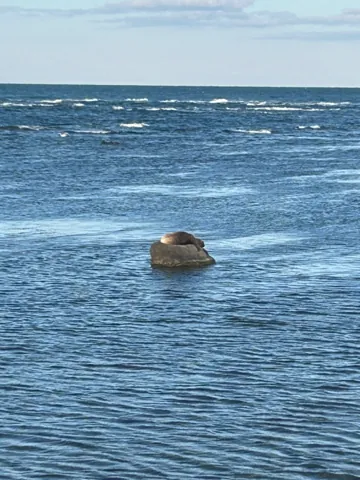
- Japan's northernmost aquarium, with about 100 species and 1,500 animals. A 90 t circular tank holds hokke, rockfish and the rare itō (Sakhalin taimen). Outside there are spotted-seal shows.62
- Open 9:00–17:00 (10:00–16:00 from November to March). Closed 1–28 April and in December and January.62
- ¥500 for adults, including the Youth Science Museum.62
- Red Brick Communication Station (赤れんが通信所) in Keihoku. Visits need booking about two weeks ahead with the city. Tours stop in winter.63
Outdoor & seasonal activities
- Base-Soya (宗谷岬展望台). The observatory at Cape Soya rents bicycles and runs a tourist desk. It is open 10:00–16:00 in summer and closed from October to late May.68
- Japan's Four Extremes certificates. Wakkanai, Nemuro, Sasebo and Minamiōsumi each issue free "reached" certificates. The four together form a "Mainland Japan Four Extremes" certificate. Get Wakkanai's at City Hall, the Soya branch office, the tourist office in Kitakara or (in summer) Base-Soya.69
- Winter. The city runs the Komadori (こまどり) and Kami-Yūchi (上勇知) ski areas.70 The winter events are the dog-sled race and the Snowland at the prefectural park.2655
- Day trips to Rishiri and Rebun by Heartland Ferry. See Getting there.8
Food experiences
Roadside stations (Michi-no-Eki)
Michi-no-Eki Wakkanai (道の駅わっかない)
- Location:
- The station is part of Kitakara (キタカラ/KITAcolor), the complex built around JR Wakkanai Station, at Chūō 3-6-1, on National Route 40.2871
- The official Michi-no-Eki list gives its address as Kaiun 2-chōme (開運2丁目). Phone 0162-29-0277 (Machizukuri Wakkanai Co.).7273
- The North Breakwater Dome is 3 minutes' walk away, Wakkanai Park 5 minutes by car and Noshappu Cape 10 minutes by car.71
- The airport bus to the station takes about 30 minutes.28
- Hours (as of September 2026 — check before visiting):
- Exhibition and information terminals: 24 hours. Information desk: 9:00–18:00.71
- Shop: 8:30–18:00 (July–September) and 9:00–18:00 (October–June). Café: 8:00–16:00. Food and sweets shops: 10:00–17:00.71
- The sweets shop closes on Wednesdays. Shops and restaurants close from 30 December to 1 January.71
- Individual tenants list slightly different hours. For example, Wakkanai Select gives 9:00–18:00 with summer changes and the tourist office 10:00–18:00, closed 31 December–5 January.7475
- Shops & products:
- Wakkanai Select (ワッカナイセレクト) sells sweets, Japanese confectionery, dried seafood snacks, drinks and souvenirs. It stocks certified Wakkanai Brand products and hand-picked specialties from all over Hokkaido, as well as Michi-no-Eki goods such as keychains. Cards accepted.7476
- The official station page recommends Wakkanai Milk ice cream, the "four great crabs" bento (四大かに弁当) and Soya Misaki Farm hamburger patties.71
- Food:
- Select Café Mocha Mattari (セレクトカフェ モカマタリ): Soya Kuroushi beef hayashi rice (¥850, set ¥1,000), fried Wakkanai squid, sandwiches, coffee and Wakkanai Milk.77
- orange egg (オレンジエッグ): soft-serve (¥320), chiffon cakes, the deer-antler Shikapan, and Yūchi-potato Poterana. Its dairy comes from neighbouring Toyotomi.5453
- Oshokujidokoro Fujita (お食事処 ふじ田): surimi ramen with hokke fish balls (¥980), scallop ramen, crab fried rice (¥1,160), and the "Wakkanai-don" of scallop with octopus (¥1,130) or with snow crab (¥1,200). A standing counter serves quick soba and udon.47
- Prices are those listed on the Kitakara website and may have changed.
- Facilities:
- Parking for 88 cars and 11 large vehicles. 24-hour toilets, including accessible toilets and an ostomate toilet.7128
- Nursing room and diaper-changing corner. A 2nd-floor kids' room with a ball pool and climbing wall.7178
- Free Wi-Fi (SSID "KITAcolor"). The atrium is open 5:00–24:00. The information corner is open 9:00–21:00 and staffed 10:00–18:00.78
- Also in the building: the JR station, the bus terminal, a convenience store and the three-screen T-Joy Wakkanai cinema.28
- The official page lists no EV charger, RV park or onsen.71
- Notes:
- Registered on 26 March 2012 as Hokkaido's 114th roadside station. It is Japan's northernmost Michi-no-Eki.712
- Having the station, rail terminal and bus terminal under one roof is described as very rare in Japan.28
- The stamp can be used 24 hours a day, even on closed days.71
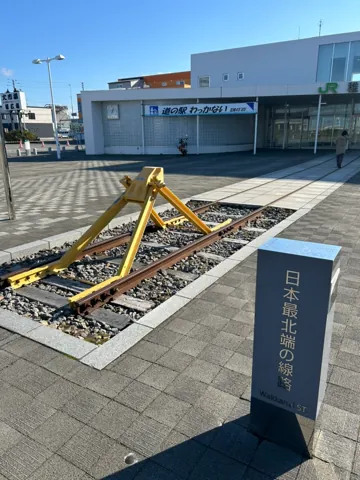
- In front of the station stands the "northernmost railway track" monument, rebuilt in 2012. Beside it is KANEPOPPO (2021), a monument by sculptor Nagare Masayuki (流政之) built around the "Sakhalin bell."28
- The nearest other roadside station on the Okhotsk side is Michi-no-Eki Sarufutsu Kōen (道の駅さるふつ公園) in Sarufutsu.72
Getting there & around
- Air.
- Rail.
- The JR Soya Main Line has three stations in the city: Yūchi (勇知), Minami-Wakkanai (南稚内) and Wakkanai (稚内), the northernmost station in Japan.328
- The limited express Sōya runs direct from Sapporo in about 5 hours 10 minutes. Alternatively, take the Kamui or Lilac to Asahikawa (about 1 hour 25 minutes) and change to the Sarobetsu (about 3 hours 50 minutes).80 English Wikipedia says there is one Sōya and two Sarobetsu services each way a day.11 Since the timetable revision of 14 March 2026 both trains are all-reserved, so book a seat before boarding.81
- Bus.
- The Wakkanai-gō and Hamanasu-gō express buses (Soya Bus and Hokuto Kōtsū) run from Sapporo Ōdōri Bus Center to Wakkanai Station bus terminal in about 5 hours 50 minutes.80
- Locally, the Soya Bus Tenpoku Soya-misaki Line reaches Cape Soya in about 50 minutes.6813
- Reservation-only shared taxis serve the rural Tenpoku, Keihoku and Masuporo areas.3
- Road.
- National Routes 40 (sharing the road with Route 232) and 238 run through the city.3
- Prefectural Road 106, the Wakkanai–Teshio road, is known as the Japan Sea Ororon Line (日本海オロロンライン).3
- The drive from Sapporo on ordinary roads takes about 5 hours 40 minutes (via Routes 231/232).80 By road the city is 328 km from Sapporo and 244 km from Asahikawa.7
- Ferries.
Practical tips
- When to go.
- June to September is the easiest time. August is the warmest month (average 19.5 °C).41
- Many outdoor sights close for winter. The White Road is closed from mid-November to late April, and the Wakkanai Park monuments from mid-November to mid-April.2217 Base-Soya opens only from late May to September, and the Centennial Tower from 29 April to 31 October.6861
- The aquarium is closed 1–28 April and in December and January.62
- Winter visitors come for the February dog-sled race and snow events.2656
- Wind and snow. Wakkanai is windy all year: gusts have reached 44.9 m/s.39 Snowfall averages 477 cm a year.41 In January 2021 a blizzard even postponed the university entrance exam at the Wakkanai venue.2 Bring windproof layers in every season.
- Brown bears.
- Deer. Police and road authorities warn drivers in the Soya region to slow down because Ezo deer often run into the road.83
- Tourist information. The Wakkanai Tourist Information Office is on the 1st floor of Kitakara, open 10:00–18:00.75 In summer there is also a desk at Base-Soya at the cape.68
- Accommodation tax.
- Russian signs. English Wikipedia shows that some road signs in Wakkanai are also written in Russian.11
Photos
-
 Oct 2024
 -
 Oct 2024
 -
 Oct 2024
 -
 Oct 2024
 -
 Oct 2024
 -
 Mar 2026
 -
 Mar 2026
 -
 Mar 2026
More about Wakkanai
At a glance
| Field | Details |
|---|---|
| Type | City (市). Wakkanai became Hokkaido's 14th city in 1949.2 |
| Subprefecture | Soya (宗谷総合振興局). The subprefecture office is in Wakkanai.3 |
| District | None (cities do not belong to a district) |
| Population | 33,563 at the 2020 National Census: 16,651 men, 16,912 women, 16,060 households. This was 7.74% lower than the 2015 count of 36,380.4 The preliminary 2025 Census count (published 29 May 2026) is 30,068 (14,942 men, 15,126 women) in 15,180 households, 10.41% fewer than in 2020.5 Resident register: 28,992 people in 16,651 households at the end of August 2026.6 The census population peaked at 55,464 in 1975.4 |
| Area | 761.42 km² (GSI figure as of 1 October 2025, used in the city's 2025 statistics book).7 The 2020 Census used the earlier GSI figure of 761.47 km².4 The city measures 37.9 km east–west and 39.7 km north–south.7 |
| Density | About 38 people/km² (August 2026 register ÷ 761.42 km²). The 2020 Census figure was 44.1 people/km²4; the preliminary 2025 count gives 39.5 people/km².5 |
| Municipal history | 1684–87: the Matsumae domain opens the Soya trading post (宗谷場所).2 1879: a district office and village office (戸長役場) open in Soya Village; the city counts this as its founding (開基).2 1900: Wakkanai Village splits from Soya Village, taking in Bakkai and Koetoi villages. 1901: becomes Wakkanai Town.3 1949: city status; the city emblem was adopted in April that year.21 1950: part of Tenkō (天興) is transferred from Toyotomi Village. 1955: absorbs Soya Village (宗谷村).2 Merger talks with neighbouring towns started in 2003 but ended without agreement in 2004.2 |
| Neighboring municipalities | By land: Toyotomi and Sarufutsu.3 Across the sea by ferry: Rishiri, Rishirifuji and Rebun.8 |
| Symbols | City trees: cherry (サクラ) and Japanese rowan (ナナカマド). City flower: beach rose (ハマナス). All three were adopted in July 1978.1 City emblem (April 1949): the outline stands for water (wakka in Ainu), and three interlocking Ws stand for will, wisdom and work.1 Symbol mark: a stylised hiragana わ in blue (Okhotsk Sea), green (land) and red (frontier spirit). It was chosen from 783 entries for the city's 50th anniversary and is free for anyone to use.9 No city bird was found. |
| Mascot | Rinzō-kun (りんぞうくん), the city's character, based on the explorer Mamiya Rinzō (間宮林蔵). It was created for the 200th anniversary of his discovery of the Mamiya (Tatar) Strait.10 English Wikipedia also names Dashinosuke (出汁之介), a green harbor seal with kelp-shaped flippers who is Rinzō-kun's assistant.11 |
| Official website | https://www.city.wakkanai.hokkaido.jp/ (Japanese). Tourism site: https://www.north-hokkaido.com/ (Kita-Hokkaido DMO, きた・北海道DMO)612 |
Name origin
- The name comes from the Ainu yam-wakka-nay (ヤㇺワッカナイ), "cold – (drinking) water – stream."
- The city glosses it as "a stream where cold water comes out."1
- The Hokkaido Government's Ainu place-name list follows the Ainu place-name scholar Yamada Hidezō (山田秀三). He explains that good water was hard to find here, so a stream with good water stood out and gave the place its name. Old maps show a small stream at a spot marked "Fushiko-Yamwakkanai," probably around today's Minato 1-chōme. The list gives this reading confidence level B.29
- Other versions of the meaning. English Wikipedia translates the name as "cold water river" or, more literally, "cold river valley."11 No sharply different theory was found. The Ainu word wakka (water) is also built into the outline of the city emblem.1
- The name is still in use.
- Other Ainu place names in the city.
History
- Prehistory and the Okhotsk culture.
- At the Onkoromanai 2 site (オンコロマナイ2遺跡) in Kiyohama, excavations in 1959 and 1966–68 found eight human skeletons, now known as "Onkoromanai people." Five came from the Epi-Jōmon layer. The site also yielded artefacts from the Final Jōmon through the Epi-Jōmon, Satsumon, Okhotsk and Ainu periods. The finds are displayed at the Hoppō Kinenkan.34
- The Bakkai rock-shelter site, dug in 1963, produced mostly Okhotsk-culture pottery from the early stage of that culture.32
- The Edo period: trading post and northern frontier.
- In the Jōkyō era (1684–87) the Matsumae domain opened the Soya trading post (宗谷場所) under the lord's direct control. It served both as a place to trade with the Ainu and as a northern guard post.2
- Soya Itsukushima Shrine (宗谷厳島神社) was built in 1781 and still stands.2
- When the shogunate took direct control of Ezo in 1807, soldiers from the Tsugaru domain guarded Soya. Many died in the harsh winter.353
- In 1808 the Aizu domain sent 587 men to replace them. Their graves in Soya Park are still looked after, and a memorial service is held every year.35
- Also in 1808, Matsuda Denjūrō and Mamiya Rinzō set sail from Soya to explore Karafuto.2
- In 1856 Matsuura Takeshirō (松浦武四郎) left from here on his own survey of Karafuto.2
- Soya Gokokuji (宗谷護国寺), a Jōdo-sect temple under the shogunate, was built in 1859. Its monks travelled as far as Rishiri, Rebun, Mashike and Abashiri to hold memorial services. The temple site is a Hokkaido-designated historic site.3637
- Meiji settlement.
- In 1875 Japan and Russia signed the Treaty of Saint Petersburg, trading Sakhalin for the Kurils. That year 841 Sakhalin natives were moved to Wakkanai.2
- A district office and village office opened at Soya in 1879, the year the city counts as its founding. In 1888 the government offices moved from Soya to Wakkanai.2
- In 1911 a forest fire spread into the town and burned 724 houses in Wakkanai and 71 in Soya.2
- Gateway to Karafuto (1905–1945).
- After the Russo-Japanese War, South Sakhalin became Japanese territory in 1905. Harbour works began in 1920.2
- The Tenpoku Line (天北線) opened in 1922. In 1923 the Chihaku ferry started running to Ōdomari (now Korsakov). The present Soya Line was completed in 1926.2
- The North Breakwater Dome was built between 1931 and 1936 to keep spray off the road and railway leading to the Karafuto ferry pier.21
- Coal was also dug locally. The Magaribuchi (曲淵) coal mine opened in 1939.2
- War's end and the post-war years.
- In 1945 ships carrying evacuees from Karafuto landed at Wakkanai, and US forces arrived.2
- The port was designated an international open port in 1948. Wakkanai became a city in 1949, absorbed Soya Village in 1955, and its port was made an Important Port (重要港湾) in 1957.2
- In 1959 news came that the sled dogs Taro and Jiro had survived alone in Antarctica. Wakkanai Airport opened the same year.2
- When the 200-nautical-mile fishing zones came in (1976–77), the city's northern-waters fishery was badly hit.3 Landings fell from 539,957 t in 1976 to 48,114 t in 2024.19
- Late 20th century.
- On 1 September 1983 Korean Air Lines Flight 007 was shot down off Sakhalin. The city set up a response headquarters, and in 1985 the "Tower of Prayer" was built at Cape Soya.238
- The first national dog-sled race was held in 1984. Jet flights to Tokyo began in 1987.2
- The Tenpoku Line closed in 1989.2
- A regular ferry to Korsakov opened in 1995.2
- 21st century.
- Wakkanai was designated a depopulating area (過疎地域) in 2002.3
- The Soya Hills periglacial landforms became a Hokkaido Heritage site in 2004, and the Soya Misaki Wind Farm (57 turbines) began operating in 2005.2
- A new Wakkanai Station opened in 2011. In 2012 the station complex Kitakara (キタカラ) opened, and with it Michi-no-Eki Wakkanai.2
- The Sakhalin ferry's operator withdrew after fiscal 2015. Service resumed in 2016 but has been suspended since 2019.2
- In 2019, for the first time in 66 years, a kuki was seen: seawater turned white by spawning herring.2
- On 29 July 2021 the city recorded its highest-ever temperature, 32.7 °C.39
- In 2022 Wakkanai Hokusei Gakuen University was renamed Ikueikan University (育英館大学).2
- Bakkai Station on the Soya Main Line closed on 15 March 2025.3
- A city accommodation tax starts on 1 March 2027.40
Geography & climate
- Position.
- Landforms.
- The land consists of two low north–south ranges of hills with lowlands between and beside them. The highest point is Mt. Etanpakku (エタンパック山, 313 m).3
- Capes: Bakkai, Noshappu, Koetoi and Soya. Main rivers: the Koetoi (声問川), Yūchi (勇知川) and Masuporo (増幌川). Lakes: Ōnuma (大沼) and Meguma-numa (メグマ沼).3
- By land category, the city is 139.3 km² forest, 130.0 km² wild land, 111.6 km² fields and 68.0 km² pasture (2025 tax-ledger figures).7
- The Soya Hills.
- These hills rise only 20–200 m and have rounded ridges and valleys. They formed near the end of the last (Würm) glaciation, about 10,000 years ago, when the ground froze and thawed again and again.21
- They were thickly forested until the mid-Meiji era. After repeated wildfires, bamboo grass now covers them.21
- Parks.
- Climate.
- Averages at Wakkanai (1991–2020 normals): annual mean temperature 7.0 °C; January and February −4.3 °C; August 19.5 °C.41
- Annual precipitation is 1,109.2 mm and annual sunshine 1,446.9 hours. Snowfall totals 477 cm a year, and the average deepest snow is 72 cm.41
- Records: highest 32.7 °C (29 July 2021); lowest −19.4 °C (30 January 1944); deepest snow 199 cm (9 February 1970); strongest gust 44.9 m/s (8 November 1995).39
- Japanese Wikipedia notes that on an average of 83.8 days a year the daily maximum wind speed reaches 10 m/s. The city is also classed as a special heavy-snow area.3
- In winter, drift ice sometimes reaches the shore at Cape Soya.1
Economy & industry
-
Three pillars. The city names fisheries, dairy farming and tourism as its core industries.1
-
Fisheries. In 2024 Wakkanai landed 48,114 t worth ¥12.40 billion.19 The main items were:19
Catch (2024) Volume Value Scallops 32,258 t ¥4.98 billion Atka mackerel (hokke) 6,270 t ¥1.11 billion Octopus 1,315 t ¥1.11 billion Crab 247 t ¥1.57 billion Sea cucumber 352 t ¥1.35 billion - The 1976 total, before the 200-mile zones, was 539,957 t. Almost half of it (262,436 t) was walleye pollock.19
- The fishery census counted 570 fishery workers in 2023, down from 914 in 2008.19
- The Wakkanai Brand council says the Soya area lands about 2,000 t of giant Pacific octopus in a typical year and ranks first in Japan.20 The 2024 city figure (1,315 t) is lower.19
-
Dairy.
- At the 2020 agricultural census, 126 farming households kept 14,168 dairy cattle.19
- In fiscal 2024 the city produced 68,385 t of raw milk, about a quarter of the Soya region's 290,739 t.19
- Farm co-op sales in the city reached ¥10.33 billion, of which ¥7.76 billion was raw milk.19
- The Akebono statue (あけぼの像), put up at Cape Soya in 1971, stands for "the dawn of Tenpoku dairying."38
-
Energy.
- The Soya Misaki Wind Farm (57 turbines) has operated since 2005.2 Removal of the old turbines for a rebuild began in 2026, and parts of the White Road area and the Soya Hills footpath may have temporary traffic restrictions.42
- A large-scale solar demonstration plant was handed to the city in 2011 and became the Wakkanai Mega Solar power station.2
- The city declared itself an "environment city" in 2011 and set a zero-carbon goal in 2021.12
-
Port and transport.
-
Tourism.
-
Population trends.
-
Revitalization.
-
Education. Ikueikan University (育英館大学) is the former Wakkanai Hokusei Gakuen University.2
Local specialties
| Specialty | Category | Details & where to get it |
|---|---|---|
| Tako-shabu (たこしゃぶ) | Signature dish | Thin slices of Soya giant Pacific octopus swished through hot broth. The octopus stays tender even when cooked. Many restaurants in the city serve it.12 |
| Chāmen (チャーメン) | Signature dish | Boiled (not steamed) Chinese noodles pan-fried until crisp, topped with a thick sauce of seafood, pork and vegetables. Add vinegar to taste. Salt and soy-sauce versions go back to two closed restaurants, Kōran (香蘭) and Aji no Kado-san (味の角さん). Popular places to try it: Ramen Daiō Honten (ラーメン大王本店, Chūō 3-16-26, 4 min walk from the station); Teppen Shokudō (てっぺん食堂) in Wakkanai Fukkō Ichiba, served on a sizzling iron plate; Wakkanai Ramen Hama (わっかないラーメンはま), which offers salt, soy or miso.27 |
| Scallops (宗谷のほたて貝) | Seafood | The largest catch by far (32,258 t in 2024).19 A certified Wakkanai Brand raw material.45 The fast Soya Strait currents make the adductor muscles firm and sweet.23 |
| Hokke (稚内のほっけ) | Seafood | A Wakkanai Brand raw material.45 Sold as overnight-dried fish and in brand products. Oshokujidokoro Fujita at the Michi-no-Eki makes a surimi ramen with hokke fish balls.47 |
| Hair crab (毛ガニ) and other crabs | Seafood | Wakkanai's hair-crab season opens at the end of January, the earliest in Hokkaido.23 King and snow crab are also offered as furusato nozei gifts.23 Live crabs are on display at Uotsune Akeda (魚常明田鮮魚店) in the Fukkō Ichiba market.48 |
| Wakkanai ginnansō (稚内銀杏草) | Seaweed | Wild seaweed picked by hand on the local shore from January to March. It turns silky in miso soup and crunchy in salads.49 |
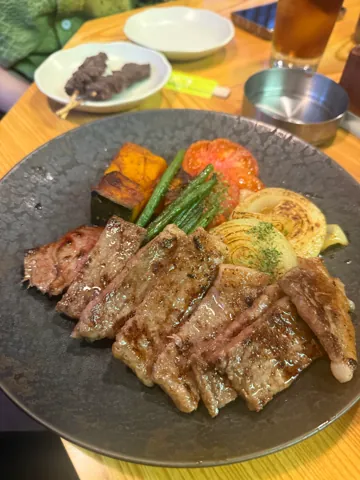
| Soya Kuroushi (宗谷黒牛) | Beef | Japan's northernmost beef brand, raised calf to finish at Soya Misaki Farm (宗谷岬牧場, Sōyamisaki 328), mostly on grass grown on the farm.50 Steakhouse Vin (ステーキハウスVin) received one Michelin star in the 2012 and 2017 Hokkaido special editions.12 |
| Wakkanai Milk (稚内牛乳) | Dairy | Non-homogenised, low-temperature-pasteurised milk from local farms. Its short shelf life (5 days) means you mostly drink it in Wakkanai. Made by JA Kita-Soya. Direct shop inside LaLa Plaza (Shiomi 1-10-15). Also sold at Wakkanai Select in Kitakara.51 Wakkanai Milk ice cream and drinking yogurt are also certified Wakkanai Brand products.45 |
| Yūchi potatoes (勇知いも) | Crop | Grown with reduced chemicals in the Yūchi district and registered under Hokkaido's YES!clean label. After a winter in snow-cooled storage they become as sweet as fruit by spring.52 |
| Poterana & Shikapan (ポテラーナ・シカパン) | Sweets | orange egg (オレンジエッグ) sells Poterana, a crema catalana made with Yūchi potatoes. It was selected for "Hokkaido High-Grade Foods 2016" and the Food Action Nippon Award 2016.53 Shikapan is a pastry shaped like a deer antler. Both are sold at the Kitakara shop.5354 |
| Other Wakkanai Brand products | Brand products | Includes Kobayashi-san's simmered whelk (小林さん家のつぶ煮), octopus and kombu ajillo (蛸と昆布のアヒージョ), both certified in 20222; Soya Misaki Farm hamburgers; salmon jerky (鮭とば); and the local bread "Akebono."45 |
| Furusato nozei gifts | Gifts | The city's special site features hair, king and snow crab, scallops, octopus, hokke, Soya Kuroushi beef and Wakkanai Milk dairy products.23 |
Culture & festivals
| Event | When | Highlights |
|---|---|---|
| First Sunrise at the Top (初日の出inてっぺん) | 1 January | Watch the New Year's first sunrise at Cape Soya.55 |
| Wakkanai Hyōsetsu no Hiroba (わっかない氷雪の広場) | Early February (2026: 7–8 Feb) | Started as an "Antarctic continent" winter event, inspired by the film Nankyoku Monogatari (Antarctica, 1983), which was filmed in Wakkanai Park. Now held in Central Park with snow tubing, slides and mini snow sculptures.56 |
| Soya Fureai Park Snowland (宗谷ふれあい公園スノーランド) | February (2027: 1–28 Feb planned) | A winter family play park at the prefectural park.55 |
| JAPAN CUP National Dog Sled Race (全国犬ぞり稚内大会) | Late February (2026: 40th race, 21–22 Feb) | Held at a special course at Ōnuma and described as one of Japan's biggest dog-sled races. It began after the film's Taro and Jiro dogs were given to the city and was first held in 1984. A winter local-products fair runs alongside.262 |
| Wakkanai Midnight Sun Festival (日本最北端わっかない白夜祭) | Mid-June, around the solstice (2026: 19–20 June) | A beer garden on the station plaza, products from friendship city Makurazaki, free Wakkanai Milk, and a film festival at T-Joy Wakkanai. In 2026 the film festival, in its 12th year, screened Nankyoku Monogatari for the 70th anniversary of Japan's Antarctic research.57 |
| Hokumon Shrine Festival (北門神社例大祭) | 4–6 July every year | About 250 stalls line the central arcade. On the 4th, dances such as Nanchū Soran are performed at the shrine. On the 5th, portable shrines are carried through town. On the 6th, a boat carrying a portable shrine leads fishing boats flying big-catch flags to Esanhomari fishing port at Noshappu.58 |
| Wakkanai Minato Nankyoku Matsuri (稚内みなと南極まつり) | First Saturday–Sunday of August (2026: 63rd, 1–2 Aug) | Two dance parades (Hokkai Teppen Odori and Nankyoku Odori), 2,500 fireworks, a products fair and boat races. It combines an older port festival with the "Antarctic Festival" first held in 1961.25 |
| Memorial service at the Gate of Ice and Snow | August | A yearly memorial and prayer for peace for those who died in Karafuto.17 |
| Wakkanai Peace Marathon (日本最北端わっかない平和マラソン大会) | Early September (2026: 9th race, 6 Sept) | Remembers the victims of the 1983 Korean Air Lines shootdown and calls for peace.55 |
| Wakkanai Night & Light | 1 Sept–25 Oct (2026) | Coloured lighting on the North Breakwater Dome and Wakkanai Park.55 |
- Nanchū Soran (南中ソーラン).
- Teachers and students at Wakkanai Minami Junior High School (稚内南中学校) created it in 1986. It is a rock arrangement of the Sōran fishing song, and its moves copy herring fishermen hauling in their nets. The present version was finished in 1992.59
- It won the grand prize at the national folk-song and dance contest in 1993 and was performed on NHK's Kōhaku Uta Gassen in 2003.59
- School groups across Japan now dance it. Wakkanai has held a national Nanchū Soran festival every three years since 2009.59
- Shrines and temples.
- Museums.
- Hoppō Kinenkan and the Centennial Tower (北方記念館・開基百年記念塔) in Wakkanai Park.61
- Wakkanai City Karafuto Memorial Museum (稚内市樺太記念館). It opened in 2018 and shows about 2,000 items donated by the National Karafuto Federation. Free entry.152
- Noshappu Kanryū Aquarium and the Youth Science Museum, known together as "Wakkarium" (わっかりうむ).622
- Kita no Sakuramori Park (北の桜守パーク), which shows material from the 2018 film Kita no Sakuramori (Sakura Guardian in the North).2
- Cultural properties.
- The city has 1 nationally registered tangible cultural property, 1 Hokkaido-designated property and 19 city-designated ones.37
- They include the Old Seto Residence (旧瀬戸邸, nationally registered) and the former Navy radio station at Makubetsu, known as the "Red Brick Communication Station" (赤れんが通信所). Messages to and from the front passed through it during the Pacific War, including the "Climb Mount Niitaka" code signal relayed at the start of the war.3763
Ainu heritage
- Chashi (fortified sites).
- Benten No. 1 and No. 2 Chashi (弁天1・2号チャシ) stand on the terrace behind the town, at Minato 2–3 chōme. From there you can see Soya and, in good weather, Sakhalin. No. 1 has a dry moat and three stepped terraces.64
- Pirikatai Chashi (ピリカタイチャシ), at the tip of a tongue-shaped plateau at Kiyohama, faces them across Soya Bay, within sight of them. The city suggests the chashi around the bay may have been linked to one another when they were built.33
- Archaeology. Ainu-period artefacts were found at the Onkoromanai 2 site together with much older material.34
- Trade. The Soya trading post (from the 1680s) was a place of trade between the Ainu and the Matsumae domain.2
- Ainu from Sakhalin.
- After the 1875 treaty, 841 Sakhalin natives were moved to Wakkanai.2
- The Karafuto Memorial Museum notes that Karafuto was home to indigenous peoples, the Ainu among them, before Japanese and Russian settlement.15
- Japanese Wikipedia lists Kashiwagi Ben (柏木ベン), a bearer of Ainu cultural traditions, among people from Wakkanai.3
- Place names. Wakkanai (yam-wakka-nay), Noshappu, Bakkai and Pirikatai all come from Ainu.29313233
- Facilities. No dedicated Ainu cultural centre or regular Ainu cultural programme in the city was found.
Sister & friendship cities
- Nevelsk (ネベリスク), Sakhalin, Russia. Formerly Japanese Honto (本斗). Friendship city since 8 September 1972. There is a "Wakkanai Street" in Nevelsk.84
- Baguio, Philippines. Sister city since 20 March 1973.84
- Port of Anchorage, Alaska, USA. Sister port since 27 July 1982.84
- Korsakov (コルサコフ), Sakhalin, Russia. Formerly Ōdomari (大泊). Friendship city since 2 July 1991 and friendship port since 8 September 1992.84
- Yuzhno-Sakhalinsk (ユジノサハリンスク), Russia. Formerly Toyohara (豊原). Friendship city since 9 September 2001. The city opened a Wakkanai office there on 8 May 2002.84
- Hengchun Township (恆春鎮), Pingtung County, Taiwan. Friendship-exchange agreement signed in 2023.2
- The city's furusato nozei site notes that exchanges with the three Sakhalin cities are currently difficult.23
- Domestic.
- Ishigaki, Okinawa: friendship city since 27 September 1987.85
- Makurazaki, Kagoshima: friendship city since 28 April 2012.85
- Aizu-Wakamatsu, Fukushima: a "place of historic ties" city. A joint declaration was signed in July 2008, together with Rishiri and Rishirifuji, for the 200th anniversary of the Aizu domain's northern guard.35
- The "Four Extremes of Mainland Japan" partnership with Nemuro, Sasebo and Minamiōsumi began with a pact on 3 May 1991.69
Notable people
- Nakai Hiroe (中井広恵, b. 1969): professional shogi player. She won the Women's Meijin title at 16 and in 1986 became the first recipient of Wakkanai's Civic Honor Award.86
- Fujita Masaki (藤田征樹, b. 1985): Paralympic cyclist. He won three medals at Beijing 2008, including two silvers on the track, then bronze at London 2012 and silver at Rio 2016.862
- Omote Akira (表章, 1927–2010): scholar of Noh history. He received the Japan Academy Prize and Imperial Prize in 2010.86
- Galileo Galilei: rock band. Japanese Wikipedia lists the band (together with its successor band BBHF) among people from Wakkanai.3
- Hatakeyama Midori (畠山みどり): enka singer, listed by Japanese Wikipedia as from Wakkanai.3
- Taihō Kōki (大鵬幸喜): the post-war grand champion (yokozuna) came ashore at Wakkanai as a boy evacuated from Karafuto. A 2020 monument records his words that Wakkanai was "the starting point" of his career.67
Sources
Numbers in the text link to these sources. Figures as of 23 September 2026
- 稚内市のご紹介 — 稚内市 JA accessed 2026-09-23
- 稚内のあゆみ(歴史) — 稚内市 JA accessed 2026-09-23
- 稚内市 — Wikipedia JA accessed 2026-09-23
- 令和7年度 稚内市統計書 第3章 国勢調査 — 稚内市 JA accessed 2026-09-23
- 令和7年国勢調査 人口速報集計 第1表(男女別人口、世帯数、人口増減率、面積及び人口密度-全国、都道府県、市区町村) — 総務省統計局 via e-Stat JA accessed 2026-09-23
- 北海道稚内市 トップページ(人口と世帯数 2026年8月末現在) — 稚内市 JA accessed 2026-09-23
- 令和7年度 稚内市統計書 第1章 土地・気象 — 稚内市 JA accessed 2026-09-23
- 稚内・利尻・礼文間のアクセス — きた・北海道DMO JA accessed 2026-09-23
- 稚内市のシンボルマークについて — 稚内市 JA accessed 2026-09-23
- りんぞうくん(稚内市キャラクターデザイン)の使用について — 稚内市 JA accessed 2026-09-23
- Wakkanai — Wikipedia EN accessed 2026-09-23
- ご当地グルメ大集合!稚内・利尻・礼文に行くなら絶対に食べたいおすすめメニュー — きた・北海道DMO JA accessed 2026-09-23
- 宗谷岬 — きた・北海道DMO JA accessed 2026-09-23
- Cape Soya — HOKKAIDO LOVE! (Hokkaido Tourism Organization) EN accessed 2026-09-23
- 稚内市樺太記念館 — きた・北海道DMO JA accessed 2026-09-23
- 稚内港北防波堤ドーム — きた・北海道DMO JA accessed 2026-09-23
- 氷雪の門(樺太島民慰霊碑) — きた・北海道DMO JA accessed 2026-09-23
- 九人の乙女の碑 — きた・北海道DMO JA accessed 2026-09-23
- 令和7年度 稚内市統計書 第4章 農業・水産業 — 稚内市 JA accessed 2026-09-23
- 宗谷のたこ — 稚内ブランド推進協議会 JA accessed 2026-09-23
- 北海道遺産について — 稚内市 JA accessed 2026-09-23
- 白い道 — きた・北海道DMO JA accessed 2026-09-23
- 稚内市日本のてっぺん応援基金|稚内ふるさと納税特設ページ — 稚内市 JA accessed 2026-09-23
- 稚内公園 — きた・北海道DMO JA accessed 2026-09-23
- 第63回稚内みなと南極まつり — きた・北海道DMO JA accessed 2026-09-23
- JAPAN CUP 全国犬ぞり稚内大会 — きた・北海道DMO JA accessed 2026-09-23
- 稚内の"推し麺" ご当地グルメ「チャーメン」を食べに行こう! — きた・北海道DMO JA accessed 2026-09-23
- キタカラ(KITAcolor) — きた・北海道DMO JA accessed 2026-09-23
- アイヌ語地名リスト ル~ワ P141-145(2007, archived) — 北海道環境生活部アイヌ政策推進室 via Internet Archive JA accessed 2026-09-23
- ヤムワッカナイ温泉 港のゆ — きた・北海道DMO JA accessed 2026-09-23
- ノシャップ岬 — きた・北海道DMO JA accessed 2026-09-23
- 抜海岩陰遺跡 — 稚内市 JA accessed 2026-09-23
- ピリカタイチャシ — 稚内市 JA accessed 2026-09-23
- オンコロマナイ2遺跡 — 稚内市 JA accessed 2026-09-23
- ゆかりの地交流都市 福島県「会津若松市」との交流 — 稚内市 JA accessed 2026-09-23
- 宗谷護国寺跡 — 稚内市 JA accessed 2026-09-23
- 稚内市の主な文化財 — 稚内市 JA accessed 2026-09-23
- 宗谷岬公園(宗谷岬平和公園) — きた・北海道DMO JA accessed 2026-09-23
- 稚内 観測史上1~10位の値 — 気象庁 JA accessed 2026-09-23
- 稚内市宿泊税について — 稚内市 JA accessed 2026-09-23
- 稚内 平年値(年・月ごとの値) — 気象庁 JA accessed 2026-09-23
- 宗谷丘陵 — きた・北海道DMO JA accessed 2026-09-23
- 令和7年度 稚内市統計書 第7章 観光 — 稚内市 JA accessed 2026-09-23
- 令和7年度 稚内市統計書 第2章 人口 — 稚内市 JA accessed 2026-09-23
- 稚内ブランド公式ウェブサイト — 稚内ブランド推進協議会 JA accessed 2026-09-23
- ふるさと納税『稚内市日本のてっぺん応援基金』 — 稚内市 JA accessed 2026-09-23
- お食事処 ふじ田 — キタカラ KITAcolor(株式会社まちづくり稚内) JA accessed 2026-09-23
- 稚内副港市場 — きた・北海道DMO JA accessed 2026-09-23
- 稚内銀杏草 — 稚内ブランド推進協議会 JA accessed 2026-09-23
- 宗谷黒牛 — 稚内ブランド推進協議会 JA accessed 2026-09-23
- 稚内牛乳 — 稚内ブランド推進協議会 JA accessed 2026-09-23
- 勇知いも — 稚内ブランド推進協議会 JA accessed 2026-09-23
- オレンジエッグ キタカラ店 — きた・北海道DMO JA accessed 2026-09-23
- orange egg[オレンジエッグ] — キタカラ KITAcolor(株式会社まちづくり稚内) JA accessed 2026-09-23
- イベント(一覧) — きた・北海道DMO JA accessed 2026-09-23
- わっかない氷雪の広場 — きた・北海道DMO JA accessed 2026-09-23
- 日本最北端わっかない白夜祭 — きた・北海道DMO JA accessed 2026-09-23
- 北門神社例大祭 — きた・北海道DMO JA accessed 2026-09-23
- 南中ソーラン — 稚内ブランド推進協議会 JA accessed 2026-09-23
- 北門神社 — きた・北海道DMO JA accessed 2026-09-23
- 稚内市北方記念館(百年記念塔) — 稚内市 JA accessed 2026-09-23
- ノシャップ寒流水族館 — きた・北海道DMO JA accessed 2026-09-23
- 旧海軍大湊通信隊稚内分遣隊幕別送信所(通称:赤れんが通信所) — 稚内市 JA accessed 2026-09-23
- 弁天1・2号チャシ — 稚内市 JA accessed 2026-09-23
- 稚内市大沼野鳥観察館(大沼バードハウス) — 稚内市 JA accessed 2026-09-23
- 稚内温泉「童夢」 — きた・北海道DMO JA accessed 2026-09-23
- 大鵬幸喜上陸の地記念碑 — きた・北海道DMO JA accessed 2026-09-23
- Base-Soya(宗谷岬展望台) — きた・北海道DMO JA accessed 2026-09-23
- 本土四極市町連携交流 — 稚内市 JA accessed 2026-09-23
- 各種施設(教育・文化・スポーツ) — 稚内市 JA accessed 2026-09-23
- わっかない — 北海道の道の駅(北海道道の駅連絡会) JA accessed 2026-09-23
- 住所等一覧 — 北海道の道の駅(北海道道の駅連絡会) JA accessed 2026-09-23
- 施設ガイド — キタカラ KITAcolor(株式会社まちづくり稚内) JA accessed 2026-09-23
- ワッカナイセレクト — キタカラ KITAcolor(株式会社まちづくり稚内) JA accessed 2026-09-23
- 稚内市観光案内所(キタカラ内) — きた・北海道DMO JA accessed 2026-09-23
- ワッカナイセレクト — きた・北海道DMO JA accessed 2026-09-23
- セレクトカフェ モカマタリ — キタカラ KITAcolor(株式会社まちづくり稚内) JA accessed 2026-09-23
- 地域交流センター — キタカラ KITAcolor(株式会社まちづくり稚内) JA accessed 2026-09-23
- 稚内・利尻・礼文へのアクセス — きた・北海道DMO JA accessed 2026-09-23
- 稚内・利尻・礼文へのアクセス(札幌から稚内へ) — きた・北海道DMO JA accessed 2026-09-23
- 2026年3月ダイヤ改正について — 北海道旅客鉄道(JR北海道) JA accessed 2026-09-23
- ヒグマ目撃情報 — 稚内市 JA accessed 2026-09-23
- エゾシカとの衝突事故にご注意ください! — 稚内市 JA accessed 2026-09-23
- 友好都市・姉妹都市 — 稚内市 JA accessed 2026-09-23
- 国内交流 — 稚内市 JA accessed 2026-09-23
- 稚内市民栄誉賞 — 稚内市 JA accessed 2026-09-23