Abashiri 網走市
あばしりし
A port city on the Sea of Okhotsk and the seat of Okhotsk Subprefecture. Drift ice reaches its shore most winters, and the icebreaker Aurora sails out into it from the city's Michi-no-Eki12. Abashiri is also known for its Meiji-era prison, now an open-air museum, and for the Moyoro Shell Mound of the ancient Okhotsk culture34.
- Population (2020 Census)
- 35,759
- Area
- 470.84 km²
- Official website
- www.city.abashiri.hokkaido.jp
Known for
- Drift ice and the icebreaker Aurora: sea ice forms from Amur River fresh water and drifts south. It usually appears off Abashiri in late January1. The sightseeing icebreaker Aurora (おーろら) sails from the Michi-no-Eki from 20 January to 31 March15. February is the busiest month for tourism: 299,000 visitors came in February 20256.
- Abashiri Prison (網走監獄): founded in 1890. Its prisoners built the Central Road toward Asahikawa, and more than 200 of them died16. The open-air Abashiri Prison Museum keeps 25 prison buildings; 8 are Important Cultural Properties3.
- Okhotsk culture and northern peoples: the Moyoro Shell Mound (モヨロ貝塚) holds a village of about 1,300 years ago and is a national historic site417. The Hokkaido Museum of Northern Peoples is the only museum in Japan devoted to the cultures of northern peoples18.
- Seafood: hairy crab caught just after the drift ice leaves, sweet scallops from Lake Notoro, line-caught kinki (釣きんき) and large shijimi clams from Lake Abashiri19. Salmon is the top catch by value (¥7.17 billion in 2024)6. Frozen surimi, the raw material of kamaboko, was first produced commercially in Abashiri after a Hokkaido research station in the city developed it in 196020.
- Lakes: Lake Notoro turns red with Japan's largest colony of coral grass (サンゴ草) in September21. Lake Abashiri is known for ice fishing for wakasagi (pond smelt)22. Lake Tōfutsu is a Ramsar wetland for swans and eagles23.
- Drift-ice food: the blue Ryūhyō Draft (流氷ドラフト) beer is brewed with drift ice. There are also drift-ice curry, soft-serve and candy2420.
- Farming: wheat, sugar beet, potatoes and broiler chickens. Farm output was worth about ¥39 billion in 20246. Two beef brands, Okhotsk Abashiri Wagyu and Abashiri Kangoku ("Prison") Wagyu, come from here24.
Sights & activities
Nature & scenery
- Tento-zan (天都山): a 207 m hill and national Place of Scenic Beauty176. The free rooftop deck of the Ryūhyō-kan gives a 360° view of the Shiretoko mountains, the Okhotsk Sea and sunset over Lake Abashiri482. The volunteer-run flower garden Hana-Tento (はな・てんと) peaks in September4341.
- Cape Notoro (能取岬, Misaki): a headland 20 minutes from the city center. The lighthouse was first lit in 1917 and is the oldest reinforced-concrete lighthouse in Hokkaido. It is 21 m tall and its light reaches about 36 km. Drift ice is seen here first in the city, and the dark sky is good for stars. A "wish bell" and scallop-shell votive plaques were added in December 202535.
- Lake Notoro coral grass (能取湖サンゴ草群落地, Uparaunai 60-3): Japan's largest colony of coral grass (Salicornia, also called akkeshisō). About 4 ha turn red from late August to late September. A wooden boardwalk leads into the field. The colony had declined but was declared restored in August 2015. Free; 16 minutes by car from Abashiri Station21.
- Ōmagari Lakeside Park (大曲湖畔園地, Sanchō 24): an 80 ha park on former prison farmland, opened in 2005. About 400,000 sunflowers bloom in early to mid-July. In a second crop from late September to early October, about 2.6 million sunflowers cover 14 ha, with cosmos alongside. Open early May–15 October, 9:00–17:00, free, with about 1,000 parking spaces49.
- Lake Tōfutsu (濤沸湖): a Ramsar wetland for swans and eagles. The Tōfutsu-ko Waterfowl and Wetland Center opened in 2012236. The Koshimizu Gensei-kaen flower meadow on the sandbar is across the border in Koshimizu23.
- Kitahama Station (北浜駅): on the Senmō Line, about 20 m from the Okhotsk shore. The café Teishajō (停車場) has run in the old station office since 1986, with seats from old railway cars. The observation deck was removed in May 202634.
- Ponmoi columnar joints (ポンモイ柱状節理): andesite columns on the shore, a city natural monument176.
Onsen
- Abashiri Kohan Onsen (網走湖畔温泉): a hot-spring area on the shore of Lake Abashiri36.
Museums & heritage
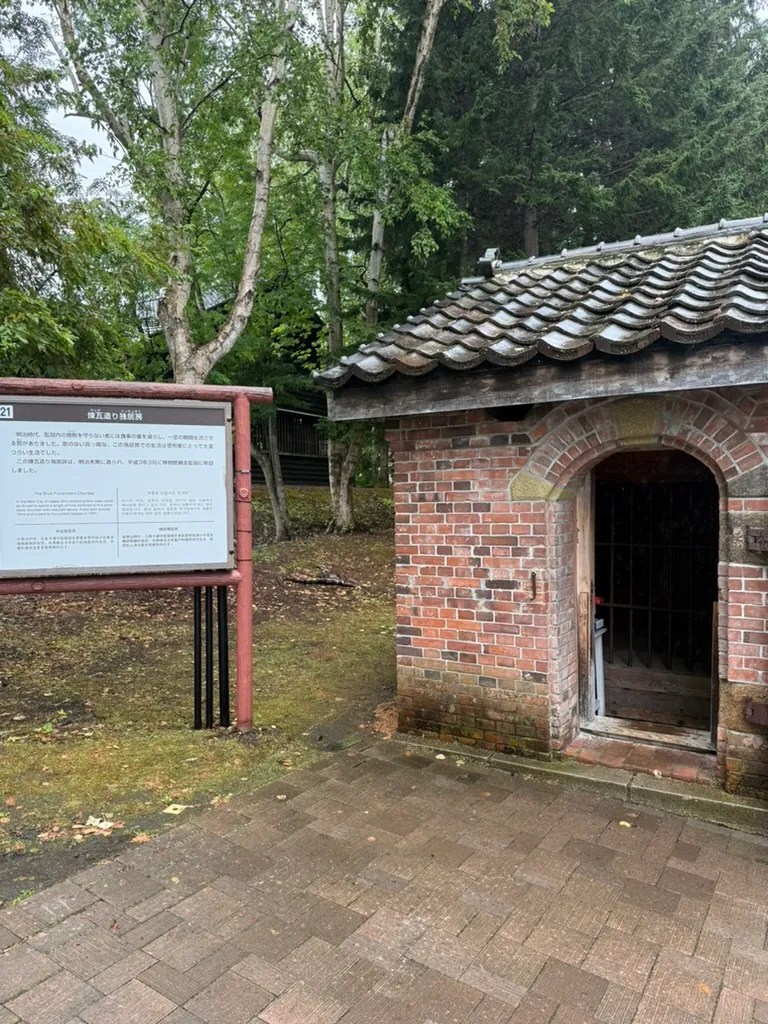
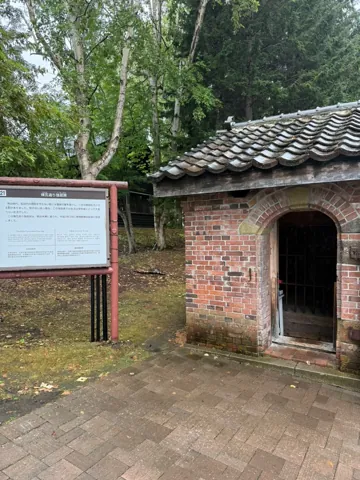
- Abashiri Prison Museum (博物館網走監獄, Yobito 1-1): an open-air museum of real prison buildings from the Meiji era on, moved and restored on the Lake Abashiri side of Tento-zan. It covers an area about 3.5 times the Tokyo Dome. There are 25 buildings. 8 are Important Cultural Properties, including the administration building, the chapel, the Futamigaoka branch prison and the radial cell block used from 1912 to 1984. 6 more are Registered Tangible Cultural Properties3. Japanese Wikipedia describes its five-wing radial cell block as Japan's oldest surviving prison building and the world's oldest wooden prison building50. Open 9:00–17:00 (last entry 16:00); closed 31 December and 1 January; adults ¥1,500; parking for 400 cars333. The museum's dining hall serves a "prison meal" modeled on today's Abashiri Prison menu3350.
- Okhotsk Ryūhyō-kan (オホーツク流氷館, Tentozan 244-3): a drift-ice museum with real sea ice in a −15 °C room. You can freeze a wet towel solid (the "shibare" experience). It also has a 360° film of the sea under the ice and a five-screen theater. Open May–Oct 8:30–18:00 and Nov–Apr 9:00–16:30; no closing days; adults ¥99048.
- Hokkaido Museum of Northern Peoples (北海道立北方民族博物館, Shiomi 309-1): Japan's only museum devoted to northern peoples, from Greenland to Scandinavia, including the Okhotsk culture. More than 900 items are on display, such as a seal-gut parka and a full-size Alaskan winter house. There is a free audio guide in five languages. Open 9:30–16:30 (9:00–17:00 in Jul–Sep). Closed Mondays, except in February and July–September; adults ¥55018.
- Moyoro Shell Mound Museum (モヨロ貝塚館, Kita 1-jō Higashi 2-chōme): shows the dwellings, graves and shell layers of the Okhotsk village. Paths lead through the site. Open 9:00–17:00 (until 16:00 in Nov–Apr). Closed Mondays and holidays from October to June; adults ¥300. It is a 25-minute walk from Abashiri Station4. It reopened after renovation in 20136.
Outdoor & seasonal activities
- Icebreaker Aurora (流氷観光砕氷船おーろら): from 20 January to 31 March. The large ship Aurora takes about 1 hour; adults pay ¥7,000 (special seats +¥500). The small Aurora 3 goes farther offshore for about 2 hours (¥9,800) and is planned for March. Seals and birds can be seen on the ice, but not clione. When there is no ice, the Aurora cruises to Cape Notoro and the Aurora 3 does not sail151.
- Abashiri Nature Cruise (あばしりネイチャークルーズ): whale, dolphin and seabird watching. May 1–October 31, Friday to Sunday and holidays, 9:30 departure, 2.5–3 hours. Adults ¥8,800, online booking only; 6–20 people. Boats leave from the pier behind the Michi-no-Eki51.
- Winter: wakasagi fishing on Lake Abashiri (see festivals)22. In February you can also try drift-ice kayaking and fat-biking43.
- Cycling: rental bikes from the tourist counter at the Michi-no-Eki. A cycling road runs west to Tokoro52.
- Skiing: the city-run Lake View ski area (レークビュースキー場) on Tento-zan has a pair lift about 800 m long, seven courses and night lighting6.
- Camping and farms: the Tentland auto campground opened in 19946. Ōmagari Lakeside Park offers asparagus and tomato picking (ask ahead)49.
Food experiences
Roadside stations (Michi-no-Eki)
Ryūhyō Kaidō Abashiri (道の駅流氷街道網走)
- Location: 4-5-1 Minami 3-jō Higashi, Abashiri (網走市南3条東4丁目5-1), at the mouth of the Abashiri River on Hokkaido Road 1083 (網走港線)5354. It looks out over the Okhotsk Sea and the Shiretoko Peninsula2. It is about 8 minutes by car from JR Abashiri Station54. Abashiri Bus calls its stop here "Ryūhyō Saihyōsen Noriba (Michi-no-Eki)" (流氷砕氷船のりば(道の駅)), served by the sightseeing loop, the Memanbetsu Airport line and the Shiretoko Airport Liner55; Japanese Wikipedia gives the stop as "Aurora Terminal" (おーろらターミナル)54. A taxi from the station costs about ¥90052.
- Hours: station and shop 9:00–18:00 (the same all year since April 2026); restaurant 11:00–15:30; takeaway counter 10:00–16:00. Closed 31 December–1 January256. The tourist information counter inside is open 9:00–18:00; the tourism site gives its year-end closure as 29 December–3 January on one page and 30 December–5 January in its footer20. As of September 2026 — check before visiting.
- Shops & products: local farm and seafood products, sweets, station goods and Abashiri pudding (網走プリン)2. Also sold here: Kimigasode sake, Ryūhyō Draft beer and wakasagi tsukudani20. The tourist association counter sells Nipopo dolls, Ryūhyō candy and Sakhalin Irga woodcraft20.
- Food: a restaurant and takeaway counter. Signature items are the Abashiri zangi-don (fried-chicken bowl), Abashiri champon, the Abashiri Burger (made with Abashiri nagaimo, Kin-jirushi wasabi and pink salmon) and Aurora soft-serve (おーろらソフト)2. The second-floor food court, Kinema-kan (キネマ館), recreates Abashiri as the Shōwa-era film location it once was240.
- Facilities:
- Parking: 106 cars and 16 large vehicles, per the Hokkaido Michi-no-Eki site. Japanese Wikipedia lists 14 large vehicles and 3 accessible spaces254.
- Toilets with warm-water seats, an accessible toilet, an ostomate toilet and a baby-changing table2. The official page does not say whether the toilets are open 24 hours.
- Wi-Fi, tourist information, an information corner, an observation deck, and credit card and cashless payment2.
- Rental bicycles (26 bikes, including e-bikes at ¥2,500 a day) from the tourist counter; ID and a ¥1,000 deposit are needed52.
- No EV charger is listed on the official page.
- Notes:
- Registered as a Michi-no-Eki on 10 December 200853. It opened on 19 January 2009; the building is officially the Minato Tourism Exchange Center (みなと観光交流センター)546. The area was registered as a "Minato Oasis" (port oasis) in 201054.
- It is the winter terminal for the icebreaker Aurora and the summer base of the nature cruise251. The shop and food court are run by Dōtō Kankō Kaihatsu, which also operates the Aurora40.
- It welcomed its 10 millionth visitor in its 17th year (2025), with a ceremony and gifts of local crab6.
- The stamp can be pressed during opening hours, but not on closed days2.
Getting there & around
- Air: Memanbetsu Airport (女満別空港) in Ozora is about 30 minutes from the city by car. Buses meet arriving flights and take about 35 minutes to Abashiri Bus Terminal. For departures, the bus leaves the terminal about 70 minutes before the flight52.
- Rail: JR Abashiri Station is the end of both the Sekihoku Main Line and the Senmō Main Line57.
- The Limited Express Okhotsk runs two round trips a day to Sapporo. The Special Rapid Taisetsu and Rapid Kitami run to Asahikawa57.
- Times: Sapporo about 5 h 30 min by limited express; Asahikawa about 3 h 50 min; Kushiro about 3 h 20 min by rapid; Shiretoko-Shari about 50 min52.
- Other stations in the city: Yobito (Sekihoku Line), and Katsuradai, Masuura, Mokoto and Kitahama (Senmō Line)5. In drift-ice season the sightseeing train Ryūhyō Monogatari runs between Abashiri and Shiretoko-Shari52.
- Road: National Routes 39, 238, 244 and 334 run through the city; Routes 240, 243, 239, 242 and 391 share parts of their roads5. By car it is about 5 h 30 min from Sapporo via the Dō-ō and Asahikawa-Monbetsu expressways and Route 450, and about 30 min from Memanbetsu via Route 3952.
- Highway buses: Abashiri Bus runs the Dreamint Okhotsk to Sapporo and the Chitose Okhotsk Express to New Chitose Airport. Both need reservations52.
- Around town:
- Abashiri Bus runs city routes, a loop bus to the sightseeing facilities, the seasonal Shiretoko Airport Liner, and an on-demand "Doko Bus" that you book ahead52.
- Taxi fares from Abashiri Station: airport about ¥6,800, Ryūhyō-kan ¥2,000, Prison Museum ¥1,700, Museum of Northern Peoples ¥1,900, Aurora Terminal ¥900, Lake Tōfutsu swan park ¥4,500. The GO taxi app works in the city from 18 June 202652.
- Rental car offices are near the station52.
Practical tips
- Drift ice: the ice usually comes ashore in early to mid-February, which is also festival time43. It is never guaranteed. In 2025 it arrived only in mid-February and the Aurora sailed in ice on just 28 days1. With no ice, the large ship cruises to Cape Notoro and the Aurora 3 is cancelled. Check the operator's daily status before you go15.
- Winter clothing: January averages a high of −2.2 °C and a low of −8.9 °C; February −2.0 °C and −9.6 °C. Wear gloves, a hat that covers your ears, and non-slip rubber soles, especially on the icebreaker43.
- March and April: March can bring "doka-yuki", heavy snow that sometimes stops all transport. Roads are slushy during the thaw, so boots are wise43.
- Summer and autumn: nights in June can drop below 5 °C, so pack a sweater43. Sunflowers peak in mid-July and late September49. Coral grass is red from late August to late September21. The salmon run peaks in October43.
- Visitor centers: the tourist association has counters at the Michi-no-Eki (9:00–18:00) and at JR Abashiri Station (12:00–17:00 on weekdays; 9:00–17:00 on weekends, holidays and from 20 January to 31 March). Both close over New Year; the dates are given as 30 December–5 January in the site footer, but as 29 December–3 January on the specialty page20.
- Opening days: the Museum of Northern Peoples closes on Mondays except in February and July–September. The Moyoro museum closes on Mondays from October to June184. The Prison Museum is closed only on 31 December and 1 January3.
- Wildlife: foxes and deer often appear around Cape Notoro, and it is pitch dark at night, so carry a light35. Feeding birds at Lake Tōfutsu has been banned since 2010 because of bird flu23. Brown bears live in forests across eastern Hokkaido; check local notices before walking in the hills.
- Cape Notoro toilets: open 8:00–17:00 in April–October and 9:00–16:00 in November–March35.
Photos
-
 Aug 2026
More about Abashiri
At a glance
| Field | Details |
|---|---|
| Type | City (市). Seat of the Okhotsk General Subprefectural Bureau and the core city of the Okhotsk region5 |
| Subprefecture | Okhotsk (オホーツク総合振興局) |
| District | None (cities belong to no district). The area was historically part of Abashiri District (網走郡) in Kitami Province (北見国)6 |
| Population | 35,759 at the 2020 Census, in 17,253 households6. The preliminary 2025 Census count was 32,770 (16,354 men, 16,416 women), down 8.4%. That made Abashiri the 20th-largest of Hokkaido's 179 municipalities7. The resident register showed 30,929 people (565 of them foreign residents) in 17,568 households at the end of August 20268. The Hokkaido Government's register figure for 1 January 2026 was 31,5189 |
| Area | 470.84 km² (GSI, 1 April 2026)10. In the FY2024 fixed-asset land survey, forest land covers 15,094 ha, fields 13,934 ha and residential land 1,144 ha. The location box in the city's own statistics book still gives 471.00 km²6 |
| Density | About 65.7 people/km² (August 2026 register). It was about 75.9/km² at the 2020 Census |
| Municipal history | In 1872 the area got the name Abashiri Village (網走村). The city counts this as its founding (開基)6. Eight villages were set up in the district that year, including Abashiri, Notoro, Moyoro, Mokoto and Tōfutsu5. Abashiri Town (網走町) formed on 1 April 1902. It absorbed Notoro and Mokoto villages on 1 April 191565. Memanbetsu split off on 1 April 1921. City status came on 11 February 1947, and Higashimokoto split off the same day6. Both split-off areas are now in Ozora Town11 |
| Neighboring municipalities | Kitami, Ozora, Koshimizu5 |
| Symbols | Tree: katsura (カツラ), chosen from public suggestions for the city's 25th anniversary and designated on 12 August 1972. Flower: Ezo-murasaki-tsutsuji (エゾムラサキツツジ, Rhododendron dauricum), designated on 2 October 1977 for the 30th anniversary. No city bird is listed126. The emblem (22 March 1940) merges the katakana ア and the kanji 走 into the shape of an anchor, for the port13 |
| Mascot | Nipone (ニポネ), picked by public contest in November 2012. It combines a carved Nipopo doll and a clione ("sea angel"). It wears a city-flower badge and a headband with a northern-peoples pattern. Its birthday is 22 November14 |
| Official website | https://www.city.abashiri.hokkaido.jp/ |
Name origin
- The city name: Abashiri comes from Ainu. The kanji 網走 ("net" + "run") only spell the sound. The Hokkaido Government's Ainu place-name list gives these theories25:
- apa-siri, "leaking place". A cave mouth dripped water like a leaking roof.
- ci-pa-sir, "the rock we found". A white rock shaped like a person in a kasa hat once stood on the south shore of Lake Abashiri. The Ainu found it and worshipped it. It has since collapsed. Nagata Hōsei read the name as "the land we found". Matsuura Takeshirō's 1858 diary says the name came from a standing rock called "Jibashiri", an offering site at the mouth of the lake.
- cipa-sir, "island with an offering altar". This was first the name of Bōshi-iwa (帽子岩, "Hat Rock"), in the sea near the mouth of the Abashiri River. The Ainu kept an altar (nusa) there for the god of the offing. Cipa was an old word, so later Ainu no longer understood it and reread the name as ci-pa-sir. This is the view of the Abashiri City History. Japanese Wikipedia adds that fishermen offered inau at Hat Rock before going to sea5.
- Folk tales say a rock god danced singing "chipashiri, chipashiri", or that a bird flew crying the same words.
- The list finds ci-pa-sir or cipa-sir plausible. Because there are so many theories, it calls the origin "unknown"25.
- The city's own summary: the city lists "a-pa-siri" (the land we found), "apa-siri" (the land at the entrance) and "chiba-siri" (island with an offering altar). It says all are Ainu words written with kanji13.
- Other Ainu names in the city:
- Notoro (能取), from not-or, "the place of the cape". Big lakes had no special names and were just called to (lake). "Notoro-ko" is a Japanese coinage meaning "the lake at Notoro"26.
- Tōfutsu (濤沸), from to-put, "mouth of the lake". The Japanese named the lake after its mouth27.
- Mokoto (藻琴), probably from mokor-to, "sleeping lake", because the lake is calm among hills (Chiri Mashiho). Other readings are po-kot-to, "lake with a child pond", and muk-to, "blocked lake"28.
- Yobito (呼人), from i-opi-to, "the lake that left it": the long inlet that branches off the north-east of Lake Abashiri28.
- Lake Riyaushi (リヤウシ湖), from riya-us-to, "the lake where people always spend the winter"28.
- Urashibetsu (浦士別), from uray-us-pet, "river with fish weirs". The Abashiri City History says a kotan (Ainu village) stood there and fish weirs were set at the river mouth29.
- Uparaunai (卯原内), from o-par-ray or u-par-ray, "river whose mouth dies out". Its mouth into Lake Notoro is marshy and hard to see29.
History
- Prehistory: people have lived around Abashiri for about 20,000 years6. From about the 5th century, the Okhotsk culture flourished along the Okhotsk coast for some 800 years. In its late phase it blended with the Satsumon culture, and it lasted until Ainu culture formed around the 13th century5. About 1,300 years ago the Moyoro village stood at the mouth of the Abashiri River. Its people hunted sea mammals, worshipped the bear, and buried their dead with pots over their heads430. Digs have found more than 100 skeletons, bone and antler tools, iron swords probably made in Honshu, and bronze bells probably brought from the continent30. The amateur archaeologist Yonemura Kioe found the site in 1913 and moved to Abashiri5. It became a national historic site on 16 December 193617.
- Ainu era: the Katsuragaoka Chashi (桂ヶ岡砦跡), a hilltop Ainu fort with moats, became a national historic site on 24 December 1935176.
- Edo period: a coastal map of 1798 by Taniguchi Seizan shows Abashiri and its fishing station (番屋). In 1812 Fujino Kihei (藤野喜兵衛), the merchant who held the trading and fishing rights (場所請負人), founded a Benten shrine at the river mouth; it is now Itsukushima Shrine. Matsuura Takeshirō traveled up the Abashiri River in 18585. Painted votive plaques of ships that Fujino offered for safe voyages, dated 1821–1873 and 1845–1875, are kept at Abashiri Shrine and Masuura Inari Shrine6.
- Early Meiji: in 1869 the area became Abashiri District of Kitami Province. The explorer Thomas Blakiston saw the Ponmoi columnar-jointed rocks that year5. Abashiri Village was named in 18726. It became the center of the four Kitami districts (Shari, Abashiri, Tokoro and Monbetsu). A district office opened in 1880, and the Abashiri Subprefecture office (網走支庁) in 18976.
- Prison and roads: in 1890 an outpost of Kushiro Prison opened here to house prisoners for road building. In 1891 they built about 160 km of the Central Road in a single year. Injuries and malnutrition killed more than 200 of them16. The road to Kushiro was finished in 1890 and the Central Road to Asahikawa opened in 18916. The prison became Abashiri Kangoku in 1903, burned in a wildfire in 1909, was rebuilt by 1912, and became Abashiri Prison (網走刑務所) in 192216.
- Settlers: in 1897 the Hokkōsha (北光社) settler group landed at Abashiri on its way to its farm at Notsukeushi (now Kitami). The first tondenhei (farmer-soldiers) for the region also arrived by ship that year5.
- Railway and port: the railway from Notsukeushi reached Abashiri in 1912, and Abashiri Station opened56. The line to Shari opened in 1925, the Senmō Line to Kushiro was completed in 1931, and the Sekihoku Line to Asahikawa in 19326. Harbor construction began in 1919. The city profile says the first works were finished in 1923, but the city timeline dates their completion to March 19306.
- City status: Abashiri became a city on 11 February 1947. After the war the Abashiri Fisheries Cooperative was founded (1949), and Abashiri Quasi-National Park was designated on 1 July 1958631. The first Okhotsk Drift Ice Festival opened in February 1966632.
- Late 20th century: Abashiri Port became an "important port" in 1978 and an international trade port in 19806. The Abashiri Prison Museum opened in 198333. The Yūmō Line along Lake Notoro closed in 19876. Tokyo University of Agriculture opened its Faculty of Bioindustry here in 1989. The icebreaker Aurora began sailing on 15 January 1991, and the Hokkaido Museum of Northern Peoples opened on 10 February 19916.
- 21st century: the Michi-no-Eki opened on 19 January 2009. The new Okhotsk Ryūhyō-kan opened in 20156. Buildings at the Prison Museum became Important Cultural Properties in 201617. The small icebreaker Aurora 3 entered service on 1 March 2023. A new city hall opened on 25 February 20256. The Michi-no-Eki welcomed its 10 millionth visitor in its 17th year6. The observation deck at Kitahama Station, open since 2002, was demolished on 22 May 2026 because it had become unsafe34. The population fell 8.4% between the 2020 and 2025 censuses7.
Geography & climate
- Location: on the Sea of Okhotsk in north-eastern Hokkaido, at about 44°02′N, 144°14′E6. The coast runs from Lake Notoro in the west, past Cape Notoro and the city center, to Lake Tōfutsu in the east3510. The Abashiri River flows from Lake Abashiri through the city center to the sea36.
- Lakes: the city's five lakes cover 101.93 km² (1993 survey): Notoro 58.51 km², Abashiri 32.87 km², Tōfutsu 9.01 km², Mokoto 1.12 km² and Riyaushi 0.42 km²6. The GSI's newer figures are Notoro 58.18 km² (all in Abashiri), Abashiri 32.27 km² (20.02 km² in Abashiri, 12.24 km² in Ozora) and Tōfutsu 8.19 km² (4.64 km² in Abashiri, 3.55 km² in Koshimizu)10.
- Lake Abashiri is brackish. At high tide seawater flows back up the river into the lake36.
- Lake Notoro opens to the sea. It has been treated as "sea" under fisheries law since 1 September 20186.
- Lake Tōfutsu, shared with Koshimizu, was listed under the Ramsar Convention on 8 November 2005. More than 60,000 geese and ducks stop there each year. Whooper swans gather there too, and many white-tailed and Steller's sea eagles spend the winter23.
- Hills and coast: Tento-zan (天都山, 207 m) is a national Place of Scenic Beauty (1938), with views along the coast to the Shiretoko Peninsula617. Cape Notoro juts into the Sea of Okhotsk, with a lighthouse at its tip35 and sea cliffs along the Notoro Peninsula31. The Ponmoi columnar-jointed andesite on the shore is a city natural monument176.
- Parks: Abashiri Quasi-National Park was designated on 1 July 1958. It covers 37,261 ha in seven municipalities and includes the lakes, Tento-zan and Cape Notoro31.
- Climate: the city describes its weather as sunny, with little rain or snow for Hokkaido. The sea keeps the temperature range narrow, so winters are mild for eastern Hokkaido6. JMA normals for Abashiri37:
- Mean annual temperature 6.9 °C. January averages −5.1 °C (daily low −8.9 °C); August averages 19.6 °C (daily high 23.3 °C).
- Precipitation 844.2 mm a year; snowfall 312 cm; sunshine 1,850 hours.
- Records: 37.6 °C on 7 August 1994; −29.2 °C on 25 January 1902; snow depth 143 cm on 23 February 2004; 163.0 mm of rain in a day on 11 September 199238.
- In 2024 the city had 760.5 mm of rain, a high of 33.5 °C (22 July) and a low of −15.7 °C (21 January). Deepest snow in winter 2024–25 was only 29 cm6.
- Drift ice: the Abashiri weather station first saw ice on 19 January 2024 (ashore 22 January) and on 15 February 2025 (ashore 17 February). It stopped recording the last day of drift ice after 20216. The Aurora's own records show 54 days of sailing in ice in 2026, but only 28 in 20251. The city notes that the sea-ice area is shrinking and the period in which drift ice is observed is getting shorter6.
Economy & industry
- Jobs: at the 2020 Census, 16,723 residents had jobs. 2,195 worked in primary industries (1,409 in farming, 761 in fishing), 2,555 in secondary industries and 11,448 in services6.
- Farming (2024): total output was about ¥38.96 billion. Crops earned ¥10.91 billion and livestock ¥28.06 billion6.
- Wheat and barley: 4,644 ha, 27,922 t (¥3.84 billion). Sugar beet: 2,916 ha, 204,387 t. Potatoes: 2,156 ha, 92,774 t (¥3.31 billion). Beans: 645 ha. There is even a little wasabi (15 ha)6.
- Livestock: broilers 20,675 t (¥13.42 billion), pork and beef carcasses 20,854 t (¥12.42 billion) and milk 14,330 t (¥1.68 billion)6.
- Processing: 17,805 t of potato starch and 3,136 t of wasabi products (¥3.03 billion). The port has 24 wheat silos holding 18,000 t6.
- Farm households fell to 304 in 2024, working 14,291 ha of land6.
- Fishing (2024): the catch was 57,873.0 t, worth ¥15.85 billion6.
- By volume: walleye pollock 18,169.4 t, scallops 17,393.9 t (¥3.47 billion) plus 5,851.3 t of young scallops (¥1.94 billion), and salmon 6,865.6 t.
- By value, salmon leads at ¥7.17 billion. Octopus (930.1 t) and herring (262.7 t) are also important.
- Inland waters (Lakes Abashiri, Mokoto and Tōfutsu; Lake Notoro counts as sea) gave 473.0 t, including 345.7 t of shijimi clams (¥295 million) and 91.4 t of wakasagi.
- Seafood processing produced 13,770.3 t worth ¥13.61 billion, mostly frozen products. Hatcheries released about 53.7 million salmon fry in FY20246.
- Port: Abashiri Port handled 191,541 t of outgoing cargo (68.3% farm and fish products) and 213,275 t of incoming cargo (61.0% minerals) in 20246.
- Tourism: 1,567,700 visitors came in FY2024, with 396,100 overnight stays. That is above the 1,508,900 of FY2019. Visits fell to 891,900 in FY2020 during the pandemic6. February (drift ice) and August are the peak months6.
- Companies and schools: Abashiri Beer Co. (網走ビール) brews happoshu (low-malt beer)39. Dōtō Kankō Kaihatsu (道東観光開発), headquartered in Abashiri, runs the Aurora as well as the Michi-no-Eki shop and food court1540. Tokyo University of Agriculture has its Okhotsk Campus here5. The city also courts sports training camps: national rugby players from Japan and abroad, top-league and university rugby teams, and leading athletes in track, skating and para-sports train here6.
- Population trend: the census peak was 44,777 in 1980. The count fell to 35,759 in 2020 and to 32,770 in the preliminary 2025 census67. In FY2024 there were 152 births and 514 deaths, and 1,785 people moved out against 1,543 who moved in6.
Local specialties
| Specialty | Category | Details & where to get it |
|---|---|---|
| Post-drift-ice hairy crab (流氷明け毛ガニ) | Seafood | Hairy crab landed from late March to late April, after the ice leaves. The crabs are said to be at their fullest then19. The "Spring Crab Battle" festival is held in May41 |
| Scallops (ホタテ) | Seafood | Scallops from calm Lake Notoro put their energy into large, sweet adductor muscles19. Scallop adductors are the top-ranked furusato nozei gift42 |
| Tsuri-kinki (釣きんき) | Seafood | Kinki (thornyhead) caught one by one on longlines, said to be the only line-caught kinki in Japan. The name is a trademark of the Abashiri Fisheries Cooperative. Eat it simmered, or as yuni (boiled) with Worcestershire sauce. Book ahead at restaurants19 |
| Shijimi and oysters | Seafood | Large shijimi clams from Lake Abashiri19. Oysters from Lakes Mokoto and Tōfutsu are best from mid-November43 |
| Wakasagi tsukudani (ワカサギの佃煮) | Seafood | Pond smelt simmered sweet and salty. Sold at the Michi-no-Eki20 |
| Kedama (ケダマ) and karazake (から酒) | Seafood products | Kedama is hairy crab meat, already shelled. Karazake is crab-leg shell roasted over charcoal, to steep in hot sake the way local fishermen do20. The meal guide says the shell is from ibaragani (a king crab relative)44 |
| Nagaten (長天) and fish cakes | Surimi | A long fried fish cake, called Abashiri's soul food and used even in curry. Sold at Ōtani Kamaboko, Yokoyama Kamaboko, Kitami Shokuhin Kōgyō and supermarkets. Maruhoku Hokuto (丸北北都) makes Nipopo-shaped kamaboko with scallop20 |
| Okhotsk Abashiri Wagyu and Abashiri Kangoku Wagyu | Beef | The first is Abashiri-raised beef that meets a branding council's standard. The second is Japanese Black beef raised by inmates at Abashiri Prison. It grades A5, and only 20–30 head are shipped a year24 |
| JA Okhotsk Abashiri goods | Farm products | Azuki jam, nagaimo pickles and burdock soy sauce from Abashiri and Higashimokoto crops; "Wagyu no Bara", made with local wagyu and the local vegetable gyōjana (行者菜). Sold at the JA antenna shop20 |
| Ryūhyō Draft (流氷ドラフト) | Beer | Bright-blue happoshu brewed with drift ice; the color comes from gardenia24. Abashiri Beer also makes Shiretoko Draft, Kankyoku no Kuro and several ales39. Sold at the Michi-no-Eki20 |
| Kimigasode (君が袖) | Sake | Local sake made with spring water from Katsuragaoka. Sold at the Michi-no-Eki20 |
| Ryūhyō soft-serve (流氷ソフトクリーム) | Sweets | Salted-caramel soft-serve with blue seaweed salt, produced by Gelateria Rimo. Sold at café de Clione in the Okhotsk Ryūhyō-kan2420 |
| Gelateria Rimo gelato | Sweets | Chef Takada Satoshi won the Sherbeth Festival in 2017 and the MIG contest in 2019. His gelato uses 100% Abashiri milk. The shop is at Yobito 418, between the city and the airport24 |
| Ryūhyō curry (流氷カレー) | Dish | Marine-blue curry with "ice floes" of white chicken curry, supervised by the Indian restaurant Krishna24 |
| Ryūhyō candy (流氷飴) | Sweets | Candy shaped and colored like drift ice, made by Nagata Seiame. 75 g ¥270; mint ¥75620 |
| Nipopo dolls (ニポポ) | Craft | Small carved dolls of enju (pagoda tree) wood. The name comes from Sakhalin Ainu nii-popo, "little wooden child"; northern peoples kept such dolls as charms. Abashiri Prison inmates first made them for sale in 1954. Sold at the tourist association counter20 |
| Sakhalin Irga (サハリンイルガ) | Craft | Wooden pendants, chokers and straps with the Uilta irga (pattern) motif20 |
| Michi-no-Eki dishes | Local food | Abashiri zangi-don (fried chicken bowl), Abashiri champon, the Abashiri Burger and Aurora soft-serve2 |
| Furusato nozei gifts | Gifts | Scallop adductors, frozen scallops and Rimo cup ice cream top the ranking; crab, salmon roe and beef are also offered42. Travel coupons (ANA and JAL packages, Yahoo! Travel, Ikyu, Rakuten) and on-site coupons for the Aurora and Ryūhyō-kan are available too45 |
Culture & festivals
| Event | When | Highlights |
|---|---|---|
| Wakasagi fishing on Lake Abashiri (網走湖ワカサギ釣り) | January to mid-March (5 Jan–11 Feb in 2026) | Ice fishing on the frozen lake. A rental set costs ¥2,200 for adults and includes the fishing fee, rod, bait, hole-drilling and a chair2243 |
| Japan's No. 1 Lake Abashiri Wakasagi Fishing Championship | Late January (24–25 Jan in 2026) | A two-day team contest on the ice41 |
| Abashiri Okhotsk Drift Ice Festival (あばしりオホーツク流氷まつり) | Early February (62nd edition, 6–7 Feb 2027) | Held since 1966, now at the Abashiri commercial port wharf. Snow and ice sculptures, stage shows, scallop scattering, drift-ice kayaking and ice ring-toss. Theme: "SAVE THE ICE SAVE THE EARTH"326 |
| Okhotsk Yatai-mura (オホーツク屋台村) | February (6–7 Feb in 2026) | Food stalls and an ice bar in the cold41 |
| Spring Seasonal Food Festival (あばしり春の旬まつり) and Kani-meshi campaign | Late April–June | Post-drift-ice seafood at local restaurants4143 |
| Spring Crab Battle in Abashiri (春カニ合戦in網走) | Mid–late May (14th edition, 23–24 May 2026) | Crab-themed event, with crab "scattered" to the crowd41 |
| Okhotsk SEA TO SUMMIT | Mid-June (13–14 Jun in 2026) | A kayak, bike and hike race through Okhotsk nature41 |
| Abashiri Okhotsk Summer Festival (あばしりオホーツク夏まつり) | Late July | A "thousand-person dance" to the song Ryūhyō Ondo, and fireworks43 |
| Michi-no-Eki Evening Market Festival (あばしり道の駅夕市まつり) | Late July | Local food at the Michi-no-Eki43 |
| Abashiri Shichifukujin Festival (あばしり七福神まつり) | Early September (5–6 Sep in 2026) | Food from Abashiri, its friendship cities and elsewhere in Japan41 |
| Lake Notoro Coral Grass Festival (網走・能取湖さんご草まつり) | Mid-September (12–13 Sep in 2026) | At the red coral-grass fields. Scallop-shucking contest, vegetable-weight guessing, and grills for scallops and whelks2141 |
| Tentland Thanksgiving Festival and Cape Notoro Lighthouse open day | Mid–late September | Food trucks at the Tentland campground; the one day a year you can enter the lighthouse4341 |
| Okhotsk Abashiri Marathon (オホーツク網走マラソン) | Late September (26–27 Sep in 2026) | The city's annual marathon event41 |
| ABASHIRI Bar (ABASHIRIバル) | Autumn (20 Oct–3 Dec 2026) | Bar-hopping to taste Abashiri's autumn food41 |
| Nipone Festival (ニポネまつり) | November | A birthday party for the mascot Nipone (22 November)4114 |
- Shrines and temples: Abashiri Shrine (網走神社) and Masuura Inari Shrine (鱒浦稲荷神社) keep painted votive plaques of ships from Fujino Kihei, both city cultural properties. The gate of Eisen-ji (永専寺山門) was built in 1912 as the main gate of Abashiri Prison and moved to the temple in 1924617. Itsukushima Shrine began as the Benten shrine founded by Fujino in 18125.
- Museums: besides the four big museums (see Sights), the Abashiri Municipal Folk Museum (網走市立郷土博物館) sits in a 1936 building by the architect Tanoue Yoshiya. It is one of the earliest museum buildings in Hokkaido and shows the influence of Frank Lloyd Wright. It became a Registered Tangible Cultural Property on 5 December 2019617.
- Monuments: a totem pole was raised in the city in 19896. On Tento-zan stands Kirishie (キリシエ), a joint memorial raised in May 1982; building it was one of the goals of the Uilta activist Dahinien Gendānu46.
- Film and TV: Cape Notoro has appeared in a Toyota Prius commercial and the films Kogitsune Helen, The Chef of South Polar and If You Are the One35. Abashiri Prison became famous across Japan through the film series Abashiri Bangaichi (網走番外地) starring Takakura Ken16.
Ainu heritage
- Katsuragaoka Chashi (桂ヶ岡砦跡): an Ainu fort built on the end of a hill, with a dry moat around it. It is described as a site that represents Ainu culture and has been a national historic site since 1935617.
- Place names: most old names in the city are Ainu, including Abashiri, Notoro, Tōfutsu, Mokoto, Yobito and Urashibetsu (see Name origin)2526272829. The villages set up in 1872 had katakana names such as Echani, Nikuribake, Notoro, Moyoro, Mokoto, Nayoro and Tōfutsu5; Notoro, Mokoto and Tōfutsu are among the Ainu names listed above262827. The place-name list records a kotan at Urashibetsu and a wintering kotan at Lake Riyaushi2928.
- Before the Ainu: the Okhotsk culture of the Moyoro site worshipped the bear4. In its late phase it blended with the Satsumon culture, and it lasted until Ainu culture formed around the 13th century5.
- Museums: the Hokkaido Museum of Northern Peoples shows Ainu culture alongside the Inuit, Uilta and other northern peoples, with exhibits on rituals such as bear sending18.
- Legend: the mascot Nipone's backstory draws on the tale of the "hell hole" cave in Zoku Abashiri Hyakuwa, a book of local stories, subtitled "the Ainu's hell hole" (アイヌの地獄穴)14.
- Sakhalin peoples: after the Soviet takeover of southern Sakhalin in 1945, some Nivkh and Uilta (Orok) families resettled in Abashiri47. The Uilta activist Dahinien Gendānu founded the museum Jakka Dofuni (ジャッカ・ドフニ, "house of precious things") here in 1978. It held about 600 Uilta, Nivkh and Ainu items. It closed in 2010, and the collection went to the Hokkaido Museum of Northern Peoples46.
- Ainu association: the city's Fureai Activity Center (ふれあい活動センター, opened 2005) lists an Ainu Association (アイヌ協会) among the groups it houses6.
- Gaps: no dedicated Ainu cultural center or regular Ainu event in the city was found in this research.
Sister & friendship cities
- Port Alberni, British Columbia, Canada: sister city since 9 February 198656. Many students take part in exchanges every year47.
- Itoman, Okinawa: friendship city since 1 December 200156.
- Tendō, Yamagata: agreement on tourism and trade exchange, 24 April 200456.
- Atsugi, Kanagawa: friendship city pact, 5 February 200556.
Notable people
- Yonemura Kioe (米村喜男衛): amateur archaeologist. He found the Moyoro Shell Mound in 1913, then settled in Abashiri and ran a barbershop while he studied the site305.
- Dahinien Gendānu (ダーヒンニェニ・ゲンダーヌ, Kitagawa Gentarō; c. 1926–1984): Uilta activist from Sakhalin. He settled in Abashiri after Soviet detention and founded the Jakka Dofuni museum in 197846.
- Nakamura Chiyo (1906–1969): Nivkh shaman from Poronaysk on Sakhalin, who resettled in Abashiri after 194547.
- Takada Satoshi (髙田聡): gelato chef at Gelateria Rimo in Abashiri, winner of the 2017 Sherbeth Festival and the 2019 MIG contest24.
Sources
Numbers in the text link to these sources. Figures as of 23 September 2026
- 冬の醍醐味、流氷観光|網走流氷観光砕氷船 おーろら 公式ホームページ — Dōtō Kankō Kaihatsu JA accessed 2026-09-23
- 道の駅 流氷街道網走 — 北の道の駅 (hokkaido-michinoeki.jp) JA accessed 2026-09-23
- 博物館 網走監獄|網走市観光公式サイト「おいしいまち網走」 — Abashiri City / Abashiri Tourism Association JA accessed 2026-09-23
- モヨロ貝塚館|網走市観光公式サイト「おいしいまち網走」 — Abashiri City / Abashiri Tourism Association JA accessed 2026-09-23
- 網走市 — Japanese Wikipedia JA accessed 2026-09-23
- 市勢要覧資料編2025(PDF) — Abashiri City JA accessed 2026-09-23
- 令和7年国勢調査速報 北海道の人口・世帯数(要計表に基づく人口・世帯数の集計) — Hokkaido Government, Statistics Division JA accessed 2026-09-23
- 網走市の人口 - 網走市公式サイト — Abashiri City JA accessed 2026-09-23
- 令和8年住民基本台帳人口・世帯数(令和8年1月1日現在)市区町村別 — Hokkaido Government, Statistics Division JA accessed 2026-09-23
- 令和8年全国都道府県市区町村別面積調(4月1日時点) — Geospatial Information Authority of Japan JA accessed 2026-09-23
- アイヌ語地名リスト 索引(2007, archived) — Hokkaido Government, Ainu Policy Promotion Office via Internet Archive JA accessed 2026-09-23
- 網走市の花・木 - 網走市公式サイト — Abashiri City JA accessed 2026-09-23
- 市名の由来と紋章 - 網走市公式サイト — Abashiri City JA accessed 2026-09-23
- あばしりご当地キャラクター ニポネ|網走市観光公式サイト「おいしいまち網走」 — Abashiri Tourism Association JA accessed 2026-09-23
- 料金・時刻表|網走流氷観光砕氷船 おーろら 公式ホームページ — Dōtō Kankō Kaihatsu JA accessed 2026-09-23
- 網走刑務所 — Japanese Wikipedia JA accessed 2026-09-23
- 史跡・文化財 - 網走市公式サイト — Abashiri City JA accessed 2026-09-23
- 北海道立北方民族博物館|網走市観光公式サイト「おいしいまち網走」 — Abashiri City / Abashiri Tourism Association JA accessed 2026-09-23
- 春の網走にはおいしいものがいっぱい|特集|網走市観光公式サイト「おいしいまち網走」 — Abashiri City / Abashiri Tourism Association JA accessed 2026-09-23
- 網走の特産品|網走市観光公式サイト「おいしいまち網走」 — Abashiri City / Abashiri Tourism Association JA accessed 2026-09-23
- 能取湖サンゴ草群落地|網走市観光公式サイト「おいしいまち網走」 — Abashiri City / Abashiri Tourism Association JA accessed 2026-09-23
- 網走湖ワカサギ釣り|網走市観光公式サイト「おいしいまち網走」 — Abashiri City / Abashiri Tourism Association JA accessed 2026-09-23
- 濤沸湖 — Japanese Wikipedia JA accessed 2026-09-23
- 夏の網走グルメ特集|特集|網走市観光公式サイト「おいしいまち網走」 — Abashiri City / Abashiri Tourism Association JA accessed 2026-09-23
- アイヌ語地名リスト ア~イチ P1-10(2007, archived) — Hokkaido Government, Ainu Policy Promotion Office via Internet Archive JA accessed 2026-09-23
- アイヌ語地名リスト P91-100(ナ~ノ行、2007, archived) — Hokkaido Government, Ainu Policy Promotion Office via Internet Archive JA accessed 2026-09-23
- アイヌ語地名リスト ツキサ~トヨコ P81-90(2007, archived) — Hokkaido Government, Ainu Policy Promotion Office via Internet Archive JA accessed 2026-09-23
- アイヌ語地名リスト P131-140(モ~ラ・リ行、2007, archived) — Hokkaido Government, Ainu Policy Promotion Office via Internet Archive JA accessed 2026-09-23
- アイヌ語地名リスト P11-20(イ~エ行、2007, archived) — Hokkaido Government, Ainu Policy Promotion Office via Internet Archive JA accessed 2026-09-23
- モヨロ貝塚 — Japanese Wikipedia JA accessed 2026-09-23
- 網走国定公園 — Japanese Wikipedia JA accessed 2026-09-23
- あばしりオホーツク流氷まつり|網走市観光公式サイト「おいしいまち網走」 — Abashiri City / Abashiri Tourism Association JA accessed 2026-09-23
- 博物館 網走監獄 公式サイト — Abashiri Prison Museum JA accessed 2026-09-23
- 北浜駅 (北海道) — Japanese Wikipedia JA accessed 2026-09-23
- 能取岬|網走市観光公式サイト「おいしいまち網走」 — Abashiri City / Abashiri Tourism Association JA accessed 2026-09-23
- 網走湖 — Japanese Wikipedia JA accessed 2026-09-23
- 過去の気象データ検索 網走 平年値(年・月ごとの値) — Japan Meteorological Agency JA accessed 2026-09-23
- 過去の気象データ検索 網走 観測史上1〜10位の値 — Japan Meteorological Agency JA accessed 2026-09-23
- 網走の地を活かした発泡酒の製造、販売をする網走ビール株式会社 — Abashiri Beer Co. JA accessed 2026-09-23
- 道東観光開発株式会社(事業紹介・会社概要) — Dōtō Kankō Kaihatsu JA accessed 2026-09-23
- イベント|網走市観光公式サイト「おいしいまち網走」 — Abashiri City / Abashiri Tourism Association JA accessed 2026-09-23
- 北海道網走市のふるさと納税 お礼の品ランキング【ふるさとチョイス】 — Furusato Choice JA accessed 2026-09-23
- 網走について|網走市観光公式サイト「おいしいまち網走」 — Abashiri City / Abashiri Tourism Association JA accessed 2026-09-23
- 網走のグルメ|網走市観光公式サイト「おいしいまち網走」 — Abashiri City / Abashiri Tourism Association JA accessed 2026-09-23
- ふるさと納税で網走旅を満喫しよう!|網走市観光公式サイト「おいしいまち網走」 — Abashiri City JA accessed 2026-09-23
- ダーヒンニェニ・ゲンダーヌ — Japanese Wikipedia JA accessed 2026-09-23
- Abashiri, Hokkaido — English Wikipedia EN accessed 2026-09-23
- オホーツク流氷館|網走市観光公式サイト「おいしいまち網走」 — Abashiri City / Abashiri Tourism Association JA accessed 2026-09-23
- 網走市大曲湖畔園地ひまわり畑|網走市観光公式サイト「おいしいまち網走」 — Abashiri City / Abashiri Tourism Association JA accessed 2026-09-23
- 博物館網走監獄 — Japanese Wikipedia JA accessed 2026-09-23
- あばしりネイチャークルーズ ~クジラ・イルカ・ウミドリ~|網走市観光公式サイト「おいしいまち網走」 — Abashiri City / Abashiri Tourism Association JA accessed 2026-09-23
- アクセス|網走市観光公式サイト「おいしいまち網走」 — Abashiri City / Abashiri Tourism Association JA accessed 2026-09-23
- 住所等一覧 — 北の道の駅 (hokkaido-michinoeki.jp) JA accessed 2026-09-23
- 道の駅流氷街道網走 — Japanese Wikipedia JA accessed 2026-09-23
- 網走流氷観光砕氷船のりばバス時刻表 — Abashiri Bus Co. JA accessed 2026-09-23
- 道の駅「流氷街道網走」営業時間変更のお知らせ — 北の道の駅 (hokkaido-michinoeki.jp) JA accessed 2026-09-23
- 網走駅 — Japanese Wikipedia JA accessed 2026-09-23