Ozora 大空町
おおぞらちょう
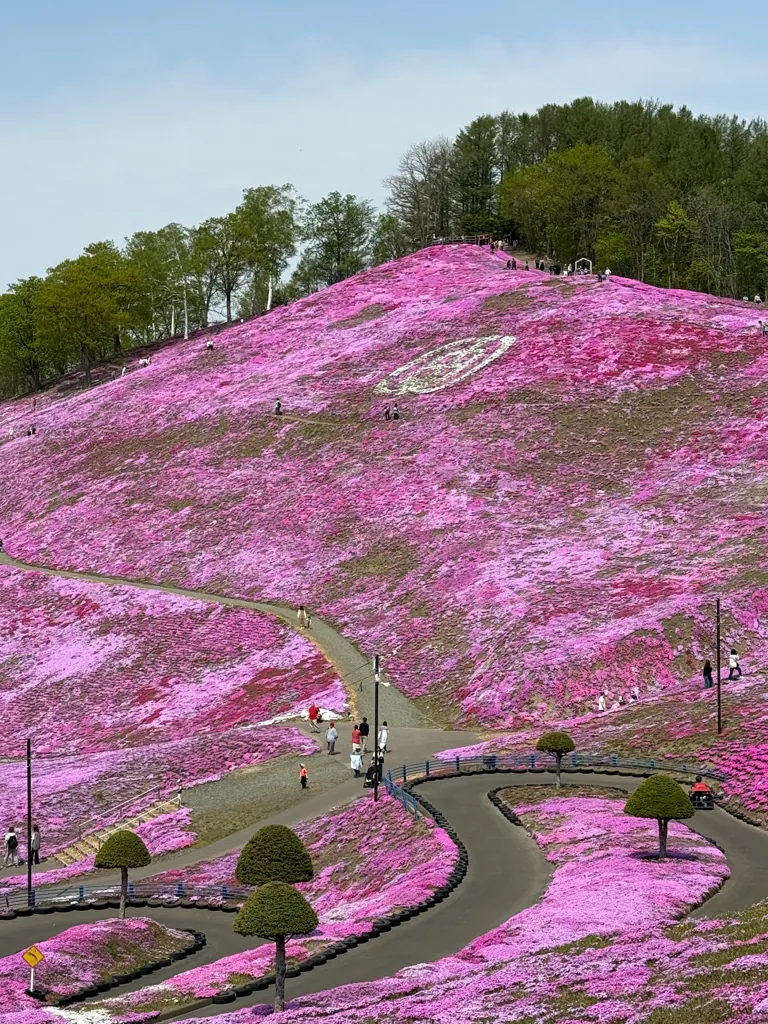
Ozora is a farming town of about 6,200 people. It was formed in 2006 when Memanbetsu Town and Higashimokoto Village merged. Memanbetsu Airport, the main air gateway to eastern Okhotsk and Shiretoko, is inside the town. Ozora also has about 10 hectares of moss phlox on a hillside, shijimi clams from Lake Abashiri, and cheese made in Higashimokoto since 1980.
- Population (2020 Census)
- 6,775
- Area
- 343.66 km²
- District
- Abashiri District (網走郡)
- Official website
- www.town.ozora.hokkaido.jp
Known for
- Memanbetsu Airport (女満別空港): the main air gateway to eastern Okhotsk and Shiretoko. It is 5 minutes by car from the town center9 and handled 845,019 passengers in FY2025 (preliminary figure)10.
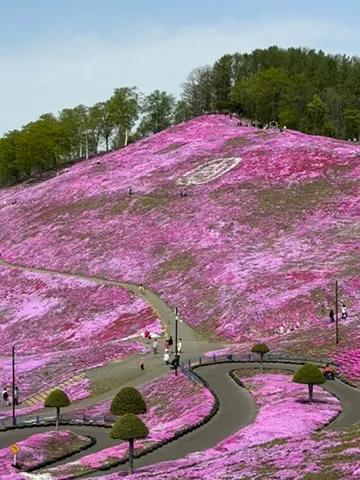
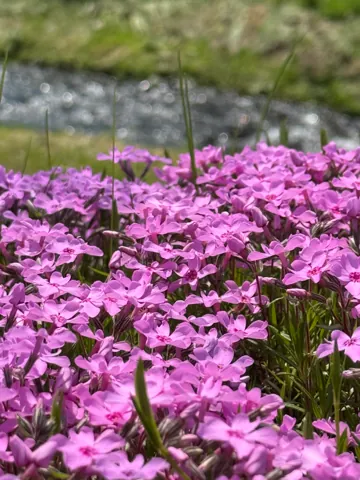
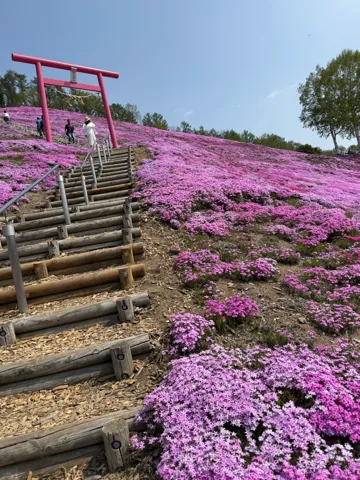
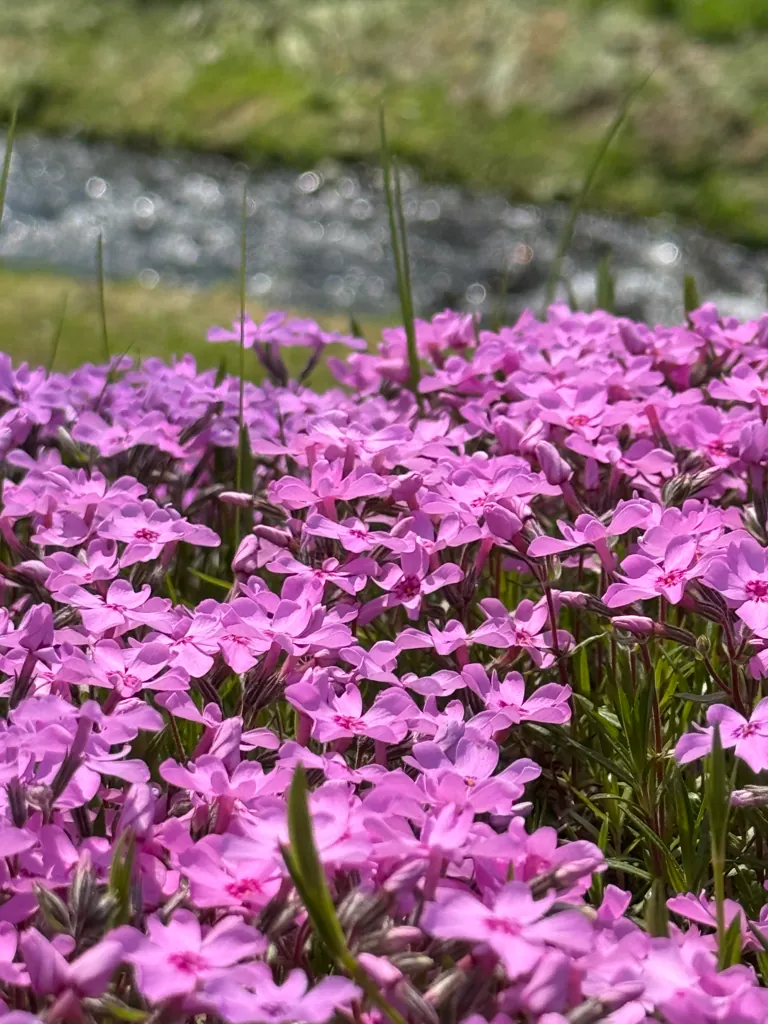
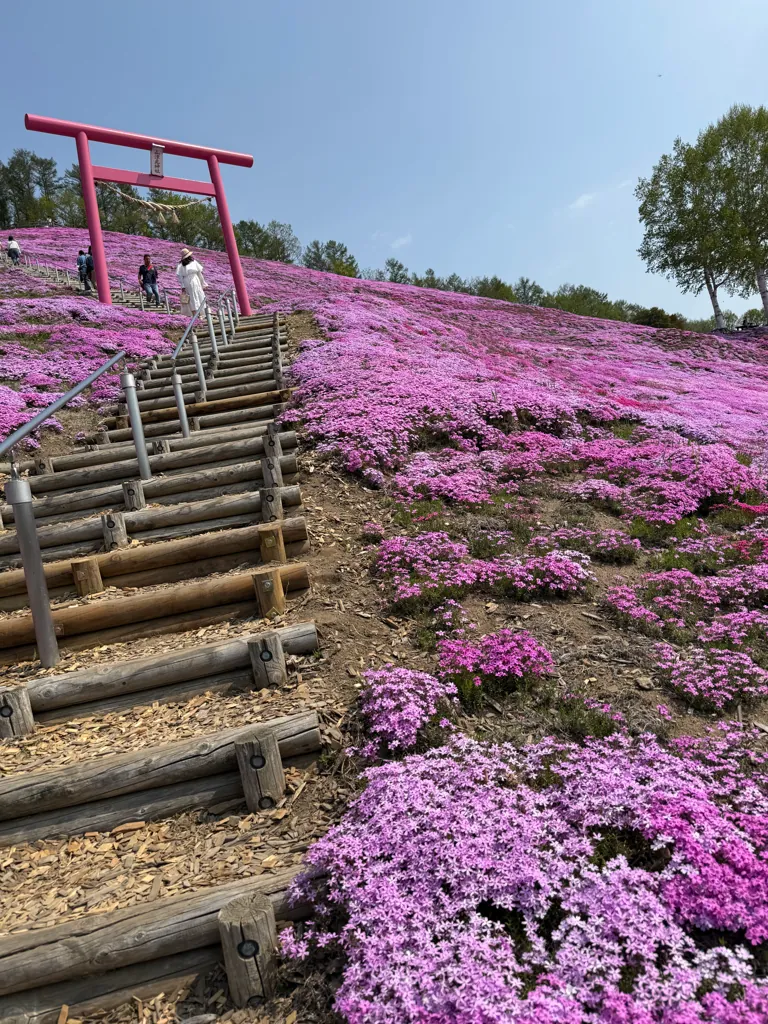
- Higashimokoto Shibazakura Park (ひがしもこと芝桜公園): about 100,000 m² of moss phlox on a steep hill. It is one of the largest plantings in Japan and blooms from mid- to late May1112. A local farmer, Nakabachi Sueyoshi (中鉢末吉), planted most of it by hand, starting in 197713.
- Lake Abashiri, Memanbetsu lakeside (網走湖女満別湖畔): on the Hokkaido Scenic 100 list. People come for shijimi-clam picking and fireworks over the water in summer, and for ice fishing for smelt in winter14.
- Märchen Hill (メルヘンの丘): a ridge of farmland with seven larch trees, and a favorite with photographers912. Akira Kurosawa filmed part of Dreams (夢) here15.
- Higashimokoto cheese: made in the village since 1980, and sold since 1996 at the Higashimokoto Nyurakukan (ひがしもこと乳酪館) dairy hall16.
- Big upland farms: wheat, potatoes, sugar beet (174,989 t in FY2025) and beans10, plus what the town calls Japan's easternmost rice6.
- Memanbetsu wetland plant community (女満別湿生植物群落): a National Natural Monument, where skunk cabbage carpets a swamp forest in spring1718.
Sights & activities
Nature & scenery
- Märchen Hill (メルヘンの丘), Memanbetsu Shōwa: seven larches on a ridge beside Route 39. The fields around them change with the season, from green to white potato flowers to golden wheat. There is a Viewpoint Parking area, and sunset is the classic photo124057.
- Asahigaoka Park (朝日ヶ丘公園), Memanbetsu Asahi 44-2: a 360° view over Lake Abashiri to Mt. Shari and the Shiretoko range. The observatory is open 1 May–31 October, and on clear nights you can see the Milky Way. The "Hill of Auvers", a Dreams location, is about 3 minutes away by car58. The park also has a 36-hole park-golf course and the stable of Kurosawa's horse "Yume" (夢号)40.
- Ozora Eight Views (大空八景): eight viewpoints listed by the tourism association. They include planes flying over the sunflower field by the airport (in bloom for only about 2 weeks), the Sumiyoshi heights and the Mt. Mokoto trailhead12.
- Memanbetsu lakeside: skunk cabbage in spring. In summer there are grey herons and kingfishers, and canoes, yachts and SUP boards on the water. Swans stop over in late autumn149.
- Higashimokoto Shibazakura Park (東藻琴末広393): about 8 km from central Higashimokoto. It has an 820 m go-kart track, a trout fishing pond and a sightseeing car to the upper viewpoint11. The town's page says pets are not allowed11, but in 2026 the park tried letting them in during the bloom, on conditions. From 2026 the park is open 9:00–17:00 during the bloom59.
Onsen
- Yumoto Hotel Sansui "Bihada no Yu" (湯元ホテル山水 美肌の湯): an alkaline spring piped straight from the source, with outdoor baths and a sauna. Open 11:00–22:00 every day, a 5-minute walk from JR Memanbetsu60.
- Himawari Onsen (ひまわり温泉): a 51 °C spring. It reopened on 2 May 2026 with a new sauna and cold plunge. Open 11:00–22:00, closed the 2nd and 4th Wednesdays; adults ¥50061.
- Fureai Center Phlox (ふれあいセンターフロックス), Higashimokoto: a sodium chloride spring with a sauna. Open 11:00–22:00, closed Thursdays; adults ¥50062.
- Shibazakura no Yu (芝桜の湯): a 59.8 °C spring in the park, with a free foot bath63. From 2026 only the foot bath opens during the bloom59. The town lists summer bathing hours of 1 July–30 September, 16:00–20:00, so check before going63. Marumo Onsen (マルモ温泉) is also in Higashimokoto9.
Museums & heritage
- Higashimokoto Nyurakukan (ひがしもこと乳酪館), Higashimokoto 409-1: a viewing corridor over the cheese room, plus a cheese-history room and a tasting and sales corner. Entry is free. Open 9:00–17:30. Closed Mondays from May to October, and Mondays and Tuesdays from November to April64. About 40 cowbells imported from Switzerland are on display38.
Outdoor & seasonal activities
- Mt. Mokoto: drive to the 6th-station trailhead off Prefectural Road 102. From there it is about 2 km, or roughly 1 hour, to a summit above Lake Kussharo, past the Ginreisui spring (銀嶺水)28. The 2026 town guidebook instead says you can drive as far as the 8th station, where the spring is, so check locally9. The 25 km Kussharo Caldera Trail follows the caldera rim through Tsubetsu, Bihoro and Ozora. It is part of the 410 km Hokkaido East Trail9.
- Camping: the Memanbetsu Lakeside Park Campground is open July–August. It costs ¥300 per adult, has room for 300 tents and takes no bookings65. The Shibazakura Park campground runs July–September and has 7–8-person bungalows11.
- Winter: ice fishing for wakasagi on Lake Abashiri, with rod sets for rent at ¥60052. Some winters there has been a free sledding hill at Märchen no Oka66.
- Food experiences: butter- and ice-cream-making at the Nyurakukan (book a week ahead)38. Try the buta-shabu nagaimo-don at more than one restaurant, because each makes its own sauce39.
Roadside stations (Michi-no-Eki)
Märchen no Oka Memanbetsu (道の駅メルヘンの丘めまんべつ)
- Location: Memanbetsu Shōwa 96-1, beside National Route 39 between Kitami and Abashiri. It is in the Märchen Hill area, with views of Lake Abashiri40, and about 10 minutes by car from Memanbetsu Airport9.
- Hours: 9:00–18:00. Closed 30 December–5 January. The Märchen Pit food hall next door is open 9:00–17:30, and each stall keeps its own hours and days off (as of September 2026 — check before visiting)4067.
- Shops & products: the antenna shop Honoka (ほのか) sells Manten miso, Onitaiji tomato juice, carrot, shiso and shijimi drinks, canned simmered beans, sekihan kits, Menko-ine sake, milk and cheese, fresh vegetables, and nagaimo dumplings. Its own products include Shiji-bi gohan no moto (¥525) and a meat sauce made with local Sakura pork (¥400)40.
- Food: Honoka serves the Sakura-buta-don with shijimi miso soup, which is not sold anywhere else40. The Märchen Pit food court (メルヘンぴっと) has shijimi ramen at Winds, mixed-flavor and seasonal soft-serve, takoyaki and imo-mochi at Milky Farm, and hamburg steak, pasta and a three-cheese Ozora pizza with siphon coffee at the café Gogo (午後)41. A fourth outlet, Ozora@Kitchen (大空@きっちん), opens on irregular days67.
- Facilities: parking for 86 cars and 4 large vehicles40, plus 10 accessible spaces according to Wikipedia68. Bidet (washlet) toilets, accessible toilets and baby-changing tables. Wikipedia says the toilets are open 24 hours68. Also Wi-Fi, a tourist information desk, farm-direct sales, credit cards and other cashless payment, a dog run (summer only) and a lawn park40. The Märchen Culture Center (opened April 2001) has food-processing training rooms and an indoor plaza40. The Okhotsk Ozora Tourism Association is based in Märchen Pit and rents bear spray by reservation69. No EV charger is listed on the official page.
- Notes: registered on 8 August 2003 as Hokkaido station No. 79. The stamp is available during opening hours only40. Honoka also takes furusato nozei donations paid in person35.
Nonky Land Higashimokoto (道の駅ノンキーランド ひがしもこと)
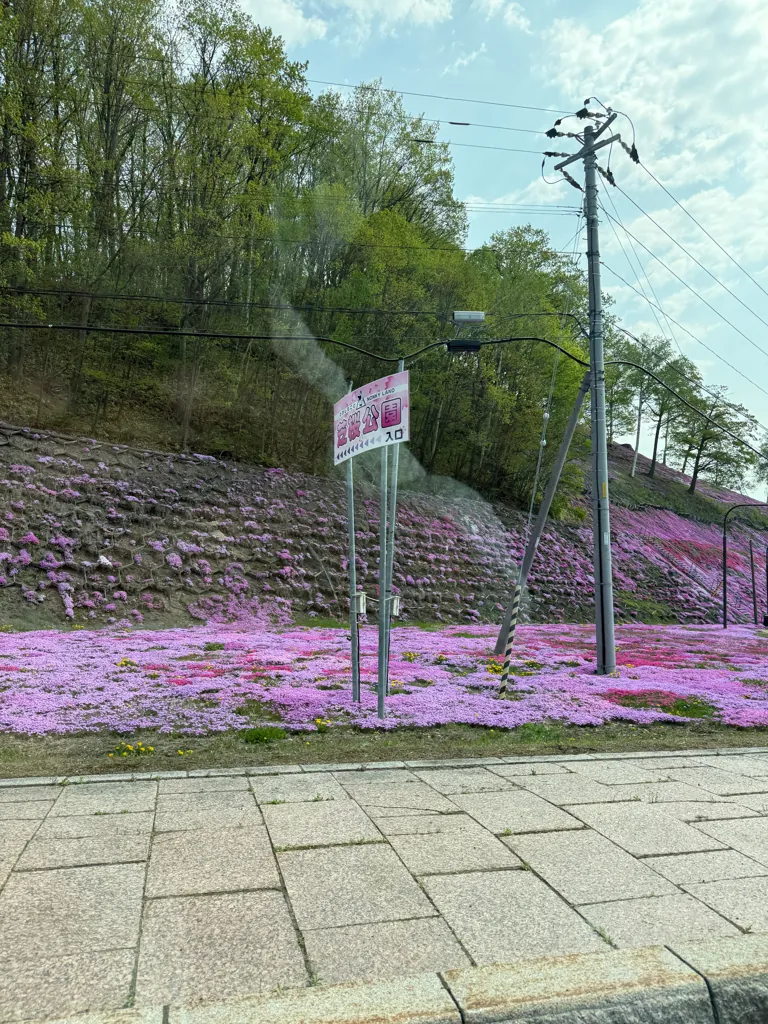
- Location: Higashimokoto 100, at the junction of National Route 334 and Prefectural Road 102 (Abashiri–Kawayu line). It is on the tourist route to Shiretoko and about 8 km from Shibazakura Park43.
- Hours: station and shop 9:00–18:00. Restaurant 11:00–15:00 (last order 14:00) and 17:00–20:00 (last order 19:00). Closed 31 December–5 January. In summer 2025 the shop opened from 8:00 during school holidays (as of September 2026 — check before visiting)43.
- Shops & products: the shop Aeru (あえ〜る) sells Ozora specialties and souvenirs from eastern Hokkaido43. The town guidebook says cheese, soft-serve and sweets sell especially well9. In June 2026 the station announced a large delivery of spring-dug nagaimo43.
- Food: Restaurant Kururink (レストランくるりんく) cooks with local ingredients43. The official site does not yet list a signature menu.
- Facilities: parking for 45 cars and 3 large vehicles. Toilets with washlets, accessible toilets and an ostomate toilet, plus Wi-Fi, information, credit cards and a gas station43. Hotel Higashimokoto (ホテルひがしもこと) is in the same building, with 18 Western-style rooms, 2 Japanese-style rooms and 1 barrier-free room, sleeping up to 66. There is also a multipurpose hall43. Wikipedia says only some of the toilets are open 24 hours25.
- Notes: registered on 21 April 2017 as No. 11843, and opened on 1 September 201725. The name plays on nonki (のん気, "easygoing") and "non-key", meaning a heart left unlocked43. It also takes furusato nozei donations on the spot35.
Getting there & around
- Air: Memanbetsu Airport (MMB) is 5 minutes from central Memanbetsu. Flights take about 45 minutes from Sapporo (New Chitose or Okadama) and 1 hour 40 minutes from Tokyo Haneda. There are also seasonal flights from Chūbu, Kansai and Itami910. JAL, ANA, AIRDO and Peach fly here70.
- Rail: JR Sekihoku Main Line (石北本線), with stations at Memanbetsu (女満別駅) and Nishi-Memanbetsu (西女満別駅)19. The Limited Express Okhotsk takes about 5 hours 30 minutes from Sapporo, and the Taisetsu about 3 hours 30 minutes from Asahikawa. Each runs about two round trips a day, so check the current JR Hokkaido timetable70.
- Bus: the Dreamint Okhotsk highway bus (ドリーミントオホーツク号) runs Sapporo–Kitami–Memanbetsu–Abashiri, taking about 5 hours 30 minutes, with nine round trips a day. The Eagle Liner (イーグルライナー) runs Sapporo–Higashimokoto–Shiretoko once a day each way (reservations required)70. Airport buses connect with Abashiri and Kitami19. A local bus from Abashiri Station reaches Higashimokoto in about 40 minutes. No regular bus goes to Shibazakura Park, so take a taxi for the last 10 minutes or so. During the bloom (9–24 May in 2026) a free shuttle ran from Higashimokoto for passengers of that bus, by reservation the day before71.
- Road: National Route 39 (Kitami–Abashiri) and the Memanbetsu Airport IC on the Hokkaido Odan Expressway, Abashiri Line (Bihoro Bypass), which opened in 2005. National Route 334 runs through Higashimokoto toward Shiretoko, and Prefectural Road 102 climbs past Mt. Mokoto toward Kawayu19. By car it is about 5 hours from Sapporo and 3 hours from Asahikawa9.
- Nearby (by car from the airport): the Abashiri Prison Museum and the Aurora drift-ice cruise pier in Abashiri take 22–30 minutes. Bihoro Pass in Bihoro takes about 33 minutes, Kaminoko Pond in Kiyosato about 1 hour 10 minutes, and Shiretoko Five Lakes in Shari about 1 hour 50 minutes9.
Practical tips
- When to go: skunk cabbage from late April to early May18. Moss phlox from mid- to late May, when the park charges admission11. The summer festival and fireworks in early August (1 August in 2026)49. Nonky Land Festival in late August50. Ice fishing from January52.
- Tourist information: the Okhotsk Ozora Tourism Association (tel. 0152-74-4323) is in Märchen Pit67. A car helps. No regular bus goes to Shibazakura Park, apart from a reservation-only shuttle during the bloom71.
- Brown bears: Mt. Mokoto, the Kussharo Caldera Trail and the forests around them are bear country. The tourism association rents bear spray by reservation from 8:45 to 17:3069.
- Lake rules: picking shijimi outside the official times and places counts as poaching48. Ice fishing is called off when a north wind of 5 m/s or more is forecast, or when drifting snow could trap cars52. During the summer festival, jet skis and drones are banned at the lakeside and roads close from 17:3049.
- Farmland: the famous hill views are working fields, so stay on the roads and in the parking areas.
Photos
-
 May 2026
 -
 May 2026
 -
 May 2026
 -
 May 2026
More about Ozora
At a glance
| Field | Details |
|---|---|
| Type | Town (町) |
| Subprefecture | Okhotsk (オホーツク総合振興局) |
| District | Abashiri District (網走郡), shared with Bihoro and Tsubetsu1 |
| Population | 2020 Census: 6,775 (3,287 male, 3,488 female; 2,750 households). That is 7.9% fewer than the 7,360 counted in 20152. 2025 Census (preliminary): 6,183, down another 8.7%, in 2,671 households3. Resident register: 6,208 (3,050 male, 3,158 female; 2,946 households) at the end of August 20264 |
| Area | 343.66 km² (GSI, 1 April 2026)56. The Hokkaido Government's municipal database and English Wikipedia give an older 343.62 km²17 |
| Density | 19.7 people/km² (2020 Census)2. About 18.1/km² using the August 2026 register figure (calculated) |
| Municipal history | Memanbetsu Village (女満別村) split from Abashiri Town on 1 April 1921 and became Memanbetsu Town on 1 April 1951. Higashimokoto Village (東藻琴村) split from Abashiri on 11 February 1947, the day Abashiri became a city. The two merged to form Ozora on 31 March 20061 |
| Neighboring municipalities | Abashiri to the north, Kitami to the west, Bihoro to the south and Koshimizu to the east6. The former Higashimokoto Village also bordered Teshikaga (Kushiro Subprefecture) near Mt. Mokoto8 |
| Symbols | Trees: Japanese rowan (ななかまど) and white birch (しらかば). Flowers: moss phlox (芝桜) and skunk cabbage (水芭蕉). Both were adopted on 1 March 2007. The town sport is volleyball. No town bird was found6 |
| Mascot | Sorakki (そらっきー). The name combines sora (sky) and ki (aircraft) and plays on the English "So Lucky". It began as the airplane figure in the 2007 symbol mark, and residents named it in March 2009. In December 2014 it was redesigned with engines, windows and the town emblem on its tail6 |
| Official website | https://www.town.ozora.hokkaido.jp/ |
Name origin
- Ozora (大空, "big sky"): a new name picked from residents' suggestions at the 2006 merger. It refers to Memanbetsu Airport19. The town says it stands for residents living with hope under a clear sky, above a fertile land6. Other candidates included Kozakura (湖桜), Aozora (青空), Sakuragaoka (桜丘) and Minori (みのり)19.
- Memanbetsu (女満別): from the Ainu Memanpet (メマンペッ; mem-an-pet), "river with spring-fed pools"120.
- Higashimokoto (東藻琴): "Higashi" means "east". "Mokoto" comes from the Ainu Mokoto or Mokorutō (モコルトー), which the Hokkaido Government glosses as "sleeping lake/marsh". The name is traced to Shinomokoto (シノモコト), "the true Mokoto", meaning the upper main stream of the Mokoto River1. A different reading takes Mokoto as "small marsh", from Lake Mokoto (藻琴湖) near the river mouth21.
History
- Prehistory: stone sinkers and arrowheads have been dug up in the area. Finds from the Memanbetsu microblade-arrowhead site (女満別石刃鏃遺跡) are a Hokkaido-designated tangible cultural property19.
- Edo period: the district moved between direct shogunate rule (from the Bunka era, 1807–08), the Matsumae domain (from 1821) and shogunate rule again (from 1855)19. In early Meiji it was assigned to the Nagoya domain, and from 1872 it was run from the Abashiri district office1.
- Settlement, 1890–1913: in 1890 Yamada Shin (山田慎), from Fukui, came to cut timber for matchsticks. He is counted as the first Wajin (ethnic Japanese) settler. In 1894 another Fukui man, Yoshida Jinmatsu (吉田甚松), planted paddy rice at Rebunshiri (now Katayama), which is said to be the start of rice farming in the Kitami region. In 1898 six households, including settlers from Chiba and Tottori, took up land at Konan1. In 1906 Umetani Fusazō (梅谷房蔵) and five others settled Higashimokoto, and group migrants from the Tōhoku prefectures followed110. Settlers from Sōma District in Fukushima founded Yamatsumi Shrine (山津見神社) there in 191322.
- Railways: the Kitami–Abashiri line and Memanbetsu Station opened in 1912, and settlement sped up1019. The Mokoto colonial light railway (殖民軌道藻琴線) opened in stages from 1935 to 1938 and ran 25.4 km from the coast through Higashimokoto to Yamazono. Trucks took over its traffic, and the whole line had closed by 196523.
- Municipal status: Memanbetsu Village split from Abashiri Town on 1 April 1921 and became a town on 1 April 1951. Higashimokoto Village split off on 11 February 19471.
- The airport: a meteorological airfield for spotting drift ice opened at Memanbetsu in 1935. It became the Imperial Navy's "Bihoro No. 2" base in the war. A new jet airport opened just to the south on 22 April 1985. The old runway is now a brake-test course for Bosch24.
- Flowers and cheese: Nakabachi Sueyoshi began planting moss phlox in 1977, and the slope reached 8 ha by 199113. Higashimokoto's cheese project started in 1979 to use surplus milk. The first cheese was made in December 1980, and the Nyurakukan opened in October 199616.
- Merger and after: a residents' referendum on the merger was held on 27 February 2005, and Ozora was created on 31 March 200610. Nonky Land Higashimokoto opened in 201725. Hokkaido Ozora High School, run by the town, replaced the Memanbetsu and Higashimokoto high schools in 202126. The Kussharo Caldera Trail opened in October 20249.
Geography & climate
- Landforms: Ozora runs from Lake Abashiri in the north to Mt. Mokoto in the south. Fields cover the rolling uplands in the middle of the town. Rice grows on the Abashiri River flats in the west, and dairy farms sit at the foot of Mt. Mokoto10. By land category the town is 35% fields, 31% forest and 4.8% rice paddies10.
- Lake Abashiri (網走湖): 32.27 km², of which 12.24 km² lies in Ozora5. The Abashiri River links it to the Sea of Okhotsk. Its water is brackish and stays in two layers, fresh water above salt water, meeting at about 7 m deep. The lakeside is in Abashiri Quasi-National Park (網走国定公園)14.
- Memanbetsu wetland plant community: a National Natural Monument since 14 June 1972. It is a strip of swamp forest about 2 km long, mainly Japanese ash and alder, along the rail line between Memanbetsu and Yobito stations17. It covers 56 ha, and the skunk cabbage under the trees peaks from late April to early May18.
- Mt. Mokoto (藻琴山): the highest point on the rim of the Kussharo caldera. It is 999.9 m high, which town sources round to "1,000 m". The summit is on the border with Kushiro Subprefecture, inside Akan-Mashu National Park (阿寒摩周国立公園)2728.
- Rivers: the Abashiri River (a Class A river) and its tributary the Memanbetsu River, plus the Mokoto and Urashibetsu (浦士別川) rivers19. The Mokoto River rises on Mt. Mokoto, passes Shibazakura Park, and flows through Higashimokoto to Lake Mokoto and the sea21.
- Climate: Ozora has an Okhotsk-coast climate. It is dry and sunny, with about 700 mm of rain a year, and snow falls from late October to late April10. The town is a designated heavy-snow area19. Normals at the JMA Memanbetsu station (temperature 2003–2020; snowfall 2006–2020) are 6.4 °C for the year, −7.9 °C in January and 20.2 °C in August, with 324 cm of snowfall29. In records kept there since 2003, the high is 37.7 °C (26 May 2019) and the low is −27.0 °C (9 February 2019). The deepest snow on record is 72 cm, and 2025 was the warmest year measured there, averaging 8.2 °C30.
Economy & industry
-
Farming: in the 2025 agricultural census there were 370 farm households. The 360 that farm their own land worked 13,213 ha, an average of 36.7 ha each10. The FY2025 harvest was10:
- sugar beet: 174,989 t
- potatoes: 56,873 t
- wheat and barley: 22,150 t
- vegetables: 16,008 t
- beans: 3,303 t
- rice: 930 t, from 155 ha
Most of the rice is glutinous (mochi) rice19. Higashimokoto nagaimo yams are sold as the "Higashimokoto brand" in Sapporo, Kushiro and the Kansai region31. Baby's breath is grown as a cut flower for the Osaka market32.
-
Livestock and forestry: 4,536 dairy cattle, 3,986 beef cattle and 2,153 pigs10. Hokkaido Chikusan Kōsha (北海道畜産公社), a meat company, has its Kitami plant in Higashimokoto19. Forest covers about 13,300 ha, and about 64% of it is planted33.
-
Lake fishery: in 2025 the 11 member households of the Nishi-Abashiri Fisheries Cooperative landed 168.0 t of shijimi clams and 9.3 t of wakasagi smelt, and no shirauo icefish10.
-
Jobs and tourism: of 3,550 working residents in 2020, 1,320 (about 37%, calculated) worked in agriculture10. Ozora had 1,091,178 visitors in FY2025, and the airport handled 845,019 passengers10.
-
Population and finances: the population fell from 15,269 in 1960 to 6,775 in 2020. In 2025 there were 23 births and 101 deaths, and about 39% of residents are 65 or older (calculated from the January 2026 age table)10. The national local allocation tax provides 44.9% of the ¥9.72 billion FY2026 general budget10.
-
Revitalization: Märchen Park has five houses where trainee farmers can live while they learn34. Furusato nozei donations can be made and paid in person (現地決済型) at both roadside stations and at the Honoka shop in the airport35.
Local specialties
| Specialty | Category | Details & where to get it |
|---|---|---|
| Higashimokoto cheeses (ひがしもこと乳酪館のチーズ) | Dairy | Camembert (170 g, ¥1,242), Gouda, cheddar, and Gouda smoked for eight hours over cherry wood. Also low-temperature-pasteurized Higashimokoto milk (ひがしもこと牛乳; 900 ml, ¥702)36. Sold at the Nyurakukan and on furusato nozei portals37 |
| Camembert soft-serve (カマンベールチーズソフト) | Sweet | ¥400, May–October, at the Nyurakukan38 |
| Ozora buta-shabu nagaimo-don (大空豚しゃぶ長いも丼) | Local dish | A rice bowl of local pork and Higashimokoto nagaimo, created after the merger. Each restaurant uses its own sauce. Served at Tonchintei (豚珍亭) in Higashimokoto and Yabusoba Nagashimaya (藪そば処 ながしま家) in Memanbetsu3919 |
| Sakura-buta-don (サクラ豚丼) | Local dish | Blanched loin of Sakura pork ("Sakura 201", a domestic pork raised in town) with a special sauce, served with miso soup made with Memanbetsu shijimi. It is served only at the Honoka shop in Märchen no Oka roadside station40 |
| Shijimi ramen (しじみラーメン) | Local dish | Ramen in a broth made from Lake Abashiri shijimi, served by Winds (ウィンズ) in the Märchen Pit food court. Take-home sets are sold at Honoka41 |
| Lake Abashiri shijimi (網走湖の大和しじみ) | Seafood | Large, glossy brackish-water clams42. Products include Shiji-bi gohan no moto (しじ美ごはんの素, rice seasoning, ¥525)40 and Ozora Zanmai's Shiji-bi shōyu clam-extract soy sauce9 |
| Shirauo and wakasagi (しらうお・わかさぎ) | Seafood | Icefish netted in autumn and smelt caught through the winter ice. Both are eaten as tempura, and shirauo is also eaten raw with grated ginger and quail egg14 |
| Nagaimo (長いも) | Crop | Fine-textured, crisp and sticky yams. Spring-dug nagaimo (春掘り長いも) is sold at Nonky Land in June3143. Frozen nagaimo dumplings (長いもだんご, ¥450) are sold at Honoka40 |
| Green asparagus (グリーンアスパラガス) | Crop | In season in May–June. Sold through JA Memanbetsu44 |
| Shiretoko beef (知床牛) | Meat | Kuroge wagyu raised at Ōhashi Ranch (大橋牧場) in Ozora. Sold at the town butcher Nikushō (肉将) and popular as a furusato nozei gift379 |
| Onitaiji tomato juice (鬼たいじ), Manten miso (満点みそ), Menko-ine sake (めんこ稲) | Processed foods | Memanbetsu products, sold at Honoka40. Also handmade sausages from Ozora Foods (大空フーズ), which the town guidebook says have won gold at an international competition9 |
| Local sweets | Confectionery | Nama-dorayaki (cream-filled pancakes) from Sugano Shōten (すがの商店) in Higashimokoto. Tamaya's (たまや菓子店) pumpkin sweet Kohan no Sato (湖畔の里). Amande's (アマンド菓子店) bean-paste bun made with local hot-spring water459 |
| Haskap and blueberries | Fruit | U-pick at Kitamuki orchard (北向小果樹園) in Memanbetsu Hongō: haskap in July, blueberries from late July to August. Jams are sold there too46 |
| Furusato nozei (ふるさと納税) | Gifts | Donations can be made through nine portals, including Furusato Choice, Rakuten and Satofull35. The Okhotsk bureau calls cheese and Shiretoko beef very popular gifts37 |
Culture & festivals
| Event | When | Highlights |
|---|---|---|
| Higashimokoto Shibazakura Festival (ひがしもこと芝桜まつり) | May, while the moss phlox is in bloom | Stage events, a sightseeing car up the hill, go-karts and local food. Admission ¥700, or ¥300 for elementary-school children911 |
| Mt. Mokoto opening day (藻琴山山開き) | Early June (7 June in 2026) | Start of the climbing season47 |
| Shijimi picking (しじみ採り) | Late July to mid-August (25 July–16 August in 2026) | Fill a bag with clams for ¥1,000 on the Memanbetsu lakeside beach, 9:00–16:0048 |
| Memanbetsu Tourism Summer Festival (めまんべつ観光夏まつり) | Early August (1 August in 2026, the 51st)9 | The Hokkaido Dragon Boat Competition, a shijimi grab, yosakoi dancing and fireworks over the lake from 20:0049 |
| Nonky Land Furusato Festival (ノンキーランドふるさとまつり) | Late August (30 August in 2026, the 44th) | Roll-korogashi Dotten-koku, a race in which four-person teams roll 500 kg hay bales (300 kg for women's teams), plus a barbecue of local beef50 |
| Mokoto-yama Fukioroshi Marathon (藻琴山ふきおろしマラソン大会) | Mid-October | Running event37 |
| Märchen Festival (メルヘンまつり) | Autumn | A food event for Lake Abashiri shirauo and other lake catches51. No shirauo were landed in 202510, so check that it is on |
| Ice wakasagi fishing (氷上わかさぎ釣り) | January–March (5 January–11 February in 2026) | Fishing through the ice on the Memanbetsu lakeside. The 2026 season was shortened to protect the smelt5253 |
- Shrine: Yamatsumi Shrine (山津見神社), next to Shibazakura Park. It enshrines a mountain deity installed in 1913 by settlers from around Sōma District, Fukushima. Its head shrine is in Iitate, Fukushima22.
- Local history and crafts: selected items from Ozora's three old local-history rooms are now shown together at the Higashimokoto Lifelong Learning Center, with folk tools on the ground floor and archaeology upstairs. It is usually locked, so call ahead54. The Memanbetsu Denshōkan (女満別伝承館) is a center for go, pottery and weaving55. From 1983 to 2002 Memanbetsu hosted an International Music Seminar that included conducting classes by Ken-Ichiro Kobayashi20.
- Pokémon manhole: a Poké Lid (ポケふた) is in the square in front of JR Memanbetsu Station56.
Ainu heritage
Municipal sources say little about Ainu history in Ozora beyond place names. Both former municipalities have Ainu names (Memanpet, Mokoto)1. Before a renaming in 1936, several districts of Memanbetsu had katakana names that appear to be of Ainu origin, including Chiepusakumokoto (チエプサクモコト), Peunpuunnai (ペウンブウンナイ), Hanakushubetsu (ハナクシユベツ), Kikin (キキン) and Rebunshiri (レブンシリ). They were replaced by Japanese names such as Nisshin, Daitō, Taisei and Toyosato20. No Ainu cultural facility in the town was found.
Sister & friendship cities
- Inagi (稲城市), Tokyo — sister city. Exchanges with Memanbetsu started in 1988 with school children, and a sister-city agreement followed in 1991. It was signed again in July 2006 after the merger72.
- Hikawa (氷川町), Kumamoto (formerly Miyahara Town) — friendship city. Exchanges with Higashimokoto began in 1993, and a friendship agreement was signed on 28 July 2002. The two towns run junior-high homestays73.
- No international partners were found.
Notable people
Sources
Numbers in the text link to these sources. Figures as of 23 September 2026
- 道内市町村沿革、字(町)名等検索システム(大空町の沿革) — Hokkaido Government, Municipal Affairs Division JA accessed 2026-09-23
- 第1表 男女別人口、面積、人口密度及び世帯数(令和2年国勢調査結果) — Hokkaido Government, Statistics Division JA accessed 2026-09-23
- 令和7年国勢調査速報 北海道の人口・世帯数(要計表に基づく人口・世帯数の集計) — Hokkaido Government, Statistics Division JA accessed 2026-09-23
- 大空町の人口世帯数(2026年) — Ozora Town JA accessed 2026-09-23
- 令和8年全国都道府県市区町村別面積調(4月1日時点) — Geospatial Information Authority of Japan (国土地理院) JA accessed 2026-09-23
- 大空町の概要 — Ozora Town JA accessed 2026-09-23
- Ōzora, Hokkaido — Wikipedia EN accessed 2026-09-23
- 東藻琴村 — Wikipedia JA accessed 2026-09-23
- 大空町観光ガイドブック(令和8年9月1日時点) — Ozora Town JA accessed 2026-09-23
- 【令和8年度版】大空町の概要(町勢要覧 資料編) — Ozora Town JA accessed 2026-09-23
- 東藻琴芝桜公園 — Ozora Town JA accessed 2026-09-23
- 大空八景 — Okhotsk Ozora Town Tourism Association JA accessed 2026-09-23
- 芝桜公園の歴史 — Higashimokoto Shibazakura Park JA accessed 2026-09-23
- 女満別湖畔 — Ozora Town JA accessed 2026-09-23
- メルヘンの丘 — Ozora Town JA accessed 2026-09-23
- 乳酪館の歴史 — Higashimokoto Nyurakukan JA accessed 2026-09-23
- 女満別湿生植物群落 — Cultural Heritage Online, Agency for Cultural Affairs JA accessed 2026-09-23
- 水芭蕉 — Ozora Town JA accessed 2026-09-23
- 大空町 — Wikipedia JA accessed 2026-09-23
- 女満別町 — Wikipedia JA accessed 2026-09-23
- 藻琴川 — Wikipedia JA accessed 2026-09-23
- 山津見神社 — Higashimokoto Shibazakura Park JA accessed 2026-09-23
- 東藻琴村営軌道 — Wikipedia JA accessed 2026-09-23
- 女満別空港 — Wikipedia JA accessed 2026-09-23
- 道の駅ノンキーランド ひがしもこと — Wikipedia JA accessed 2026-09-23
- 北海道大空高等学校 — Wikipedia JA accessed 2026-09-23
- 藻琴山 — Wikipedia JA accessed 2026-09-23
- 藻琴山トレッキング — Ozora Town JA accessed 2026-09-23
- 平年値(年・月ごとの値)女満別 — Japan Meteorological Agency JA accessed 2026-09-23
- 観測史上1~10位の値(年間を通じての値)女満別 — Japan Meteorological Agency JA accessed 2026-09-23
- 長いも — Ozora Town JA accessed 2026-09-23
- カスミソウ — Ozora Town JA accessed 2026-09-23
- まちの産業 — Ozora Town JA accessed 2026-09-23
- メルヘン公園(道の駅「メルヘンの丘 めまんべつ」) — Ozora Town JA accessed 2026-09-23
- 大空町ふるさと応援寄附金について — Ozora Town JA accessed 2026-09-23
- チーズ — Ozora Town JA accessed 2026-09-23
- Outline of Okhotsk 2026 管内18市町村の紹介(P25置戸町~P33大空町) — Okhotsk General Subprefectural Bureau, Hokkaido Government JA accessed 2026-09-23
- ひがしもこと乳酪館 — Okhotsk Ozora Town Tourism Association JA accessed 2026-09-23
- 大空町ご当地グルメ — Okhotsk Ozora Town Tourism Association JA accessed 2026-09-23
- メルヘンの丘めまんべつ — 北の道の駅 (Hokkaido Michi-no-Eki official site) JA accessed 2026-09-23
- メルヘンぴっとフードコート — Okhotsk Ozora Town Tourism Association JA accessed 2026-09-23
- しじみ — Ozora Town JA accessed 2026-09-23
- ノンキーランド ひがしもこと — 北の道の駅 (Hokkaido Michi-no-Eki official site) JA accessed 2026-09-23
- グリーンアスパラガス — Ozora Town JA accessed 2026-09-23
- おみやげ・お菓子 — Okhotsk Ozora Town Tourism Association JA accessed 2026-09-23
- くだもの狩り — Okhotsk Ozora Town Tourism Association JA accessed 2026-09-23
- 藻琴山 — Okhotsk Ozora Town Tourism Association JA accessed 2026-09-23
- しじみ採り — Okhotsk Ozora Town Tourism Association JA accessed 2026-09-23
- めまんべつ観光夏まつり — Okhotsk Ozora Town Tourism Association JA accessed 2026-09-23
- 第44回ノンキーランドふるさとまつり — Ozora Town JA accessed 2026-09-23
- しらうお — Ozora Town JA accessed 2026-09-23
- 氷上わかさぎ釣り — Okhotsk Ozora Town Tourism Association JA accessed 2026-09-23
- わかさぎ釣り — Ozora Town JA accessed 2026-09-23
- 東藻琴生涯学習センター郷土資料室 — Ozora Town JA accessed 2026-09-23
- 女満別伝承館 — Ozora Town JA accessed 2026-09-23
- 女満別駅前広場にポケモンマンホール「ポケふた」が登場しました! — Ozora Town JA accessed 2026-09-23
- メルヘンの丘 — Wikipedia JA accessed 2026-09-23
- 朝日ヶ丘公園 — Okhotsk Ozora Town Tourism Association JA accessed 2026-09-23
- 【お知らせ】芝桜開花期間中の開園時間等の変更について — Higashimokoto Shibazakura Park JA accessed 2026-09-23
- 美肌の湯(湯元ホテル山水) — Ozora Town JA accessed 2026-09-23
- 女満別農業構造改善センター(町営温泉、公衆浴場) — Ozora Town JA accessed 2026-09-23
- ふれあいセンターフロックス — Ozora Town JA accessed 2026-09-23
- 芝桜の湯 — Ozora Town JA accessed 2026-09-23
- ひがしもこと乳酪館 — Ozora Town JA accessed 2026-09-23
- 女満別湖畔公園キャンプ場 — Ozora Town JA accessed 2026-09-23
- ウィンターフィールド — Ozora Town JA accessed 2026-09-23
- メルヘン観光交流センター(メルヘンぴっと) — Ozora Town JA accessed 2026-09-23
- 道の駅メルヘンの丘めまんべつ — Wikipedia JA accessed 2026-09-23
- 熊スプレーのレンタルを開始します! — Okhotsk Ozora Town Tourism Association JA accessed 2026-09-23
- 大空町へのアクセス — Okhotsk Ozora Town Tourism Association JA accessed 2026-09-23
- Access – English (How to get to Higashimokoto Shibazakura Park) — Higashimokoto Shibazakura Park EN accessed 2026-09-23
- 東京都稲城市 — Ozora Town JA accessed 2026-09-23
- 熊本県氷川町 — Ozora Town JA accessed 2026-09-23