Town Rumoi Subprefecture
Haboro 羽幌町
はぼろちょう
Haboro is a fishing and rice-farming town on the Sea of Japan coast of northwest Hokkaido, about 180 km north of Sapporo. It is the port for two offshore islands: Teuri, where about a million seabirds breed, and Yagishiri, known for its old-growth yew forest.12 Its tourism association says the town's sweet shrimp (amaebi) catch is among the largest in Japan.1 In the 1960s it was a coal town of more than 30,000 people; today it has fewer than 6,000.34
- Population (2020 Census)
- 6,548
- Area
- 472.65 km²
- District
- Tomamae District (苫前郡)
- Official website
- www.town.haboro.lg.jp
Known for
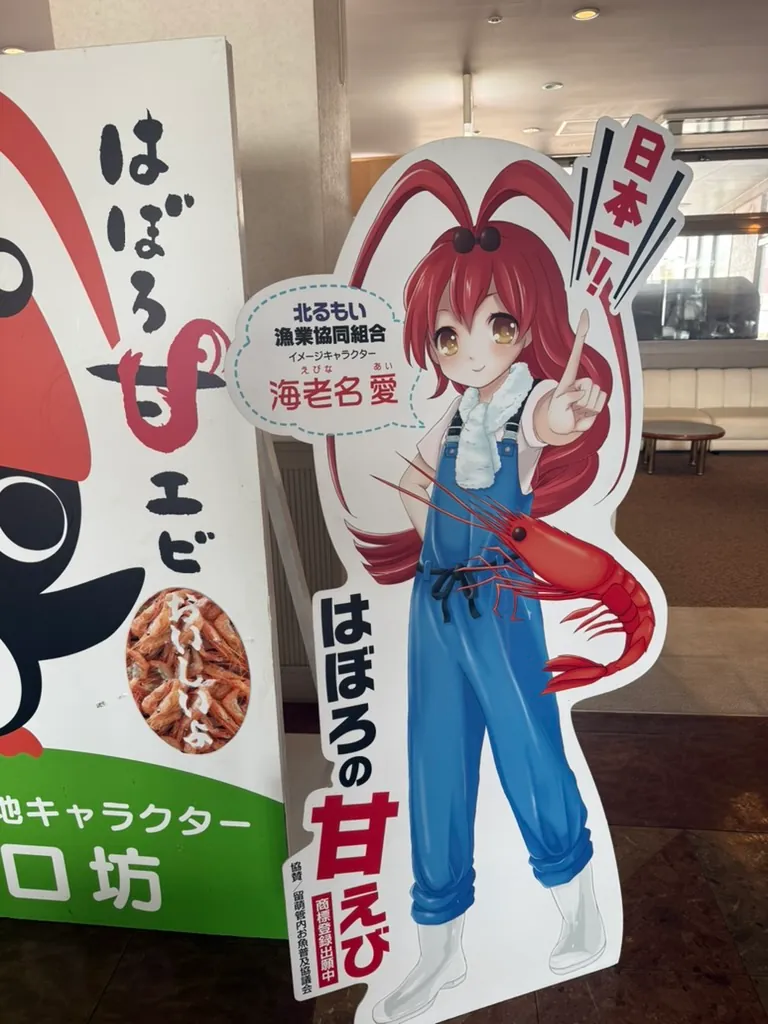
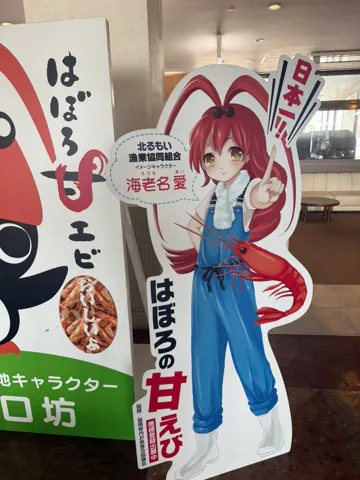
- Amaebi (甘エビ, sweet shrimp). The tourism association says Haboro's catch is "among the largest in Japan" (日本屈指).1 In 2024 the town landed 185 t of shrimp worth about ¥625 million.3
- Teuri Island (天売島), a seabird island.
- Yagishiri Island (焼尻島), a forest island.
- Coal-mining heritage. The Haboro Coal Mine (羽幌炭砿) was known for high-quality coal. It closed in 1970, and its ruins still stand in the hills.1617
- Rice at its northern limit. The tourism association says Haboro is the northern limit for growing ordinary (non-glutinous) rice.1 The local brand is Orolon rice (オロロン米).10
- Michi-no-Eki Hot♡Haboro. The roadside station includes an onsen hotel, the Haboro Rose Garden and the Hokkaido Seabird Center.18
- Local dishes. The subprefecture lists Haboro's signature dishes as shrimp-and-octopus pan-fried dumplings (羽幌えびタコ焼き餃子) and Haboro shrimp-salt ramen (羽幌えびしおラーメン).11
Sights & activities
Nature & scenery
- Teuri Island.
- Watch rhinoceros auklets fly back to their burrows at dusk from the Akaiwa Lookout (赤岩展望台).14 Their season runs from March to late July.14
- Spectacled guillemots (ケイマフリ), with their red feet, can be seen from April to late July, even from the ferry.14
- The island also has a seabird observation hut (海鳥観察舎) and the Kannon Cape lookout (観音岬展望台).21
- The common murre fell to just 15 birds at one point and is slowly recovering thanks to Ministry of the Environment efforts.14
- Stray-cat control began in 2012.28 After the cats were almost gone, black-tailed gulls recovered from about 1,000 birds in 2015 to about 5,000 in 2019.21
- Yagishiri Island. The Onko (yew) old-growth forest is one of the subprefecture's picks.11 Walk through the forest to open pastures with sheep. The island is about 12 km around.2
- Haboro Sunset Beach (はぼろサンセットビーチ). At Minato-machi 5-chōme, with sunsets behind Teuri and Yagishiri.40
- Haboro Rose Garden (はぼろバラ園). About 300 varieties and 2,000 bushes at Kita 5-jō 1-chōme. The tourism association calls it Japan's northernmost rose garden.41 Admission is free and the toilets are open 24 hours.41
- Northern cedar grove (北方の杉). A settler from Atsumi Village in Yamagata sent for Japanese cedar seed from his home area in 1915. In 1918 he planted over 4,000 three-year-old saplings grown from it in Chikubetsu. Cedar is a warm-climate tree, so a grove this far north is unusual.42 In fiscal 1997 there were 494 trees. The grove is a protected forest. You may not enter it without permission, because of the fire risk.42
Onsen
- Haboro Onsen Sunset Plaza (はぼろ温泉サンセットプラザ), at the roadside station.43
- Water: strong sodium-chloride saline spring (ナトリウム塩化物強塩泉).
- Baths: large bath, lie-down bath, jacuzzi, open-air bath and sauna.
- Day visits: 10:00–22:30 (last entry 22:00). Adults ¥600, ages 4 through elementary school ¥300.
Museums & heritage
- Hokkaido Seabird Center (北海道海鳥センター). Kita 6-jō 1-chōme.44 The tourism association calls it the only facility in Japan devoted to seabird conservation and research.18
- Haboro Town Local Museum (羽幌町郷土資料館). Minami-machi 20-1.38
- Yagishiri Kyōdokan (焼尻郷土館, former Kona residence). A 1900 Western-style wooden house built by the Kona (小納) family, the island's fishing bosses. It is a Hokkaido-designated Tangible Cultural Property.3926
- Haboro Coal Mine ruins (羽幌炭砿). About 23 km east of the town centre, in the Chikubetsu, Haboro main-pit and Kami-Haboro areas.16
Outdoor & seasonal activities
- Island activities. The island portal promotes birdwatching, cycling, fishing, camping and stargazing on Teuri and Yagishiri.45
- Byu ski area (羽幌町民スキー場「びゅー」). A family ski slope at Aza Chūō 405-1 with views of the Sea of Japan.46
- Park golf and Orochan Land. The town has a park golf course.47 Orochan Land (オロちゃんランド), at Asahi 34 next to the town gymnasium, is a park with large play equipment and a street-basketball court. A new toddler play set opened there on 17 July 2024.48
Food experiences
Roadside stations (Michi-no-Eki)
Hot♡Haboro (道の駅ほっと♡はぼろ)
- Location: Kita 3-jō 1-chōme 29, Haboro, on National Route 232, the Japan Sea Ororon Line (日本海オロロンライン).3249 The station is a cluster of three facilities: the Sunset Plaza onsen hotel, the Rose Garden and the Hokkaido Seabird Center.18 Phone 0164-62-3800.32
- Hours:
- Shops & products:
- Food:
- The restaurant Nishima Monogatari (二島物語, "Tale of Two Islands") serves amaebi-don.4932
- Also on the menu: shrimp-and-octopus dumplings, Haboro shrimp-salt ramen and a shrimp-and-octopus dumpling curry (羽幌えびタコ餃子カレー).33
- Specials change often; a recent one was a hamburger plate made with Haboro-raised "Yume no Daichi" (ゆめの大地) pork.50
- No soft-serve flavour was found in the sources.
- Facilities:
- Parking for 224 standard cars and 23 large vehicles.3249
- 24-hour outdoor toilets, accessible toilets and a baby-changing table in the women's toilet.32
- Wi-Fi.32
- Onsen (large bath, open-air bath, sauna), hotel rooms and a park.3243
- The 7th-floor viewing lounge Aoi Bara (青い薔薇, "Blue Rose"), a café by day and a bar at night.3249
- EV charging is not listed on the official station page.
- Notes:
- Registered and opened on 17 April 1998.49 Town records give 30 June 1998 as the opening date of the station with the rose garden.3
- The station stamp is available during opening hours, but not on closed days.32
- A station notice dated 6 August 2026 announced that the large bath had reopened after a refurbishment.32
- From 1 October 2026 the 9:30 express bus from Sapporo (and the 17:00 from Haboro) starts and ends at the Sunset Plaza.51
Getting there & around
- Rail. There is no railway in Haboro.
- The JNR Haboro Line closed in 1987.24
- The whole Rumoi Main Line had closed by 1 April 2026.52
- From Sapporo, take the express bus, or take JR to Fukagawa or Chippubetsu and change to an Engan Bus or Dōhoku Bus. From Asahikawa, the Tokkyū Asahikawa express bus runs once a day; otherwise use local buses.53
- Express bus from Sapporo. Engan Bus runs the Tokkyū Haboro (特急はぼろ号) from Sapporo Station bus stop No. 32. Seats must be reserved.54
- From 1 October 2026 it leaves Sapporo at 9:30, 13:00, 15:00 and 17:30. It reaches Haboro Terminal at 12:51, 16:21, 18:21 and 20:51, a trip of about 3 hours 20 minutes.54
- Some buses continue north to Enbetsu, Teshio, Horonobe and Toyotomi.54
- The timetable revision of 1 October 2026 gives drivers more time between Sapporo, Rumoi and Haboro.51
- Local buses. Engan Bus also runs the coastal routes that replaced the Haboro Line.24 The town runs a loop bus, the Hot-gō (ほっと号), which started in 2003.3
- By car. Take the Dō-ō Expressway to Fukagawa JCT, then the Fukagawa-Rumoi Expressway to Rumoi IC, then take National Route 239 and then Route 232 north.53 Approximate driving times:53
- From Sapporo: about 180 km, about 3 hours.
- From Asahikawa Airport: about 2 hours 40 minutes.
- From Wakkanai Airport: about 2.5 hours, via National Route 40. Wakkanai is about 130 km to the north.
- From New Chitose Airport: about 3 hours 20 minutes.
- Ferry to the islands. Haboro Enkai Ferry (羽幌沿海フェリー) sails from the Haboro Ferry Terminal at Minato-machi 1-chōme to Yagishiri and then Teuri.5556
- Ships:
- Sailings in 2026:58
- October to early April: one ferry a day.
- May and September: two a day.
- Peak summer: up to three ferries and three high-speed boats a day.
- The high-speed boat runs mainly from April to August.
- One-way adult fares:59
- Ferry (2nd class), Haboro–Teuri: ¥2,330 (September–June) or ¥2,520 (July–August).
- High-speed boat, Haboro–Teuri: ¥4,170–4,360.
- Payment is cash only.
- Airports. New Chitose is about 3 hours 20 minutes away by car.53
Practical tips
- Best seasons.
- Seabirds: spring to July. Rhinoceros auklets are around from March to late July, and spectacled guillemots from April to late July.14
- Sea urchin: late June to early September.15
- Roses: from June, with the Rose Festival in late June.4134
- Beach: July to mid-August.40
- Early August brings the Yagishiri Sheep Festival and the island fireworks.34
- In winter, look for eagles and steam fog.1
- Island trips.
- Ferries run less often outside summer and can be cancelled in bad weather.5856
- Motorbikes and bicycles need a reservation and cannot go on the high-speed boat.56
- Car bookings can be bumped by cars left waiting after earlier cancellations.56
- Fares are cash only.59
- Rooms on the islands are limited: 11 places (348 guests) on Teuri and 4 (190 guests) on Yagishiri.3
- Visitor information. The Haboro Tourism Association is at the town hall (Minami-machi 1-1). Phone 0164-62-6666.4518
- Weather. Winters bring heavy snow and strong winds. The station has recorded 189 cm of snow and gusts of 46.9 m/s.25
- Wildlife. The coal-mine ruins are brown-bear country.16
- Seasonal closures.
Photos
-
 Mar 2026
 -
 Aug 2026
More about Haboro
At a glance
| Field | Details |
|---|---|
| Type | Town (町) |
| Subprefecture | Rumoi (留萌振興局) |
| District | Tomamae District (苫前郡)5 |
| Population | 6,548 at the 2020 National Census (3,163 men, 3,385 women; 3,143 households). This was 10.6% lower than the 2015 count of 7,327.6 Of these, 6,118 lived on the mainland, 259 on Teuri and 171 on Yagishiri.3 The preliminary 2025 Census count is 5,642 (2,938 households), down another 13.8%.7 Resident register: 5,642 people in 3,239 households at the end of August 2026.4 In June 2026, 228 people lived on Teuri and 140 on Yagishiri.8 |
| Area | 472.65 km² (GSI, 1 April 2026).5 Of this, Teuri Island is 5.47 km² and Yagishiri Island 5.19 km².5 The town measures 65.1 km east–west and 27.8 km north–south. Forest covers 85.5% of the land.3 |
| Density | About 11.9 people/km² (August 2026 register ÷ GSI area). The 2020 Census figure was 13.9 people/km².6 |
| Municipal history | 3 February 1894: Haboro Village is created. 15 July 1897: it gets its own village office.3 1902: second-class village. 1909: first-class village. 1921: town status.39 1 April 1955: absorbs Teuri Village. 1 April 1959: absorbs Yagishiri Village.9 |
| Neighboring municipalities | Tomamae (south), Shosanbetsu and Enbetsu (north), and Horokanai (east, across the Teshio Mountains)3 |
| Symbols | Town tree: Japanese yew, called onko locally (オンコ/イチイ). Town flower: azalea (ツツジ). Both adopted 17 March 1978.103 The town emblem spells out ハボロ. The town says it also stands for its three main industries of coal, rice and fishing.3 No town bird was found. |
| Mascot | Orobo (オロ坊), a male common murre (the "Orolon bird"). His favourite food is sand lance (イカナゴ), and he swims better than he flies.1112 |
| Official website | https://www.town.haboro.lg.jp/ (Japanese). Tourism association: https://haboro.tv/ 13 |
Name origin
- The name comes from the Ainu name of the Haboro River, but its meaning is uncertain. The Hokkaido Government's Ainu place-name list gives three readings and rates them at confidence level C, its lowest:19
- Hapur (ハプル), "soft." Uehara wrote that the shore rocks here were unusually soft. Matsuura Takeshirō (松浦武四郎) wrote that the sand was soft. Yamada Hidezō (山田秀三) visited and found the sand did not seem soft, but the shore was muddy. He suggested the name may mean that this mud turns slippery and soft when wet.19
- Ha-poro-pet (ハポロペッ), "outflowing(?)–great–river." Nagata Hōsei (永田方正) wrote that when the river floods it breaks through the sandbar at its mouth.19
- Hap-oro-o-pet (ハプオロオペッ), "river where lily bulbs(?) grow in plenty." This reading comes from JNR's book of station-name origins.19
- The town's own version. The town says the name comes from ハポロペツ and translates it as "land where a broad river flows."10 The subprefecture gives "a great river that flows."11
- An early record. The Genroku-era map of Ezo (元禄御国絵図, 1700) already marks Hahoro (はほろ), with Tomamai and Tefure Island (Teuri).3
- Other Ainu names in the town.
History
- Ainu era. Before Japanese settlement, the coast was Ainu land.1 Ainu river names such as Haboro and Chikubetsu survive.1920
- Matsumae and Edo-era contact.
- In the mid-17th century the Matsumae domain panned for gold at Haboro.3
- In 1690 it sent retainers and several dozen miners there. In 1692 more than 60 miners fled back to Fukuyama (Matsumae), using a false rumour about the Haboro Ainu as their excuse.3
- In 1786 the merchant Sebara Kakubei VI (六代栖原角兵衛) was given the fishing concession (場所請負) for Teuri and Yagishiri. In 1787 he also received the Tomamae fishery.3
- In 1792, 23 Ainu herring fishers and one Matsumae fisherman were lost at sea off Teuri.3
- In 1848 the American adventurer Ranald MacDonald drifted ashore on Yagishiri.3
- From 1855 the Akita domain guarded the Tomamae area. From 1859 the Shōnai domain ran Tomamae, Teuri and Yagishiri.3
- Meiji fishing and whaling.
- In 1869 the area became Tomamae District of Teshio Province.3
- Around 1887–88, fishermen from Uchinada in Ishikawa came to Haboro for whaling and herring. By about 1903–04 there were many of these seasonal workers.22
- Whaling began in 1887. In 1890 there was a big herring catch and whaling was thriving.3
- Settlement.
- In 1896 the Haboro and Chikubetsu plains were opened for settlement. About 400 households arrived in organized groups from Fukui, Toyama and other prefectures.3
- Among them, 40 households from Taira Village in Toyama settled the Taira district of Haboro in 1896.23
- The town passed 10,000 people in 1912.3
- Sea disasters. In 1902, more than 60 herring boats were wrecked off Teuri and 228 people drowned. In 1908, 34 cod-fishing boats were lost there and 229 people drowned.3
- Coal and the railway.
- The JNR Haboro Line reached Haboro in 1932. Haboro Station opened on 1 September.324
- Taiyō Sangyō began developing the Chikubetsu mine in 1939 and started mining in 1940.3
- In 1941 the Haboro Tankō Railway Company was founded, and its mine railway and the JNR line to Chikubetsu opened.3
- The Kami-Haboro pit began in 1947 and the main Haboro pit in 1948.3
- Coal output passed 500,000 t a year in 1956 and 1 million t in 1962.3
- The Haboro Line was completed from Rumoi to Horonobe on 18 October 1958 (141.1 km).24
- The 1965 Census counted 30,266 people, the town's peak.3
- Mine closure and decline.
- After other mines nearby closed one after another, many miners quit, and the mine could no longer operate.17
- The mine railway closed on 14 December 1970, and the mine closed on 19 December 1970.3 English Wikipedia gives the closure year as 1971.12
- By March 1972 the population was 15,154.3
- The Haboro Line's last trains ran on 29 March 1987. Replacement buses started the next day.324
- Turning to tourism.
- 1990: Teuri and Yagishiri become part of the Shokanbetsu-Teuri-Yagishiri Quasi-National Park.3
- 1992: hot water struck in a former riverbed. The Sunset Plaza opened on 4 December 1994.3
- 1997: the Hokkaido Seabird Center opens on 25 April.3
- 1998: the Michi-no-Eki is registered on 17 April, and it opens with the Rose Garden on 30 June.3
- Mergers of co-ops, not of the town.
- Recent events.
- 8 September 2004: Typhoon No. 18 causes ¥627 million of damage.3 It also brought the station's strongest gust on record, 46.9 m/s.25
- 14 December 2004: an M6.1 earthquake in southern Rumoi is felt at shindo 5-lower in Haboro.3
- 2013: a new ferry terminal and a new high-speed boat enter service.3
- 31 August 2023: the town-run Yagishiri sheep ranch passes to a private company.326
- 15 April 2024: herring spawning (群来, kuki) is seen off Teuri for the first time in about 70 years.3
- 2025: a Haboro farmer is chosen to supply rice for the imperial harvest rite (新嘗祭, Niiname-sai), the first from the town in 21 years.3
Geography & climate
- Layout. Haboro sits in the middle of the Rumoi coast.3
- To the east rise the Teshio Mountains (天塩山地). Their main peak, Mt. Pisshiri (ピッシリ山, 1,032 m), is the highest point in the town.39
- The Haboro River (羽幌川) and Chikubetsu River (築別川) rise on Mt. Pisshiri and flow west to the sea, one on each side of the Asahi upland (朝日台地). Their valleys hold the town's farmland.3
- Mt. Haboro (羽幌岳) is 649 m high.9 Haboro Dam was completed in 1966.3
- Land use. Forest covers 403.98 km² (85.5%). Rice paddies cover 19.39 km² (4.1%) and upland fields 9.07 km² (1.9%).3 Most of the forest (33,398 ha) is national forest.3
- The islands. Teuri and Yagishiri lie offshore to the west-northwest of Haboro Port: Yagishiri about 25 km away and Teuri about 28 km.2 Both are part of the Shokanbetsu-Teuri-Yagishiri Quasi-National Park (暑寒別天売焼尻国定公園).10 The town calls it the northernmost quasi-national park in Japan.3
- Teuri: its highest point is 184.5 m.21 Its seabird colonies were made a national Natural Monument, "Teuri Island Seabird Breeding Ground" (天売島海鳥繁殖地), on 8 August 1938 according to the Agency for Cultural Affairs database.27 English Wikipedia gives 1939.28 It became a national wildlife protection area in 1982.28 The Akaiwa (赤岩) sea stack rises 38 m from the sea.21
- Yagishiri: a low island, 94 m at its highest.26 Its "Natural Forest of Yagishiri" (焼尻の自然林), with many old Japanese yews, was made a national Natural Monument on 30 August 1983.2629
- Climate. The warm Tsushima Current keeps winters milder than inland, with small temperature swings. Strong winds blow all year.101 Figures for the JMA Haboro station (1991–2020 normals):30
- Annual mean temperature 8.0 °C. January averages −4.3 °C and August 20.9 °C.
- Annual precipitation 1,337.7 mm.
- Annual snowfall 535 cm. The average deepest snow of the year is 99 cm.
- Records (since 1921):25
- Highest temperature: 34.4 °C, on 1 August 2021 and 3 August 1978.
- Lowest temperature: −26.4 °C, on 27 January 1923.
- Deepest snow: 189 cm, on 27 February 1974.
- Strongest gust: 46.9 m/s, on 8 September 2004.
- Winter sights. In the coldest mornings, below about −10 °C, steam fog (気嵐, keárashi) rises off the sea, usually between 5 and 10 a.m. Steller's sea eagles and white-tailed eagles arrive from autumn and stay through winter.1
Economy & industry
- Fishing. Fishing is the town's main industry. In 2024 the three landing points (Haboro, Teuri and Yagishiri) landed 3,571 t of seafood worth ¥2.64 billion.3
| Catch (2024) | Volume | Value |
|---|---|---|
| Octopus (たこ) | 834 t | ¥648 million |
| Shrimp, mainly amaebi (えび) | 185 t | ¥625 million |
| Scallop spat (ほたて稚貝) | 785 t | ¥386 million |
| Herring (にしん) | 712 t | ¥232 million |
| Grown scallops (ホタテ成貝) | 330 t | ¥190 million |
| Sea cucumber (なまこ) | 76 t | ¥184 million |
| Sea urchin (うに), almost all from the islands | 67 t | ¥113 million |
- Source for the table: town statistics.3
- The Kita-Rumoi Fisheries Cooperative is based in Haboro. In 2024 it had 124 members from the town (62 in Haboro, 42 on Teuri, 20 on Yagishiri) and 206 registered boats.3
- Farming.
- Rice is the main crop: 888 ha of paddy produced 5,040 t in 2024. The town also grew wheat (1,110 t), soybeans (304 t) and buckwheat.3
- The town also names green asparagus and nagaimo yams as main crops.10
- Dairy is small: the 2020 farm census counted 5 dairy farms with 365 cattle.3
- The rice-drying and storage facility Haboro Rice Terminal (羽幌ライスターミナル) was completed in 2008.3
- Tourism.
- Population decline.
- Revitalization.
- Teuri High School (北海道天売高等学校) accepts students from off the island. In April 2022 enrolment passed 15, and every student came from outside Teuri.3
- A private company took over the Yagishiri sheep ranch in 2023.3
- In 2026 the town announced "Haboro to Tsunagaru Hi" (羽幌とつながる日), an event to build ties with people outside the town who support it (関係人口).4
Local specialties
| Specialty | Category | Details & where to get it |
|---|---|---|
| Amaebi (甘エビ) | Seafood | The town's signature catch.1 Sold at Sanchoku Kōbō Kitaru (産直工房きたる), the fishery co-op's own shop, which calls Haboro's amaebi landings "among the largest in Japan" (日本有数), at Amaebi Factory Ebina Gyogyōbu (甘えびファクトリー 蝦名漁業部) and at Maruya Shibuya Suisan (まるや渋谷水産).31 The Amaebi Factory is the shop of the shrimp-pot boat Dai-51 Takasago Maru.31 |
| Amaebi-don (甘えび丼) | Dish | Rice bowl topped with sweet shrimp. Served at the roadside station32 and at Hama no Kāchan Shokudō (浜のかあちゃん食堂).31 Kita no Nishin-ya-san (北のにしん屋さん), the diner run by Maruya Shibuya Suisan, is also known for its mixed seafood "Haboro-don" (はぼろ丼).31 |
| Haboro ebi-tako yaki-gyōza (羽幌えびタコ焼き餃子) | Dish | Pan-fried dumplings filled with local shrimp and octopus. The town announced this dish on 15 June 2009.311 The Sunset Plaza restaurant serves it.33 |
| Haboro ebi-shio ramen (羽幌えびしおラーメン) | Dish | Salt ramen with a shrimp broth. On the menu at the Sunset Plaza restaurant.3311 |
| Sea urchin (ウニ) | Seafood | From Teuri and Yagishiri. To protect stocks, the number of fishing days is limited, and the season runs from about late June to early September.15 |
| Octopus (タコ) | Seafood | The largest catch by value in 2024.3 Giant Pacific octopus (ミズダコ) from Teuri waters is caught all year.15 |
| Yagishiri lamb (焼尻めん羊) | Meat | Suffolk sheep raised on sea-salted island grass. The meat is lean and not gamey.15 Sold at the Yagishiri Sheep Festival (焼尻めん羊まつり) in August.34 |
| Orolon rice (オロロン米) | Rice | Haboro is at the northern limit for ordinary rice.110 |
| Nuka-nishin (糠にしん) | Preserved fish | Herring pickled in rice bran. Listed by the subprefecture as a Haboro specialty.11 |
| Green asparagus | Vegetable | One of the town's main crops.1011 |
| Oyaki (おやき) | Sweets | Kubota Oyaki-ten (久保田おやき店) has made these bean-filled cakes since 1954, using Tokachi azuki beans.31 |
| Ororon monaka (おろろん最中) | Sweets | A wafer sweet shaped like the Orolon bird, from Meika Sasaya (銘菓ささや).31 |
| Orobo manjū (オロ坊まんじゅう) | Sweets | Buns named after the town mascot and packed with Haboro-grown azuki bean paste, from the shop ichigo syrup. The café TIARA sells a similar oyaki called "Oro-chan-man."31 The confectioner 御菓子司 梅月 makes yōkan with Rumoi-area azuki beans.31 |
| Furusato nozei gifts | Gifts | Examples include raw amaebi and botan shrimp flash-frozen in brine ("liquid freezing"), soy-marinated salmon roe (いくら醤油漬) and Yagishiri lamb.3536 |
Culture & festivals
| Event | When | Highlights |
|---|---|---|
| Children's Festival (子どもフェスティバル) | Mid-May (17 May 2026) | Inflatables, science corner and stalls at Rest Park, in front of the Engan Bus terminal.34 |
| Rose Festival (バラフェスティバル) | Late June (28 June 2026) | Food stalls, rose garden guides and a "rose carpet" display at the Haboro Rose Garden.34 |
| Amaebi Festival (甘エビ祭り) | Late June | Listed by Japanese Wikipedia.9 Not in the subprefecture's 2026 event calendar, so check before planning (unverified for 2026).34 |
| Haboro Shrine Festival (羽幌神社祭) | Early July | Japanese Wikipedia gives 8–10 July.9 The Kaga lion dance is performed at the July grand festival.22 |
| Sunset Beach season | 11 July – 16 August 2026 | Beach opening with children's pools and beach-volleyball courts. A dance festival for northern Hokkaido teams (道北ダンスフェス) was held on the beach on 19 July 2026, and a beach-volleyball cup on 2 August 2026.34 |
| Yagishiri Sheep Festival (焼尻めん羊まつり) and Yagishiri fireworks | Early August (1 August 2026) | Yagishiri lamb for sale, food stalls and grill-your-own barbecue at a temporary site at Yagishiri Port. Fireworks are launched from the breakwater the same night.34 |
| Teuri Island fireworks (天売島花火大会) | 13 August 2026 | Launched from the Teuri Port breakwater.34 |
| Furusato Bon-odori (羽幌町ふるさと大盆踊り大会) | Mid-August (15 August 2026, 27th) | Bon dancing and fair stalls around the rose garden.34 |
| Haboro Autumn Festival (はぼろ秋まつり) | Early October | Food corner and candy scattering for children, in front of the Central Community Hall.34 |
| Snow Festival (スノーフェスティバル) | Late January (2027) | Banana-boat rides on snow, snowboard contests and a snow-flag race at the town ski area "Byu."34 Japanese Wikipedia lists it in early February.9 |
- Performing arts from Toyama.
- In 1900 settlers brought lion-dance gear from Taira Village in Toyama and kept up the Taira Etchū lion dance (平越中獅子舞).23
- In 1979 local people formed a group to keep up Taira's folk song, the Kokiriko-bushi (こきりこ唄).23
- Every year the fifth-graders of Haboro Elementary School perform the Kokiriko dance at school events.23
- Kaga lion dance (加賀獅子) from Ishikawa. This lion dance is a town Intangible Cultural Property. It began in the late Taishō era, when people from Uchinada bought a set of lion-dance gear to recreate their home town's dance. It is performed each July at the Haboro Shrine grand festival.22
- Calligraphy. Nakano Hokumei (中野北溟), a calligrapher, was born on Yagishiri in 1923.1137 His works are on permanent show in the Hokumei memorial room (書の北溟記念室) in the Central Community Hall, Minami 6-jō 2-chōme. Admission is free; it is open 9:00–17:30 and closed on the fourth Sunday of each month and from 30 December to 3 January.37
- Museums. The town museum covers fossils, prehistory, the settler era, herring fishing and coal mining. The Yagishiri Kyōdokan is a Meiji fishing boss's house (details below).3839
- Sports. Haboro hosted the Japan Sea Ororon Line Triathlon (日本海オロロンライントライアスロン国際大会). It ended with its 20th race on 27 August 2006.3
Ainu heritage
Little is documented. Before Japanese settlement the coast was Ainu land; Japanese began to live here permanently under the Edo-era fishing-concession system (場所請負制度).1 Records from that time include the 1692 incident, when fleeing miners blamed a rumour about the Haboro Ainu, and the loss at sea of 23 Ainu herring fishers off Teuri in 1792.3 Today the Ainu past survives mainly in place names such as Haboro and Chikubetsu.1920 No Ainu cultural facility or Ainu exhibit in the town museum was found in this research.
Sister & friendship cities
- Uchinada, Ishikawa Prefecture (内灘町) — sister town since 1 October 1980.22
- Taira Village, Toyama Prefecture (平村, now part of Nanto City, 南砺市) — friendship village since 11 September 1979.23
- Ebina, Kanagawa Prefecture (海老名市) — exchange partner. An exchange programme began on 23 July 2017. A mutual disaster-support agreement followed on 22 June 2019.3
- No international sister city was found.
Notable people
- Shiina Karuho (椎名軽穂) — manga artist, creator of Kimi ni Todoke (君に届け). Graduate of Haboro High School.11
- Minoya Masahiko (みのや雅彦) — singer, known for "Waraenai Piero" (笑えないピエロ). Graduate of Haboro High School.11
- Nakano Hokumei (中野北溟) — calligrapher, born on Yagishiri in 1923. A memorial room in the town shows his work.1137
- Ishimori Shirō (石森史郎) — screenwriter, born in Haboro.9
- Matsuki Rojin (松樹路人) — Western-style painter, born in Haboro.9
- Isono Kiriko (磯野貴理子) — TV personality and Haboro tourism ambassador.9
Sources
Numbers in the text link to these sources. Figures as of 23 September 2026
- 羽幌について — 羽幌町観光協会 JA accessed 2026-09-23
- 天売島・焼尻島 — 羽幌町観光協会 JA accessed 2026-09-23
- 町勢要覧資料編(2026年版)全ページ — 羽幌町 JA accessed 2026-09-23
- 羽幌町ホームページ(人口・世帯数 令和8年8月末現在) — 羽幌町 JA accessed 2026-09-23
- 令和8年全国都道府県市区町村別面積調(4月1日時点) — 国土地理院 JA accessed 2026-09-23
- 第1表 男女別人口、面積、人口密度及び世帯数(令和2年国勢調査結果 統計表) — 北海道総合政策部計画局統計課 JA accessed 2026-09-23
- 令和7年国勢調査速報 北海道の人口・世帯数(要計表に基づく人口・世帯数の集計) — 北海道総合政策部計画局統計課 JA accessed 2026-09-23
- 過去の人口・世帯数 — 羽幌町 JA accessed 2026-09-23
- 羽幌町 — Wikipedia JA accessed 2026-09-23
- まちの概要 — 羽幌町 JA accessed 2026-09-23
- 留萌の概要2026 管内市町村の概要(市町村コーナー) — 北海道留萌振興局 JA accessed 2026-09-23
- Haboro, Hokkaido — Wikipedia EN accessed 2026-09-23
- 羽幌町観光協会 公式サイト — 羽幌町観光協会 JA accessed 2026-09-23
- 海鳥観察 — 天売島・焼尻島 島時間(羽幌町観光協会) JA accessed 2026-09-23
- 島の食 — 天売島・焼尻島 島時間(羽幌町観光協会) JA accessed 2026-09-23
- 羽幌炭砿 — 羽幌町観光協会 JA accessed 2026-09-23
- 羽幌炭鉱 — Wikipedia JA accessed 2026-09-23
- 道の駅ほっと♡はぼろ — 羽幌町観光協会 JA accessed 2026-09-23
- アイヌ語地名リスト P101-110(2007年; Internet Archive copy) — 北海道環境生活部アイヌ政策推進室 JA accessed 2026-09-23
- アイヌ語地名リスト P71-80(2007年; Internet Archive copy) — 北海道環境生活部アイヌ政策推進室 JA accessed 2026-09-23
- 天売島 — Wikipedia JA accessed 2026-09-23
- 姉妹都市 石川県内灘町 — 羽幌町 JA accessed 2026-09-23
- 友好町村 富山県平村(現・南砺市) — 羽幌町 JA accessed 2026-09-23
- 羽幌線 — Wikipedia JA accessed 2026-09-23
- 羽幌 観測史上1~10位の値 — 気象庁 JA accessed 2026-09-23
- 焼尻島 — Wikipedia JA accessed 2026-09-23
- 天売島海鳥繁殖地 — 国指定文化財等データベース(文化庁) JA accessed 2026-09-23
- Teuri Island — Wikipedia EN accessed 2026-09-23
- 焼尻の自然林 — 国指定文化財等データベース(文化庁) JA accessed 2026-09-23
- 羽幌 平年値(年・月ごとの値) — 気象庁 JA accessed 2026-09-23
- グルメ — 羽幌町観光協会 JA accessed 2026-09-23
- ほっと♡はぼろ — 北海道の道の駅(北海道道の駅連絡会) JA accessed 2026-09-23
- レストラン「二島物語」 — はぼろ温泉サンセットプラザ JA accessed 2026-09-23
- 令和8年度 留萌管内イベントカレンダー — 北海道留萌振興局 JA accessed 2026-09-23
- 北海道羽幌町のお礼の品一覧 — ふるさとチョイス JA accessed 2026-09-23
- 北海道羽幌町 — ふるさとチョイス JA accessed 2026-09-23
- 書の北溟記念室~中野北溟作品展示室 — 羽幌町観光協会 JA accessed 2026-09-23
- 羽幌町郷土資料館 — 羽幌町 JA accessed 2026-09-23
- 焼尻郷土館(旧小納家) — 羽幌町 JA accessed 2026-09-23
- サンセットビーチ — 羽幌町 JA accessed 2026-09-23
- はぼろバラ園 — 羽幌町観光協会 JA accessed 2026-09-23
- 北方の杉 — 羽幌町 JA accessed 2026-09-23
- 館内のご案内 — はぼろ温泉サンセットプラザ JA accessed 2026-09-23
- 北海道海鳥センター — 羽幌町 JA accessed 2026-09-23
- 天売島・焼尻島 島時間(公式観光サイト) — 羽幌町観光協会 JA accessed 2026-09-23
- 羽幌町民スキー場「びゅー」 — 羽幌町 JA accessed 2026-09-23
- 観光情報 — 羽幌町観光協会 JA accessed 2026-09-23
- オロちゃんランド — 羽幌町 JA accessed 2026-09-23
- 道の駅ほっと♡はぼろ — Wikipedia JA accessed 2026-09-23
- はぼろ温泉サンセットプラザ 公式サイト — はぼろ温泉サンセットプラザ JA accessed 2026-09-23
- 特急はぼろ号 ダイヤ改正(令和8年10月1日) — 沿岸バス株式会社 JA accessed 2026-09-23
- 留萌本線 — Wikipedia JA accessed 2026-09-23
- アクセス — 羽幌町観光協会 JA accessed 2026-09-23
- 特急はぼろ号 時刻表 — 沿岸バス株式会社 JA accessed 2026-09-23
- 羽幌フェリーターミナル — 羽幌町観光協会 JA accessed 2026-09-23
- 羽幌沿海フェリー 公式サイト — 羽幌沿海フェリー株式会社 JA accessed 2026-09-23
- 船舶案内 — 羽幌沿海フェリー株式会社 JA accessed 2026-09-23
- 運航ダイヤ — 羽幌沿海フェリー株式会社 JA accessed 2026-09-23
- 運賃・割引 — 羽幌沿海フェリー株式会社 JA accessed 2026-09-23