Village Ishikari Subprefecture
Shinshinotsu 新篠津村
しんしのつむら
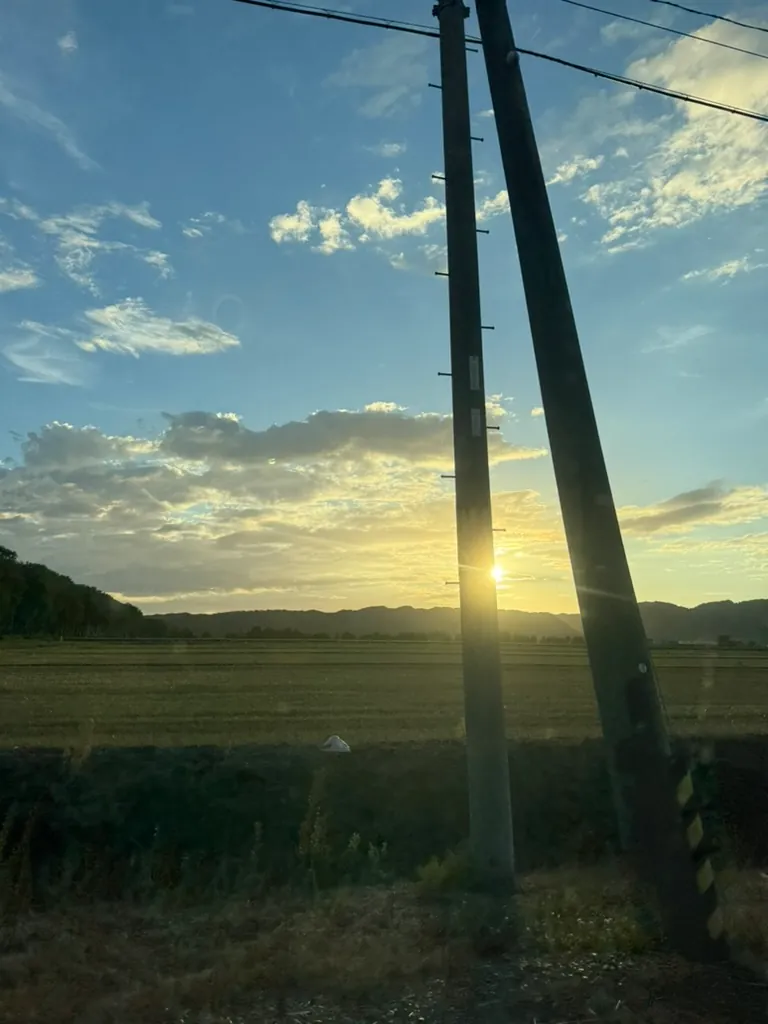
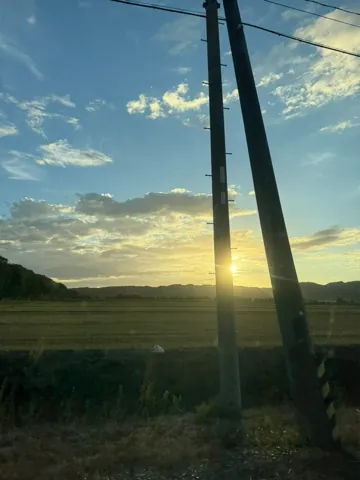
The only village in Ishikari Subprefecture.1 It is a flat rice-growing plain on the right bank of the Ishikari River2 where the horizon is visible in every direction.3 The village markets itself as a "town of the sky" (空のまち), with a 50 cm observatory, glider flights and a winter sky-lantern festival.34 Its Michi-no-Eki is built into the Tappu-no-Yu hot spring, which closes for renovation from October 2026 to about the end of 2027.5
- Population (2020 Census)
- 3,044
- Area
- 78.04 km²
- District
- Ishikari District (石狩郡)
- Official website
- www.vill.shinshinotsu.hokkaido.jp
Known for
- Rice: one of Hokkaido's leading rice villages (米の村).3 JA Shinshinotsu (JA新しのつ) sells its crop as Shin-Shinotsu rice (新しのつ米) in Yumepirika, Nanatsuboshi and Oborozuki varieties.12
- Clean farming: growers use organic methods, EM farming and Hokkaido's own YES!clean certification.13 In December 2020 the co-op's clean-rice growers (12 farmers plus the co-op's rice-drying plant) gained GLOBALG.A.P. group certification for rice. The co-op calls it the first such group certification for rice in Hokkaido.14
- Tappu-no-Yu hot spring (しんしのつ温泉たっぷの湯): an iodine-bearing strong-salt spring. The water comes out at 50.8 °C and contains 29.39 g of dissolved minerals per kg.15 The building also houses the village's Michi-no-Eki.16
- "Town of the sky" (空のまち): the Shinshinotsu Observatory (しんしのつ天文台) opened in November 2023. Its 50 cm reflector is described as the sixth-largest in Hokkaido.17 Glider flights run from a field on the Ishikari riverbed.318 In October 2025 the village received the Council Chair's Award, the second-highest prize, at the Ministry of the Environment's 37th "Starry Sky Town, Blue Sky Town" (星空の街・あおぞらの街) national convention. The village says it was the first single municipality to win it.19
- Winter pond-smelt fishing (ワカサギ釣り): fishing on the ice of Lake Shinotsu (しのつ湖), from early January to early March.20 Smelt fishing on the lake began in 1964.9
- Sky Lantern Festival (新篠津天灯(ランタン)祭り): lanterns released over the snowy plain in February.21
- Local food and drink: additive-free kimchi called Hono no Hana (炎の華), the junmai sake Ōbora (大法螺) and miso made from local soybeans.1622 The village was certified as a doburoku special zone (どぶろく特区) in 2009, and doburoku is sold as a local product.916
Sights & activities
Nature & scenery
- Shinotsu Park (しのつ公園): Dai-46-sen Minami 3 (第46線南3番地). The lakeside park is the venue for the lantern festival.41 Its observation tower inspired the mascot's hat.3 Japanese irises, the village flower, bloom there in July.16
- Lake Shinotsu (しのつ湖): an Ishikari River oxbow lake used for fishing in summer and ice fishing in winter.116
- Tappu Ohashi (たっぷ大橋): an 825 m cable-stayed bridge over the Ishikari River to Iwamizawa. It carries prefectural roads 81, 139 and 1121.24
- Cycling: The village publishes four routes on flat, quiet roads: a family loop around Lake Shinotsu, a countryside course, a middle-distance course and a "Horizon Challenge."28
Onsen
- Tappu-no-Yu (天然温泉たっぷの湯): Dai-45-sen Kita 2. The spring is an iodine-bearing sodium-chloride strong-salt spring (含よう素‐ナトリウム‐塩化物強塩温泉), 50.8 °C at the source with 29.39 g/kg of dissolved minerals. It has an open-air bath, a large bath, a sauna and private family baths (¥1,650 an hour). Day bathing costs ¥700 for adults (junior-high age and over) and ¥300 for elementary-school children, 6:00–22:00 (last entry 21:30).15 The onsen's analysis gives pH 7.33 and classes the water as neutral. The village tourism page instead describes it as alkaline; the onsen's own analysis is used here.1543 The onsen is closed from October 2026 to December 2027 for renovation.27
Museums & heritage
- Shinshinotsu Observatory (しんしのつ天文台): Dai-48-sen Kita 17, in Fureai Park. It has a 50 cm reflector, a 15 cm refractor and a solar telescope.17 The village tourism site calls it Hokkaido's first fully open-roof observatory.44 It opens from April to November and closes for winter from December to March. Daytime viewing is on weekends and holidays, 13:00–15:30, and is free. Night viewing is on Wednesdays, Fridays, weekends and holidays, 20:00–22:30 from April to August, 19:00–21:30 in September and 18:00–20:30 in October and November. Thursday nights (except holidays) are reserved for one group per hour, booked online in advance.45 It is closed Mondays, Tuesdays (except holidays) and the 2nd and 3rd Wednesdays of the month (except in August and on holidays).1746 From fiscal 2026, night viewing costs ¥300 for adults (high-school age and over) and ¥200 for elementary and junior-high students. Village residents, preschoolers and disabled visitors are free.46 Free parking for about 130 cars.17 Its facility page and the subprefecture's overview also call it the "Tappu Observatory" (たっぷ天文台).346
- Fureai Park Constellation Viewing Site (ふれあい公園星座観測場): an open-air site completed in August 2021. It has benches and a large planisphere-style sign that you set to the date and time. It is open free every night during the season; the village notice gives an opening date of 22 April.47
- Murals (壁画アート): a listed sight.3 Four works along the main street were completed from 2023 to 2026.21
Outdoor & seasonal activities
- Gliding: The Sapporo Aviation Association (札幌航空協会) flies from the Shinshinotsu glider field (新篠津滑空場) on the Ishikari riverbed. It has been based there since 1984, with the village's support. Visitors can watch or book trial flights.1848 Flights run on weekends from spring to autumn.3
- Golf: New Shinotsu Golf Course (ニューしのつゴルフ場), 18 holes, open mid-April to early November.34
- Camping: at Shinotsu Park beside the lake. The free-site area is open 29 April to 31 October (adults ¥1,500, children ¥1,000 per night). An equipment-included "hands-free camping" plan runs 6 June to 26 September. Book free sites online through Nap (なっぷ); phone bookings are not accepted.49
- Ice fishing: Tappu-no-Yu's hut-fishing course includes a bath ticket: adults ¥3,000, elementary-school children ¥1,000, preschoolers ¥300. Rods, tackle, bait, a stove, chairs and buckets are provided. Lake Shinotsu has gas vents that leave patches of unfrozen water, and the operator says fishing on the ice is at your own risk.50
- Other: soba-making classes, park golf, a rental allotment farm (ふれあい農園) and snow cycling.44 The park-golf courses are certified by the Japan Park Golf Association.50
Food experiences
- Daichi no Terrace Enishi (大地のテラス 縁): Tappu-no-Yu's lakeside restaurant. It is known for a breakfast buffet of more than 70 Japanese and Western dishes, including tofu from local soybeans (see Roadside stations below). Banquet courses cost ¥4,400–5,500.51 It closes with the rest of Tappu-no-Yu during the renovation.27
- Shinshinotsu farmers' market (しんしのつ産直市場): run by JA Shinshinotsu next to Tappu-no-Yu. JA lists its 2026 season as 29 April to 3 November, 9:00–17:00. Farmers set their own prices for vegetables, asparagus, wild greens, melons, rice, local sake and kimchi.40 The Michi-no-Eki's closure notice says the market closes for winter from 1 November 2026.52 It opened in August 2011,9 and its take-out café sells soft-serve ice cream and smoothies made with local vegetables.16
- Other places to eat: the tourism site lists about a dozen restaurants, including Ajidokoro Robata (味処 ろばた), Flamingo Cafe (フラミンゴカフェ), Yakiniku Taimon (焼き肉 太門), Shinshinotsu Gohan Komessaku (しんしのつごはんこめっさく) and the baked-goods shop Gaburi (焼菓子ガブリ).53
Roadside stations (Michi-no-Eki)
Michi-no-Eki Shinshinotsu (道の駅しんしのつ)
- Location: Dai-45-sen Kita 2-banchi, Shinshinotsu (〒068-1134 石狩郡新篠津村第45線北2番地), on Prefectural Road 139, the Ebetsu–Naie Line (道道江別奈井江線). The station is inside the Tappu-no-Yu hot spring complex, next to Shinotsu Park and Lake Shinotsu. The road links Iwamizawa, Ebetsu and Sapporo. Tel. 0126-58-3166.16
- Hours: Closed for renovation from 1 October 2026 until about the end of December 2027 (planned).52752 (The onsen's camp page gives 30 September 2026 to 31 December 2027.)49 Before the closure, the station was open 6:00–22:00, the shop 7:00–21:00, the restaurant 11:00–21:00 (last order 20:30) and the onsen 6:00–22:00 (last entry 21:30). It closed on 6–8 April and 11 May.16 As of September 2026 — check before visiting.
- Shops & products: The shop stocks the local sake Ōbora (大法螺), doburoku, rice, Kome cider and other products made from local ingredients. Its top recommendation is the additive-free kimchi.16 JA Shinshinotsu supplies Shin-Shinotsu rice (Nanatsuboshi, Oborozuki and Yumepirika in 5 kg bags) and country-style miso.37 During the closure, the neighboring farmers' market stays open through October 2026. The closure notice says it then closes for winter from 1 November,52 although JA lists its season as running to 3 November.40
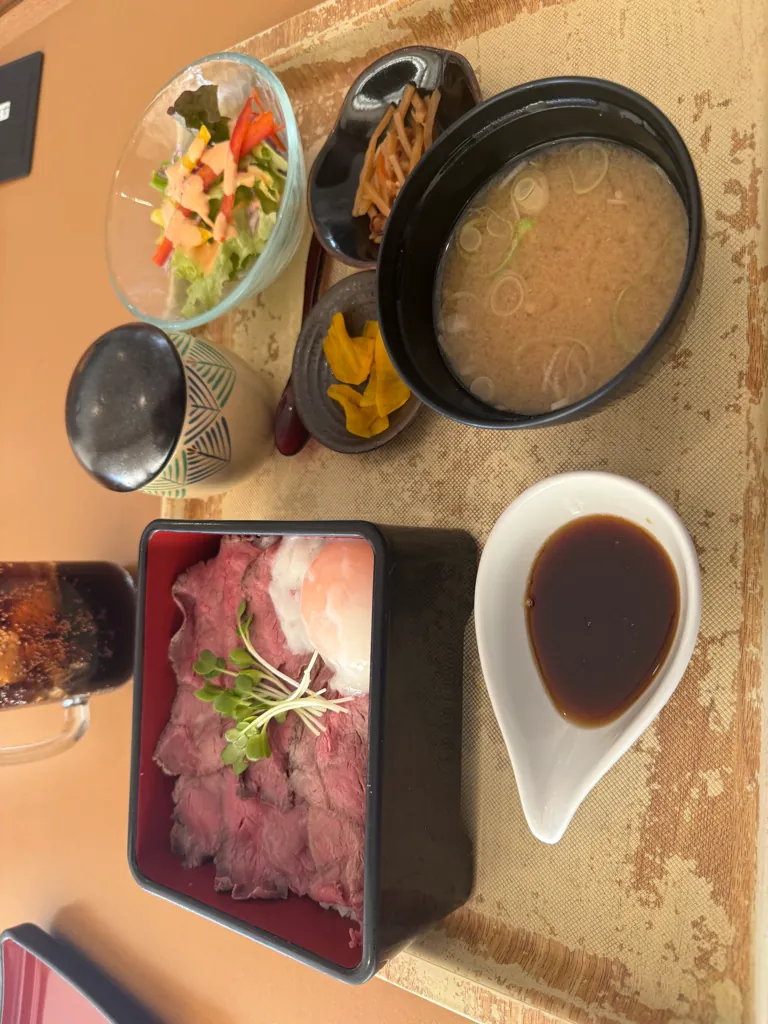
- Food: The restaurant is Daichi no Terrace Enishi (大地のテラス 縁). Its all-you-can-eat breakfast buffet has more than 70 items, including roast beef baked every morning and a sashimi rice bowl you build yourself, in the style of Kushiro's katte-don.16 The buffet costs ¥2,200 for adults, ¥1,100 for elementary-school children and ¥550 for preschoolers.51 Other dishes include Tokugawa miso ramen (¥1,320) and a roast-beef set meal.16 The farmers' market's take-out café sells soft-serve ice cream; no flavors are documented in the sources checked.16
- Facilities: Parking for 159 cars and 7 large vehicles. Toilets with warm-water seats, an accessible toilet, EV charger, Wi-Fi, baby-changing table, shop, restaurant, onsen, campground, observation deck and park.1654 The toilets are outdoors.16 A November 2025 notice said the EV quick charger was out of service for maintenance; no return to service had been posted when checked.1655 There is also a hotel, with rooms from 8-tatami Japanese rooms to 46 m² split-level (maisonette) Western rooms.56 Whether the toilets are open 24 hours is not stated.
- Notes: Registered on 9 August 2010 as Hokkaido Michi-no-Eki No. 11057 and opened on 3 November 2010. The 1997 onsen building was converted for the purpose.916 From 1 to 31 October 2026, the stamp can be pressed at the farmers' market next door, 9:00–17:00. From 1 November the market also closes for winter, so no stamp will be available.552 Other stations nearby include Hokuō no Kaze Michi-no-Eki Tōbetsu (北欧の風 道の駅とうべつ) in Tobetsu, Michi-no-Eki 275 Tsukigata (道の駅275つきがた) in Tsukigata and Michi-no-Eki Mikasa (道の駅三笠) in Mikasa.57
Getting there & around
- Rail: There is no railway in the village.1 The nearest stations are Kami-Horomui (上幌向) on the JR Hakodate Main Line in Iwamizawa, and Hokkaido-Iryōdaigaku (北海道医療大学) in Tobetsu.15859
- Bus: Shinshinotsu Kōtsū (新篠津交通) runs the Hokushin Line (北新線) from Iwamizawa bus terminal to Tappu-no-Yu. The operator took over routes after JR Hokkaido Bus withdrew in 2003.59 The trip takes about 30 minutes from Iwamizawa Station. From Kami-Horomui Station, the stop is across Route 12 near the Seicomart on the Sapporo-bound side, about 17 minutes to Tappu-no-Yu.60 The village also runs the New Shinotsu Bus (ニューしのつバス) between Ebetsu Station and Tsukigata, which replaced a Hokkaido Chuo Bus route in 1992.61
- By car: About 50 minutes from Sapporo and about 1 hour 40 minutes from New Chitose Airport.58 From Sapporo, leave the Dō-Ō Expressway at Ebetsu-Higashi IC, then follow Routes 337 and 12 and turn onto Prefectural Road 81 (follow the blue signs for Shinshinotsu) for about 6 km. From Asahikawa, exit at Iwamizawa IC and take Routes 234 and 12 to the same turn.60 Prefectural roads 81, 139, 751, 887 and 1121 serve the village. There is no national highway inside it.1
- Nearest airport: New Chitose (新千歳空港).58
- Getting around: Buses are infrequent, and a car or bicycle is the practical way to reach the observatory, glider field and lake. The flat roads suit cycling.28
Practical tips
- Plan around the renovation: From October 2026 to about December 2027, Tappu-no-Yu (onsen, restaurant, hotel and Michi-no-Eki) is closed.527 Confirm whether events that normally use the complex, such as ice-fishing plans, will run.
- Best seasons: Summer and early autumn for golf, camping, gliding and the Aozora Matsuri (late August). In 2026, Kite Day is on 3 October. January to March is ice-fishing season, and the lantern festival is in February.2021 The observatory is open only from April to November.46
- Visitor information: The tourism association (新篠津村観光協会) is based in the village office, Dai-47-sen Kita 13. Tel. 0126-57-2111, weekdays 8:45–17:15, email kankou@vill.shinshinotsu.hokkaido.jp.4
- Services: The village has two convenience stores and a small supermarket. For larger shopping, residents go to Iwamizawa.162
- Stargazing: The observatory is closed from December to March, on Mondays and Tuesdays and on the 2nd and 3rd Wednesdays. Thursday nights are for advance bookings only, made online.45 Check its calendar before driving out.1746
- Winter cautions: This is a special heavy-snow area with about 8 m of snowfall a year.1 Open, flat farmland roads are prone to whiteouts and drifting snow. Check the ice-fishing status before going onto Lake Shinotsu, where gas vents leave patches of unfrozen water.50
- Wildlife: No village-specific brown-bear advisory was found in the sources checked. The onsen's camp page says no bears have been sighted at the campground since it opened.49 Take normal Hokkaido precautions near the riverside woods along the Ishikari.
Photos
-
 Aug 2026
 -
 Mar 2026
More about Shinshinotsu
At a glance
| Field | Details |
|---|---|
| Type | Village (村). It is the only village in Ishikari Subprefecture and has the smallest population there.1 |
| Subprefecture | Ishikari (石狩振興局) |
| District | Ishikari District (石狩郡) |
| Population | 3,044 at the 2020 Census.26 The resident register showed 2,659 people (1,291 men, 1,368 women) in 1,348 households on 1 September 2026.7 The subprefecture's 2026 overview gives 2,686 as of 1 January 2026.3 |
| Area | 78.04 km².18 An older entry in the Nihon Rekishi Chimei Taikei (日本歴史地名大系) gives 78.24 km².2 |
| Density | About 34 people/km², calculated from the September 2026 register figure. It was about 39/km² at the 2020 Census. |
| Municipal history | Split from Shinotsu Village (篠津村, now part of Ebetsu) in February 1896 (Meiji 29).23 The second-class municipal system (二級町村制) was applied in April 1915.2 In October 1930 the village annexed Fukurotappu (字袋達布) from Kita Village (北村).2 It has not merged since. Merger talks with Ebetsu, aimed at fiscal 2008, were called off on 10 July 2008 over differences in farm policy.1 The mayor is Ishizuka Takashi (石塚隆), in office since July 2017.1 |
| Neighboring municipalities | Ebetsu and Tobetsu in Ishikari. Iwamizawa and Tsukigata in Sorachi.1 |
| Symbols | Tree: Japanese rowan (ナナカマド). Flower: Japanese iris (ハナショウブ).3 Both were chosen on 2 May 1980.9 No village bird is listed. |
| Mascot | Shinshinotsu no Okome-chan (しんしのつのおこめちゃん) is a "rice fairy" created in 2015 for the village's 120th anniversary. Her design draws on rice, snow and doburoku, and her hat is modeled on the observation tower in Shinotsu Park.310 Her younger sister, Shinshinotsu no Sorami-chan (しんしのつのそらみちゃん), was introduced in February 2026. Sorami-chan's upper body shows the daytime sky and her lower body a starry night with the Big Dipper. She is named after the observatory's telescope.311 |
| Official website | https://www.vill.shinshinotsu.hokkaido.jp/ |
Name origin
- "New Shinotsu": The village was part of Shinotsu Village until 1896. When it became independent it took the name Shin-Shinotsu, "New Shinotsu" (新篠津).3 According to Japanese Wikipedia, the name first proposed was Higashi-Shinotsu Village (東篠津村, "East Shinotsu"). The Hokkaido Government asked for it to be changed to the present name.1
- Ainu origin of "Shinotsu": Most sources trace the name to Ainu, with two main theories.23
- Early records: The explorer Matsuura Takeshirō wrote the name as "Sunotsu" (スノツ) in 1846 and as "Shinotsu" (シノツ) in 1856. The name was therefore in use by the Ansei era (1854–1860).23
- "Tappu": The formal name of Lake Shinotsu is Fukurotappu-numa (袋達布沼).1 The village chronology says Fukurotappu was formed in 1909, when a flood shifted the river's course.9 The land annexed from Kita Village in 1930 was also called Fukurotappu (袋達布).2 "Tappu" appears again in the names of the bridge, the onsen and the observatory. Tappu Ohashi was named through a public naming contest held by Shinshinotsu and Kita Village.24 A direct link between these names and the old place name is likely but unverified.
History
- Ainu era: The name Shinotsu survives in Matsuura Takeshirō's survey records of 1846 and 1856.23 The sources checked record no archaeological sites or Ainu settlements within the present village.
- 1881: Nineteen tondenhei (屯田兵) households under Sergeant Major Nagoshi Gengorō moved into the Shinotsu soldier-farmer village, in what is now Ebetsu. The area then became officially known as Shinotsu Village. More tondenhei arrived in 1885 and 1886.23
- About 1887: Land along the right bank of the Ishikari River and the Shinotsu River was chosen for colonization as the Kami-Tobetsu Plain (上当別原野, about 48.37 million tsubo).2
- 1893: Colonization lots were surveyed on the Shinotsu Plain (篠津原野) and settlement began.2 Large numbers of settlers arrived after the Hokkaido Government's first call for colonists in 1894.23 The Shisō (宍粟) district, north of Lake Shinotsu, is named after a group from the old Shisō District of Hyōgo Prefecture that settled there in 1894.1
- 1896: The settlement split from Shinotsu Village as Shinshinotsu Village. The new village was proclaimed on 16 February 1896.2323 English Wikipedia gives 1895.25 The village celebrated its 100th, 120th and 130th anniversaries in 1995, 2015 and 2025.926
- 1897: Population 581 households and 2,249 people.2
- 1900–1929: In 1900 the village center had 17 houses and the Shinshinotsu Agricultural Society was founded. Hardship followed: a cold-summer crop failure in 1902; a storm flood in August 1913 that wiped out the crops, so that imported "Nanking rice" had to be brought in; and a snowmelt flood of the Ishikari River in April 1921. Between these, a flood in 1909 shifted the river's course and formed Fukurotappu, today's Lake Shinotsu. The first village head, Yoshida Bunjirō (吉田文次郎), took office under the second-class municipal system on 1 April 1915.9 (Japanese Wikipedia writes his name 吉田文治郎.1) The Ishikari River embankment was completed in 1922. A scheduled bus to Ebetsu began on 16 April 1929.9
- 1930: Fukurotappu was annexed from Kita Village in October.2
- 1945: Twelve households of the Takuhoku Farm Corps (拓北農兵隊) arrived from Tokyo on 16 August. Twenty-three households (110 people) of a return-to-farming corps (帰農隊) arrived from Shizuoka Prefecture on 20 October.9
- Postwar peatland reclamation: Much of the village was peat bog and wetland, and its history was a struggle with river control, drainage and soil improvement.2 The Shinotsu peatland development project (篠津泥炭地開発事業) turned this land into paddy and made the area one of the Ishikari Plain's leading rice districts.2 The Shinotsu Canal (篠津運河) was completed in 1965.9 The Shin-Takakura, Nishi-Takakura and Takushin districts marked 50 years since settlement in March 2004.9
- 1960: The Iwamizawa Ohashi bridge over the Ishikari River opened on 8 October.9 It was lengthened in 1964 and 1968 as the river was widened.24
- 1997: The Tappu-no-Yu hot spring and training lodge opened on 1 June.9
- 2003: A friendship-city agreement with Kamiyubetsu, now part of Yubetsu, was signed on 29 September.9
- 2004: Tappu Ohashi (たっぷ大橋), an 825 m cable-stayed bridge, replaced the old Iwamizawa Ohashi on 29 September.924
- 2005: Atsuta and Hamamasu villages merged into Ishikari, leaving Shinshinotsu as the subprefecture's only village.1
- 2008: Merger talks with Ebetsu were called off on 10 July.1
- 2009: The village was named a doburoku special zone (どぶろく特区) on 27 March.9 Shinotsu Park Campground opened the same year.1
- 2010: Tappu-no-Yu was registered as Michi-no-Eki Shinshinotsu on 9 August and opened as one on 3 November.9
- 2011: The Shinshinotsu farmers' market opened at the Michi-no-Eki on 4 August.9
- 2021: The first lantern event (新篠津点灯(ランタン)フェスタ) was held on 27 February. The Fureai Park constellation-viewing site opened on 12 August.9
- 2023: The observatory's completion ceremony was held on 2 November.9
- 2024: The first Shin-Shinotsu Kite Day was held on 9 June.9
- 2025–2026: The village published a 130th-anniversary history. Its mayor's greeting is delivered by an AI "digital clone" in Japanese, English and Chinese.26 On 25 October 2025 the village won the Council Chair's Award at the national "Starry Sky Town, Blue Sky Town" convention.19 Sorami-chan was introduced in February 2026.3
- October 2026 to about the end of 2027: Tappu-no-Yu and the Michi-no-Eki close for major renovation.527
Geography & climate
- Setting: The village lies in the northeast of Ishikari Subprefecture,1 in the middle of the Ishikari Plain on the right bank of the Ishikari River.2 The Ishikari River forms the eastern boundary with Iwamizawa. The Shinotsu River and the Shinotsu Canal run roughly southwest across the village.12
- Lake Shinotsu (しのつ湖): formally Fukurotappu-numa (袋達布沼). It is an oxbow lake, a cut-off meander of the Ishikari River.1 The village chronology dates its formation to a 1909 flood that shifted the river's course.9 Shinotsu Park, the campground, the golf course and Tappu-no-Yu are all around the lake.16
- Terrain: The land is almost completely flat. The village promotes its 360-degree horizon,3 and its cycling map notes that the roads have no hills and little traffic.28 The Nihon Rekishi Chimei Taikei counted about 50 km² of paddy and 2 km² of upland fields, roughly 67% of the village's area.2
- Parks: No national, quasi-national or prefectural natural park was found within the village.
- Climate: The climate is humid continental (Köppen Dfb). Mean annual temperature is 7.3 °C and mean annual snowfall 820 cm, and the village is a designated special heavy-snow area (特別豪雪地帯). The highest temperature on record is 35.5 °C (25 August 2023) and the lowest −27.0 °C (7 February 1998).1
Economy & industry
- Agriculture: Farming, above all rice, is the core industry. It is organized through JA Shinshinotsu (新篠津村農業協同組合, JA新しのつ).1 The co-op runs a "rice factory" for drying and hulling, low-temperature storage for 230,000 bales, a seed-disinfection plant and its own mill. This lets it take rice from seed to sale inside the village.12 In fiscal 2023 the village had 228 farm households. Rice was planted on 2,486 ha, wheat on 1,429 ha and soybeans on 617 ha, far more than any other crop in the village's table of main crops.6
- Rice products: Besides regular rice, JA Shinshinotsu sells GABA rice. A 2018 Yumepirika batch reached 32 mg of GABA per 100 g, against about 2 mg in ordinary white rice.29 It also sells EM rice, grown with half the Hokkaido standard amounts of chemical pesticides and fertilizer,30 and Kirari-mochi waxy barley (もち麦).31
- Vegetables: The main vegetables are strawberries, broccoli, green peppers, melons, napa cabbage, asparagus, blanched long green onions (軟白長ねぎ), sweet corn and onions. Soybeans (the Toyomusume variety) are also grown.32
- Flowers: Flower growing began in 1973. Alstroemeria, grown year-round, is the main crop, followed by eustoma (25 varieties), statice and lilies. They are sold under the brand Kita no Hana-dayori (北の花だより).33
- Commerce: The village belongs to Ishikari administratively but looks to Iwamizawa for shopping. It lies in Iwamizawa's primary retail catchment, with 56% or more of retail purchases made there.1
- Tourism: Tappu-no-Yu (onsen, hotel and restaurant), the 18-hole New Shinotsu Golf Course,34 the campground, the observatory and the glider field are the main attractions. No annual visitor count was found.
- Population: The population fell from 4,818 in 1970 to 3,811 in 1990, 3,519 in 2010 and 3,044 in 2020.1 It was 2,659 in September 2026.7
- Revitalization: The village is building a "sky" brand around the observatory, lantern festival and gliding. Its 2025 national starry-sky award cited this work.19 It has published a rice-promotion magazine, "PRO JP01: The whole picture of Shinshinotsu rice" (新篠津村の米の全貌).35 Since 2023 it has also had one mural a year painted on a building or structure along the main street,21 and it accepts furusato nozei donations through eight portal sites.36
Local specialties
| Specialty | Category | Details & where to get it |
|---|---|---|
| Shin-Shinotsu rice (新しのつ米) | Rice | Yumepirika, Nanatsuboshi and Oborozuki, grown with as little pesticide and chemical fertilizer as possible.12 Sold in 5 kg bags at the Michi-no-Eki.37 |
| GABA rice (GABA米) | Rice | Rice treated to raise its GABA content. The co-op suggests mixing it at 10% with white rice.29 |
| Kirari-mochi waxy barley (もち麦 きらりもち) | Grain | A two-row hull-less waxy barley grown in the village.31 Second on Furusato Choice's popularity ranking for the village when checked (after onions): 750 g × 2 bags for a ¥6,000 donation.38 |
| Ōbora junmai sake (純米酒「大法螺」) | Sake | The village's local sake, sold in 1.8 L, 720 mL and 300 mL bottles.22 Brewed from Suisei (彗星) sake rice grown in the village and stocked at the Michi-no-Eki.16 |
| Doburoku (どぶろく) | Unfiltered rice brew | The village was certified as a doburoku special zone in 2009.9 Sold at the Michi-no-Eki.16 |
| Kome cider (こめサイダー) | Soft drink | A lightly carbonated soda made with local Yumepirika rice.16 A listed specialty.3 The tourism site suggests it after a hot-spring bath.4 |
| Hono no Hana kimchi (キムチ「炎の華」) | Pickles | Made by Tsukuriya (造り家) to a traditional Korean method that a local napa-cabbage farmer, Mr. Satō, and his wife learned in Korea. No additives. The village says it has fans as far away as Ishigaki in Okinawa.22 The Michi-no-Eki calls it its top recommendation.16 |
| Country-style miso (田舎風味噌) | Miso | Made from 100% local soybeans and aged for a long time. 450 g ¥430, 850 g ¥720.22 Additive-free, naturally brewed and handmade with the co-op's own koji.39 A 4 kg keg is a furusato nozei gift.38 |
| Koji-kun rice koji (こうじくん) and tofu (こだわり豆腐) | Fermented foods | Local-rice koji fermented for 48 hours, and tofu made from local Toyomusume soybeans.39 |
| Organic dried sweet potato (有機ほし甘いも), ginger dressing (ジンジャードレッシング) | Processed foods | Listed among the village's specialties.3 |
| Onions, Beni-haruka sweet potatoes, Jerusalem-artichoke tea (菊芋茶, by Shinshinotsu Foods) | Furusato nozei gifts | Among the top gifts on Furusato Choice; onions were ranked first when checked.38 |
| Mini tomatoes, blanched long green onions, flowers | Produce | Listed specialties.3 Seasonal produce is sold at the Shinshinotsu farmers' market (しんしのつ産直市場).40 |
Culture & festivals
| Event | When | Highlights |
|---|---|---|
| Shinshinotsu Sky Lantern Festival (新篠津天灯(ランタン)祭り) | February | The 5th festival was held on 22 February 2025, 14:00–19:30, in Shinotsu Park, with paper-bag lanterns, ice candles, food stalls and snow activities.41 The 6th was held in February 2026.4 The tourism site lists the next one for every Saturday and Sunday in February 2027 and says the format will change substantially that year.21 The first lantern event was held in February 2021.9 |
| Lake Shinotsu smelt fishing (しのつ湖わかさぎ釣り) | Early January to early March | Ice fishing on the lake. Your catch can be fried as tempura at the restaurant.20 |
| Chamber of Commerce Summer Festival (商工会夏祭り) | July (17 July in 2026) | Draft beer, entertainment, children's games and a cash grab.21 |
| Bon Odori (盆踊り) | 14–15 August | Traditional Bon dancing.21 |
| Shin-Shinotsu Aozora Matsuri (新しのつ青空まつり) | Late August | The village's biggest event. It includes a morning "agri-fest" with grilled lamb and beer, stage shows, taiko drumming, a scatter of mochi (rice cakes) with prizes at sunset, a float parade down the main street, and fireworks.21 The 44th festival in 2023 was the first in four years.9 |
| Shrine festival (神社まつり) | 10 September | A family-friendly festival with food and drinks.21 |
| Shin-Shinotsu Kite Day (新しのつたこあげデー) | 3 October 2026 (the first was on 9 June 20249) | The 3rd event runs 10:00–15:00 on the No. 1 soccer field of the village sports park. Kite-making workshops cost ¥1,000 (120 places in four sessions, booking required). Sport-kite and train-kite flying are free, and a high-school band performs.42 |
| Public mural project (壁画公開制作プロジェクト) | Summer (next in 2027) | One mural a year on a main-street building or structure: a phone box (2023), a farm warehouse (2024), the Jichi Center (2025) and the north wall of the elementary-school gym, painted by the live-painting artist Gravityfree in August 2026.21 |
| Stargazing sessions (星空ウォッチング) | Held from time to time | Guided viewing with several telescopes, including meteor-shower nights.421 |
- Performing arts and schools: The drama club of Hokkaido Shinshinotsu Special Needs High School (北海道新篠津高等養護学校) won a top prize (優勝賞) at a national competition in November 2016 with the play Donguri no Gakkō (どんぐりの学校).9
- Shrine: A shrine festival is held every 10 September.21 The shrine's formal name and history were not confirmed in the sources checked.
- Museums: No municipal museum was found. The village's history is covered by its online chronology and the 130th-anniversary book, available as a digital book and a PDF.926
Ainu heritage
Little is documented. The Ainu heritage that survives in the sources checked is the name Shinotsu itself (Shinnotsu or Shinotto) and Matsuura Takeshirō's mid-19th-century records of it.23 No Ainu cultural facility, archaeological site or living tradition in the village was found. Visitors interested in Ainu culture usually go to Upopoy (National Ainu Museum) in Shiraoi.
Sister & friendship cities
Notable people
- Ogata Kaiki (尾形回帰): vocalist of the rock band HERE, from Shinshinotsu.163
- Takeda Masayuki (武田将幸): guitarist of HERE, from Shinshinotsu.163
- Kitagawa Naoya (北川尚弥, born 1996): stage actor, known for the third season of the Prince of Tennis musicals and the Touken Ranbu stage plays. Japanese Wikipedia gives Shinshinotsu as his hometown.164
Sources
Numbers in the text link to these sources. Figures as of 23 September 2026
- 新篠津村 — Wikipedia JA accessed 2026-09-23
- [新篠津村 entries: 日本歴史地名大系, ブリタニカ国際大百科事典 小項目事典] — コトバンク JA accessed 2026-09-23
- 2026石狩管内概要(P33 当別町、新篠津村) — 北海道石狩振興局 JA accessed 2026-09-23
- [Tourism site top page] — 新篠津村観光協会/新篠津村 JA accessed 2026-09-23
- [Top page, notice of 2026-09-18 on the しんしのつ renovation closure] — 北の道の駅 JA accessed 2026-09-23
- 村勢要覧(2025年版)資料編 — 新篠津村 JA accessed 2026-09-23
- [Official website top page, population box] — 新篠津村 JA accessed 2026-09-23
- 令和8年全国都道府県市区町村別面積調(4月1日時点) — 国土交通省 国土地理院 JA accessed 2026-09-23
- しんしのつ村の歴史 — 新篠津村 JA accessed 2026-09-23
- [PR character page: しんしのつのおこめちゃん] — 新篠津村 JA accessed 2026-09-23
- [New PR character page: しんしのつのそらみちゃん] — 新篠津村 JA accessed 2026-09-23
- 新しのつ米 — JA新しのつ(新篠津農業協同組合) JA accessed 2026-09-23
- しんしのつ農業の今、未来 — 新篠津村 JA accessed 2026-09-23
- GLOBALG.A.P. — JA新しのつ(新篠津農業協同組合) JA accessed 2026-09-23
- 温泉 — 天然温泉たっぷの湯 JA accessed 2026-09-23
- しんしのつ — 北の道の駅 JA accessed 2026-09-23
- しんしのつ天文台 — 新篠津村 JA accessed 2026-09-23
- グライダー — 新篠津村観光協会/新篠津村 JA accessed 2026-09-23
- 【市町村単独では全国初の受賞!】環境省主催・第37回「星空の街・あおぞらの街」全国大会 — しんしのつ天文台(新篠津村) JA accessed 2026-09-23
- ワカサギ釣り — 新篠津村観光協会/新篠津村 JA accessed 2026-09-23
- [Tourism site: festivals & events page] — 新篠津村観光協会/新篠津村 JA accessed 2026-09-23
- 特産品 — 新篠津村 JA accessed 2026-09-23
- 篠津 (江別市) — Wikipedia JA accessed 2026-09-23
- たっぷ大橋 — Wikipedia JA accessed 2026-09-23
- Shinshinotsu, Hokkaido — Wikipedia EN accessed 2026-09-23
- 新篠津村開村130年記念誌 — 新篠津村 JA accessed 2026-09-23
- たっぷの湯大規模改修工事に伴う休館のお知らせ — 天然温泉たっぷの湯 JA accessed 2026-09-23
- しんしのつサイクリングロードマップ — 新篠津村 JA accessed 2026-09-23
- GABA米 — JA新しのつ(新篠津農業協同組合) JA accessed 2026-09-23
- 新篠津EM米 — JA新しのつ(新篠津農業協同組合) JA accessed 2026-09-23
- 新篠津産もち麦誕生!(きらりもち) — JA新しのつ(新篠津農業協同組合) JA accessed 2026-09-23
- 野菜 — JA新しのつ(新篠津農業協同組合) JA accessed 2026-09-23
- 花卉(北の花だより) — JA新しのつ(新篠津農業協同組合) JA accessed 2026-09-23
- ニューしのつゴルフ場 — ニューしのつゴルフ場 JA accessed 2026-09-23
- 新篠津産米魅力発信情報誌「PRO JP01 新篠津村の米の全貌」 — 新篠津村 JA accessed 2026-09-23
- 新篠津村へのふるさと納税は、次のサイトからお願いします — 新篠津村 JA accessed 2026-09-23
- 道の駅しんしのつ — JA新しのつ(新篠津農業協同組合) JA accessed 2026-09-23
- [新篠津村 return-gift list] — ふるさとチョイス JA accessed 2026-09-23
- 加工品 — JA新しのつ(新篠津農業協同組合) JA accessed 2026-09-23
- しんしのつ産直市場 — JA新しのつ(新篠津農業協同組合) JA accessed 2026-09-23
- 第5回新篠津天灯(ランタン)祭り開催! — 新篠津村 JA accessed 2026-09-23
- 第3回新しのつたこあげデー開催! — 新篠津村 JA accessed 2026-09-23
- [Tourism site: hot spring page] — 新篠津村観光協会/新篠津村 JA accessed 2026-09-23
- [Tourism site: outdoor activities page] — 新篠津村観光協会/新篠津村 JA accessed 2026-09-23
- 予約利用 — しんしのつ天文台(新篠津村) JA accessed 2026-09-23
- 施設案内 — しんしのつ天文台(新篠津村) JA accessed 2026-09-23
- ふれあい公園星座観測場オープン! — 新篠津村 JA accessed 2026-09-23
- 札幌航空協会 — 札幌航空協会 JA accessed 2026-09-23
- キャンプ — 天然温泉たっぷの湯 JA accessed 2026-09-23
- アクティビティ — 天然温泉たっぷの湯 JA accessed 2026-09-23
- レストラン(大地のテラス 縁) — 天然温泉たっぷの湯 JA accessed 2026-09-23
- 道の駅しんしのつより長期休館のお知らせ(2026年9月18日) — 北の道の駅 JA accessed 2026-09-23
- [Tourism site: dining page] — 新篠津村観光協会/新篠津村 JA accessed 2026-09-23
- 施設 — 天然温泉たっぷの湯 JA accessed 2026-09-23
- EV急速充電器利用停止のお知らせ — 北の道の駅 JA accessed 2026-09-23
- 宿泊 — 天然温泉たっぷの湯 JA accessed 2026-09-23
- [道の駅 list: addresses and facilities] — 北の道の駅 JA accessed 2026-09-23
- [Tourism site: access page] — 新篠津村観光協会/新篠津村 JA accessed 2026-09-23
- 新篠津交通 — Wikipedia JA accessed 2026-09-23
- アクセス — 天然温泉たっぷの湯 JA accessed 2026-09-23
- 新篠津村営バス — Wikipedia JA accessed 2026-09-23
- [Tourism site: shopping page] — 新篠津村観光協会/新篠津村 JA accessed 2026-09-23
- HERE (バンド) — Wikipedia JA accessed 2026-09-23
- 北川尚弥 — Wikipedia JA accessed 2026-09-23