Town Iburi Subprefecture
Shiraoi 白老町
しらおいちょう
Shiraoi is a Pacific-coast town midway along Iburi. Since July 2020 it has been home to Upopoy, Japan's national center for Ainu culture, on the shore of Lake Poroto.12 It is also known for Shiraoi beef, Kojohama pollock roe (tarako), seaside and "moor" hot springs, and the remains of an 1856 Sendai-domain camp.1
- Population (2020 Census)
- 16,212
- Area
- 425.63 km²
- District
- Shiraoi District (白老郡)
- Official website
- www.town.shiraoi.hokkaido.jp
Known for
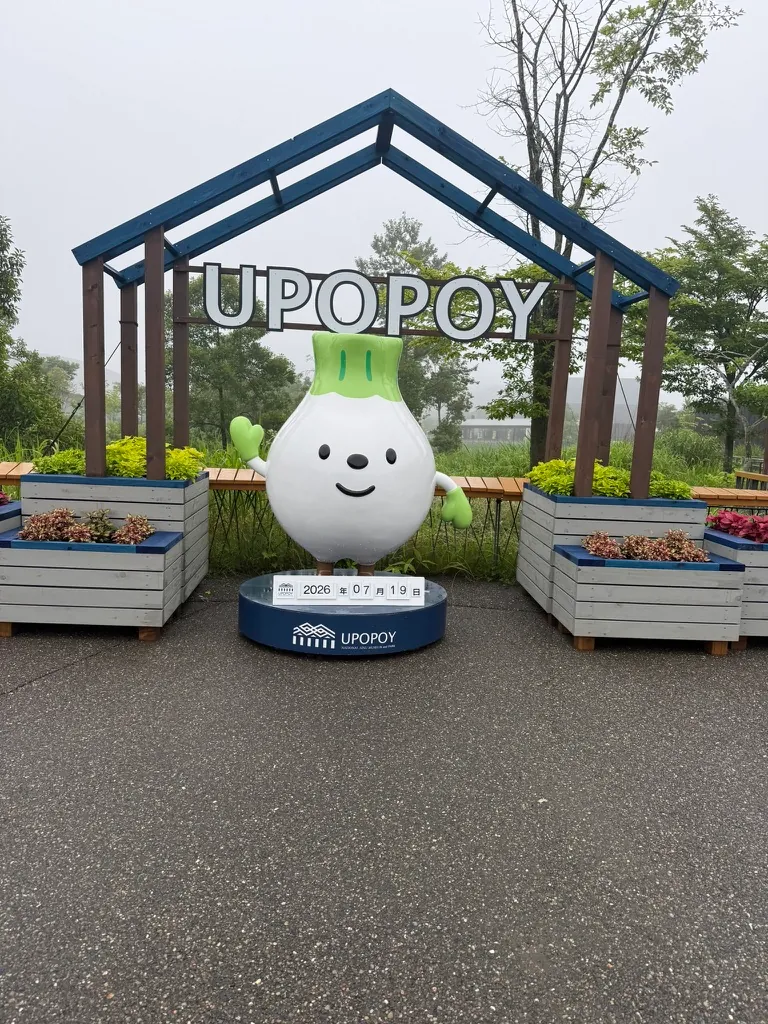
- Upopoy (ウポポイ, National Ainu Museum and Park): opened on 12 July 2020 on Lake Poroto. It includes the National Ainu Museum, Japan's first national museum devoted to the Ainu, and the National Ainu Park.1 The name means "singing together in a large group" in Ainu.11
- Shiraoi beef (白老牛): Kuroge Wagyu cattle were first brought here from Shimane in 1954.7 The town says they were the first Kuroge Wagyu brought into Hokkaido.12 The name was trademarked in 2006. The beef was served at the dinner after the Japan–US leaders' meeting during the 2008 Lake Tōya G8 Summit.1
- Kojohama tarako (虎杖浜たらこ): salted pollock roe made in Kojohama since the Taishō era. It is a regional collective trademark of the Iburi Fisheries Processing Cooperative.1
- Hot springs: Kojohama Onsen is a seaside spa with plentiful water. Shiraoi Onsen, in the Shadai–Ishiyama area, has brown "moor" (plant-derived) water.113
- Racehorses: the town is known for breeding racehorses.1 Japanese Wikipedia names Triple Crown winner Orfevre and his sire Stay Gold among the horses bred here.8
- Sendai Domain Shiraoi Jinya Site (白老仙台藩陣屋跡): the site of a northern-defense camp built in 1856. It is a National Historic Site and was selected as Hokkaido Heritage in 2022.147
- Clear lakes and forests: Lake Kuttara ranked first among Japan's lakes for water quality in the Ministry of the Environment's FY2001 survey.15 The town also has Poroto Forest and Inkura Falls, one of Japan's Top 100 Waterfalls.16
- Ainu traditional dance (アイヌ古式舞踊): designated an Important Intangible Folk Cultural Property in 1984; in Shiraoi it is kept up by the local preservation society.17 It was inscribed on UNESCO's Intangible Cultural Heritage list in 2009.7
Sights & activities
Nature & scenery
- Lake Poroto and Poroto Forest (ポロト湖・ポロトの森): Poroto Forest is one of the "100 Best Walks" (遊歩百選). Skunk cabbage around the floating bridge peaks in Golden Week. Chestnut, oak and katsura trees along the trails are over 1 m across. Autumn color is best at Momiji-daira, deep in the forest.16
- Lake Kuttara (倶多楽湖), Kojohama: a clear caldera lake reached from the Noboribetsu side.115
- Inkura Falls (インクラの滝), Shadai: 43.9 m high and about 10 m wide. You view it from observation decks near the car park and cannot reach the plunge pool. Summer foliage can hide it. The name comes from the timber incline railway ("incline") once built here. Locals used to call it Betsubetsu Falls.4416 Shiraoi Falls and Shadai Falls are also listed as sights.45
- Ayoro Coast (アヨロ海岸), Kojohama: a sunset coast rich in Ainu legend, with hotels and seafood shops nearby.16
- Hagi no Sato Nature Park (萩の里自然公園): in the middle of the town, with a deck looking out to Mount Tarumae and the Pacific. Its center house is nicknamed "Kennel House" (ケネルハウス).1
- Shikisai Kaido (四季彩街道, Road 86): a mountain road to Ōtaki, known for autumn color.18
Onsen
- Kojohama Onsen (虎杖浜温泉): a seaside spa village. Its springs are said to give the most water per facility in Hokkaido. The spa's operators declared that they serve free-flowing water piped straight from the source (源泉かけ流し宣言). The tourist association dates the declaration to September 2011; the town dates it to 2012.131
- Shiraoi Onsen (白老温泉): brown, plant-derived "moor" water, rare worldwide, from Shadai to Ishiyama.13
- Where to bathe and stay:
- day-use only: Ayoro Onsen (Kojohama 154-2)
- Kojohama: Hotel Izumi, Umi no Bettei Furukawa and Kojohama Onsen Hotel
- Takeura: Onsen Hotel Ocean and Yumoto Hokuyō
- central Shiraoi: KAI Poroto (Wakakusa-chō) and Livemax Resort Upopoy Shiraoi Onsen (Higashi-machi)46
Museums & heritage
- Upopoy (ウポポイ), Wakakusa-chō 2-3:
- Hours: 9:00–18:00 from 1 April to 31 October, 9:00–17:00 from 1 November to 31 March.
- Closed Mondays (the next weekday if Monday is a holiday), 28 December–4 January and 27 February–8 March in 2026–27. A few listed dates that would otherwise be closed, mostly Mondays, are open.
- Last entry is one hour before closing.47
- Admission: adults ¥1,200 (¥1,000 online), high-school students ¥600, junior-high age and under free. A ticket for entry after 14:00 costs ¥600.48
- Sendai Domain Shiraoi Motojinya Museum (仙台藩白老元陣屋資料館):
- Opened in 1984 beside the historic site. It shows about 300 items, including plans of the camp, documents and armor, with free audio guides in four languages.
- Open 9:30–16:30. Closed Mondays (the next day if Monday is a holiday) and 29 December–3 January.
- Admission ¥300 (children ¥150); Upopoy ticket holders pay the group rate. Free parking.14
- Closed all day on 11 October 2026 for the marathon.39
- Nachu no Mori (ナチュの森), Kojohama:
- A garden on the grounds of the former Kojo Junior High School, with about 7,000 m² of lawn and fountains fed by Kuttara spring water. Pony rides on weekends.
- Open 10:00–17:00, closed Wednesdays and Thursdays. Adults ¥600.49
- SL Poroto (D51-333): a D51 steam locomotive from the final years of steam in Hokkaido, on display at Poroto Mintar. It is under covers from mid-October to mid-April.50
Outdoor & seasonal activities
- Canoeing on Lake Poroto: from the Poroto no Mori Information Center, April–September. Open 9:00–17:00, closed Tuesdays. ¥2,000 per adult per hour, including paddle and life jacket.51 In winter the lake freezes for wakasagi (pond smelt) ice fishing.16
- Cycling: electric bikes can be rented at Poroto Mintar, April–October, ¥2,000 for up to 8 hours.33
- Camping: Buubetsu no Mori (Ishiyama 110-2), Shiraoi Camp Field ASOBUBA (Morino 98-1), Poroto no Mori (in the Poroto recreation forest) and Izumi Onsen (Kojohama 312-1).46
- Racehorse country: Japanese Wikipedia lists racehorse farms such as Shiraoi Farm (白老ファーム), Shadai Bokujō (社台牧場) and Narashino Bokujō (習志野牧場) among local sights.8
Food experiences
Roadside stations (Michi-no-Eki)
No Michi-no-Eki is located in Shiraoi. None appears for Shiraoi, or for neighboring Noboribetsu, in the official Hokkaido roadside-station directory.52 Stations in nearby cities include:
- Utonai-ko (道の駅ウトナイ湖): Uenae (植苗) 156-30, Tomakomai, by Lake Utonai.5253
- Mitara Muroran (道の駅みたら室蘭): Shukutsu-machi 4-16-15, Muroran.52
- Also within reach: Date Rekishi no Mori (道の駅だて歴史の杜) in Date, Sobetsu Jōhōkan i (道の駅そうべつ情報館i) in Sobetsu, and Salmon Park Chitose (道の駅サーモンパーク千歳) in Chitose.52
- Note: Forest 276 Ōtaki (フォーレスト276大滝), in the Ōtaki area of Date that Road 86 leads to, is no longer a Michi-no-Eki. Its registration was cancelled on 31 January 2022.52
In town instead: Poroto Mintar (ポロトミンタㇻ), the Shiraoi Station North tourist information center at Wakakusa-chō 1-1-21, offers a similar stop.33
- Services: a souvenir shop, light meals, multilingual information, luggage storage (¥500 per item), e-bike rental, free Wi-Fi, a children's play dome (closed in winter), and outdoor toilets open 24 hours.33
- Hours: 9:00–18:00 from April to October and 9:00–17:00 from November to March. Closed 29 December–3 January; the shop also closes on Mondays from November to March (as of September 2026 — check before visiting).33
Getting there & around
- Rail: the JR Muroran Main Line runs along the coast, with six stations in town: Kojōhama, Takeura, Kita-Yoshihara, Hagino, Shiraoi and Shadai.8
- Shiraoi Station opened on 1 August 1892. Its sub-name is "Upopoy Minzoku Kyōsei Shōchō Kūkan-mae" (ウポポイ 民族共生象徴空間前, "in front of Upopoy"). All Suzuran and some Hokuto limited expresses stop here.50
- The 28.7 km from Shiraoi to Numanohata is the longest straight stretch of railway in Japan.50
- Times by limited express: about 60 minutes from Sapporo, 30 from Chitose, 15 from Tomakomai and 30 from Muroran; Hakodate is about 2 h 30 min.54
- After the heavy rain of 27 August 2026, all Hokuto trains between Sapporo and Hakodate were suspended (as reported on 29 August 2026). Track was damaged on the Muroran Line well west of Shiraoi, between Usu and Nagawa and between Shizukari and Koboro (小幌). Check JR Hokkaido for the current timetable.2055
- Road:
- The Dō-ō Expressway has Shiraoi IC and Hagino PA. National Route 36 and the Shiraoi Bypass follow the coast.8
- Hokkaido Road 86 (Shiraoi–Ōtaki, "Shikisai Kaido") crosses the mountains toward Ōtaki and the Shiribeshi region.8
- Driving times: about 60 minutes from Sapporo, 40 from New Chitose Airport, 20 from Tomakomai ferry port, 30 from Muroran and 4 hours from Hakodate.54
- Bus:
- Dōnan Bus runs Tomakomai–Shiraoi–Noboribetsu. Expressway buses stop at Takeura on the Dō-ō Expressway. Hokkaido Chūō Bus ended its services into the town on 1 December 2025.8
- In town, the Gurupon (ぐるぽん) circulator links JR Shiraoi, Upopoy and the jinya museum, and also runs to Hagino and Shadai. Fares are ¥100 for adults (cash only), and a day pass is ¥200. It does not run on Mondays (the next weekday if Monday is a holiday) or 29 December–3 January.5657
- The Genki-gō (元気号) links Kojohama with the town center via JR Shiraoi and Upopoy, also for ¥100. It does not run on Sundays, holidays or 31 December–3 January.5657
- On foot to Upopoy: about 500 m (10 minutes) from the north exit of JR Shiraoi.58
- Parking at Upopoy: the main car park has 246 spaces at ¥500. At busy times cars may be sent to a temporary lot about 0.5 km away.58
- Air and sea: the nearest airport is New Chitose, in Chitose, about 40 minutes by car. Ferries use Tomakomai port, about 20 minutes away.54
Practical tips
- When to go:
- Upopoy planning:
- Visitor center: Poroto Mintar next to JR Shiraoi (tel. 0144-82-2216) has multilingual staff and stores luggage.33
- Buses: town buses are cash only and have no service on some days, so plan for gaps. Gurupon does not run on Mondays; Genki-gō does not run on Sundays or holidays.5756
- Weather:
- The coast gets little snow; average deepest snow cover is 28 cm.23 Sea fog is common from May to July.8
- Late summer and autumn bring heavy rain.24 Storms in August 2026 cut the town's water supply and closed Upopoy for a day.2021
- Mountain roads such as Road 86 are colder and snowier than the coast. Use winter tires from late autumn (general advice).
- Nature:
- Where to stay: see the Onsen section above. For something different, try haku hostel (Ōmachi 3-1-7; no onsen) or Pirika Rera Hotel (Hinode-chō).46
Photos
-
 Jul 2026
 -
 Jul 2025
 -
 Jul 2026
More about Shiraoi
At a glance
| Field | Details |
|---|---|
| Type | Town (町) |
| Subprefecture | Iburi (胆振総合振興局) |
| District | Shiraoi District (白老郡) |
| Population | 16,212 at the 2020 Census, down 8.6% from 2015.3 The resident register showed 14,443 people in 8,949 households at the end of August 2026.4 The preliminary 2025 Census count was 14,582, a fall of 10.1% in five years.5 |
| Area | 425.63 km² (GSI, 1 January 2026).6 The town stretches 28.0 km east–west and 26.4 km north–south.7 About 75% of it is forest.1 |
| Density | About 33.9 people/km² (14,443 residents). It was 38.1/km² at the 2020 Census.3 |
| Municipal history | The town counts 1856, when the Sendai domain built its camp here, as its founding year. Shiraoi, Shikiu (敷生) and Shadai (社台) villages merged as Shiraoi Village (白老村) in 1919. The village became a town on 1 November 1954.78 There have been no mergers since. |
| Neighboring municipalities | Tomakomai to the east (across the Betsubetsu River), Noboribetsu to the west, and Chitose (Ishikari) and the Ōtaki area of Date to the north.1 Reference works also list Sobetsu in the northwestern mountains.98 |
| Symbols | Tree: Japanese rowan (ナナカマド), chosen 1977. Flower: bush clover (ハギ), chosen 1978.7 Japanese Wikipedia gives the flower as エゾヤマハギ.8 No town bird was found. |
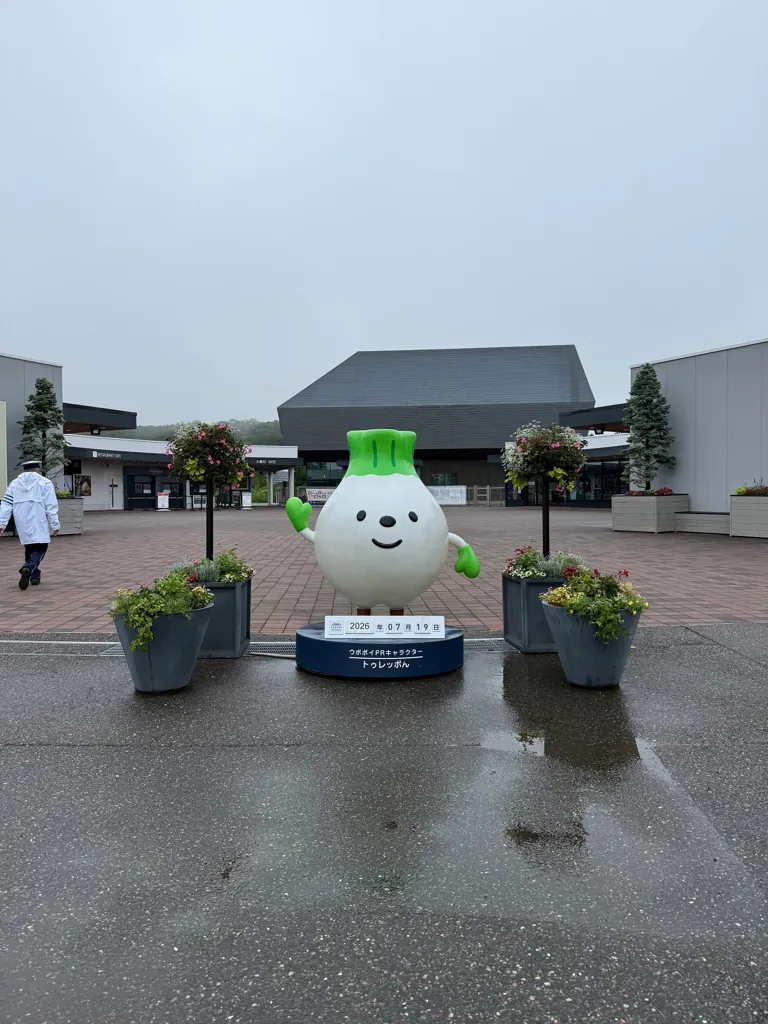
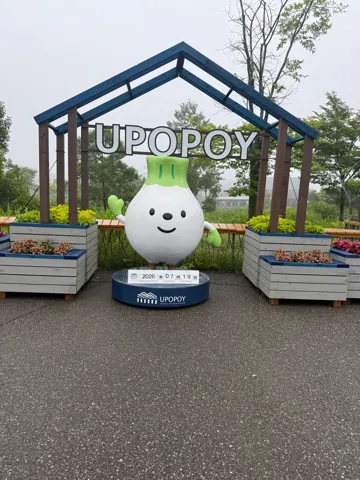
| Mascot | No official town mascot was found. Upopoy's PR character is TureppoN (トゥレッポん), a giant-lily bulb (turep). Shiraoi Ainu dug these bulbs in June–July for starch.10 |
| Official website | https://www.town.shiraoi.hokkaido.jp/ |
Name origin
- Main theory: the name comes from Ainu siraw-o-i (シラウオイ), "place where there are many horseflies". The town uses this reading.1 Britannica Japan gives it too.9
- Alternative: sirara-o-i (シララオイ), usually glossed as "place with (many) tides". Britannica lists it as the second theory.9 Japanese Wikipedia says place-name scholar Nagata Hōsei (永田方正) also recorded it.8 English Wikipedia says the town's website gives "rainbows" as the meaning.18 The town's current overview page says "horseflies", so the "rainbows" reading is unverified.1
- In the Edo period the name was written シラヲイ. Shiraoi was the center of the Shiraoi trading post (basho, シラヲイ場所).19
- Local names: Kojohama (虎杖浜) is named after the itadori (虎杖, Japanese knotweed) that grew there.13 Lake Kuttara's name is usually explained as Kuttar-us-to, "the lake of Kojohama (where knotweed grows)".15
History
- Ancient and Ainu era: the Ayoro terrace and coast at Kojohama are rich in Jōmon-period sites.1 Ornaments from the Ayoro site and vermilion-lacquered pottery from the Shadai 1 site are town-designated cultural properties.17 In the Edo period the Ainu kotan of Shiraoi, Uyoro and Buubetsu lay within the Shiraoi basho. When Yonezawa-domain samurai Miyajima Miki visited in 1870, he recorded 40–50 Ainu houses and no permanent Japanese residents.19
- 1856–1870, the Sendai domain: the shogunate ordered the Sendai domain to guard the north. In Ansei 3 (1856) it built its Shiraoi camp (jinya, 陣屋) and the Shiogama Shrine (塩釜神社).17 Settlers from the Nanbu domain arrived at Shadai in 1861 and at Shikiu in 1867. In 1868, during the Boshin War, the Sendai men withdrew over the mountains to Otaru and home. One retainer, Kusakari Untarō (草刈運太郎), took his own life at Shadai. The camp was dismantled in 1870, and its timber was used for offices and houses.7
- Meiji period: Shiraoi District was created in 1869, and a Hokkaido Development Commission (開拓使) office opened in 1872. The Sapporo–Muroran–Hakodate road opened in 1873, and Mount Tarumae erupted in 1874.7 Isabella Bird visited in August 1878. On 3 September 1881, Emperor Meiji visited and was shown a bear-ceremony performance.8 The railway and Shiraoi Station opened in 1892.7
- Settlers: migrants came from Iwate (1869), Aizu (1889) and Iyo, today's Ehime (1904).7 In 1932 more than 20 households from Fukushima, Niigata, Iwate and other prefectures settled Horokeshi (now Morino).19 After the war, farmers settled Kitayoshihara (1946) and Tobiu (1947).7
- Mines and mills: the Shikiu mine opened in 1917 and a barite mine in 1960. The Nittetsu mine closed in 1971.7 Daishowa Paper began partial operation of its Shiraoi mill in 1960 (full operation 1965). The mill is now Nippon Paper's Hokkaido Mill, Shiraoi.8 An Asahi Kasei plant opened in 1970.7 In 1974 the mill's team, Daishowa Hokkaido, won the national Intercity Baseball Tournament. It was the first time the championship flag crossed the Tsugaru Strait.7
- Municipal milestones: Shiraoi, Shikiu and Shadai merged as Shiraoi Village in 1919, with 4,906 people. The village became a town in 1954, the same year Kuroge Wagyu arrived from Shimane.7 The Ainu kotan moved to Lake Poroto in 1965. The jinya site became a National Historic Site in 1966.7 The Shiraoi Bypass and the Dō-ō Expressway's Shiraoi IC opened in 1983, and the first Shiraoi Beef Festival was held that year.7
- Peak and decline: the population peaked at 24,353 in the 1985 Census.3 Shiraoi Port opened in 1990. In 2009 the town's population fell below 20,000 for the first time in 41 years, partly because companies left. In 2012 the town declared a fiscal crisis: revenue fell ¥140 million short and its fiscal-adjustment fund was empty. It was designated a depopulated area (過疎地域) in 2014.7
- Upopoy era: in 2014 the Cabinet decided to build the "Symbolic Space for Ethnic Harmony" in Shiraoi.2 Orix's mega-solar plant of about 19 MW was completed in 2015 on the former Asahi Kasei site.7 The 2018 Hokkaido Eastern Iburi Earthquake registered intensity 5-lower here.7 Upopoy opened to the public on 12 July 2020.2 The town marked its 70th anniversary in 2024, and the beef festival returned that year after five years.7
- Recent: heavy rain on 27 August 2026 muddied the river that feeds the water plant. From 28 August, about 4,400 households, around half the town, lost their water supply. It was restored on 29 August.20 Upopoy closed for the day on 29 August.21
Geography & climate
-
Setting: Shiraoi lies near the middle of Iburi.1 It has about 25 km of Pacific coast, from the Betsubetsu River (the Tomakomai border) to the Fushikobetsu River (the Noboribetsu border).8 Its eight districts are Shadai, Shiraoi, Morino, Ishiyama, Hagino, Kitayoshihara, Takeura and Kojohama. Takeura is the largest, at 124.06 km².7
-
Mountains: the interior rises to Horohoro-yama (1,322 m), which the town calls the highest peak in Iburi and which is one of the "100 Natural Sights of Hokkaido". Its summit looks out over Lakes Shikotsu and Tōya.16 Other peaks include Orofure-dake (1,230.8 m), Shiraoi-dake (968 m) and Mount Tarumae (1,041 m). The mountains and Lake Kuttara lie within Shikotsu-Tōya National Park.9
-
Rivers: the Shiraoi River is the longest (26.5 km) and drains the largest basin (178.3 km²), followed by the Shadai (23.2 km) and Shikiu (22.8 km).7 The town's chronology records that in 1999 a national survey, which it attributes to the Ministry of the Environment, ranked Lake Kuttara and the Shiraoi River top in Japan for water quality.7
-
Lakes and wetlands: Lake Kuttara (倶多楽湖) is a round caldera lake about 8 km around, formed about 40,000 years ago. Its transparency of 28.3 m is second only to Lake Mashū, and its maximum depth is 147 m. It has no inflowing or outflowing rivers.1516 Lake Poroto (ポロト湖) lies beside Upopoy and freezes in winter.16 Kuttara, Horohoro Marsh (a wetland in an old explosion crater) and Yokosuto Marsh (behind the coastal dunes) are on the Ministry of the Environment's list of important wetlands.22
-
Climate: the climate is humid continental (Köppen Dfb). Spring is mostly clear, but sea fog can bring chilly weather from May to July, and August is the wettest month.8 JMA normals for Shiraoi (1991–2020) are:
- annual mean temperature 7.6 °C, with January at −3.7 °C and August at 20.0 °C
- annual precipitation 1,450 mm
- annual snowfall 253 cm, with an average deepest snow cover of only 28 cm23
Records are a high of 33.8 °C (23 July 2025), a low of −20.8 °C (7 February 1998), a wettest day of 442 mm (26 August 1987) and a deepest snow cover of 70 cm (9 March 1985).24 Inland Morino gets far more rain: 2,222.5 mm a year.25
Economy & industry
-
Structure: at the 2020 Census, 62.7% of workers were in services, 25.4% in manufacturing and construction, and 9.6% in farming, forestry and fishing. In 1955, 65.7% had worked in primary industry.7 Japanese Wikipedia, summarizing the town's 2016 commerce and tourism plan, lists the main industries as beef cattle, eggs, racehorses, fishing and forestry, plus paper, stone and soil products, and food processing.8
-
Livestock (1 February 2025):
- 13,628 beef cattle on 32 farms
- about 1.1 million chickens on 7 farms
- 7,339 pigs
- 160 horses on 13 farms
- one dairy farm left, with 287 cows
At the town's livestock market, the average price per head for males fell from ¥803,359 in FY2022 to ¥610,844 in FY2024.7 Shiraoi beef was served at the Milan Expo's Japan Pavilion in 2015, its first shipment to Europe.7
-
Fishing: the landed catch in FY2024 was 5,815 t, worth ¥1.93 billion. The main species were:
- walleye pollock: 2,839 t (¥438 million)
- horsehair crab: 29 t (¥222 million)
- hokki clams: 155 t
- octopus: 100 t
Autumn salmon has collapsed, from 822 t in FY2016 to 64 t.7 The Shiraoi, Kojohama and Noboribetsu fishing cooperatives agreed to merge in 2003.7
-
Industry and port: Nippon Paper's Shiraoi mill, Nittetsu Mining, Harima Chemicals and food makers such as Diet Cook Shiraoi and Lilac Foods (both Kenko Mayonnaise group) are based in the town.8 Shiraoi Port handled a record 1.06 million tonnes of cargo in 2012.7 Its 2016 cargo ranked first among Hokkaido's local ports for the tenth year running.7 An edible-oil storage terminal, which the town describes as the largest of its kind in Hokkaido, opened at the port in 2023.7
-
Tourism: visitors numbered 2,322,565 in FY2024, up from 1.51 million in FY2018 before Upopoy opened. They included 223,018 from outside Hokkaido and 124,408 overnight guests. Shiraoi ranks third in Iburi, behind Noboribetsu (3.34 million) and Tomakomai (2.89 million).7
-
Demographics and revitalization: 47.3% of residents were 65 or older at the end of FY2024, and children made up only 6.0%.7 Furusato nozei donations reached a then-record ¥589.59 million in FY2016.7 The Shiraoi Tourist Association was registered as a regional DMO candidate in 2019.7 In 2024 the town signed a comprehensive partnership with the Foundation for Ainu Culture, which runs Upopoy.72
Local specialties
| Specialty | Category | Details & where to get it |
|---|---|---|
| Shiraoi beef (白老牛) | Beef | Kuroge Wagyu raised in the town since 1954.7 Trademarked in 2006 and noted for balanced marbling.1 Served at yakiniku and "Shiraoi beef" restaurants listed by the tourist association.26 The butcher Oishii Nikuya-san Shiraoi (おいしい肉屋さん 白老店) is listed under Shiraoi beef by the tourist association.27 |
| Shiraoi Burger (白老バーガー) | Local dish | Won the 2nd Hokkaido Local Burger Grand Prix in 2012.7 A festival-only version is sold at the Shiraoi Beef Festival, along with patties of 100% Shiraoi Kuroge Wagyu.28 Japanese Wikipedia also lists Shiraoi Seafood Curry (白老シーフードカレー) as a local dish.8 |
| Kojohama tarako (虎杖浜たらこ) | Seafood | Pollock roe from local winter catches, processed fresh.1 Tarakoya Kojohama Banya (たらこ家 虎杖浜番屋, Kojohama 56-7) sells it, with a fill-a-bag offer. It is open 9:00–17:00 and closed Wednesdays.29 |
| Horsehair crab, hokki clams, matsukawa flounder, pollock, salmon | Seafood | Main catches of the Shiraoi coast.17 Seafood shops cluster in Kojohama near the Ayoro coast.16 The tourist association's model courses include a Kojohama "seafood road" course and a Kojohama–Takeura Route 36 course.30 |
| Sun-dried himono (干物) | Seafood | Sakanaya Honpo (さかな屋本舗, Kojohama 184-10) dries fish in the Kojohama sea wind using a recipe handed down in the family. Open 8:00–15:00 until sold out.31 |
| Eggs and shiitake | Farm produce | Eggs are a major product, with about 1.1 million hens. Shiitake are also grown.17 The town says its shiitake and egg output is among the highest in Hokkaido.12 |
| Rainbow trout (ニジマス) | Freshwater fish | Raised in spring water filtered from Lake Kuttara.8 The tourist association lists rainbow-trout dishes as a restaurant category.26 |
| Ainu cuisine | Local dish | At Upopoy:32 • ohaw soup and Hokkaido game (deer, bear) set meals at Kaiku no Haru (海空のハル) • "Shiraoi champon", Poroto pork bowls and mugwort (noya) soft-serve at the Poro food court • local Ainu dishes at Café Rimse (カフェリㇺセ) |
| Gangetsu (雁月) and Awayuki (泡雪) | Sweets | Two "lost" Shiraoi confections, revived in 2009 after 35 years.7 |
| Wood carving and Ainu crafts | Crafts | Carved bears, and pottery shops and workshops.8 Poroto Mintar sells carved owls by the Shiraoi Ainu Association and one-off pieces by town artists.33 |
| Furusato nozei gifts | Hometown tax | The top 10 are:12 1–2. Ushi no Sato hamburg steaks (牛の里ハンバーグ), regular and "imperfect" 3. broken tarako 4. trout roe (ますいくら) 5. king crab 6–7. baby lotion 8. Shiraoi beef 9. KAI Poroto stay vouchers 10. egg tarts Donors can also give on the spot for e-vouchers usable in town, or at a vending machine inside Upopoy. |
Culture & festivals
| Event | When | Highlights |
|---|---|---|
| BBQ on ICE | February | A winter event listed by Japanese Wikipedia (details unverified).8 |
| Shiraoi Beef Festival (白老牛肉まつり) | Early June (7–8 June in 2025) | Held at Poroto Mintar. Visitors grill Shiraoi beef on 1,200 charcoal grills. There is a whole roast Kuroge Wagyu, and a festival-only Shiraoi Burger.28 First held in 1983. It drew a record 50,000 in 2011, and 15,000 over two days when it returned in 2024.7 |
| Genki Machi Shiraoi Port Festival (元気まちしらおい港まつり); Kojohama Crab, Tarako & Onsen Festival (虎杖浜かに・たらこ・温泉三大祭り) | August | Summer festivals at the port and in Kojohama.8 |
| BikeJIN Festival (BikeJIN祭り) | Early September (1 September in 2024) | Motorcycle festival first held in Hokkaido in 2014, at the Shiraoi Glider Field (Kitayoshihara 516). It has maker displays, test rides, a stage and local food stalls.34 |
| Tobiu Art Festival / TOBIU CAMP (飛生芸術祭) | September (second weekend for the camp; the festival ran 7–15 September in 2024) | Art and music in the forest at the former Tobiu Elementary School. Volunteers began clearing the forest in 2011. Bring a tent for the overnight camp.35 |
| Shiraoi Hachiman Shrine Grand Festival (白老八幡神社例大祭) | Last Friday–Sunday of September (25–27 September 2026) | The shrine claims 350 years of history. The program includes a consecration rite for the children's portable shrine (子供みこし) and a karaoke contest. The YOSAKOI dance event "Dairanbu in Shiraoi" (大乱舞 IN 白老) had a record 67 teams and 3,200 dancers in 2026; the tourist association's announcement calls it second in scale only to Sapporo's YOSAKOI Soran Festival.3637 |
| Shiraoi Chep Festival (しらおいチェプ祭) | Early autumn (6 October in 2024) | Held at Shione Hiroba, Shiraoi Port, to pray for a good salmon catch. It has Ainu dance and mukkuri (mouth harp) music, cheap salmon, chep ohaw (salmon soup) and chimachep (skewer-grilled salmon).38 |
| Shiraoi Marathon (しらおいマラソン) | October (49th race on 11 October 2026) | The course passes the Sendai jinya site. The 2026 race also marks 50 years since the town declared itself a "Sports City".39 |
| Shiraoi Sky Lantern Festival | 31 October 2026 | Lanterns painted with Ainu patterns are released at dusk from the lawn at Upopoy. ¥1,000; 200 places by lottery.40 |
| Tsugaru City specialty sale | December | Apples and other products from the sister city are sold in Shiraoi.41 |
- Performing arts: Ainu traditional dance is held by the Shiraoi Folk Performing Arts Preservation Society (白老民族芸能保存会).17 Kojohama Echigo Bon Odori (虎杖浜越後盆踊り) was designated a town intangible folk cultural property in 2000.17
- Tradition bearers: since 2007 the town has certified individual bearers of Ainu dance, embroidery, attus weaving, mat-making, bear carving, food and language. It also certifies bearers of the Echigo bon dance and of traditional horse packing.17
- Shrines: Shiraoi Hachiman Shrine (白老八幡神社, Honchō 1-1-11) is marked by a large torii gate.36 Five of its treasures are town cultural properties.17 The Shiogama Shrine was founded with the Sendai camp in 1856.7
Ainu heritage
-
A long-standing Ainu community: the town says the Ainu laid the foundations of its history, and promoting Ainu culture is official policy.8 Japanese Wikipedia's town chronology notes that Ainu took family names for the first time in 1871, under the Family Register Act.8 The Hokkaido Prefectural Shiraoi Hospital, known as the "Ainu hospital", opened in 1921 under the Former Aborigines Protection Act.719
-
From kotan to museum: the Ainu kotan moved to the shore of Lake Poroto in 1965, and a folk museum opened in 1967.7 The Ainu Museum Foundation was set up in the mid-1970s and opened a new museum building in 1984.7 The museum closed in 2018.8 That year the foundation merged with the Foundation for Research and Promotion of Ainu Culture to form today's Foundation for Ainu Culture, which runs Upopoy.2
-
Upopoy (opened 12 July 2020): its three parts are:
- the National Ainu Museum (an=ukokor aynu ikor oma kenru)
- the National Ainu Park (an=ukokor uaynukor mintar), with traditional dance performances and hands-on programs
- a Memorial Site on the hill east of the lake, where Ainu people can hold dignified memorial rites111
More than 20 Ainu culture programs run every day.42
-
Living tradition:
- Ainu traditional dance has been a national Important Intangible Folk Cultural Property since 1984, with Shiraoi's preservation society as a holder.17 It was inscribed by UNESCO in 2009.7
- The Shiraoi Iwor Office "Chikisani" (しらおいイオル事務所チキサニ; chikisani = Japanese elm) opened in 2008.7 It runs booked sea, river and mountain iwor programs and displays crafts by local makers.43
- The Ainu Memorial Plaza (アイヌ記念広場) and its monument were completed in 2005.7
-
Places and legends: Ayoro coast has Ainu place names and legends, such as Osorkot ("where a god sat down") and Ahun-ru-par ("entrance to the other world").1
-
Notable figures: Ainu poet Moritake Takeichi (森竹竹市) was born in Shiraoi. So was Nomura Giichi (野村義一), a former chairman of the Hokkaido Utari Association.8
Sister & friendship cities
- Sendai, Miyagi (仙台市): "historic sister city" since May 1981 (8 May 1981 per Japanese Wikipedia), based on the Sendai domain's camp in Shiraoi. The two run children's history trips and youth sports exchanges.418
- Quesnel, British Columbia, Canada (ケネル市): international sister city since July 1981 (13 July per Japanese Wikipedia). The link came through a company tied to the former Daishowa Paper in Quesnel, and there are youth homestay exchanges.418 The two towns' chambers of commerce also partnered in 1984.7
- Tsugaru, Aomori (つがる市): sister city since 31 July 2005. The town's page dates the tie with the former Morita Village (森田村) to 1991; the town's chronology marks 10th and 15th anniversaries in 1996 and 2001, which would put it in 1986. Townspeople go apple picking there each November.417
Notable people
- Moritake Takeichi (森竹竹市), Ainu poet, counted among the "three great Ainu poets"8
- Nomura Giichi (野村義一), former chairman of the Hokkaido Utari Association and town councillor8
- Ono Takuji (小野卓爾), former footballer and coach, in the Japan Football Hall of Fame8
- Yamamoto Hiromi (山本宏美), former speed skater8
- Nemoto Yūka (根本悠楓) and Wakabayashi Gakuto (若林楽人), professional baseball players8
- Orfevre (オルフェーヴル), Triple Crown racehorse and a Shiraoi tourism ambassador. He won the Arima Kinen and retired in 2013.87
Sources
Numbers in the text link to these sources. Figures as of 23 September 2026
- 白老町の概要 — Shiraoi Town JA accessed 2026-09-23
- ウポポイについて — Upopoy National Ainu Museum and Park / Foundation for Ainu Culture JA accessed 2026-09-23
- 令和2年国勢調査 人口等基本集計結果の概要(白老町の人口・世帯数等確定値) — Shiraoi Town JA accessed 2026-09-23
- 北海道白老町(トップページ「人口・世帯数 令和8年8月末現在」) — Shiraoi Town JA accessed 2026-09-23
- 令和7年国勢調査速報 北海道の人口・世帯数(要計表に基づく人口・世帯数の集計) — Hokkaido Government, Statistics Division JA accessed 2026-09-23
- 令和8年全国都道府県市区町村別面積調(1月1日時点) — Geospatial Information Authority of Japan JA accessed 2026-09-23
- 白老町統計書(令和7年度版) — Shiraoi Town JA accessed 2026-09-23
- 白老町 — Wikipedia JA accessed 2026-09-23
- 白老町(日本歴史地名大系/ブリタニカ国際大百科事典 小項目事典) — Kotobank JA accessed 2026-09-23
- TureppoN the Upopoy Mascot — Upopoy National Ainu Museum and Park EN accessed 2026-09-23
- Upopoy (facility information) — Upopoy National Ainu Museum and Park EN accessed 2026-09-23
- 北海道白老町ふるさと納税特設サイト — Shiraoi Town JA accessed 2026-09-23
- 白老虎杖浜温泉 — Shiraoi Tourist Association JA accessed 2026-09-23
- 仙台藩白老元陣屋資料館利用案内 — Shiraoi Town JA accessed 2026-09-23
- 倶多楽(クッタラ)湖 — Shiraoi Tourist Association JA accessed 2026-09-23
- しらおいの自然 — Shiraoi Town JA accessed 2026-09-23
- 白老町の文化財一覧 — Shiraoi Town JA accessed 2026-09-23
- Shiraoi, Hokkaido — Wikipedia EN accessed 2026-09-23
- 白老村(日本歴史地名大系) — Kotobank JA accessed 2026-09-23
- 北海道大雨 白老町で4400世帯の断水解除 脱線事故など交通への影響は続く — 日テレNEWS NNN JA accessed 2026-09-23
- Notice of Temporary Closure of Upopoy on August 29th (Sat) — Upopoy National Ainu Museum and Park EN accessed 2026-09-23
- 環境省「日本の重要湿地500」に選ばれました — Shiraoi Town JA accessed 2026-09-23
- 白老(胆振地方) 平年値(年・月ごとの値) — Japan Meteorological Agency JA accessed 2026-09-23
- 白老(胆振地方) 観測史上1~10位の値(年間を通じての値) — Japan Meteorological Agency JA accessed 2026-09-23
- 森野(胆振地方) 平年値(年・月ごとの値) — Japan Meteorological Agency JA accessed 2026-09-23
- 食べる — Shiraoi Tourist Association JA accessed 2026-09-23
- 買う — Shiraoi Tourist Association JA accessed 2026-09-23
- 白老牛肉まつり — Shiraoi Tourist Association JA accessed 2026-09-23
- たらこ家 虎杖浜番屋 — Shiraoi Tourist Association JA accessed 2026-09-23
- 白老観光案内(トップページ) — Shiraoi Tourist Association JA accessed 2026-09-23
- さかな屋本舗 — Shiraoi Tourist Association JA accessed 2026-09-23
- 飲食施設 — Upopoy National Ainu Museum and Park JA accessed 2026-09-23
- ポロトミンタㇻ(白老駅北観光インフォメーションセンター) — Shiraoi Tourist Association JA accessed 2026-09-23
- BikeJIN祭り — Shiraoi Tourist Association JA accessed 2026-09-23
- 飛生芸術祭・TOBIU CAMP — Shiraoi Tourist Association JA accessed 2026-09-23
- 【お知らせ】350年の歴史と伝統、そして熱気が交差する3日間。「白老八幡神社 例大祭」開催のご案内 — Shiraoi Tourist Association JA accessed 2026-09-23
- 白老八幡神社例大祭 — Shiraoi Tourist Association JA accessed 2026-09-23
- しらおいチェプ祭 — Shiraoi Tourist Association JA accessed 2026-09-23
- 仙台藩白老元陣屋資料館臨時休館のお知らせ【10月11日(日)】 — Shiraoi Town JA accessed 2026-09-23
- しらおいスカイランタンフェスティバル2026 — Shiraoi Tourist Association JA accessed 2026-09-23
- 白老町の姉妹都市 — Shiraoi Town JA accessed 2026-09-23
- Upopoy National Ainu Museum and Park (home) — Foundation for Ainu Culture EN accessed 2026-09-23
- しらおいイオル事務所チキサニ — Hokkaido Government, Akarenga Exhibition Guide JA accessed 2026-09-23
- インクラの滝 — Shiraoi Tourist Association JA accessed 2026-09-23
- 観る — Shiraoi Tourist Association JA accessed 2026-09-23
- 白老町観光パンフレット(2025年3月版) — Shiraoi Tourist Association JA accessed 2026-09-23
- 開園時間 — Upopoy National Ainu Museum and Park JA accessed 2026-09-23
- チケット案内 — Upopoy National Ainu Museum and Park JA accessed 2026-09-23
- ナチュの森(ナチュラルガーデン) — Shiraoi Tourist Association JA accessed 2026-09-23
- 白老駅 — Wikipedia JA accessed 2026-09-23
- カヌー — Shiraoi Tourist Association JA accessed 2026-09-23
- 住所等一覧 — 北の道の駅 JA accessed 2026-09-23
- Uenae Station — Wikipedia EN accessed 2026-09-23
- アクセス — Shiraoi Tourist Association JA accessed 2026-09-23
- Koboro Station – Koboro Cave Route — Toya-Usu UNESCO Global Geopark EN accessed 2026-09-23
- 白老町における地域公共交通(バス)のご案内について — Shiraoi Town JA accessed 2026-09-23
- 白老町内バス情報 — Shiraoi Tourist Association JA accessed 2026-09-23
- アクセス — Upopoy National Ainu Museum and Park JA accessed 2026-09-23