Chitose 千歳市
ちとせし
Hokkaido's front door. Chitose is home to New Chitose Airport and Japan's only armored division, and a 2-nanometer chip fab is under construction. Yet more than half the city is forest, and it holds Lake Shikotsu, a deep, clear caldera lake. The Chitose River that drains the lake still has a salmon-catching water wheel first set up in 1896.
- Population (2020 Census)
- 97,950
- Area
- 594.5 km²
- Official website
- www.city.chitose.lg.jp
Known for
- New Chitose Airport (新千歳空港): Hokkaido's main air gateway. It set a record of 24,825,918 passengers in FY2024 (April 2024–March 2025), of whom 3.88 million flew international routes2. The airport began in 1926 with a landing strip villagers built by hand in two days10.
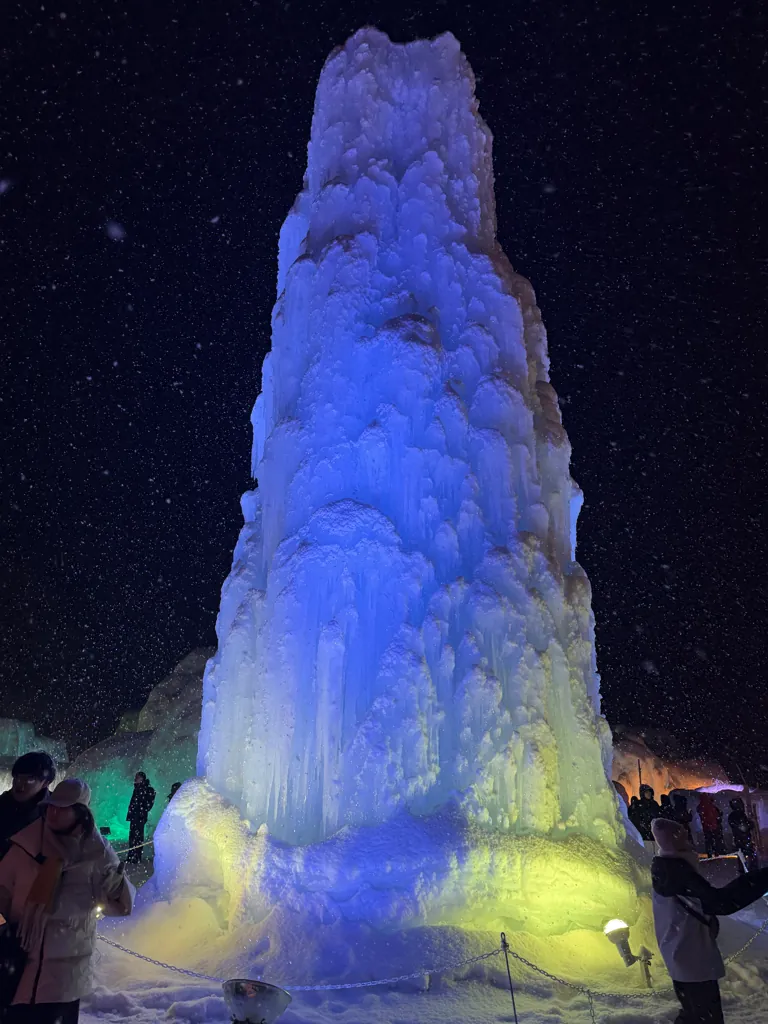
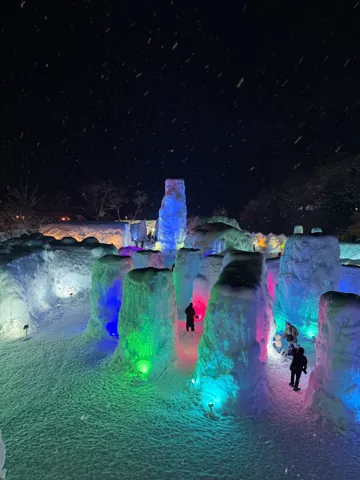
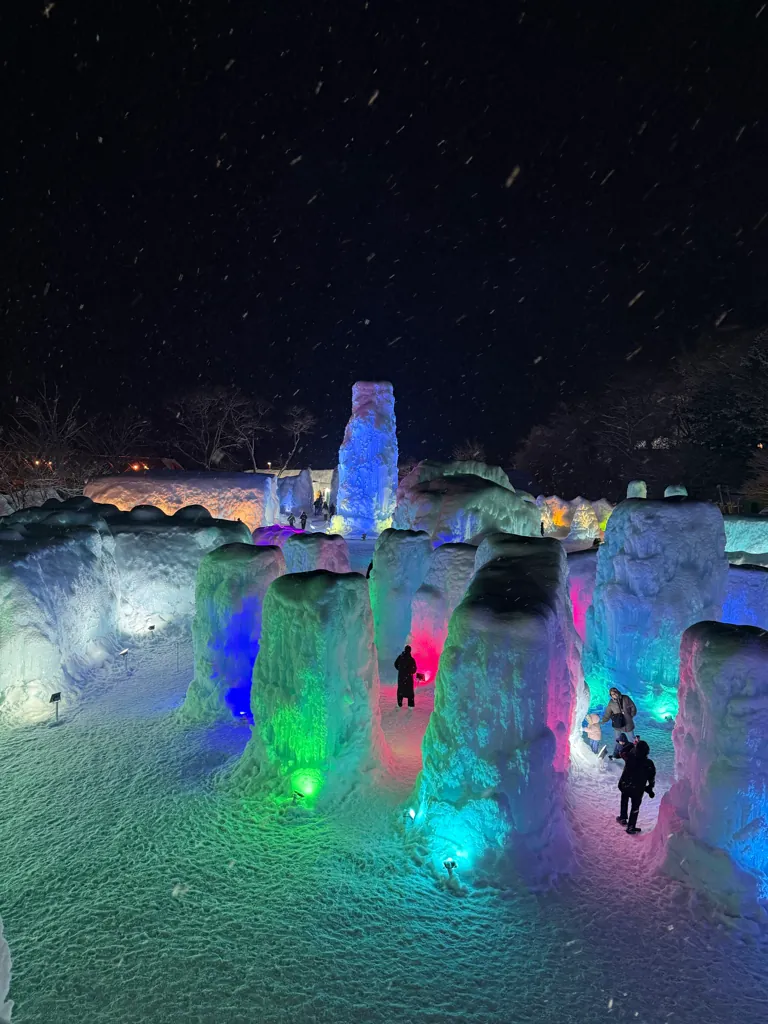
- Lake Shikotsu (支笏湖): a caldera lake about 360 m deep, the second-deepest in Japan11. It is the northernmost lake in Japan that does not freeze over5, and it has ranked No. 1 in the national lake water-quality survey 20 times4. In winter the lakeshore hosts the Chitose-Shikotsu Ice Festival (千歳・支笏湖氷濤まつり)12.
- Salmon and the Indian water wheel (インディアン水車): salmon hatching on the Chitose River began in 1888, and the fish-catching wheel has run since 18962. The river is billed as the birthplace of Hokkaido's salmon-propagation program13. The riverside aquarium lets visitors look straight into the river11.
- Kiusu Earthwork Burials (キウス周堤墓群): circular Jōmon burial enclosures up to 83 m across. They are part of the "Jomon Prehistoric Sites in Northern Japan," inscribed as a UNESCO World Heritage Site in 2021142.
- A Self-Defense Forces town: two GSDF camps and the ASDF's Chitose Air Base are here. Service members and their families make up about 25% of the population15.
- Eggs: about 1.5 million of Hokkaido's roughly 5 million laying hens, a third of the total, live in Chitose. The local Chitose Burger (千歳バーガー) showcases the eggs16.
- Semiconductors: in February 2023, Rapidus (ラピダス) chose Chitose for its next-generation (2 nm) chip plant17.
- Hokkaido's youngest city: the city cites an average age of 42.9 (2015 Census), the lowest in Hokkaido, and an aging rate of 23.2% (resident register, 1 January 2021)5.
Sights & activities
Nature & scenery
- Lake Shikotsu (支笏湖): Shikotsu-ko Onsen (支笏湖温泉) is the lakeside base. The Shikotsuko Visitor Center (支笏湖ビジターセンター) hosts events such as Illumina Historia40. Sightseeing boats (the Emerald and Sapphire, 50 passengers each) include underwater viewing, which shows off the lake's clarity117. The lake is about 30 minutes (25 km) by car from central Chitose51.
- Lake Okotanpe (オコタンペ湖): entry is prohibited. View it from the observation point on Prefectural Road 7811.
- Yamasen Railway Bridge (山線鉄橋): an iron bridge built over the Sorachi River in 1899 and later moved to the lake outlet. It is Hokkaido's oldest surviving iron bridge and was recognized as civil-engineering heritage in 2018. The old railway bed is now a cycling road611.
- Kokemon moss gorge (苔の洞門): once famous for its moss-covered walls, it has been closed since a 2014 storm. In FY2019 the city decided it will not reopen11.
- Aoba Park (青葉公園): a 100 ha forest park in the city with sports grounds25.
Onsen
- Shikotsu-ko Onsen (支笏湖温泉): lakeside hotels and day-use baths3211.
- Marukoma Onsen (丸駒温泉): an inn at Horobinai (幌美内) on Lake Shikotsu, opened in 191511.
- Shikotsu-ko Itō Onsen (支笏湖いとう温泉)7. New Chitose Airport Onsen (新千歳空港温泉, 2011) is inside the airport terminal1130.
Museums & heritage
- Kiusu Earthwork Burials (キウス周堤墓群, Chūō district): nine enclosures, eight still visible, the largest 83 m across and 4.7 m deep. Free 30-minute volunteer tours run from late April to late November. The site is 2 minutes from Chitose-Higashi IC14.
- Chitose Salmon Aquarium (サケのふるさと 千歳水族館): Japan's first underwater observation windows looking straight into a river, plus a tank that recreates the Lake Shikotsu bed11. Open 9:00–17:00, 10:00–16:00 in winter. Closed 29 December to 1 January and for maintenance 12–31 January 2027. Adults ¥80052.
- Indian Water Wheel (インディアン水車): in place from late August to early December, next to the aquarium25. It is run by the Japan Sea salmon-propagation association, and the fish go to the national hatchery for egg collection11.
- Hokkai No. 1 replica: a full-size model stands in the Rankoshi water-purification plant next to Meisui Fureai Park. Bronze statues of the plane and its pilot stand in Airport Park10.
Outdoor & seasonal activities
- Kayaking, diving and snow trekking on and around the lake. Chip fishing opens in June32.
- Hiking on Tarumae, Fuppushi, Eniwa and Monbetsu (866 m, about 2 hours up). Parts of Tarumae's dome and Eniwa's summit are closed because of volcanic activity and rockfall11.
- Camping: Morappu (モラップ, a sandy beach below Tarumae, late April to early October) and Bifue (美笛, auto-camping, early May to late October). Both require reservations11.
Food experiences
- Kirin Hokkaido Chitose Brewery: a 90-minute Ichiban Shibori tour. From 1 October 2026 it costs ¥1,000 for adults 20 and over (¥500 until the end of September)28.
- New Chitose Airport: the Ramen Dōjō food hall, a gourmet world, sweets shopping, the Sora Cinema (Japan's first airport movie theater) and the Doraemon Sky Park30.
- Chip dishes at the lake in summer. Salmon dishes at Salmon Park (see below)32.
Roadside stations (Michi-no-Eki)
Salmon Park Chitose (道の駅サーモンパーク千歳)
- Location: 2-4-2 Hanazono, Chitose (千歳市花園2丁目4-2), on National Route 337. About 1 km east of JR Chitose Station, on the Chitose River beside the Salmon Aquarium and the Indian water wheel. About 10 minutes by car from New Chitose Airport or Chitose IC2511. The operator gives about 15 minutes from the airport33.
- Hours: open every day, 9:00–17:00. Most food outlets run 10:00 to a 16:00 last order. The grill restaurant is open 10:00–15:00, with last food orders at 14:00 and only desserts after that. The strawberry stand opens 9:00–16:00, and the bakery 9:00–17:00 until sold out. Hours may change in winter (as of September 2026 — check before visiting)5325.
- Shops & products: a regional-products area with original salmon products, and a farm stand selling Hokkaido vegetables, fruit and processed foods53. Look for the award-winning salmon-roe soy sauce35. Tax-free shopping has been available since February 202435.
- Food: seven outlets3353:
- Grill Restaurant Salmon King (グリルレストラン サーモンキング): a grilled salmon plate (¥1,848), salmon-cutlet soup curry (¥2,178) and Hokkaido sirloin54.
- Kaisendon Totomaru (海鮮丼とと丸): salmon-centered seafood bowls, with takeout.
- Namara-uma Onigiri (なまら旨おにぎり): rice balls made with Hokkaido rice, fillings and salt.
- TAMAGOYA (親子丼とざんぎ): fluffy oyakodon and zangi fried chicken.
- Furusato Ramen Shokudō Chitosegawa (ふるさとラーメン食堂 ちとせがわ): salmon-miso butter-corn ramen (¥1,540) and salmon-miso ramen (¥1,375)55.
- Ichigo BonBon HOKKAIDO STAND (いちごBonBon HOKKAIDO STAND): strawberry desserts, including BonBon soft serve (¥518) and shortcake soft serve (¥626)56.
- Salmon Bakery (サーモンベーカリー): opened on 20 March 2026. Its signature is a salmon curry bread made with Hokkaido wheat and butter-soy-sautéed salmon35.
- Facilities: the operator lists parking for 222 cars, 12 large vehicles and 6 accessible spaces, 240 in all with one EV bay33. The Michi-no-Eki association and Wikipedia still give 213 cars and 14 large vehicles2557. A 24-hour EV quick charger (¥500 per 30 minutes) is next to the convenience store25. There is an indoor kids' space and large outdoor play equipment1157. The Salmon Aquarium is next door25. 24-hour toilet access is standard for Michi-no-Eki but not stated by the station (unverified).
- Notes: registered on 9 August 2004 as Hokkaido's 85th roadside station, and opened on 25 June 200525572. It was renovated and reopened on 8 August 201511. The Shizuoka-based TTC took over operations in 2023 through its local company Mover (ムーバー), with a grand reopening on 26 August 20235857. The stamp can be pressed 24 hours a day: at the convenience store outside 9:00–17:0025. In the Hokkaido Michi-no-Eki Ranking 2020, it placed No. 1 for clean toilets (fourth year running) and No. 1 as a family-friendly station59. It also hosts seasonal fairs, such as the Spring Salmon Festival (20 March–5 April 2026)35.
Getting there & around
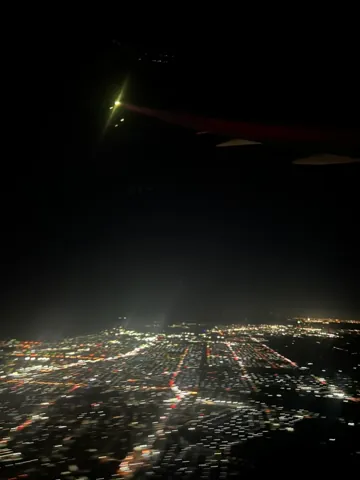
- Air: New Chitose Airport is in the city. Flights take about 1 h 30 min from Haneda, and there are direct international routes, mostly to Asia51.
- Rail (JR Hokkaido): the Chitose Line serves Osatsu, Chitose, Minami-Chitose and New Chitose Airport stations. Minami-Chitose, where many limited expresses stop, is also on the Sekishō Line (石勝線)7. The Rapid Airport train takes about 10 minutes between Chitose and the airport, about 30 minutes from Chitose to Sapporo, and about 40 minutes from the airport to Sapporo51.
- Bus: Hokkaido Chūō Bus runs to Lake Shikotsu, about 45 minutes from Chitose Station and about 55 minutes from the airport (domestic stop 28, international stop 66)51. Chūō Bus, Chitose Sōgo Kankō Bus and Atsuma Bus link the city with the airport51.
- Road: Dōō Expressway (New Chitose Airport IC, Chitose IC, Chitose-Eniwa JCT) and Dōtō Expressway (Chitose-Higashi IC)7. National Routes 36, 234, 274, 276, 337 and 453 all pass through7. By car, Sapporo is about 60 minutes by expressway or 80 minutes by ordinary roads. Lake Shikotsu is 30 minutes via Prefectural Road 16 and National Route 45351.
- Sea: the port of Tomakomai is close by7.
Practical tips
- Best seasons: June to August for chip (kokanee) season and lake activities16. Autumn for the salmon run and the Indian water wheel. Late January to February for the Ice Festival, which is cheaper on weekdays (¥1,000 vs ¥3,000)12.
- Brown bears: the city logged 74 sightings in FY2025 (to 9 December), some near residential areas and the airport area60. FY2026 sightings reached 35 by mid-September, including on the Fuppushi hiking trail and along National Route 276 near the lake61. The 2026 marathon was cancelled over bear risk24. Check the city's bear-sighting map before hiking or cycling.
- Winter: temperatures can fall below −25 °C27. Roads to the lake climb through forest, so drive with winter tires and care.
- Closures and restrictions: the aquarium closes in the second half of January for maintenance52. Kokemon is permanently closed11, Lake Okotanpe is view-only, and parts of Tarumae and Eniwa are off-limits11. Meisui Fureai Park closes in winter7. Campsites require reservations11.
- Nature notes: the chip catch varies by year. In 2026 a poor catch cancelled the festival's grilled-fish stalls43.
- Airport layovers: the Salmon Park, the aquarium and the Rera outlet mall make easy short trips from New Chitose Airport257.
Photos
-
 Feb 2026
 -
 Oct 2024
 -
 Feb 2026
 -
 Feb 2026
More about Chitose
At a glance
| Field | Details |
|---|---|
| Type | City. City status came on 1 July 1958, making Chitose Hokkaido's 24th city1 |
| Subprefecture | Ishikari (石狩振興局) |
| District | None (city). Historically part of Chitose District (千歳郡), Iburi Province2 |
| Population | 97,950 (2020 Census), up 2,302 (2.4%) since 2015. Only 12 of Hokkaido's 179 municipalities grew in that period. Chitose's gain was second only to Sapporo's, and its growth rate was the highest of any Hokkaido city1. Resident register: 97,398 people in 53,664 households as of 1 September 20263 |
| Area | 594.50 km² (GSI 2024 survey), about the size of Tokyo's 23 wards. The city stretches 57.2 km east–west and 30.4 km north–south45 |
| Density | About 165/km² (2020 Census), about 164/km² (September 2026 register) |
| Municipal history | Formed in 1869 as part of Chitose District. A joint village office for Chitose and five neighboring villages opened in 1880. Izari and Shimamatsu (now Eniwa) split off in 18972. In April 1915, Chitose, Osatsu (長都), Rankoshi (蘭越) and Usakumai (烏柵舞) merged into Chitose Village2. It became a first-class village in 1939, Chitose Town (千歳町) in 1942, and Chitose City (千歳市) in 195816 |
| Neighboring municipalities | Ishikari: Sapporo, Eniwa. Iburi: Tomakomai, Date (Ōtaki area), Abira, Shiraoi. Sorachi: Naganuma, Yuni. Four cities and four towns in total47 |
| Symbols | Trees: Japanese white birch (シラカバ, 1968) and katsura (カツラ, 1986). Flowers: azalea (ツツジ) and Japanese iris (ハナショウブ), both 1986. Birds: ring-necked pheasant (コウライキジ) and crested kingfisher (ヤマセミ), both 1986. Fish: kokanee (ヒメマス) and chum salmon (サケ), both 1996. The emblem (1952) turns the hiragana 「ち」 into an airplane8 |
| Mascot | Tamaran & Tamarin (たまらん・たまりん), created in 2012. The winged egg characters promote Chitose as Hokkaido's top egg producer. Tamaran wears an eggshell hat that looks like an airplane, and Tamarin wears a ribbon9 |
| Official website | https://www.city.chitose.lg.jp/ (tourism: https://www.welcome-to-chitose.jp/) |
Name origin
- Ainu origin: the area was called Shikot (シコッ, si-kot), "big hollow." The river was Shikoppet (シコッペッ, si-kot-pet), "big-hollow river"818. The Japanese transcription Shikotsu (支笏/志古津) survives in Lake Shikotsu.
- What the "hollow" was: the city describes Shikot as a large depression or valley8. The Ainu place-name list quoted by Japanese Wikipedia is more specific: the hollow is the valley the Chitose River cut, not the lake basin or the lowland marshes18. The lake's own Ainu name came from the river: the Ainu called it Shikot-to or Shikot-toho, "the lake of the Shikot river"19.
- The 1805 renaming: Yamada Rihei Yoshimitsu (山田鯉兵衛嘉充) was the Hakodate magistracy official in charge of the Yūfutsu trading post. He felt "Shikotsu" sounded like shikotsu (死骨, "dead bones"), so he asked the magistrate Habuto Masayasu (羽太正養) for a new name. Many red-crowned cranes lived in the area, and Habuto drew on the saying "the crane lives a thousand years, the tortoise ten thousand" (鶴は千年、亀は万年). He renamed the river Chitose (千歳, "a thousand years")207. The story is written on the back of the shrine cabinet for the Benzaiten statue at Kamaka Shrine (釜加神社), now inside the grounds of Chitose Shrine, and in Habuto's diary Kyūmeikōki (休明光記)20.
History
- Prehistory: people first lived here about 30,000 years ago (Shukubai lower-layer site, 祝梅下層遺跡)2. More than 40 rivers run through the city, and about 300 archaeological sites from the Paleolithic to the early modern period lie along them20. Two are National Historic Sites: the Usakumai site group (ウサクマイ遺跡群, Initial Jōmon to early modern) and the Kiusu earthwork burials20. About 3,200 years ago, Jōmon people built the Kiusu burials2. Three finds are national Important Cultural Properties: the animal-shaped clay figure from Bibi 4 (美々4遺跡, Final Jōmon), the clay mask from Mamachi (ママチ遺跡, Final Jōmon), and a set of early-modern Ainu wooden artifacts from Bibi 820.
- Ainu era and Matsumae contact: Ainu culture here dates back about 700 years, and chashi (fortified sites) were built about 300 years ago2. Chitose sat on the "Shikotsu crossing" (シコツ越え). Travelers paddled up from the Pacific via Lake Utonai and the Bibi River, crossed the low watershed on foot, and continued down the Chitose and Ishikari rivers to the Sea of Japan2047. The crossing appears on the 1644 Shōhō provincial map, and a Benzaiten shrine was built in 16582. The place name first appears in an entry for 1660 in the Matsumae domain chronicle Fukuyama Hifu (福山秘府)20. The city's own chronology dates this first mention to 1658 instead2. Later records mention it in accounts of Shakushain's War and as a place where hawks were caught for shoguns and daimyo20. Ainu and Japanese traded salmon and other goods at 16 posts (シコツ十六場所). In the late Edo period these were merged into the Yūfutsu trading post (ユウフツ場所), with an office on the Chitose River20.
- Edo period: the monk Enkū (円空) dedicated a statue he carved here in 1666. Many people starved in 1724. Mt. Tarumae erupted heavily in 1667 and 17392. In 1857 a road from Ishikari to Chitose was cut, and the explorer Matsuura Takeshirō (松浦武四郎) surveyed the Lake Shikotsu area2.
- Meiji settlement: in 1869 the area became Chitose District of Iburi Province under the Kōchi (Tosa) domain, and Kōchi settlers took up land on both banks of the Mamachi River in 18702. The Sapporo Main Road (札幌本道, today's National Route 36) opened in 1873. Chitose became a post town with a Kaitakushi relay station (駅逓所)220. A government venison-canning factory ran at Bibi from 18782. Emperor Meiji stayed overnight at the Shinpo Inn in 18812. A group of 31 farming households from Yamaguchi Prefecture arrived in 1884220. Around 1887 the Chitose and Osatsu plains were designated for settlement, and in 1894 some 188 individual settlers and two organized groups moved in20.
- Salmon and paper: in 1888, Hokkaido official Itō Kazutaka (伊藤一隆) had just returned from studying salmon hatcheries in North America. He found springs here and founded a salmon hatchery. In 1896 a fish wheel modeled on those Itō had seen on the Columbia River was installed2011. Oji Paper's light railway (王子軽便鉄道, the "Yamasen") opened in 1908 to link Lake Shikotsu, Chitose and Tomakomai. Its No. 1 hydroelectric plant began sending power in 191026. The Muroran–Iwamizawa railway opened in 1892, and traffic on the old Sapporo road dropped off20.
- The airfield and the Navy: a railway (today's JR Chitose Line) arrived in 1926. That October the Otaru Shimbun newspaper planned a hatchery tour for its readers. Villagers put in 150 person-days of work over two days to level a landing strip, and on 22 October the newspaper's biplane Hokkai No. 1 (北海1号) landed on it2010. A proper airfield was completed in 1934. In 1939 the Imperial Navy opened an air group with a 1,200 m runway and 48 aircraft. The population passed 10,000, and Chitose became a town in 1942201. The Chitose Mine (千歳鉱山) operated from 1936 until 19867. In 1924 residents had even petitioned to rename Lake Shikotsu "Lake Chitose"2.
- Post-war: US forces took over the airfield after 1945. Civil flights to Haneda resumed in 1951202. The same year, the US 45th Infantry Division (Oklahoma National Guard) was stationed here before going to Korea, bringing an "Oklahoma boom"1. The GSDF arrived in 1954 and the ASDF in 1957. Chitose became a city in 195820. When the US forces withdrew, the city built Hokkaido's first municipal industrial estates from 196421.
- Airport city: the first Ice Festival opened on 30 January 1979, and the salmon festival (now the Indian Water Wheel Festival) began the same year27. New Chitose Airport opened as a separate civil airport in 198820. The Chitose Institute of Science and Technology (公立千歳科学技術大学) opened in 1998 and became a public university in 20192. Salmon Park and the Chitose Outlet Mall Rera (千歳アウトレットモール・レラ) opened in 20057.
- Recent events: the Hokkaido Eastern Iburi Earthquake struck on 6 September 2018 (shindo 6-upper in neighboring Abira)2. In 2021 the Kiusu burials joined the World Heritage list2. On 28 February 2023, Rapidus chose Chitose for its plant, and construction of the IIM-1 fab began in September 20231722. A Kiusu guidance center opened on 25 April 20256. In December 2025 the national research institute AIST (産業技術総合研究所) announced an open semiconductor R&D base in Chitose23. The 2026 Chitose JAL International Marathon was cancelled because of brown-bear activity in the city24. 2026 marks 100 years since Hokkai No. 1 landed8.
Geography & climate
Chitose lies at the southern end of the Ishikari Plain, about 40 km south of Sapporo4. The city falls into three zones47:
- The mountainous west: Lake Shikotsu and its volcanoes, inside Shikotsu-Toya National Park (支笏洞爺国立公園, designated in 1949)11. Forest covers 52.5% of the city and lakes and ponds 16.6%. Over 75% of the land is national or public property4.
- The flat center: the urban area, the airport, industrial estates and SDF bases. The center sits only about 15 m above sea level (city hall 13.7 m, the airport 24.8 m)4. Near the airfield lies the lowest watershed in Japan, at about 25 m. It divides rivers flowing north to the Sea of Japan from those flowing south to the Pacific47.
- The rolling east: the Umaoi Hills (馬追丘陵) and farmland7.
Lake Shikotsu formed after a huge eruption of the Shikotsu volcano about 40,000 years ago (the city chronology gives 46,000)42. It is about 42 km around, covers about 77 km², and is about 360 m deep. That makes it 8th in Japan by area, 2nd by depth, and 2nd by water volume114. It is billed as Japan's northernmost ice-free lake, but it has occasionally frozen over completely, most recently in 200119. Rising lava cones later pinched it into a cocoon shape. Mt. Fuppushi (風不死岳, 1,103 m) stands on the south shore and Mt. Eniwa (恵庭岳, 1,320 m) on the north. Mt. Eniwa hosted the downhill races of the 1972 Sapporo Olympics114. Mt. Tarumae (樽前山, 1,041 m) is known for the lava dome that rose in its crater in 1909. The dome is about 130 m high and 450 m across11. Lake Okotanpe (オコタンペ湖), one of Hokkaido's "three secret lakes," sits 599 m above sea level and is a no-entry special protection zone11. The Chitose River flows east out of the lake through town. The Naibetsu River spring (ナイベツ川湧水), fed by the lake's groundwater, was named one of Japan's "100 Exquisite Waters" in 1985225.
Climate: Chitose sits where Pacific and Sea of Japan weather meet. It is dry by Hokkaido standards, and the city compares its inland climate to Karuizawa's4. The JMA climate normals at Chitose are an annual mean of 7.4 °C, 984.7 mm of precipitation, 227 cm of total snowfall and a 52 cm maximum snow depth26. At the current JMA station (records from 2003), extremes run from 34.2 °C (11 August 2011) to −25.4 °C (31 January 2022, equalling 9 February 2019). The deepest snow on record there is 123 cm (February 2022)27. The city yearbook also lists an older low of −30.7 °C (19 January 1966) from observations at the Chitose airfield4. The city says its snow depth is about half of Sapporo's (a 51 cm peak in 2017)5. The city lies in a designated heavy-snow area7.
Economy & industry
- Manufacturing: more than 280 companies operate in the city's industrial estates. In the 2023 survey, manufacturing shipments reached about ¥279.5 billion, 4th among Hokkaido's 35 cities after Tomakomai, Sapporo and Muroran21. Major plants include Kirin Brewery's Hokkaido Chitose Brewery and factories of Seiko Epson, Denso Hokkaido and SUMCO2128.
- Semiconductors: Rapidus is building its IIM-1 plant in the Chitose Bibi World estate (千歳美々ワールド) to mass-produce chips at 2 nm and below2117. The company aims to start mass production in 202729. The national research institute AIST plans an open semiconductor R&D center in the city23. The prefecture publishes PFAS monitoring results for the Chitose River17.
- Aviation and logistics: New Chitose Airport has two 3,000 m runways20. The airport, expressways and nearby Tomakomai port have drawn logistics hubs and industrial estates730.
- Defense: the GSDF 7th Division (第7師団), Japan's only armored division, is headquartered at Camp Higashi-Chitose (東千歳駐屯地). Camp Kita-Chitose (北千歳駐屯地) hosts the 1st Artillery Brigade (第1特科団). The ASDF 2nd Air Wing (第2航空団), a fighter wing, is based at Chitose Air Base (千歳基地), which is also home to the Special Airlift Group (特別航空輸送隊) that operates the government's official aircraft15.
- Agriculture: 214 farm households (2020). Crops are grown on 5,830 ha, mainly wheat (1,570 ha), soybeans (772 ha) and sugar beet (596 ha) in 202431. Chitose leads Hokkaido in egg production. Two large poultry companies operate mainly in the Komasato (駒里) district165. Chitose also has the highest agricultural output in the Ishikari region5.
- Fisheries: the Chitose salmon station, run by the national fisheries research agency, anchors salmon stocking for the Sea of Japan side of Hokkaido. In FY2024 about 160,000 salmon were caught and about 30.3 million fry released31. On Lake Shikotsu, the city-run kokanee hatchery and the Shikotsu Lake fishery cooperative protect the fish stock. The brand "Shikotsuko Chip" (支笏湖チップ) became a registered regional collective trademark in June 202431.
- Tourism: 1.85 million visits in FY2024, 594,700 of them from outside Hokkaido. The Lake Shikotsu area alone drew 929,300. Foreign guests accounted for 201,000 overnight stays, back to pre-pandemic levels11.
- Demographics: Chitose is still growing, in contrast to most of Hokkaido. In 2020, 440 more teenagers aged 15–19 moved in than moved out, partly thanks to SDF recruitment7. The 7th Comprehensive Plan (FY2021–2030) sets the goal "Connecting people, connecting the world: Chitose, city of the sky" (人をつなぐ 世界をつなぐ 空のまち ちとせ)8.
Local specialties
| Specialty | Category | Details & where to get it |
|---|---|---|
| Shikotsuko Chip (支笏湖チップ) | Freshwater fish | Kokanee (landlocked sockeye) that live their whole life in the lake. They were brought from Lake Akan in 189416. They are caught only from June to August and eaten as sashimi, smoked or salt-grilled, mostly at Shikotsu and Chitose restaurants1632. The fishery cooperative sells the processed product "Himeshizuku" (姫しずく)16 |
| Chitose eggs (千歳の卵) | Eggs | Hokkaido's largest egg output16. Egg dishes such as oyakodon are served at TAMAGOYA inside Salmon Park33 |
| Chitose Burger (千歳バーガー) | Local dish | Created in 2014 to promote Chitose eggs16 |
| Haskap (ハスカップ) | Fruit | Grown in Chitose since the 1970s. The name comes from the Ainu hashikap, "many on the branches." Look for jams, "Haskap Sweet" wine from Chitose Winery (千歳ワイナリー) and the "Haskap Jewelry" (ハスカップジュエリー) confection by Morimoto (もりもと)16 |
| Kirin Ichiban Shibori (キリン一番搾り) | Beer | Brewed at Kirin's Hokkaido Chitose Brewery (tours available)28. It is one of the city's most popular furusato nozei gifts (3rd in the ranking in September 2026)34 |
| Local wine and craft beer | Drinks | White wine from Chitose-grown grapes (La Concha vineyard), wines from the Chitose River left-bank vineyard (千歳川左岸ビンヤード), and Shikotsuko Beer (支笏湖Beer)16 |
| Chitose zangi, ham and sausages | Meat | "Chitose Zangi" fried chicken (北のマルシェ), pork ham and bacon (北海道千歳ハム), Hokkaido beef hamburg steaks (肉の山本)16 |
| Dairy and sweets | Dairy/confectionery | Milk jam from Hakone Bokujō (箱根牧場), ice cream from Farm Kacha (ファーム花茶), pudding and kinako-mochi from local factories16 |
| Salmon-roe soy sauce (いくら醤油) | Condiment | Sold at Salmon Park. Won the Grand Prix at the 15th Seasoning Championship (2024)35 |
| Furusato nozei gifts | Gifts | In September 2026 the ranking was led by LeTAO's Double Fromage cheesecake, followed by Kirin beer from the Chitose brewery and salmon-and-roe marinade. Chitose-grown sweet corn (Gold Rush, Pure White) and meat products are also offered34 |
Culture & festivals
| Event | When | Highlights |
|---|---|---|
| Chitose-Shikotsu Ice Festival (千歳・支笏湖氷濤まつり) | Late Jan–Feb (2027: 30 Jan–23 Feb) | Structures made by spraying lake water onto frames, glowing "Shikotsu blue" by day and lit at night. First held in 1979, it drew about 131,000 visitors in FY2024. Admission ¥1,000 on weekdays and ¥3,000 on weekends and holidays (children of elementary age and under free)12211 |
| Chitose Specialty Products Fair (ちとせ特産品祭り) | Late Jan (2026: 24–25 Jan) | Local foods and products at Salmon Park3637 |
| Chitose Holmenkollen March (ちとせホルメンコーレンマーチ) | February (2026: 11 Feb) | 7 km cross-country and 3.5 km ski-walking courses. It started as a ski-walking festival in 1977 and inspired the Kongsberg friendship link3839 |
| Shikotsu Illumina Historia (支笏湖イルミナヒストリア) | April | Projection mapping in the lakeside forest by the visitor center (2026: 4–29 Apr)40 |
| Lake Shikotsu opening (支笏湖湖水開き) | Mid-April | A Shinto safety prayer that opens the lake's season41 |
| Chitose JAL International Marathon (千歳JAL国際マラソン) | Early June | Full and half marathons on a forest course along the Chitose River42. The 2026 race was cancelled because of bear sightings, with organizers aiming to bring it back24 |
| Shikotsuko Chip Festival (支笏湖チップまつり) | Late June (2026: 21 Jun) | Held as the 76th Lake Shikotsu Lake Festival (支笏湖湖水まつり) in 2026. Stage events at the lake. Salt-grilled chip sales were dropped in 2026 because of a poor catch43 |
| Sky Beer & YOSAKOI Festival (スカイ・ビア&YOSAKOI祭) | Mid-July (2026: 18–20 Jul) | YOSAKOI dance teams from across Hokkaido perform and parade, with stage events on the downtown Green Belt44 |
| Chitose City Fireworks (千歳市民花火大会) | Late July (2026: 25 Jul) | Summer fireworks36 |
| Chitose River Beer Festival (ちとせ川ビール祭り) | Early August (2026: 6–9 Aug) | A beer garden, stage events and river floats on the Chitose River45 |
| Chitose Air Base Air Show (千歳基地航空祭) | Early September (2026: 6 Sep) | Open day at the ASDF base46 |
| Chitose Shrine Festival (千歳神社祭) | 1–3 September | The city's main shrine festival7 |
| Indian Water Wheel Festival (インディアン水車まつり) | Late September (2026: 26–27 Sep) | Salmon hot pot, the Chitose Kikō taiko drummers, a GSDF band and Ainu traditional dance at Salmon Park13 |
| Chitose Ainu Festa (千歳・アイヌフェスタ) | Early October (2026: 3–4 Oct) | Hands-on traditional marek salmon fishing, deer-antler and woodcarving workshops, and Ainu dance at the aquarium47 |
| New Chitose Airport International Animation Festival (新千歳空港国際アニメーション映画祭) | November (2026: 20–24 Nov) | Animation film festival held inside the terminal since 201448 |
Shrines and traditions: Chitose Shrine (千歳神社) grew out of an Inari shrine that was ranked a gōsha (district shrine) in 18752. Kamaka Shrine (釜加神社) in its grounds traces back to the 1658 Shikotsu Benten shrine7. City-designated intangible cultural properties include the Izumisato lion dance (泉郷獅子舞) and Ainu traditional performing arts and craft skills7.
Museums: the Buried Cultural Property Center (千歳市埋蔵文化財センター) displays local archaeology6. The Kiusu guidance center (2025) shows real excavated finds such as ritual stone rods6. The Salmon Aquarium welcomed 313,547 visitors in FY202411. The Chitose Salmon Forest information hall (千歳さけますの森 さけます情報館, 1994) reproduces a Meiji-era hatchery11.
Ainu heritage
- A salmon river homeland: many Ainu lived along the Chitose River. Artifacts from Ainu culture about 700 years ago, and chashi sites such as Atteushi (アッテウシ) and Furedoihi (フレドイヒ), have been identified in the city62. Early-modern Ainu wooden tools from the Bibi 8 site are a national Important Cultural Property20.
- Words in the landscape: besides Shikot/Chitose, the Ainu name for the kokanee, kapachep ("thin fish"), gave the local word chip4. Mountain names come from Ainu too. Fuppushi is from hup-us-i, "where the Sakhalin firs grow." Eniwa is from e-en-iwa, "the sharp-headed mountain." Tarumae's original name was O-fuinupuri, "burning mountain"11. "Haskap" comes from hashikap16.
- Living traditions: the Chitose Ainu Association (千歳アイヌ協会) and the Chitose Ainu Cultural Heritage Preservation Society (千歳アイヌ文化伝承保存会) are based at the Rankoshi Community Hall (蘭越生活館)649. Each autumn they hold Ashiri Chep Nomi (アシリチェプノミ) to welcome the new salmon. Participants catch only what they need from a dugout canoe (chip) with a hooked spear (marek), and offer the fish to Ape-huchi Kamuy, the fire deity6.
- Events open to visitors: the Chitose Ainu Culture Exhibition (July 2026, Civic Culture Center) showed tools and excavated items along with photographs of "Chitose's last bear ceremony"49. The Ainu Festa at the aquarium offers marek fishing, deer-antler and woodcarving workshops and dance (3–4 October 2026)4750. Ainu dance is also performed at the Indian Water Wheel Festival13.
Sister & friendship cities
- Anchorage, Alaska, USA: sister city. The city council approved the link in June 1968 (the 70th Japan–US sister-city pair), and it was signed on 21 April 196939.
- Ibusuki, Kagoshima Prefecture: sister city since 15 April 1994, Chitose's first domestic sister city39.
- Kongsberg, Norway: friendship city since 31 August 1988, a link that grew out of the Holmenkollen March39.
- Changchun, China: friendship city since 11 October 200439.
- Also: the Chitose Tourism Federation has had a sister tie with the Jeju tourism association (Korea) since 198139.
Notable people
- Aina Suzuki (鈴木愛奈): voice actress and singer from Chitose and the city's tourism PR ambassador357.
- Akiko Oshidari (忍足亜希子): actress from Chitose7.
- Hiromi Tsuru (鶴ひろみ): voice actress from Chitose7.
- Yūya Satō (佐藤友哉): novelist from Chitose7.
- Chiyotaikai Ryūji (千代大海龍二): former ōzeki sumo wrestler, born in Chitose and raised in Ōita7.
Sources
Numbers in the text link to these sources. Figures as of 23 September 2026
- 要覧ちとせ 令和7年版 第2章(人口) — 千歳市 JA accessed 2026-09-23
- 要覧ちとせ 令和7年版 略年表 — 千歳市 JA accessed 2026-09-23
- 北海道千歳市公式ウェブサイト(トップページ:人口・世帯数 令和8年9月1日) — 千歳市 JA accessed 2026-09-23
- 要覧ちとせ 令和7年版 第1章(自然) — 千歳市 JA accessed 2026-09-23
- 千歳市ってどんなまち? — 千歳市 JA accessed 2026-09-23
- 千歳の歴史と文化 — ちとせの観光(千歳市公式観光サイト) JA accessed 2026-09-23
- 千歳市 — Wikipedia JA accessed 2026-09-23
- 要覧ちとせ 令和7年版 巻頭カラー(市章・地名の由来・市のシンボル) — 千歳市 JA accessed 2026-09-23
- たまらん・たまりん|千歳市のゆるキャラ・ご当地キャラクター紹介 — KAWAii HOKKAIDO JA accessed 2026-09-23
- ちとせくうこうのはじまり — 千歳市 JA accessed 2026-09-23
- 要覧ちとせ 令和7年版 第16章(観光・レクリエーション) — 千歳市 JA accessed 2026-09-23
- 千歳・支笏湖 氷濤まつり 氷の美術館 — ちとせの観光(千歳市公式観光サイト) JA accessed 2026-09-23
- インディアン水車まつり — ちとせの観光(千歳市公式観光サイト) JA accessed 2026-09-23
- キウス周堤墓群 — 世界遺産 北海道・北東北の縄文遺跡群(公式サイト) JA accessed 2026-09-23
- 要覧ちとせ 令和7年版 第19章(防衛) — 千歳市 JA accessed 2026-09-23
- ちとせの特産品 — ちとせの観光(千歳市公式観光サイト) JA accessed 2026-09-23
- 次世代半導体産業立地推進ポータルサイト — 北海道 経済部AI・DX推進局次世代半導体戦略室 JA accessed 2026-09-23
- 千歳川 — Wikipedia JA accessed 2026-09-23
- 支笏湖 — Wikipedia JA accessed 2026-09-23
- 歴史散歩ちとせ — 千歳市 JA accessed 2026-09-23
- 要覧ちとせ 令和7年版 第5章(工業) — 千歳市 JA accessed 2026-09-23
- 主な出来事など — 北海道 経済部AI・DX推進局次世代半導体戦略室 JA accessed 2026-09-23
- 千歳市への新たな研究開発拠点の整備について — 北海道 経済部AI・DX推進局次世代半導体戦略室 JA accessed 2026-09-23
- 第46回千歳JAL国際マラソン大会 開催の中止について(公式サイト トップ) — 千歳JAL国際マラソン大会実行委員会 JA accessed 2026-09-23
- サーモンパーク千歳 — 北の道の駅(北海道地区「道の駅」連絡会) JA accessed 2026-09-23
- 過去の気象データ検索:千歳 平年値(年・月ごとの値) — 気象庁 JA accessed 2026-09-23
- 過去の気象データ検索:千歳 観測史上1~10位の値 — 気象庁 JA accessed 2026-09-23
- キリンビール 北海道千歳工場|キリンの工場見学 — キリン JA accessed 2026-09-23
- NEWS アーカイブ — Rapidus株式会社 JA accessed 2026-09-23
- 北海道の空の玄関口「新千歳空港」 — ちとせの観光(千歳市公式観光サイト) JA accessed 2026-09-23
- 要覧ちとせ 令和7年版 第4章(農林水産業) — 千歳市 JA accessed 2026-09-23
- 透き通る、青の湖「支笏湖」 — ちとせの観光(千歳市公式観光サイト) JA accessed 2026-09-23
- 道の駅「サーモンパーク千歳」公式サイト — 道の駅サーモンパーク千歳 JA accessed 2026-09-23
- 北海道千歳市のふるさと納税 お礼の品ランキング — ふるさとチョイス JA accessed 2026-09-23
- お知らせ — 道の駅サーモンパーク千歳 JA accessed 2026-09-23
- イベント情報 — ちとせの観光(千歳市公式観光サイト) JA accessed 2026-09-23
- ちとせ特産品祭り — ちとせの観光(千歳市公式観光サイト) JA accessed 2026-09-23
- ちとせホルメンコーレンマーチ — ちとせの観光(千歳市公式観光サイト) JA accessed 2026-09-23
- 姉妹都市・友好親善都市 — 千歳市 JA accessed 2026-09-23
- 支笏湖 イルミナ ヒストリア — ちとせの観光(千歳市公式観光サイト) JA accessed 2026-09-23
- 支笏湖湖水開き — ちとせの観光(千歳市公式観光サイト) JA accessed 2026-09-23
- 千歳JAL国際マラソン — ちとせの観光(千歳市公式観光サイト) JA accessed 2026-09-23
- 支笏湖チップまつり ~第76回支笏湖湖水まつり~ — ちとせの観光(千歳市公式観光サイト) JA accessed 2026-09-23
- スカイ・ビア&YOSAKOI祭 — ちとせの観光(千歳市公式観光サイト) JA accessed 2026-09-23
- CHITOSE RIVER CITY PROJECT × ちとせ川 ビール祭り — ちとせの観光(千歳市公式観光サイト) JA accessed 2026-09-23
- 千歳基地「航空祭」 — ちとせの観光(千歳市公式観光サイト) JA accessed 2026-09-23
- アイヌフェスタ — 千歳市 JA accessed 2026-09-23
- 新千歳空港国際アニメーション映画祭 — ちとせの観光(千歳市公式観光サイト) JA accessed 2026-09-23
- ちとせアイヌ文化展 — 千歳市 JA accessed 2026-09-23
- 千歳・アイヌフェスタ 2026 — サケのふるさと 千歳水族館 JA accessed 2026-09-23
- 交通情報(アクセス) — ちとせの観光(千歳市公式観光サイト) JA accessed 2026-09-23
- 営業・料金案内 — サケのふるさと 千歳水族館 JA accessed 2026-09-23
- 施設紹介(フロアマップ・営業時間) — 道の駅サーモンパーク千歳 JA accessed 2026-09-23
- グリルレストラン サーモンキング メニュー — 道の駅サーモンパーク千歳 JA accessed 2026-09-23
- ふるさとラーメン食堂 ちとせがわ メニュー — 道の駅サーモンパーク千歳 JA accessed 2026-09-23
- いちごBonBon HOKKAIDO STAND メニュー — 道の駅サーモンパーク千歳 JA accessed 2026-09-23
- 道の駅サーモンパーク千歳 — Wikipedia JA accessed 2026-09-23
- 会社概要 — 株式会社ムーバー JA accessed 2026-09-23
- 道の駅サーモンパーク千歳「北海道「道の駅」ランキング2020」2部門で1位 — ちとせの観光(千歳市公式観光サイト) JA accessed 2026-09-23
- 2025年度(令和7年度)千歳管内のヒグマ目撃情報 — 千歳市 JA accessed 2026-09-23
- 2026年度(令和8年度)千歳管内のヒグマ目撃情報 — 千歳市 JA accessed 2026-09-23