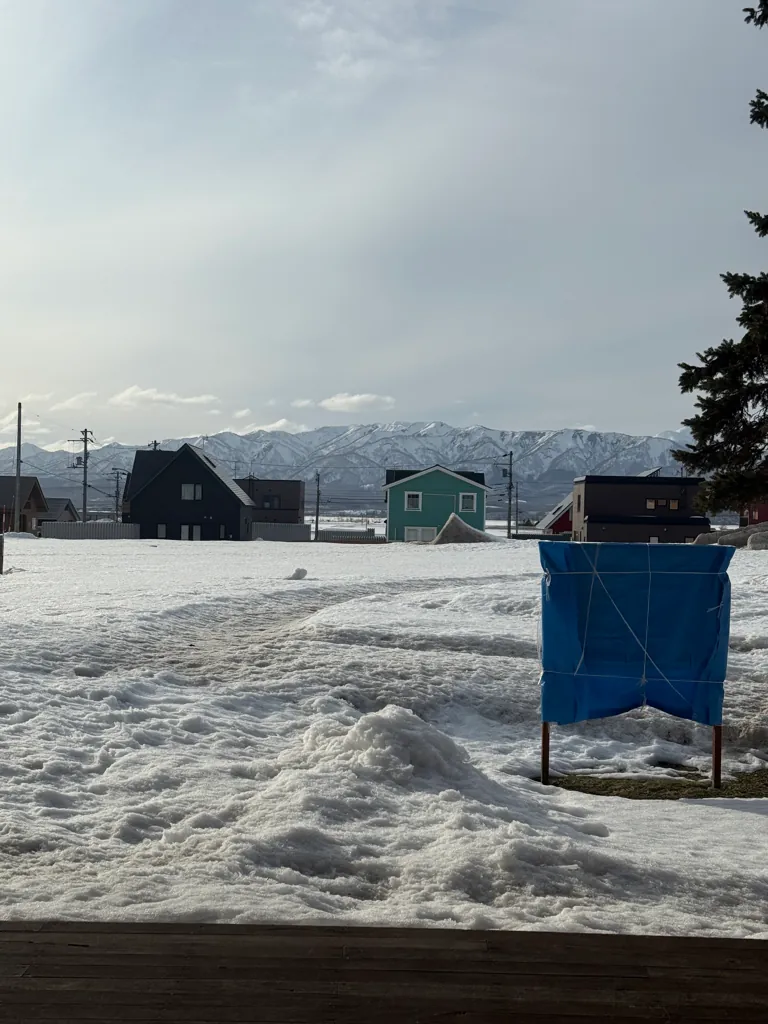
Naie 奈井江町
ないえちょう
A small farming town in central Sorachi. It stands at the midpoint of Japan's longest straight road, the 29.2 km stretch of National Route 12, and it is a former coal town that now grows prize-winning Yumepirika rice. It styles itself the "town of health and welfare", has a friendship link with Finland, and is home to the robot wolf that scares off wild animals.123
- Population (2020 Census)
- 5,120
- Area
- 88.19 km²
- District
- Sorachi District (空知郡)
- Official website
- www.town.naie.hokkaido.jp
Known for
- The midpoint of Japan's longest straight road. National Route 12 runs dead straight for 29.2 km through Bibai, Naie, Sunagawa and Takikawa1. The town's roadside station stands at its midpoint2.
- Yumepirika rice (ゆめぴりか). The local farm co-op, JA Shin-Sunagawa (新すながわ農協), won the top gold award at the first Yumepirika Contest in 2015. In 2020 it won the grand prize in Nikkei Trendy's "Kome no Hit Kōshien" (米のヒット甲子園) rice ranking11.
- Coal-mining heritage. Sumitomo began large-scale mining in 1938. In November 1972 a coal-dust explosion at the Ishikari mine killed 31 miners, and the town's last mine closed in 19739.
- Monster Wolf (モンスターウルフ). Local manufacturer Ota Seiki (太田精器) makes this wolf-shaped robot with LED eyes to scare deer and bears away from fields12.
- "Town of health and welfare" (健康と福祉のまち). Local doctors can admit and treat their own patients at the town hospital under an open hospital-clinic scheme started in 1995. Naie also passed a children's-rights ordinance in 2002 and, in 2003, held a referendum in which it chose to stay independent39.
- Hokkai King Melon (北海キングメロン). An orange-fleshed melon grown for gifts, known for its high sugar content13.
- A friendship town in Finland. The roadside station is named after Hausjärvi (ハウスヤルビ), Naie's friendship town since 199514.
Sights & activities
Nature & scenery
- Niwayama Forest Nature Park (にわ山森林自然公園).
- Address: Aza-Higashi-Naie 59-7.
- Two observation decks look over the town and the Kabato Mountains (樺戸連山).
- Facilities: four barbecue tables, a Coal Plaza (石炭広場) and a center house.
- Hours: 8:30 to sunset. Admission is free.
- Season: the town lists 25 April to 31 October, and the tourism association lists 1 May to 31 October4435.
- Furō Falls (不老の滝). A seasonal waterfall up the forest road toward Mt. Bibai, on the prefectural road between Higashi-Naie and Naie Station. The road's winter closure was lifted on 21 May 2026, but sections of the Naie forestry road beyond it may be closed for bridge work45.
- Mt. Bibai (美唄山, 986 m). Listed among the town's mountains, with trekking access from the same valley455.
- The straight road itself. Route 12 runs 29.2 km without a curve through Naie, Bibai, Sunagawa and Takikawa1.
Onsen
- Naie Onsen (ないえ温泉). The town bought the hot spring in 1989. Its hotel, Hotel Kitanoyu (ホテル北乃湯), opened in April 1990 and added an open-air bath in 1997. By 2001 it had logged 2 million day visitors, and it was privatized in 20089. It is not in the 2026 tourism-association listings, so its current operating status is unverified. Check before you go.
Museums & heritage
- Local History Museum (郷土館). Inside the Social Education Center43.
- Mitsui Mining Naie colliery railway (三井鉱山奈井江専用鉄道) remains. The line ran from 1949 to 1968. Bridge remains over the Toyonuma-Naie River and stretches of embankment survive17. The town's tourism pamphlet lists the site46.
- Henjō-ji temple. Pilgrimage stop No. 12 of the Hokkaido Thirty-Three Kannon41.
Outdoor & seasonal activities
- Spring. Cherry-blossom viewing and wild-vegetable foraging at Niwayama in spring. Brown bears have been confirmed in the park44.
- Golf. Hokkaido Naie Country Club opened in 1992 on former Sumitomo land9.
- Kotobuki Park (寿公園). Park golf and a turf soccer pitch22.
- Swimming. The town pool "Naekko" (なえっこ) is run by the same organization that manages the Michi-no-Eki47.
Food experiences
- Karamatsuen. Hand-stretched soba made with Botan buckwheat30.
- Tamariba. Charcoal-grilled yakitori33.
- Café Mimizuku. Handmade ice cream at the Michi-no-Eki48.
- Yumepirika Fes. Freshly cooked new-crop rice every September39.
Where to stay
Roadside stations (Michi-no-Eki)
House Yarubi Naie (道の駅ハウスヤルビ奈井江)
- Location
- Hours (as of September 2026; check before visiting)
- Building: 8:30–18:00 according to the official Hokkaido roadside-station site48. The operator's own site gives 9:30–18:00 (May–October) and 10:00–16:00 (November–April)47, and the tourism association gives 9:30–17:00 in summer32. Closed over New Year47.
- Café Mimizuku: 10:00–17:00 from mid-April to October and 10:00–16:00 from November to mid-April. Closed Mondays and 28 December–3 January48.
- Milk Factory: 10:00–16:00 on weekdays from April to November, and 10:00–17:00 on weekends and holidays from April to October. Closed Wednesdays, and closed for the season from 1 December to 31 March48.
- Ramen Gantetsu: 11:00–21:00, closed Wednesdays48. The operator's site lists 11:00–20:0047.
- Shops & products
- Food
- Café Mimizuku (喫茶「木菟」) is known for freshly ground coffee and handmade ice cream in flavors such as vanilla, corn and pumpkin4832.
- Soft-serve made with local Nanatsuboshi rice32, plus a pastry-chef-supervised soft-serve made with Hokkaido milk47.
- Omusubi Kororin (おむすびころりん) makes rice balls with fillings from Sapporo's Satō Suisan (佐藤水産)47.
- Naie Milk Factory, and Ramen Gantetsu (らあめん がんてつ)4827.
- Facilities
- Parking: 38 cars and 20 large vehicles according to the official site48. Wikipedia gives 40 cars, 20 large vehicles and 2 accessible spaces49, and the operator gives 62 free spaces47.
- 24-hour toilets49; accessible toilet, heated toilet seats, diaper-changing table and Wi-Fi48.
- Cashless payment (not credit cards)48.
- A dog run for small dogs behind the building, and children's play equipment248.
- A lawn that can serve as a helicopter landing site. The station is designated for disaster-prevention use49.
- No EV charger, RV park or onsen is listed.
- Notes
- Registered on 16 April 1996 as No. 26 on the Hokkaido list50. The building was completed in November 19959.
- It is a log-house-style building named after Naie's Finnish friendship town, Hausjärvi. On the second floor, "Rest House Naie" is a partly reconstructed Taishō-era house2.
- The stamp is available 24 hours a day, including closed days48.
- The designated manager is the Naie Nihon-ichi Chokusendō Machizukuri Kenkyūkai (奈井江町日本一直線道まちづくり研究会)47.
Getting there & around
- Rail. Naie Station (奈井江駅) on the JR Hakodate Main Line opened on 5 July 189120.
- It has been unstaffed since 1 April 2022, and in 2018 it averaged 478 passengers a day20.
- The neighboring stations are Chashinai (6.2 km, to the south) and Toyonuma (4.7 km, to the north)20.
- From Sapporo it takes about 54 minutes, changing at Iwamizawa. From Asahikawa it takes about 55 minutes, changing at Takikawa. From New Chitose Airport it takes about 1 hour 20 minutes51. The English town guide gives slightly different times: 56 minutes from Sapporo and 53 from Asahikawa, excluding connections27.
- Road.
- The Naie-Sunagawa IC on the Dō-ō Expressway opened on 8 October 19885.
- Distances by expressway: Sapporo 69 km (about 1 hour 10 minutes), Asahikawa 65 km (about 1 hour 5 minutes), New Chitose Airport 79 km (about 1 hour 20 minutes)51.
- National Route 12 runs through the town center. Prefectural roads 114 (Akabira–Naie) and 139 (Ebetsu–Naie) cross the town5.
- Buses.
- Two town buses on weekdays: a loop through the town center with 5 runs, and the Mukaigaoka line with 5 runs on weekdays and 4 on weekends and holidays. Outlying districts have a shared demand-response taxi21.
- Hokkaido Chūō Bus has withdrawn its Takikawa–Naie route. From October 2026 riders can use the Bibai driving-school bus, which serves 12 stops in town, including the town hall and Naie High School21.
- Air. New Chitose Airport is the main gateway. From Asahikawa Airport, allow about 2 hours by bus and train27.
Practical tips
- Best times.
- Seasonal closures.
- Wildlife. Brown bears have been seen and their signs confirmed at Niwayama, and the park may close when bears are active. Report sightings to the Industry and Tourism Division (0125-65-2118)44. Deer are common across Sorachi's farmland; this is general regional advice, not a town-specific source.
- Information.
- Driving the straight road. The long, featureless stretch of Route 12 is a well-known place to lose concentration. Take breaks, for example at the Michi-no-Eki. This is general driving advice.
Photos
-
 Mar 2026
More about Naie
At a glance
| Field | Details |
|---|---|
| Type | Town (町) |
| Subprefecture | Sorachi. The town lies in central Sorachi, on the northern part of the Ishikari Plain4 |
| District | Sorachi District (空知郡)5 |
| Population | 5,120 (2020 Census, 2,312 households); 4,527 residents in 2,544 households on the resident register as of 31 August 2026. The peak was 18,458 at the 1960 Census6 |
| Area | 88.19 km² (GSI, 1 April 2026)7. English Wikipedia gives 88.05 km²8, which was the town's official area after a November 1989 revision9 |
| Density | About 51.3 people/km² on the 2026 register figure, or 58.1 on the 2020 Census (calculated from the figures above) |
| Municipal history | Naie Village (奈江村) was split from Takikawa Village in May 1890. It was renamed Sunagawa Village in 1903, and Sunagawa became a town in 1923. Naie Village (奈井江村) split off from Sunagawa Town in April 1944 and became a town in September 1950. In a 2003 referendum, 73.61% of voters rejected merging with a neighbor9 |
| Neighboring municipalities | Sunagawa (north), Ashibetsu (east, across the Yūbari Mountains), Bibai (south), and Urausu and Shintotsukawa (west, across the Ishikari River)4. Japanese Wikipedia also lists Kamisunagawa5 |
| Symbols | Tree: Japanese rowan (ナナカマド). Flowers: azalea (つつじ) and daylily (ヘメロカリス)4. The rowan was chosen in July 1970 and the azalea in December 19749. No town bird found |
| Mascot | No official yuru-chara found. The town's catchphrase is "Zudōn" (ずどーん), a word meant to suggest the straight road and wide farmland10 |
| Official website | https://www.town.naie.hokkaido.jp/ |
Name origin
- Official explanation. The town says the name is a corruption of the Ainu word nae (ナヱ), meaning "a river with much sand" (砂多き川)4.
- Yamada Shūzō's theory. The Ainu place-name scholar Yamada Shūzō (山田秀三) suggested a different root: naye (ナイェ), the locative form of nay (ナイ, "river"). On this reading the name simply means "at the river"15.
- Early records. The 1870 survey record already names two rivers, the "Naei" (ナエイ) and the "Nae" (ナエ)9. Today's Naie River (奈井江川) is 23.6 km long. It rises on the western slope of Mt. Bibai (美唄山) and joins the Ishikari River inside the town15.
History
- Ainu era. Little is recorded about Ainu settlement inside today's town boundaries. The Ainu river names ("Naei" and "Nae") are the main trace in early records9.
- 1869–1870: first survey. In October 1869 the whole of Sorachi District was placed under Date Kuninao (伊達邦直). In May 1870 he sailed up the Ishikari River with a survey party of 17, landed at Naie, and set boundary posts at the mouths of the two rivers916.
- 1874: coal survey. The American geologist Benjamin Smith Lyman (ライマン) went up the Naie River to survey the coalfield9.
- 1886–1891: road, post station and railway. The Kamikawa temporary road, today's National Route 12, opened in 188616. A government post station (駅逓) followed in August 1889. Naie Village was created from part of Takikawa Village in May 1890. Naie Station opened in July 1891 on the new railway between Iwamizawa and Utashinai9.
- 1893–1895: land grants and farm settlers. Large land leases were granted to men from Hiroshima (和田郁次郎, about 248 ha), Iwate (伊藤広幾 and 佐藤庄五郎, about 188 ha), Kanagawa (the Yokohama businessman Takashima Kaemon 高島嘉右エ門, about 826 ha) and Saitama (清水宗徳, about 248 ha). Each recruited tenant farmers. In May 1894, 30 households of tondenhei engineers (屯田工兵) settled at Chashinai (茶志内). In 1895 Kyōgoku Takanori (京極高徳) leased the Chashinai tondenhei reserve for farming. The Takashima (高島) and Kyōgoku (京極) district names come from these farms9.
- 1895–1903. Coal was found in December 1895, and mining began in 1896. Paddy rice was first grown in 1895 with water from the Naie River. In 1903 the village was renamed Sunagawa Village9.
- 1923–1944: part of Sunagawa. Sunagawa became a town in 1923. Morinaga built a condensed-milk plant here in 1924–25, and Sumitomo Mining began large-scale mining in May 1938. In April 1944 Naie split from Sunagawa Town as Naie Village, and it became a town in September 1950916.
- 1949–1968: Mitsui's colliery railway. Mitsui Mining ran a private railway about 10 km east from Naie Station to Higashi-Naie17.
- 1960s–1973: the coal era ends. The population peaked at 18,458 in the 1960 Census6. The mines then closed one by one:
- Sumitomo's Naie mine in 1963.
- Mitsui's Naie mine in September 1967, which cost the town about 5,000 residents.
- Shin-Naie in 1969 and Dainichi Kōsan in 1971.
- The Ishikari mine, where a coal-dust explosion in November 1972 killed 31 men. It closed in January 1973, and the Takiguchi mine followed in June 1973, leaving the town with no mines9.
- 1968 onward: power and industry. Hokkaido Electric's coal-fired Naie Power Station opened its two 175 MW units in 1968 and 197018. Factories came in to replace mining jobs: Kamaya Electric (釜屋電機, 1969) was the first company attracted to the former coalfield, and Hokkaido Sumiden Precision (北海道住電精密) opened in 19809.
- 1981 flood. A downpour of 400.4 mm broke the Naie River levee in August 1981, causing about ¥7.36 billion in damage9.
- 1985–2003: welfare and independence. The first Naie Industrial Festival took place in 1985. In 1988 the town opened Kenjuen (健寿苑), recorded as Japan's first geriatric health facility run by a municipality. The friendship with Hausjärvi began in April 1995. The open hospital-clinic scheme also started in 1995, and the roadside station building was finished that November. The children's-rights ordinance took effect in April 2002, and the October 2003 referendum rejected a merger. In a parallel children's vote, 84.19% of pupils also said no9.
- 2019–2026. The Naie Power Station was suspended on 31 March 2019 and is due to be decommissioned by March 202718. The Minakuru community plaza opened in April 202219, and Naie Station became unstaffed the same month20. A new town hall opened in May 20245. Hokkaido Chūō Bus has withdrawn its Takikawa–Naie route. From October 2026 a bus run by the Bibai driving school takes its place21.
Geography & climate
- Setting. Naie lies in central Sorachi, on the northern Ishikari Plain. To the east are the Yūbari Mountains (夕張山系), which form the border with Ashibetsu. To the west is the Ishikari River, which forms the border with Urausu and Shintotsukawa. The flat, fertile farmland continues south into Bibai and north into Sunagawa4.
- Size and land use. The town measures 18.9 km east to west and 9.9 km north to south. Forest covers 46.79% of the land, upland fields 21.50% and rice paddies 20.66%22.
- Mountains. Mt. Bibai (美唄山, 986 m), 芦奈江岳 (930 m), Naie-yari (奈井江槍, 830 m), Mukai-yama (向山, 311 m) and Niwa-yama (爾波山, 270 m)5.
- Rivers. The Ishikari River, the Naie River, the Toyonuma-Naie River (豊沼奈江川), the Futamatasawa River (二股沢川) and the Chashinai River (茶志内川)5.
- Parks. None of the sources consulted mention a national, quasi-national or prefectural natural park in the town. The main green spaces are the town-run Niwayama Forest Nature Park and the upper Naie River valley.
- Climate (official summary). The climate is fairly inland in character, with highs around 30°C and lows around −20°C. The first frost comes in late October and lasting snow cover in early December, and the snow melts in early April4.
- Climate (data book). The town's data book reprints Japan Meteorological Agency figures for 2008–2014, without naming the observation point:
- Annual mean temperature: 7.0–7.9°C.
- Highest temperature: 33.2°C (2014).
- Lowest temperature: −26.2°C (2010 and 2012).
- Annual precipitation: 886–1,496.5 mm22.
Economy & industry
-
Rice. Rice is the core of local farming. Yumepirika covers more than half of the town's rice acreage, and Nanatsuboshi and Kirara 397 are also grown23. From 2009 to 2011 the area had Hokkaido's highest share of low-protein rice three years running. The town also has a snow-cooled rice warehouse, "Yukimai no Kura – Yume no Kura" (雪米の蔵~ゆめのくら~)11. The peak year for shipments was 1968, at 181,279 bales9.
-
Other farm products. Melons, tomatoes, mini tomatoes and buckwheat23.
-
Farm structure. In 2010 the town had 217 farm households, 184 of them selling farms, with an average of 10.37 ha each22. Naie's co-op merged with Sunagawa's in February 1998 to form JA Shin-Sunagawa9.
-
Manufacturing. Factories are the town's other pillar. In 2013, 12 plants with 915 workers shipped goods worth about ¥24.0 billion. The main firms are:
- Hokkaido Sumiden Precision (cemented-carbide tools, about 500 staff)
- Kamaya Electric (chip resistors)
- Hokkaido Denki (electric wire)
- Hokkaido Precision Tool (北海道精密ツール)
- Ishiguro Casting (plant machinery)
- Ota Seiki (electronic parts)
The town's share of the Sorachi Chūkaku Industrial Park (空知団地) at Chashinai covers about 48.8 ha22. In 2009 Ota Seiki was chosen as one of Japan's "300 vibrant small manufacturers" (元気なモノ作り中小企業300社)9.
-
Energy. Hokkaido Electric's Naie Power Station burned domestic coal to produce 350 MW. It was mothballed in 2019 and is scheduled for decommissioning by March 2027. In April 2025 the company signed a partnership agreement with local municipalities on how the site will be used afterwards18.
-
Population. Numbers have fallen from 18,458 in 1960 to 5,120 in 2020 and 4,527 in August 20266. Deaths far outnumber births: in 2013 the town recorded 28 births and 98 deaths22.
-
Revitalization. Efforts include:
-
Visitor numbers. No municipal tourist count was found.
Local specialties
| Specialty | Category | Details & where to get it |
|---|---|---|
| Yumepirika & Nanatsuboshi rice (ゆめぴりか・ななつぼし) | Rice | Specially cultivated rice grown with less than half the usual pesticides and chemical fertilizer. It won the top gold award at the first Yumepirika Contest26. The town guide also lists the Fukkurinko (ふっくりんこ) variety27 |
| Hokkai King Melon (北海キングメロン) | Fruit | Orange flesh, high sugar and fine netting; sold as a gift melon13 |
| Tomatoes and mini tomatoes | Vegetables | A main local crop23. Eguchi Farm (江口農園) makes tomato juice, tomato sauce, basil sauce and pickles27 |
| "Taiyō no Tomato" additive-free tomato juice (無添加トマトジュース太陽のトマト) | Drink | Sold at the Michi-no-Eki28 |
| Naie shiitake (椎茸) | Mushrooms | Grown by staff and disabled workers at the Naie Welfare Association's (奈井江福祉会) work center. The mushrooms are thick and juicy and have won national and Hokkaido awards29. In 2011 an entry from Naie Gakuen (奈井江学園) won the top prize at the 8th Hokkaido Shiitake Show9. Shiitake soy sauce and shiitake curry are also sold27 |
| Hand-stretched soba (手のべそば) | Noodles | From Karamatsuen (からまつ園), a Route 12 soba restaurant open since 1971. Its noodles use Hokkaido-grown Botan buckwheat (ボタン種), sometimes called "phantom soba"30. The restaurant was listed in the special Hokkaido edition of the Michelin Guide published in April 20129 |
| Chihiro-mochi (ちひろ餅) | Sweets | Additive-free rice cakes made fresh daily from Naie-grown rice by the Doriimu workshop (味わい手作り工房 土梨夢). Flavors include plain, black soybean and mugwort. Eat them the day you buy them; sold at the Michi-no-Eki and online31 |
| Nanatsuboshi soft-serve | Sweets | Soft-serve made with local Nanatsuboshi rice, sold at the Michi-no-Eki32 |
| Yakitori (焼き鳥) | Local dining | The English town guide calls Naie's chicken skewers "famous"27. At Tamariba (炭火焼き鳥 たまりば 奈井江), on Route 12, the owner grills over charcoal and seasons with a rock salt he spent six months choosing33 |
| O-Tumbler (オータンブラー) | Craft / metalwork | A hand-polished stainless-steel beer tumbler from Ota Seiki. It is finished to give beer a fine, creamy head34 |
| Monster Wolf (モンスターウルフ) | Local invention | Ota Seiki's wolf-shaped robot for scaring off wildlife12 |
| Furusato nozei gifts | Hometown tax | Offered through Furusato Choice, Rakuten, Satofull, Furunavi and other portals. Gifts include rice from local farms such as Eguchi and Akiyoshi, the Welfare Association's shiitake, and Doriimu products25 |
Culture & festivals
| Event | When | Highlights |
|---|---|---|
| Cherry blossoms at Niwayama Forest Nature Park | Early to mid-May | About 1,800 Ezo mountain cherry trees, with a blossom tunnel near the first observation deck35. During the May cherry-blossom festival, a Monster Wolf is set up on the observation deck27 |
| Naie Industrial Festival & Summer Fireworks (ないえ産業まつり・奈井江町納涼花火大会) | Late August (39th edition held 22 August 2026) | Held since 19859 in front of the town community center. The program includes taiko drums, school bands, karaoke, a mochi toss and food stalls, and fireworks go up at 8 pm from the Naie Junior High School ground3637 |
| Naie Hashigo-zake (ないえはしご酒) | September (12 September 2026) | A bar crawl that starts and ends at the Naie Commerce and Industry Association. Visit three participating bars and enter a prize draw38 |
| Naie Yumepirika Fes (ないえのゆめぴりかフェス) | Late September (26 September 2026) | A celebration of the new rice harvest, with freshly cooked Yumepirika, local produce sales and live stage shows. It also hosts a Tyrannosaurus costume race, now in its fifth year in Naie39 |
- Bitchū Kagura (備中神楽). This masked Shinto dance-drama came to Naie through its exchange with Nariwa, now part of Takahashi City in Okayama. Nationally it is an Important Intangible Folk Cultural Property. A preservation society formed in Naie in 1986 and now has about 13 members, who perform at local festivals40.
- Shrines and temples.
- Culture venues.
- Concerto Hall (文化ホール「コンチェルトホール」): 246 seats, a one-minute walk from JR Naie Station, closed Mondays42. It opened in November 19939.
- The Social Education Center (社会教育センター) at Aza-Naie 152-1 houses the community hall, library and local history museum (郷土館)43. The museum opened in January 1981, and the town also has a pottery center (陶芸センター, 1985)9.
- Town songs. "Naie Ondo" (奈井江音頭) was chosen by public contest in 1964, and "Shin-Naie Ondo" (新奈井江音頭) followed in 19809.
Ainu heritage
Sister & friendship cities
- Takahashi City (高梁市), Okayama Prefecture.
- Hausjärvi (ハウスヤルビ), Finland.
- Friendship signed in April 1995149. Japanese Wikipedia gives 19975, but the town's own pages give 1995.
- Hausjärvi lies about 70 km north of Helsinki and has about 8,800 residents. Its health-care and welfare model is a reference for Naie.
- Delegations travel every year. In FY2024 the mayor and students visited from 26 September to 4 October14.
Notable people
- Kita Shūji (北修二, 1925–2007). Member of the House of Councillors for Hokkaido (1977–1995). He headed both the Hokkaido Development Agency and the Okinawa Development Agency in 1992–9352, and became Naie's fourth honorary citizen in 19979.
- Kita Ryōji (北良治, 1936–2021). Mayor for eight terms (1986–2018). He championed welfare and medical care and wide-area cooperation among neighboring towns, and chose independence over merger53.
- Kita Katsutarō (北勝太郎). The first head of Naie Village in 1944. He was named an honorary citizen in 19609.
- Yumiko Kayukawa (粥川由美子, b. 1970). A manga artist and illustrator born in Naie, now based in Seattle54.
Sources
Numbers in the text link to these sources. Figures as of 23 September 2026
- 国道12号 — Wikipedia JA accessed 2026-09-23
- 道の駅「ハウスヤルビ奈井江」 — 奈井江町 JA accessed 2026-09-23
- 町のプロフィール — 奈井江町 JA accessed 2026-09-23
- 町の概要 — 奈井江町 JA accessed 2026-09-23
- 奈井江町 — Wikipedia JA accessed 2026-09-23
- ないえの人口 — 奈井江町 JA accessed 2026-09-23
- 令和8年全国都道府県市区町村別面積調(4月1日時点) (PDF) — 国土地理院 JA accessed 2026-09-23
- Naie, Hokkaido — Wikipedia EN accessed 2026-09-23
- 奈井江町町政要覧 年表編 (PDF) — 奈井江町 JA accessed 2026-09-23
- 町のキャッチフレーズ「ずどーん」 — 奈井江町 JA accessed 2026-09-23
- 奈井江のお米 — 奈井江町 JA accessed 2026-09-23
- モンスターウルフ — 奈井江町観光協会 JA accessed 2026-09-23
- 北海キングメロン — 奈井江町観光協会 JA accessed 2026-09-23
- 友好都市 ハウスヤルビ町(フィンランド共和国) — 奈井江町 JA accessed 2026-09-23
- 奈井江川 — Wikipedia JA accessed 2026-09-23
- ないえのあゆみ — 奈井江町 JA accessed 2026-09-23
- 三井鉱山奈井江専用鉄道 — Wikipedia JA accessed 2026-09-23
- 奈井江発電所 — Wikipedia JA accessed 2026-09-23
- 奈井江町交流プラザみなクル — 奈井江町観光協会 JA accessed 2026-09-23
- 奈井江駅 — Wikipedia JA accessed 2026-09-23
- 公共交通 — 奈井江町 JA accessed 2026-09-23
- 奈井江町町政要覧 資料編 (PDF) — 奈井江町 JA accessed 2026-09-23
- 奈井江の農業 — 奈井江町 JA accessed 2026-09-23
- ゲストハウス 泊まれる音楽室 — 奈井江町観光協会 JA accessed 2026-09-23
- ふるさと納税 — 奈井江町 JA accessed 2026-09-23
- ゆめぴりか — 奈井江町観光協会 JA accessed 2026-09-23
- 奈井江町 TOWN GUIDE (English version, PDF) — Naie Town EN accessed 2026-09-23
- 無添加トマトジュース太陽のトマト — 奈井江町観光協会 JA accessed 2026-09-23
- 椎茸 — 奈井江町観光協会 JA accessed 2026-09-23
- 手のべそば — 奈井江町観光協会 JA accessed 2026-09-23
- ちひろ餅 — 奈井江町観光協会 JA accessed 2026-09-23
- 道の駅 ハウスヤルビ奈井江 — 奈井江町観光協会 JA accessed 2026-09-23
- 炭火焼き鳥 たまりば 奈井江 — 奈井江町観光協会 JA accessed 2026-09-23
- オータンブラー — 奈井江町観光協会 JA accessed 2026-09-23
- にわ山森林自然公園 — 奈井江町観光協会 JA accessed 2026-09-23
- 産業まつり — 奈井江町 JA accessed 2026-09-23
- 奈井江町納涼花火大会 — 奈井江町観光協会 JA accessed 2026-09-23
- ないえはしご酒 — 奈井江町観光協会 JA accessed 2026-09-23
- ないえのゆめぴりかフェス — 奈井江町 JA accessed 2026-09-23
- 友好都市 高梁市(岡山県) — 奈井江町 JA accessed 2026-09-23
- 北海道三十三観音霊場 — Wikipedia JA accessed 2026-09-23
- 文化ホール「コンチェルトホール」 — 奈井江町 JA accessed 2026-09-23
- 社会教育センター(公民館・図書館・郷土館) — 奈井江町 JA accessed 2026-09-23
- にわ山森林自然公園 — 奈井江町 JA accessed 2026-09-23
- 不老の滝 — 奈井江町 JA accessed 2026-09-23
- 奈井江町の観光パンフレットについて — 奈井江町 JA accessed 2026-09-23
- 国道12号沿い、日本一長い直線道路29.2kmにある北海道 奈井江道の駅「ハウスヤルビ奈井江」 — 奈井江町日本一直線道まちづくり研究会 JA accessed 2026-09-23
- ハウスヤルビ奈井江 — 北の道の駅 JA accessed 2026-09-23
- 道の駅ハウスヤルビ奈井江 — Wikipedia JA accessed 2026-09-23
- 住所等一覧 — 北の道の駅 JA accessed 2026-09-23
- 奈井江町への交通アクセス — 奈井江町 JA accessed 2026-09-23
- 北修二 — Wikipedia JA accessed 2026-09-23
- 北良治 — Wikipedia JA accessed 2026-09-23
- 粥川由美子 — Wikipedia JA accessed 2026-09-23