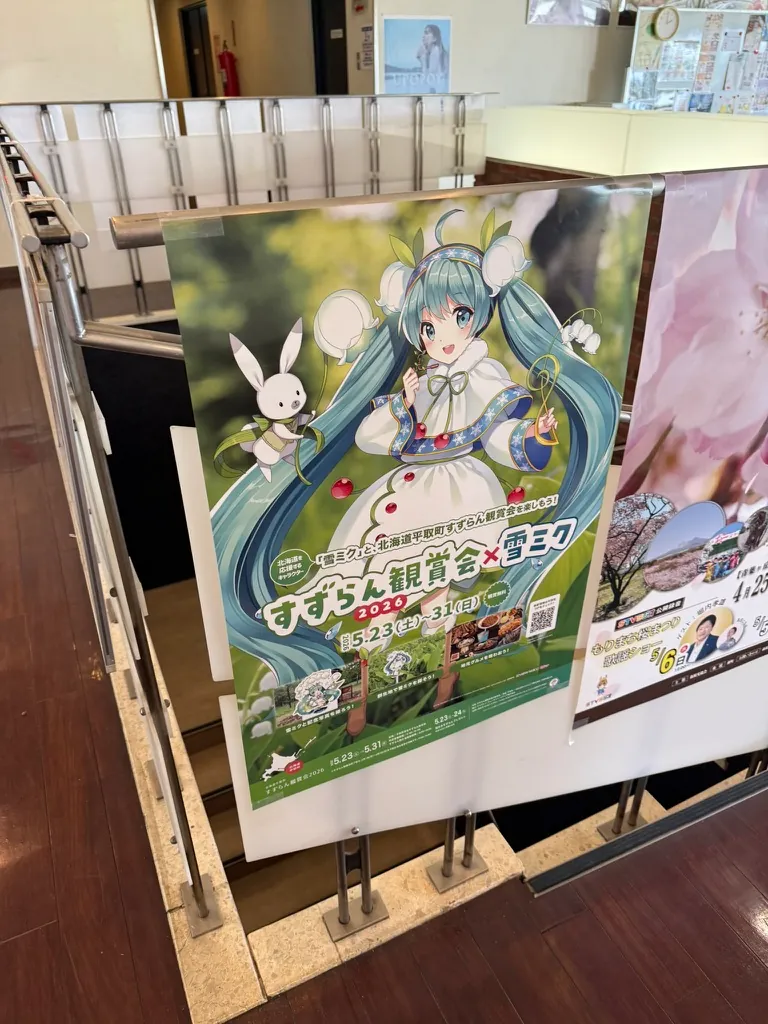
Urausu 浦臼町
うらうすちょう
Urausu is a farming town of about 1,500 people. It lies on a strip of flat land between the Kabato Mountains and the Ishikari River in central Sorachi. The town has the largest wine-grape planting area in Japan, grows a scarce buckwheat called botan soba, and was settled by Christians from Tosa (Kochi), among them relatives of Sakamoto Ryōma.
- Population (2020 Census)
- 1,732
- Area
- 101.83 km²
- District
- Kabato District (樺戸郡)
- Official website
- www.town.urausu.hokkaido.jp
Known for
- Wine grapes: Urausu ranks No. 1 in Japan for wine-grape planting area8. Hokkaido Wine's own Tsurunuma Winery (鶴沼ワイナリー) covers 447 ha in total. It is the largest trellised (垣根式) vineyard in Japan and grows about 40 grape varieties11.
- Botan soba (ぼたんそば): a buckwheat variety with a strong flavour and aroma. It is hard to grow and yields little, so it is called "phantom soba" (幻のそば)12. The town serves it as 100% buckwheat noodles13.
- Tosa Christian settlers and the Sakamoto family: in 1893 the Kochi politician Takechi Yasuya led Christian settlers to found Seien Farm and Seien Church14. Sakamoto Ryōma's nephew Sakamoto Naohiro later ran the farm15, and the Sakamoto family's graves are in town16.
- Melons: the soft, very sweet King Melty (キングメルティ), called the "phantom melon", and the juicy Rupia Red (ルピアレッド)17.
- Rice: rice brought in ¥3.17 billion of the town's estimated ¥4.10 billion farm output in 202418.
- Tsurunuma Park and Urausu Onsen: a lakeside campground, a day-use hot spring and the Michi-no-Eki Tsurunuma, all on National Route 275192021.
- Spring flowers at Urausu Shrine: dogtooth violet (カタクリ) and Corydalis (エゾエンゴサク) carpet the grounds. Squirrels and other wildlife make the shrine a favourite of photographers22.
Sights & activities
- Nature & scenery
- Tsurunuma Park (鶴沼公園), opposite the Michi-no-Eki, has a walking path around the pond with seasonal flowers, rowing boats, tennis courts and play equipment2119.
- Urausu Shrine is known for its spring wildflowers and squirrels. It is about 5 minutes' walk from the Michi-no-Eki and has no parking of its own27.
- Ikoi-no-Mori Park has views over the Kabato range. Sattekizawa Falls (札的沢大滝) is another sight1.
- Onsen
- Urausu Onsen (うらうす温泉) is inside the Natural Recreation Village Center. It is open 10:00–21:00, with last entry at 20:30. It closes on Mondays in April–June and October–March, and is open every day in July–September. Entry is ¥450 for adults and ¥230 for children; children under 6 are free. The jacuzzi is back in use after repairs (May 2026)20.
- Museums & heritage
- Outdoor & seasonal activities
- Tsurunuma Park Campground is open from 25 April to 18 October 2026. It has 24 car sites (14 with power), 6 bungalows and about 80 free tent pitches, plus a coin laundry and hot showers.
- Prices are ¥4,500 a night for a bungalow plus Hokkaido's accommodation tax of ¥100 per person (from April 2026), ¥2,000 or ¥3,000 for a car site, and ¥600 or ¥1,200 for a free-site tent depending on its size.
- Bungalows and car sites can be booked online from 62 days ahead. The campground is closed on the night of the summer festival fireworks19.
- Food experiences
- Tsurunuma Winery shop, Osatsunai 428-17, is open 9:00–16:00 from mid-April to October and 9:00–15:30 in winter, with irregular closing days. It sells Tsurunuma wines, and the rows of vines are a sight in themselves4443.
- Waka-sugi (わか杉), Urausunai 183-33, serves hand-made botan soba, red-Wagyu meat soba and a venison rice bowl. It is closed on Mondays12.
- Tachi (舘), a café-restaurant in the old Urausu post office building, reopened in August 2026. It is known for curry and katsu curry57.
- Shiitake Hanten (しいたけ飯店) is a Chinese restaurant with a shiitake ramen58.
- Yakitori Kō (やきとり康) is a charcoal yakitori shop on Route 27559.
Roadside stations (Michi-no-Eki)
Tsurunuma (道の駅つるぬま)
- Location: Aza Kinausunai 188, Urausu, on National Route 275, about 65 km north of Sapporo217. Since 1 September 2020 the staffed station counter (stamp and goods) has been inside the Urausu Onsen building across the road; its address is Kinausunai 188-2146061. Use the original car park and 24-hour toilets if you only need a rest stop60. Tsurunuma Park and its campground are next to the onsen7. Phone 0125-68-2626; mapcode 360 100 68221.
- Hours: Station and shop 10:00–18:00 (May–September) and 10:00–17:00 (October–April). Closed on Mondays (Tuesday if Monday is a holiday) and 31 December – 3 January2161. The station has also closed for inspections, for example 17–31 March 202562. As of September 2026 — check before visiting.
- Shops & products:
- At the station counter you can buy country-sign magnets and commemorative "Michi-no-Eki tickets" (道の駅記念きっぷ)61, as well as wine-grape jam45.
- Healthy Food Bussankan "U-tick" (Kinausunai 186-90) makes tofu and atsuage from local soybeans on site. It also sells other Urausu specialties and a lightly sweet soy-milk soft-serve2149.
- Hours are 10:30–15:30. It is open every day from 16 April through the summer, and closed on several weekdays each week from mid-December to early April49.
- Todokeyō Club Yumeya (とどけよう倶楽部ゆめや) is a farm stand run by women farmers on the station grounds. It sells Urausu rice, vegetables and flowers, with seedlings in spring and new-crop rice in autumn.
- The 2025 season ran from 26 April to 19 October. It was open 8:30–17:00 from June to September, and only at weekends in May. It is closed on Mondays63.
- Food: The Café & Restaurant Tsurunuma in the onsen is closed20. The food stalls are in the Shoku-no-Eki Urausu (食の駅うらうす) building on the station grounds:
- Soba-dokoro Botan-tei (そば処 ぼたん亭) serves 100% botan soba. The shrimp-tempura soba (えび天そば) is recommended, and a small side of greens dressed with kelp and bonito comes free. Open 10:00–15:00. Closed on Wednesdays and the 1st and 3rd Thursdays (April–October), and on Wednesdays and Thursdays (November–March)13.
- Amai Kura (甘い蔵) sells oyaki filled with red bean paste (小倉あん), cream or soy-milk cream, plus limited-time flavours. It also sells Urausu ramen and souvenirs from Motoyama, Kochi6421.
- Ninjin Kazoku (にんじん家族) sells carrot soft-serve and carrot juice made with snow-stored carrots, and scallop rice. Open 9:00–16:00, closed on Wednesdays, and closed for the season from November to April50.
- Goyō Foods (五葉フーズ) sells age-imo (fried battered potatoes), imo-mochi, fries and corn dogs. Closed on Tuesdays65.
- Ishichan Kitchen (いしちゃんキッチン) is the Ishibashi Farm rice-ball shop (try the plain salt shio-musubi). Open 10:00–17:00, closed on Thursdays66.
- Facilities:
- Parking for 67 cars, 10 large vehicles and 3 disabled drivers7. 24-hour toilets6067.
- The official site lists warm-water bidet toilets, an accessible toilet, baby-changing, Wi-Fi, an information corner, credit-card and other cashless payment, and a nearby gas station, onsen, campground and park21.
- No EV charger is listed.
- Notes:
- Registered on 27 August 1999 as Hokkaido Michi-no-Eki No. 60. The stamp can be pressed during opening hours, and also on closing days21.
- The original 1999 station building became too old, so the station moved "temporarily" into the onsen. The town is planning to rebuild the onsen and roadside station together as a new exchange hub7.
- Other nearby stations: The nearest are House Yarvi Naie (ハウスヤルビ奈井江) in Naie, 275 Tsukigata (275つきがた, registered 2024) in Tsukigata, Takikawa (たきかわ) in Takikawa and Hokuō-no-Kaze Tōbetsu (北欧の風 道の駅とうべつ) in Tobetsu68.
Getting there & around
- Rail: There is no railway in town. The Sasshō Line (Gakuen Toshi Line) stations at Osokinai, Satteki, Urausu, Tsurunuma and Osatsunai closed on 7 May 2020128. The nearest stations are on the JR Hakodate Main Line: Sunagawa for limited expresses and Naie for local trains. Change there to a bus69.
- Buses:
- Car:
- National Route 275 runs north–south through the town. From Sapporo it takes about 90 minutes on Route 27569 (63 km, about 1 h 20 min by the town's estimate4).
- From New Chitose Airport it takes about 100 minutes via the Dō-Ō Expressway to Bibai IC, Route 12 and Prefectural Road 1159.
- From Asahikawa Airport it takes about 90 minutes via Naie-Sunagawa IC69.
- Prefectural Road 1159 (Bibai–Urausu), which links Urausu with Bibai across the Ishikari, opened fully on 26 March 2011. The Bi-Ura river ferry (美浦渡船) then ended on 25 September 20111.
- Nearest airport: New Chitose (about 100 minutes by car)69.
- Getting around: You need a car to get around. The town's on-demand shared taxi is only for registered residents69.
Practical tips
- Best seasons:
- Seasonal closures: The museum opens only from late April to October24, and the campground from late April to mid-October19. Ninjin Kazoku and Yumeya close in winter5063. Monday is the common closing day for the Michi-no-Eki and the onsen2120.
- Winter: Snowfall reaches 8–9 m in a normal year8, so drive Route 275 with winter tyres and allow extra time.
- Wildlife: Since April 2026 the town posts brown bear sightings on the "Higumap" (ひぐまっぷ) map. The town warns that a place with no mark is not necessarily safe70. Ezo deer are common enough for the town to run a venison processing plant, so watch for them on the roads at dusk31.
- Information: Contact the Commerce and Tourism section of the town office, phone 0125-68-211461.
Photos
-
 May 2026
 -
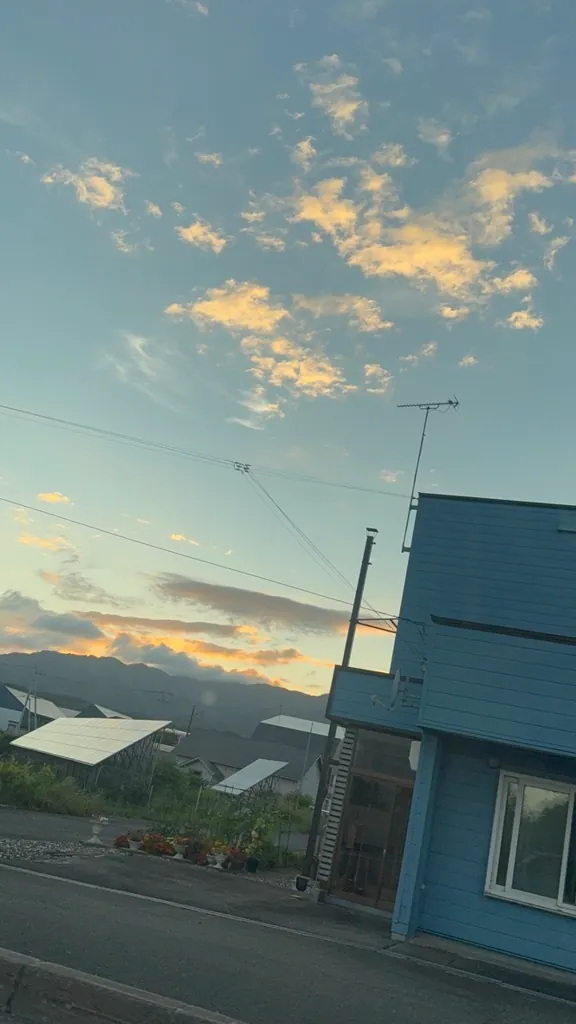
 Aug 2026
More about Urausu
At a glance
| Field | Details |
|---|---|
| Type | Town (町) |
| Subprefecture | Sorachi (空知総合振興局) |
| District | Kabato District (樺戸郡)1 |
| Population | 1,732 (2020 Census; 777 households)2; 1,525 (resident register, 31 August 2026; 748 men, 777 women)3. The town gives 773 households at the end of August 20264. The 2025 Census preliminary count is 1,533, down 11.5% from 2020, ranking 166th of Hokkaido's 179 municipalities5 |
| Area | 101.83 km²6 |
| Density | About 15.0 people/km² (latest figure, calculated); 17.0/km² (2020 Census)2 |
| Municipal history | Urausu Village split from Tsukigata Village (月形村) on 27 May 1899. It became a second-class village in 1909 and a town on 1 September 1960. On 1 April 1951 it exchanged small areas with Naie. There have been no mergers1 |
| Neighboring municipalities | Bibai, Tsukigata, Shintotsukawa and Naie (Sorachi), and Tobetsu (Ishikari)1. A national planning document also lists Sunagawa across the Ishikari River7 |
| Symbols | Tree: cherry (サクラ). Flower: azalea (ツツジ)8. No town bird found. The town emblem and flag date from 9 May 19681 |
| Mascot | Usuko Nē-san (臼子ねぇさん), a character shaped like a mortar (臼, the usu in Urausu). She wears heavy make-up to hide the cracks in her "skin", drinks wine every night, and says she is "forever 32". She became the town's tourism ambassador in 20139. English Wikipedia calls her a wine barrel10 |
| Official website | https://www.town.urausu.hokkaido.jp/ |
Name origin
The name comes from the Ainu name of the Urausunai River (浦臼内川), but its meaning is disputed1:
- Uray-us-pet (ウライウシペッ), "river with many fish weirs". Weirs were built here to catch salmon and trout. Japan's railway station-name books give this form, and the Hokkaido Government's list calls the "weir" reading the general one23.
- Uray-us-nay (ウライウシナイ), "river where there are weirs". The Ainu place-name scholar Yamada Shūzō supported this form23. He doubted the -pet ending, because the explorer Matsuura Takeshirō and old local names record the name as "Urausunai" or "Urausinai"1.
- Uras-nay (ウラシナイ), "bamboo-grass river", a reading proposed by Nagata Hōsei. Yamada thought it may have been confused with other uras names in Hokkaido, such as Urashibetsu (浦士別)123.
- A fourth theory, from Uehara, links the name to the guts (腸) of fish and animals left from hunting and fishing. The list marks it as doubtful23.
History
- Ainu era: Japanese Wikipedia says the area was inhabited from the Jōmon period1. The town museum shows finds from a chashi (Ainu fort) site24. In 1857 Matsuura Takeshirō recorded 16-year-old Mataichi, the future Ainu leader Kotoni Mataichi (琴似又市), as a resident of Urashinai (Urausu)25.
- 1807: Kondō Jūzō (近藤重蔵) explored the Urausu area1.
- 1887: Convicts from the Kabato Prison (樺戸集治監) in Tsukigata cut a road from Tsukigata to Osokinai. This opened the land to farming8.
- 13 July 1893: Takechi Yasuya (武市安哉), a Kochi member of the House of Representatives, resigned his seat. He arrived at Sattek (札的) with the first 27 settlers from Kochi and named the land Seien Farm (聖園農場, "Holy Garden Farm"). The settlers promised to rest and worship on Sundays and to neither sell nor drink alcohol14.
- 2 December 1894: Takechi died of a stroke aboard the Seikan ferry on his way back to Hokkaido14. His relative Sakamoto Naohiro (坂本直寛), Sakamoto Ryōma's nephew, took over the farm14.
- 1897–1898: A new church was built near Urausu Pond in November 1897. The great flood of 1898 destroyed many settlers' homes26. Naohiro moved to Urausu in May 1898 to run Seien Farm (the town's Wikipedia article says 1897)151. In 1902 he left the farm to his sister-in-law Tome and his nephew and moved to Asahikawa15. Tome was the widow of Ryōma's adopted heir, Takamatsu Tarō. Tome and her son ran a small sweets shop (駄菓子屋) in Urausu for the rest of their lives, and the family is buried in town16.
- 27 May 1899: Urausu Village split from Tsukigata Village1.
- 1910: Urausu Shrine was completed on 9.9 ha of land donated by Tomonari Shisutarō in 18982227.
- 10 October 1934: Urausu Station opened on what became the Sasshō Line (札沼線)28.
- 1 September 1960: Urausu became a town1.
- 1971–1979: In 1971 Mayor Tomonari Kazuo consulted the people who went on to found Hokkaido Wine about large abandoned paddy fields. Test planting began in 1972 and the Tsurunuma vineyard was founded in 1974. The first commercial wine, a Müller-Thurgau, came out in 197929.
- 1992–1998: The town's third-sector company, Urausu Resort Development Corporation, planned a large resort in the bubble years. The plan was linked to the 1992 Fuji Bank Akasaka branch loan scandal. In 1998 the company went into special liquidation with ¥13.5 billion of debt1.
- 1997–1999: Jinnai Farm 21 (神内ファーム21) was built on 280 ha of farmland and 320 ha of forest, including the former resort land, and was completed on 15 August 199930.
- 1999: Friendship ties with Motoyama, Kochi (27 February)1. On 27 August the Michi-no-Eki Tsurunuma was registered as Hokkaido's 60th roadside station21.
- 1 June 2019: A Lawson opened, the town's first convenience store1. In October 2019 the town opened its Gibier Processing Center for Ezo deer31.
- 7 May 2020: The Sasshō Line north of Hokkaidō-Iryōdaigaku closed, leaving Urausu without a railway. Trains had already stopped on 17 April because of the COVID-19 state of emergency28.
- 2024: The operator of the Natural Recreation Village Center left at the end of March. The town has run the Urausu Onsen baths directly since 12 April 2024, and the lodging and restaurant are suspended3220.
Geography & climate
- Setting: Urausu lies on the right (west) bank of the Ishikari River, near the centre of Sorachi. The ridge of the Kabato Mountains (樺戸山地) forms the western border with Tobetsu. The Kabato-sakai River (樺戸境川) marks the northern border with Shintotsukawa, and the Toreshipputaushinai River the southern border with Tsukigata7.
- Land: The town is almost flat, with many rivers and ponds between the mountains and the river8. Of its 10,183 ha, 3,460 ha is farmland (2,450 ha paddy, 1,020 ha upland) and 4,888 ha is forest18.
- Mountains: Mt. Kumaneshiri (隈根尻山), Mt. Kabato (樺戸山) and Mt. Urausu (浦臼山)1.
- Rivers and ponds: The Ishikari, Urausunai, Kinausunai, Osatsunai, Sattekinai and Osokinai rivers. Ponds include Tsurunuma (鶴沼), Urausu-numa, Pira-numa and Toi-numa1.
- Climate: Summers are warm with moderate rain, which suits farming. Winters are very snowy, with 8–9 m of snow in a normal year8. Hokkaido Wine says the day–night temperature gap reaches about 10 °C in the April–October growing season, which helps the grapes11. The Urausu weather station (AMeDAS) measures only precipitation, with an annual normal of 1,532.7 mm; August is the wettest month at 184.6 mm (1991–2020)33.
- Nearest full weather station: Bibai, across the Ishikari River. Its 1991–2020 normals are 7.3 °C for the year, −6.6 °C in January and 21.2 °C in August, with 766 cm of snowfall a year and a typical maximum snow depth of 116 cm34. Its records are 35.6 °C (2021), −29.6 °C (30 January 2023) and a snow depth of 167 cm (2012 and 2018)35.
Economy & industry
- Farming is the core: Urausu grew up as a rice-growing farm village. It now also produces flowers, melons, potatoes, asparagus, botan soba and wine grapes8. Estimated farm output in 2024 was ¥4.10 billion. Rice made up ¥3.17 billion, fruit ¥450 million, vegetables ¥190 million and livestock ¥140 million18.
- Crops (2025): Paddy rice covered 1,660 ha and yielded 9,830 t. Wheat covered 223 ha, buckwheat 115 ha and soybeans 52 ha18. Rice fills 73.9% of the cultivated land (2023). The town has about 2,308 ha of certified paddy land36.
- Farms: 160 farm businesses and 414 people working on farms at least 60 days a year (2020 Census of Agriculture)18. Farmers are ageing and there are too few successors. The town is shifting to mixed farming with wheat, soba, mini tomatoes, garlic, melons and kanro melons. New farmers can train for two years as community-support workers with about ¥230,000 a month in support37.
- Companies:
- Hokkaido Wine's Tsurunuma Winery. Hokkaido Wine is based in Otaru29, and its head winery makes more Japanese wine than any other winery38.
- Jinnai Farm 21, which raises red Wagyu (神内和牛あか)3039.
- Hokkaido Agrimart, a juice and food processor in Osatsunai40.
- The Hokkaido Chevreuil Urausu venison plant, run by Aimaton31.
- Tourism: Urausu had 152,000 visitors in FY2025, down from 176,400 in FY2024. Most were day-trippers from within Hokkaido, and only 6,500 stayed overnight. August was the busiest month, with 36,000 visitors41.
- Population decline: The population fell from 3,058 in 1990 to 1,732 in 20207, and to 1,533 in the 2025 preliminary count5.
- Revitalization:
Local specialties
| Specialty | Category | Details & where to get it |
|---|---|---|
| Tsurunuma wines (鶴沼ワイン) | Wine | Made from Tsurunuma grapes, with many awards at Japan's domestic wine competitions. Try the crisp Tsurunuma Zweigelt (鶴沼ツヴァイゲルト, ¥2,160) or the mineral Pinot Blanc. Sold at the Tsurunuma Winery shop, Osatsunai 428-174344 |
| Wine-grape jam (ワインブドウジャム) | Preserve | Jam made from wine grapes and rich in polyphenols. Sold at the Healthy Food Bussankan and the Michi-no-Eki Tsurunuma45 |
| Botan soba (ぼたんそば) | Noodles | The town's "phantom soba". Eat it as 100% buckwheat noodles at Botan-tei13 or hand-made at Waka-sugi12. Hand-stretched dried botan soba is sold by Hokkaido Agrimart46 |
| King Melty (キングメルティ) and Rupia Red (ルピアレッド) melons | Fruit | Very sweet melons that are popular furusato nozei gifts. Sold at JA Pinne's Urausu branch and at farm stands in town17 |
| Momotarō tomato juice | Juice | Whole Momotarō tomatoes are pressed within 24 hours of harvest. Sold at the Healthy Food Bussankan, Pikoru A-Mart and Obana Shōten47 |
| Presserd'or (プレサドール), agurico and Hokkaido Cider | Juice & soft drinks | Hokkaido Agrimart products. They include a mango mix juice made with mangoes grown in Urausu, mini-tomato juice, and a non-alcoholic wine made from 100% Urausu wine grapes. There is also a sparkling range with 50% juice: tomato, carrot, grape and apple. Sold on the Agrimart website4048 |
| Tofu, atsuage, soy-milk soft-serve | Soy products | Made from local soybeans at the Healthy Food Bussankan "U-tick" (ユーティック)4921 |
| Carrot soft-serve and juice | Sweets & drinks | Made from carrots kept under the snow all winter to sweeten them. Sold at Ninjin Kazoku (にんじん家族)50 |
| Ezo deer (エゾシカ) venison | Game meat | From the Urausu plant, which holds Hokkaido HACCP and national gibier certifications. Local shops sell venison jingisukan (300 g, ¥400) and venison for shabu-shabu51. Waka-sugi serves a venison rice bowl12 |
| Jinnai Wagyu Aka (神内和牛あか) | Beef | Red Wagyu (褐毛和種) from Jinnai Farm 21. It appears as a meat soba at Waka-sugi and in furusato nozei gifts such as hamburger steaks and sliced shoulder loin1239 |
| Furusato nozei gifts | Gifts | Rice, melons, red Wagyu, wine (34 items listed) and botan soba39 |
Culture & festivals
| Event | When | Highlights |
|---|---|---|
| Urausu Summer Taste Festival (うらうす夏の味覚まつり) | Early August. The 15th festival was on 2 August 2026, 11:00–20:30 | Held at the Tsurunuma Park event plaza. A yakiniku beer garden serves Urausu-raised Kuroge Wagyu and venison loin, and specialties from Motoyama are on sale. There is a botan soba speed-eating contest and a performance by the Inazuma Taiko drum group. The day ends with fireworks at about 20:00. Free shuttle buses run from the former Tsurunuma Elementary School52 |
| Urausu Friends Maranic (うらうす友だちマラニック) | Late August (30 August 2026) | A "marathon + picnic" run over about 13 km or 25 km. Runners taste local farm produce at "hospitality points" along the course53 |
| Urausu Shrine festival | 7 September | The shrine's annual festival (例祭)27 |
| Katakuri and Ezo-engosaku bloom | Around Golden Week (late April–early May) | The shrine grounds turn purple and blue, and photographers come to catch Ezo squirrels among the flowers27 |
| Sakamoto Ryōma letter exhibition | Occasional (9–21 July 2025) | The museum owns a letter that Ryōma wrote to his sister Otome in 1858, and shows the original for short periods54 |
- Older events: Japanese Wikipedia also lists an Urausu Summer Festival, a "Wine Village Festival in Urausu" and a botan soba harvest festival1. The town's current event pages do not show them, so check before planning around them (unverified).
- Urausu Shrine (浦臼神社): The shrine was founded as Tsurunuma Shrine and renamed in 1968. Its present hall came from a Sumitomo shrine at Ikushunbetsu, Mikasa, in 1972. Three extra log pillars help it carry heavy snow27.
- Seien Church (聖園教会): This Church of Christ in Japan congregation has continued since 1893 at Urausunai 183-38. Its fourth church building, a wooden hall finished in 1959, was modelled on the old Sapporo Kita-Ichijō Church26.
- Urausu Local History Museum (浦臼町郷土史料館): It shows belongings of Sakamoto Naohiro and of Ryōma's elder brother's family, and papers on Ryōma. It also covers the Iwamura Farm of Hokkaido's first governor, Iwamura Michitoshi, and his son Hassaku24.
- Other heritage: A haiku stone by the poet Yamaguchi Seishi, a "Lovers' Sanctuary" (恋人の聖地) in a stone warehouse called "Kura", and a farm-machinery exhibition hall1.
Ainu heritage
Little Ainu history of Urausu is well documented. The main traces are place names. The town never reformed its aza names, so Ainu-derived names still appear in addresses such as Urausunai, Kinausunai, Osatsunai and Sattekinai; the Michi-no-Eki's address is 字キナウスナイ188121.
- Osatsunai (於札内): o-sat-nay, "river whose mouth dries up". It is a gravel river whose lower reaches dry out55.
- Osokinai (晩生内): The station-name source gives o-soske-nay, "river whose mouth is crumbling". Nagata recorded a different, doubtful form55.
- Sattekinai (札的内): sattek-nay, "river that grows thin". In summer its water sinks into the gravel bed56.
The Ainu leader Kotoni Mataichi (琴似又市) is recorded as a young man from Urausu. He later led the Kotoni area of Sapporo and studied in Tokyo in the 1870s25. The Local History Museum shows finds from a chashi site24. There is no Ainu cultural facility in town. For Ainu culture, see Shiraoi or Biratori.
Sister & friendship cities
- Motoyama, Kōchi Prefecture (高知県本山町): friendship ties since 27 February 1999171. Kochi is the old Tosa Province, home of the Christian settlers who founded Seien Farm14. Motoyama specialties are sold at the Summer Taste Festival and at Amai Kura in the Michi-no-Eki5264.
- No international sister cities found.
Notable people
- Takechi Yasuya (武市安哉, 1847–1894): Kochi politician who founded Seien Farm and Seien Church in 189314.
- Sakamoto Naohiro (坂本直寛, 1853–1911): freedom-and-people's-rights activist and pastor, nephew of Sakamoto Ryōma. He ran Seien Farm from 189815.
- Kotoni Mataichi (琴似又市): Ainu leader, recorded as a youth from Urausu in 185725.
- Igawa Ihei (井川伊平): former member of the House of Councillors and parliamentary vice-minister for Hokkaido Development, who went to school at Urausu Seien1.
- Kanbara Masaru (神原勝): public-administration scholar and professor emeritus of Hokkaido University, from Urausu1.
Sources
Numbers in the text link to these sources. Figures as of 23 September 2026
- 浦臼町 — Wikipedia JA accessed 2026-09-23
- 第1表 男女別人口、面積、人口密度及び世帯数(令和2年国勢調査結果 統計表) — 北海道総合政策部計画局統計課 JA accessed 2026-09-23
- 住基ネットにおける人口【参考値】(令和8年8月31日現在) — 北海道総合政策部地域行政局市町村課 JA accessed 2026-09-23
- くらし・行政 — 浦臼町 JA accessed 2026-09-23
- 令和7年国勢調査速報 北海道の人口・世帯数(要計表に基づく人口・世帯数の集計) — 北海道総合政策部計画局統計課 JA accessed 2026-09-23
- 令和8年全国都道府県市区町村別面積調(4月1日時点) — 国土地理院 JA accessed 2026-09-23
- 浦臼町交流拠点施設再整備事業 — 国土交通省 JA accessed 2026-09-23
- 町の概要 — 浦臼町 JA accessed 2026-09-23
- 臼子ねぇさん — 日本ご当地キャラクター協会 JA accessed 2026-09-23
- Urausu, Hokkaido — Wikipedia EN accessed 2026-09-23
- ぶどう作り — 北海道ワイン株式会社 JA accessed 2026-09-23
- わか杉 — 浦臼町 JA accessed 2026-09-23
- そば処 ぼたん亭 — 浦臼町 JA accessed 2026-09-23
- 武市安哉 — Wikipedia JA accessed 2026-09-23
- 坂本直寛 — Wikipedia JA accessed 2026-09-23
- 坂本龍馬家の墓 — 浦臼町 JA accessed 2026-09-23
- メロン — 浦臼町 JA accessed 2026-09-23
- わがマチ・わがムラ 市町村の姿 北海道浦臼町 — 農林水産省 JA accessed 2026-09-23
- 鶴沼公園キャンプ場 — 浦臼町 JA accessed 2026-09-23
- 浦臼町自然休養村センター(うらうす温泉) — 浦臼町 JA accessed 2026-09-23
- つるぬま — 北の道の駅 JA accessed 2026-09-23
- 浦臼神社 — 浦臼町 JA accessed 2026-09-23
- アイヌ語地名リスト イチャ~エリ P11-20 — 北海道環境生活部アイヌ政策推進室 JA accessed 2026-09-23
- 郷土史料館 — 浦臼町 JA accessed 2026-09-23
- 琴似又市 — Wikipedia JA accessed 2026-09-23
- 聖園教会 — Wikipedia JA accessed 2026-09-23
- 浦臼神社 — Wikipedia JA accessed 2026-09-23
- 浦臼駅 — Wikipedia JA accessed 2026-09-23
- 企業情報 — 北海道ワイン株式会社 JA accessed 2026-09-23
- 神内ファーム21 — Wikipedia JA accessed 2026-09-23
- 浦臼町ジビエ処理加工センター — 浦臼町 JA accessed 2026-09-23
- 道の駅つるぬま — Wikipedia JA accessed 2026-09-23
- 浦臼 平年値(年・月ごとの値) — 気象庁 JA accessed 2026-09-23
- 美唄 平年値(年・月ごとの値) — 気象庁 JA accessed 2026-09-23
- 美唄 観測史上1~10位の値 — 気象庁 JA accessed 2026-09-23
- 2024年度 浦臼町水田収益力強化ビジョン(1) — 浦臼町地域農業再生協議会 JA accessed 2026-09-23
- 浦臼町の新規就農支援について — 浦臼町 JA accessed 2026-09-23
- 北海道ワイン株式会社 公式サイト — 北海道ワイン株式会社 JA accessed 2026-09-23
- 北海道浦臼町|自治体・ふるさと納税情報をご紹介 — ふるさとチョイス JA accessed 2026-09-23
- その他農産物加工品 — 浦臼町 JA accessed 2026-09-23
- 北海道観光入込客数調査報告書 令和7(2025)年度 資料編 — 北海道 JA accessed 2026-09-23
- ふるさと本舗Award2024 BRONZEを受賞しました! — 浦臼町 JA accessed 2026-09-23
- ワイン — 浦臼町 JA accessed 2026-09-23
- 鶴沼ワイナリー — 浦臼町 JA accessed 2026-09-23
- ワインブドウジャム — 浦臼町 JA accessed 2026-09-23
- 北海道アグリマート — 浦臼町 JA accessed 2026-09-23
- トマトジュース — 浦臼町 JA accessed 2026-09-23
- ミニトマトジュース等 — 浦臼町 JA accessed 2026-09-23
- 浦臼ヘルシー食品物産館 — 浦臼町 JA accessed 2026-09-23
- にんじん家族 — 浦臼町 JA accessed 2026-09-23
- ジビエ(エゾシカ肉) — 浦臼町 JA accessed 2026-09-23
- 第15回うらうす夏の味覚まつり — 浦臼町 JA accessed 2026-09-23
- うらうす友だちマラニック — 浦臼町 JA accessed 2026-09-23
- 坂本龍馬直筆の手紙 特別展示の開催 — 浦臼町 JA accessed 2026-09-23
- アイヌ語地名リスト エン~オニシ P21-30 — 北海道環境生活部アイヌ政策推進室 JA accessed 2026-09-23
- アイヌ語地名リスト ゴ~シブ P51-60 — 北海道環境生活部アイヌ政策推進室 JA accessed 2026-09-23
- 舘 — 浦臼町 JA accessed 2026-09-23
- しいたけ飯店 — 浦臼町 JA accessed 2026-09-23
- 炭焼き やきとり康 — 浦臼町 JA accessed 2026-09-23
- 道の駅つるぬま 場所の移動について — 北の道の駅 JA accessed 2026-09-23
- 道の駅つるぬま — 浦臼町 JA accessed 2026-09-23
- 道の駅つるぬま 臨時休業のお知らせ — 北の道の駅 JA accessed 2026-09-23
- とどけよう倶楽部ゆめや — 浦臼町 JA accessed 2026-09-23
- 甘い蔵 — 浦臼町 JA accessed 2026-09-23
- 五葉フーズ — 浦臼町 JA accessed 2026-09-23
- いしちゃんキッチン — 浦臼町 JA accessed 2026-09-23
- 道の駅つるぬま 24時間トイレの使用中止のお知らせ — 北の道の駅 JA accessed 2026-09-23
- 道の駅一覧 — 北の道の駅 JA accessed 2026-09-23
- 交通アクセス — 浦臼町 JA accessed 2026-09-23
- ヒグマの出没状況 — 浦臼町 JA accessed 2026-09-23
- 本山町 — Wikipedia JA accessed 2026-09-23