Shari 斜里町
しゃりちょう
Shari covers the Sea of Okhotsk side of the Shiretoko Peninsula. Its territory includes the Five Lakes, the Kamuiwakka hot falls and the onsen port of Utoro, the main gateway to the Shiretoko World Natural Heritage site. The other half of the town is a farming and fishing community on the Shari plain, and the town says it lands more salmon and trout than anywhere else in Japan1.
- Population (2020 Census)
- 11,418
- Area
- 737.13 km²
- District
- Shari District (斜里郡)
- Official website
- www.town.shari.hokkaido.jp
Known for
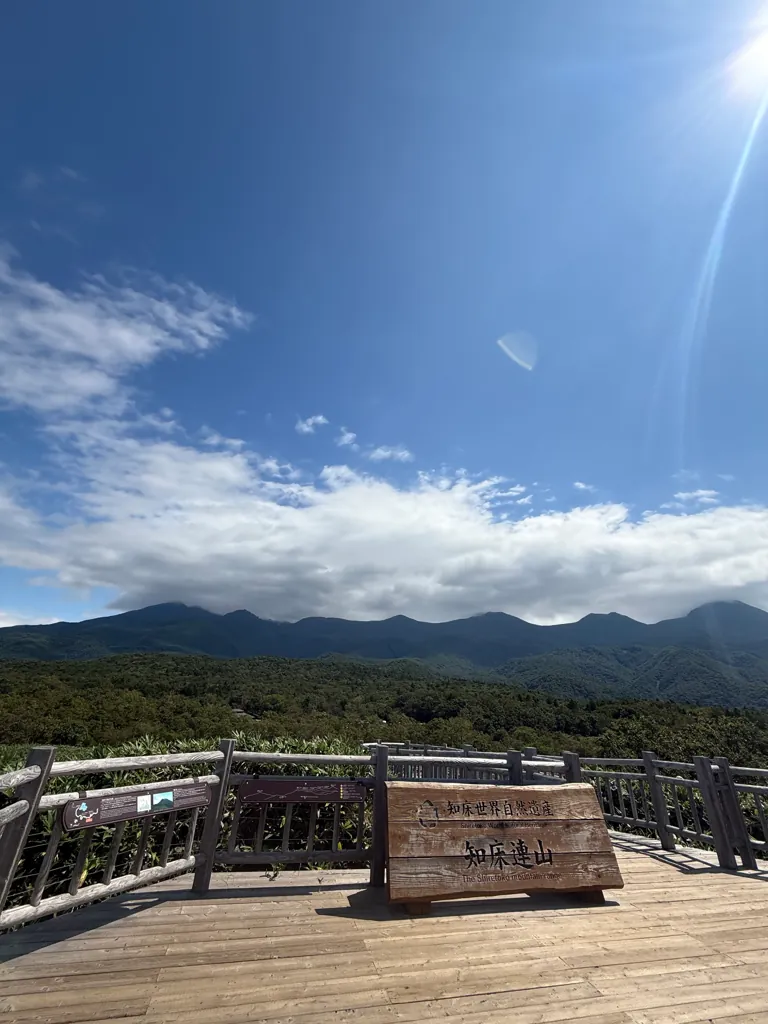
- Shiretoko World Natural Heritage (知床世界自然遺産). Shiretoko was inscribed in 2005, Japan's third natural World Heritage site8. It was the first in Japan to include a marine area. The sea here is the lowest-latitude sea in the world that freezes over each winter, and the drift ice feeds a food chain that runs from plankton to salmon, brown bears and sea eagles15.
- Salmon (鮭). The town says Shari lands more salmon and trout than anywhere else in Japan1, and a salmon feature on its Furusato Choice gift page calls it "No. 1 for salmon, 18 years running"16. In 2024 the catch was 14,406 t of salmon worth ¥14.77 billion17.
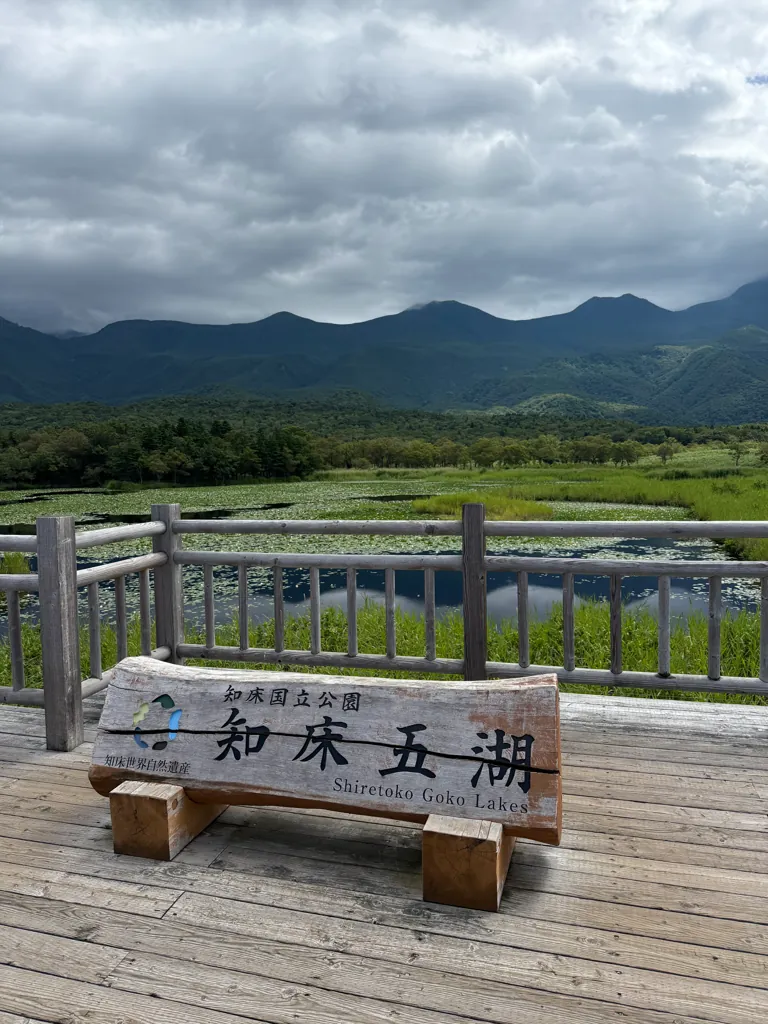
- Shiretoko Five Lakes (知床五湖) and the Shiretoko Eight Views (知床八景). At the Five Lakes, a free elevated boardwalk (about 1.6 km round trip) leads out over the first lake. The ground trails need a lecture, or in bear season a registered guide1819. The other seven views are Oshinkoshin Falls (one of Japan's 100 best waterfalls), Furepe Falls, Kamuiwakka hot falls, Puyuni Cape, Oronko Rock, Yūhidai and Shiretoko Pass209.
- Brown bears and wildlife cruises. Boats leave Utoro for the peninsula's cliffs. The two-hour course to Rusha Bay has a high chance of brown bears, deer and white-tailed eagles15.
- Drift ice (流氷). From late January to March the sea ice reaches the coast, and guides lead "drift-ice walks" in special suits. In 2026 the ice first reached the Shiretoko coast on 26 January21.
- The Shiretoko 100 m² Movement (しれとこ100平方メートル運動). In 1977 the town began asking the public for donations to buy back abandoned farm plots inside the national park. The town notes its international recognition, and Japanese Wikipedia calls it Japan's first National Trust movement89.
- "Road to Heaven" (天に続く道). A straight run of about 28.1 km along National Routes 244 and 334. From the rise at Minehama it seems to climb into the sky22.
- Shiretoko Shari Neputa (しれとこ斜里ねぷた). Hirosaki-style fan floats up to 8 m tall parade each July. The festival grew out of the town's link with Hirosaki, which goes back to the Tsugaru samurai who died guarding Shari in 180723.
Sights & activities
Nature & scenery
- Shiretoko Five Lakes (知床五湖), Iwaubetsu 549, Onnebetsu-mura. Open late April to early November; the 2026 season was scheduled to open on 20 April55.
- The elevated boardwalk is free, usable by wheelchair and about 1.6 km round trip (around 40 minutes)5614.
- The ground trails are a 3 km large loop and a 1.6 km small loop. In spring and in summer to autumn you must first attend a 10-minute lecture (adults ¥450). In the brown-bear season, 10 May to 31 July, you can only go on a guided tour with a registered guide: from ¥6,000 for the large loop, ¥4,000 for the small loop19.
- Furepe Falls (フレペの滝, "Maiden's Tears"): there is no river. Rain and snow from the Shiretoko range soak into the ground and trickle out of cracks in a sheer cliff about 100 m high, straight into the sea1557. About 20 minutes' walk each way from the Shiretoko Nature Center57.
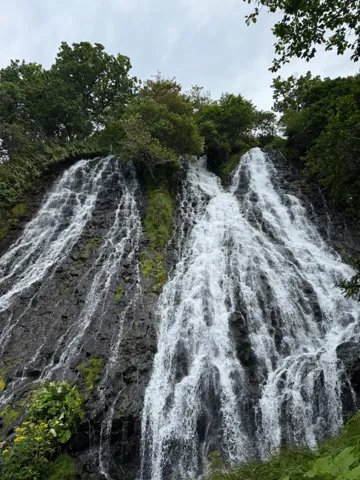
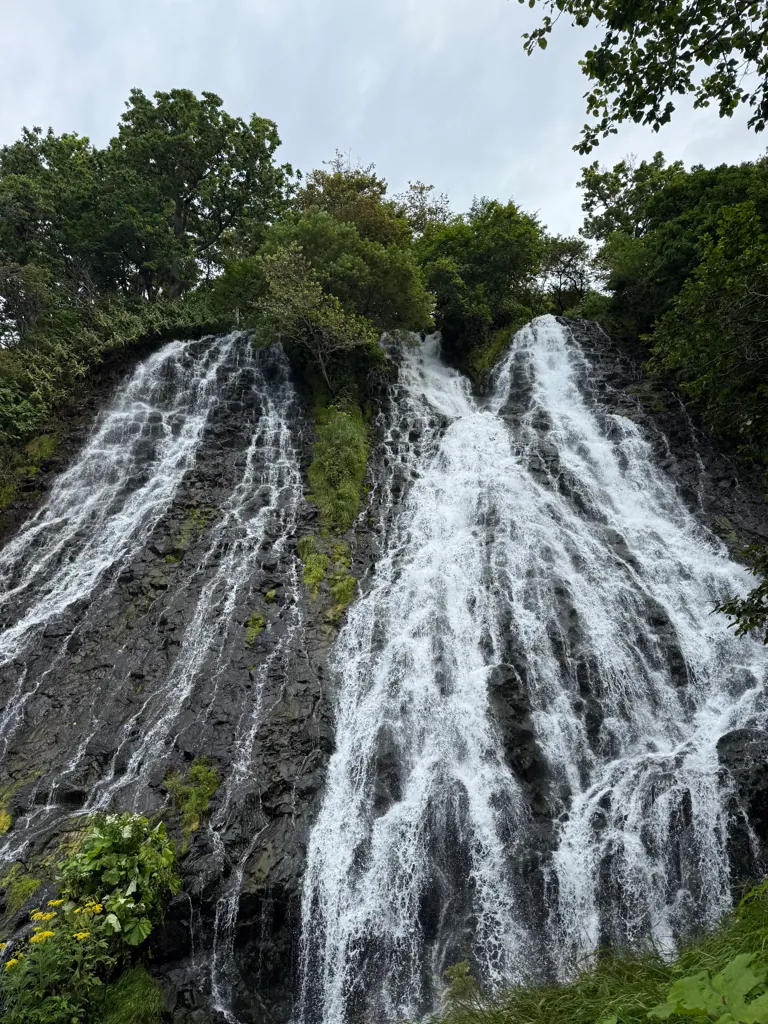
- Oshinkoshin Falls (オシンコシンの滝) beside Route 334 in the Utoro-nishi area: about 30 m high and split in two, so it is also called the "twin beauty falls". Steps lead halfway up. Free parking for 40 cars20.
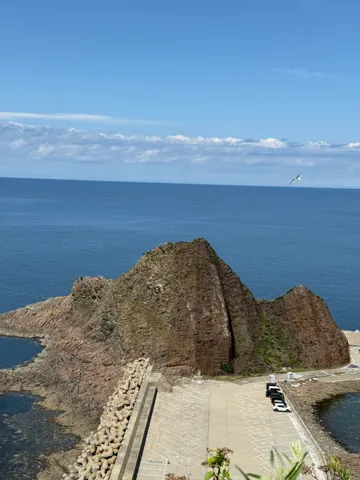
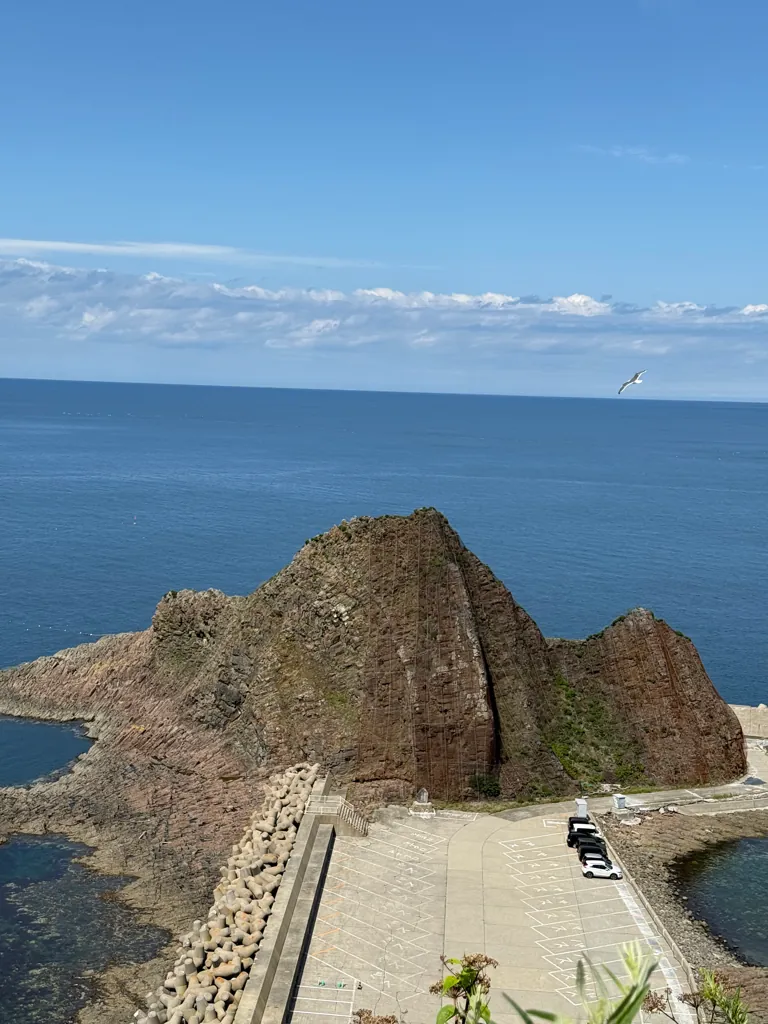
- Oronko Rock (オロンコ岩): a 60 m rock beside Utoro harbor. More than 200 steep steps lead up to views of the Okhotsk and the Shiretoko range54.
- Puyuni Cape (プユニ岬) on the hill road toward the Nature Center: known for sunsets, and one of the first places where the drift ice can be seen each winter58.
- Yūhidai (夕陽台) for sunsets, about 1 km from the Utoro bus terminal59.
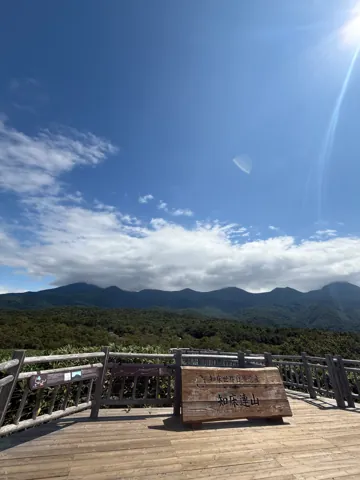
- Shiretoko Pass (知床峠, 738 m): at the top of the Utoro–Rausu road. It looks out on Mt. Rausu and, on clear days, Kunashiri Island. Open late April to early November. The tourism association counts it among Shari's Eight Views, but the summit car park has a Rausu address (Yunosawa-chō)60.
- Ikushina Natural Flower Garden (以久科原生花園) on the Okhotsk shore: Japanese rose and Ezo lilies from late June to late July, and drift ice close up in February and March61.
- Road to Heaven (天に続く道) at Minehama. A parking area for 8 cars and a small viewing deck opened in 2018; both are closed in winter22.
Onsen
- Utoro Onsen (ウトロ温泉): hotels and minshuku along the shore and on the hill above it. Some have baths where you can watch the sun set15.
- Yūhidai no Yu (夕陽台の湯): a public bath on the cliff above Utoro harbor, near the national campground, with open-air baths facing the sunset. Open 1 June – 31 October, 14:00–20:00; ¥50062.
- Iwaobetsu Onsen (岩尾別温泉): the single inn "Chi-no-Hate" (地の涯) at the Rausu-dake trailhead, open from mid-April to early November15.
- Kamuiwakka hot falls (see the table above)28.
Museums & heritage
- Shiretoko Museum (Honmachi 49-2): the town's history and nature. Its outdoor area has an alpine garden and cares for injured eagles and deer. It is about 15 minutes' walk from JR Shiretoko-Shari Station. Closed Mondays52.
- Shiretoko World Heritage Conservation Center (知床世界遺産センター), next to Michi-no-Eki Utoro. It has life-size photos of brown bears and deer and explains the park rules. Summer hours 8:30–17:3063.
- Shiretoko Nature Center (知床自然センター), Onnebetsu-mura 531. Free entry. It has trail and bear information, a 12 m × 20 m screen showing "Shiretoko no Bōken" (¥600), a THE NORTH FACE / HELLY HANSEN shop and a café. Parking for 182 cars64.
- Kita no Alp Museum, Asahimachi 11-2. Closed from late December to about the end of February53.
- Tsugaru samurai sites in the Town Park (Honmachi), and the Koshikawa Bridge (越川橋梁) of the never-finished Konpoku Line29.
Outdoor & seasonal activities
-
Sightseeing cruises from Utoro. There are three main courses:
- Kamuiwakka Falls, about 1 hour round trip.
- Brown-bear watching toward Rusha Bay, about 2 hours.
- Cape Shiretoko, about 3 hours. Nobody may land at the cape.
Operators name the courses slightly differently15.
-
Climbing Mt. Rausu from Iwaobetsu. Mt. Shiretoko-Iōzan is climbed from the Kamuiwakka area3328.
-
Unabetsu Ski Area (ウナベツスキー場), Minehama 110. It has three runs, night skiing and views of the drift ice. Early January to mid-March; a day pass for adults is ¥3,20065.
-
Drift-ice walks and the winter Five Lakes tour (see the festival table)2145.
Food experiences
Roadside stations (Michi-no-Eki)
Utoro-Shirietoku (道の駅うとろ・シリエトク)
- Location:
- Address: Utoro-nishi 186-8, on National Route 334 in the Utoro Onsen district14. It sits right next to the Shiretoko World Heritage Conservation Center63, and the Utoro Onsen Bus Terminal is a 5-minute walk away14.
- Mapcode 894 824 850. Tel. 0152-22-500014.
- Route 334 over Shiretoko Pass to Rausu is closed in winter (November to April)14.
- Hours:
- Shops & products:
- The building is modeled on a fishermen's work hut (番屋)66.
- Utopia Shiretoko (ユートピア知床) sells foods made in its own factory, such as Ezo deer jerky and salmon rolled with kelp (知床鮭重ね巻), plus lingonberry tart cakes, cream dorayaki sold only in Utoro, Shiretoko Bakushu and Toko-san goods14.
- "Gokkoya" (ごっこや) is the Utoro fishery cooperative's own shop, selling fresh local fish from spring to autumn and seafood snacks14.
- Ship stamps (御船印) are sold here; the station announced them in April 202514.
- Food:
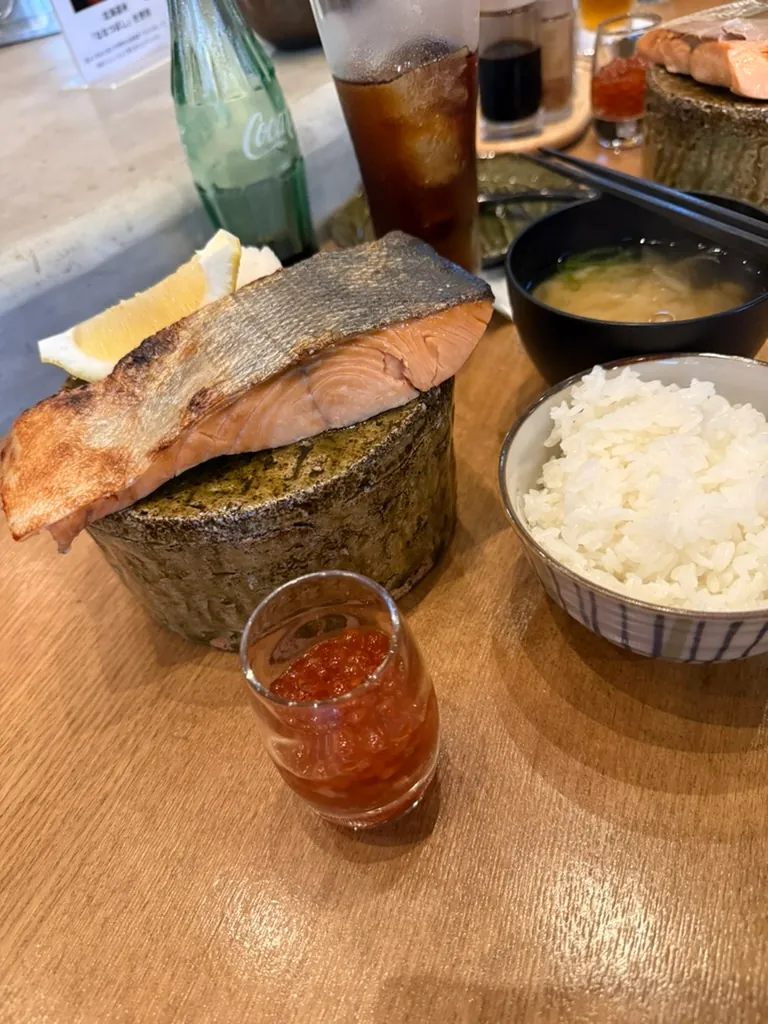
- The restaurant serves seafood bowls. The salmon-and-roe oyako-don uses whatever salmon is in season: tokishirazu in spring, pink salmon in summer, silver salmon in autumn. The sanshoku-don adds Okhotsk scallops. There is also a venison sauce-katsu bowl14.
- The takeout corner has lingonberry (こけもも) soft-serve and a venison burger in buns of Shari-grown Haruyokoi wheat, sold only in Utoro14.
- Facilities:
- Parking: 87 cars, 12 large vehicles and 2 covered accessible spaces1466.
- Toilets with bidet seats, accessible toilets (ostomate-ready), a nursing room (open during opening hours) and a baby-changing table14.
- Wi-Fi and a tourist information desk that gives road and boat information and books rooms14.
- A 10-minute high-definition film of the Shiretoko seasons on a 65-inch screen, and nature panels with English text14.
- Coin lockers at the west entrance, usable 24 hours (¥300 and ¥400), and a phone-charging station (¥200 for 30 minutes)14.
- The official listing does not mention 24-hour toilets or EV charging.
- Notes:
Shari (道の駅しゃり)
- Location:
- Hours:
- Shops & products:
- Shiretoko Sustainable Station COBAKO Shari opened on 30 July 2024. The Shiretoko Shari Association runs it as a shop and meeting place, selling Toko-san goods and local crafts. Its shelves, tables and chairs are boxes made from Shari-grown Sakhalin fir6744.
- The shop next door, Shari Kōbō Shiretoko-ya (斜里工房しれとこ屋), sells fresh Shiretoko seafood and souvenirs67.
- Food:
- COBAKO serves an original blend coffee and juices made from Shari farm produce44.
- The restaurant next to the station closed in April 2021, and the official site's food section is still "in preparation"67.
- The station also holds events such as a bread fair and the summer "Night Beer Week in Shari"13.
- Facilities:
- Parking for 19 cars, 2 large vehicles and 2 accessible spaces, plus a 30-car overflow lot32. The second car park moved in May 202667.
- Toilets with bidet seats, an accessible toilet (ostomate-ready) and a baby-changing table6732.
- Free Wi-Fi and a town information corner with a large screen and touch panels6732.
- A community room, a street piano (since 2021) and a real Neputa float on display6732.
- The official listing does not mention 24-hour toilets or EV charging.
- Notes: Registered on 1 March 2007 as Hokkaido No. 100, on the same day as Utoro. Stamps can be pressed during opening hours6768.
Nearby stations in other towns:
Getting there & around
- By air. The nearest airport is Memanbetsu (女満別空港), about 60 minutes by car to Shari via National Route 244. Flights take about 40 minutes from New Chitose and about 1 hour 30 minutes from Tokyo Haneda69. The seasonal Shiretoko Airport Liner (知床エアポートライナー) runs straight from the airport via Abashiri and Shari to Utoro. It runs June to September and late January to early March; in winter 2026 it ran 17 January – 8 March70. The tourism association also shows a route from Kushiro Airport via JR Kushiro Station71.
- By rail. The JR Senmō Main Line (釧網本線) stops at Shiretoko-Shari (知床斜里駅; called Shari until 1998) and Naka-Shari. Minami-Shari station closed on 13 March 202198. Trains run west to Abashiri and south to Kushiro.
- By bus.
- Shari Bus (斜里バス) runs the Shiretoko Line. In summer it goes Shari – Utoro – Five Lakes – Rausu; in winter, Shari – Utoro – Nature Center.
- It also runs a line to Abashiri, the town loop bus "Sharigur" (しゃりぐる), and guided sightseeing buses, the "Shiretoko Roman Fureai-gō" (知床浪漫ふれあい号) A/B/C courses, from 28 April to 31 October7273.
- From Sapporo, the reservation-only overnight "Eagle Liner" (イーグルライナー) leaves at 23:15. It reaches Shari Bus Terminal at 5:45 and Utoro Onsen at 6:30. Fares are ¥7,800 to Shari and ¥8,900 to Utoro74. By car, Sapporo to Shari is roughly a 6-hour drive (unverified).
- By road.
- Getting around the peninsula. Private cars are banned on the Kamuiwakka road during peak weeks, when shuttle buses run instead; in 2026 the ban ran 8–15 August28. Winter access to the Five Lakes is only by guided tour55.
Practical tips
- When to go.
- For drift ice, come from late January to March21.
- The Five Lakes, the Shiretoko Pass road and the cruises run from late April to early November5560.
- In July and August it can be cool and foggy. When the weather turns, the temperature can fall below 10 °C even in summer, so bring a long-sleeved layer15.
- Good times to plan around: Neputa (July), the Mt. Rausu opening (July) and the Industry Festival (late September)233346.
- Brown bears. Shiretoko is one of the world's leading brown-bear habitats13.
- Never feed bears or other wildlife. Since 1 April 2022, approaching, following or feeding bears in the special zones of national and quasi-national parks has been against the law15.
- Check bear sightings before walking. The Five Lakes site and the Nature Center post live updates, and the Nature Center has opened a reservation site for bear spray1848.
- Farm fields. Do not walk into fields or pastures, even for a photo of the Road to Heaven. Soil on shoes can spread crop diseases such as nematodes. Under the winter snow there is often autumn-sown wheat15.
- Winter driving. Roads freeze into polished ice. Wear boots with deep treads, and wear sunglasses against the snow glare15. The Road to Heaven can be closed after heavy snow22.
- Boat safety. After the 2022 KAZU I disaster, the small cruise operators agreed that no boat sails alone and that sailing decisions are made jointly. They also added flooding alarms931.
- Visitor information.
Photos
-
 Aug 2025
 -
 Aug 2025
 -
 Aug 2025
 -
 Aug 2025
 -
 Aug 2025
 -
 Aug 2025
 -
 Aug 2026
 -
 Aug 2026
More about Shari
At a glance
| Field | Details |
|---|---|
| Type | Town (町) |
| Subprefecture | Okhotsk (オホーツク総合振興局) |
| District | Shari District (斜里郡), together with Kiyosato and Koshimizu |
| Population | 11,418 (2020 Census; 5,672 male, 5,746 female; 5,349 households). That is 6.6% fewer than the 12,231 counted in 20152. The preliminary 2025 Census counted 10,717 (down another 6.1%) in 5,419 households3. Resident register: 10,214 (5,070 male, 5,144 female; 5,484 households) at the end of August 20264 |
| Area | 737.13 km²52. English Wikipedia's infobox still shows an older figure of 736.97 km²6 |
| Density | 15.5 people/km² (2020 Census)2. About 13.9/km² using the August 2026 register figure (calculated) |
| Municipal history | A joint village office (戸長役場) for the area's five villages opened in 1879, and the town counts that as its founding (開基)7. The villages, given Ainu-derived names in 1872, merged into Shari Village in 1915. Koshimizu split off in 1919. Town status came on 1 January 1939. Kami-Shari (today's Kiyosato) split off in 19438. Heisei-era merger talks with neighboring towns came to nothing9 |
| Neighboring municipalities | Koshimizu and Kiyosato (Okhotsk); Shibetsu and Rausu (Nemuro)9. Shari and Rausu share the Shiretoko Peninsula1 |
| Symbols | Flower: Japanese rose (ハマナス), chosen 23 Oct 1968. Tree: Mongolian oak (ミズナラ) and bird: white-tailed eagle (オジロワシ), both chosen 21 Dec 199410. Town sport: volleyball (1968)11. The emblem (24 Sep 1958) shows a bird taking off, built from the katakana シャリ and a circle for peace12 |
| Mascot | Shiretoko Toko-san (知床トコさん), a brown-bear character and the "symbol character" of Shiretoko and Shari. Its trademark and goods are handled by the Shiretoko Shari Association (一般社団法人知床しゃり), founded in July 20191314 |
| Official website | https://www.town.shari.hokkaido.jp/ (tourism association: https://www.shiretoko.asia/) |
Name origin
- Shari (斜里): from the Ainu sar, "a marsh where reeds grow". The name originally referred to this whole area. The Shari River itself was sar-un-pet, "the river in the reed marsh", and reeds are said to grow thickly on both banks near its mouth24. The town gives the same meaning, from saru or sharu, "a place where reeds grow"8. There is another famous sar, the Saru River (沙流) in Hidaka, so Shari was sometimes called pinne-sar ("male sar") and the Hidaka one matne-sar ("female sar")24. Japanese Wikipedia, citing the place-name scholar Yamada Hidezō, adds that old stories from southern Hokkaido call this place mosir-pa-sar, "the sar at the upper end of the island"9.
- Shiretoko (知床): sir-etok, "the tip of the land", in other words a cape. From the Shari coast you can clearly see the peninsula running out past the ridges of Mt. Rausu and Mt. Shiretoko24.
- Utoro (ウトロ, formerly 宇登呂) has two readings. Chiri Mashiho read it as uturu-ci-kus-i, "the place where we pass between (the rocks)", meaning the narrow path between Godzilla Rock and a large pot-shaped rock near the harbor. Matsuura Takeshirō read it as "where boats pass between rocks". The Hokkaido list prefers Chiri's reading25.
- Other place names in the town:
- Shuen (朱円): from suma-tukari-pet, "the river on this side of the stones". The coast is sand on the Shari side of this river and stones beyond it. The name changed from Shumatokari to the kanji 朱円, which later came to be read "Shuen"24.
- Onnebetsu (遠音別): onne-pet, "big river"26.
- Unabetsu (海別): una-pet, "ash river", said to be named for an eruption that choked the river with ash25.
- Iwaobetsu (岩尾別): iwaw-pet, "sulfur river"25.
- Rusha (ルシャ): ru-e-san-i, "where the path comes down to the shore". This was an old route across the lowest part of the peninsula to the Rausu side27.
- Kamuiwakka: "water of the gods"28.
- Puyuni Cape: "the place with a hole"14.
History
- Prehistory. People have lived here for about 30,000 years. The earliest stone tools, from before pottery, are of a northern Asian type8.
- The Shari Shuen stone circle (斜里朱円周堤墓) is a Late Jōmon burial ground. The Shuen pit-dwelling sites (朱円竪穴住居群) span the Jōmon to Satsumon and Okhotsk periods. Both are protected sites29.
- Between the 8th and 12th centuries, seafaring people of the Okhotsk culture moved east along this coast toward the Kurils and left many sites in Shari8.
- The Chashikotsu Misaki-jō site (チャシコツ岬上遺跡) near Utoro dates from the end of the Okhotsk culture. It became a national historic site in 2019829.
- Trading-post era.
- A Matsumae retainer reached Shari in 16358.
- In 1789 the Ainu of Shari asked the Matsumae domain to send official trading ships. In 1790 the Shari trading post (斜里場所) was split off from the Sōya post8.
- Shari Shrine's old prayer hall dates from 179629.
- From 1815 the merchant Fujino Kihei (藤野喜兵衛) ran the Sōya and Shari posts on his own8.
- The 1807 Tsugaru tragedy. Russian ships raided Sakhalin and the Kurils, and the shogunate took direct control of Ezo. It sent more than 100 soldiers of the Tsugaru domain to guard Shari, with the explorer Mogami Tokunai (最上徳内) in command. They arrived after a 12-day march overland. They had no experience of wintering in the cold and too little bedding and food. From mid-November most fell ill with edema (水腫病), and 72 died over the winter823. The sites of their camp and graves are now town historic sites29.
- Meiji administration and first farmers.
- The explorer Matsuura Takeshirō passed through Shari to the tip of the peninsula in 18468.
- The area became Shari District of Kitami Province in 18698.
- In 1872 five villages were named: Shari, Shimatokari, Onnebetsu, Yanbetsu and Aoshimai. They were given kanji names in 18758.
- In 1877 Suzuki Yōta (鈴木養太) began farming at Akagami. The town honors him as the pioneer of Shari farming8.
- Early industry centered on salmon and sulfur. A salmon hatchery opened on the Sarapa River in 1899, and a shared salmon and trout cannery opened in 1903. Steamships came to load sulfur from Shiretoko, and Mt. Iō (Shiretoko-Iōzan) erupted violently in 18808.
- Group settlement. In 1913 the Mitsui Farm (三井農場) brought settlers from prefectures elsewhere in Japan to clear 3,000 chōbu of wild land, and in 1914 the number of farm settlers jumped8. The settlement of Horobetsu and Iwaobetsu on the peninsula also began in 19149. The sources consulted do not say which prefectures the settlers came from.
- Village to town.
- The five villages merged into Shari Village in 1915, and Koshimizu split off in 19198.
- The Senmō railway reached Shari from Abashiri in 1925 and was completed through to Kushiro in 1931. Sugar beet farming started in 19258.
- In 1936 teams from Japan and Britain came to watch a total solar eclipse8.
- Shari became a town on 1 January 1939. Kami-Shari split off in 19438.
- War and postwar fishing.
- On 22 June 1945 the US submarine Barb fired rockets at the town9. English Wikipedia calls this the first submarine-based rocket attack against a surface target6.
- Fishing-ground development began in 1947 and Utoro harbor in 1949. Salmon set-net fishing then grew into the town's main industry8.
- The Konpoku Line (根北線) to Koshikawa ran only from 1957 to 1970. Its Koshikawa Bridge (built 1940), which trains never crossed, is now a registered tangible cultural property82930.
- The "Shiretoko boom." Tourism took off in stages:
- Conservation. Many settler farms on the peninsula failed and were abandoned, and developers began buying up the land. In 1977 the town started the 100 m² Movement, selling shares at ¥8,000 each to buy back 860 ha9. It reached its goal in 1997 and was followed by a "Forest Trust" to restore the forest8. By March 2025 it had drawn 73,842 donations worth ¥1.04 billion and protected 862.7 ha7.
- Twin ties. The town made Taketomi, Okinawa, its sister town in 1973 and put up a memorial to the Tsugaru samurai the same year. Hot water was also struck at Utoro in 1973. It signed a friendship pact with Hirosaki in 1983 and held the first Neputa festival that year8.
- 2000s.
- Talks on a Heisei-era merger failed. In October 2004 the town passed a "Declaration to Protect and Nurture Shiretoko" (知床を守り育てるまち宣言) after a quarrel over a neighboring town's plan to put "Shiretoko" in a new city name9.
- World Heritage inscription came in 20058.
- Both Michi-no-Eki opened in 2007, and the Shari Brand scheme began in 20098.
- Recent events.
- In 2019 Chashikotsu became a national historic site. In 2020 "Shiretoko" license plates arrived. In 2021 Shari was designated a depopulating area (過疎地域). In 2022 it declared itself a zero-carbon city8.
- On 23 April 2022 the tour boat KAZU I sank off the peninsula's west coast. All 26 people aboard died; six of them were never found and were legally declared dead31.
- Neputa returned in 2023 after four years off during COVID-19. The national park turned 60 and was registered as a Zero-Carbon Park in 2024, and 2025 marked 20 years of World Heritage8.
Geography & climate
-
Shape and setting. Shari is the easternmost municipality of the Okhotsk region. It has more than 100 km of Okhotsk coastline to the north and the Shiretoko mountains to the southeast, which give it a bow-like triangular shape1. It shares the Shiretoko Peninsula, about 25 km wide and 65 km long, with Rausu9. Utoro is about 40 km from the town center32, and the Five Lakes are about 20 minutes' drive beyond it1.
-
Mountains. The Shiretoko range includes:
- Mt. Rausu (羅臼岳), the highest at 1,660 m. The Geospatial Information Authority revised its height down from 1,661 m on 1 April 202533.
- Shiretoko-Iōzan (知床硫黄山), 1,562 m.
- Mt. Unabetsu (海別岳), 1,419 m.
- Mt. Onnebetsu (遠音別岳), 1,330 m.
- Mt. Shiretoko (知床岳), 1,254 m.
Mt. Shari (斜里岳, 1,547 m) rises to the south7.
-
Rivers and lowlands. The Shari River and its branches drain a fertile plain between the foothills of Mt. Shari and Mt. Unabetsu9. Forest covers about 57,035 ha, most of it national forest (49,799 ha)7. Of the land, 578.42 km² is recorded as forest and 114.07 km² as farmland7.
-
Protected areas.
- Shiretoko National Park (designated 1 June 1964) covers 38,954 ha of land in Shari and Rausu34. 23,011 ha of it lies in Shari7.
- In Shari there are also 491 ha of Abashiri Quasi-National Park, 915 ha of Shari-dake Prefectural Natural Park (1980), the 1,045 ha Onnebetsu-dake Wilderness Area (1980) and the Ikushina coastal conservation area (125 ha)7.
-
Climate. The Shari weather station (JMA normals, 1991–2020) records an annual mean of 6.2 °C.
- February averages −7.0 °C and August 19.3 °C.
- Precipitation is only 802 mm a year and snowfall 524 cm35.
- Extremes: 37.1 °C on 26 August 2023 and −31.6 °C on 17 February 1978. The deepest snow was 155 cm, on 13 March 199036.
- Utoro, on the peninsula, is wetter and snowier: 1,202 mm of precipitation and 635 cm of snowfall a year, with an annual mean of 6.4 °C37.
- Snow melts late. Until mid-June, föhn winds from the southeast can blow hard across the fields1.
Economy & industry
-
Three pillars. The town lists farming, fishing and tourism as its core industries, with food processing tied closely to the first two1. At the 2020 Census, 22.6% of workers were in primary industry, 16.6% in secondary and 60.8% in tertiary7.
-
Fisheries. Salmon set nets dominate the catch.
Year Salmon Trout Total catch 2021 5,047 t (¥4.45 billion) 149 t 7,520 t (¥5.37 billion) 2024 14,406 t (¥14.77 billion) 74 t 17,315 t (¥16.07 billion) The catch has swung widely in recent years17. Besides salmon and trout, the main catches are Okhotsk atka mackerel (hokke), octopus and thornyhead (kichiji). In 2023 there were 53 fishing businesses employing 379 people717. The Utoro fishing harbor section completed in 2016 is a rare two-level port. Visitors can watch salmon being landed from its upper deck38.
-
Farming. The farming is large-scale upland cropping: potatoes, sugar beet and wheat, plus carrots and onions, on 9,647 ha7.
-
Manufacturing. 23 plants with four or more workers employed 533 people and shipped goods worth ¥41.85 billion in 202440. Food processing tied to farming and fishing is a large part of it1.
-
Tourism.
- Visitors reached 1,001,914 in 2025, back above one million after falling to 553,091 in 2021. Of these, 726,586 came from outside Hokkaido and 372,152 stayed overnight40.
- Visitor spending was about ¥10.1 billion in fiscal 20247.
- Utoro has 19 places to stay with room for 4,175 guests. The town center has 10 with room for 4637.
-
Population and revitalization.
- In the 2020 Census, 33.6% of residents were 65 or older7. In fiscal 2024 there were 38 births and 167 deaths, and 74 more people moved out than in7. The national government designated Shari a depopulating area in 20218.
- The town's responses include:
- the "Shiretoko Shari Brand" (知床しゃりブランド) certification for food made in Shari from local ingredients41
- a furusato nozei program with a local gift voucher, "Shiretoko Tabipon" (知床たびポン)30
- a 2021 partnership with the outdoor company Goldwin8
- the 2022 Zero-Carbon City declaration, and the national park's registration as a Zero-Carbon Park in 20248
Local specialties
| Specialty | Category | Details & where to get it |
|---|---|---|
| Autumn salmon (秋鮭, locally akiaji) and salmon roe (いくら) | Seafood | The town's signature catch. Salted and soy-marinated ikura and boneless salmon fillets are the top furusato nozei gifts16. Local makers also sell ikura in soy (いくら醤油漬, Shari Brand No. 5) and salmon tataki made from top-grade fish (鮭タタキ, No. 25)42 |
| Keiji (鮭児) | Seafood | A "phantom salmon", said to turn up only once in about 10,000 fish. The tourism association recommends it along with aramaki and yamazuke salted salmon and ruibe (frozen salmon sashimi)15 |
| Kinki and cherry salmon in miso (きんき味噌漬, さくらます味噌漬) | Seafood | Pickled by Yoshino (合資会社吉野), Shari Brand Nos. 23 and 22; the kinki goes into the miso fresh, without freezing. The same maker's Nos. 20 and 21 are halibut (銀がれい) in miso and air-dried kinki. The maker says cherry salmon is the fish Shari people like best42 |
| Hokke (ホッケ) | Seafood | Usually sold split and dried. A classic Shiretoko souvenir15 |
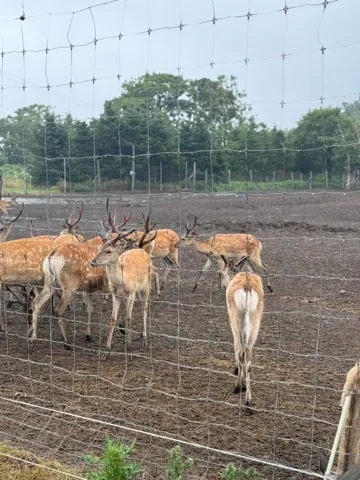
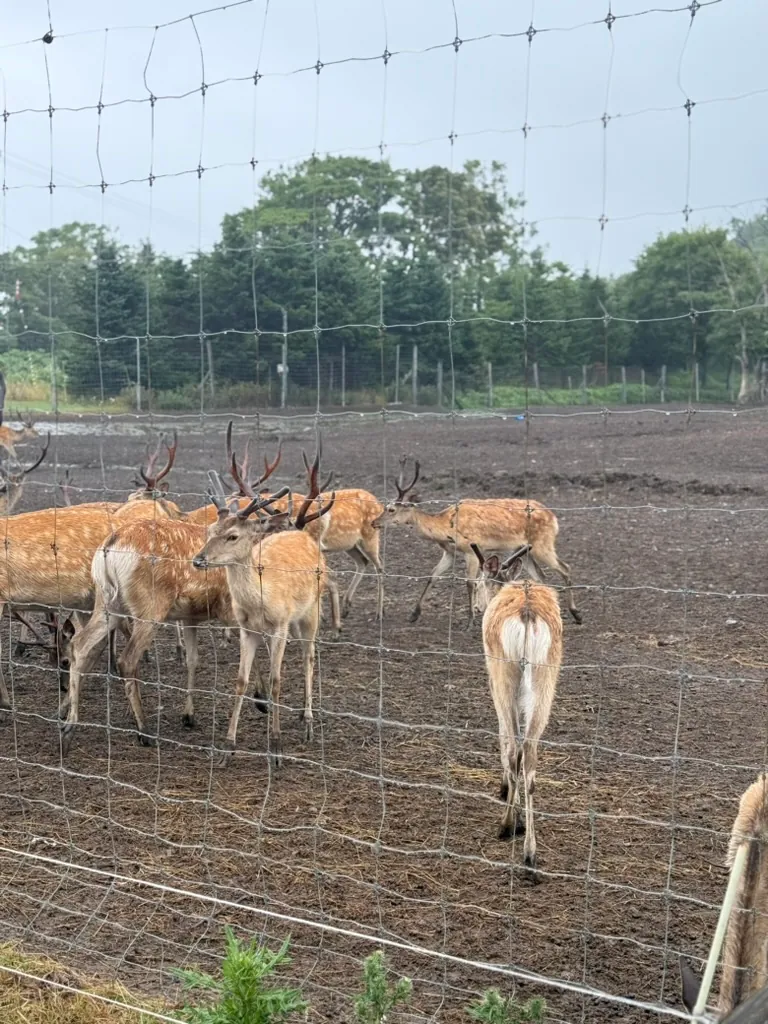
| Ezo deer products (エゾシカ) | Game | Deer jerky (Shari Brand No. 2) from deer culled to keep numbers down, and venison yamato-ni stew (No. 18)42. There is also a venison burger and a venison sauce-katsu bowl at Michi-no-Eki Utoro14 |
| Shiretoko wheat (春よ恋, きたほなみ) | Crop and processed food | "Koharu" (こはる) fresh noodles from 100% Shari Haruyokoi wheat and "Shiretoko Gyoza" (知床の餃子), both from JA Shiretoko Shari. "Shiretoko Chepu-man" (知床チェプ饅), buns filled with Utoro salmon cooked chanchan-yaki style42 |
| Sachiku Mugi-ō pork (サチク麦王) | Meat | Wheat-fed pork from Sasaki Shuchiku Farm (佐々木種畜牧場), Shari Brand No. 2842 |
| Shiretoko Bakushu (しれとこ麦酒) | Craft beer | Launched in October 2021 and sold only in Shari. It is made partly with wheat from JA Shiretoko Shari farmers. Available at Michi-no-Eki Utoro14 |
| Awamori "Raiun no Izumi" (来運の泉) | Spirits | An awamori (the Okinawan spirit; Shari's sister town is in Okinawa) whose name means "Raiun Spring". The town's timeline records it being made and sold in 2008 and again in 20138 |
| Carrot juice and red-shiso drink | Drinks | JA's carrot juice uses only Shari carrots and lemon (No. 15). "Re・Life" is a juice from organically grown Shari red shiso (No. 1, Plaisir)42 |
| Kokemomo (こけもも) sweets | Sweets and soft-serve | Lingonberry soft-serve, bite-size lingonberry tart cakes, and lingonberry or Japanese-rose cream dorayaki sold only in Utoro14. "Shiretoko no Kuma-san" (知床のクマさん), bear-shaped baked sweets of Shari Kitahonami flour from the confectioner Mont Blanc (モンブラン)42 |
| Raiun spring water (来運の水) | Water | Spring water from the Raiun district, said to come from snow on Mt. Shari that has filtered through the ground for decades. It flows out at about 5 t a minute at around 6 °C. The district's name, "fortune comes", draws people who come to fill bottles43 |
| Toko-san goods (知床トコさんグッズ) | Souvenirs | Tumblers, T-shirts and towels with the bear character. The official shops are at Michi-no-Eki Utoro and COBAKO in Michi-no-Eki Shari1444 |
Furusato nozei. Gifts are dominated by salmon and ikura. The town also runs "Shiretoko Tabipon" (知床たびポン), a pay-on-the-spot furusato nozei voucher for visitors, and has used crowdfunding to save the Koshikawa Bridge and to repair a handmade fish ladder3016.
Culture & festivals
| Event | When | Highlights |
|---|---|---|
| Drift-ice walk (知床流氷ウォーク) | Late January to about March, depending on the ice | Guided walks on the sea ice in special suits. The ice is dangerous without a guide and proper suit21 |
| Midwinter Five Lakes eco-tour (厳冬期の知床五湖エコツアー) | 22 Jan – 22 Mar 2026 | The only way into the lakes in winter. Groups of up to 10 go on snowshoes or cross-country skis, with at most 150 people a day. From ¥6,500, including a ¥1,500 conservation fee45 |
| Mt. Rausu opening (羅臼岳山開き) | First Sunday of July, 6:00 | A safety prayer at the Iwaobetsu trailhead to open the climbing season on the peninsula's highest peak33 |
| Shiretoko Shari Neputa (しれとこ斜里ねぷた) | Two days in mid to late July (18–19 July in 2025) | About 15 fan-shaped floats, the tallest 8 m, parade 2.5 km along the main street. The "Shiretoko Summer Festival" and a neputa music festival run alongside23 |
| Kamuiwakka hot-falls climbing season (カムイワッカ湯ノ滝のぼり) | 1 Jul – 30 Sep 2026; private cars barred and shuttle buses only 8–15 Aug | Climb up a warm river to the "4th fall", where the water reaches 35–38 °C. Booking required28 |
| Shiretoko Industry Festival (しれとこ産業まつり) | Last Sunday of September (the 47th is on 27 Sep 2026) | The town's biggest autumn festival, at a special site by Yume Hall Shiretoko. Local seafood and farm produce, Hirosaki apples, stage shows and free chanchan-yaki4647 |
| Shiretoko Sustainable Fes (知床サスティナブルフェス) | 10–11 Oct 2026 | An event about sustainability held inside the national park48, at the Shiretoko Nature Center and around it. It is run by a committee of the town, the Shiretoko Nature Foundation and the Shiretoko Shari Association; entry is free49 |
- Neputa and the Tsugaru link. In 1973 residents put up a memorial to the Tsugaru soldiers and began holding a yearly memorial service. That led to the friendship pact with Hirosaki in 1983, and Hirosaki's neputa were brought to Shari the same July. The first parade had just two fan floats23. About 20 floats are kept at the museum's exchange hall50.
- Shrines and temples. Shari Shrine (斜里神社): its old prayer hall (1796) and stone lanterns (1834) are town cultural properties. Zenryū-ji (禅龍寺, Sōtō Zen) keeps the death register of the Tsugaru soldiers from 1807. There are memorial stones to them (1812) in the Town Park and at Nisshō-ji (日照寺)29.
- Museums.
- The Shiretoko Museum (知床博物館) opened on 28 December 1978 for the town's centenary. The Sister Town and Friendship City Exchange Hall was added in 199351. Admission ¥300, free for primary and junior-high pupils, open 9:00–17:0052.
- The Kita no Alp Museum (北のアルプ美術館) keeps every issue of the mountain literary magazine Alp, which ended in 1983, together with its original manuscripts and prints53.
- On screen. Films shot in Shari include the Tora-san film Otoko wa Tsurai yo: Shiretoko Bojō and the Chinese hit If You Are the One (非誠勿擾)9.
Ainu heritage
- Early Ainu period. The town's own history says that in the early Ainu period the area was ruled by no outside power and traded with the mainland of Asia through Sōya and Sakhalin. The Shari trading post itself was opened in 1790, after the local Ainu asked for official trade in 17898. The Chashikotsu Misaki-jō site, on top of Chashikotsu Cape near Utoro and dating from the last years of the Okhotsk culture, is now a national historic site829.
- Place names and legends. Almost every place name on the peninsula is Ainu, from Shiretoko itself (sir-etok) to Utoro, Rusha and Iwaobetsu (see Name origin). According to an Ainu legend, the Five Lakes were made where a god pressed his fingers into the ground14. Seen from the cruise boats:
- Kunneporu (クンネポール) means "black cave".
- Kashuni Falls (カシュニの滝) means "place with a hut". Ainu travelling from Utoro to the cape are said to have stopped there for the night15.
- Museum displays. The Shiretoko Museum's history floor runs through the Jōmon, Epi-Jōmon, Okhotsk, Tobinitai and Satsumon cultures and the Ainu period, and then early-modern Shari50. The English guide lists the sections "The land of God" and "The exploitation"51.
- Matsuura Takeshirō. The explorer, who named Hokkaido, made three trips to Shiretoko and described it in his Shiretoko Nisshi (知床日誌). A monument to him was put up at Utoro in 1988, the 100th anniversary of his death54.
- Present day. The sources consulted found no Ainu cultural center or regular Ainu cultural event in Shari. The Shiretoko Shari Association lists passing on "Ainu traditions" among the local culture it aims to hand down13.
Sister & friendship cities
- Taketomi (竹富町), Okinawa Prefecture — sister town, pact signed 10 January 1973. When Okinawa returned to Japan in 1972, Shari residents wanted to help the islands rebuild. The two towns also sit at opposite ends of Japan, and each has a national park: Iriomote in the southwest and Shiretoko in the northeast757.
- Hirosaki (弘前市), Aomori Prefecture — friendship city, pact signed 12 February 1983, renewed 15 November 2006 after Hirosaki merged with neighboring municipalities. The tie goes back to the Tsugaru domain soldiers who died in Shari in 1807. The story had been forgotten until the Shari local history society rediscovered it in 1968. The mayor of Hirosaki attended the 10th memorial service in Shari in 1982, and the pact followed the next year757.
Notable people
- Takebe Tsutomu (武部勤): politician and former member of the House of Representatives, born in Shari96.
- Takebe Arata (武部新): member of the House of Representatives9.
- Takeda Toyoki (武田豊樹): keirin cyclist and former speed skater. He placed 8th in the 500 m at the 2002 Salt Lake City Olympics98.
- Tatsuhikari Kumagorō (立洸熊五郎): former sumo wrestler96.
Sources
Numbers in the text link to these sources. Figures as of 23 September 2026
- 斜里町について — Shari Town JA accessed 2026-09-23
- 第1表 男女別人口、面積、人口密度及び世帯数(令和2年国勢調査結果 統計表) — Hokkaido Government, Statistics Division (北海道総合政策部計画局統計課) JA accessed 2026-09-23
- 令和7年国勢調査速報 北海道の人口・世帯数(要計表に基づく人口・世帯数の集計) — Hokkaido Government, Statistics Division JA accessed 2026-09-23
- 斜里町ホームページ(トップページ:町の人口と世帯数 2026年8月末現在) — Shari Town JA accessed 2026-09-23
- 令和8年全国都道府県市区町村別面積調(4月1日時点) — Geospatial Information Authority of Japan (国土地理院) JA accessed 2026-09-23
- Shari, Hokkaido — Wikipedia EN accessed 2026-09-23
- ポケット統計しゃり 令和7年度版(2025年) — Shari Town JA accessed 2026-09-23
- 町のあゆみ(斜里町年表) — Shari Town JA accessed 2026-09-23
- 斜里町 — Wikipedia JA accessed 2026-09-23
- 町の花・木・鳥 — Shari Town JA accessed 2026-09-23
- 町のスポーツ — Shari Town JA accessed 2026-09-23
- 町章 — Shari Town JA accessed 2026-09-23
- 一般社団法人知床しゃり|Shiretoko! Sustainable — Shiretoko Shari Association (一般社団法人知床しゃり) JA accessed 2026-09-23
- うとろ・シリエトク|道の駅を見る — 北海道の道の駅(北の道の駅) JA accessed 2026-09-23
- 旅の豆知識(知床の旅ガイド) — 知床斜里町観光協会 (Shiretoko Shari-cho Tourist Association) JA accessed 2026-09-23
- 北海道斜里町のふるさと納税(鮭特集を含む) — ふるさとチョイス (Furusato Choice) JA accessed 2026-09-23
- 漁業(分野別統計データ) — Shari Town JA accessed 2026-09-23
- 知床五湖 二つの歩き方 — 知床五湖(環境省 公式サイト) JA accessed 2026-09-23
- 地上遊歩道|知床五湖 — 知床五湖(環境省 公式サイト) JA accessed 2026-09-23
- オシンコシンの滝 — 知床斜里町観光協会 JA accessed 2026-09-23
- ドコココ?知床! 知床流氷ウォークと知床五湖エコツアー — Shari Town / 知床斜里町観光協会 JA accessed 2026-09-23
- 天に続く道 — 知床斜里町観光協会 JA accessed 2026-09-23
- しれとこ斜里ねぷた — 知床斜里町観光協会 JA accessed 2026-09-23
- アイヌ語地名リスト シベ~セツ P61-70(Internet Archive copy) — Hokkaido Government, Ainu Policy Promotion Office (北海道環境生活部アイヌ政策推進室) JA accessed 2026-09-23
- アイヌ語地名リスト イ~エ P11-20(Internet Archive copy) — Hokkaido Government, Ainu Policy Promotion Office JA accessed 2026-09-23
- アイヌ語地名リスト P31-40(Internet Archive copy) — Hokkaido Government, Ainu Policy Promotion Office JA accessed 2026-09-23
- アイヌ語地名リスト P141-145(Internet Archive copy) — Hokkaido Government, Ainu Policy Promotion Office JA accessed 2026-09-23
- カムイワッカ湯の滝(公式サイト) — Shari Town (斜里町) JA accessed 2026-09-23
- 指定文化財(分野別統計データ) — Shari Town JA accessed 2026-09-23
- 斜里町ふるさと納税 — Shari Town JA accessed 2026-09-23
- 知床遊覧船沈没事故 — Wikipedia JA accessed 2026-09-23
- 道の駅しゃり — 知床斜里町観光協会 JA accessed 2026-09-23
- 羅臼岳山開き — 知床斜里町観光協会 JA accessed 2026-09-23
- 概要・計画書|知床国立公園 — Ministry of the Environment (環境省) JA accessed 2026-09-23
- 斜里 平年値(年・月ごとの値) — Japan Meteorological Agency (気象庁) JA accessed 2026-09-23
- 斜里 観測史上1~10位の値(年間を通じての値) — Japan Meteorological Agency JA accessed 2026-09-23
- 宇登呂 平年値(年・月ごとの値) — Japan Meteorological Agency JA accessed 2026-09-23
- ウトロ鮭テラス — 知床斜里町観光協会 JA accessed 2026-09-23
- 農業(分野別統計データ) — Shari Town JA accessed 2026-09-23
- 商工業・観光(分野別統計データ) — Shari Town JA accessed 2026-09-23
- 知床しゃりブランド — Shari Town JA accessed 2026-09-23
- 知床しゃりブランド認証品一覧 — 知床しゃりブランド運営委員会 (Shiretoko Shari Brand Committee) JA accessed 2026-09-23
- 来運の水(来運公園) — 知床斜里町観光協会 JA accessed 2026-09-23
- 『Shiretoko Sustainable Station COBAKO Shari』 — Shiretoko Shari Association JA accessed 2026-09-23
- 厳冬期の知床五湖エコツアー — 知床斜里町観光協会 JA accessed 2026-09-23
- 第47回しれとこ産業まつり — Shari Town JA accessed 2026-09-23
- しれとこ産業まつり — 知床斜里町観光協会 JA accessed 2026-09-23
- 知床自然センター公式サイト — Shiretoko Nature Center (知床自然センター) JA accessed 2026-09-23
- 知床サスティナブルフェス | SHIRETOKO SUSTAINABLE FES — 知床サスティナブル実行委員会 (Shari Town, Shiretoko Nature Foundation, Shiretoko Shari Association) JA accessed 2026-09-23
- 常設展示(一覧) — 斜里町立知床博物館 (Shiretoko Museum) JA accessed 2026-09-23
- Welcome to SHIRETOKO MUSEUM — Shari Town Shiretoko Museum EN accessed 2026-09-23
- 知床博物館 — 知床斜里町観光協会 JA accessed 2026-09-23
- 北のアルプ美術館 — 知床斜里町観光協会 JA accessed 2026-09-23
- オロンコ岩 — 知床斜里町観光協会 JA accessed 2026-09-23
- 知床五湖 — 知床斜里町観光協会 JA accessed 2026-09-23
- Shiretoko Goko Lakes — Ministry of the Environment, Government of Japan EN accessed 2026-09-23
- フレペの滝 — 知床斜里町観光協会 JA accessed 2026-09-23
- プユニ岬 — 知床斜里町観光協会 JA accessed 2026-09-23
- 夕陽台 — 知床斜里町観光協会 JA accessed 2026-09-23
- 知床峠 — 知床斜里町観光協会 JA accessed 2026-09-23
- 以久科原生花園 — 知床斜里町観光協会 JA accessed 2026-09-23
- 夕陽台の湯 — Shari Town JA accessed 2026-09-23
- 知床世界遺産センター — 知床斜里町観光協会 JA accessed 2026-09-23
- 知床自然センター — 知床斜里町観光協会 JA accessed 2026-09-23
- ウナベツスキー場 — Shari Town JA accessed 2026-09-23
- 道の駅うとろ・シリエトク — Shari Town JA accessed 2026-09-23
- しゃり|道の駅を見る — 北海道の道の駅(北の道の駅) JA accessed 2026-09-23
- 道の駅一覧(住所等一覧) — 北海道の道の駅(北の道の駅) JA accessed 2026-09-23
- アクセス — Shari Town JA accessed 2026-09-23
- 知床エアポートライナー — Shari Bus (斜里バス) JA accessed 2026-09-23
- アクセス — 知床斜里町観光協会 JA accessed 2026-09-23
- 斜里バス株式会社 公式ホームページ — Shari Bus JA accessed 2026-09-23
- 【まとめ】斜里町の地域公共交通 — Shari Town JA accessed 2026-09-23
- イーグルライナー(札幌~斜里・ウトロ)時刻表・運賃 — Hokkaido Chuo Bus (北海道中央バス) JA accessed 2026-09-23
- 姉妹町・友好都市 — Shari Town JA accessed 2026-09-23