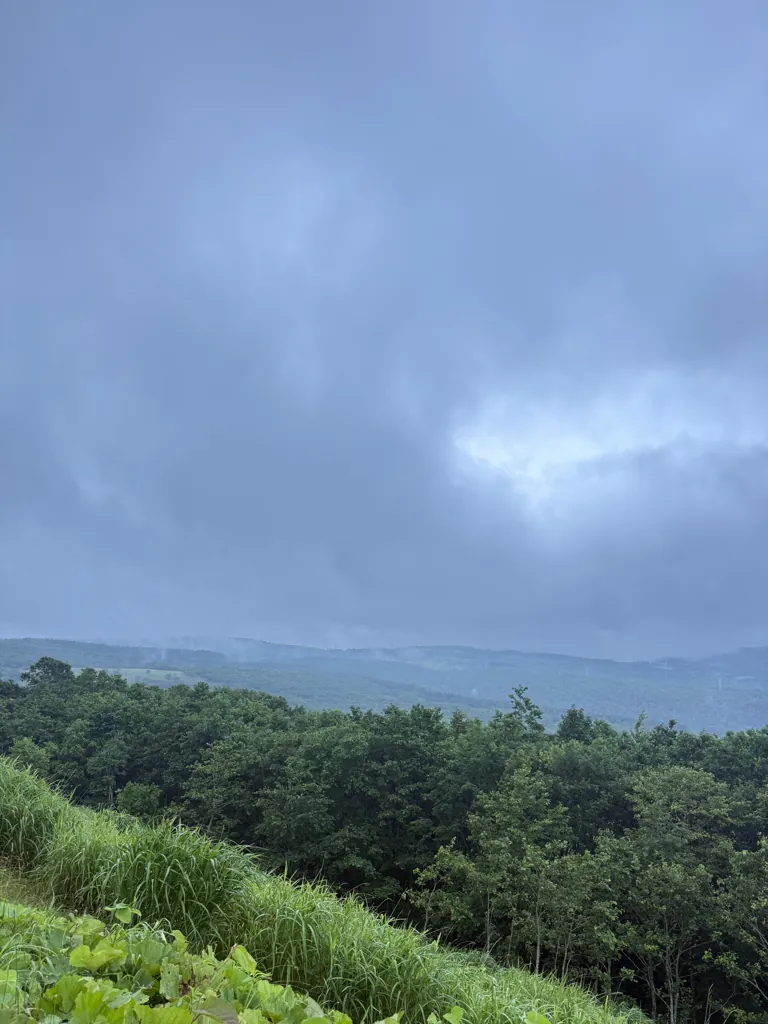
Town Iburi Subprefecture
Sobetsu 壮瞥町
そうべつちょう
A small farming and hot-spring town on the southeast shore of Lake Toya. Showa-shinzan, a mountain that pushed up out of a wheat field in 1943–45, is here, and the town shares active Mount Usu with its neighbors. Sobetsu invented competitive snowball fighting (Yukigassen) and has grown apples since 1886.
- Population (2020 Census)
- 2,743
- Area
- 205.01 km²
- District
- Usu District (有珠郡)
- Official website
- www.town.sobetsu.lg.jp
Known for
- Showa-shinzan (昭和新山): a 398 m volcano that rose out of farmland between December 1943 and September 1945. It has been a Special Natural Monument since 1957. The land still belongs privately to the Mimatsu family.910
- Mount Usu (有珠山) and the geopark: Mount Usu (733 m) is an active volcano shared with Toyako and Date. It has erupted nine times since 1663.1112 All of Sobetsu lies inside the Toya-Usu UNESCO Global Geopark (洞爺湖有珠山ジオパーク). The Iburi Subprefecture describes its August 2009 certification as Japan's first.6 The town notes that Itoigawa and the Shimabara Peninsula were certified at the same meeting, so the three share that distinction.13
- Birthplace of sports snowball fighting: the Showa-shinzan International Yukigassen (昭和新山国際雪合戦) started in 1989. Each February about 150 teams take part, and tournaments abroad now play by rules written in Sobetsu.1415 The tournament is listed as a Hokkaido Heritage (北海道遺産).16
- Fruit orchards: the town dates apple growing to 1886, while the tourism association says the first trees were planted around 1876.1718 The pick-your-own orchards of Sobetsu Kudamono-mura (そうべつくだもの村) are open from June to late October.12
- Lake Toya's east shore and its onsen: the Sobetsu, Bankei and Naka-Toya hot springs are in the town, and so is part of the Toyako Onsen resort area.71920
- Yokozuna Kitanoumi (北の湖): the 55th yokozuna came from Sobetsu. A memorial hall to him stands in the town center.421
- Geothermal farming: in 1976 the town started what it calls Japan's first project to grow vegetables with geothermal water. That work led to the greenhouse "Orofure tomato" (オロフレトマト).22
Sights & activities
Nature & scenery
- Showa-shinzan: smoke still rises from the dome.10 At its foot are the ropeway, the bear park, the Mimatsu museum, restaurants and souvenir shops. The Showa-shinzan Park Service Center (昭和新山パークサービスセンター) is a free rest stop with a diorama of the Lake Toya area.12
- Usu-zan Ropeway (有珠山ロープウェイ): a 6-minute ride from the Showa-shinzan base station to the summit station. It looks out over Showa-shinzan, Lake Toya and Mount Yōtei. Fares since April 2025 are ¥2,000 for adults and ¥1,000 for children. It runs about 8:15–17:45 from May to mid-September, with shorter hours in other seasons. Most years it stops for a while in January–February for inspection.46 From the summit station, the 1.1 km Usu South Outer Rim Trail (有珠山南外輪遊歩道) passes the crater to a rim viewpoint.12
- Sobetsu Park (壮瞥公園, Higashi-kohan): a hillside of plum trees in bloom in mid-May, with views of Lake Toya, Mount Usu, Showa-shinzan, and farther off Mount Yōtei and the Niseko range. It has only about 10 parking spaces, takes no large vehicles and gets very busy in May. The road in is closed from November to mid-April.44
- Sobetsu Falls: 2 minutes by car from the T-junction of Route 453 and Route 2 in the town center, then about 5 minutes on foot. The trail to the falls is closed until 31 May 2027 (planned).2412
- Orofure Pass: the Daikanbō (大観望) viewpoint on the old pass road looks over Lake Kuttara, the Pacific, Lake Toya and Mount Yōtei on clear days. The old road is closed for much of the year, roughly November to June.32
- Nakajima (中島): the island in the middle of the lake has walking trails through largely untouched forest, where you may see wild Ezo sika deer and giant Sakhalin spruce trees.12 The deer descend from three animals brought to the island as a tourist attraction between 1957 and 1966.31
- Shinzan-numa (新山沼) and its lookout park: a pond formed when the rising dome dammed the valley, with views of pyroclastic-flow deposits.12
Onsen
- Yū-ai no Ie (ゆーあいの家): 290-44 Takinomachi, near the Michi-no-Eki and next to the town park golf course. Open 10:00–21:00 and closed on the third Monday of each month (open if it is a holiday). Adults ¥500.471938
- Naka-Toya Onsen Kimundo no Ie (仲洞爺温泉 来夢人の家): a calcium-sulfate spring piped straight from the source, with no added water or recirculation. Open 10:00–20:30 from April to October and 10:00–19:00 from November to March, closed on Tuesdays. Adults ¥500. It has a barrier-free bath and a campground on site, and serves Kanazawa-style udon. Its log building, made from about 360 Finnish red pines, came out of the town's exchange with Kemijärvi.48
- Kubonai Fureai Center (久保内ふれあいセンター): 151-3 Minami-Kubonai, on Route 453. Open 10:00–20:30 and closed on Wednesdays. Adults ¥500.4719
- Bankei Onsen (蟠渓温泉): opened in 1884 in the Osaru River valley. The water is a salt-containing gypsum and hydrogen-sulfide spring. There are three small inns and one day-use bath, as well as a free riverbed bath, Osaru no Yu (オサルの湯), which has had ongoing problems with bathers' manners.25 The tourism association lists the inns Bankei Onsen Yunotoya (湯人家) and Bangakusō (蟠岳荘).19
- Toyako Onsen, Sobetsu side (字洞爺湖温泉): Toya Sun Palace Resort & Spa (洞爺サンパレス) offers day bathing, including its indoor water park, on weekends, holidays and school vacations, 10:00–15:00, for ¥2,000 per adult.20 The same list includes Lake Toya Tsuruga Resort Hikari no Uta (洞爺湖鶴雅リゾート「洸の謌」) and The Lake Suite Konosumika (ザ・レイクスイート湖の栖, opened August 2019).19
Museums & heritage
- Yokozuna Kitanoumi Memorial Hall and Sobetsu Local History Museum: 294-2 Takinomachi. Open 9:00–17:00 every day from April to November. From December to March it is closed except by advance booking. Admission ¥350 for adults and ¥150 for school children.47 The Michi-no-Eki website still gives the older ¥250 adult fee.38
- Mimatsu Masao Memorial Hall: 184-12 Showa-shinzan. Open 8:00–17:00 from April to October and 9:00–16:00 from November to March, with irregular closing days. Adults ¥300.45
- Volcano remains: the 1977 Volcanic Remains Park (76-17 Sobetsu Onsen)27 and the Showa-shinzan Railway Bridge Ruins Park.12
Outdoor & seasonal activities
- Showa-shinzan Bear Park (昭和新山熊牧場, 183 Showa-shinzan): see Ezo brown bears up close. Visitors can feed them cookies and watch from a "human cage" (人の檻). Cubs go on show from Golden Week. Adults ¥1,000, children aged 6 and over ¥500 (fees revised in April 2025). Open 8:30–17:00 from May to October, with shorter hours in other months.49
- Fruit picking: Kudamono-mura orchards, about 1 km from the Michi-no-Eki toward Otaki.5018
- Park golf: the IPGA-certified Sobetsu Town Park Golf Course (壮瞥町パークゴルフ場, 290 Takinomachi), next to a hot-spring bath. The tourism association lists two courses, 467 m (par 33) and 897 m (par 66),50 while the town lists 18 holes.47 It is open from early April to mid-November, 9:00–17:00 (last entry 16:00). A day ticket is ¥400.47
- Camping: Naka-Toya Campground (仲洞爺キャンプ場) on the lakeshore, Orofure Campground (オロフレキャンプ場) in the mountains, and the bungalows at Mori to Ki no Sato Center (森と木の里センター).19 Mori to Ki no Sato is open 1 May–31 October, with bungalows at ¥5,200–7,800 a night (non-resident rates).47 Its center building and Japanese-style room have closed.19
- On the lake: canoe and walking tours from Toya Guide Center (洞爺ガイドセンター), plus motorboats and swan boats from Toya Marine (洞爺マリン).50
- Winter: Orofure Ski Area (オロフレスキー場), a family-friendly hill about 20 minutes by car from the town center.50
Food experiences
- Sams café at the Michi-no-Eki: see below.36
- Resthouse Azusa (75-1 Sobetsu Onsen): Okutoya beef dishes and the "BIG" fried noodles. Open 11:00–20:00 and closed on Tuesdays except holidays. In winter it closes 15:30–17:00.41
- Farm cafés: Nōjō Tatsukamu Tamago Café (農場たつかーむ・たまごCafé) serves farm lunches with its own pesticide-free vegetables and free-range fertile eggs. Restaurant Oodera (レストランおおでら) near Showa-shinzan serves bowls of local Kuroge Wagyu beef. The tourism association's list includes some places that have closed, so check before going.42
Roadside stations (Michi-no-Eki)
Sobetsu Jōhōkan i (道の駅そうべつ情報館i)
- Location: 384-1 Takinomachi (字滝之町384-1), Sobetsu, Usu District, 052-0101. It stands on National Route 453, on a stretch shared with Hokkaido Route 2 (the Toyako–Noboribetsu road).3851 The Kitanoumi Memorial Hall is nearby, with the Yū-ai no Ie hot-spring bath next to it,38 and the Kudamono-mura orchards are about 1 km toward Otaki.50
- Hours: 1 April–15 November: 9:00–17:30, open every day. 16 November–31 March: 9:00–17:00, closed on Tuesdays except holidays. Closed 31 December–5 January. (As of September 2026 — check before visiting.)3852
- Shops & products: The station has three sections: a tourist information hall that is one of the geopark's core centers, a volcano disaster-prevention exhibit (火山防災学び館), and the Sams farm stand (農産直売所サムズ).52 Sams sells vegetables and fruit picked that morning by local farmers and its own products made from local fruit. In 2026 it began selling its own apple pie, made with local apples and potatoes.36 The station's listed specialties are Sobetsu apple juice, fruit and vegetables, fruit jams and Sobetsu apple wine.38 The Orofure tomato is a popular item.22
- Food: The café corner's favorites are strawberry soft-serve, "Sams' Pumpkin" made with Dark Horse pumpkin, and a grape float made with local grape juice.36
- Facilities: Parking for about 80 cars and 5 large vehicles. Sources differ on the car count: 85 regular spaces on the Michi-no-Eki site,38 78 regular plus 4 accessible spaces from the tourism association,52 and 79 on Wikipedia.51 Toilets are open 24 hours.51 They include heated bidet seats, an accessible toilet and an ostomate toilet. There are an EV charger, Wi-Fi, a nursing room and a diaper-changing table, and credit cards and other cashless payments are accepted.38 The EV charger has one dedicated space, and the nursing room opened in April 2017.52 Other facilities: a public phone and a multipurpose open area.51
- Notes: Registered on 5 August 1996 (Hokkaido registration No. 39)38 in Japan's 11th round of registrations as 道の駅そうべつサムズ (Michi-no-Eki Sobetsu Sams). It took its current name on 16 November 2007.51 Station phone: 0142-66-2750.38 Sams: 0142-66-3600.36
Nearby stations in neighboring municipalities are Tōya-ko (道の駅とうや湖) and Abuta (道の駅あぷた) in Toyako, and Date Rekishi no Mori (道の駅だて歴史の杜) in Date. Forest 276 Ōtaki (フォーレスト276大滝), in Date's Ōtaki district, lost its registration on 31 January 2022.53
Getting there & around
- Rail: No trains have served the town since the Iburi Line closed in 1986.26 The town lists JR Date-Mombetsu Station (伊達紋別駅, Muroran Main Line) as its rail contact.54 Dōnan Bus Route 7 links JR Tōya Station (洞爺駅) in Toyako with Toyako Onsen and Showa-shinzan.55
- Buses: Dōnan Bus (道南バス) routes include No. 6 (Muroran–Date–Toyako Onsen), No. 7 (Toya Station–Toyako Onsen–Showa-shinzan) and No. 9 (Sapporo–Jōzankei–Rusutsu–Toyako Onsen). Stops in the town include Sobetsu Onsen, Sobetsu Town Office and Sobetsu Danchi.55 Dōnan Bus also runs to Date, Muroran, Otaki and Lake Toya.7 The bus contact is the Toyako Onsen terminal, 0142-75-3117.54
- Road: About 20 minutes from Date IC or 25 minutes from Abuta-Tōyako IC on the Dō-ō Expressway.54 National Route 453 runs through the town, and Hokkaido Route 2 crosses the Orofure Pass to Noboribetsu.732
- Air: New Chitose Airport is the nearest major airport. The town's access page has a route diagram from the airport.54 Drive time from the airport or from Sapporo is roughly 1.5–2 hours (approximate, unverified).
- Getting around: A car is the easiest way to reach the orchards, Orofure and Bankei (general advice). Local taxi firms (道南ハイヤー, 毛利ハイヤー) are listed on the tourism site.56
Practical tips
- When to go: plum blossoms in mid-May;44 fruit picking from June to late October (cherries from late June, grapes in autumn);1237 autumn leaves at Orofure Pass;12 and the Yukigassen in February.14
- Seasonal closures: The Kitanoumi hall is closed December–March (visits by advance booking only).47 The ropeway usually stops for some days in January–February for inspection.46 Mori to Ki no Sato runs May–October, and park golf from April to mid-November.47 The Sobetsu Falls trail is closed until 31 May 2027 (planned).12 Sobetsu Park is closed to traffic from November to mid-April.44
- Roads: The Orofure Tunnel closes at night from November to April, and the old pass road with the viewpoint is closed for much of the year.32 Snow on low ground is fairly light (about 30 cm),4 but Hokkaido winter driving rules still apply.
- Volcano: Mount Usu is a Rank A active volcano.11 Check the current volcanic alert level before hiking the crater rim. The volcano exhibit at the Michi-no-Eki explains how the area prepares.52
- Wildlife: Wild Ezo sika deer live on Nakajima.12 As elsewhere in Hokkaido, watch for deer on roads at dusk and take bear precautions on mountain trails and at campgrounds (general advice). The bears at the Bear Park are captive.
- Visitor information: the tourist information hall at the Michi-no-Eki (0142-66-2750)38 and the Sobetsu Tourism Association website (sobetsu-kanko.com), which has an English section.37
- Bathing manners: At Bankei's free riverbed bath, follow local rules. The Japanese Wikipedia article notes ongoing etiquette problems there.25
Photos
-
 Jul 2026
 -
 Jul 2026
 -
 Jul 2026
 -
 Jul 2026
More about Sobetsu
At a glance
| Field | Details |
|---|---|
| Type | Town (町) |
| Subprefecture | Iburi (胆振総合振興局) |
| District | Usu District (有珠郡) |
| Population | 2,743 at the 2020 Census (1,285 men, 1,458 women, 1,170 households), 6.1% fewer than the 2,922 counted in 2015.1 The Hokkaido Government's resident-register figure for 1 January 2026 was 2,223 in 1,266 households, 83 of them foreign residents.2 Its monthly reference figure for 31 August 2026 was 2,201.3 |
| Area | 205.01 km².14 English Wikipedia gives 205.04 km².5 |
| Density | 13.4 people/km² at the 2020 Census.1 About 10.7/km² using the August 2026 figure. |
| Municipal history | Settlement began in 1879 (Meiji 12), when settlers from Iwate Prefecture arrived. In August 1899 Sobetsu separated from three villages and opened its own village office, with 346 households and 1,304 people. It became a second-class village in April 1915, when Tokushunbetsu Village (徳舜瞥村, later Ōtaki, now part of Date) was split off, and a first-class village in April 1939. It became a town on 1 January 1962 (Showa 37).46 It has never merged with another municipality. It set up a merger council with Date and Ōtaki Village but withdrew in December 2004.7 |
| Neighboring municipalities | Date (including its Otaki district), Toyako, Noboribetsu and Shiraoi.7 |
| Symbols | Flower: rose of Sharon (むくげ). Trees: Japanese maple (もみじ) and Japanese yew (いちい). The emblem, adopted on 30 June 1958, is a stylized そ ("so"). Its upper part stands for spreading wings and the peaks of Mount Usu and Showa-shinzan, and its lower part for Lake Toya.4 No town bird was found. |
| Mascot | None was found in official sources (unverified). |
| Slogan | "Town of lake, volcanoes and hot springs" (湖と火山と温泉の町)8 |
| Official website | https://www.town.sobetsu.lg.jp/ |
Name origin
- The name comes from so-pet (ソペッ), the Ainu name of today's Sobetsu River (壮瞥川). It means "waterfall river."723 The Iburi Subprefecture writes the word sō-pet (ソーぺツ) and translates it as "a river with a waterfall."6 The tourism association explains sō as "waterfall" and pet as "river."24
- The waterfall is Sobetsu Falls (壮瞥滝), where Lake Toya drains out. Its Ainu name is recorded as poro-so (ポロソ), "big waterfall." It carried much more water before hydroelectric development.23
- The sources consulted agree on this origin and give no competing theory.
History
- Before 1800: The sources consulted record the Ainu presence mainly through place names (see Ainu heritage below). Mount Usu erupted in 1663, the Kanbun eruption.711
- Edo period: The area came under direct shogunate rule in 1799, went back to the Matsumae domain in 1821, and returned to shogunate rule in 1855.7
- Settlement (1879–1899): Farming began in 1879 with settlers from Iwate Prefecture.4 Bankei Onsen opened in 1884,25 and apple growing started in 1886, by the town's account.17 In August 1899 Sobetsu Village opened its own office.4
- 1910: Mount Usu erupted and formed Meiji-shinzan (明治新山).7
- 1915: Tokushunbetsu Village (later Ōtaki Village, now the Ōtaki district of Date) was split off from Sobetsu.47
- The railway years: The JNR Iburi Line (胆振線, 83.0 km from Date-Mombetsu to Kutchan) had stations at Sobetsu, Kubonai (久保内) and Bankei (蟠渓). The line closed on 1 November 1986, and Dōnan Bus took over its routes.26
- Showa-shinzan (1943–1945): Earthquakes began on 28 December 1943. Over the next two years a wheat field in the Fukaba (フカバ) area rose into a new mountain, and activity ended on 20 September 1945. Wartime secrecy stopped official observation. Local postmaster Masao Mimatsu (三松正夫) charted the growth himself in the "Mimatsu Diagram" (ミマツダイヤグラム), called the only detailed human record of a volcano being born.9 The rising ground lifted Iburi Line bridge piers by about 30 m. They survive in the Showa-shinzan Railway Bridge Ruins Park (昭和新山鉄橋遺構公園).12
- After the war: Showa-shinzan became a Natural Monument in 1951 and a Special Natural Monument in 1957.9 Emperor Showa visited in 1954.7 Sobetsu became a town on 1 January 1962.46
- 1976: The town started what it calls Japan's first project to grow vegetables with geothermal water.22
- 1977–1982 eruption: Mount Usu's activity pushed the lakeshore ground about 25 m toward the lake. A hospital there cracked within days and slowly collapsed over the next two to three months. Its ruins now form the 1977 Volcanic Remains Park (1977年火山遺構公園).27
- Revival through fruit and snow (1987–1995): The Kudamono-mura orchard group formed in 1987.18 That same year young residents saw travelers from Southeast Asia playing in the snow and had the idea of turning snowball fights into a sport. The first tournament was held in 1989.14 Sobetsu signed a friendship agreement with Kemijärvi in Finland in 1993.28
- 2000 eruption: More than 10,000 residents of the three towns around Mount Usu were evacuated before it erupted on 31 March 2000.11 The town notes that nobody died. It credits the resident researchers at Hokkaido University's observatory and local leaders who knew the volcano well.29
- 2004: Sobetsu withdrew in December from a merger council with Date and Ōtaki Village, and it remains an independent town.7
- 2009 to today: The Toya-Usu area was certified as a Global Geopark in 2009, and it has been a UNESCO Global Geopark since UNESCO made geoparks an official programme in November 2015.13 The 37th Yukigassen took place on 21–22 February 2026.30 The population has kept falling: 2,922 in 2015, 2,743 in 20201 and 2,201 in August 2026.3
Geography & climate
- Location: southwestern Hokkaido, about 140°49′–141°04′E and 42°30′–42°39′N, covering 205.01 km².4
- Lake Toya (洞爺湖): a caldera lake of 70.72 km², up to 180 m deep, with its surface 84 m above sea level. It formed in an eruption about 106,000–109,000 years ago. Toyako and Sobetsu share it. Sobetsu's part of Nakajima (中島), the island in the middle of the lake, is the east-northeast to south-southwest side. The lake lies within Shikotsu-Tōya National Park (支笏洞爺国立公園).31
- Volcanoes: Mount Usu (733 m) is a Rank A active volcano made up of a stratovolcano and lava domes.11 Showa-shinzan (398 m) rises at its eastern foot.9
- Rivers and ponds: The Osaru River (長流川) runs east to west through the middle of the town. The town divides into the flat land along it and the surrounding hills, and much of its farm produce is grown in the river basin.48 The 3.2 km Sobetsu River drains Lake Toya over Sobetsu Falls (a drop of about 18 m). It then passes Shinzan-numa pond and joins the Osaru.2324 Shinzan-numa (新山沼) formed when the rise of Showa-shinzan dammed the valley.12
- Orofure Pass (オロフレ峠, 930 m): the pass on Hokkaido Route 2 toward Noboribetsu. The 935 m Orofure Tunnel keeps the road open all year.32 The pass is known for autumn leaves and for rime ice in winter.12
- Climate: The town describes itself as unusually mild for Hokkaido. The average annual temperature is 7.8°C, and winter snow on flat land is about 30 cm deep.4 No JMA weather station figures for the town were confirmed.
Economy & industry
- Farming and tourism: These are the two main industries.8 Along the Osaru River, farmers grow high-grade beans, led by ōfuku-mame (大福豆) white kidney beans. They also grow rice, apples, grapes and other fruit, and tomatoes in greenhouses heated with Orofure's geothermal water.833 The town promotes its Nanatsuboshi and Yumepirika rice, and its corn, tomatoes, potatoes, pumpkins and beans grown in volcanic soil.17
- Fruit growing: Until about 1965 the town had only four or five fruit farms. It now has about 40, and 18 of them make up Kudamono-mura.18
- Geothermal and renewable energy: Geothermal water heats the greenhouses. Further downstream the same water supplies baths at a hospital, an elderly-care facility and town-run hot-spring baths, and a heat exchanger uses it to heat the junior high school. The town reports renewable-energy self-sufficiency of 389%, 17th in Japan and 3rd in Hokkaido (the survey year is not stated). It is studying geothermal power generation.22
- Tourism: The town had 1.77 million visits in FY2025. There were 1.78 million in FY2019, before the pandemic, and 0.72 million in FY2020.34
- New products from farm–business partnerships: Sweets made with Dark Horse pumpkin (ダークホースかぼちゃ) went on sale in autumn 2013. In 2015 a committee of about 20 farmers, merchants and tourism operators began full-scale production of cider and sparkling apple juice. For it they bought 263 cases of apples (18 kg each) from 21 local orchards: Fuji, Hokuto, Orin, Kōgyoku and Jonagold.35
- Population and priorities: The population fell 6.1% between 2015 and 2020.1 Furusato nozei donors can choose where their money goes: farming, child-rearing support, living with the volcano, the town-run Sobetsu High School, the Yukigassen, exchange with Finland, or the Kitanoumi memorial hall.17
Local specialties
| Specialty | Category | Details & where to get it |
|---|---|---|
| Apples (りんご) | Fruit | Grown since 1886, by the town's account.17 Buy them fresh at the Sams farm stand in the Michi-no-Eki, or pick your own at Kudamono-mura.3612 |
| Cherries, grapes, strawberries, plums and pears (さくらんぼ・ぶどう・いちご・プラム・梨) | Fruit | Pick-your-own at Sobetsu Kudamono-mura, June to late October. Entry is all you can eat with no time limit: ¥1,540 for adults, ¥1,320 for elementary pupils and ¥880 for children aged 3 and over (prices revised in FY2025). Strawberry picking is priced separately.1812 Cherry picking started by late June in 2026, and grapes are picked in autumn.37 |
| Orofure tomato (オロフレトマト) | Vegetable | Grown in geothermal greenhouses and harvested from February to July, unusually early for Hokkaido. A popular item at the Michi-no-Eki.226 |
| Ōfuku beans (大福豆) | Beans | A high-grade white kidney bean and the lead crop of the town's upland farms.33 |
| Rice: Nanatsuboshi and Yumepirika (ななつぼし・ゆめぴりか) | Grain | Available as furusato nozei gifts.17 |
| Cider (シードル) and sparkling apple juice | Drink | Made from local apples since 2015.35 The subprefecture also lists apple juice and cider among the town's specialties.6 |
| Apple juice, fruit jams and Sobetsu apple wine (そうべつりんごワイン) | Drink / preserves | Named as the Michi-no-Eki's specialty products.38 |
| Handmade jams and compotes (手作りジャム&コンポート) | Preserves | Made by Jam Kōbō Anzu no Ki (ジャム工房杏の樹), Takashina Kankō Kajuen (タカシナ観光果樹園), Sarara Sōbetsu (さらら壮瞥) and Fresh Plaza Sams (フレッシュプラザサムズ).39 |
| "Ringo Hoshichaimashita" dried apple and apple jelly (りんご干しちゃいました・りんごゼリー) | Sweets | Made by Farm Agriate Hokuhoku Farm (ファームアグリエイト ほくほくファーム).39 |
| Simple apple pie and walnut tart (シンプルアップルパイ・くるみタルト) | Sweets | Made at Hamada-en Kashibu (くだもの農家浜田園菓子部), 358 Takinomachi. This fruit farm dates to 1882 (Meiji 15) and opened a jam workshop in 2006. It sells soft-serve in summer.40 |
| Dark Horse pumpkin (ダークホースかぼちゃ) sweets | Sweets | A dark-green, heart-shaped pumpkin used in local sweets since 2013.35 It goes into "Sams' Pumpkin" (サムズのパンプキン) at the Michi-no-Eki café.36 |
| Okutoya beef (奥洞爺牛) | Meat | A local high-grade wagyu. Resthouse Azusa (レストハウス梓) serves it in dishes such as sukiyaki beef bowls, and also offers its media-famous "BIG" Chinese-style fried noodles.41 |
| Wood carvings | Craft | Old and contemporary carvings, plus original sweets, at Showa-shinzan Iwakuraya (昭和新山いわくら屋).42 |
| Furusato nozei gifts | — | Fruit (including melons and watermelons), juices, jams and cider; rice and vegetables; onsen stays with local food; and geopark experiences. The town's page links to about a dozen portals, including Rakuten, Furusato Choice, Furunavi and Satofull.17 |
Culture & festivals
| Event | When | Highlights |
|---|---|---|
| Showa-shinzan International Yukigassen (昭和新山国際雪合戦) | February. The 37th tournament was held on 21–22 Feb 2026. | About 150 teams that won qualifiers around Japan play on courts at the foot of Showa-shinzan.1430 Each team fields 7 players. Matches are three 3-minute sets, and the first team to win two takes the match. Each side gets 90 snowballs per set, all made before play starts. A set is won by pulling the other team's flag or hitting all of its players.43 The tournament is a Hokkaido Heritage.16 |
| Scenic Night at Sobetsu Jōhōkan i (シーニックナイトinそうべつ情報館i) | Winter | Ice candles, craft workshops, rice-cake pounding and snow-hut building at the Michi-no-Eki.15 |
| Plum blossoms in Sobetsu Park (壮瞥公園の梅) | Mid-May | About 300 Bungo plum trees on a slope above Lake Toya.44 |
| Sobetsu High School Harvest Festival (壮瞥高校収穫祭) | September | Students sell vegetables and fruit they grew themselves, at low prices.15 |
| Sobetsu Shrine Grand Festival (壮瞥神社例大祭) | September | A festival of thanks for the harvest. The tourism association's entry for it also describes a lion dance, with every prop handmade, handed down by settlers from Miyagi Prefecture who moved to the Naka-Toya district.15 |
| Taki Fudōson Grand Festival (瀧不動尊例大祭) | Autumn | The highlight is the portable shrine being carried across the Sobetsu River, over the riverbed and rocks.15 |
| Kubonai Shrine Festival (久保内神社祭り) | Autumn | Two days. Karaoke, dancing and food on the first day, the main festival on the second.15 |
| Sams Autumn Harvest Festival (サムズ秋の大収穫祭) | Autumn | Freshly picked Sobetsu vegetables, fruit and new rice, all in one place.15 |
| Sobetsu Apple Festival (そうべつりんごまつり「そうべつりんごめぐり」) | October | Appears in the subprefecture's events calendar and town profile.346 |
- Museums: The Yokozuna Kitanoumi Memorial Hall covers his 18 years in sumo and the history of the sport. The Sobetsu Local History Museum (壮瞥町郷土史料館) in the same building shows how pioneers lived and the area's wildlife.21 The Mimatsu Masao Memorial Hall (三松正夫記念館), opened in April 1988,9 keeps his record of Showa-shinzan's birth, along with his paintings, designs and letters.45
- Folk performing arts: The Kubonai and Naka-Toya lion dances (久保内獅子舞・仲洞爺獅子舞) are town-designated intangible folk cultural properties.7
- Outdoor art: 18 of the 58 sculptures in the Toya-ko Gurutto Sculpture Park (とうや湖ぐるっと彫刻公園) stand in Sobetsu.12
- Exchange with Finland: Since 1995 the town has sent middle-school students to Finland. By March 2026 there had been 27 trips with 907 students in total, and Kemijärvi had sent 15 groups (247 people) to Sobetsu. Two citizens' groups arrange homestays: the Kiitos Club (キートスクラブ) in Sobetsu and the Friends Club (友達クラブ) in Kemijärvi.28
Ainu heritage
- Place names: Ainu names survive in many local features. Sobetsu comes from so-pet, "waterfall river," and Sobetsu Falls from poro-so, "big waterfall."23 Lake Toya's Ainu name was Kimun-to (キムン・トー), "the lake in the mountains." "Tōya" itself is said to come from to (lake) and ya (shore).31 Bankei comes from panke-yu (パンケユ), "the downstream hot spring."25 Orofure comes from orofure-pet (オロフレペツ), "the river that is red inside."32
- Sites and facilities: Bankei's hot springs were a place where Ainu people bathed for healing long before the onsen formally opened in 1884.25 Beyond that, the sources consulted record little Ainu history, archaeology or cultural activity within Sobetsu itself. The nearest major center is Upopoy (ウポポイ), the National Ainu Museum and Park, which opened on 12 July 2020 in Shiraoi, next to Sobetsu.6
Sister & friendship cities
- Kemijärvi, Lapland, Finland (ケミヤルヴィ市): Sobetsu signed a friendship-city agreement with Kemijärvi in 1993 (Heisei 5). The town chose it because the two are fairly similar in population, industry and geography. Exchanges began that June with a visit to an international wood-carving symposium. In 1995 Kemijärvi held the first Yukigassen tournament outside Japan, and Sobetsu sent five residents to run it and teach the rules.28
- Domestic: None found.
Notable people
- Kitanoumi Toshimitsu (北の湖敏満, 1953–2015): born in Sobetsu. In July 1974, at 21 years and 2 months, he became the youngest wrestler ever promoted to yokozuna (the 55th). Over 18 years he won 24 top-division championships and 951 bouts. He was made an honorary citizen of the town in 1992 and later chaired the Japan Sumo Association.4217
- Masao Mimatsu (三松正夫, born 1888): the local postmaster who recorded Showa-shinzan's birth in the Mimatsu Diagram. His family still owns the mountain.945
Sources
Numbers in the text link to these sources. Figures as of 23 September 2026
- 第1表 男女別人口、面積、人口密度及び世帯数(令和2年国勢調査結果 統計表) — 北海道 総合政策部計画局統計課 JA accessed 2026-09-23
- 令和8年住民基本台帳人口・世帯数(令和8年1月1日現在)市区町村別 — 北海道 総合政策部計画局統計課 JA accessed 2026-09-23
- 住基ネットにおける人口【参考値】(令和8年8月末日現在) — 北海道 総合政策部地域行政局市町村課 JA accessed 2026-09-23
- 町の概要|壮瞥町ホームページ — 壮瞥町 JA accessed 2026-09-23
- Sōbetsu, Hokkaido - Wikipedia — Wikipedia EN accessed 2026-09-23
- 胆振の概況2026「市町紹介」(P33-37) — 胆振総合振興局地域創生部地域政策課 JA accessed 2026-09-23
- 壮瞥町 - Wikipedia — Wikipedia JA accessed 2026-09-23
- 胆振のまち - 北海道胆振総合振興局のホームページ — 北海道胆振総合振興局 JA accessed 2026-09-23
- 昭和新山 - Wikipedia — Wikipedia JA accessed 2026-09-23
- 昭和新山|洞爺湖周辺観光スポット一覧!北海道壮瞥町そうべつ観光協会 — そうべつ観光協会 JA accessed 2026-09-23
- 有珠山 - Wikipedia — Wikipedia JA accessed 2026-09-23
- 洞爺湖周辺観光スポット一覧!北海道壮瞥町そうべつ観光協会 — そうべつ観光協会 JA accessed 2026-09-23
- 日本初のジオパーク!洞爺湖有珠山|壮瞥町ホームページ — 壮瞥町 JA accessed 2026-09-23
- 雪合戦で町おこし!昭和新山国際雪合戦|壮瞥町ホームページ — 壮瞥町 JA accessed 2026-09-23
- お祭りとイベント|北海道壮瞥町観光情報!そうべつ観光協会 — そうべつ観光協会 JA accessed 2026-09-23
- 昭和新山国際雪合戦大会 | 各地の北海道遺産 — NPO法人北海道遺産協議会 JA accessed 2026-09-23
- ふるさと納税|壮瞥町ホームページ — 壮瞥町 JA accessed 2026-09-23
- そうべつくだもの村|洞爺湖周辺観光スポット一覧!北海道壮瞥町そうべつ観光協会 — そうべつ観光協会 JA accessed 2026-09-23
- 洞爺湖周辺の温泉と宿泊一覧|北海道壮瞥(そうべつ)観光協会 — そうべつ観光協会 JA accessed 2026-09-23
- 洞爺サンパレス リゾート&スパ|洞爺湖周辺の温泉と宿泊一覧|北海道壮瞥(そうべつ)観光協会 — そうべつ観光協会 JA accessed 2026-09-23
- 横綱「北の湖」記念館・壮瞥町郷土史料館|洞爺湖周辺観光スポット一覧!北海道壮瞥町そうべつ観光協会 — そうべつ観光協会 JA accessed 2026-09-23
- 再生可能エネルギー の取り組み|壮瞥町ホームページ — 壮瞥町 JA accessed 2026-09-23
- 壮瞥川 - Wikipedia — Wikipedia JA accessed 2026-09-23
- 壮瞥滝|洞爺湖周辺観光スポット一覧!北海道壮瞥町そうべつ観光協会 — そうべつ観光協会 JA accessed 2026-09-23
- 蟠渓温泉 - Wikipedia — Wikipedia JA accessed 2026-09-23
- 胆振線 - Wikipedia — Wikipedia JA accessed 2026-09-23
- 1977年火山遺構公園|洞爺湖周辺観光スポット一覧!北海道壮瞥町そうべつ観光協会 — そうべつ観光協会 JA accessed 2026-09-23
- 国際交流の取り組み。フィンランドへ派遣|壮瞥町ホームページ — 壮瞥町 JA accessed 2026-09-23
- 火山でまちづくり、ホームページ火山と共生するまち|壮瞥町 — 壮瞥町 JA accessed 2026-09-23
- 第37回大会情報 - 昭和新山国際雪合戦実行委員会 公式ウェブサイト — 昭和新山国際雪合戦実行委員会 JA accessed 2026-09-23
- 洞爺湖 - Wikipedia — Wikipedia JA accessed 2026-09-23
- オロフレ峠 - Wikipedia — Wikipedia JA accessed 2026-09-23
- 胆振の概況2026「農業」(P06-07) — 胆振総合振興局地域創生部地域政策課 JA accessed 2026-09-23
- 胆振の概況2026「観光」(P14-15) — 胆振総合振興局地域創生部地域政策課 JA accessed 2026-09-23
- 農商工連携の事例と取り組みを紹介|壮瞥町ホームページ — 壮瞥町 JA accessed 2026-09-23
- 農産物直売所サムズ|洞爺湖周辺グルメおすすめ|北海道壮瞥町そうべつ観光協会 — そうべつ観光協会 JA accessed 2026-09-23
- 壮瞥町観光情報サイト〜北海道の奥座敷〜|そうべつ観光協会 — そうべつ観光協会 JA accessed 2026-09-23
- そうべつ情報館i — 北の道の駅 JA accessed 2026-09-23
- 壮瞥町のお土産一覧!〜北海道の奥座敷〜|そうべつ観光協会 — そうべつ観光協会 JA accessed 2026-09-23
- くだもの農家浜田園菓子部|洞爺湖周辺グルメおすすめ|北海道壮瞥町そうべつ観光協会 — そうべつ観光協会 JA accessed 2026-09-23
- レストハウス梓|洞爺湖周辺グルメおすすめ|北海道壮瞥町そうべつ観光協会 — そうべつ観光協会 JA accessed 2026-09-23
- 洞爺湖周辺グルメおすすめ|北海道壮瞥町そうべつ観光協会 — そうべつ観光協会 JA accessed 2026-09-23
- 国際ルール - 昭和新山国際雪合戦実行委員会 公式ウェブサイト — 昭和新山国際雪合戦実行委員会 JA accessed 2026-09-23
- 壮瞥公園|洞爺湖周辺観光スポット一覧!北海道壮瞥町そうべつ観光協会 — そうべつ観光協会 JA accessed 2026-09-23
- 三松正夫記念館|洞爺湖周辺観光スポット一覧!北海道壮瞥町そうべつ観光協会 — そうべつ観光協会 JA accessed 2026-09-23
- 有珠山ロープウェイ|洞爺湖周辺観光スポット一覧!北海道壮瞥町そうべつ観光協会 — そうべつ観光協会 JA accessed 2026-09-23
- 公共施設|壮瞥町ホームページ — 壮瞥町 JA accessed 2026-09-23
- 仲洞爺温泉 来夢人の家(きむんど・の・いえ)|洞爺湖周辺の温泉と宿泊一覧|北海道壮瞥(そうべつ)観光協会 — そうべつ観光協会 JA accessed 2026-09-23
- 昭和新山熊牧場|洞爺湖周辺観光スポット一覧!北海道壮瞥町そうべつ観光協会 — そうべつ観光協会 JA accessed 2026-09-23
- 北海道を体験する!奥洞爺壮瞥町観光情報|そうべつ観光協会 — そうべつ観光協会 JA accessed 2026-09-23
- 道の駅そうべつ情報館i(アイ) - Wikipedia — Wikipedia JA accessed 2026-09-23
- 道の駅そうべつ情報館i(アイ)|洞爺湖周辺観光スポット一覧!北海道壮瞥町そうべつ観光協会 — そうべつ観光協会 JA accessed 2026-09-23
- 北の道の駅(道の駅一覧) — 北の道の駅 JA accessed 2026-09-23
- アクセス/交通機関|壮瞥町ホームページ — 壮瞥町 JA accessed 2026-09-23
- 千歳市内・郊外路線バス | 道南バス株式会社 — 道南バス株式会社 JA accessed 2026-09-23
- 交通アクセス|北海道壮瞥町観光情報サイト|そうべつ観光協会 — そうべつ観光協会 JA accessed 2026-09-23