City Iburi Subprefecture
Noboribetsu 登別市
のぼりべつし
A Pacific-coast city in southwestern Hokkaido. It is home to Noboribetsu Onsen, one of Japan's best-known hot-spring resorts, which is fed by the steaming crater of Jigokudani ("Hell Valley"). The resort has adopted "oni" demons as its mascots. The city is also where the Ainu writer Chiri Yukie was born, and its western districts are part of the Muroran industrial area.
- Population (2020 Census)
- 46,391
- Area
- 212.21 km²
- Official website
- www.city.noboribetsu.lg.jp
Known for
- Noboribetsu Onsen (登別温泉): Ten different types of spring water rise here, which is rare for a single resort9. About 10,000 tonnes of hot water a day come from Jigokudani and are piped to the resort's hotels and inns10.
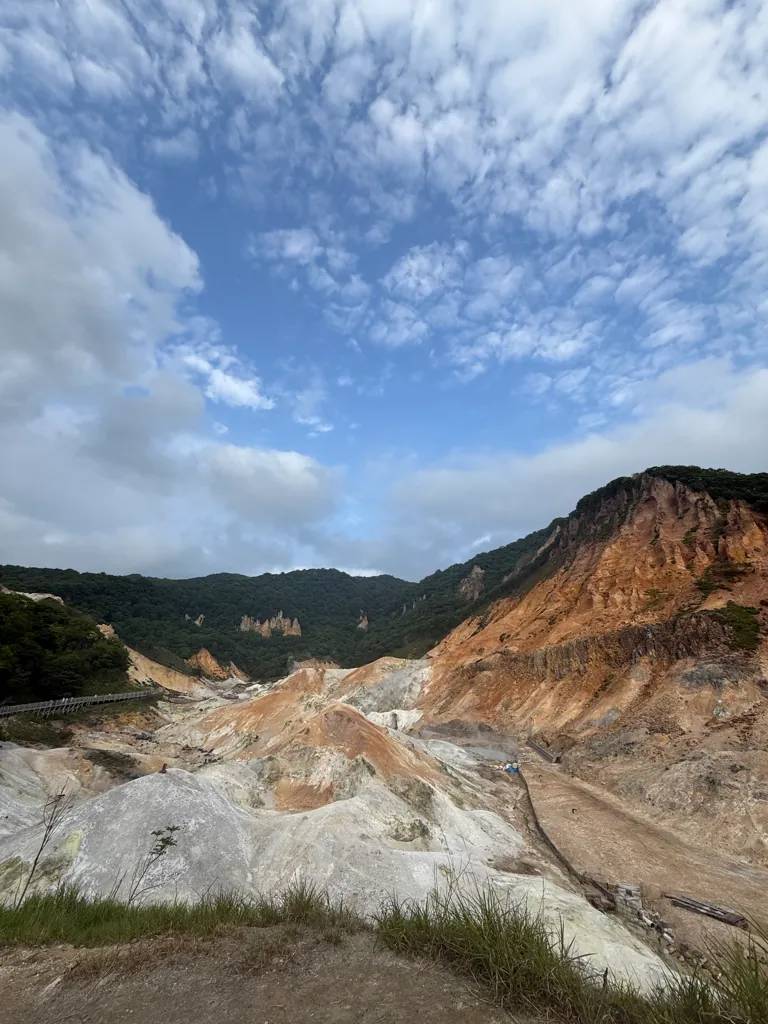
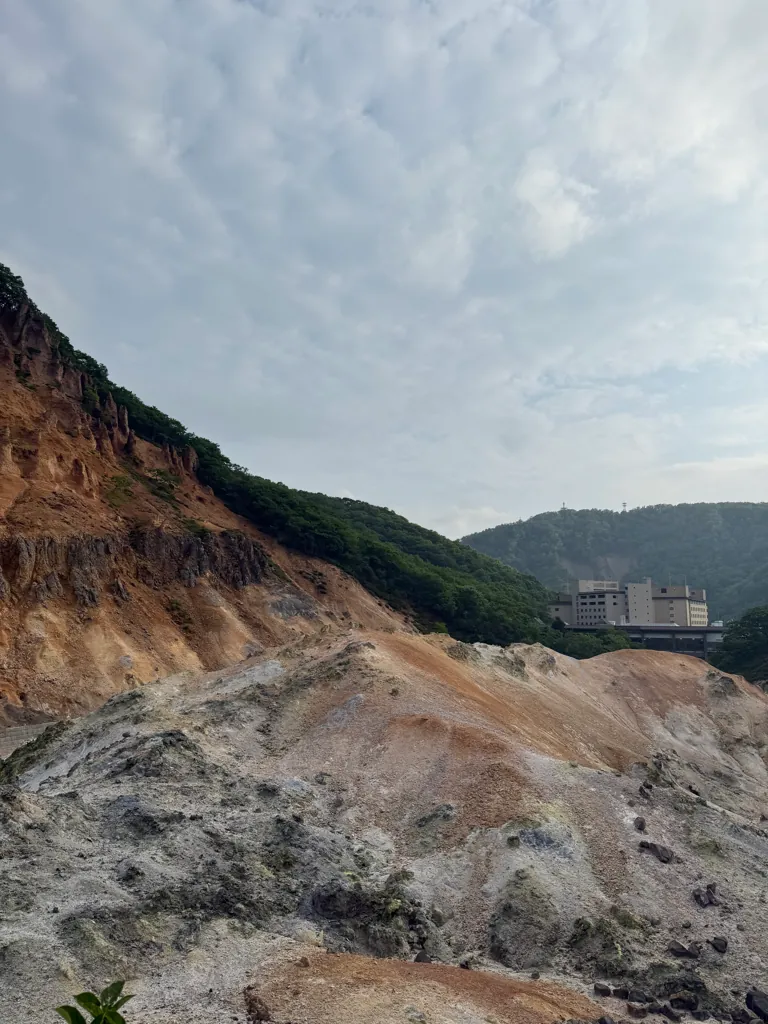
- Jigokudani, "Hell Valley" (地獄谷): An explosion crater about 450 m across, covering some 11 ha, full of vents and boiling pools10. It was chosen as a Hokkaido Heritage site (北海道遺産) in 200411.
- Oni demons and Enma, King of Hell: Demon statues stand all over town12. A mechanical Enma Daiō float performs several times a day at Enma-dō (閻魔堂)13. The demon theme runs through the Jigoku Matsuri, the Oni-hanabi fireworks and the "Yukijin" (湯鬼神) guardians of the hot springs1415.
- Karurusu Onsen (カルルス温泉): A small spa village in the mountains of the city's interior. In 1957 it became Hokkaido's first, and Japan's 12th, National Health Resort Hot Spring (国民保養温泉地)9.
- Noboribetsu Bear Park (のぼりべつクマ牧場): A brown-bear park reached by a ropeway of about 7 minutes from the onsen town16. It opened in 19581.
- Chiri Yukie (知里幸恵): Born in Noboribetsu in 1903. She transcribed and translated the Ainu kamuy yukar and compiled the Ainu Shin'yōshū (アイヌ神謡集)17. A memorial museum stands in Noboribetsu Hon-chō18.
- Noboribetsu Enma Yakisoba (登別閻魔やきそば): The city's local-gourmet dish, launched in 2015. Cumulative servings reached 700,000 by the end of March 202619.
- Theme parks: Noboribetsu Date Jidaimura, an Edo-period theme park, and Noboribetsu Marine Park Nixe, an aquarium inside a castle modelled on Denmark's Egeskov Castle202122.
Sights & activities
Nature & scenery
- Jigokudani (地獄谷), Noboribetsu Onsen-machi: Boardwalks lead into the crater, and the viewpoint has a wheelchair ramp from the park service center. Parking costs ¥500 per car per day, with the ticket also valid at Ōyunuma parking except in winter10. Tessen-ike (鉄泉池), a small intermittent spring in the middle of the valley, now erupts less than it used to58.
- Ōyunuma, Ōyunuma River and the natural footbath (大湯沼・大湯沼川天然足湯): A steaming grey crater pond (surface 40–50°C). Downstream, a forest trail passes Taishō Jigoku to a free natural footbath fed by overflow from the pond3359. Ōyunuma parking closes in winter33.
- Sengen Park geyser (泉源公園の間欠泉): Built for the resort's 150th anniversary in 2008. About every three hours, 80°C water shoots up to 8 m6011.
- Hiyoriyama (日和山): Beside Ōyunuma (use the Ōyunuma parking lot). It has colonies of alpine plants such as crowberry and Labrador tea32.
- Noboribetsu Primeval Forest (登別原始林): About 60 tree species and 110 herbaceous species, with trails among giant Mongolian oaks35.
- Lake Kuttara (倶多楽湖): A caldera lake with some of the clearest water in Japan. It is administratively in Shiraoi but reached via Noboribetsu Onsen341. The Bear Park has an observation deck overlooking it16.
Onsen
-
Noboribetsu Onsen (登別温泉): Its spring types include:
- milky, egg-scented sulphur springs;
- salt (sodium chloride) springs;
- alum springs;
- Glauber's-salt springs;
- iron springs that turn reddish-brown;
- strongly acidic springs;
- bicarbonate "beauty" springs;
- radium springs.
Day bathing is widely available. Examples from the tourism association's list include Dai-ichi Takimotokan (9:00–21:00, reception until 18:00; adults ¥2,500) and the public bath Yumoto Sagiri-yu (夢元さぎり湯; 9:00–21:00; adults ¥500). Prices and hours are as of September 2026 — check before visiting961.
-
Karurusu Onsen (カルルス温泉): Clear, odourless simple springs with sodium sulphate, 48–74°C at the source9. Ainu people are said to have used them as a medicinal bath since ancient times. Karurusu has three inns4011. Day bathing is offered at Suzuki Ryokan (鈴木旅館, adults ¥500), Yumoto Orofure-sō (湯元オロフレ荘, ¥600) and Mori-no-yu Sanseikan (森の湯山静館, ¥600) (as of September 2026)61.
Museums & heritage
- Local History Museum (Katakura-chō) and Chiri Yukie memorial museum (Noboribetsu Hon-chō): see Culture & festivals and Ainu heritage3018.
- Enma-dō and the demon statues: Examples include the "Welcome parent-and-child oni" (歓迎 親子鬼像) and the Yukijin's nine iron clubs in Sengen Park (2013). Oni statues also greet visitors at Noboribetsu-Higashi IC and JR Noboribetsu Station551162.
- Enkū's Kannon (鉈作観音像): Enshrined on the hill of the Jigokudani viewpoint. Nearby are the Yakushi Nyorai hall and the daimoku stone1155.
Theme parks
-
Noboribetsu Bear Park (のぼりべつクマ牧場, Noboribetsu Onsen-machi 224): The main areas are:
- large-bear enclosures, with a "human cage" (ヒトのオリ) where visitors stand among the bears;
- a cub enclosure;
- a Brown Bear Museum;
- Yukar-no-sato.
Open 9:00–17:00 (last entry 16:20) as of September 2026. In 2026 it closed from 6 to 24 April for the statutory ropeway inspection16.
-
Noboribetsu Date Jidaimura (登別伊達時代村, Naka-Noboribetsu-chō 53-1): A recreated Edo-period town with ninja action shows, oiran shows and period comedy. Visitors can rent costumes. Summer hours (25 April–31 October) are 9:00–17:00 and winter hours (1 November–19 March) 9:00–16:00. The park lists no regular closing day but closes for maintenance in winter. As of September 2026 — check before visiting2063.
-
Noboribetsu Marine Park Nixe (登別マリンパークニクス, Noboribetsu Higashi-machi 1-22): An aquarium inside Nixe Castle, which is modelled on Egeskov Castle in Denmark. Highlights are an 8 m "crystal tower" tank, a walk-through aqua tunnel, a penguin parade, and dolphin and sea-lion shows. Open 9:00–17:00 (last entry 16:30)216422.
Outdoor & seasonal activities
- Guided nature walks: Noboribetsu Gateway Center (登別ゲートウェイセンター), inside the Noboribetsu Onsen bus terminal (open 8:30–18:00), runs guided walks with "Hell guides" (地獄案内人), from short strolls to full treks65.
- Skiing: Karurusu Onsen Sunlive ski area (サンライバスキー場, Karurusu-chō 27) has 7 courses and 3 pair lifts66.
- Other activities: The tourism association lists golf at Noboribetsu Country Club, the Noboribetsu Off-road Park, the Tsudoi-no-yakata campground (つどいの館キャンプ場) and the Momonga Club nature-activity NPO55.
Food experiences
- Enma Yakisoba restaurant crawl: Over 20 participating restaurants in four areas: the onsen town, Noboribetsu-Higashi, the centre and the west19.
- Onsen Ichiba (温泉市場): Live seafood from the local port. Open 10:30–21:0046.
- Fujisaki Wasabi-en: Wasabi pickles made in the onsen town. Open 9:00–22:00, with shorter hours in winter48.
Roadside stations (Michi-no-Eki)
No Michi-no-Eki is located in Noboribetsu. The official Hokkaido roadside-station list registers none in the city67. The nearest Michi-no-Eki are:
- Mitara Muroran (道の駅みたら室蘭): Shukutsu-chō 4-16-15, Muroran, on National Route 37, two minutes by car from the Hakuchō Ōhashi suspension bridge. It is housed in the Hakuchō Ōhashi Memorial Hall. The café sells "Uzuran" soft-serve made with eggs from Muroran's quail farm. Open 9:30–19:00 from April to October and 9:30–17:00 from November to March (closed Thursdays in winter and on 31 December–1 January), as of September 2026 — check before visiting68.
- Date Rekishi no Mori (道の駅だて歴史の杜): Matsugae-chō 34-1, Date, on National Route 37. Local products include "Date no tempura" (だてのてんぷら), a revival of a local speciality. Open 9:00–18:00 and closed 31 December to 4 January. There are 263 car spaces69.
- Sobetsu Jōhōkan i (道の駅そうべつ情報館i): Takinomachi 384-1, Sobetsu, on National Route 453. Sobetsu borders Noboribetsu to the north across Orofure Pass. It sells fruit and vegetables and has a volcano-disaster learning corner. Open daily from April to mid-November; closed Tuesdays in winter70.
- Utonai-ko (道の駅ウトナイ湖): Uenae, Tomakomai, further east along the coast67.
Practical substitute inside the city: The Noboribetsu Tourism Exchange Center "Nupur" (登別市観光交流センター ヌプㇽ, Noboribetsu-minato-chō 1-4-9) is not a Michi-no-Eki, but it serves road-trippers in a similar way. It has:
- tourist information and paid luggage storage;
- a shop selling Noboribetsu specialties and Ainu crafts;
- restaurant tenants;
- a rest area and kids' corner.
Open 9:00–17:30 and closed 29 December to 3 January (as of September 2026 — check before visiting)25.
Getting there & around
- Rail: Four JR Muroran Main Line stations lie in the city: Washibetsu, Horobetsu, Tomiura and Noboribetsu1.
- Noboribetsu (登別): The gateway to the onsen. The Hokuto and Suzuran limited expresses stop here. It takes about 1 h 10 min from Sapporo and about 2 h 25 min from Hakodate on the Hokuto62.
- Horobetsu (幌別): The nearest station to city hall1. It had about 190,500 boardings in fiscal 2024, against about 102,200 at Noboribetsu71.
- Washibetsu (鷲別) and Tomiura (富浦): Both are unstaffed. Washibetsu lost its staff on 1 November 20157172.
- To the onsen: Noboribetsu Onsen is about 8 km from JR Noboribetsu Station, and Karurusu Onsen about 14 km62. Dōnan Bus (道南バス) runs the local routes, with its terminal in Noboribetsu Onsen165.
- Highway buses: Reservation-only buses run from New Chitose Airport (Airport-gō, about 1 h) and from Sapporo (Onsen-gō, about 1 h 20 min). The Hakuchō-gō and the Chūō Bus Muroran-gō also serve Sapporo and Muroran62.
- Road: The Dō-ō Expressway (道央自動車道) has two interchanges and a parking area in the city: Noboribetsu-Muroran IC, Tomiura PA and Noboribetsu-Higashi IC. Noboribetsu Onsen is about 6 km from Noboribetsu-Higashi IC, which has no "onsen" in its name, so follow the oni signboards162. National Route 36 follows the coast. Prefectural Road 2 (洞爺湖登別線) crosses Orofure Pass to Lake Tōya1. By car, Sapporo is about 1 h 40 min and New Chitose Airport about 1 h12.
- Air & sea: The nearest airport is New Chitose. Ferries arrive at Muroran (from Hachinohe) and at Tomakomai West Port (from Hachinohe, Sendai, Ōarai and Nagoya). Routes are as of November 2021 per the tourism association62.
- Around the onsen town: Oni-slo (オニスロ) is Hokkaido's first green slow-mobility electric bus, running since March 2023 at under 20 km/h. Riders can flag it down and get off at most points on its loop45.
Practical tips
-
Timing: Plan around these dates:
- the Jigoku Matsuri, on the last weekend of August14;
- the Yu Matsuri, at Setsubun (3–4 February)50;
- Oni-hanabi nights: Mondays and Thursdays in June, Thursdays in July and September (2026 schedule)15. Tickets can sell out; the 17 September 2026 show did73.
Cherry blossoms come in May: the 1991–2020 normal for Somei-yoshino flowering at nearby Muroran is 4 May, and maples there turn red around 7 November38. In 2026 the Local History Museum has free-entry weeks for cherry blossoms (3–10 May) and autumn leaves (8–15 November)30.
-
Event logistics: On Oni-hanabi nights, Jigokudani parking holds about 70 cars (free). The road near the Jigokudani entrance closes from 20:00 to about 21:00, and ticketless visitors cannot enter the viewpoint from about 18:3015. For the Jigoku Matsuri, the paid lots fill early and there are shuttles from Date Jidaimura, so public transport is recommended14.
-
Visitor centers:
-
Winter: Inland areas get heavy snow: 454 cm of snowfall a season at the Satsunai station36. The Ōyunuma parking lot closes in winter33. Check road conditions before driving over Orofure Pass or up to Lake Kuttara in the cold season; this entry could not verify their winter closures.
-
Wildlife: Brown bears live in the mountains and forests. They are most active from March to May after hibernation, and in August–September, when they come down looking for food. The city advises carrying a bell or radio, avoiding dawn and dusk, and not hiking alone74.
-
Onsen tips: White towels may turn reddish in the iron springs. The tourism association advises people with sensitive skin to keep soaks short in the acidic, salt and alum springs, and to rinse off with fresh water after acidic ones9.
Photos
-
 Jul 2025
 -
 Jul 2025
More about Noboribetsu
At a glance
| Field | Details |
|---|---|
| Type | City (市) |
| Subprefecture | Iburi (胆振総合振興局) |
| District | None. The former Horobetsu District (幌別郡) ceased to exist when the town became a city in 19701 |
| Population | 46,391 in 20,928 households (2020 National Census, 令和2年国勢調査)2; 42,199 in 23,613 households on the resident register as of 31 August 202634 |
| Area | 212.21 km²56 |
| Density | ≈199 people/km² (42,199 ÷ 212.21 km², calculated); ≈219/km² at the 2020 census (calculated) |
| Municipal history | Three villages (Horobetsu, Noboribetsu and Washibetsu) merged as Horobetsu Village (幌別村) in 1919. It became Horobetsu Town (幌別町) in 1951 and was renamed Noboribetsu Town (登別町) in 1961. City status followed in 19706, on 1 August 19701. It was the 570th city in Japan and the 30th in Hokkaido6 |
| Neighboring municipalities | Muroran, Date, Sobetsu, Shiraoi6 |
| Symbols | Flower: chrysanthemum (キク). Tree: plane tree (プラタナス). Flowering tree: azalea (ツツジ)7. The city's symbols page lists no city bird7 |
| Mascot | 登夢くん, the official PR character (the romanized reading could not be confirmed)8 |
| Official website | https://www.city.noboribetsu.lg.jp/6 |
Name origin
- Noboribetsu (登別): The name comes from the Ainu name of the Noboribetsu River, nupur-pet (ヌプㇽペッ), "dark-coloured (thick-coloured) river". The river is coloured by hot-spring water flowing in from upstream16. The kanji 登別 ("climb" + "separate") were chosen only for their sound and carry no meaning23.
- The river's colour: Mogami Tokunai's Ezo Zōshi (蝦夷草紙, 1790) described the Noboribetsu River as cloudy, "as if white powder and Prussian blue had been stirred in". The water comes from the Kusuri-sanbetsu River (クスリサンベツ川), which drains the onsen area. According to the place-name scholar Yamada Hidezō, the Ainu called only the stretch below that confluence nupur-pet. The stretch above it was pekere-pet (ペケレ・ペッ)24.
- Horobetsu (幌別): The city hall district keeps the old municipal name. It comes from Ainu poro-pet (ポロペッ), "big river", the name of today's Iburi-Horobetsu River1.
- Why the name changed: When Horobetsu became a town in 1951, residents were split between the familiar "Horobetsu" and "Noboribetsu", which was famous nationwide because of the onsen. Horobetsu was chosen at first. Public opinion shifted before the town's 10th anniversary, and the assembly voted to rename it Noboribetsu in 19611.
- Competing theories: The sources consulted give no substantially different etymology for Noboribetsu. The differences between them are only in how nupur is translated ("dark-coloured", "thick-coloured" or "deep-coloured")125.
- Karurusu (カルルス): This name is not Ainu. It comes from Karlsbad (Karlovy Vary) in today's Czech Republic, because the two spas' radium-bearing waters were thought to be similar11.
History
- Before the Meiji era: The Ainu names of the rivers and districts (nupur-pet, poro-pet) record the area's Ainu past1. The sources consulted document no specific archaeological sites. Much older still, a carbonized fir (トドマツ) buried by an eruption of the Kuttara volcano about 43,580 years ago is a city-designated cultural property26.
- 1666: The wandering monk Enkū (円空) carved a hatchet-made Kannon statue. It is now enshrined beside the Jigokudani viewpoint and is a city cultural property1126.
- Matsumae era: The Matsumae domain opened the Horobetsu trading post (ホロベツ場所). Okada Hanbei (岡田半兵衛) became its contractor in 18381. Mogami Tokunai recorded Noboribetsu around 1785, and Matsuura Takeshirō stopped at the hot springs around 184511.
- 1857–1858: Okada Hanbei, an Ōmi merchant who was mining sulphur at Jigokudani, built bathing huts for his workers. In 1858 Takimoto Kinzō (滝本金蔵), a carpenter from Edo, built an inn so that his wife could take the waters for a skin disease. It was the forerunner of today's Dai-ichi Takimotokan hotel, and 1858 is counted as the opening of the resort11.
- 1869–1870: The Meiji government placed Horobetsu District under Katakura Kuninori (片倉邦憲), lord of Shiroishi Castle in the Sendai domain. His first retainers began clearing land at Washibetsu in 187061. This link is the origin of today's sister-city tie with Shiroishi, Miyagi27. Katta Shrine (刈田神社) was founded in 18711.
- 1880s–1890s: In 1882 a settler arrived from present-day Marugame, Kagawa Prefecture. His memoir, the Jōsō no Ki (丈草の記), is a city cultural property26. In 1886 Hino Aiki (日野愛憙) found the springs that became Karurusu Onsen. His adopted son Hino Kyūkitsu (日野久橘) built a road to them, and the resort opened in 189911. The Hokkaido Colliery and Railway's Muroran line opened Noboribetsu and Horobetsu stations in 1892. Full-scale sulphur mining at Jigokudani and Ōyunuma began in 1899, although sulphur had been dug at Jigokudani since at least the 1850s111.
- Mining boom: The Horobetsu Mine (幌別鉱山) went into full production in 1906, mining gold, silver, copper and sulphur. Its sulphur output was the largest in Japan from 1916 to 19196. The mine closed in 19731.
- Tourism infrastructure: In 1905 Karurusu and Noboribetsu Onsen were designated convalescent resorts for soldiers wounded in the Russo-Japanese War, which spread their fame11. A horse-drawn tramway to the onsen opened in 1915, then a steam light railway (1918) and an electric tram (1925)11. The Noboribetsu Primeval Forest became a national Natural Monument in 192426.
- 1919–1951: Horobetsu, Noboribetsu and Washibetsu villages merged as Horobetsu Village (1919)6. From 1942 about 1,450 company houses were built for the Nippon Steel works in neighbouring Muroran1. The onsen area became part of Shikotsu-Tōya National Park in 194911. Horobetsu became a town in 19516.
- Postwar growth: The JGSDF Horobetsu camp opened in 1953. The Bear Park opened in 19581. The town was renamed Noboribetsu in 1961, and the first Jigoku Matsuri was held in 1964111. Noboribetsu became a city on 1 August 19701. Two Dō-ō Expressway interchanges opened in 1985–19861.
- Theme-park era: Marine Park Nixe opened in 1990. Date Jidaimura and Tenkaen (天華園, closed 1999) opened in 1992. That year tourist numbers peaked at 4.47 million128. The resident-register population stood at 59,481 in 1983, the highest figure in the city yearbook's series, which begins in 19822.
- Shocks and recovery: Visitor numbers fell after the 2000 Mt. Usu eruption, the 2011 Great East Japan Earthquake and the 2018 Hokkaido Eastern Iburi Earthquake28. In fiscal 2020 the COVID-19 pandemic cut them by 67%28. In 2016 hot water burst out at Taishō Jigoku (大正地獄), and the activity continued into 201711. The Oni-hanabi fireworks won the Prime Minister's Award at the Furusato Event Awards in 202011.
- Recent years: The Nupur tourism exchange center opened at Noboribetsu Port on 1 March 202325. The Kanto-rera cultural exchange hall (カント・レラ) closed on 30 September 202529. The Local History Museum reopened after a full renovation on 1 April 202630.
Geography & climate
-
Shape and size: A roughly diamond-shaped city6, 18.5 km east–west and 22.6 km north–south31. Forest (山林) makes up about 14,789 ha of the 21,221 ha land register, roughly 70%31.
-
Coast and plains: The Pacific coastline runs almost straight6 and is mostly sandy beach. There are rocky headlands at Cape Ranbokke (蘭法華岬) in the northeast and Cape Washibetsu (鷲別岬) in the southwest1. The built-up area runs along a coastal strip from Washibetsu through Horobetsu to Noboribetsu23.
-
Mountains: Mt. Karurusu (1,077 m) and Mt. Raiba (来馬岳, 1,040.1 m) rise in the north. Orofure Pass (オロフレ峠) is on the border with Sobetsu16. Hiyoriyama (日和山, 377 m) is an active volcano that still steams32. The Japan Meteorological Agency monitors the area continuously as the Kuttara (Noboribetsu) volcano1.
-
Rivers and lakes: The Noboribetsu River (16.8 km) rises below Orofure Pass, passes Karurusu Onsen and takes in hot-spring water from the Kusuri-sanbetsu River24. The Iburi-Horobetsu River is dammed as Muroran's industrial water reservoir (Horobetsu Dam, 1968)1. Ōyunuma (大湯沼) is a gourd-shaped crater pond about 1 km around, with 130°C sulphur water welling up from its bottom33. Lake Kuttara (倶多楽湖) is a round caldera lake about 8 km around, with no inflowing or outflowing river. It is reached from Noboribetsu Onsen but lies in Shiraoi341.
-
Protected areas: The onsen and Karurusu districts are in Shikotsu-Tōya National Park (支笏洞爺国立公園)1. The Noboribetsu Primeval Forest, about 186 ha of natural forest around Jigokudani, has been a national Natural Monument since 19243526. The Kiusito Wetland (キウシト湿原) is on the Environment Ministry's list of 500 Important Wetlands1.
-
Climate: The JMA weather station "Noboribetsu" is in Satsunai-chō (札内町), inland at 197 m1. Its 1991–2020 normals show:
- an annual mean of 7.4°C, ranging from −4.1°C in January to 19.6°C in August;
- 1,811 mm of precipitation a year;
- 454 cm of snowfall a season, with a mean maximum snow depth of 84 cm36.
The record high is 34.3°C (7 July 2025) and the record low is −19.4°C (17 February 1978). The wettest day on record brought 417 mm of rain (25 September 1983)37. The coast is milder: the Muroran observatory next door averaged 10.8°C in 2025, against 9.1°C at the Noboribetsu station38. The city is designated a heavy-snow area (豪雪地帯)1.
Economy & industry
- Structure: The city's own summary describes two economies: a major tourist city built around Noboribetsu Onsen, and a wing of the Muroran heavy-industrial zone, the most advanced in Hokkaido6. The east of the city depends on tourism, fishing and dairy farming. Factories and construction firms line the coast in the centre and west1.
- Employment: The 2024 Economic Census counted 1,118 establishments with 12,199 employees. The tertiary sector accounted for 10,008 of them (about 82%). Construction employed 1,181 people in 189 establishments, and manufacturing 953 in 5539. Notable local employers include hotel operators Dai-ichi Takimotokan (第一滝本館) and Noguchi Kankō (野口観光), and a Paloma plant (1993)1.
- Tourism: In fiscal 2025 the city recorded 3,215,914 visitors, including 1,055,153 overnight guests. The peak was 4,467,628 in fiscal 199228. As of April 2025 the city had 18 hotels and inns with 2,005 rooms and room for 7,367 guests. Fourteen of them (1,926 rooms) are in Noboribetsu Onsen and three in Karurusu40.
- Overseas visitors: Foreign guest-nights reached 410,777 in fiscal 2025. Taiwan led with 137,255, then South Korea (116,746) and mainland China (42,779)41. The record was 518,936 in fiscal 201741.
- Fisheries: The Iburi-chūō fishery cooperative (いぶり中央漁協) covers the city's coast1. In 2024 the city's 37 fishing businesses (83 fishers) landed 2,630 t worth ¥774.5 million. Walleye pollock (すけとうだら), caught mainly by gill-net, made up 1,609 t (¥231 million). Hairy crab (毛がに) brought only 15 t but ¥124.6 million, and hokki surf clams 72 t42. The pollock catch is the base of the city's many tarako (pollock roe) products (see Local specialties).
- Agriculture: Farming is small. The 2020 Census of Agriculture and Forestry (農林業センサス) counted 36 farm businesses working 955 ha, nearly all upland and grassland, and 9 dairy farms with 562 cattle43.
- Demographics: The population fell 6.5% between the 2015 and 2020 censuses (49,625 → 46,391)2. On the resident register it dropped from 44,564 in September 2023 to 42,900 in September 20252. As of August 2026, 38.8% of residents were 65 or older, and the average age was 53.54.
- Revitalization: Several projects support local business. The Noboribetsu Brand Promotion Council (登別ブランド推進協議会, founded 2009) certifies local products144. The Enma Yakisoba campaign is run by the Noboribetsu Enma Yakisoba association (登別閻魔やきそばの会) and its member restaurants19. The Oni-slo electric slow-mobility bus has run in the onsen town since March 202345. The Nupur center at Noboribetsu Port combines tourist information, a city branch office and local-product sales25.
Local specialties
| Specialty | Category | Details & where to get it |
|---|---|---|
| Noboribetsu Enma Yakisoba (登別閻魔やきそば) | Local gourmet (ご当地グルメ) | Flat noodles of Hokkaido wheat, a spicy sesame "secret sauce" and local ingredients, as set by "Enma Daiō's rules". Served since 16 April 2015 at participating restaurants across the city, including Onsen Ichiba and Kissa Den'en in the onsen town and the Wakasaimo Honpo Noboribetsu-Higashi store19 |
| Enma yakisoba rice crackers & "Enma no Namida" chili oil (えんまのなみだ) | Souvenir | Spin-offs of the dish. Sold at Wakasaimo Honpo shops and the Noboribetsu Brand Shop in the Arnis shopping center19 |
| Tarako (pollock roe): Ranbokke no Tarako (らんぼっけのたらこ), Noboribetsu Tarako Jigoku-zuke (登別たらこ地獄漬), Ganso Tarako Kimchi (元祖たらこキムチ) | Seafood | Certified Noboribetsu Brand products (2009–2011)44, based on the local pollock catch42 |
| Hokkai Ōdako Jigoku-zuke (北海大だこ地獄漬) | Seafood | Large octopus in a "hell" marinade, brand-certified in 201044 |
| Hairy crab & hokki clams | Seafood | Hairy crab fetched ¥124.6 million from just 15 t in 2024, and 72 t of hokki clams were landed42. Onsen Ichiba (温泉市場) in the onsen town serves live seafood from Noboribetsu Port as sashimi or charcoal-grilled46 |
| Oni Densetsu beers (鬼伝説): Kin-oni Pale Ale, Ao-oni Pilsner, Aka-oni Red Ale | Craft beer | Brand-certified (2009, 2012)44. A furusato-nozei set also includes "Nupurpet" (ヌプルペッ), a beer brewed with Noboribetsu-grown hops47 |
| Wasabi-zuke (わさび漬) | Pickles | Fujisaki Wasabi-en (藤崎わさび園), Noboribetsu Onsen-machi 49. The farm has grown true wasabi with spring water from the Orofure valley since the Taishō era4811 |
| Noboribetsu Ezo sika venison (のぼりべつエゾシカ): yamato-ni, miso-ni, curry | Game | Canned venison, brand-certified 2014–201944 |
| Noboribetsu pork (のぼりべつ豚): miso-marinated loin, hamburg steak, "Buta-jin" (豚ジン) | Meat | Brand-certified 2018 and 202244 |
| Straw-wrapped natto (わら納豆), Bunshirō no Kazuno Nattō (文志郎の鹿角納豆) | Natto | Brand-certified44. Natto also features heavily in furusato nozei (27 listings in the tofu/natto category, for example from Dōnan Hiratsuka Shokuhin, 道南平塚食品)47 |
| Yu-no-ka Hyōtan Ame (湯の香ひょうたん飴), Noboribetsu milk castella (登別牛乳カステラ) | Sweets | Brand-certified 2013 and 201644 |
| Kumazasa soba (北海道熊笹そば), Enma ramen (登別閻魔らーめん) | Noodles | Brand-certified 2017 and 200944 |
| Onsen eggs, "nama-chichi" ice cream | Snacks | Eggs cooked in sulphur spring water, and ice cream made with raw milk, at Onsen Ichiba46 |
| Bear buns (熊まんじゅう), wood carvings (木彫り民芸品) | Souvenirs & crafts | Listed among local specialties1. Ainu crafts are sold at the Nupur center25 |
| Furusato nozei gifts | Hometown tax | Accommodation vouchers (20 listings) and onsen/spa-use tickets (14), yunohana bath salts, Fujisaki wasabi products, and seafood such as salmon, ikura and sea urchin47 |
Where to buy brand products: Wakasaimo Honpo Noboribetsu-Higashi (わかさいも本舗登別東店, Naka-Noboribetsu-chō 96-6); the Nupur center (Noboribetsu-minato-chō 1-4-9); the Noboribetsu Brand Shop (のぼりべつブランドショップ, Arnis shopping center 1F, Chūō-chō 4-11)44.
Culture & festivals
| Event | When | Highlights |
|---|---|---|
| New Year lucky mochi-pounding (元旦縁起もちつき) | 1 January, 11:00–12:00 | Four young men perform the "kodakara mochi-tsuki mai" (子宝もちつき舞) at Sengen Park, and the lucky rice cakes are handed out to visitors49 |
| Noboribetsu Onsen Yu Matsuri (登別温泉湯まつり) | Setsubun, 3–4 February (2026 dates) | Red and blue Yukijin (湯鬼神) demons parade through the resort collecting bad luck. Young men in loincloths drench each other in the "source hot-water battle" (源泉湯かけ合戦). First held in 1972501 |
| Karurusu Onsen Winter Festival (カルルス温泉冬まつり) | March (7 March in 2026) | Tangerine-hunting in the snow, rice-cake throwing and games at Sunlive ski area51 |
| Local History Museum festival & Sakura Week (郷土資料館まつり) | Early–mid May (2026: Sakura Week 3–10 May, festival 9 May) | Free entry during cherry season. The grounds have 46 cherry trees of 6 varieties, including the rare pale-green gyoikō (御衣黄)3052 |
| Washibetsu Shrine festival (鷲別神社祭) | June | Neighbourhood shrine festival1 |
| Oni-hanabi, "Demon Fireworks of Hell Valley" (地獄の谷の鬼花火) | 2026 schedule: Mondays and Thursdays in June, Thursdays in July and September; 20:00 for about 20 minutes | Yukijin demons set off fireworks at the Jigokudani viewpoint. Tickets are ¥500 for adults and free for children of elementary-school age and under. The show started in 2006 and won the 2020 Prime Minister's Award at the Furusato Event Awards152811 |
| Noboribetsu summer festival; Katta Shrine grand festival (のぼりべつ夏まつり・刈田神社例大祭) | August | The city's summer festival, and the annual festival of Katta Shrine (founded 1871)1 |
| Noboribetsu Jigoku Matsuri (登別地獄まつり) | Last Saturday–Sunday of August (63rd festival: 29–30 August 2026) | Legend says the lid of Hell opens and Enma Daiō leads his demons into town. The festival includes Noboribetsu taiko, an oni mikoshi carried by local junior-high students, and oni dances. It is the only day a year that the giant Enma float parades down Gokuraku-dōri. Held since 19641411 |
| Noboribetsu Port festival (登別漁港まつり) | September | Not held since 20181 |
| Onibi-no-michi, "Demon-fire Path" (鬼火の路) | Year-round, dusk–21:30 | A lantern-lit walk to the Jigokudani viewpoint53 |
| Noboribetsu × Ainu Culture digital stamp rally (まちぐるデジタルスタンプラリー) | 1 September – 31 October 2026 | A bingo-style rally across 47 spots: Enma Yakisoba restaurants, brand-product shops and Ainu cultural sites54 |
Traditions and performing arts: Two local lion dances have been city-designated cultural properties126:
- the Horobetsu Mine lion dance (幌別鉱山獅子舞), performed to pray for miners' safety and higher output. It is still designated26;
- the Satsunai kagura lion dance (札内神楽獅子舞). Its designation was lifted on 9 January 2013, after its preservation society was dissolved26.
At Enma-dō in the onsen town, a mechanical float of Enma Daiō, built in 1993 for the 30th Jigoku Matsuri, "passes judgement" at set times. The listed times are 10:00, 11:00, 13:00, 15:00, 17:00, 20:00 and 21:00, and the hall may close in bad weather13.
Shrines and temples: Katta Shrine (刈田神社) was founded in 1871, the year after the Katakura settlers arrived1. Kannon-zan Shōkō-in (観音山聖光院) holds a Sacred Kannon by Enkū and 34 Kannon statues by Takamura Tōun, both city cultural properties126. The Yakushi Nyorai hall (薬師如来堂, 1861) and the daimoku stone (題目石, 1871) are small sacred sites in the onsen area1155.
Museums:
- Noboribetsu City Local History Museum (登別市郷土資料館, Katakura-chō 6-27-2): The building is modelled on Shiroishi Castle. It displays everyday tools from the past, the carbonized Kuttara-eruption fir, records of the Katakura settlers, and Ainu material. Hours are 10:00–17:00 from April to October and 10:00–16:00 from November to March. It is closed on Mondays, the day after national holidays and over the New Year holidays. Adults ¥19030.
- Chiri Yukie Gin no Shizuku Memorial Museum (知里幸恵 銀のしずく記念館): See Ainu heritage.
Ainu heritage
- Horobetsu Ainu community: Kannari Kizō (金成喜蔵) was an elder of the Horobetsu Ainu and founded the Airin School (愛隣学校)1. The Kannari and Chiri families produced several leading figures of Ainu culture. Kannari Matsu (金成マツ, Imekanu) was a transmitter of yukar epics1. Her niece Chiri Yukie (知里幸恵, 1903–1922) was born in Noboribetsu17. Yukie worked with the linguist Kindaichi Kyōsuke in Tokyo and died there aged 19. Her Ainu Shin'yōshū was published the following year17. Yukie's brother Chiri Mashiho (知里真志保, 1909–1961) was born in Noboribetsu Village, today's Noboribetsu Hon-chō. He became an Ainu linguist and a professor at Hokkaido University56.
- Chiri Yukie Gin no Shizuku Memorial Museum (知里幸恵 銀のしずく記念館, Noboribetsu Hon-chō 2-34-7): Opened on 19 September 2010 with public donations. It is run by the NPO Chiri Shinsha (知里森舎)18. It displays Yukie's diaries, letters, and facsimiles of the notebooks that became the Ainu Shin'yōshū18. Related sites include Mashiho's monument at the foot of the Noboribetsu Bridge, inscribed "銀のしずく降れ降れまわりに" ("Silver droplets fall, fall all around"), and Yukie's grave with a monument to Kannari Matsu at Rifuruka (リフルカ)57. The museum is open 9:30–16:30, is closed on Tuesdays, and closes for winter from 20 December to the end of February; check its website before visiting57.
- Place names: Many local names are Ainu: nupur-pet (Noboribetsu), poro-pet (Horobetsu), pekere-pet (upper Noboribetsu River)124. The Nupur center's nickname means "deep-coloured" in Ainu. Its logo uses Ainu patterns, and it displays Ainu costume and sells Ainu crafts25.
- Other facilities: The Local History Museum has Ainu-culture exhibits and an online "Ainu Museum Virtual Guide"30. Yukar-no-sato (ユーカラの里) at the Bear Park reproduces Ainu dwellings and ways of life16. The national Ainu museum and park, Upopoy, opened in neighbouring Shiraoi in 202011.
Sister & friendship cities
- Shiroishi (白石市), Miyagi — sister city, October 1983: Chosen because the Katakura retainers from Shiroishi Castle pioneered the area27.
- Ebina (海老名市), Kanagawa — sister city, May 2015: The tie grew out of Ebina's own sister-city link with Shiroishi. The three cities signed a disaster-aid agreement in 2010 and a "Triangle Exchange Declaration" in 201127.
- Kusatsu Onsen (草津温泉), Gunma — sister hot spring, June 19726.
- Saipan, Northern Mariana Islands (USA) — friendship city, November 2006: Saipan junior-high students visit every February and home-stay with local families22.
- Faaborg-Midtfyn, Denmark — friendship city, 2007: The link began because Nixe Castle is modelled on Egeskov Castle there. The two cities exchanged a "Bond of Friendship" in 1997, and Noboribetsu has sent junior-high delegations since 199222.
- Guangzhou (广州), China — friendship city, 2012: A friendship-exchange promotion pact was signed in 2002 after tourism promotion that began in 200022.
- Other ties: An exchange declaration with Sapporo's Shiroishi Ward (2016)1. Tourism friendship agreements with two Taichung (Taiwan) tourism associations (2018), signed at association level11.
Notable people
- Chiri Yukie (知里幸恵, 1903–1922): Ainu transcriber and translator of kamuy yukar, author of the Ainu Shin'yōshū, born in Noboribetsu17.
- Chiri Mashiho (知里真志保, 1909–1961): Ainu linguist and Hokkaido University professor, born in Noboribetsu Village56.
- Kannari Matsu (金成マツ, Imekanu): Yukar reciter, from Noboribetsu1.
- Kannari Kizō (金成喜蔵): Horobetsu Ainu elder, businessman and founder of the Airin School1.
- Takimoto Kinzō (滝本金蔵): Founder of the first onsen inn (1858), the origin of Dai-ichi Takimotokan11.
- Yoshida Brothers (吉田兄弟): Shamisen duo, from Noboribetsu123.
- Nagashima Yū (長嶋有): Akutagawa Prize-winning novelist, from Noboribetsu1.
- Aihara Kōji (相原コージ): Manga artist, from Noboribetsu1.
Sources
Numbers in the text link to these sources. Figures as of 23 September 2026
- 登別市 — Wikipedia JA accessed 2026-09-23
- 登別市統計書 令和7年版「3 人口」(国勢調査・住民登録人口) — 登別市 JA accessed 2026-09-23
- 人口推移表(令和5年度~令和8年度、住民基本台帳) — 登別市 JA accessed 2026-09-23
- 指定区別年齢別男女別人口調(令和8年8月31日現在) — 登別市 JA accessed 2026-09-23
- 令和8年全国都道府県市区町村別面積調(4月1日時点) — 国土地理院 JA accessed 2026-09-23
- 登別市について — 登別市 JA accessed 2026-09-23
- 登別市の花・木・花木 — 登別市 JA accessed 2026-09-23
- 登別市PRキャラクター『登夢くん』の利用申請について — 登別市 JA accessed 2026-09-23
- 10の湯のものがたり — 一般社団法人 登別国際観光コンベンション協会 JA accessed 2026-09-23
- 登別地獄谷 — 一般社団法人 登別国際観光コンベンション協会 JA accessed 2026-09-23
- 登別の歴史 — 一般社団法人 登別国際観光コンベンション協会 JA accessed 2026-09-23
- Getting to Know Noboribetsu ONSEN — Noboribetsu International Tourism and Convention Association EN accessed 2026-09-23
- 閻魔堂(えんまどう) — 一般社団法人 登別国際観光コンベンション協会 JA accessed 2026-09-23
- 登別地獄まつり — 一般社団法人 登別国際観光コンベンション協会 JA accessed 2026-09-23
- 地獄の谷の鬼花火 — 一般社団法人 登別国際観光コンベンション協会 JA accessed 2026-09-23
- のぼりべつクマ牧場 公式サイト — 登別温泉ケーブル株式会社 JA accessed 2026-09-23
- Yukie Chiri — Wikipedia EN accessed 2026-09-23
- 知里幸恵 銀のしずく記念館 — Wikipedia JA accessed 2026-09-23
- 登別閻魔やきそば — 登別ブランド推進協議会 JA accessed 2026-09-23
- 登別伊達時代村[公式] — 登別伊達時代村 JA accessed 2026-09-23
- 【公式】登別マリンパークニクス|北海道最大級の展示数を誇る水族館 — 登別マリンパークニクス JA accessed 2026-09-23
- 友好都市の紹介 — 登別市 JA accessed 2026-09-23
- Noboribetsu — Wikipedia EN accessed 2026-09-23
- 登別川 — Wikipedia JA accessed 2026-09-23
- 登別市観光交流センター(ヌプㇽ) — 登別市 JA accessed 2026-09-23
- 指定文化財 — 登別市 JA accessed 2026-09-23
- 姉妹都市を紹介します — 登別市 JA accessed 2026-09-23
- 観光入込み年度別推移(平成元年度~令和7年度) — 登別市 JA accessed 2026-09-23
- 歴史・文化財 — 登別市 JA accessed 2026-09-23
- 登別市郷土資料館 — 登別市 JA accessed 2026-09-23
- 登別市統計書 令和7年版「1 地勢」 — 登別市 JA accessed 2026-09-23
- 日和山(ひよりやま) — 一般社団法人 登別国際観光コンベンション協会 JA accessed 2026-09-23
- 大湯沼 — 一般社団法人 登別国際観光コンベンション協会 JA accessed 2026-09-23
- 倶多楽湖(くったらこ) — 一般社団法人 登別国際観光コンベンション協会 JA accessed 2026-09-23
- 登別原始林 — 一般社団法人 登別国際観光コンベンション協会 JA accessed 2026-09-23
- 登別(胆振地方) 平年値(年・月ごとの値) — 気象庁 JA accessed 2026-09-23
- 登別(胆振地方) 観測史上1~10位の値 — 気象庁 JA accessed 2026-09-23
- 登別市統計書 令和7年版「2 気象」 — 登別市 JA accessed 2026-09-23
- 登別市統計書 令和7年版「6 事業所」(経済センサス) — 登別市 JA accessed 2026-09-23
- 登別市統計書 令和7年版「19 観光」 — 登別市 JA accessed 2026-09-23
- 訪日外国人宿泊延べ数年度別推移(平成8年度~令和7年度) — 登別市 JA accessed 2026-09-23
- 登別市統計書 令和7年版「5 漁業」 — 登別市 JA accessed 2026-09-23
- 登別市統計書 令和7年版「4 農業」(農林業センサス) — 登別市 JA accessed 2026-09-23
- 登別ブランド推奨品 — 登別ブランド推進協議会 JA accessed 2026-09-23
- オニスロ(グリーンスローモビリティ) — オニスロ JA accessed 2026-09-23
- 温泉市場 — 一般社団法人 登別国際観光コンベンション協会 JA accessed 2026-09-23
- 北海道登別市のふるさと納税 お礼の品ランキング【ふるさとチョイス】 — トラストバンク JA accessed 2026-09-23
- 藤崎わさび園 — 一般社団法人 登別国際観光コンベンション協会 JA accessed 2026-09-23
- 元旦縁起もちつき — 一般社団法人 登別国際観光コンベンション協会 JA accessed 2026-09-23
- 登別温泉湯まつり — 一般社団法人 登別国際観光コンベンション協会 JA accessed 2026-09-23
- カルルス温泉冬まつり — 一般社団法人 登別国際観光コンベンション協会 JA accessed 2026-09-23
- 登別市郷土資料館・登別市文化伝承館 — 一般社団法人 登別国際観光コンベンション協会 JA accessed 2026-09-23
- 鬼火の路 幻想と神秘の谷 — 一般社団法人 登別国際観光コンベンション協会 JA accessed 2026-09-23
- 登別×アイヌ文化 まちぐるデジタルスタンプラリー — 登別ブランド推進協議会 JA accessed 2026-09-23
- 観光スポット・イベント — 一般社団法人 登別国際観光コンベンション協会 JA accessed 2026-09-23
- 知里真志保 — Wikipedia JA accessed 2026-09-23
- 知里幸恵 銀のしずく記念館(ホーム) — 知里幸恵 銀のしずく記念館 JA accessed 2026-09-23
- 鉄泉池(てっせんいけ) — 一般社団法人 登別国際観光コンベンション協会 JA accessed 2026-09-23
- 大湯沼川天然足湯 — 一般社団法人 登別国際観光コンベンション協会 JA accessed 2026-09-23
- 泉源公園の間欠泉 — 一般社団法人 登別国際観光コンベンション協会 JA accessed 2026-09-23
- 日帰り温泉 — 一般社団法人 登別国際観光コンベンション協会 JA accessed 2026-09-23
- 交通アクセス — 一般社団法人 登別国際観光コンベンション協会 JA accessed 2026-09-23
- 登別伊達時代村 — 一般社団法人 登別国際観光コンベンション協会 JA accessed 2026-09-23
- 登別マリンパークニクス — 一般社団法人 登別国際観光コンベンション協会 JA accessed 2026-09-23
- 登別ゲートウェイセンター — 一般社団法人 登別国際観光コンベンション協会 JA accessed 2026-09-23
- サンライバスキー場 — 一般社団法人 登別国際観光コンベンション協会 JA accessed 2026-09-23
- 道の駅一覧 — 北の道の駅(北海道道の駅連絡会) JA accessed 2026-09-23
- みたら室蘭 — 北の道の駅 JA accessed 2026-09-23
- だて歴史の杜 — 北の道の駅 JA accessed 2026-09-23
- そうべつ情報館 i(アイ) — 北の道の駅 JA accessed 2026-09-23
- 登別市統計書 令和7年版「11 運輸」 — 登別市 JA accessed 2026-09-23
- 富浦駅 (北海道) — Wikipedia JA accessed 2026-09-23
- 一般社団法人 登別国際観光コンベンション協会(トップページ・お知らせ) — 一般社団法人 登別国際観光コンベンション協会 JA accessed 2026-09-23
- ヒグマの出没に注意してください — 登別市 JA accessed 2026-09-23