Teshikaga 弟子屈町
てしかがちょう
Teshikaga is an inland town in the middle of eastern Hokkaido, built inside and around two volcanic calderas. About 65% of the town lies in Akan-Mashu National Park1. Within its borders are Lake Mashu, Lake Kussharo, the steaming Atosanupuri volcano and the acidic hot springs of Kawayu Onsen. Away from the lakes, it is dairy and buckwheat country23.
- Population (2020 Census)
- 6,955
- Area
- 774.33 km²
- District
- Kawakami District (川上郡)
- Official website
- www.town.teshikaga.hokkaido.jp
Known for
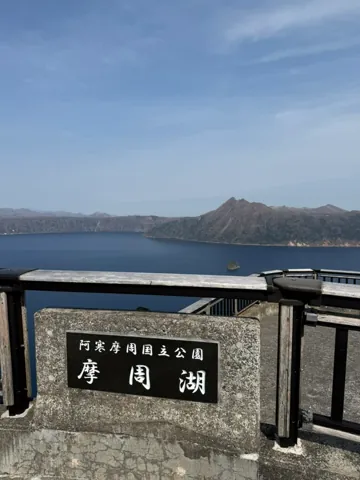
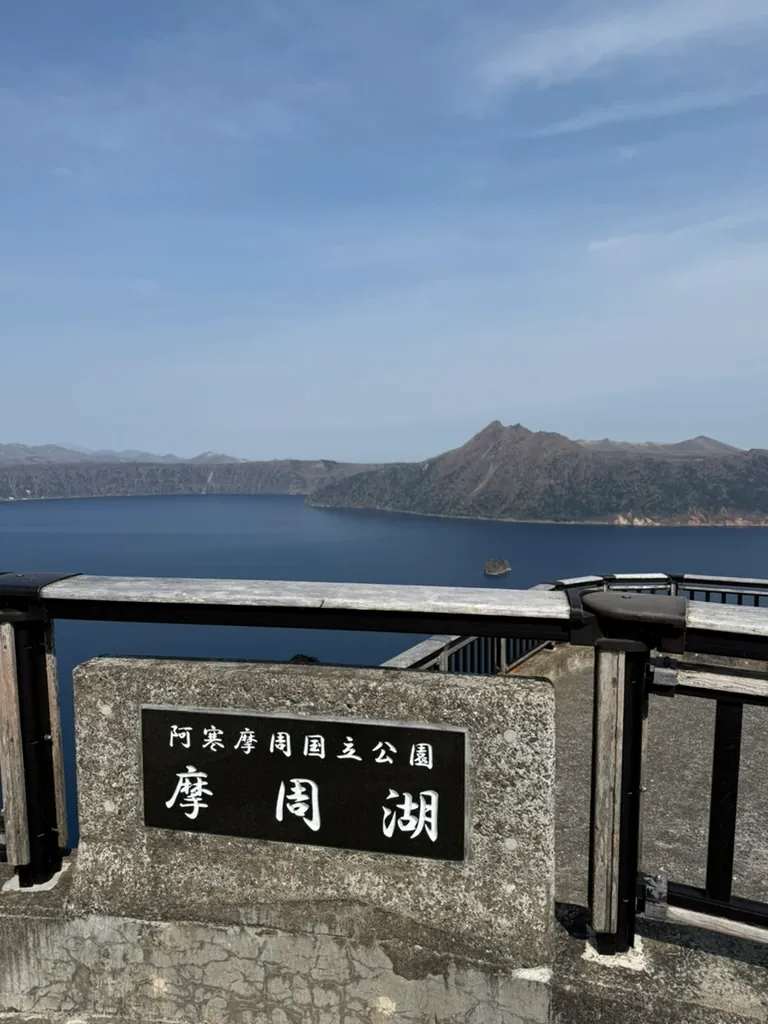
- Lake Mashu (摩周湖): a closed caldera lake that the tourism association bills as the clearest in Japan. A transparency of 41.6 m was measured in 1931. The lake is often hidden by summer fog14, the "fog" of Fuse Akira's 1966 hit song Kiri no Mashūko (霧の摩周湖)15.
- Lake Kussharo (屈斜路湖): Japan's largest caldera lake16, at 79.54 km²7. It has hot sand at Sunayu, free lakeside baths and wintering whooper swans1617.
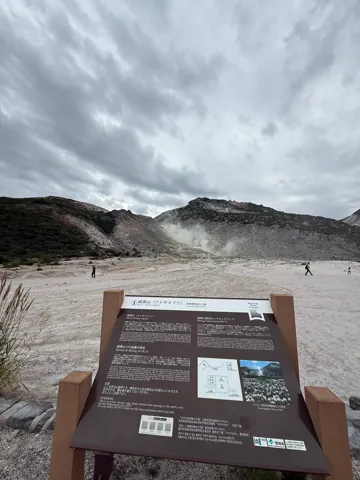
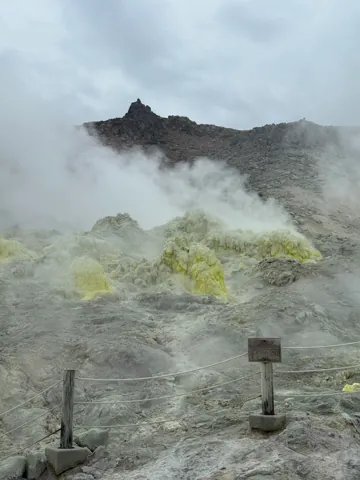
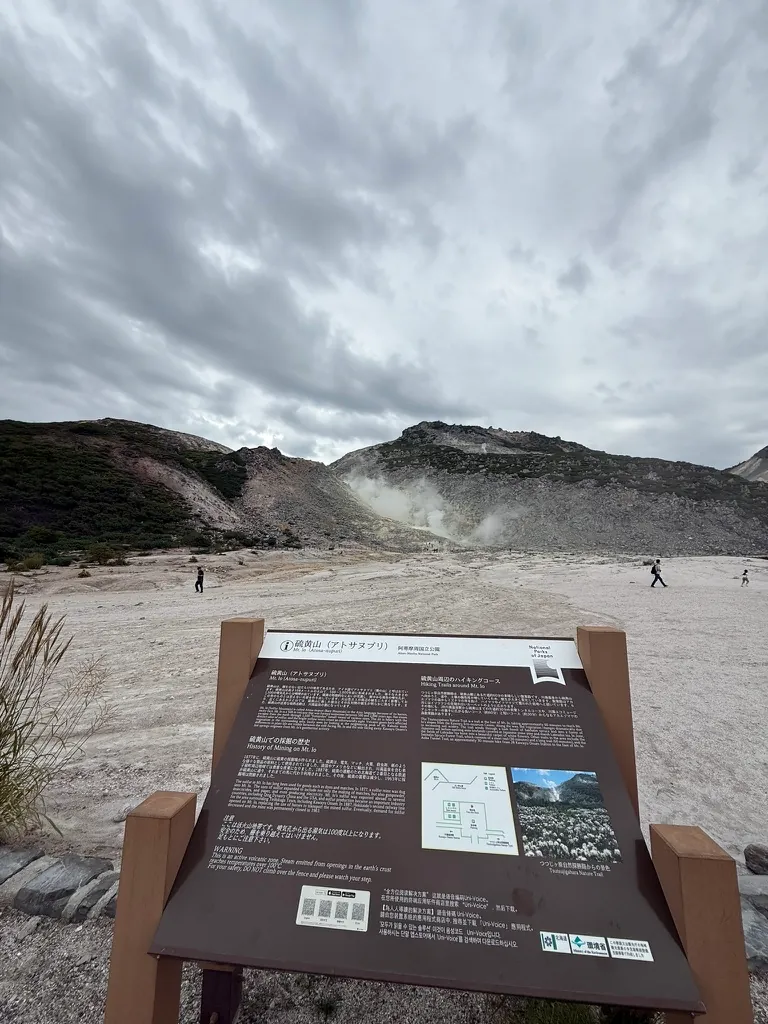
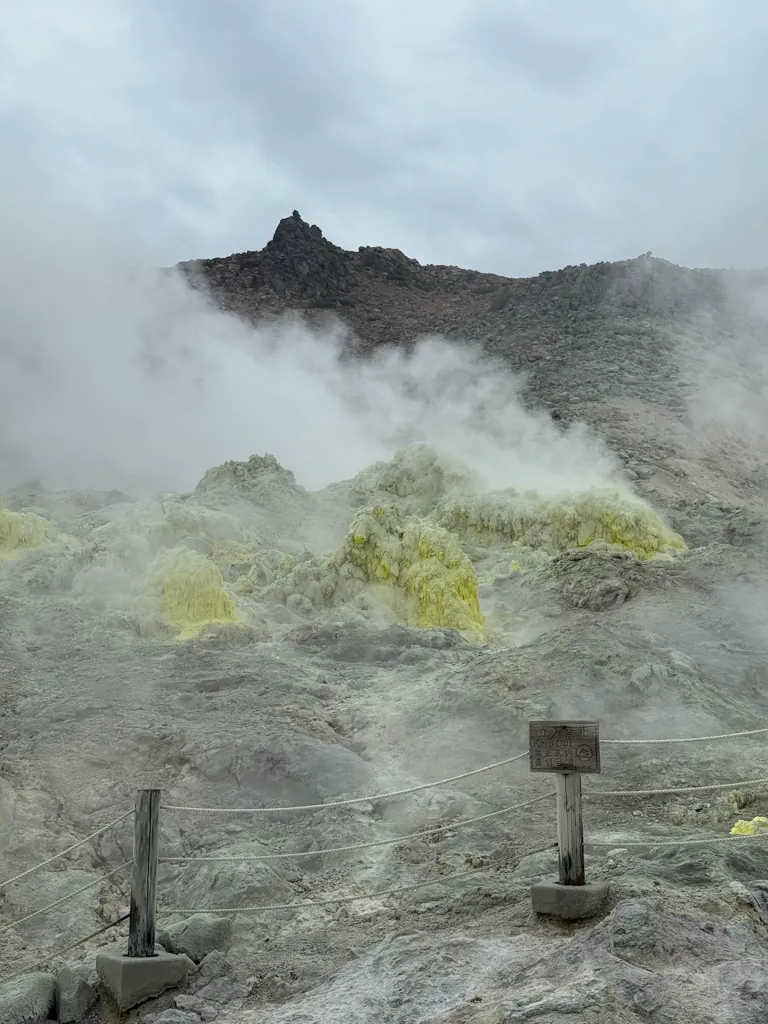
- Atosanupuri / Mt. Iō (アトサヌプリ/硫黄山): a live lava dome where visitors can walk right up to roaring sulfur vents. The summit is open only on tours with a town-certified guide18.
- Kawayu Onsen (川湯温泉): strongly acidic sulfur springs. A hot river runs through the middle of the resort1920.
- Taihō (大鵬): the 48th yokozuna spent his school years in Kawayu. The Taiho Sumo Memorial Hall stands there2122.
- Dairy and Mashu soba: 11,762 dairy cattle on 64 farms in FY2023. The town also grows buckwheat for Mashu soba (摩周そば)3.
- Sustainable tourism: Teshikaga won a 2026 Green Destinations Gold Award, the first in Hokkaido1.
Sights & activities
Nature & scenery
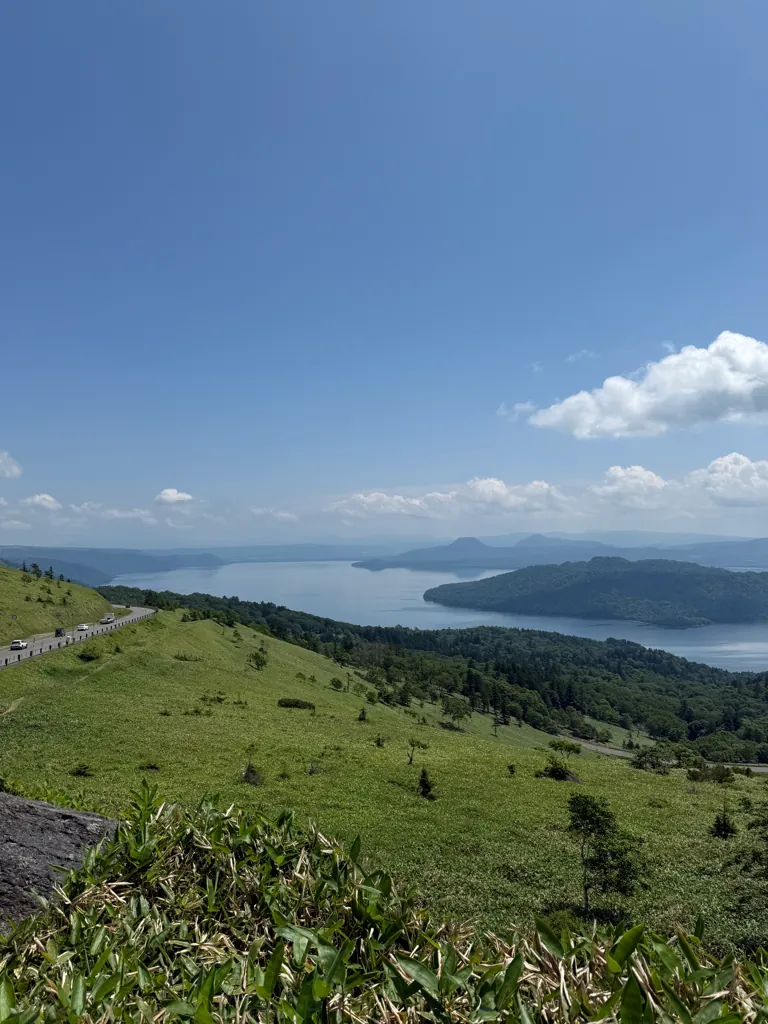
- Lake Mashu No. 1 Observatory and Lake Mashu Kamuy Terrace (摩周湖カムイテラス): the most popular Lake Mashu viewpoint, with more than a million visitors a year. Its rest house was renovated and reopened in 2022 as Kamuy Terrace, with a rooftop terrace open 24 hours (weather permitting) for stargazing. Parking is ¥500 per car, and the ticket also covers the Mt. Iō car park the same day; it is free in winter1445.
- Lake Mashu No. 3 Observatory: free, with no shop or toilets. It looks across both calderas. The road to it closes in winter1470.
- Sea of clouds (unkai): at Lake Mashu, most often from June to September, thickest around 2:00–5:00 a.m. Over Lake Kussharo it is best in July–August, seen from Tsubetsu Pass or Bihoro Pass142.
- Wakoto Peninsula (和琴半島): a 2.5 km nature trail around the peninsula, passing giant katsura trees and the Oyakotsu Jigoku (オヤコツ地獄) steam vents16.
- 900 Grassland (900草原): the town ranch, where cows graze on about 900 ha of pasture from late May to late October. Its view is known locally as the "720-degree panorama"71.
- Sunflower field: the town opens a sunflower field in summer. In 2026 its season was ending by late August, and it is planned again for next year72.
- Winter: whooper swans gather at Kotan and Sunayu2. On winter mornings, steam from Kawayu's hot river freezes onto trees as rime2.
Onsen
- Kawayu Onsen: strongly acidic spring water; the tourism association lists it as 酸性・含硫黄・鉄(II)-ナトリウム-硫酸塩・塩化物泉19. There are free footbaths, a hot hand-washing basin at Kawayu Shrine, and steam baths at Kawayu Bedrock Terrace19. Because the water is too acidic to recirculate, every bath is free-flowing (kake-nagashi)20.
- Free lakeside baths: Kotan no Yu is a stone pool at lake level, split by a rock but effectively mixed; it closes for cleaning until 16:00 on Fridays69. Wakoto Onsen is a fully mixed, crescent-shaped pool with spring water rising through gravel73. At Sunayu you can dig your own bath in the sand, 24 hours a day17.
- Day-use baths: Hotel Mashu (7:00–22:00, ¥400), the public bath Izumi-no-yu in Mashu Onsen (¥200, closed Tuesdays) and the Kawayu public bath Yukichi (¥500, closed Wednesdays), among others74.
Museums & heritage
- Taiho Sumo Memorial Hall (大鵬相撲記念館), Kawayu Onsen 2-1-20: Taihō's championship portraits, ceremonial aprons and films of his bouts. Adult admission is ¥42022. The tourism association gives hours as 9:00–17:00, while Japanese Wikipedia lists longer summer hours, so check before going2248.
- Kawayu Visitor Center (川湯ビジターセンター): a free national-park center with a café, outdoor-gear rental and bear-sighting updates. Open 8:00–17:00 in April–October and 9:00–16:00 in November–March. It closes on Wednesdays, but not from the third week of July to 31 August75.
- Mt. Iō MOKMOK Base (硫黄山MOKMOKベース): reopened after renovation in 2023, with a 5 m "theater" window facing the vents and a small museum on the sulfur-mining era18.
- Other museums: Kussharo Kotan Ainu Museum and the Furusato History Museum (see above)6764.
Outdoor & seasonal activities
- Mashu-Kussharo Trail (MKT): about 50 km from the Lake Mashu No. 1 Observatory to Kussharo Prince Hotel, opened in October 2020. A roughly 12 km extension to Bihoro Pass opened on 11 October 2025 and closes in winter76.
- Atosanupuri Trekking Tour: runs in the green season with town-certified guides. Part of the fee pays for trail upkeep and monitoring3218.
- Canoeing: guided trips on the upper Kushiro River from Lake Kussharo, suitable for beginners2.
- Mt. Mashu (Kamuinupuri): a 7.2 km one-way trail from the No. 1 Observatory, busiest in autumn14.
- Winter: snowshoe sets rent for ¥1,100 a day at Kamuy Terrace and MOKMOK Base (2025 season)14.
Food experiences
Roadside stations (Michi-no-Eki)
Mashu Onsen (道の駅摩周温泉)
- Location: 3-5-5 Yunoshima (湯の島), on National Route 241 near where Routes 241, 243 and 391 meet. It sits at the entrance to Mashu Onsen, about 11 km from Lake Mashu35. Mapcode 462 849 69635.
- Hours:
- May–October: 9:00–18:00. November–April: 9:00–17:0035.
- Closed 30 December–3 January35.
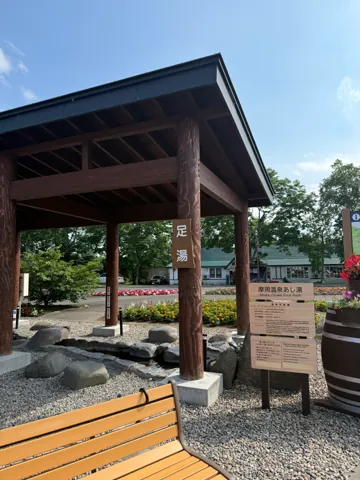
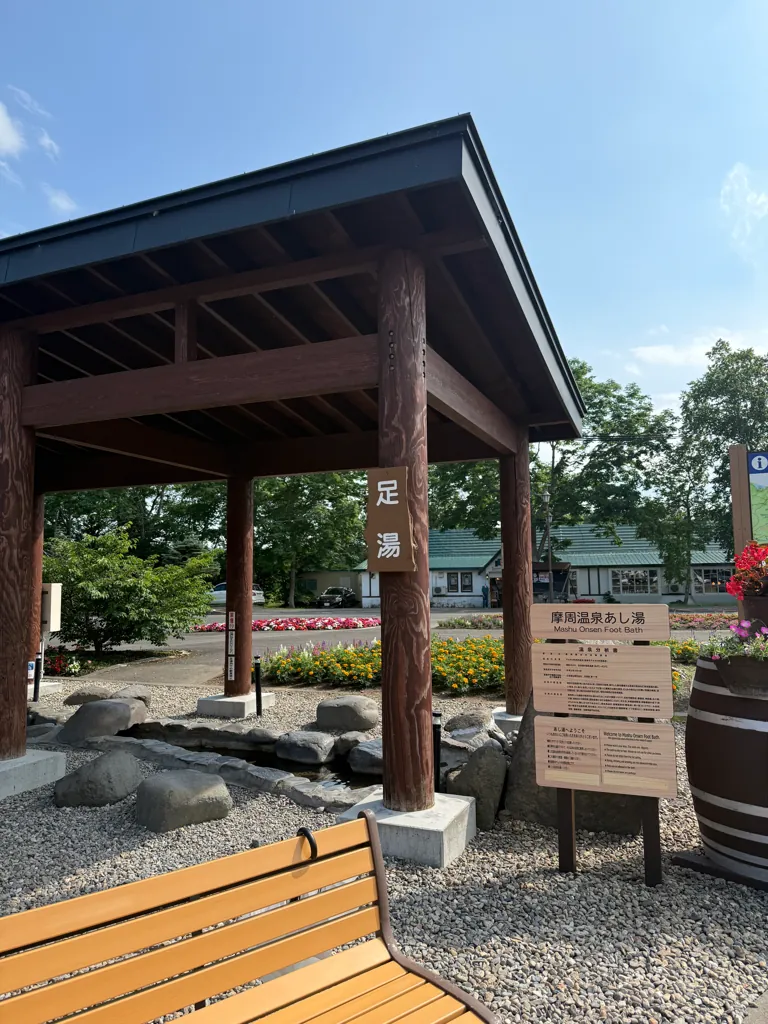
- In summer the stamp can be pressed in the front hall from 8:00. The outdoor toilets and footbath are open 24 hours77.
- The tourism association's information-desk page gives an 8:00 summer opening78.
- As of September 2026. Check before visiting.
- Shops & products: the direct-sales shop focuses on Teshikaga and eastern Hokkaido products34:
- Mashu hachiwari soba and Mashu Ruby nama caramels
- Taihō senbei, soba manjū and koguma monaka
- the "牛のおっぱい" dairy range from a local farm
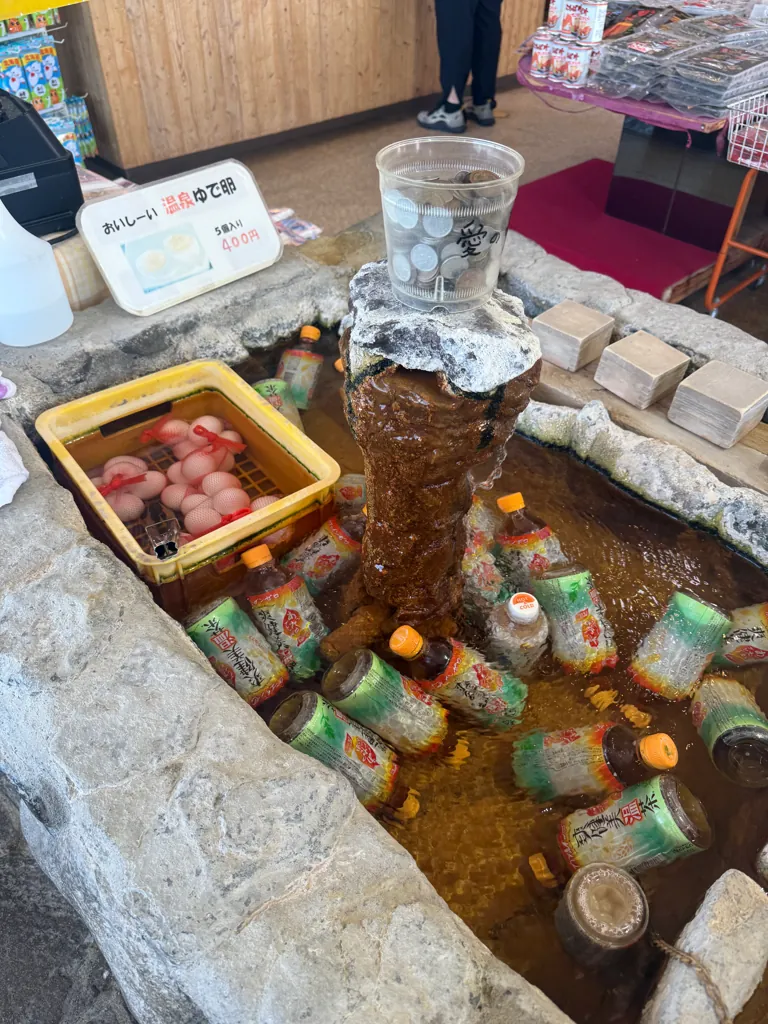
- leafy greens such as komatsuna and spinach, grown year-round in hot-spring-heated greenhouses35
- Mashu shiitake, wild vegetables and fruit, sold in season47
- "Mashūko no Yūhi" mangoes46
- Food: two take-out counters. Home Sweet Home sells burgers, zangi fried chicken and fries; its specialty is the Ezo deer burger. Cream Dōwa serves gelato made with local milk, in about 14 flavors including milk and sakura-mochi4735.
- Facilities:
- Parking: 66 cars, 9 large vehicles and 3 accessible spaces, plus 25 temporary spaces from Golden Week to the end of October3547.
- 24-hour toilets with bidet seats and an ostomate-accessible toilet35
- EV charger, Wi-Fi and covered parking35
- nursing room, dog run and a free hot-spring footbath with free-flowing water35
- tourist information for the town and all of eastern Hokkaido, with foreign-language pamphlets47. Staff check conditions with the Lake Mashu observatory in real time and suggest where to go that day35.
- Notes:
- Registered on 22 April 1993 as No. 11 on the Hokkaido list, part of the first batch of stations3579.
- The building was replaced in July 2011 with a much larger one (890 m² of floor space)80.
- MLIT chose it as a "key" roadside station (重点「道の駅」) in FY2018 for its plans as a gateway to eastern Hokkaido and a winter blizzard shelter81.
- Nearby stations: Gurutto Panorama Bihoro-tōge (道の駅ぐるっとパノラマ美幌峠) is just over the pass in Bihoro. Akan Tanchō no Sato (道の駅阿寒丹頂の里) is in Kushiro City79.
Getting there & around
- Rail: Teshikaga has three stations on the JR Senmō Line: Mashu (摩周駅), Biruwa (美留和駅) and Kawayu-Onsen (川湯温泉駅)10. Mashu is the only staffed station, with bus and taxi connections82. Mashu is about 80 minutes from Kushiro and 110 minutes from Abashiri. The limited express from Sapporo to Kushiro takes about 3 hours 40 minutes83. Kawayu-Onsen Station has had its present name since 198884.
- Air: the town says public transport from the three nearby airports is poor, so a car is needed. By car it is about 50 minutes (51 km) from Nakashibetsu, and about 1 hour 10 minutes from Kushiro (69 km) or Memanbetsu (65 km)83.
- Road: National Routes 241, 243 and 391 cross the town10. The nearest expressway exit is Akan IC on the Dōtō Expressway10. By car, Kushiro is about 80 minutes away and Abashiri about 90 minutes. Sapporo is about 5 hours using expressways, or 6 hours 30 minutes on ordinary roads83.
- Buses:
- Local Akan Bus routes link Mashu Station with the roadside station and Lake Mashu, and Kawayu-Onsen Station with the Taiho museum10.
- Year-round highway buses run from Sapporo on two Sapporo–Kushiro routes and one Sapporo–Abashiri/Bihoro/Kitami route82.
- In summer 2026 the Eco Passport (弟子屈えこパスポート) sightseeing loop ran from 1 to 30 August. It needs a reservation and costs ¥3,000 for adults (¥1,000 for children) for three consecutive days85.
- Getting around: Mashuko Rent-a-car has offices in Mashu and Kawayu, and bicycles can be rented through the tourism association82.
Practical tips
- Seasons:
- Fog on Lake Mashu: mostly a summer problem. The Kamuy Terrace website publishes how often the lake surface is visible. Outside summer, it can be seen for at least 4 hours between 9:00 and 16:00 on more than 70% of days on average. Check the live camera before driving up14.
- Winter roads: roads close for the winter from late October66:
- Route 52 to the No. 3 Observatory
- Route 150 to the Ura-Mashu (裏摩周) observatory
- Route 588 over Tsubetsu Pass
- part of Route 587 over Mokoto Pass
- The No. 1 Observatory stays open from the Teshikaga side.
- Blizzards close roads about three times a season86.
- Visitor information: the roadside station, the desk in JR Mashu Station (free Wi-Fi, coin lockers) and Kawayu Visitor Center78.
- Wildlife: Kawayu Visitor Center posts brown bear sightings75. Deer are common enough that farmland is ringed by about 100 km of fencing, so drive carefully at dawn and dusk3.
- Onsen care: Kawayu's acidic water corrodes metal, so take off watches and jewelry before bathing20.
- Seasonal closures: Kussharo Kotan Ainu Museum is closed from 1 December to 9 April67. The Mashu observatory parking is unstaffed and free from November to April14.
Photos
-
 Jul 2025
 -
 Jul 2025
 -
 Jul 2025
 -
 Aug 2025
 -
 Aug 2025
 -
 May 2026
 -
 May 2026
 -
 May 2026
More about Teshikaga
At a glance
| Field | Details |
|---|---|
| Type | Town (町) |
| Subprefecture | Kushiro (釧路総合振興局) |
| District | Kawakami District (川上郡) |
| Population | 2020 Census: 6,955 people (3,314 men, 3,641 women) in 3,339 households4. Latest: 6,219 people on 31 August 2026. This is the Hokkaido Government's reference figure from the resident-register network (住基ネット)5. Trend: the 2025 Census preliminary count was 6,247, down 10.2% from 20206. The census peak was 13,262 in 19604 |
| Area | 774.33 km² (GSI, 1 April 2026)7. The town measures 28.8 km east to west and 31.0 km north to south8 |
| Density | About 8.0 people/km² in August 2026 and 9.0/km² at the 2020 Census (calculated from the figures above) |
| Municipal history | Village office: 1903, when Teshikaga split from Kumaushi Village (熊牛村, now Shibecha) and a joint village-chief office for Teshikaga and one other village (弟子屈外一村戸長役場) was set up910. Village: second-class village in 1923, first-class village in 1943. Town: 1947. Boundary changes: part of the town went to Shibecha in 1956, and part of Shibecha was added to the town in 195710. The town counted 2003 as its 100th year11. No merger was found |
| Neighboring municipalities | Kushiro City, Shibecha, Tsubetsu, Bihoro, Koshimizu, Kiyosato and Nakashibetsu10 |
| Symbols | Flower: azalea (ツツジ), chosen for the white Ledum (シロイソツツジ) on Mt. Iō. Tree: cherry (サクラ). Bird: swan (白鳥), which winters on Lake Kussharo and the Kushiro River. The three were picked from 613 public entries after a call in December 198612. Emblem: three peaks for Mt. Mashu which, with a "T" below them, form the katakana テ; the inner circle stands for Lake Mashu13. Catchphrase: 「摩周湖と いで湯のロマン 弟子屈町」, chosen for the town's centenary in 200311 |
| Mascot | No official town mascot was found. The lake monster Kussie (クッシー) has a statue at Sunayu10 |
| Official website | https://www.town.teshikaga.hokkaido.jp/ |
Name origin
- Main theory: the name comes from the Ainu tes-ka-ka (テㇱカカ)23. Tes originally meant a weir for catching fish. In place names it usually describes a ledge of bedrock that crosses a river like a weir. Place-name scholar Yamada Hidezō took tes-ka-ka to mean the bank by such a ledge across the Kushiro River. He suggested the second ka ("top of") was added to mean "the bank at that bedrock"23.
- Early records: in his 1858 diary (戊午日誌), the explorer Matsuura Takeshirō describes bedrock on the riverbed with shallow water rustling over it. Local accounts say it was not the rock under today's Teshikaga Bridge. It was a long ledge in the old river channel that formed a small fall, where people speared salmon23.
- The town's version: the town reads the name as teshika "bedrock" plus ga "on top of", so "on the bedrock"8. A local story tells of Ainu fishers who could not drive net stakes into the rock at a pool full of fish. The spot is near today's Lake Mashu Tourism Association office8. The official town history (町史) also gives "bedrock, top"23.
- Other local names: Lake Mashu is Kamuy-to, "lake of the gods"14. Kussharo comes from kutcharo, "outlet (throat)" of a lake16. Atosanupuri is atusa-nupuri, "bare mountain"24. Kawayu ("river hot water") translates sesek-pet, "hot river". The word order was reportedly flipped because Hakodate's Yunokawa Onsen already had the other order20.
History
- Prehistory: 50 archaeological sites are recorded in the town. The Kussharo Kotan site dates to the Initial Jōmon, about 8,000–6,000 years ago. Grave goods there include great white shark teeth, and the site is thought to have been a settled village. Tobinitai pottery found locally shows that the Okhotsk culture reached this far inland25.
- Ainu era: eight chashi (Ainu hilltop enclosures) are known in the town. Four of them became national historic sites in 2015 as part of the Kushiro River Basin Chashi Sites (釧路川流域チャシ跡群)2526. When Matsuura Takeshirō explored the area in the 1850s, only 17 Ainu households lived at Teshikaga and on the shore of Kussharo9.
- Sulfur mining (1877–1896): Sano Magoemon, a Kushiro fishery operator, began mining Mt. Iō in 1877 and hauled the sulfur with some 400 horses. From 1885 the next owner, Yamada Shin, used convicts from the Kushiro prison (釧路集治監). The sulfur gas and dust left many with eye disease or blindness. In 1887 Yasuda Zenjirō took over and built a sulfur railway from Atosanupuri to Shibecha, counted as Hokkaido's second railway. The mine was worked out and shut in 189627. Small-scale mining ended in 196327.
- First settlers: Motoyama Shichiemon, from Ishikawa, opened a hot-spring inn in Teshikaga in 1885 (the town names today's Mashu Park as its successor), and he is counted as the first permanent Japanese settler928. Sarashina Jirō of Niigata became the first farmer in 1890, according to the town. Japanese Wikipedia gives 188092810.
- Imperial estate (1897 onward): most of the area became an imperial estate (御料地) in 1897. Odagiri Eizaburō, who arrived in 1898 to head the estate bureau's Kawakami branch office, promoted mixed farming with livestock rather than grain alone. The first 50 households arrived from Toyama in 1899, and settlers kept coming in 11 waves through 19199. The town's agriculture report also lists settlers from Kagawa, Ehime, Tokushima, Ibaraki, Kōchi, Fukushima and Nara3. The Toyama settlers brought the lion dances still performed at the Teshikaga Shrine festival28.
- Timber and tourism (1900s–1930s): paper mills opened in Kushiro and Tomakomai in 1905–1907. Logs from Teshikaga's forests were floated down the Kushiro River to them9. Road engineer Nagayama Arikane built the road to Lake Mashu (1929) and the Akan crossing road (1930)29. The railway reached Teshikaga in 1929 and Kawayu in 1930, and the Kushiro–Abashiri line was finished in 1931. Akan National Park was designated on 4 December 19342930.
- Postwar boom: fire destroyed 16 buildings in Kawayu on 24 May 194821. The 1953 film Kimi no Na wa (君の名は) was shot at Mt. Iō and Minami-Teshikaga Station and set off a tourism boom21. The Emperor and Empress visited in August 195410. Fuse Akira's 1966 song Kiri no Mashūko, set at what was then a little-known lake, sold about 600,000 copies15. The four resort areas' combined visitor count passed 2 million in 1968. It peaked at 4,476,588 in FY1991 (the sum of the four areas' separate counts)21.
- 1990s–2010s: Teshikaga Station was renamed Mashu Station in 199031. The two local tourism associations merged in 200721. The park was renamed Akan-Mashu National Park in 2017 after a long local campaign21.
- Recent years: Minami-Teshikaga Station closed on 14 March 202010. In FY2020 the town opened Atosanupuri, which had been off-limits, to limited numbers of visitors with town-certified guides32. In 2023 the town, the Ministry of the Environment and Hoshino Resorts signed an agreement for a new lodging on the site of derelict Kawayu hotels that had been torn down33. A plan to redevelop the Kawayu area was certified by the environment minister on 20 October 202534.
Geography & climate
- Landforms: the town sits in and around the Kussharo caldera and the Mashu caldera to its east10. About 70% of it is forest. Farmland is scattered along Lake Kussharo and the river valleys8. Mt. Mokoto (藻琴山, 1,000 m) heads Japanese Wikipedia's list of the town's mountains10.
- Lake Kussharo: 79.54 km², the sixth-largest lake in Japan7. It is 125 m deep at its deepest, with its surface at 121 m above sea level. Its island, Nakajima (中島), is 5.81 km²716. Ice spreads from about December, and the lake is fully frozen from about January into March. The tourism association calls it the largest lake in Japan to freeze over completely. Pressure ridges (omiwatari) up to 2 m high and 10 km long can form on the ice16.
- Lake Mashu: 19.22 km² according to GSI (the tourism association gives 19.6 km²)714. It is 212 m deep at its deepest, and its surface is at 351 m. Caldera walls 150–350 m high surround it, and no rivers flow in or out. The lake is a special protection zone of the national park1435.
- Atosanupuri: a lava dome given as 512 m high by Japanese Wikipedia and 508 m by the tourism association2418. It is rated a class-C active volcano and has more than 1,000 fumaroles, according to the tourism association's Mt. Iō page; its Lake Mashu page says more than 1,5001814. At its foot, Tsutsujigahara (つつじヶ原) is about 100 ha of Hokkaido-native Ledum (エゾイソツツジ), which grows on the acidic soil18.
- Kushiro River: it flows out of Lake Kussharo, the only river to leave the lake. It runs 154 km through the Kushiro Wetland to the Pacific, and the tourism association notes it has no dams or weirs along the way16.
- Climate: the town is cool and inland. Kawayu station averages 4.7°C a year, from −8.9°C in January to 18.2°C in August. Average snowfall is 505 cm a year (1991–2020 normals)36. The record low is −34.0°C at Kawayu (25 February 1978) and −26.7°C at Teshikaga (9 February 2019)3738. Summers can be hot: Kawayu reached 36.6°C on 23 July 2025, and Teshikaga 35.7°C on 26 May 20193738. Kawayu's deepest recorded snow was 175 cm, on 7 March 200437.
Economy & industry
- Main industries: tourism and dairy farming. Most of the tourism is at Lake Mashu, Lake Kussharo, Mashu Onsen and Kawayu Onsen10.
- Visitor numbers: 760,823 in FY2025, up 1.7% on the previous year. Overnight stays totaled 151,882, including 24,386 by international visitors39. In FY1995 the town had 1,296,289 visitors and 613,269 overnight guests40. The fall shows most in Kawayu Onsen's overnight stays: 493,756 in FY1995, and 67,690 by domestic guests in FY20254039.
- Dairy: in FY2023, 64 dairy farms kept 11,762 cattle, about 184 head per farm. In FY1970 there were 451 farms averaging about 15 head3. The town shipped 53,878 t of raw milk, worth about ¥6 billion, in FY2023. There were also 1,660 beef cattle3. The town ranch covers 1,486 ha. In summer 2023 it grazed 1,444 dairy cattle and 96 horses3.
- Crops (FY2023): potatoes 385.7 ha (13,644 t), sugar beet 279.2 ha (17,733 t), wheat 259.2 ha (1,658 t) and buckwheat 217.5 ha (252 t)3. In total, JA Mashuko (摩周湖農業協同組合) sold about ¥6.94 billion of farm produce in FY20233.
- Farm numbers: farm households peaked at 1,059 in 1959 and fell to 116 by FY2023; another table in the same report gives 1153. The town has built about 100 km of deer fencing around farmland (sum of the listed sections)3.
- Geothermal heat: hot-spring heat has warmed the town hall since it was rebuilt in 1977, saving about 220,000 liters of oil a year. The same heat grows the town's strawberries and mangoes in greenhouses41.
- Population: in the 2020 Census, 2,854 of the town's 6,955 residents were 65 or older (about 41%), and 605 were under 154.
- Revitalization: the town and the tourism association (a registered regional DMO since 2022) plan tourism around the GSTC sustainability criteria1. Teshikaga was named a Green Destinations Top 100 story in 2023 and won the Gold Award in 20261. Kawayu is being rebuilt under a 2023 master plan: derelict hotels have been removed, and the Kawayu Bedrock Terrace opened in October 2024343319.
Local specialties
| Specialty | Category | Details & where to get it |
|---|---|---|
| Mashu soba (摩周そば) | Buckwheat noodles | Made from local buckwheat (252 t in FY2023)3. Stone-ground Mashu hachiwari (80% buckwheat) dried noodles are sold at the roadside station35. Mashu Soba Dōraku in Kawayu grows its own buckwheat and serves 100% inaka soba42. New-crop soba is the main draw at the JA Mashuko Fes in late August43 |
| Milk and dairy sweets | Dairy | The roadside station sells the "牛のおっぱい" range (drinking yogurt, milk, coffee milk, cheese tart, milk sablé, jam), made with milk from a local experience farm35. Watanabe Taiken Bokujō (渡辺体験牧場) has 120 cows on 70 ha and offers milking, butter-making and ice-cream-making44 |
| Mashu Ruby (摩周ルビー) strawberries | Fruit | Grown in greenhouses heated by hot-spring water41. Sold as handmade nama caramels at the roadside station and in the Mashu Ruby sweets corner at Lake Mashu Kamuy Terrace3545 |
| "Mashūko no Yūhi" (摩周湖の夕日) mango | Fruit | Farm People's "extreme-cold ripened" mangoes, grown with hot-spring heat and sharp day–night temperature swings. Sold at the roadside station46 |
| Ezo deer burger (エゾシカバーガー) | Local dish | A Hokkaido venison patty with house demi-glace sauce, from Home Sweet Home in the roadside station3547 |
| Gelato from Cream Dōwa (くりーむ童話) | Sweets | A Kawayu shop that uses local milk. About 14 flavors, including milk and sakura-mochi3547 |
| Mashu Blue soft-serve (摩周ブルーソフト), Mashu imo-dango | Snacks | Served at Lake Mashu Kamuy Terrace. The soft-serve is colored like the lake, and the imo-dango are made from local potatoes45 |
| Taihō senbei (大鵬せんべい) | Confectionery | Hase Seika's tile-shaped crackers, printed with the design of Taihō's ceremonial apron. Sold at the roadside station and the Taiho museum3548. Hase Seika also runs the Aoidō (碧生堂) sweet shop in central Teshikaga49 |
| Soba manjū and koguma monaka | Confectionery | Buns with at least 50% Mashu buckwheat flour in the skin, and bear-cub-shaped wafers from a Kawayu confectioner. Both are sold at the roadside station35 |
| Teshikaga Ramen (弟子屈ラーメン) | Ramen | A ramen brand named after the town. It started in Sapporo in 2003 and opened its main shop (総本店) in Teshikaga in July 2006; branches followed in Sapporo, New Chitose Airport and elsewhere in Japan50. The main shop, at Mashu 1-chome, is known for its gyokai shibori shōyu (seafood-stock soy sauce) ramen51 |
| Furusato nōzei gifts | Hometown tax | Furusato Choice lists 101 ice cream/yogurt items, 49 lodging vouchers, 35 beef items, 12 milk items, 3 soba and 2 strawberry items (September 2026). Snow crab and salmon roe are among the top-ranked gifts52 |
Culture & festivals
| Event | When | Highlights |
|---|---|---|
| Mori no Snow Park in Kawayu Onsen (森のスノーパーク in 川湯温泉) | February (21 Feb 2026) | A free winter day at Kawayu Visitor Center: cross-country skiing, snowshoes, tipi campfires and red-spruce distilling53 |
| Teshikaga Hanabi-mura (てしかが花火村) | February (22 Feb 2026) | Unlimited hand-held fireworks, a hot-air balloon and food trucks at the Teshikaga Junior High ground54 |
| Mashu Snow Land (摩周スノーランド) | February (15 Feb 2025) | A long snow slide, a snowball-fight contest, outdoor winter yakiniku and fireworks at Yunoshima Park55 |
| Grand Fondo Mashu (グランフォンド摩周) | May–October (1 May–31 Oct 2026) | Now run as a self-paced cycling stamp rally; entry at the roadside station or Kawayu Visitor Center brings a ¥500 shopping voucher and a hot-spring ticket56. It was earlier a one-day ride in June (a 2023 notice lists 4 June 2022) on 100 km and 60 km courses past the lakes and Mt. Iō, with feed stations serving Mashu soba and imo-dango57 |
| Kawayu Onsen Yukemuri Beer Garden | July (24–25 Jul 2026, first held) | Draft beer, local food, a children's fair and hand-held fireworks in the Kawayu resort area58 |
| Kushiro River Kawamachi Jamboree (釧路川かわまちジャンボリー) | August (17–23 Aug 2025) | A riverside café and beer garden, a kids' area and disaster-prevention activities at the Kushiro River Fureai Plaza59 |
| Lake Kussharo Open Water Swimming | Late August (27 Aug 2023) | Races from 400 m to 5 km in the caldera lake60 |
| JA Mashuko Fes (JA摩周湖フェス) | Late August (29 Aug 2026) | 1,000 servings of hand-made new-crop soba, grilled local meat and food trucks outside A-Coop Teshikaga43 |
| Kawayu no Mori Night Museum (川湯の森ナイトミュージアム) | Autumn (2023 program: September–December) | Evening light-ups in the Kawayu forest (6–22 October 2023) and evening lighting of Mt. Iō (12 September–25 December 2023)61 |
| Kawayu Marche (川湯マルシェ) | October (10 Oct 2026, 6th edition) | Local restaurants, a Kawayu-bayashi performance and hand-held fireworks62 |
- Lion dances: the Tōbetsu (鐺別) and Nita (仁多) lion dances came from Toyama with the 1899 settlers and were first offered at Teshikaga Shrine in 1904 (Tōbetsu) and the following year (Nita). Both are town-designated intangible cultural properties (1971)2826. The Nita dance was pieced back together from old recordings. In 2025 it was performed alongside Tōbetsu's at the shrine festival for the first time in about 40 years28.
- Kawayu-bayashi (川湯ばやし): a drum-and-flute festival music adapted from the Myōjin-bayashi of Echizen, Fukui. It was learned in 1971 and first performed in 1972. It plays at the Kawayu Shrine festival and other events, and was designated a town cultural property in 20256326.
- Natural monuments: the Wakoto minmin-zemi cicada habitat was designated nationally in 1951. The lake-ball moss of Lake Kussharo (屈斜路湖マリゴケ) has been a town natural monument since 196926.
- Museums: the Furusato History Museum (ふるさと歴史館), in the Mashu Tourism and Culture Center, opened in April 2023. It covers local history, the poet Sarashina Genzō and the travel collection of Taneichi Sakai, a former national-railway employee. Admission is free, and it closes on Tuesdays6465.
- Music history: cartoonist Akatsuka Fujio produced the Kamuitorano Lake Kussharo Jazz Festival on the lakeshore at Nibushi in 1983 and 198466.
Ainu heritage
- Settlements: in the Edo period, Ainu lived in kotan (villages) at Tesikaka (the present town center) and Kutcharo (Kussharo), as Matsuura Takeshirō and others recorded10. Today Kussharo Kotan (屈斜路古丹), on the south shore of the lake, has the Ainu museum, the Mosir group and the Kotan no Yu bath676869.
- Kussharo Kotan Ainu Museum (弟子屈町屈斜路コタンアイヌ民族資料館): opened on 6 June 1982. Exhibits are grouped into five themes on Ainu life and belief. The museum was renamed from "folk" to "ethnic" museum in 202067. It is open 10 April–30 November, 9:00–17:00, and adult admission is ¥420. Visitors can book Ainu-pattern embroidery on Matsusaka cotton (¥1,000), a magatama bead workshop (¥700), or try on traditional clothes for free67. It also screens a short cut of Chironnupu Kamuy Iomante (チロンヌプカムイ イオマンテ), a 1986 film of a fox spirit-sending ritual led by the museum's late director, Deshi Toyoji67.
- Dance: the Kussharo Kotan Ainu Culture Preservation Society was added on 21 December 1994 to the national Important Intangible Folk Cultural Property "Ainu Traditional Dance" (アイヌ古式舞踊)2610.
- Chashi sites: Uranko-ushi (ウランコウシ), Kutcharoshipe No. 1 and No. 2 (クッチャロシペ第1・第2) and Puirakuni (プイラクニ) are part of the national historic site covering the Kushiro River basin26.
- Living culture: the Ainu music and dance group Mosir (モシリ), based in Kussharo Kotan, performs new songs and dances rooted in tradition68. Its leader, Atuy (アト゜イ), also runs the inn Marukibune (丸木舟)10.
- Legend: the Ainu hero Otashtonkur (オタシトンクル) is said to have tied a raging giant amemasu char to a mountain. The mountain collapsed into the lake and became Nakajima, and local earthquakes are blamed on the trapped fish16.
Sister & friendship cities
- Hioki, Kagoshima Prefecture (日置市): a sister-town pact was signed with Higashi-Ichiki (東市来町) in November 1983. The tie honors Nagayama Arikane, a Higashi-Ichiki native who built the Akan crossing road. Higashi-Ichiki merged into Hioki in May 2005, and the pact was carried over, with ceremonies in Hioki (28 October 2005) and in Teshikaga (August 2006). Middle-school exchanges have run every other year since 199087.
- China: Japanese Wikipedia lists Shangqiu (商丘市, Henan), Sishui County (泗水県, Shandong) and Bincheng District of Binzhou (Shandong), without dates. These do not appear on the town's sister-city page (unverified)1087.
Notable people
- Taihō Kōki (大鵬幸喜, 1940–2013): the 48th yokozuna, with 32 top-division titles. He was born in Karafuto (Sakhalin) and lived in Teshikaga from fifth grade until the summer of his first high-school year. He received the People's Honour Award posthumously in 20138821.
- Sarashina Genzō (更科源蔵, 1904–1985): a poet and Ainu culture researcher, born in Teshikaga to a family of settlers from Niigata89.
- Atuy (アト゜イ): an Ainu musician who leads the Mosir troupe and runs the Marukibune inn in Kussharo Kotan10.
Sources
Numbers in the text link to these sources. Figures as of 23 September 2026
- 持続可能な観光でGreen Destinations 「Gold Award」を受賞! — Teshikaga Town JA accessed 2026-09-23
- 弟子屈町について — Teshikaga Navi, Lake Mashu Tourism Association JA accessed 2026-09-23
- 令和5年度 弟子屈町農業の概要 (PDF) — Teshikaga Town JA accessed 2026-09-23
- 人口(人口と世帯数の推移) — Teshikaga Town JA accessed 2026-09-23
- 住基ネットにおける人口【参考値】令和8年(2026年)8月31日現在 (XLSX) — Hokkaido Government, Statistics Division JA accessed 2026-09-23
- 令和7年国勢調査速報 北海道の人口・世帯数 (PDF) — Hokkaido Government, Statistics Division JA accessed 2026-09-23
- 令和8年全国都道府県市区町村別面積調(4月1日時点) — Geospatial Information Authority of Japan JA accessed 2026-09-23
- 弟子屈町の概要 — Teshikaga Town JA accessed 2026-09-23
- 弟子屈町の歴史とあゆみ — Teshikaga Town JA accessed 2026-09-23
- 弟子屈町 — Wikipedia JA accessed 2026-09-23
- 弟子屈町のシンボルマーク・キャッチフレーズ — Teshikaga Town JA accessed 2026-09-23
- 弟子屈町の花・木・鳥 — Teshikaga Town JA accessed 2026-09-23
- 町章・町民憲章・各種宣言 — Teshikaga Town JA accessed 2026-09-23
- 摩周湖~日本一の透明度を誇る神秘の湖 — Teshikaga Navi, Lake Mashu Tourism Association JA accessed 2026-09-23
- 霧の摩周湖 — Wikipedia JA accessed 2026-09-23
- 屈斜路湖~国内最大のカルデラ湖 — Teshikaga Navi, Lake Mashu Tourism Association JA accessed 2026-09-23
- 砂湯~砂から温泉が出る。オオハクチョウも飛来する景勝地 — Teshikaga Navi, Lake Mashu Tourism Association JA accessed 2026-09-23
- 硫黄山(アトサヌプリ)~日本一近づける噴気孔観賞~ — Teshikaga Navi, Lake Mashu Tourism Association JA accessed 2026-09-23
- 川湯温泉(北海道)~日本最大のカルデラから生まれる名湯 — Teshikaga Navi, Lake Mashu Tourism Association JA accessed 2026-09-23
- 川湯温泉 (北海道) — Wikipedia JA accessed 2026-09-23
- 戦後弟子屈観光史 — Teshikaga Town (Furusato History Museum) JA accessed 2026-09-23
- 大鵬相撲記念館 — Teshikaga Navi, Lake Mashu Tourism Association JA accessed 2026-09-23
- アイヌ語地名リスト ツキサ~トヨコ P81-90(2007; Internet Archive copy) — Hokkaido Government, Ainu Policy Promotion Office JA accessed 2026-09-23
- アトサヌプリ — Wikipedia JA accessed 2026-09-23
- 先史時代の弟子屈 — Teshikaga Town (Furusato History Museum) JA accessed 2026-09-23
- 文化財 — Teshikaga Town JA accessed 2026-09-23
- 硫黄山の歴史 — Teshikaga Town (Furusato History Museum) JA accessed 2026-09-23
- 弟子屈町の獅子舞 — Teshikaga Town (Furusato History Museum) JA accessed 2026-09-23
- 弟子屈町「川湯」地域の歴史 — Teshikaga Town (Furusato History Museum) JA accessed 2026-09-23
- 阿寒摩周国立公園から見る弟子屈の歴史 — Teshikaga Town (Furusato History Museum) JA accessed 2026-09-23
- 摩周駅 — Wikipedia JA accessed 2026-09-23
- 世界の持続可能な観光地TOP100に選出されました! — Teshikaga Town JA accessed 2026-09-23
- 阿寒摩周国立公園川湯温泉廃屋撤去跡地における宿舎事業 公募に係る宿舎事業実施協定の締結について — Teshikaga Town JA accessed 2026-09-23
- 阿寒摩周国立公園における利用拠点整備改善計画が認定されました — Teshikaga Town JA accessed 2026-09-23
- 摩周温泉 — 北の道の駅 (Hokkaido Michi-no-Eki official site) JA accessed 2026-09-23
- 平年値(年・月ごとの値)川湯 — Japan Meteorological Agency JA accessed 2026-09-23
- 観測史上1~10位の値(年間を通じての値)川湯 — Japan Meteorological Agency JA accessed 2026-09-23
- 観測史上1~10位の値(年間を通じての値)弟子屈 — Japan Meteorological Agency JA accessed 2026-09-23
- 令和7年度観光入込客数 (PDF) — Teshikaga Town JA accessed 2026-09-23
- 年度別観光客数(平成7年度~令和元年度)(PDF) — Teshikaga Town JA accessed 2026-09-23
- 温泉熱利用の歴史 — Teshikaga Town (Furusato History Museum) JA accessed 2026-09-23
- 摩周そば道楽 — Teshikaga Navi, Lake Mashu Tourism Association JA accessed 2026-09-23
- 【2026年】限定1000食の新そばを堪能!JA摩周湖フェス開催 — Teshikaga Navi, Lake Mashu Tourism Association JA accessed 2026-09-23
- 渡辺体験牧場 — Teshikaga Navi, Lake Mashu Tourism Association JA accessed 2026-09-23
- 摩周湖カムイテラス~2022年オープンした自然観光施設 — Teshikaga Navi, Lake Mashu Tourism Association JA accessed 2026-09-23
- ファームピープル(極寒完熟マンゴー) — Teshikaga Navi, Lake Mashu Tourism Association JA accessed 2026-09-23
- 道の駅「摩周温泉」 — Teshikaga Navi, Lake Mashu Tourism Association JA accessed 2026-09-23
- 大鵬相撲記念館 — Wikipedia JA accessed 2026-09-23
- AOIDO FACTORY LABO/菓匠 碧生堂(長谷製菓株式会社) — Teshikaga Navi, Lake Mashu Tourism Association JA accessed 2026-09-23
- 弟子屈ラーメン 沿革 — 弟子屈ラーメン公式サイト (FBS Co., Ltd.) JA accessed 2026-09-23
- 弟子屈ラーメン総本店 — Teshikaga Navi, Lake Mashu Tourism Association JA accessed 2026-09-23
- 北海道弟子屈町のふるさと納税 お礼の品ランキング — ふるさとチョイス (Furusato Choice) JA accessed 2026-09-23
- 「森のスノーパーク 2026 in 川湯温泉」が開催されます! — Teshikaga Navi, Lake Mashu Tourism Association JA accessed 2026-09-23
- みんなおいでよ! てしかが⭐️花火村が開催! — Teshikaga Navi, Lake Mashu Tourism Association JA accessed 2026-09-23
- 摩周⭐︎スノーランド2025が今年も開催されます。 — Teshikaga Navi, Lake Mashu Tourism Association JA accessed 2026-09-23
- グランフォンド摩周 公式Webサイト — Grand Fondo Mashu Executive Committee JA accessed 2026-09-23
- グランフォンド摩周開催のおしらせ — Teshikaga Navi, Lake Mashu Tourism Association JA accessed 2026-09-23
- 川湯温泉初開催ビアガーデン!街歩きツアー同時開催!! — Teshikaga Navi, Lake Mashu Tourism Association JA accessed 2026-09-23
- 【8/17~23】釧路川かわまちジャンボリー開催! — Teshikaga Navi, Lake Mashu Tourism Association JA accessed 2026-09-23
- 第4回 屈斜路湖オープンウォータースイミング大会 — Teshikaga Navi, Lake Mashu Tourism Association JA accessed 2026-09-23
- 川湯の森ナイトミュージアム2023 — Teshikaga Navi, Lake Mashu Tourism Association JA accessed 2026-09-23
- 紅葉シーズン到来!「川湯マルシェ」開催のお知らせ! — Teshikaga Navi, Lake Mashu Tourism Association JA accessed 2026-09-23
- 川湯ばやしの歴史 — Teshikaga Town (Furusato History Museum) JA accessed 2026-09-23
- 弟子屈町ふるさと歴史館 — Teshikaga Town JA accessed 2026-09-23
- 弟子屈町複合展示施設ふるさと歴史館について — Teshikaga Town JA accessed 2026-09-23
- カムイトラノ屈斜路湖ジャズフェスティバル — Wikipedia JA accessed 2026-09-23
- 弟子屈町屈斜路コタンアイヌ民族資料館 令和8年度の開館について — Teshikaga Town JA accessed 2026-09-23
- モシリ — Teshikaga Navi, Lake Mashu Tourism Association JA accessed 2026-09-23
- コタンの湯(露天風呂) — Teshikaga Navi, Lake Mashu Tourism Association JA accessed 2026-09-23
- 令和7年 冬季道路通行止めのお知らせ — Teshikaga Navi, Lake Mashu Tourism Association JA accessed 2026-09-23
- 弟子屈町営牧場について — Teshikaga Town JA accessed 2026-09-23
- 2026年 ひまわり畑の状況について — Teshikaga Town JA accessed 2026-09-23
- 和琴温泉 — Teshikaga Navi, Lake Mashu Tourism Association JA accessed 2026-09-23
- 日帰り入浴 — Teshikaga Navi, Lake Mashu Tourism Association JA accessed 2026-09-23
- 川湯ビジターセンター — Teshikaga Navi, Lake Mashu Tourism Association JA accessed 2026-09-23
- 摩周・屈斜路トレイルルート延伸ルートの開通について — Teshikaga Town JA accessed 2026-09-23
- 夏期開館時間のお知らせ(道の駅摩周温泉) — 北の道の駅 (Hokkaido Michi-no-Eki official site) JA accessed 2026-09-23
- 観光案内所 — Teshikaga Navi, Lake Mashu Tourism Association JA accessed 2026-09-23
- 住所等一覧(登録年度) — 北の道の駅 (Hokkaido Michi-no-Eki official site) JA accessed 2026-09-23
- 道の駅摩周温泉 — Wikipedia JA accessed 2026-09-23
- 地方創生拠点となる「道の駅」を選定しました【重点「道の駅」15箇所】 — Ministry of Land, Infrastructure, Transport and Tourism JA accessed 2026-09-23
- アクセス — Teshikaga Navi, Lake Mashu Tourism Association JA accessed 2026-09-23
- アクセス~道東の中心地~ — Teshikaga Town JA accessed 2026-09-23
- 川湯温泉駅 — Wikipedia JA accessed 2026-09-23
- 【事前予約制】2026年夏「弟子屈えこパスポート」町内周遊バスの予約が開始! — Teshikaga Navi, Lake Mashu Tourism Association JA accessed 2026-09-23
- 旅の安全情報 — Teshikaga Navi, Lake Mashu Tourism Association JA accessed 2026-09-23
- 弟子屈町の姉妹都市 — Teshikaga Town JA accessed 2026-09-23
- 大鵬幸喜 — Wikipedia JA accessed 2026-09-23
- 更科源蔵 — Wikipedia JA accessed 2026-09-23