Minamifurano 南富良野町
みなみふらのちょう
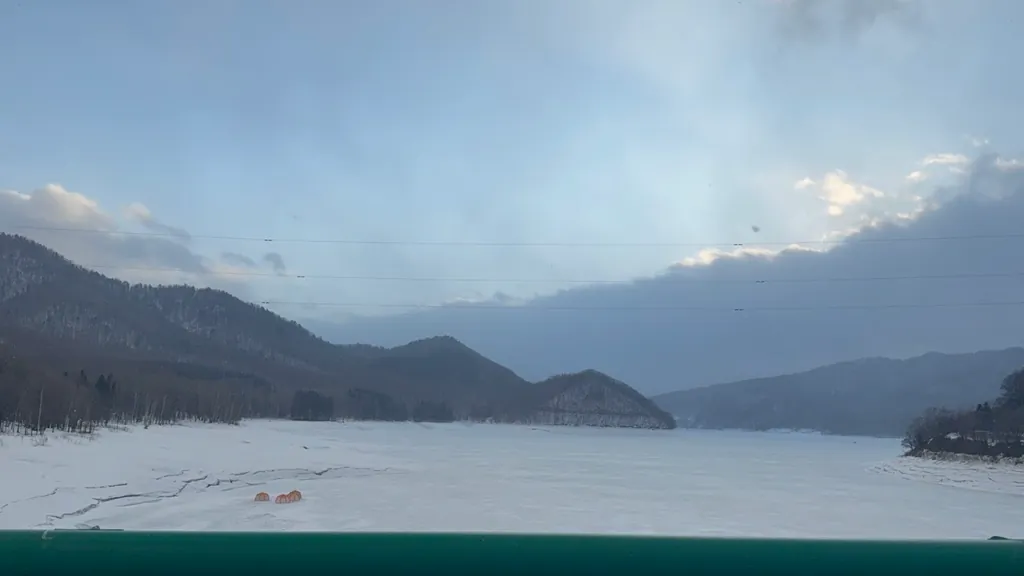
A forested mountain town in the middle of Hokkaido, strung along the upper Sorachi River (空知川) south of Furano. About 90% of its land is forest. At its centre is Lake Kanayama (かなやま湖), a reservoir created by Kanayama Dam (金山ダム).1 Today the town is known for rafting and canoeing, winter ice fishing, venison curry, and the station set from the 1999 film Poppoya (鉄道員).234
- Population (2020 Census)
- 2,376
- Area
- 665.54 km²
- District
- Sorachi District (空知郡)
- Official website
- www.town.minamifurano.hokkaido.jp
Known for
- Lake Kanayama and Kanayama Dam (かなやま湖・金山ダム): The lake was created by a dam finished in 1967. It was chosen as one of Japan's 100 best dam lakes (ダム湖百選) in 2005.15
- Rafting on the upper Sorachi River: The upper river, called the Shī-sorapuchi (シーソラプチ川), is one of the best-known rafting rivers in Hokkaido.16
- Poppoya filming location: Ikutora Station (幾寅駅) played "Horomai Station" in the 1999 film Poppoya (鉄道員), starring Ken Takakura (高倉健).4
- Nanpu Ezo Katsu Curry (なんぷエゾカツカレー): Curry topped with a cutlet of Ezo deer (エゾシカ) venison. It was launched in 2008 as the town's local dish.3
- Potatoes and carrots: The town is described as one of Hokkaido's leading producers of both.5 Bata-jaga (バタじゃが), whole potatoes packed with butter, is the classic souvenir.13
- Protecting the itou (イトウ): In 2009 the town passed an ordinance to protect the itou (Japanese huchen), said to be the first in Japan written for a single fish species.517
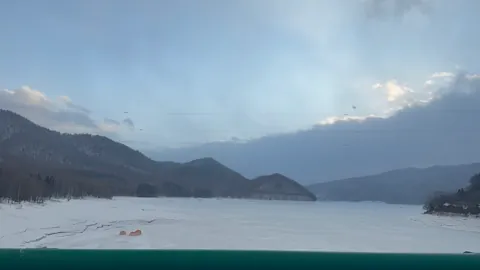
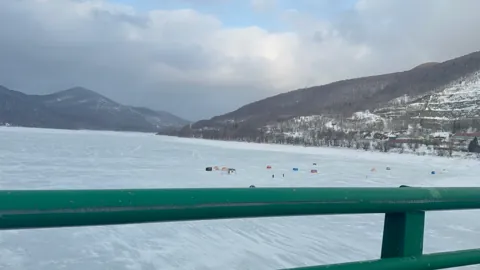
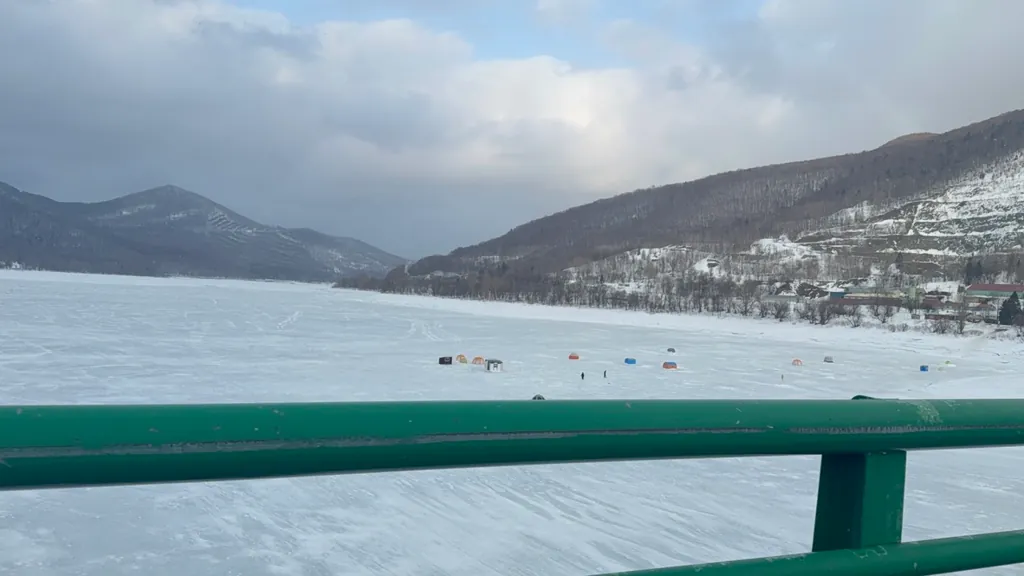
- Wakasagi ice fishing (ワカサギ釣り): In winter people fish for pond smelt through the ice on the frozen lake.2
- Michi-no-Eki Minamifurano (道の駅南ふらの): The roadside station was redeveloped after being named a Key Roadside Station (重点道の駅) in 2019.18
Sights & activities
Nature & scenery
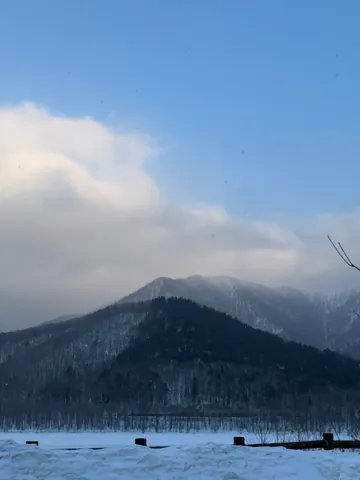
- Lake Kanayama & Kanayama Dam: The lake is ringed by forests of Ezo spruce and Sakhalin fir. In 2003 about 738,000 people visited the dam and lake, the third-highest number among dams managed by MLIT or the Japan Water Agency.15 The cherry trees below the dam are a little-known spot for spring blossom.46
- Shikagoe Park lavender (鹿越園地): Lavender with the lake behind it, at its best in mid-July.49 The lavender of Furano, including the town's, was chosen as one of Japan's 100 best "scent landscapes" (かおり風景100選) in 2001.5
- Tonashibetsu Gorge (十梨別渓谷): A gorge listed among the town's highlights.46
- Karikachi Pass (狩勝峠): On Route 38 and the Hokkaido Garden Route (北海道ガーデン街道).25
Onsen & bathing
- Kanayama Lake Recreation Centre (かなやま湖保養センター): A large public bath beside the lake campgrounds. Open 12:00–18:00, and until 20:00 from May to October. Adults ¥500, elementary students ¥250, preschoolers ¥100.51 Whether it uses natural hot-spring water was not confirmed.
Museums & heritage
- Poppoya station and film sets (幌舞駅): At the former Ikutora Station, near the Michi-no-Eki. The station building and the film sets around it were kept, the front of the KiHa 40 train used in the film has been displayed here since 2005, and the waiting room shows photos and props from the shoot.2046
- Historic sites: The town lists 65 historic sites, including the remains of the old Karikachi Tunnel, the old Tokachi Road (旧十勝街道), gold-panning sites on the Tonashibetsu and Kogane rivers and a monument to Kanayama Dam.36
Outdoor & seasonal activities
- Summer:
- Rafting, canyoning and river-boogie (riding the river on a bodyboard) on the upper Sorachi. The tourism association lists about a dozen outdoor companies, such as North River Adventures, Little Tree, Kawanoko Rafting, Gakkeisha and Earth Outdoor Tours.252
- Canoeing on Lake Kanayama from June to October. Namara Hokkaido lets you bring your pet in the canoe.40
- Cycling: North Gear runs rides on e-bikes, road bikes and mountain bikes, and the tourist association rents bicycles.40
- Camping: Kanayama Lakeside Campground (かなやま湖畔キャンプ場) has open, unmarked sites for about 500 tents (adults ¥1,000 a night) and 6-person bungalows (¥3,600, booking required). Kanayama Lake Auto Campground (かなやま湖オートキャンプ場) has 8 camper-van and 63 standard sites; the 2026 season runs 1 May – 11 October.51
- Fishing: Anglers are asked to stay out of the town's itou protection zones.53
- Winter:
- Wakasagi ice fishing on Lake Kanayama, dog sledding at Kita-Ochiai, snowshoe walks, backcountry tours (Yukinoko) and curling lessons (Donkoro Outdoor School).254 In September 2026 the tourism association listed its dog-sled operator, hat Hokkaido Adventure Tours, as temporarily closed.2
- The national Minamifurano ski area (国設南ふらのスキー場) is run by the town and has night skiing. It has a 400 m vertical drop and a longest run of 1,500 m. A 4-hour adult ticket costs ¥1,500. The 2025–26 season was scheduled for 20 December – 15 March.55
Food experiences
- Wood-fired Neapolitan pizza at Cafe Seizan (Margherita ¥1,290), pies at KUMADEL Cafe beside the Kanayama orchard, berry dishes at Farm & Café Berries in Ochiai and soba at Ochi-an.402
- Miso soup and onigiri at Hoshizawaya (ほしざわや 故郷店) at the Michi-no-Eki, opened by TV cook Sachiko Hoshizawa (星澤幸子), who comes from the town.2940
Roadside stations (Michi-no-Eki)
Minamifurano (道の駅南ふらの)
- Location: 空知郡南富良野町字幾寅687番地, on National Route 38. Tel. 0167-52-2100. Mapcode 550 324 065.31
- Hours (as of September 2026 — check before visiting):
- April–May and October–March: 9:00–17:00.
- June and September: 9:00–18:00.
- July and August: 9:00–19:00.
- Closed 31 December – 2 January.3113
- The shops and restaurants in the next-door complex keep their own hours. For example, mont-bell is open 9:00–18:00 every day, and Restaurant Maple closes on Wednesdays.29 Some restaurants change their hours or close in winter.40
- Shops & products: The product centre (南富良野町物産センター) sells local goods and a selection of products from around Hokkaido.13 These include:
- Minamifurano Chips (sold only here), Furanocchi and Bata-jaga;
- Yukigeshō squash, sweet corn, highland soba and mochi-rice pasta;
- kumasasa tea and Furano melon sweets;
- Toba Farm tomato juice, venison jerky and dog treats;
- Niwatori Bokujō pudding and Brown Swiss milk ice cream;
- a Minami-chan mascot doll.13 Many of these are also furusato nozei gifts.31
- Food:
- At the station: Felina rich soft-serve (late April to early October). Toppings are chocolate and Hokkaido melon, plus seasonal haskap and blueberry sauces from Kanayama Orchard.13
- Next door: The wooden complex next to the station is not officially part of the Michi-no-Eki.29 It has:
- mont-bell Minamifurano (モンベル南富良野店), described as one of the largest mont-bell stores in Hokkaido, with an 8 m climbing pinnacle open for paid sessions on weekends and holidays;29
- Restaurant Maple (レストラン メープル), Western food by a former hotel chef;
- a food court with Omochi Café Mochi wa Mochiya (おもちカフェ もちはもち屋), Café Yorimichi (Cafe よりみち), the tonkatsu shop Katsusai (かつさい), Hoshizawaya, Bistro Sacchan (venison dishes) and Svalbard (スヴァールバル, bento and sake).29
- Bistro Sacchan also sells soft-serve with jam made from local tomatoes.40
- The bakery Nanpu Kōbō Mori no Panya (なんぷ〜香房 森のパン屋) is known for its Furano melon bread and "Mori burger."3140
- Facilities:
- Parking for 74 cars and 10 large vehicles.31
- The official site also lists: accessible toilets with an ostomate facility, covered parking, an EV charger, Wi-Fi, a nursing room, baby-changing tables, a kids' corner, a dog run and a park. Credit cards and other cashless payments are accepted.31
- Japanese Wikipedia lists the toilets as usable 24 hours, but this is pre-renewal information and was not reconfirmed.18
- Nanpu Adventure Park (なんぷアドベンチャーパーク): Opened 27 April 2024 behind the station.3039
- Play equipment for toddlers and for school-age children, and a swinging bridge that wheelchair users can use.
- A dog run split into areas for small and for medium/large dogs, and a 1,620 m² lawn.
- Toilets, 14 parking spaces and an RV park (車中泊対応型駐車場) with 44 spaces.30
- The park closes in winter.30 In 2026 it closes from 13 October for turf work.856
- The tourist association calls the RV park "free."42
- Tourist information: The Minamifurano tourism association (南富良野まちづくり観光協会, tel. 0167-39-7000) has its desk inside the product centre and rents out bicycles.5740
- Hotel: Fairfield by Marriott Hokkaido Minamifurano is next door. It has no restaurant of its own.40
- Notes:
- Registered on 22 April 1993 as Hokkaido registration No. 3.31
- The stamp can be collected during opening hours only, not on closed days.31
- The building's shape is modelled on the bow of a canoe. A large tank at the entrance holds itou, white-spotted char (アメマス) and dace (ウグイ).31
- The entrance lobby has a stuffed bear that visitors like to pose with and a kids' corner with a small bouldering wall. The second floor has a remote-work and multipurpose space.31
- Named a Key Roadside Station in 2019 and reopened after renovation on 26 April 2025.1831
- Since April 2024 the station has been the main bus stop for the Ikutora area, where different bus routes connect.3218
- Stations in neighbouring municipalities include Shizen Taikan Shimukappu (自然体感しむかっぷ) on Route 237 in Shimukappu58 and Jukai Road Hidaka (樹海ロード日高) on Route 274 in Hidaka.59
Getting there & around
- Rail:
- JR closed the Nemuro Main Line between Furano and Shintoku on 1 April 2024. The town's stations (Shimo-Kanayama, Kanayama, Higashi-Shikagoe, Ikutora and Ochiai) closed with it.325
- The JR Sekisho Line (石勝線) crosses the town, but it has only signal stations here (Kushinai and Kami-Ochiai) and no passenger stations.5
- The nearest working stations are Furano and Tomamu. The town's own access page still describes old train routes via Ikutora, so do not rely on it for rail.60
- Buses (as of late 2025):5
- Furano Bus Nishitappu Line (ふらのバス西達布線), Furano–Ikutora, extended to Ikutora in April 2024 with 6 round trips a day planned.32
- Town buses from Kanayama to Furano, and from Kanayama Lake Forest Park via the Michi-no-Eki, Ikutora and Ochiai to JR Tomamu Station; Shimukappu village buses also reach Kanayama and Ikutora.
- Northliner (ノースライナー), an intercity bus from Asahikawa and Furano via Ikutora, Ochiai and Karikachi Pass to Shintoku and Obihiro. Booking required.32
- Road:
- Driving times (from the town's access page):60
- Sapporo: 167 km, about 2 h 15 min by expressway.
- New Chitose Airport: about 1 h 40 min by expressway. The tourism association says about 1 h 30 min.61
- Furano: 41 km, about 45 min.
- Asahikawa: 99 km, about 2 h 15 min.
- Obihiro: 80 km, about 1 h 35 min.
- Airports: New Chitose, Asahikawa (about 2 h by car) or Tokachi-Obihiro (about 1 h 50 min).60
- Taxi: FMT Traffic Taxi, based in Ikutora, also offers chartered sightseeing trips.40
Practical tips
- When to go:
- Tourist information: The tourism association desk is inside the Michi-no-Eki (tel. 0167-39-7000).57 For general questions, contact the town's commerce and tourism section (tel. 0167-52-2115).46
- Ice-fishing safety: In a tent with a heater, air it out about once an hour. Carbon-monoxide poisoning killed two people in 2013 and one in 2014, and more people were taken to hospital in January 2021.54
- Fishing rules for itou: In 2026:
- Anglers are asked not to fish upstream of Kita-Ochiai Bridge from 15 April to 15 June (spawning season).
- Anglers are asked not to ice-fish upstream of the lake's JR railway bridge from 15 December to 31 January.
- Anglers are asked not to fish at all downstream of that bridge, all year.53
- Roads:
- Wildlife: Brown bears live in the area. The town posts sightings on the online "Higumap" (ひぐまっぷ) map, so check it before hiking.62 Ezo deer numbers have grown enough to cause damage,3 so watch for them on the roads.
- Money and bookings: Since 1 April 2026, Hokkaido's accommodation tax of ¥100 per person is charged at the lakeside campground's bungalows.63 Campground bookings open on 10 April at 8:00.51
Photos
-
 Mar 2026
 -
 Mar 2026
 -
 Mar 2026
 -
 Mar 2026
 -
 Mar 2026
More about Minamifurano
At a glance
| Field | Details |
|---|---|
| Type (種別) | Town (町) |
| Subprefecture (振興局) | Kamikawa (上川総合振興局)5 |
| District (郡) | Sorachi District (空知郡). The district has the same name as Sorachi Subprefecture, but the town belongs to Kamikawa.5 |
| Population (人口) | 2,376 in the 2020 Census, in 1,075 households. This was down 7.0% from 2,555 in 2015.6 2,139 on 2026-08-31 in the Hokkaido resident-register reference count, including 107 foreign residents.7 The town website showed 2,143 residents in 1,257 households as of 2026-02-28.8 The preliminary 2025 Census count is 2,195.9 Final 2025 Census results are scheduled for release on 29 September 2026.10 |
| Area (面積) | 665.54 km², about 43.3 km east–west by 45.9 km north–south.16 Older sources, including English Wikipedia, give 665.52 km².11 |
| Density (人口密度) | 3.6 people/km² in the 2020 Census.6 About 3.2 people/km² in August 2026 (calculated from the figures above). |
| Municipal history (沿革) | The town counts its founding from 1891, when gold-dust prospectors settled at Kanayama.12 In 1908 it separated from Shimofurano Village (now Furano) with its own village-headman's office (戸長役場). It became Minamifurano Village in 1919, while it still shared a joint office with Shimukappu. That joint office was split in 1932, and the village became a town in 1967.5 It has never merged with another municipality. |
| Neighboring municipalities (隣接自治体) | Furano to the north, with Ashibetsu to the northwest and Kamifurano to the northeast. Shintoku to the east and Shimizu to the southeast. Hidaka and Shimukappu to the south. Yubari to the west.51 |
| Symbols (町の木・町の花) | Tree: walnut (クルミ). Flower: corn poppy (ヒナゲシ).1 No town bird was found. The emblem and flag date from March 1967.5 |
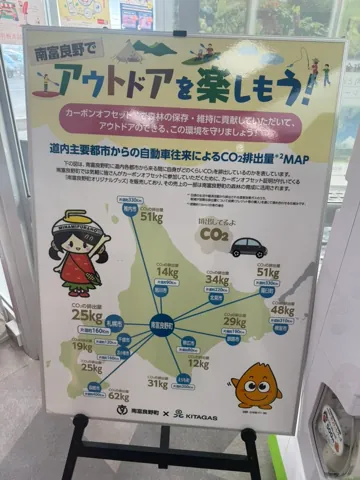
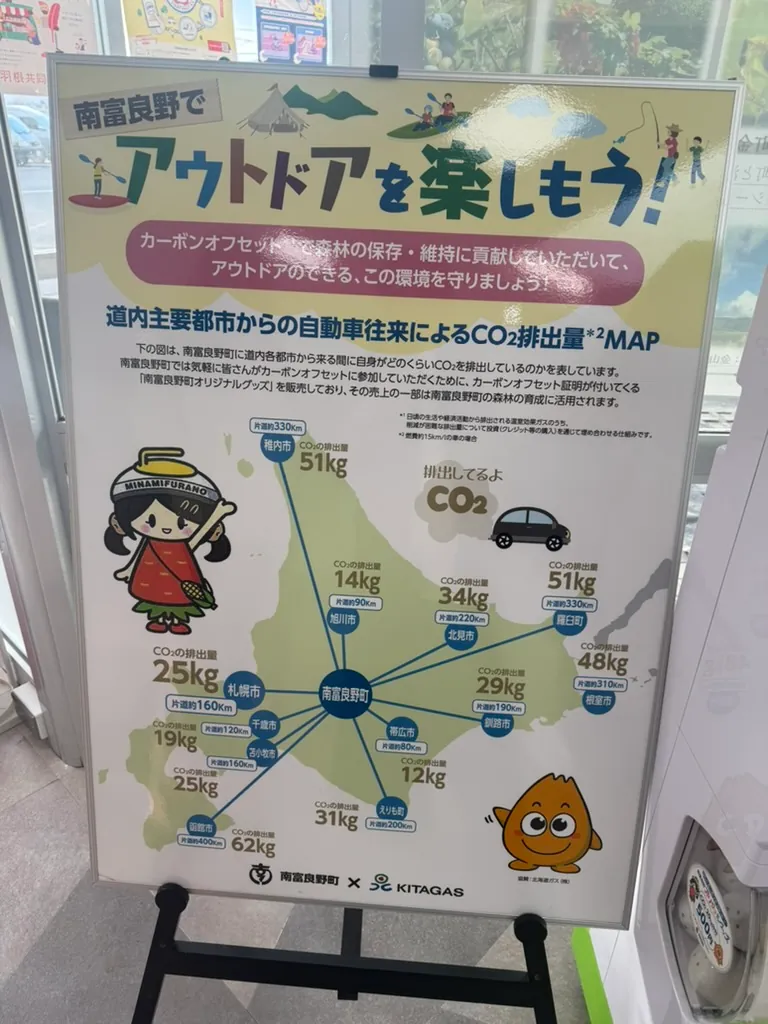
| Mascot (マスコット) | Minami-chan (南ちゃん) was unveiled in 2018. She wears a helmet shaped like a curling stone, clothes shaped like carrots and a bag shaped like corn.11 The Michi-no-Eki calls her the town's PR ambassador.13 Shikary (シカリー) is a separate character that promotes the town's venison curry; the town's own gourmet page still calls Shikary "Minamifurano's only mascot character."14 |
| Official website | https://www.town.minamifurano.hokkaido.jp/ |
Name origin
The town was named in 1908, when it split from Shimofurano Village. The name simply means "south Furano (南・富良野)."45
Furano itself comes from an Ainu word. The town's own booklet explains that the name first appears as "Furanu (フラヌ)" in an 1886 survey report by the colonial official Uchida Kiyoshi (内田瀞). The booklet says Furanu means "a place with much red lava and scorched stone," a description of the area around Mt. Tokachi (十勝岳). For a time the name was also written with the characters 振縫.4 The theory favoured in Furano itself is hura-nu-i (フラヌイ, "smell–have–place"). In this version the smell is sulphur in the Furano River, which flows down from Mt. Tokachi.19
Many place names inside the town are also Ainu:
- Sorachi (空知): From so-rapci-pet, "river of many waterfalls."16
- Ikutora (幾寅): The town centre. From yuk-turasi-pet, "river the deer climb up."20
- Shī-sorapuchi (シーソラプチ): Si-sorapchi, "the main Sorachi."21
- Ru-oman-sorapuchi (ルウオマンソラプチ): Ru-oman-sorapchi, "the Sorachi along which a trail runs."21
- Ochiai (落合): A Japanese name meaning "confluence." It marks where the two branches above meet.21
- Kanayama (金山): A Japanese name meaning "gold mountain," after the gold dust found there. The older Ainu name was Tonashibetsu. It has two proposed meanings: tunas-pet, "fast river," or tuni-us-pet, "river with many oaks."22
In the Furano area the town is often called Nanpu (なんぷ), a short form of its name.23
History
- Ancient times: The town has 25 registered archaeological sites on the river terraces. Finds range from pre-pottery (Palaeolithic) microblade cores at Ochiai 1 through Jōmon to Epi-Jōmon (続縄文) material at Kanayama 2. One site, Ikutora 1, now lies under Lake Kanayama.24 The town chronology also records Ainu traditions for the area.5
- 1858: The explorer Matsuura Takeshirō (松浦武四郎) followed the upper Shī-sorapuchi River and crossed over to the Sahoro River (佐幌川) in Tokachi.5
- 1891: Gold-dust prospectors settled at Kanayama. The town treats this as its founding (開基).12
- 1900–1907: The railway reached Shikagoe in 1900 and Ochiai in 1901, and Ikutora Station opened in 1902. In 1901 organised settler groups arrived from Ise (伊勢団体, Mie Prefecture) and Gifu (岐阜団体). In 1907 the line was completed over to Tokachi through the Karikachi Tunnel (狩勝トンネル).5 The view from this line became known as one of Japan's "three great train-window views."25
- 1903: Ikutora Shishimai (幾寅獅子舞), a lion dance, was started by the priest of Ekō-ji temple (恵光寺) and a women's group of the temple.12
- 1955–1967: Kanayama Dam met strong local opposition. It submerged 261 households in settlements including Kanayama and Shikagoe, and 13 km of the Nemuro Main Line.15 The flooded farmland had produced about 30% of the village's farm output, and 1,229 people had to move. The population peaked at 11,029 in the 1965 Census, swollen by dam workers.26 The dam was completed in 1967, the year the village became a town.5
- 1972–1993: The dam lake was turned into a leisure area: the first lake festival (1972), the ski area (1980), Kanayama Lake Forest Park (1982) and the product centre (1988), which became a Michi-no-Eki in 1993. The canoe events of the 1989 national sports festival were held here.5
- 1996: A friendship pact was signed with Motobu, Okinawa.5
- 1999: Poppoya was filmed at Ikutora Station over two weeks in January and released that June.4
- 2008–2009: The Ezo katsu curry was launched in 2008.3 In 2009 the itou ordinance was passed17, the town attracted the Sirera (シレラ) potato-chip factory26, and the snack maker Koikeya (湖池屋) signed a forest agreement with the town.27
- 2016: Typhoon No. 10 brought more than 515 mm of rain, and the Sorachi River broke its levees; nobody was killed.2826 About 130 ha were flooded, including homes, potato fields and a potato-chip factory.16 Trains east of Higashi-Shikagoe were replaced by buses.20
- 2019–2025: The roadside station was named a Key Roadside Station in 201918 and rebuilt in stages: the next-door shopping complex opened on 27 April 202229, Nanpu Adventure Park on 27 April 202430 and the renewed station building on 26 April 2025.31
- 1 April 2024: JR closed the Nemuro Main Line between Furano and Shintoku. Ikutora, Ochiai and the other stations in the town closed, and new bus routes replaced the trains.32
Geography & climate
- Setting: Minamifurano lies almost exactly in the middle of Hokkaido, and mountains surround it on every side:
- to the northeast, the Tokachi peaks of the Daisetsuzan range;
- to the south, the Hidaka Mountains;
- to the west, the Yubari Mountains, whose main peaks are Ashibetsu-dake and Yubari-dake.1 Six settlements sit along the Sorachi River as it flows east to west: Kita-Ochiai (北落合), Ochiai (落合), Ikutora (幾寅), Higashi-Shikagoe (東鹿越), Kanayama (金山) and Shimo-Kanayama (下金山). The town hall at Ikutora stands at 350 m.1
- Forest: Forest covers 59,006 ha, about 90% of the town. Of this, 47,222 ha is national forest.26
- Mountains: The town has more than 30 named peaks, including Kami-Horokamettoku-yama (上ホロカメットク山, 1,920 m), where the Sorachi River begins, Ashibetsu-dake (芦別岳, 1,727 m) and Yubari-dake (夕張岳, 1,668 m).516 Ashibetsu-dake and Yubari-dake belong to Furano-Ashibetsu Prefectural Natural Park (富良野芦別道立自然公園). The alpine plants and serpentine mélange of Yubari-dake are a national Natural Monument.5
- Rivers: The Sorachi River is 194.5 km long, the longest tributary of the Ishikari River. It begins as the Shī-sorapuchi and becomes the Sorachi where it joins the Ru-oman-sorapuchi at Ochiai. It then flows past Ikutora into Lake Kanayama.16
- Lake Kanayama: Kanayama Dam is 57.3 m high and is Hokkaido's only hollow gravity dam. The lake covers about 9.2 km², holds 150.45 million m³, is home to itou and Dolly Varden trout (オショロコマ), and freezes over in winter.15
- Passes:
- Climate: The climate is humid continental. Temperatures often fall below −25 °C in winter, and the town is a designated Special Heavy Snowfall Area (特別豪雪地帯).5 At the Ikutora weather station (350 m), the 1991–2020 averages are 5.6 °C for the year, −8.4 °C in January and 19.2 °C in August, with 1,092.4 mm of precipitation, 601 cm of snowfall and an average deepest snow of 84 cm.34 Records: the highest temperature was 35.0 °C (24 July 2025), the lowest −33.4 °C (6 February 1982) and the deepest snow 114 cm (5 March 2001).35 English Wikipedia still gives an older record high of 34.9 °C.11
Economy & industry
- Jobs: In the 2020 Census the town had 1,277 workers. 20.7% worked in farming and forestry, 16.3% in industry and 62.0% in services.26
- Farming: The town grows crops suited to its cold highland climate, above all potatoes and carrots.5 Farming is shrinking: there were 351 farm households in 1970 but only 56 by 2020.26 The list of historic sites includes the place where seed-potato growing began in the town (種子馬鈴薯発祥の地).36
- Forestry: Forestry is a core industry. The town's 2011 forest master plan links forest management to protecting the itou.17 Since 2009 Koikeya has planted and thinned a town forest called the "Pure Potato Forest" (ピュアポテトの森).27
- Mining: Limestone is quarried in the town. Mining operations include Oji Mokuzai Ryokka's Shikagoe mine (王子木材緑化 鹿越鉱業所) and Nittetsu Mining's Higashi-Shikagoe mine (日鉄鉱業 東鹿越鉱業所).5 The raw stone goes to sugar refineries in Hokkaido. It is also made into calcium carbonate for improving soil.26
- Food processing: JA Furano's Sirera Furano factory (シレラ富良野) makes potato chips in the town. The town's promotion company (南富良野町振興公社) makes Bata-jaga, soba and other products.1337
- Tourism:
- FY2025: 457,400 visitors, up 26.6% on FY2024. Of these, 421,800 were day visitors and 35,600 stayed overnight.38
- There were 6,522 foreign overnight guests, who stayed 8,717 guest-nights in total.38
- Visitor numbers rose after Poppoya and peaked in FY2004.26
- More than 3,000 people visit the Michi-no-Eki on a summer weekend.13
- Population: In 2020, 32.2% of residents were 65 or older.26 A national population projection used in the town's plan expects about 1,380 residents by 2045.26
- Revitalization: The town's plan uses the Michi-no-Eki as the base for tourism. It also promotes adventure tourism.26 Furusato nozei gifts range from farm produce and venison to camping passes and hotel stays.2839
Local specialties
| Specialty | Category | Details & where to get it |
|---|---|---|
| Nanpu Ezo Katsu Curry (なんぷエゾカツカレー) | Local dish | A cutlet of Ezo deer thigh meat, pounded to about 5 mm thick, served on curry.23 The rules call for local vegetables and Hokkaido rice, and the dish comes with kumasasa tea.23 It was served from 15 May 2008 at 10 member restaurants for a flat ¥950.3 Today Bistro Sacchan (ビストロ さっちゃん) at the Michi-no-Eki serves an "Ezo Katsu Curry."40 |
| Bata-jaga (バタじゃが) | Processed potato | Whole Danshaku potatoes (男爵いも) with Hokkaido butter in a vacuum pack. Ready after heating in a microwave. There are also soy-sauce and curry flavours. Made at the town's processing centre.37 |
| Minamifurano Chips (南ふらのチップス) / Furanocchi (ふらのっち) | Snack | Thick-cut 100 g potato chips made at the Sirera Furano factory.13 Sold only at the Michi-no-Eki.31 Furanocchi is JA Furano's chip, in lightly salted, consommé, nori-salt and garlic flavours.13 |
| Kumasasa tea (くまささ茶) | Drink | Tea made from kumasasa bamboo grass, sold in cans and plastic bottles.3714 |
| Hokuhoku kabocha Yukigeshō (ほくほくかぼちゃ雪化粧) / sweet corn (スイートコーン) | Vegetables | The town's Yukigeshō squash and freshly picked corn, cooked and vacuum-packed. Seasonal.37 |
| Minamifurano highland soba (みなみふらの高原そば) / Tartary buckwheat (韃靼そば) | Noodles | Soba from Minamifurano buckwheat.37 The town's 2014 profile also featured Tartary buckwheat from the Kita-Ochiai uplands.4 Ochi-an (おち庵) in Ochiai makes hand-cut soba from local Kita-Ochiai flour.2 |
| Mochi-rice pasta (南ふらの もち米のパスタ) | Noodles | Flat pasta made from local glutinous rice and Furano wheat flour.37 |
| Venison (エゾシカ肉) | Meat | Venison jerky and dog treats are sold at the Michi-no-Eki.13 Canned venison has been made in three flavours: yamato-ni (sweet soy stew), miso and curry.4 |
| Felina soft-serve (濃厚ソフトクリーム フェリーナ) | Dessert | Rich soft-serve sold from late April to early October. Seasonal sauces use haskap (from mid-July) and blueberries (from early August) grown at Kanayama Orchard (金山果樹園).13 |
| Station-only sweets | Sweets | Minami-chan no Fuwaffle (南ちゃんのふわっふる), a waffle filled with custard, made with the Furano confectioner 菓子司 新谷. A Beni-haruka sweet-potato dessert (密たっぷりさつまいも).13 |
| Furusato nozei gifts (ふるさと納税) | Gifts | Melon, corn, potatoes, onions, jams, venison, Bata-jaga, Furanocchi, carrot juice, amazake, pet treats, dried flowers and stays at Log Hotel Larch.28 |
Culture & festivals
| Event | When | Highlights |
|---|---|---|
| Kanayama Dam Cherry Blossom Festival (金山ダム桜まつり) | May (2nd festival: 9 May 2026) | At Kanayama Dam Site Park: all-inclusive barbecue, free tours inside the dam and a night-time cherry light-up. Free shuttle from the Michi-no-Eki.41 |
| 3×3 Nanpu Basketball & Food Festival | July (5 July 2026) | 3-on-3 games against professional players, held in the Michi-no-Eki RV park, with food trucks.42 |
| Kanayama Lake Water Festival (かなやま湖湖水まつり) | Late July (55th festival: 25 July 2026) | At Kanayama Lakeside Campground; first held in 1972.5 Stage shows, dam tours, about 2,000 fireworks and a 700 m "Niagara" firework curtain.43 Sixty paid seats (¥5,000 with parking) were sold online from 1 to 23 July.44 |
| Nikkō Saru Gundan show (日光さる軍団) | August (23 August 2026) | A performing-monkey show held at the Michi-no-Eki every year.45 |
| Minamifurano Canoe Competition (南富良野カヌー大会) | August | Japanese Wikipedia lists a canoe competition in August.5 The town's sightseeing page says a canoe competition is held on the Sorachi River every year.46 No 2026 date was found. |
| Michi-no-Eki Minamifurano Thanksgiving Festival (道の駅 南ふらの感謝祭) | Late September (5th: 26 September 2026) | Sales, a prize draw with 1,000+ prizes and the Nanpu kei-truck market (南プ軽トラ市) of local produce.4748 |
| Lavender at Shikagoe Park (鹿越園地ラベンダー園) | Peaks mid-July | Lavender with the lake behind it. The town posts updates on the bloom.49 |
Traditions and places:
- Ikutora Shishimai (幾寅獅子舞): The town's only designated intangible cultural property, designated in 1965. It is performed at the Minamifurano Shrine festival and the lake festival.12
- Local history room (郷土資料室): About 300 kinds of objects (about 500 items), including farm tools, logging gear, railway items, gold dust and excavated pottery and stone tools. It is displayed in a corridor of the town gymnasium (Tuesday–Sunday 8:30–17:15, closed Mondays) and is being moved to the former Ikutora nursery school, so fewer items are on show.12
- Canoeing and curling: Minamifurano High School's canoe club and curling club are each said to be the only high-school club of its kind in Hokkaido.50 Donkoro Outdoor School in Ochiai offers curling lessons to visitors.2
- Other films: Besides Poppoya, the films Amemasu no Kawa (雨鱒の川) and Ururu no Mori no Monogatari (ウルルの森の物語) were shot in the town.5
Ainu heritage
Little Ainu history specific to Minamifurano is recorded, and no Ainu cultural centre or monument was found in the town. The clearest evidence is in place names:
- Sorachi, "river of many waterfalls";16
- Ikutora, "river the deer climb up";20
- the Shī-sorapuchi and Ru-oman-sorapuchi branches of the Sorachi;21
- Tonashibetsu, the old name of Kanayama;22
- the Raunebetsu River, which gives its name to Mt. Rōnebetsu (老根別山). The name is said to mean "a stream flowing in a narrow, deeply cut valley."5
The town chronology mentions Ainu traditions but gives no details.5 Much older people lived here too: pre-pottery, Jōmon and Epi-Jōmon remains have been found along the river terraces.24
Sister & friendship cities
Notable people
- Sachiko Hoshizawa (星澤幸子): Cooking expert. She presented a weekday TV cooking show for 33 years and opened Hoshizawaya at the Michi-no-Eki.540
- Kumiko Ishigami (石上久美子): Enka singer. She was on the programme of the 2026 lake festival.543
- Miria Watanabe (渡辺みり愛): Singer, formerly of Nogizaka46.5
- Sanshōtei Yumenosuke (三笑亭夢之助): Rakugo storyteller.5
- Connected with the town: The curlers Sakurako Terada (寺田桜子) and Moe Meguro (目黒萌絵) received the town's sports honour award.5
Sources
Numbers in the text link to these sources. Figures as of 23 September 2026
- 南富良野町の概要 — 南富良野町 JA accessed 2026-09-23
- TOURISM(夏・冬のアクティビティ、飲食店・ショップ、宿泊施設) — NPO法人 南富良野まちづくり観光協会 JA accessed 2026-09-23
- 広報みなみふらの 2008年6月号 特集「なんぷエゾカツカレー誕生」(PDF) — 南富良野町 JA accessed 2026-09-23
- 北海道南富良野町 町勢要覧(2014年発行、PDF) — 南富良野町 JA accessed 2026-09-23
- 南富良野町 — Wikipedia JA accessed 2026-09-23
- 令和2年国勢調査 第1表 男女別人口、面積、人口密度及び世帯数(XLS) — 北海道総合政策部計画局統計課 JA accessed 2026-09-23
- 住基ネットにおける人口【参考値】令和8年(2026年)8月31日現在(XLSX) — 北海道総合政策部地域行政局市町村課 JA accessed 2026-09-23
- 南富良野町 公式サイト トップページ(人口・世帯数 2026.02.28更新、お知らせ) — 南富良野町 JA accessed 2026-09-23
- 令和7年国勢調査速報 北海道の人口・世帯数(要計表に基づく人口・世帯数の集計)(PDF) — 北海道総合政策部計画局統計課 JA accessed 2026-09-23
- 令和7年国勢調査 調査の結果(人口等基本集計 公表時期 令和8年9月29日) — 総務省統計局 JA accessed 2026-09-23
- Minamifurano, Hokkaido — Wikipedia EN accessed 2026-09-23
- 南富良野町の歴史【史跡・指定無形文化財『幾寅獅子舞』】 — 南富良野町 JA accessed 2026-09-23
- 道の駅南ふらの 南富良野町物産センター — 株式会社南富良野町振興公社 JA accessed 2026-09-23
- 南富良野のグルメ — 南富良野町 JA accessed 2026-09-23
- 金山ダム — Wikipedia JA accessed 2026-09-23
- 空知川 — Wikipedia JA accessed 2026-09-23
- イトウ保護について — 南富良野町 JA accessed 2026-09-23
- 道の駅南ふらの — Wikipedia JA accessed 2026-09-23
- 富良野市 — Wikipedia JA accessed 2026-09-23
- 幾寅駅 — Wikipedia JA accessed 2026-09-23
- 落合駅 (北海道) — Wikipedia JA accessed 2026-09-23
- 金山駅 (北海道) — Wikipedia JA accessed 2026-09-23
- なんぷエゾカツカレー — Wikipedia JA accessed 2026-09-23
- 埋蔵文化財包蔵地一覧(PDF) — 南富良野町教育委員会 JA accessed 2026-09-23
- 狩勝峠 — Wikipedia JA accessed 2026-09-23
- 南富良野町過疎地域持続的発展市町村計画(令和8年度~令和12年度)(PDF) — 南富良野町 JA accessed 2026-09-23
- 株式会社湖池屋で南富良野町産の木材を活用したキャンペーンを行っています! — 南富良野町 JA accessed 2026-09-23
- ふるさと寄附金 — 南富良野町 JA accessed 2026-09-23
- 複合商業施設(道の駅を核としたまちの賑わい拠点施設)について — 南富良野町 JA accessed 2026-09-23
- 道の駅公園「なんぷアドベンチャーパーク」 — 南富良野町 JA accessed 2026-09-23
- 南ふらの — 北の道の駅(北海道地区「道の駅」連絡会) JA accessed 2026-09-23
- 根室線(富良野・新得間)バス転換後の新しい交通体系について (PDF) — 北海道旅客鉄道(JR北海道) JA accessed 2026-09-23
- 幾寅峠 — Wikipedia JA accessed 2026-09-23
- 幾寅(上川地方) 平年値(年・月ごとの値) — 気象庁 JA accessed 2026-09-23
- 幾寅(上川地方) 観測史上1~10位の値(年間を通じての値) — 気象庁 JA accessed 2026-09-23
- 南富良野町の史跡一覧 — 南富良野町 JA accessed 2026-09-23
- 南ふらの農産物処理加工センター — 株式会社南富良野町振興公社 JA accessed 2026-09-23
- 北海道観光入込調査報告書(R7 資料編)令和7年度市町村別・月別観光入込客数/訪日外国人宿泊者数 (XLSM) — 北海道経済部観光局 JA accessed 2026-09-23
- 株式会社南富良野町振興公社(トップページ、ふるさと納税) — 株式会社南富良野町振興公社 JA accessed 2026-09-23
- Minamifurano digital tourist pamphlet (English) — NPO Minamifurano Tourism Association EN accessed 2026-09-23
- 第2回 金山ダム桜まつり — NPO法人 南富良野まちづくり観光協会 JA accessed 2026-09-23
- 3×3 Nanpu Basketball & Food Festival — NPO法人 南富良野まちづくり観光協会 JA accessed 2026-09-23
- 第55回 かなやま湖湖水まつり — NPO法人 南富良野まちづくり観光協会 JA accessed 2026-09-23
- 【花火】有料観覧席の販売|第55回 かなやま湖湖水まつり — NPO法人 南富良野まちづくり観光協会 JA accessed 2026-09-23
- 日光さる軍団がやってくる! — NPO法人 南富良野まちづくり観光協会 JA accessed 2026-09-23
- 南富良野町の見どころ — 南富良野町 JA accessed 2026-09-23
- 【第5回 道の駅 南ふらの感謝祭】の開催について — 株式会社南富良野町振興公社 JA accessed 2026-09-23
- 「南プ軽トラ市」 出店者募集のお知らせ — 南富良野町 JA accessed 2026-09-23
- 南富良野のラベンダー開花情報 — 南富良野町 JA accessed 2026-09-23
- 北海道南富良野高等学校 — Wikipedia JA accessed 2026-09-23
- かなやま湖のキャンプ場について(オートキャンプ場・湖畔キャンプ場) — 株式会社南富良野町振興公社 JA accessed 2026-09-23
- 自然の中で遊ぶ — 南富良野町 JA accessed 2026-09-23
- イトウの保護区・保護期間について — 南富良野町 JA accessed 2026-09-23
- 南富良野町の観光情報(ワカサギ釣り・犬ぞり・一酸化炭素中毒への注意) — 南富良野町 JA accessed 2026-09-23
- 国設 南ふらのスキー場 — 株式会社南富良野町振興公社 JA accessed 2026-09-23
- 【なんぷアドベンチャーパーク(道の駅 南南ふらの公園)】の閉鎖について — 株式会社南富良野町振興公社 JA accessed 2026-09-23
- 南富良野まちづくり観光協会(トップページ) — NPO法人 南富良野まちづくり観光協会 JA accessed 2026-09-23
- 自然体感 しむかっぷ — 北の道の駅(北海道地区「道の駅」連絡会) JA accessed 2026-09-23
- 樹海ロード日高 — 北の道の駅(北海道地区「道の駅」連絡会) JA accessed 2026-09-23
- 南富良野町へのアクセス — 南富良野町 JA accessed 2026-09-23
- TOURIST SPOTS MAP(アクセス) — NPO法人 南富良野まちづくり観光協会 JA accessed 2026-09-23
- 熊出没情報 — 南富良野町 JA accessed 2026-09-23
- かなやま湖畔キャンプ場よりバンガロー宿泊時に関わる宿泊税のお知らせ — 株式会社南富良野町振興公社 JA accessed 2026-09-23