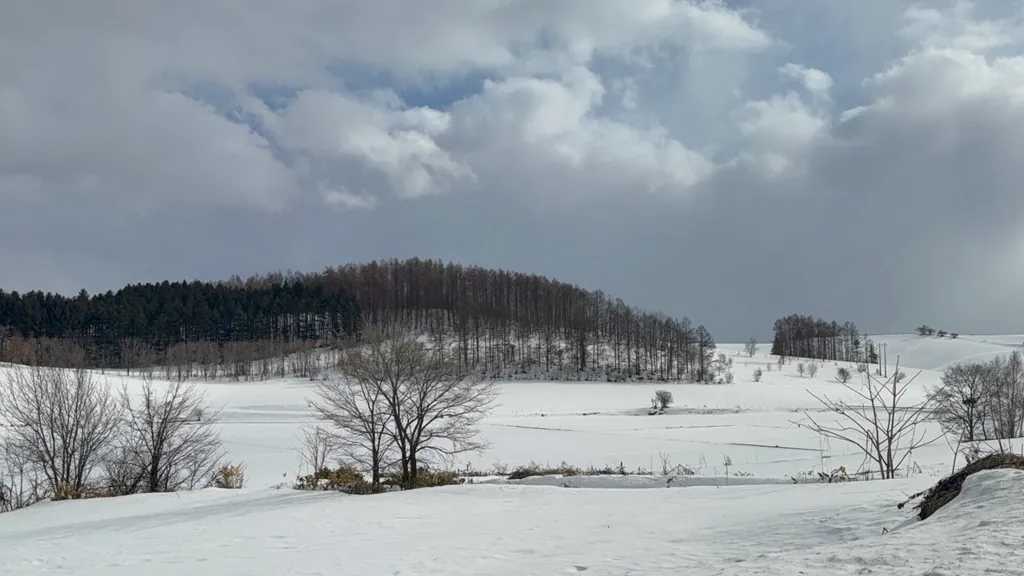
Kamifurano 上富良野町
かみふらのちょう
Kamifurano lies at the northern end of the Furano Basin, below the active Tokachidake volcano. It calls itself the place where lavender farming in Japan began, and it is the only town in Hokkaido that grows hops commercially.12 It is also a base town for the Ground Self-Defense Force, and the setting of Miura Ayako's novel "Deiryū Chitai" (泥流地帯), about the 1926 volcanic mudflow.34
- Population (2020 Census)
- 10,348
- Area
- 237.1 km²
- District
- Sorachi District (空知郡)
- Official website
- www.town.kamifurano.hokkaido.jp
Known for
- Lavender: farmers in Higashinaka (東中) began growing lavender for a fragrance company in 1948. At its peak the town grew 85 ha.17 Today the main fields are Hinode Park (日の出公園) and Farm Tomita's Lavender East, which calls itself one of Japan's largest lavender fields.1819
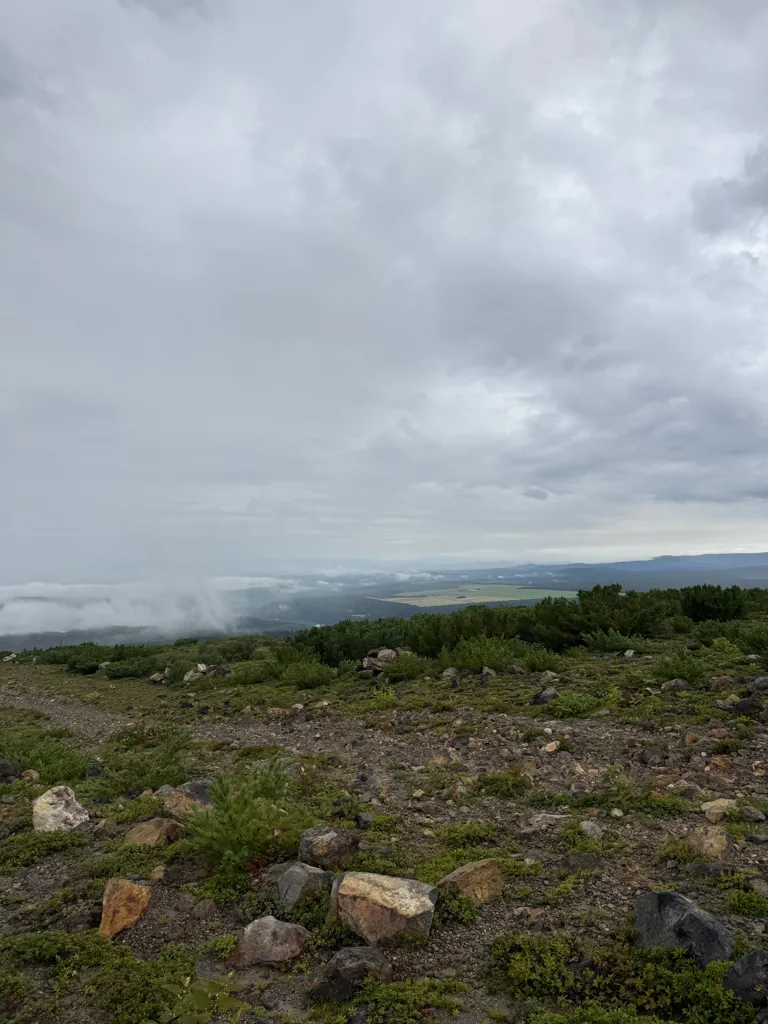
- Tokachidake (十勝岳, 2,077 m): an active volcano on the town's eastern edge. Its 1926 eruption sent a mudflow that left 144 people dead or missing.20 Since 12 September 2026 it has been at eruption alert level 3, which closes the mountain to climbers.21
- Mountain hot springs: Tokachidake Onsen, where Ryōunkaku (凌雲閣) is Hokkaido's highest onsen inn, and Fukiage Onsen (吹上温泉), with its free open-air bath.2223
- Hops and beer: Sapporo's hop farm opened here in 1926.24 Local hops and barley go into "Marugoto Kamifurano Premium Beer," sold only in town, and into the beers of Hop Kotan Brewing.2526
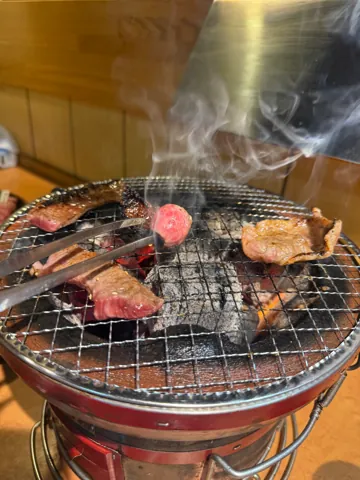
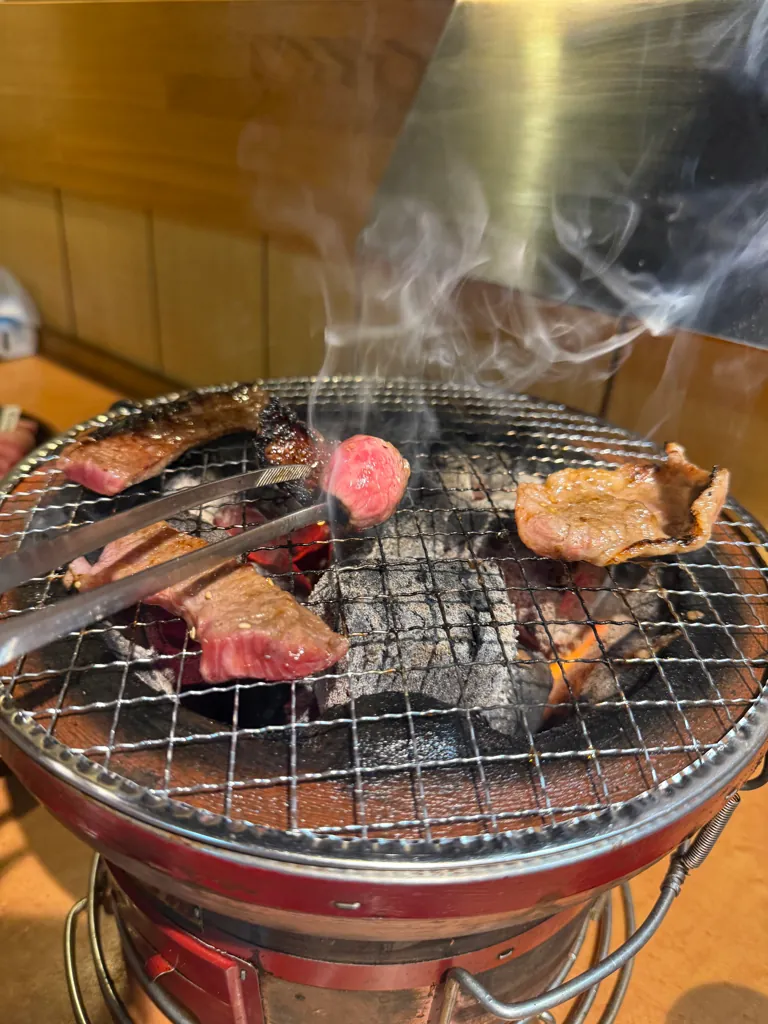
- Pork and sagari: the town ships more pigs than any other in Kamikawa.4 Grilled pork skirt (豚さがり, buta-sagari) is said to have started here.27
- "Deiryū Chitai": Miura Ayako's novel about the 1926 mudflow and the farmers who rebuilt. The town is backing a film version.428
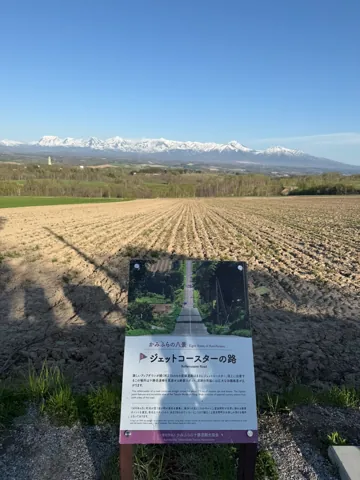
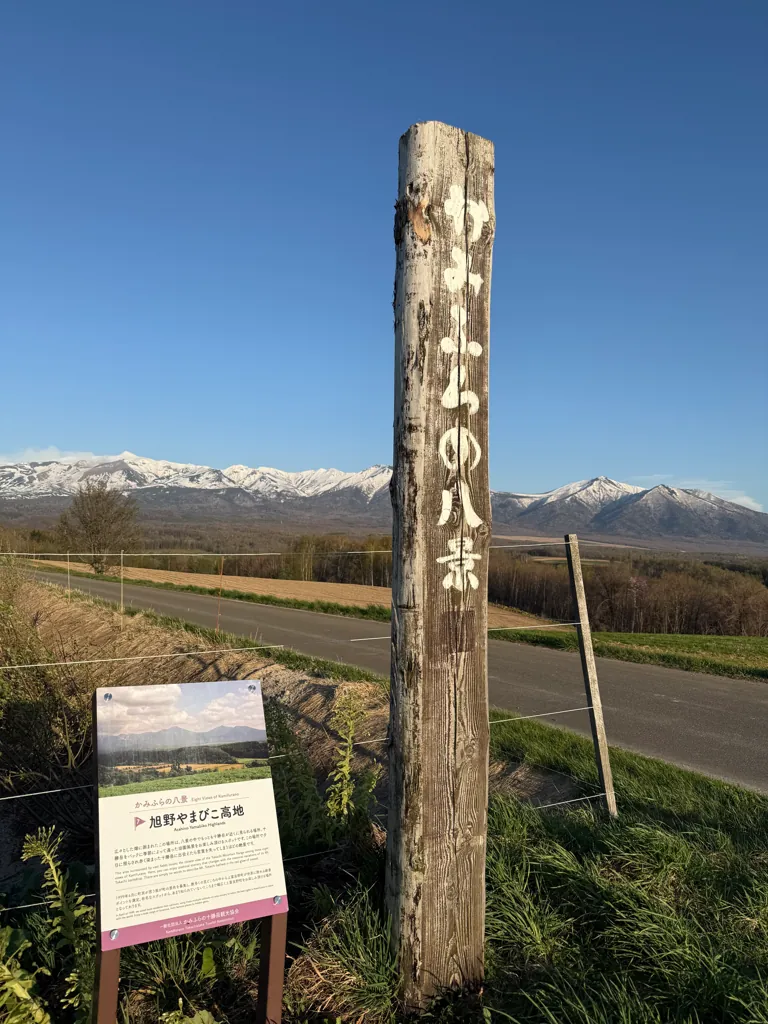
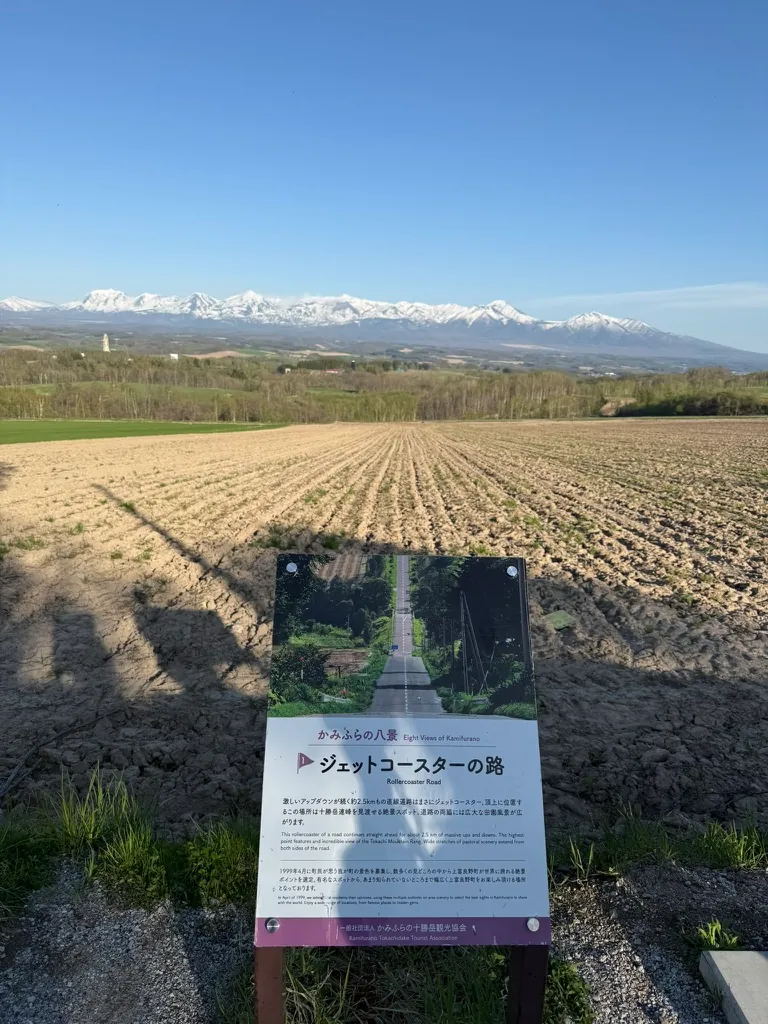
- Hill drives: the Kamifurano Eight Views (かみふらの八景), including the up-and-down "Roller-Coaster Road" (ジェットコースターの路) and Panorama Road Ebana.23
- Army town: Japan Ground Self-Defense Force (JGSDF) Camp Kamifurano opened in 1955.29 About 30% of residents are SDF members or their families.3
Sights & activities
Nature & scenery
- Hinode Park Lavender Garden (日の出ラベンダー園), East 1-sen North 27-gō: a hilltop lavender field about 15 minutes' walk from the station. It blooms from late June to early August, and the late-flowering Okamurasaki variety keeps it purple late in the season. Entry and parking are free.18 An auto campground is next to it.23
- Lavender East (ラベンダーイースト), East 6-sen North 16-gō, Higashinaka: Farm Tomita's fragrance-crop field, about 4 km east of the main farm. In 2026 it was open 20 June to 20 July, 9:30–16:30. There are tractor-bus rides, an onsen footbath and a shop.1957
- Flower Land Kamifurano (フラワーランドかみふらの), West 5-sen North 27-gō: 100,000 m² of flower fields with views of the basin and the Tokachidake range. It has tractor-bus rides and lavender craft workshops.4757
- Kamifurano Eight Views (かみふらの八景, chosen 1999):323
- The Roller-Coaster Road on West 11-sen, a straight road over steep rises and dips. The tourism association says it is 4.5 km long; Japanese Wikipedia says about 2.5 km.
- Miyama Pass, with cherry blossoms against spring snow on the peaks.
- The Senbō Pass viewpoint, which has parking, toilets and a lookout and is closed in winter.
- Panorama Road Ebana, a 5 km straight run down from the hills toward Furanodake.
- Hinode Lavender Garden.
- Wada Grassland and Donguri no Sato (和田草原とどんぐりの郷).
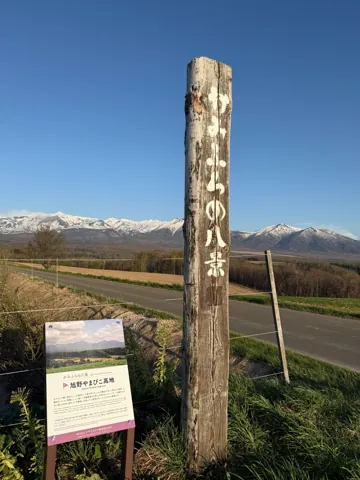
- Asahino Yamabiko Heights (旭野やまびこ高地), a spot known for its echo.
- Tokachidake Onsen.
- Tokachidake Lavender Road (十勝岳ラベンダーロード): about 7 km of lavender planted along the footpath of Road 291 toward the onsen.57
Onsen
- Tokachidake Onsen (十勝岳温泉), above 1,280 m: the tourism association says its leaves turn earlier than anywhere else in Japan.23 Ryōunkaku (湯元 凌雲閣) is Hokkaido's highest onsen inn, with 100% free-flowing hot-spring water. Kamihoro-sō (カミホロ荘) stands at 1,200 m among Sakhalin spruce forest. Both were open as normal in mid-September 2026.222561
- Fukiage Onsen (吹上温泉): Hakuginsō (白銀荘) offers day bathing and self-catering rooms, and has a campground. The free, mixed-gender Fukiage Roten no Yu (吹上露天の湯) has no changing room. All of these have been closed since 12 September 2026 because of the volcano, with no date set to reopen.2261
- Frontier Furanui Onsen (フロンティア フラヌイ温泉), Shinmachi 4-4-25: a hotel with carbonated spring water next to Hinode Park, 12 minutes' walk from the station.22
Museums & heritage
- Gotō Sumio Museum (後藤純男美術館), East 4-sen North 26-gō: about 130 works by the nihonga painter Gotō Sumio, who built the museum himself. The Furano Grill restaurant upstairs is open 11:00–17:00 in summer.6257
- Tsuchi no Yakata (土の館), West 2-sen North 25-gō: a soil museum linked to the farm-machinery maker Sugano (スガノ農機). It is Hokkaido Heritage and a Mechanical Engineering Heritage site, and has about 80 classic tractors, including Japan's first domestic tractor, as well as some of Japan's largest soil monoliths. Entry is free, 9:00–16:00. From 1 September to 30 June it is closed on weekends and holidays.63
- Miyama Pass Art Park (深山峠アートパーク), on Route 237: a trick-art museum, a Ferris wheel (¥600), a local-products hall and pork barbecue. Open 10:00–17:00 from April to October and closed from November to March. It has 200 parking spaces.64
Outdoor & seasonal activities
- Hiking: trails up Tokachidake, Furanodake and Sandanyama start from Tokachidake Onsen and Fukiage. All climbing from these trailheads is banned while alert level 3 is in force.6152
- Cycling: rental bikes and the Eight Views Rally cycling course; the Yamaichi shop rents bikes.5025
- Winter: the Snow Festival and the town-run Hinode ski area (opened 1967).5143
Food experiences
- A sagari yakiniku dinner in town, pork barbecue at Miyama Pass, and lavender soft-serve at Table Top (テーブルトップ) on Miyama Pass.27642
- Ebana Coffee Roastery and Ebana Kitchen (江花珈琲焙煎所&江花きっちん), in the western hills, roasts beans to order and sells baked goods and local-vegetable croquettes. Patisserie Merci on Miyama Pass makes cakes from local ingredients.2
Roadside stations (Michi-no-Eki)
No Michi-no-Eki is located in Kamifurano. The official Hokkaido list has no station in the town.65 In September 2026 the town began asking private companies for ideas about a planned roadside station (道の駅, tentative name). Talks with companies are set for 4–20 November 2026, and a summary of the results is due around January 2027.66
The nearest Michi-no-Eki:
- Biei "Oka no Kura" (道の駅びえい「丘のくら」), Honmachi 1-9-21, central Biei: north of Kamifurano. It is a stone warehouse built in the early Taishō era, turned into a shop. It sells Biei soft-serve and croquettes, and the Kōmugi Shokudō (香麦食堂) serves a curry with Biei vegetables as the main ingredient. Open 9:00–17:00 from September to November, 9:00–18:00 from June to August and 10:00–17:00 from December to February; closed 31 December – 1 January. It has 21 car spaces and was registered in 2007 (as of September 2026 — check before visiting).67
- Biei "Shirogane Birke" (道の駅びえい「白金ビルケ」), Shirogane, Biei: near the Blue Pond. It has 229 car spaces, shower rooms, a burger shop and a The North Face corner. Hours are the same as Oka no Kura. It was registered in 2018. Road 966 over the mountains from Tokachidake is closed while the alert level is raised, so go by way of central Biei.6869
- Minamifurano (道の駅南ふらの), Ikutora, Minamifurano, on National Route 38: it reopened after renovation in April 2025. It has 74 car spaces and is open 9:00–19:00 in July and August (as of September 2026 — check before visiting).70
Stop in town instead: the Miharashidai Information Station (かみふらの見晴台情報ステーション), Hikarimachi 3-chōme, on Route 237. This log house has tourist information, leaflets for the whole Furano area and lavender goods, and it has parking. It does not sell food. It is open 9:30–17:00, every day from early May to late September (the 2026 season started on 7 May).4671
Getting there & around
- Rail: Kamifurano Station (上富良野駅, F39) on the JR Furano Line is 39.7 km from Asahikawa. It has had no staff since 14 March 2026.35 In the summer 2026 timetable, local trains took about 55–60 minutes from Asahikawa (for example, 9:38 → 10:38 and 11:33 → 12:27) and about 20 minutes on to Furano.72 From Sapporo, take the Lilac or Kamui limited express to Asahikawa, or the Furano Lavender Express sightseeing train, which runs from Sapporo to Furano without a change, and then take the Furano Line.73 The Furano–Biei Norokko sightseeing train, which ran from 1998, made its last run on 23 September 2026.41
- Buses: Furano Bus's "Lavender-gō" runs Furano – Kamifurano – Biei – Asahikawa Airport – Asahikawa.743 The North Liner runs to Obihiro over Karikachi Pass.3 The town bus Tokachidake Line runs from the station to Tokachidake Onsen (¥500 for adults to the onsen area). While the volcano alert lasts, it does not stop at Hakuginsō or Fukiage.5675
- Roads: National Route 237 runs through the town beside the railway. By car, Asahikawa is about 46 km (about 1 hour) and Asahikawa Airport, in Higashikagura, about 35 km (about 45 minutes). Sapporo is about 140 km: about 2 hours 15 minutes using the Dō-Ō Expressway, or about 3 hours on national roads. Obihiro is about 136 km (about 2 hours 45 minutes).13 In summer the tourism association recommends driving from Sapporo by way of Mikasa and Lake Katsurazawa, which saves 30–60 minutes. In winter the longer route by way of Utashinai is safer.74
- Flights: Asahikawa Airport has flights from Tokyo taking 95–105 minutes (JAL, ANA, AIRDO).74
Practical tips
- Best seasons: lavender blooms from late June to early August and peaks in early to mid July. That is also when the Lavender Festa is on. From 2026, parking at Hinode Park costs ¥500 during the festa, and there are three free overflow lots and a weekend shuttle.1854 Autumn colors at Tokachidake Onsen usually peak from late September to early October.50
- Volcano (as of 23 September 2026): Tokachidake is at alert level 3. The area within about 3 km of Crater 62-2 is closed, and large volcanic rocks could be thrown that far.21 Road 966 (Tokachidake Skyline) has been closed since 12 September between the Tokachidake gate and Biei's Bōgakudai gate, with no end date. You can still reach Tokachidake Onsen from town on Road 291.69 Check the JMA and town websites before going up the mountain.76
- Winter roads: in the most recent winter, Road 966 between Hakuginsō and Bōgakudai was closed from 20 October 2025 to 23 April 2026.77 Winter lows below −25 °C are not unusual.3
- Visitor information: the Miharashidai Information Station on Route 237 is open in season.46 The Kamifurano Tokachidake Tourism Association (かみふらの十勝岳観光協会) is at Nakamachi 1-1-8, near the station (tel. 0167-45-3150).78
- Wildlife and mountain safety: brown bears and Ezo deer are among the mammals recorded in the town.79 The town posts mountain-safety leaflets and links to JMA climbing warnings for Tokachidake.80
- Buy early: the premium beer is sold in town only, from June to October, and often sells out.25
Photos
-
 Mar 2026
 -
 Mar 2025
 -
 Mar 2026
 -
 May 2026
 -
 May 2026
 -
 May 2026
 -
 Jul 2026
More about Kamifurano
At a glance
| Field | Details |
|---|---|
| Type | Town (町) |
| Subprefecture | Kamikawa (上川総合振興局) |
| District | Sorachi District (空知郡). In 1869 the area was placed in Sorachi District of Ishikari Province (石狩国).5 |
| Population | 10,348 at the 2020 Census (5,363 men, 4,985 women, 4,287 households). That was 4.4% fewer than in 2015.6 The preliminary 2025 Census count was 9,150, down 11.6%.7 The town's resident register showed 9,393 people in 5,147 households at the end of July 2026.8 The Hokkaido Government's register figure for 1 January 2026 was 9,484, including 159 foreign residents.9 |
| Area | 237.10 km².10 The town is 24.6 km east to west and 19.0 km north to south. Forest covers 47.5% of it.4 |
| Density | About 39.6 people/km² (July 2026 register). It was 43.6/km² at the 2020 Census.6 |
| Municipal history | Furano Village (富良野村) was created on 1 July 1897. At first it shared a village office with Utashinai.11 Its own office opened on 25 June 1899 in what is now Kamifurano. On 1 September 1903 the south split off as Shimo-Furano Village (now Furano), and the rest became Kami-Furano Village.12 Nakafurano split off in 1917, and Kamifurano became a town in 1951.3 It has not merged with any other municipality. |
| Neighboring municipalities | Biei, Shintoku (Tokachi), Minamifurano, Furano and Nakafurano.13 |
| Symbols | Tree: Sakhalin spruce (アカエゾマツ). Flower: lavender (ラベンダー). Both were adopted on 1 October 1981. The town emblem (1957) shows three 力 characters around 富, read together as "Kami-fu."14 No official town bird was found. |
| Mascot | Labeton (らべとん), a pig "idol" with lavender on her hat. Her name joins rabe (lavender) and ton (pork). She was chosen from 519 entries, and her birthday is 28 July.1516 |
| Official website | https://www.town.kamifurano.hokkaido.jp/ |
Name origin
- The river name: the town is named after the Furano River (富良野川). A map attributed to Mamiya Rinzō (間宮林蔵, 1821) is the first record of the name, as "Furanui" (フラヌイ). Matsuura Takeshirō (松浦武四郎) wrote it as "Fūranui" in 1858.3031
- Meaning: the town's centennial history reads it as Ainu hura-nu-i, "smell–have–place" (臭・を持つ・所).31 An 1886 settlement survey found the basin's rivers muddy and partly sulfurous, which fits the "smell" reading.32 The same history says the Pirika-Furano River (ピリカ富良野川) got its name, "good Furano River," because its water is clean. The main river runs over a red bed and its water is poor.31
- "Kami" (上, upper): the original Furano Village office stood here from 1899. When the southern part split off as Shimo-Furano ("lower Furano") in 1903, this part became Kami-Furano ("upper Furano").12
- Other Ainu names: Beberui River (ベベルイ川), from pe-pet-ruy ("water–river–rough") or pe-pi-ruy ("water–stones–rough"). Nukkakushi-Furano River (ヌッカクシ富良野川), from nup-ka-kus ("passing over the peat plain"); its old name was Iwaopet, "sulfur river." Ehorokanbetsu (江幌完別), from e-horka-an-pet ("river whose head turns back").31
History
- Prehistory: the town's 1998 centennial history lists 37 registered archaeological sites. Most sit on hill edges near springs. Finds include Jōmon pottery (Middle to Final Jōmon), obsidian flakes, possible Final Jōmon graves and one stone core that may be pre-ceramic.33
- Ainu era: Matsuura's journals do not mention any Ainu living in the Furano Basin. The centennial history concludes that the basin had no permanent Ainu village. Ainu from Kamikawa and Tokachi came through it to hunt and to travel. Salmon could hardly get past the Sorachi River falls, and the basin floor was wetland and peat.32
- 1858–1871, surveys and rule: in 1858 Matsuura crossed the basin to Tokachi with Kamikawa Ainu guides.3230 A monument to him stands at Miyama Pass (深山峠).3 In 1869 the area went to Sorachi District. It was split among three lords, Date Kunnao (伊達邦直), Date Katsusaburō (伊達勝三郎) and Watari Mototarō (亘理元太郎), until direct Kaitakushi rule began in August 1871.5
- 1897, the Mie group: settlers from Mie Prefecture sailed from Yokkaichi on 28 March 1897. The largest share came from Anō District (安濃郡). On 12 April a scouting party of the group's leaders reached an elm tree at West 3-sen North 29-gō, and that date is kept as the settlement anniversary. The first 18 households arrived in early May.34 The group's leader was Tanaka Tsunejirō (田中常次郎).11 Fukiage Onsen was found the same year.3
- 1899–1917, farms and villages: the railway from Biei reached Kamifurano Station on 15 November 1899.35 The Shimazu family, former lords of Satsuma, acquired land for a large tenant farm (島津農場) in 1899.36 Most settlers came from Toyama and Tokushima. Others came from Mie, Fukui, Aomori, Miyagi, Fukushima, Niigata, Ishikawa, Gifu and Kagawa, including organized groups from Yamagata, Miyagi, Iwate, Gifu, Shiga and Okayama.37 Kami-Furano Village was created in 1903, and Nakafurano split off in 1917.123
- 1917–1926, sulfur and hops: the Hirayama sulfur mine began digging at Tokachidake's crater in 1917.20 Trial plots in 1923 showed Kamifurano to be the best hop land in Hokkaido. Dai Nippon Beer (now Sapporo Breweries) opened its Kamifurano hop farm in October 1926.24
- 24 May 1926, the Taishō eruption: a second blast that afternoon melted the snow and set off a mudflow. It traveled about 25 km to the village in 25–27 minutes and buried the Mie group's fields and the Arai Ranch (新井牧場).38 Of 144 dead and missing, 137 were in Kamifurano, including 25 people at the Hirayama mine.2038 Village head Yoshida Sadajirō (吉田貞次郎) led the rebuilding. His house survived the mudflow and is now the Pioneer Memorial Hall.4
- 1948–1958, lavender and the army: lavender farming began in 1948, and Kamifurano became a town in 1951.173 Camp Kamifurano opened in September 1955, with about 2,500 soldiers from the 2nd Artillery Regiment and the 2nd Tank Battalion (特車大隊).29 The population passed 19,000 by 1958.4
- 1962–1989, eruptions: Tokachidake erupted in 1962, killing 4 people according to the tourism association (Japanese Wikipedia says 5). It erupted again 21 times between December 1988 and March 1989.203
- 1977–1981, from oil to tourism: the fragrance company stopped buying lavender oil in 1977. The town planted 1.5 ha of lavender in Hinode Park in 1980 and named lavender its flower in 1981.17
- 2001–2022, new projects: JA Furano formed in 2001. The Tsuchi no Yakata soil museum became Hokkaido Heritage in 2004, and the town received a special zone for home-brewed doburoku in 2015.3 The lavender light-up began in 2021. In January 2022 Tokachidake Geopark, shared with Biei, was certified.4
- 2025–2026, recent events: the friendship with Camrose, Canada, ended in 2025.39 2026 marks 100 years since the Taishō eruption.28 The tourism association reported a small eruption on 22 July 2026.40 On 12 September the alert level went up to 3.21 On 23 September the Furano–Biei Norokko sightseeing train made its last run.41
Geography & climate
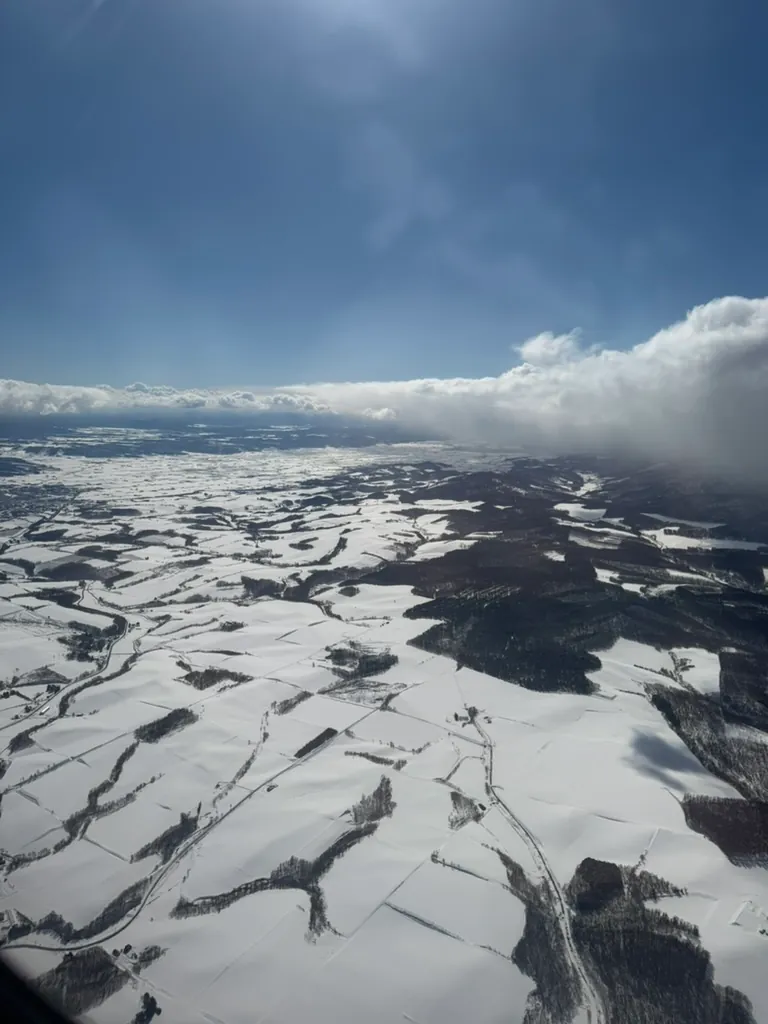
- Setting: Kamifurano covers the north of the Furano Basin, with mountains on three sides. The Tokachidake range, in Daisetsuzan National Park (大雪山国立公園), rises to the east. The Ashibetsu block of the Yubari Mountains lies to the west, and to the north is the divide between Kamikawa and Sorachi. The town center and flat farmland lie to the south.424
- Mountains: Tokachidake (2,077 m), Kami-Horokamettoku (上ホロカメットク山, 1,920 m), Furanodake (富良野岳, 1,912 m), Sandanyama (三段山, 1,748 m) and Mae-Furanodake (前富良野岳, 1,625 m).3
- Water: the Furano, Nukkakushi-Furano and Beberui rivers run down from the Tokachidake range. Nisshin Dam (日新ダム), Hinode Dam (日の出ダム) and Ehoro Reservoir (江幌貯水池) lie in the north.42
- Land use: 48.63 km² of fields, 21.41 km² of rice paddies and 94.26 km² of forest.4
- Geology: the rolling hills formed from pyroclastic-flow deposits laid down 2 to 1 million years ago. The Tokachidake range formed on top of them. Tokachidake Geopark (十勝岳ジオパーク) covers Kamifurano and Biei and includes sites such as the wave-like hills and Bakemono-iwa (化け物岩).4
- Climate: the JMA weather station in Ōmachi (220 m)3 averages −8.1 °C in January and 20.9 °C in August. The annual mean is 6.7 °C, with 993.7 mm of precipitation (1991–2020).43 The record high is 37.5 °C (7 August 2021) and the record low −31.7 °C (17 February 1978).44 Snow reaches about 1 m on the plain and 2–3 m in the mountains.42 The town is a designated heavy-snow area.3
Economy & industry
- Crops: farming is the town's main industry. In FY2025 JA Furano recorded 1,863 ha of wheat, 787.5 ha of rice, 779.2 ha of soybeans, 357.5 ha of potatoes and 263.9 ha of sugar beet. It also recorded small plots that set the town apart: 8.2 ha of green shiso, 7.2 ha of haskap and 3.4 ha of hops.4 Farm households fell from 494 in 2000 to 225 in 2023.4
- Livestock: in FY2025 the town had 29,811 pigs, about 13,000 beef cattle and 1,137 dairy cattle. It ships more pigs than any other town in Kamikawa, and it has its own slaughterhouse. Two large beef farms sell "Furano Wagyu" and "Kamifurano Wagyu."4 Four pig farmers keep about 3,500 sows and ship about 70,000 pigs a year under the Kamifurano Pork brand. They work with a meat plant in town and with Prima Ham.27
- Forestry: national and private forests are about equal in area. 69.3% of the private forest is planted, mostly larch.4
- Other employers: Camp Kamifurano makes public-sector jobs unusually important.3 Businesses in town include the farm-machinery maker Sugano (スガノ農機), Calbee Potato and a Sapporo Breweries hop research center.324 The 2021 Economic Census counted 454 business establishments with 3,088 workers.4
- Tourism: 489,386 visitors came in 2025, down from a peak of 611,395 in 2024. The town counted 6,191 foreign overnight guests in 2025.4 The town credits the lavender light-up (since 2021), the geopark and film-location tourism for the recovery after the pandemic.4
- Furusato nozei: in FY2024 the town received ¥445.2 million from 19,206 donations.45
- Population: numbers rose sharply when the camp opened in 1955 and peaked above 19,000 in 1958.4 The preliminary 2025 Census showed an 11.6% fall in five years.7 The town still aims to hold about 9,745 people in 2027.4
Local specialties
| Specialty | Category | Details & where to get it |
|---|---|---|
| Kamifurano Pork (かみふらのポーク) | Pork | Pigs raised on feed that is at least 10% barley in the final months, which firms up the meat.27 Local butchers such as Taniguchi (谷口精肉店), which also ships nationwide, and Yamazaki (山崎肉店) sell it.272 |
| Pork sagari (豚さがり) | Local dish (ご当地グルメ) | Pork diaphragm, only 250–300 g per pig. It is said to have started in Kamifurano and is the standard summer barbecue meat. Try it at yakiniku shops such as Hide (焼肉 秀), Marumasu (まるます) and Būbū (ぶーぶー).274 Tada Seinikuten (多田精肉店, Nakamachi 2-4-11) calls itself the original sagari shop.2 |
| Kamifurano-don (かみふらの丼) | Local dish | Rice bowls with fresh local pork, served at more and more restaurants.27 |
| Marugoto Kamifurano Premium Beer (まるごとかみふらのプレミアムビール) | Beer | Made only from Kamifurano barley (Kitanohoshi, since 2020) and hops (Furano Special and Furano Beauty). Sold in town only, June to October, and often sells out.25 |
| Hop Kotan Brewing (忽布古丹醸造) | Craft beer | Its ORIGINALS series uses only Kamifurano hops. The brewery has a taproom at West 8-sen North 33-gō on Miyama Pass.262 |
| SORACHI 1984 | Beer | A beer made with Sorachi Ace hops, which the tourism association calls "born in Kamifurano." Sold at Liquor Shop Kamada (リカーショップかまだ).25 |
| TADA WINERY | Wine | Pinot noir planted from 2007. The winery opened in 2016 and uses wild yeast and no filtering. It also has a small inn.2 |
| Doburoku (どぶろく) | Rice liquor | Unfiltered rice liquor from Beaver Farm Kitagawa (ビーバーファーム北川) in Higashinaka, made with organic rice. Made possible by the 2015 doburoku special zone.23 |
| Lavender goods | Crafts | Lavender products are sold at the Miharashidai info station and in the tourism association's online Lavender Web Shop. Flower Land runs lavender craft workshops, such as making potpourri pillows.461547 |
| MARUGOTO KAMIFURANO "Ōgon no Ichimai" (黄金の一枚) | Snack | Thick-cut chips from new Kamifurano potatoes, in a Labeton bag. On sale in town since 29 August 2025, and also through the association's online shop.48 |
| CAMIFLAG (興農社) | Wheat products | Udon, ramen and flour from the rare Haruyutaka wheat, grown on the company's JGAP farm.2 |
| Furusato nozei gifts | Gifts | Furano melons, Kamifurano Pork and the premium beer, among others. The town runs its own donation site, "Kamifuru" (かみふる).149 |
Culture & festivals
| Event | When | Highlights |
|---|---|---|
| Kita no Daimonji (北の大文字) | 31 December – 1 January | At midnight, torch runners light a giant "大" character on the snowy slope of Hinode Park. The 39th was held in 2025–26.50 |
| Kamifurano Snow Festival (かみふらの雪まつり) | Early February (62nd: 8 February 2026) | A giant snow slide built by the JGSDF 2nd Tank Regiment, snowmobile rides and a display of army equipment.51 |
| Tokachidake Mountain Opening (十勝岳山開き) | Mid-June | A safety ceremony and four guided climbs. The 48th, set for 21 June 2026, was cancelled because the alert level was 2.52 |
| Kamifurano Eight Views Rally (八景ラリー) | June – September (2026: 1 June – 30 September) | A smartphone stamp rally around the viewpoints, with a cycling course.50 |
| Lavender Festa Kamifurano (ラベンダーフェスタかみふらの) | Early–mid July (2026: 4–12 July) | The Hinode Park lavender is lit up at night, with a hop-vine arch tunnel. On the opening night the lights went on at 19:45 after mini fireworks.5354 |
| Tokachidake Autumn Leaves Festival (十勝岳紅葉まつり) | Late September – early October | Stamp rallies at Tokachidake Onsen at what the association calls "Japan's earliest autumn leaves." The October 2026 festival was cancelled because of alert level 3.5055 |
| Kamifurano Tokachidake Hill Climb (かみふらの十勝岳ヒルクライム大会) | September (9th: 7 September 2025) | A hill-climb race toward Tokachidake; the town bus runs as normal that day. Details of the course are unverified.56 |
- Shrines and temples: Kamifurano Shrine (上富良野神社, Miyamachi 1-4-26) offers beer brewed with local hops to the gods in place of sake.57 After the 1926 mudflow, survivors sheltered at Meikenji temple (明憲寺).38
- Museums: the Local History Museum (郷土館) opened in 1978. Its building copies the 1919 village office, and it shows stone tools and pioneer-era tools.58 The Pioneer Memorial Hall (開拓記念館, 1997) is Yoshida Sadajirō's house, which survived the mudflow, taken down and rebuilt.457
- Literature: Miura Ayako's "Deiryū Chitai" ran in the Hokkaido Shimbun in 1976, and its sequel in 1978. The town backs a film version4 and a national high-school reading contest based on the novel.59 In 2025 director Shibayama Kenji started work on the film, with Takita Yōjirō as supervisor.4
- TV and film: Fukiage Onsen's open-air bath appeared in "Kita no Kuni kara '95 Himitsu" (北の国から'95秘密).223 "Yasashii Jikan" (優しい時間) and the film "Ito" (糸) were also filmed here.3
Ainu heritage
Kamifurano has little documented Ainu history. The town's centennial history found no record of Ainu living permanently in the Furano Basin. It was hunting ground and a travel route for Ainu from Kamikawa (the upper Ishikari River) and from Tokachi. In 1858 Matsuura's Kamikawa Ainu guides even recognized snowshoe tracks near the Beberui River as those of Tokachi Ainu.32 The Ainu heritage that remains is mostly in place names: Furano, Beberui, Nukkakushi, Ehorokanbetsu and others (see Name origin).31 The nearest place to learn about Ainu culture is the Kawamura Kaneto Ainu Memorial Hall (川村カ子トアイヌ記念館) in Asahikawa. It opened in 1916 and is the oldest Ainu museum in Japan.60
Sister & friendship cities
- Tsu, Mie Prefecture (三重県津市), Japan: friendship city since 30 July 1997. The link goes back to the Mie group that settled Kamifurano in 1897.3934 The two towns have agreed to post each other's disaster information online if either website goes down. In 2022 they started a shared social-media account, "Tsū-kamifu" (つぅかみふ), for the 25th anniversary.81
- Camrose, Alberta, Canada (former): friendship city from 5 September 1985.3 The citizens' groups behind the exchange had disbanded, so on 27 August 2025 the town decided to end it. The town profile gives 30 September 2025 as the end date.394
Notable people
- Tanaka Tsunejirō (田中常次郎): leader of the Mie group of settlers who founded the town in 1897.1134
- Yoshida Sadajirō (吉田貞次郎): village head from 1919 to 1935, who led the rebuilding after the 1926 mudflow.34
- Miura Ayako (三浦綾子): novelist who set "Deiryū Chitai" in Kamifurano.4
- Gotō Sumio (後藤純男): nihonga painter who built his own museum in the town.62
Sources
Numbers in the text link to these sources. Figures as of 23 September 2026
- 北海道上富良野町 ふるさと納税特設サイト — 上富良野町 JA accessed 2026-09-23
- お土産店舗 — かみふらの十勝岳観光協会 JA accessed 2026-09-23
- 上富良野町 — Wikipedia JA accessed 2026-09-23
- 令和8年度 町勢要覧 — 上富良野町 JA accessed 2026-09-23
- 上富良野町(日本歴史地名大系/ブリタニカ国際大百科事典) — コトバンク JA accessed 2026-09-23
- 第1表 男女別人口、面積、人口密度及び世帯数(令和2年国勢調査結果 統計表) — 北海道 総合政策部計画局統計課 JA accessed 2026-09-23
- 令和7年国勢調査速報 北海道の人口・世帯数(要計表に基づく人口・世帯数の集計) — 北海道 総合政策部計画局統計課 JA accessed 2026-09-23
- 住民基本台帳人口(月別人口) — 上富良野町 JA accessed 2026-09-23
- 令和8年住民基本台帳人口・世帯数(令和8年1月1日現在)市区町村別 — 北海道 総合政策部計画局統計課 JA accessed 2026-09-23
- 令和8年全国都道府県市区町村別面積調(4月1日時点) — 国土地理院 JA accessed 2026-09-23
- 上富良野百年史 第3章第3節1「富良野村の設置」 — 郷土をさぐる会(上富良野町公式サイト内) JA accessed 2026-09-23
- 上富良野百年史 第3章第3節2「戸長役場の移設と上富良野村の設置」 — 郷土をさぐる会(上富良野町公式サイト内) JA accessed 2026-09-23
- 上富良野町の位置 — 上富良野町 JA accessed 2026-09-23
- かみふらの町のシンボル — 上富良野町 JA accessed 2026-09-23
- らべとんのお部屋 — かみふらの十勝岳観光協会 JA accessed 2026-09-23
- Kamifurano, Hokkaido — Wikipedia EN accessed 2026-09-23
- ラベンダーの歴史とあゆみ — かみふらの十勝岳観光協会 JA accessed 2026-09-23
- 日の出ラベンダー園 — かみふらの十勝岳観光協会 JA accessed 2026-09-23
- ラベンダーイースト — ファーム富田 JA accessed 2026-09-23
- 十勝岳と上富良野 — かみふらの十勝岳観光協会 JA accessed 2026-09-23
- 火山活動の状況(十勝岳) — 気象庁 JA accessed 2026-09-23
- 温泉(温泉一覧) — かみふらの十勝岳観光協会 JA accessed 2026-09-23
- かみふらの八景 — かみふらの十勝岳観光協会 JA accessed 2026-09-23
- ホップと上富良野 — かみふらの十勝岳観光協会 JA accessed 2026-09-23
- プレミアムビールについて — かみふらの十勝岳観光協会 JA accessed 2026-09-23
- 忽布古丹醸造 HOP KOTAN BREWING(公式サイト) — 忽布古丹醸造株式会社 JA accessed 2026-09-23
- かみふらのポーク — かみふらの十勝岳観光協会 JA accessed 2026-09-23
- 十勝岳大正噴火100年事業「特別講演会」開催のお知らせ — 上富良野町 JA accessed 2026-09-23
- 上富良野百年史 第6章第4節4「駐屯地誘致と部隊の移駐」 — 郷土をさぐる会(上富良野町公式サイト内) JA accessed 2026-09-23
- 上富良野百年史 第2章第5節1「武四郎とアイヌ語地名」 — 郷土をさぐる会(上富良野町公式サイト内) JA accessed 2026-09-23
- 上富良野百年史 第2章第5節2「川と地名」 — 郷土をさぐる会(上富良野町公式サイト内) JA accessed 2026-09-23
- 上富良野百年史 第2章第3節2「上川・富良野盆地とアイヌ民族」 — 郷土をさぐる会(上富良野町公式サイト内) JA accessed 2026-09-23
- 上富良野百年史 第2章第2節3「上富良野の遺跡と遺物」 — 郷土をさぐる会(上富良野町公式サイト内) JA accessed 2026-09-23
- 上富良野百年史 第3章第2節2「三重団体の移住」 — 郷土をさぐる会(上富良野町公式サイト内) JA accessed 2026-09-23
- 上富良野駅 — Wikipedia JA accessed 2026-09-23
- 上富良野百年史 第3章第1節4「島津農場の開設」 — 郷土をさぐる会(上富良野町公式サイト内) JA accessed 2026-09-23
- 上富良野百年史 第3章第2節3「団体移住の展開」 — 郷土をさぐる会(上富良野町公式サイト内) JA accessed 2026-09-23
- 上富良野百年史 第4章第10節1「噴火の概況」 — 郷土をさぐる会(上富良野町公式サイト内) JA accessed 2026-09-23
- 友好都市との交流 — 上富良野町 JA accessed 2026-09-23
- かみふらの十勝岳観光協会公式サイト 上富良野Navi(トップページ、Instagram投稿「7月22日11:07の十勝岳噴火について」を含む) — かみふらの十勝岳観光協会 JA accessed 2026-09-23
- ありがとう!「富良野・美瑛ノロッコ号」~ラストランの運転概要・おもてなしについて~ — JR北海道 旭川支社 JA accessed 2026-09-23
- かみふらの町の自然と地勢 — 上富良野町 JA accessed 2026-09-23
- 上富良野(上川地方)平年値(年・月ごとの値) — 気象庁 JA accessed 2026-09-23
- 上富良野(上川地方)観測史上1~10位の値 — 気象庁 JA accessed 2026-09-23
- 寄付金実績及び使途の状況(令和6年度ふるさと応援寄付金実績) — 上富良野町 JA accessed 2026-09-23
- かみふらの見晴台情報ステーション — かみふらの十勝岳観光協会 JA accessed 2026-09-23
- フラワーランドかみふらの(公式サイト) — フラワーランドかみふらの JA accessed 2026-09-23
- ご当地ポテトチップス販売しています♪ — かみふらの十勝岳観光協会 JA accessed 2026-09-23
- 上富良野町のふるさと納税制度 — 上富良野町 JA accessed 2026-09-23
- イベントガイド — かみふらの十勝岳観光協会 JA accessed 2026-09-23
- 第62回かみふらの雪まつり — かみふらの十勝岳観光協会 JA accessed 2026-09-23
- 十勝岳 山開き(第48回十勝岳山開き中止のお知らせ) — かみふらの十勝岳観光協会 JA accessed 2026-09-23
- ラベンダーフェスタかみふらの2026 — ラベンダーフェスタかみふらの運営委員会 JA accessed 2026-09-23
- ラベンダーフェスタ始まりました☆ — かみふらの十勝岳観光協会 JA accessed 2026-09-23
- 十勝岳紅葉まつり(令和8年開催中止) — かみふらの十勝岳観光協会 JA accessed 2026-09-23
- 上富良野町営バス路線案内 — 上富良野町 JA accessed 2026-09-23
- 観光名所 — かみふらの十勝岳観光協会 JA accessed 2026-09-23
- 上富良野町郷土館 — 上富良野町 JA accessed 2026-09-23
- 第2回<三浦綾子『泥流地帯』>全国高校生朗読甲子園の開催について — 上富良野町 JA accessed 2026-09-23
- 川村カ子トアイヌ記念館 | 道北圏 | アイヌ文化情報検索 — 赤れんが庁舎 展示ガイド(北海道) JA accessed 2026-09-23
- 十勝岳の噴火警戒レベル引き上げに伴うお知らせ(9/16修正) — かみふらの十勝岳観光協会 JA accessed 2026-09-23
- 後藤純男美術館(公式サイト) — 後藤純男美術館 JA accessed 2026-09-23
- 土の館「北海道遺産」・「機械遺産」認定・「未来技術遺産」収蔵 — かみふらの十勝岳観光協会 JA accessed 2026-09-23
- 深山峠アートパーク — かみふらの十勝岳観光協会 JA accessed 2026-09-23
- 住所等一覧 — 北の道の駅(北海道の道の駅公式総合情報サイト) JA accessed 2026-09-23
- 【事業者募集】(仮称)上富良野町道の駅整備事業検討に向けたプレサウンディング型市場調査の実施について — 上富良野町 JA accessed 2026-09-23
- びえい「丘のくら」 — 北の道の駅(北海道の道の駅公式総合情報サイト) JA accessed 2026-09-23
- びえい「白金ビルケ」 — 北の道の駅(北海道の道の駅公式総合情報サイト) JA accessed 2026-09-23
- 道道966号(十勝岳スカイライン)臨時通行止めのお知らせ — かみふらの十勝岳観光協会 JA accessed 2026-09-23
- 南ふらの — 北の道の駅(北海道の道の駅公式総合情報サイト) JA accessed 2026-09-23
- 見晴台今年度の営業を開始しました♪ — かみふらの十勝岳観光協会 JA accessed 2026-09-23
- 2026年 富良野線6月~9月の時刻変更について — JR北海道 旭川支社 JA accessed 2026-09-23
- JRで行く 富良野・美瑛2026 — JR北海道 JA accessed 2026-09-23
- 交通・アクセス — かみふらの十勝岳観光協会 JA accessed 2026-09-23
- 十勝岳温泉地区の道道966号通行止め及び町営バスの運行について — 上富良野町 JA accessed 2026-09-23
- 十勝岳 噴火警報(火口周辺規制)について — 上富良野町 JA accessed 2026-09-23
- 十勝岳温泉地区の道々の冬期通行止めの知らせ — 上富良野町 JA accessed 2026-09-23
- 観光協会について — かみふらの十勝岳観光協会 JA accessed 2026-09-23
- 上富良野百年史 目次 — 郷土をさぐる会(上富良野町公式サイト内) JA accessed 2026-09-23
- 山岳遭難対策 — 上富良野町 JA accessed 2026-09-23
- 三重県津市との災害時の情報発信に関する相互応援協定 — 上富良野町 JA accessed 2026-09-23