Nakafurano 中富良野町
なかふらのちょう
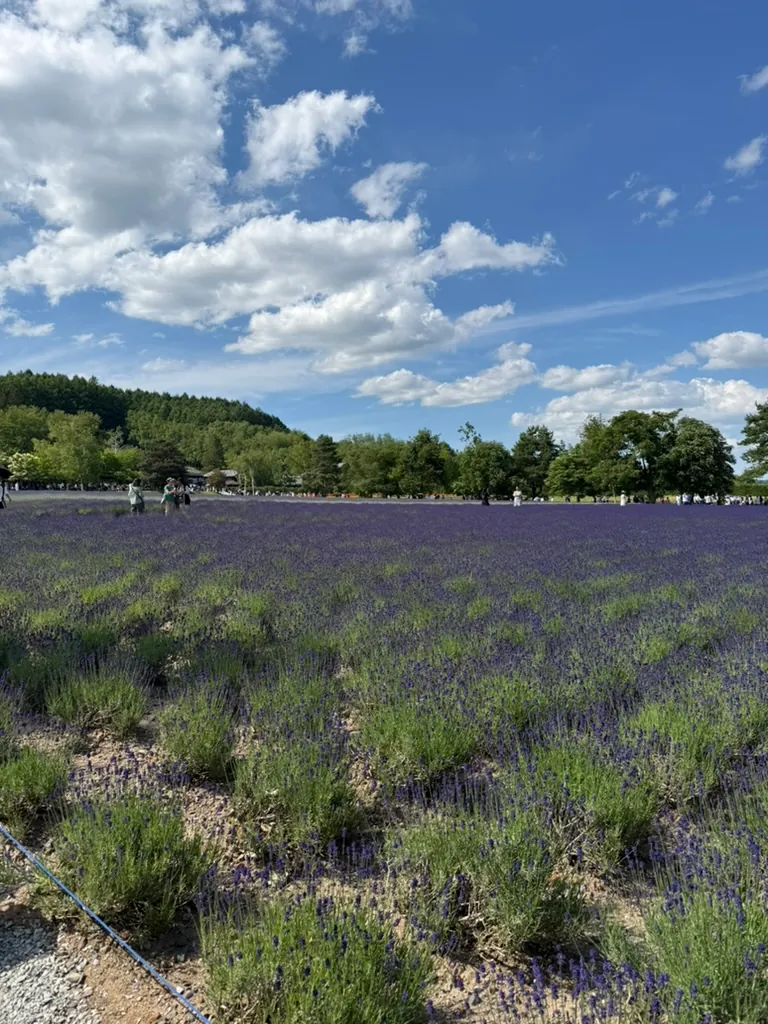
Nakafurano is a farming town of about 4,400 people in the middle of the Furano Basin. The town calls it the birthplace of Furano's lavender tourism: Farm Tomita's "Traditional Lavender Field" became famous after it appeared on a Japanese National Railways calendar in 1976.1 About 1.1 million visitors a year come for the lavender, the melons and the view of the Tokachidake range.12
- Population (2020 Census)
- 4,733
- Area
- 108.65 km²
- District
- Sorachi District (空知郡)
- Official website
- www.town.nakafurano.lg.jp
Known for
- Farm Tomita (ファーム富田): the Tomita family began growing lavender here in earnest in 1958. Fragrance companies stopped buying lavender oil in 1973 and most of the region's fields disappeared. Then a 1976 JNR calendar photo of the Tomita field made it famous and started Furano's lavender tourism.121
- Hokuseiyama Lavender Garden (北星山ラベンダー園): a town-run hillside garden next to the town centre. A single-seat chairlift climbs through the lavender to views of the Tokachidake range. In winter the slope becomes the Hokusei Ski Area.13
- The Lavender Festival & Fireworks (なかふらのラベンダーまつり&花火大会): the town's biggest event, first held in 1981.91
- Visitor numbers: 1,109,400 tourists in 2025, far more than the town's own population.2
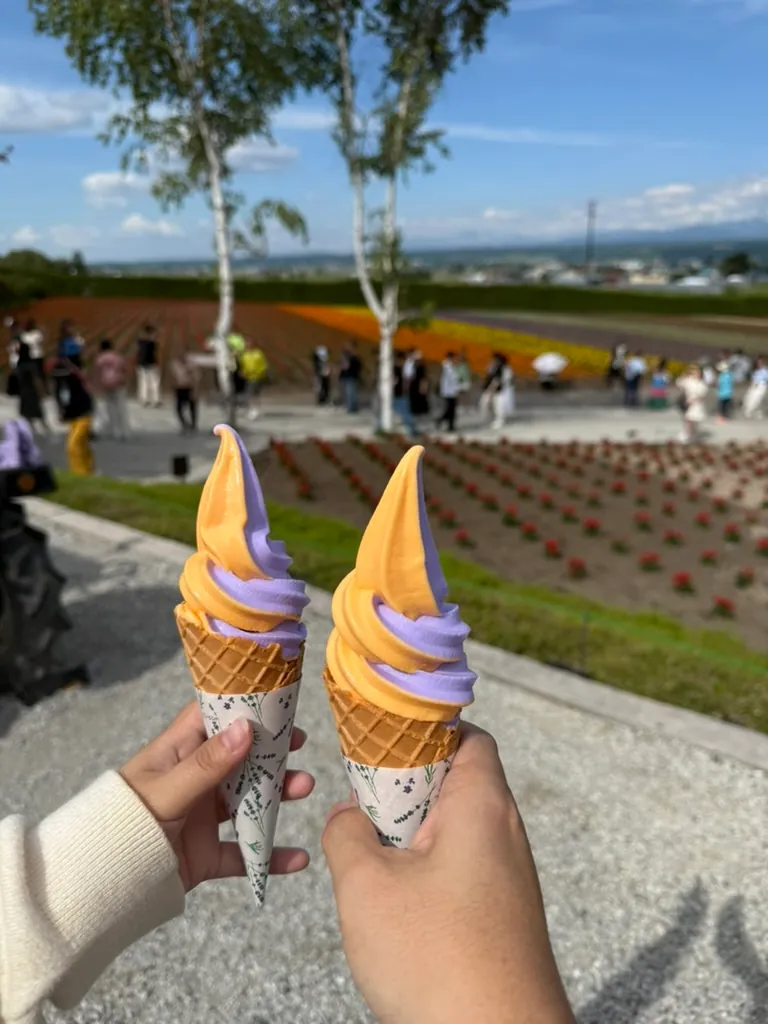
- Melons: red-fleshed melons from the basin's hot days and cool nights. Poplar Farm's trademarked "Santa's Beard" (サンタのヒゲ), a half melon topped with soft-serve, is billed as a Hokkaido sweet you can only get there.1410
- Onions, vegetables and "clean rice": vegetables make up about two-thirds of farm output. Onions are grown on 753 ha. Local farmers began growing reduced-pesticide "clean rice" (クリーン米) in 1988.810
Sights & activities
Nature & scenery
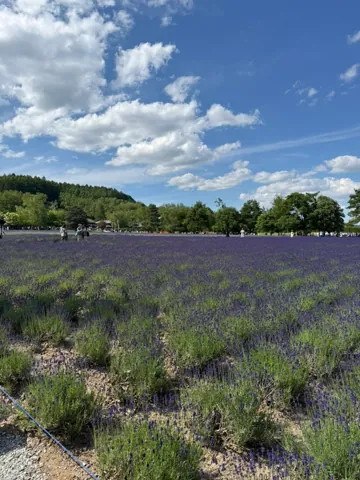
- Farm Tomita (ファーム富田, Kisen Kita 15-gō): its flower fields include the "Irodori" (colorful) field (彩りの畑) and the Traditional Lavender Field (トラディショナルラベンダー畑), where lavender tourism began.1 Tulips, poppies and baby's breath bloom from May.1 The farm also has cafés, shops, a history museum and a new observation deck.33 Hours shown on 23 September 2026 were 9:00–17:00.33 Admission to the fields has traditionally been free (unverified).
- Lavender East (ラベンダーイースト): Farm Tomita's lavender field grown for oil. It is about 4 km (7 minutes by car) east of the main farm, in Kamifurano. In 2026 it opened 20 June–20 July, 9:30–16:30.4142
- Hokuseiyama Lavender Garden (北星山ラベンダー園, Miyamachi 1-41): the town lists four lavender varieties (the tourism association says three): Nōshi Hayazaki (濃紫早咲), Okamurasaki (おかむらさき), Lavandin (ラバンジン) and Misato Sekka (美郷雪華), a white lavender from Misato, Akita.1 The single-seat lift takes about 5½ minutes to the summit. In 2026 it ran 13 June–23 August, 9:00–17:00, and cost ¥700 return for adults and ¥350 for children.13 The garden is 0.7 km (10 minutes' walk) from JR Nakafurano Station, and its shop sells soft-serve and cut melon.43
- Nakafurano Flower Park (なかふらのフラワーパーク, Miyamachi 2-1): a park with fountains and lawns at the foot of Hokuseiyama, built for the town's centennial. It has parking for 78 cars.44 Kita no Curry Kōbō Kirara (北のカレー工房きらら) is inside.45
- Nakafurano Forest Park (中富良野森林公園, Nishi 1-sen Kita 13): walking trails with cherry blossoms, tulips and autumn leaves, and sometimes Ezo squirrels.25 Its campground and barbecue house are currently closed.46
- Farmland views: the town's "three chestnut trees" (三本の栗の木) among wheat and potato fields are one of its signature views.1 The Environment Ministry's "100 Fragrant Landscapes" selection of 2001 included the area (per Japanese Wikipedia).9
Onsen
- SPA & HOTEL RESORT Furano Laterre (ふらのラテール, Higashi 1-sen Kita 18): a natural hot spring with 15 kinds of baths and an outdoor bath facing the Tokachidake range. Day bathing at "Banka no Yu" (万華の湯) is 10:00–22:00 (last entry 21:00). The hotel shop, Nakafurano Marche (なかふらのマルシェ), is open 7:00–21:00. There is parking for 300 cars and free Wi-Fi.47
Museums & heritage
- The Hokkaido Landscape Painting Museum is open 29 April–10 October, 10:00–15:00 (last entry). Admission is ¥500 for adults, or ¥900 with the garden.40
- Nakafurano Shrine and the Local History Museum are described under Culture & festivals.181
Outdoor & seasonal activities
- Hokusei Ski Area (北星スキー場): usually open from about the second week of January to early March, with some ungroomed slopes. The 2025–26 season was cancelled for lack of snow.13
- Cycling: rental bikes at Ekimae BASE33 (9:00–16:30), plus the Nakafurari rally in summer.1739
- Camping & stays: the Hoshi ni Te no Todoku Oka campground (星に手のとどく丘キャンプ場) at Hitsuji no Oka is about 9 km (10 minutes by car) from Nakafurano Station and has Suffolk sheep and a petting farm.48 The tourism association also lists glamping (GLAMP SORA), cottages and Furano Resort Orika with its golf club.49
Food experiences
- Domaine Raison: feed young goats, try goat milking and tour the winery, with some tastings. There are seasonal harvest activities (asparagus, blueberries, potatoes) and goat's-milk soft-serve at the summer café. Open 10:00–17:00.34
- Jōmon Spring Water Café beberui (縄文湧水Cafe beberui): coffee made with spring water from a Jōmon site, plus garden-vegetable and venison lunches. Open June to mid-October; closed Mondays and Thursdays.16
- Melon stops at Tomita Melon House and Poplar Farm (see Local specialties).3114
Roadside stations (Michi-no-Eki)
No Michi-no-Eki is located in Nakafurano. The official Hokkaido roadside station list has no station in the town, and none in neighboring Furano City or Kamifurano either.50 The nearest ones are:
- Biei "Oka no Kura" (道の駅びえい「丘のくら」), Biei: north, in central Biei (Honchō 1-9-21). It is in an old Biei soft-stone warehouse and serves curry made with Biei vegetables and corn-butter ramen. Hours are 9:00–18:00 in June–August and shorter in other months (as of September 2026 — check before visiting).51
- Star Plaza Ashibetsu (道の駅スタープラザ芦別), Ashibetsu: west over the Yubari Mountains on National Route 38. It is known for its star-shaped toilets and "gatatan ramen". Parking for 114 cars.52
- Minamifurano (道の駅南ふらの), Minamifurano: south on National Route 38 at Ikutora. It has a canoe-shaped building, a freshwater aquarium, EV charging and parking for 74 cars.53
- Biei "Shirogane Birke" (道の駅びえい「白金ビルケ」), Biei: in the Shirogane (白金) area of Biei.50
Stop in town instead: Ekimae BASE33 (駅前BASE33, Minamimachi 1-24, next to JR Nakafurano Station) is not a Michi-no-Eki, but it serves as the town's tourist information center. It offers rental bikes, luggage storage (¥800), coin lockers, a kids' corner and Wi-Fi. Hours are 9:00–18:00 in June–August and 9:00–17:00 the rest of the year (as of September 2026 — check before visiting).17 Furano Laterre's hotel shop, Nakafurano Marche (なかふらのマルシェ), is open 7:00–21:00.47
Getting there & around
- Rail: the JR Furano Line (Asahikawa–Furano) has three regular stations in the town: Nishinaka (西中), Nakafurano (中富良野) and Shikauchi (鹿討).9 The seasonal Lavender Farm Station (ラベンダー畑駅) is a 7–8 minute walk from Farm Tomita and is served only by the Furano-Biei Norokko.54 The Norokko's final run is on 23 September 2026, and no plan for the station after that was found.19 From Nakafurano Station it is about 25 minutes on foot to Farm Tomita and 10 minutes to Hokuseiyama.4243
- From Sapporo by train: take the Limited Express Kamui to Takikawa (about 55 minutes), then the Nemuro Line to Furano (about 1 hour 10 minutes), then the Furano Line north (about 10 minutes). Or take the Kamui to Asahikawa (about 1 hour 25 minutes) and the Furano Line south (about 1 hour 5 minutes).42
- Bus: the Furano Bus Lavender-gō takes about 1 hour 25 minutes from Asahikawa Station, 48 minutes from Asahikawa Airport and 12 minutes from Furano Station to the Nakafurano stop. Chūō Bus runs from Sapporo Station to Furano in about 2½ hours.42 The North Liner (Asahikawa–Obihiro) also serves the town.9
- Car: National Routes 237 and 38 are listed as the town's national highways; Route 237 is the road from Asahikawa Airport.942 It takes about 45 minutes from Asahikawa Airport, and about 2½ hours from Sapporo (Dō-Ō Expressway, Mikasa IC) or from New Chitose Airport (Shimukappu IC).42
- Nearest airport: Asahikawa Airport, about 45 minutes by car.42
- Getting around: the town centre, Hokuseiyama and the Flower Park are all within walking distance of the station. Use a rental bike from BASE33 or a taxi to reach Farm Tomita and the farms.1742
Practical tips
- Best time: early lavender varieties start blooming in late June, and fields are at their best in July.1 Farm Tomita's spring flowers start in May, and the harvest runs from September to October.1 Many places are seasonal. The town's tourist-spot page gives 1 May–31 October as the season for town-run facilities, though the Hokuseiyama lift runs only in summer.46 Tomita Melon House closes from October to May, and HASEGAWA from January to April.3135
- Crowds and parking: traffic is heavy on July weekends and holidays. Mornings and evenings on weekdays are calmer.55 The town-run North 15 parking lot (町営北15号駐車場) charged ¥500 per car (¥2,000 per bus) from 13 June to 23 August 2026. It is cashless only and has 104 car spaces.56 On festival day there is no parking near the venue, so arrive without a car if you can.38
- Drive carefully: the roads to the lavender fields have stop signs that visitors often miss: three coming from the Sapporo side and one from the Asahikawa side. Accidents happen every year.55
- Stay out of the fields: farmland is private property. The town asks photographers to take a step back rather than walk into crops.57
- Tokachidake: check the JMA volcano bulletins before hiking in the Tokachidake range. It has been at Alert Level 3 since 12 September 2026.26
- Winter: it can reach −25 °C, and lying snow lasts from December.1 Drive with winter tyres and allow extra time.
- Information: Nakafurano Tourism Association / Ekimae BASE33, tel. 0167-39-3033.17
Photos
-
 Jun 2026
 -
 Apr 2026
 -
 Jun 2026
More about Nakafurano
At a glance
| Field | Details |
|---|---|
| Type | Town (町) |
| Subprefecture | Kamikawa (上川総合振興局) |
| District | Sorachi District (空知郡). The town is in Kamikawa Subprefecture even though its district name is Sorachi.3 |
| Population | 4,733 at the 2020 Census (2,260 men, 2,473 women), down 6.6% from 5,069 in 2015.4 The preliminary 2025 Census count was 4,285, down 9.5%.5 The resident register showed 4,387 people (2,076 men, 2,311 women) in 2,204 households on 31 August 2026.3 The Hokkaido Government's register figure for 1 January 2026 was 4,376, including 96 foreign residents.6 |
| Area | 108.65 km² (GSI, 1 April 2026).7 Of the 10,865 ha total, 4,810 ha is farmland and 4,409 ha is forest.8 |
| Density | About 40.4 people/km² (August 2026 register). It was 43.6/km² at the 2020 Census.4 |
| Municipal history | Furano Village (富良野村) was founded in 1897 and split up in 1903. Nakafurano Village separated from Kamifurano Village in 1917. It adopted the first-class village system in 1923 and became a town on 1 May 1964. There have been no mergers.910 |
| Neighboring municipalities | Furano, Kamifurano and Biei in Kamikawa; Ashibetsu in Sorachi.9 |
| Symbols | Flower: lavender (ラベンダー). Tree: kobushi magnolia (こぶし). Residents chose both in a survey for the town's 90th-anniversary projects, and they were adopted on 1 January 1986.1 No town bird was found. |
| Mascot | The Lavender Fairy (ラベンダーの妖精). She was created for the town's centennial and debuted on 7 July 1995. She lives at Hokuseiyama Lavender Garden. Her outfit is melon-themed and her hat and apron carry lavender.11 |
| Official website | https://www.town.nakafurano.lg.jp/ |
Name origin
- Town's explanation: the Ainu word fūranui (フーラヌイ) became furanui (フラヌイ). It means "foul-smelling mud" or "rotten mud" (臭くにおう泥土、腐れ泥). A sulfur-smelling river from Tokachidake wandered across the plain and made a peat swamp. The area was called Furanui (振縫) or the Furano Plain (富良野原野). Nakafurano ("middle Furano") got its name because it lay at the plain's centre.10
- Wider theory: the name Furano is usually traced to Ainu hura-nu-i (フラヌイ), "odor–have–place". This refers to the sulfur smell of the Furano River (富良野川), which rises on Tokachidake.15 The two readings agree that the name comes from the volcanic smell of the river and swamp.
- Upper, middle and lower: the railway opened in 1900 between Kami-Furano ("upper") and Shimo-Furano ("lower", today's Furano City). Nakafurano Station opened between them the same year.9
History
- Prehistory: people have lived here since the Jōmon period, and Ainu oral traditions exist for the area.9 Jōmon artifacts were dug up at a spring in the Beberui (ベベルイ) district, where a café now uses the water.16
- 1858: explorer Matsuura Takeshirō (松浦武四郎) surveyed the Furano area.9
- 1895: Itō Kitarō (伊藤喜太郎) became the first settler, farming alone at Nishinaka (西中).9
- 1897–1899: Furano Village was founded in 1897, put under Kamikawa Subprefecture in 1898, and given a village office in 1899.9
- 1900: the railway between Kami-Furano and Shimo-Furano (today's JR Furano Line) opened, and Nakafurano Station opened with it.9 The town's new station-front tourist center, Ekimae BASE33, is named after this year (Meiji 33).17
- 1903: Furano Village was divided.9 In the same year Tomita Tokuma (富田徳馬), grandfather of Farm Tomita's founder, began clearing land on the Nakafurano plain.12
- 1917: Nakafurano Village (中富良野村) separated from Kamifurano Village.9
- 1919: the Central Drainage Canal (中央大排水) was completed.9
- 1923: the village adopted the first-class village system (一級町村制).9
- 1958–1976, the lavender story: Tomita Tadao (富田忠雄) and his wife Sachiko began growing lavender in earnest in 1958. By 1970 more than 230 ha and about 250 farms in the Furano region grew it for oil. In 1973 fragrance companies stopped buying the oil and most fields disappeared. In 1976 a JNR calendar showed the Tomita field and tourists began to arrive.12
- 1962–1964: the village emblem was adopted on 1 April 1962. It became the town emblem when Nakafurano became a town on 1 May 1964.10 Nakafurano Shrine moved from the flatland to the slope of Hokuseiyama in 1962.18
- 1981: the first Lavender Festival was held.9
- 1988: the JA Nakafurano Clean Rice Producers' Council began growing clean rice. By 2000 more than 300 farms took part, and the method had spread to reduced-pesticide onions.10
- 1995: the town's centennial. The Lavender Fairy mascot was created.11
- 1998–2026: the Furano-Biei Norokko (富良野・美瑛ノロッコ号) sightseeing train ran on the Furano Line for 28 years. Its last season ends on 23 September 2026.19
- 2015: partnership agreement with Misato Town, Akita (20 May). In July the town hosted about 300 people for the Flower City Exchange Liaison Council's general meeting.2021
- 2022: exchange declaration with Toshima Ward, Tokyo (1 July).22
- 2026: Nakafurano Gakuen (ラベンダーの杜 中富良野町立なかふらの学園), a combined school covering all nine compulsory grades, opened in April.23 The town is also building new tourism bases: a lodging hub on Hokuseiyama, and an auberge there planned under a partnership agreement with Japan Airlines.2423
- Settler origins: no source was found that says which prefectures Nakafurano's settlers came from.
Geography & climate
- Setting: the town is in the centre of the Furano Basin (富良野盆地), in the middle of Hokkaido.1 The central plain slopes gently from northeast to southwest. Rice paddies cover the flat land and upland crops cover the hills.10
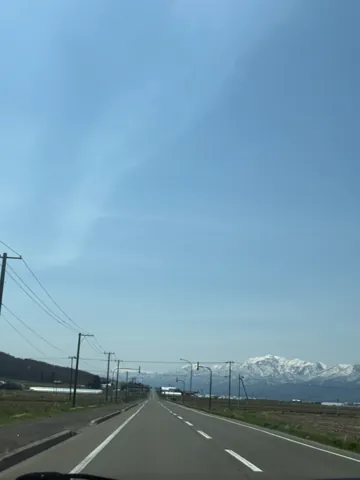
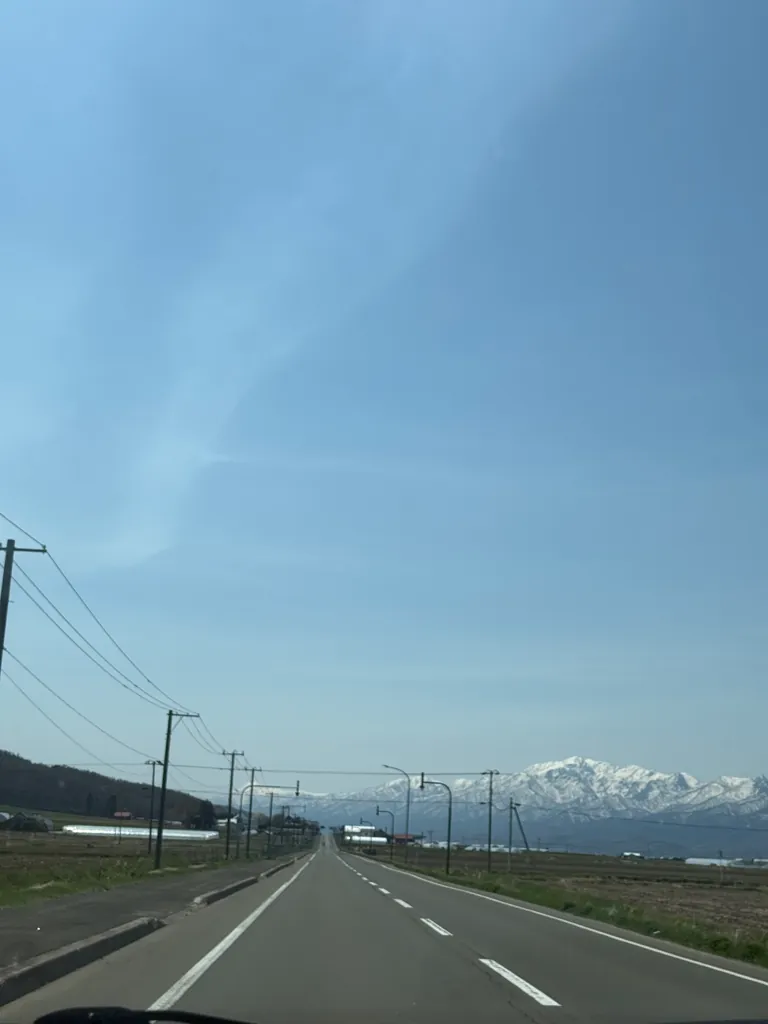
- Mountains: to the east rise the Tokachidake range and Furano-dake in Daisetsuzan National Park. To the west, the Yubari Mountains run north–south, topped by Ashibetsu-dake in a prefectural natural park.10 Hokuseiyama (北星山), a low hill beside the town centre, holds the lavender garden, the ski slope and the forest park.1325
- Rivers: the Furano River (富良野川) and Sorachi River (空知川).9
- Land use: 3,090 ha of paddy and 1,730 ha of upland fields (2024).8
- Climate: inland climate. Summer highs reach about 30 °C and winter lows about −25 °C. The plains get about 1 m of lying snow.10 First snow falls in November and snow stays on the ground from December.1 Japanese Wikipedia gives annual precipitation of about 900 mm and 2–3 m of snow in the mountains.9 No official JMA weather station in the town was found.
- Volcano: Tokachidake (十勝岳) has been at Volcanic Alert Level 3 (entry restricted) since 09:30 on 12 September 2026. People are warned about large ballistic rocks within about 3 km of the crater.26 The alert lists Furano, Biei, Kamifurano, Minamifurano and Shintoku, but not Nakafurano, and the tourism association says the town itself is not in danger.2627
Economy & industry
- Farm output: the 2024 estimate is ¥10.17 billion. Vegetables account for ¥6.59 billion (about 65%), rice for ¥2.19 billion, wheat and barley for ¥250 million, and livestock for only ¥320 million.8
- Farms: the 2020 Census of Agriculture counted 307 farm businesses. 227 of them farm as their main business, and 761 people worked 60 days or more on farms.8
- Main crops (2020 census areas): rice 1,151 ha (191 farms), wheat 802 ha, onions 753 ha (94 farms), potatoes 107 ha, sugar beet 124 ha, melons 28 ha (62 farms) and watermelons 6 ha.8
- 2025 harvest: paddy rice 1,090 ha and 6,350 t; wheat 910 ha and 2,920 t; two-row barley 94 ha and 202 t, which is 5.3% of Hokkaido's two-row barley area; sugar beet 7,720 t.8
- Clean agriculture: reduced-pesticide "clean rice" was one of Hokkaido's first clean-farming efforts, starting in 1988.10 The local farm co-op is the Nakafurano branch of JA Furano (ふらの農業協同組合).9
- Tourism: visitors peaked at 1,172,800 in 2018, fell to 383,800 in 2020 during COVID, and reached 1,109,400 in 2025. Only 30,100 of them stayed overnight in 2025 (6,600 of those were foreign guests).2 The town describes its tourism as mostly pass-through.24
- Revitalization: the town is trying to make visitors stay longer and come outside lavender season. Projects include the Nakafurano tourist information center Ekimae BASE33 (北海道なかふらの観光案内所「駅前BASE33」) by JR Nakafurano Station, and a year-round wellness and lodging base on Hokuseiyama, both funded with national grants.2824 It also runs a furusato nozei program on five portal sites.29
- Population: from 8,352 in 1970 to 4,733 in 2020.94 In 2020, 36.6% of residents were 65 or older, compared with 32.2% for Hokkaido as a whole.30
Local specialties
| Specialty | Category | Details & where to get it |
|---|---|---|
| Melons (メロン) | Fruit | Sweet red-fleshed melons grown on 28 ha.810 Tomita Melon House (とみたメロンハウス, Miyamachi 3-32) sells cut melon and two kinds of melon bread (red- and green-fleshed). It opens daily from about June to September, 9:00–17:00; in 2025 it stayed open until 13 October.31 Furusato Choice lists many melon gifts.23 |
| "Santa's Beard" (サンタのヒゲ) | Dessert | Poplar Farm's trademarked half melon topped with soft-serve, at its main shop (Higashi 1-sen Kita 18). Open mid-April to mid-October, 9:00–17:00.14 |
| Clean rice (クリーン米) | Rice | Reduced-pesticide rice grown since 1988.10 Rice is one of the main furusato nozei categories.29 |
| Onions, carrots, asparagus, potatoes, sweet corn | Vegetables | The town's staple crops.1 Local farms sell produce at the "Nakafu fresh vegetable Sunday market" (なかふ採れたて野菜日曜市) in the JA Furano Nakafurano branch parking lot. The 2026 date is 4 October, 9:00–12:00.32 |
| Lavender products | Crafts & cosmetics | Farm Tomita sells lavender oil, perfume, dried flowers and sweets, and lavender soft-serve at its cafés.33 Its own perfume "Furano" was developed between 1980 and 1984.12 |
| Wine & goat cheese | Wine / dairy | Domaine Raison (ドメーヌレゾン, Higashi 1-sen Kita 4) makes three goat's-milk cheeses and wine. Its "Nakafurano Sauvignon Blanc 2023" won a Grand Gold award, a new top prize above gold created that year. The source page does not name the competition.34 |
| Baumkuchen (バウムクーヘン) | Sweets | Baumkuchen no HASEGAWA bakes each layer by hand with a ladle and uses no emulsifiers. Open Friday–Sunday; closed January–April.35 |
| Mini Catalana (ミニカタラーナ) | Sweets | Nakafurano's chosen prize in the 2026 farewell campaign for the Norokko train. The maker is not named.19 |
| Suffolk-lamb jingisukan (ジンギスカン) | Local dish | Hitsuji no Oka (ひつじの丘) in Beberui grills Suffolk lamb over charcoal on an open terrace, 11:00–15:00 (season listed as 27 April–13 October).36 |
| Sake "Horafuki" and "Murasaki no Shizuku" | Sake | A junmai (法螺吹) and a ginjō (紫の雫) brewed from local Yukihikari rice were listed as specialties in 2000. Whether they are still sold is unverified.10 |
| Furusato nozei gifts | Various | Categories include rice, fruit, vegetables, meat, sweets, processed foods, lavender goods, alcohol and travel. They are offered through Furusato Choice, Rakuten, Furunavi, Satofull and JAL.29 Choice lists melons such as Endo Farm's (遠藤ファーム) extra-large pair, plus wine, lamb and corn.23 |
Culture & festivals
| Event | When | Highlights |
|---|---|---|
| Nakafurano Lavender Festival & Fireworks (なかふらのラベンダーまつり&花火大会) | Usually mid-July. The 42nd was on 12 July 2025; the 43rd was on 1 August 2026. | Held at Hokuseiyama Lavender Garden and the Flower Park. The program includes lift rides, lavender picking, bands, Aoi Taiko drumming, a farm market and an exchange fair with Misato Town, Akita. Fireworks start at 19:45 from Hokuseiyama, with paid summit seating.3738 First held in 1981.9 |
| Nakafurari (なかふらりー) cycling rally | 11 July–30 September 2026 | Visit 16 checkpoints around town by bicycle, including the tourist center, Farm Tomita and the landscape-painting museum.39 |
| Nakafu fresh vegetable Sunday market (なかふ採れたて野菜日曜市) | Autumn Sundays (e.g. 4 October 2026, 9:00–12:00) | Fresh local vegetables, with a raffle.32 |
| Winter festival and harvest festival | February and October | Listed on Japanese Wikipedia; details not confirmed (unverified).9 |
- Performing arts: the Nakafurano Aoi Taiko Preservation Society (中富良野町郷土芸能葵太鼓保存会) plays at the Lavender Festival.38
- Nakafurano Shrine (中富良野神社, Miyamachi 2-13): it moved in 1962 to its current site halfway up Hokuseiyama. The new building was paid for by the town and residents, and it was built of reinforced concrete, which was unusual at the time. The outside was renovated in 2003. The shrine is known for spring cherry blossoms, autumn leaves, goshuin stamps and pet charms.18
- Temple and museum: kobushi magnolias bloom at Chūzenji Temple (中善寺) and at the Nakafurano Local History Museum (中富良野町郷土館).1
- Hokkaido Landscape Painting Museum (北海道風景画館, Nae): a gallery of painter Okuda Shūichi's pictures of the Furano seasons. It has a 2,300-tsubo riverside garden and a small chapel.40
- Past festival feature: in 2000 the Lavender Festival's best-known part was a harvest event called "Hankakusai" (繁穫祭).10
Ainu heritage
Few sources describe Ainu life in Nakafurano. Japanese Wikipedia says only that Ainu oral traditions exist for the area.9 The clearest trace is in place names: the town name comes from Ainu furanui, "foul-smelling mud".10 Beberui (ベベルイ), a district of the town, also looks like an Ainu name, but no source found explains it (unverified). No Ainu cultural facility in the town was found. Visitors looking for Ainu culture usually go to Asahikawa or to the national Upopoy museum in Shiraoi.
Sister & friendship cities
- Misato Town, Akita Prefecture (秋田県美郷町): partnership and cooperation agreement signed on 20 May 2015 and extended on 31 March 2021 for five years, to 31 March 2026. It covers exchanging lavender seedlings, joint tourism and product promotion, and resident exchanges, with eight partner organizations.20 The white lavender "Misato Sekka" now grows at Hokuseiyama.1 Whether the agreement was renewed after March 2026 was not confirmed.
- Toshima Ward, Tokyo (東京都豊島区): the "Nakaf-life & Toshima-gurashi" mutual exchange declaration (ナカフライフ&としまぐらし相互交流宣言) was signed on 1 July 2022. It covers living, culture, education and tourism.22
- Flower City Exchange Liaison Council (フラワー都市交流連絡協議会): Nakafurano (lavender) is one of nine member towns. The others are Tonami, Toyama (tulips); Nagai, Yamagata (irises); Ōno, Gifu (roses); Shimoda, Shizuoka (daffodils); Hagi, Yamaguchi (camellias); Kurume, Fukuoka (azaleas); Takarazuka, Hyōgo (violets); and Wadomari, Kagoshima (lilies).21
- International: none found.
Sources
Numbers in the text link to these sources. Figures as of 23 September 2026
- 中富良野町の紹介 — Nakafurano Town (中富良野町) JA accessed 2026-09-23
- 北海道中富良野町の観光統計について — Nakafurano Town (中富良野町) JA accessed 2026-09-23
- 北海道中富良野町 (official website, top page) — Nakafurano Town (中富良野町) JA accessed 2026-09-23
- 令和2年国勢調査 人口等基本集計 第1表 男女別人口、面積、人口密度及び世帯数 (XLS) — Hokkaido Government, Statistics Division (北海道総合政策部計画局統計課) JA accessed 2026-09-23
- 令和7年国勢調査速報 北海道の人口・世帯数(要計表に基づく人口・世帯数の集計) (PDF) — Hokkaido Government, Statistics Division (北海道総合政策部計画局統計課) JA accessed 2026-09-23
- 住民基本台帳人口・世帯数 市区町村別(令和8年1月1日現在) (XLSX) — Hokkaido Government, Statistics Division (北海道総合政策部計画局統計課) JA accessed 2026-09-23
- 令和8年全国都道府県市区町村別面積調(4月1日時点) (PDF) — Geospatial Information Authority of Japan (国土地理院) JA accessed 2026-09-23
- 北海道中富良野町(わがマチ・わがムラ 市町村の姿) — Ministry of Agriculture, Forestry and Fisheries (農林水産省) JA accessed 2026-09-23
- 中富良野町 — Wikipedia JA accessed 2026-09-23
- 中富良野町勢要覧(平成12年10月発行) (PDF) — Nakafurano Town (中富良野町) JA accessed 2026-09-23
- 中富良野町イメージキャラクター「ラベンダーの妖精」のご紹介 — Nakafurano Town (中富良野町) JA accessed 2026-09-23
- ファーム富田の歴史 — Farm Tomita (ファーム富田) JA accessed 2026-09-23
- 北星山ラベンダー園/北星スキー場 — Nakafurano Tourism Association (なかふらの観光協会) JA accessed 2026-09-23
- ポプラファーム 中富良野本店 — Nakafurano Tourism Association (なかふらの観光協会) JA accessed 2026-09-23
- 富良野市 — Wikipedia JA accessed 2026-09-23
- 縄文湧水Cafe beberui — Nakafurano Tourism Association (なかふらの観光協会) JA accessed 2026-09-23
- 駅前BASE33 / EKIMAE BASE 33 — Nakafurano Tourism Association (なかふらの観光協会) JA accessed 2026-09-23
- 中富良野神社 — Nakafurano Tourism Association (なかふらの観光協会) JA accessed 2026-09-23
- JR富良野線観光列車「富良野・美瑛ノロッコ号」利用促進キャンペーン — Nakafurano Town (中富良野町) JA accessed 2026-09-23
- 秋田県美郷町との連携協力協定について — Nakafurano Town (中富良野町) JA accessed 2026-09-23
- フラワー都市交流連絡協議会について — Nakafurano Town (中富良野町) JA accessed 2026-09-23
- 東京都豊島区と「ナカフライフ&としまぐらし相互交流宣言」を締結しました — Nakafurano Town (中富良野町) JA accessed 2026-09-23
- 北海道中富良野町|自治体・ふるさと納税情報をご紹介【ふるさとチョイス】 — Furusato Choice (ふるさとチョイス) JA accessed 2026-09-23
- 【事業概要】北星山エリアの空間を活かしたウェルビーイング創出事業 — Nakafurano Town (中富良野町) JA accessed 2026-09-23
- 中富良野森林公園 — Nakafurano Tourism Association (なかふらの観光協会) JA accessed 2026-09-23
- 火山活動の状況(十勝岳) — Japan Meteorological Agency (気象庁) JA accessed 2026-09-23
- 9/12 十勝岳の入山規制について — Nakafurano Tourism Association (なかふらの観光協会) JA accessed 2026-09-23
- 【観光拠点施設の新設による観光産業と花によるまちづくりの持続的発展】 事業概要 — Nakafurano Town (中富良野町) JA accessed 2026-09-23
- 花と香りと味覚のまち 中富良野町 ふるさと納税 — Nakafurano Town (中富良野町) JA accessed 2026-09-23
- 令和2年国勢調査 人口等基本集計 第2表 年齢(3区分)別人口及び世帯数 (XLS) — Hokkaido Government, Statistics Division (北海道総合政策部計画局統計課) JA accessed 2026-09-23
- とみたメロンハウス — Nakafurano Tourism Association (なかふらの観光協会) JA accessed 2026-09-23
- なかふ採れたて野菜日曜市を開催します! — Nakafurano Tourism Association (なかふらの観光協会) JA accessed 2026-09-23
- 北海道のラベンダー畑「ファーム富田」オフィシャルサイト — Farm Tomita (ファーム富田) JA accessed 2026-09-23
- Domaine Raison(ドメーヌレゾン) — Nakafurano Tourism Association (なかふらの観光協会) JA accessed 2026-09-23
- バウムクーヘンのHASEGAWA — Nakafurano Tourism Association (なかふらの観光協会) JA accessed 2026-09-23
- 富良野ジンギスカン ひつじの丘 — Nakafurano Tourism Association (なかふらの観光協会) JA accessed 2026-09-23
- 2025年「第42回なかふらのラベンダーまつり&花火大会」について — Nakafurano Town (中富良野町) JA accessed 2026-09-23
- 2026年「第43回なかふらのラベンダーまつり&花火大会」について — Nakafurano Town (中富良野町) JA accessed 2026-09-23
- なかふらりー 2026 チェックポイント — Nakafurano Tourism Association (なかふらの観光協会) JA accessed 2026-09-23
- 北海道風景画館(風景画家の庭、絵画教室) — Nakafurano Tourism Association (なかふらの観光協会) JA accessed 2026-09-23
- ラベンダーイースト — Farm Tomita (ファーム富田) JA accessed 2026-09-23
- ファーム富田・ラベンダーイーストへのアクセス方法 — Farm Tomita (ファーム富田) JA accessed 2026-09-23
- 北星山ラベンダー園 — Nakafurano Town (中富良野町) JA accessed 2026-09-23
- なかふらのフラワーパーク — Nakafurano Tourism Association (なかふらの観光協会) JA accessed 2026-09-23
- ごはん・カフェ — Nakafurano Tourism Association (なかふらの観光協会) JA accessed 2026-09-23
- 観光スポット — Nakafurano Town (中富良野町) JA accessed 2026-09-23
- SPA&HOTEL RESORT ふらのラテール — Nakafurano Tourism Association (なかふらの観光協会) JA accessed 2026-09-23
- ひつじの丘(星に手の届く丘キャンプ場) — Nakafurano Town (中富良野町) JA accessed 2026-09-23
- 宿 — Nakafurano Tourism Association (なかふらの観光協会) JA accessed 2026-09-23
- 北の道の駅 — 住所等一覧 — Kita no Michi-no-Eki (北の道の駅) JA accessed 2026-09-23
- 北の道の駅 — びえい「丘のくら」 — Kita no Michi-no-Eki (北の道の駅) JA accessed 2026-09-23
- 北の道の駅 — スタープラザ芦別 — Kita no Michi-no-Eki (北の道の駅) JA accessed 2026-09-23
- 北の道の駅 — 南ふらの — Kita no Michi-no-Eki (北の道の駅) JA accessed 2026-09-23
- ラベンダー畑駅(ノロッコ号) — Farm Tomita (ファーム富田) JA accessed 2026-09-23
- 観光シーズンの交通情報 — Nakafurano Town (中富良野町) JA accessed 2026-09-23
- 町営北15号駐車場有料化について — Nakafurano Town (中富良野町) JA accessed 2026-09-23
- 観光マナーとルールについて — Nakafurano Town (中富良野町) JA accessed 2026-09-23