Asahikawa 旭川市
あさひかわし
Hokkaido's second city and the hub of the island's north. It grew up as a Meiji farmer-soldier settlement and army town where the Ishikari River meets its tributaries in the Kamikawa Basin. Today it is known for Asahiyama Zoo, soy-sauce ramen, furniture making, its "Hokkai no Nada" sake, and the lowest temperature ever recorded by Japan's weather service: −41.0 °C.
- Population (2020 Census)
- 329,306
- Area
- 747.66 km²
- Official website
- www.city.asahikawa.hokkaido.jp
Known for
- Asahiyama Zoo (旭山動物園): Japan's northernmost zoo, opened in 19672. Its "behavioral exhibits" (行動展示) let visitors watch animals swim, climb and hunt the way they would in the wild10. Attendance peaked at 3.07 million in FY200711. In FY2025 it had 1,327,911 visitors1.
- Asahikawa ramen (旭川ラーメン): a soy-sauce broth built on a "double soup" of pork and chicken stock combined with dried sardine and kelp stock. A layer of lard on top keeps the soup from cooling quickly12. Asahikawa ramen is part of the Hokkaido Heritage listing "Hokkaido ramen" (北海道のラーメン)136.
- Japan's cold record: on 25 January 1902 the thermometer here read −41.0 °C, still the lowest temperature on record at any Japan Meteorological Agency observatory. The same station recorded 37.9 °C on 7 August 2021142.
- Furniture and design: Asahikawa is one of Japan's five major furniture-making districts, with more than 120 years of history2. The IFDA design competition has been held every three years since 199015. UNESCO named Asahikawa a Creative City of Design in 20191, and Asahikawa furniture is a Hokkaido Heritage item13.
- "Hokkai no Nada" (北海の灘) sake: the nickname compares the city to Nada, Japan's most famous brewing district. Three brewers still work here: Otokoyama (男山), Takasago Shuzo (高砂酒造) and Godo Shusei's Taisetsu no Kura (合同酒精「大雪乃蔵」). There is also a craft brewery, Taisetsu Ji Beer (大雪地ビール)2.
- Asahikawa Winter Festival (旭川冬まつり): held every February since 1960. The main snow sculpture measures 140 m wide and 20 m high9, and Guinness once certified one of these main sculptures as the world's largest snow sculpture161.
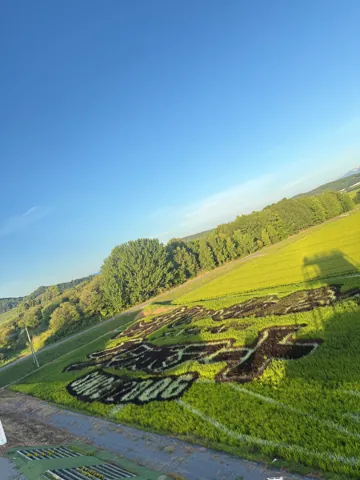
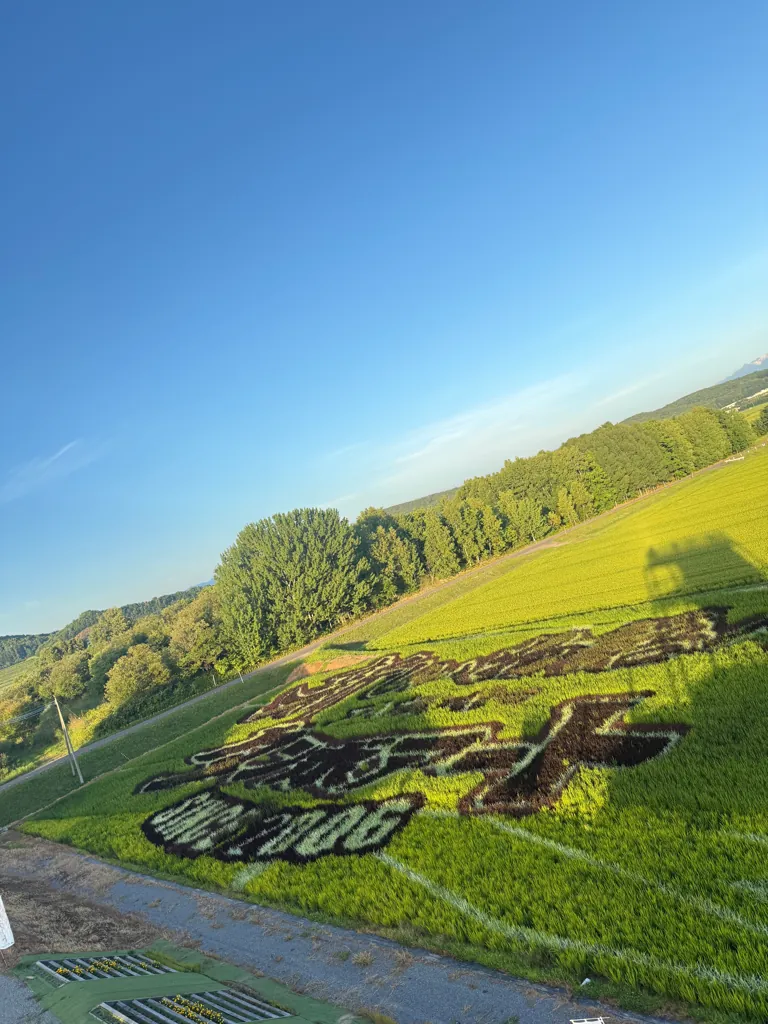
- Rice country: Asahikawa is first in Hokkaido for both rice area planted and rice harvested2. The 2025 crop was 38,200 t1.
- Heiwa-dori Kaimono Koen (平和通買物公園): Japan's first permanent pedestrian shopping street, opened in 19722.
Sights & activities
Nature & scenery
- Asahibashi Bridge (旭橋): the steel arch bridge over the Ishikari, finished in its present form in 19321, is the city's symbol and a Hokkaido Heritage site1320.
- Kamuikotan (神居古潭): about 15 km west of the center55, where the Ishikari runs past about 10 km of strangely shaped rocks through a gorge of dark-green "Kamuikotan stone". The river-carved potholes (おう穴群) have been a city natural monument since 196620. The old Kamuikotan Station building is a city-designated cultural property6. The city publishes a Kamuikotan web map with walking routes and legends55.
- Arashiyama (嵐山) and Hoppō Yasōen (北邦野草園): a lookout over the city, the Ishikari and Daisetsuzan. At the foot of the hill is one of Japan's largest gardens of northern wild plants, with more than 600 species20.
- Foreign Tree Species Sample Forest (外国樹種見本林): the oldest plantation of foreign trees in Hokkaido and the setting of Hyōten. Together with the Miura Ayako Literature Museum it is a Hokkaido Heritage site, and it is near the Michi-no-Eki201312.
- Tokiwa Park (常磐公園): the city's first park, with elms, fir and poplar avenues and Chidorigaike pond. The Central Library and the Hokkaido Asahikawa Museum of Art stand in the grounds20.
- Katakuri at Otokoyama Nature Park (男山自然公園): one of Hokkaido's largest wild katakuri fields, open mid-April to early May, 9:00–17:00, free28.
- Gardens and hills: the Kitasaito Garden (あさひかわ北彩都ガーデン, 2015) lies right beside the station156. Ueno Farm (上野ファーム) is on the Hokkaido Garden Route, and Shujitsu Hill (就実の丘) looks out over the Daisetsuzan range6.
Onsen
- The city has no major hot-spring resort of its own. It is the gateway to the resorts of its neighbors, such as Sounkyo and Taisetsu Kogen onsen in Kamikawa6. Other nearby areas are Higashikawa (Daisetsuzan National Park), Biei and Furano6.
Museums & heritage
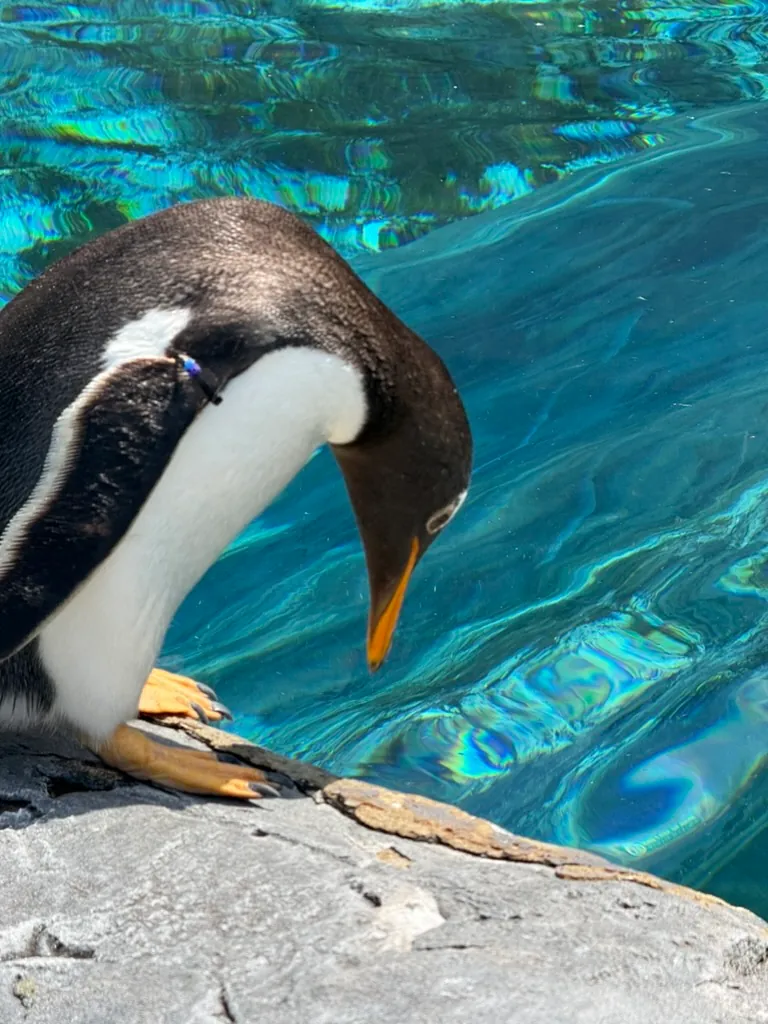
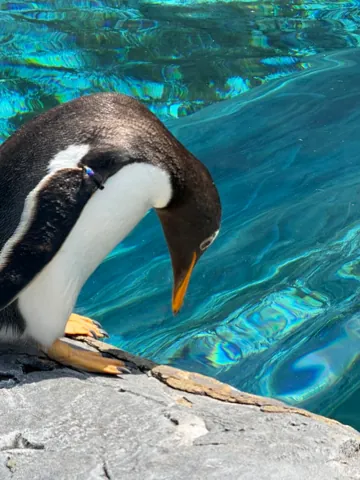
- Asahiyama Zoo (旭山動物園), in Higashi-Asahikawa-chō Kuranuma57: its landmark exhibits include the penguin house, the polar bear houses and the African habitat zone10. The seal house (あざらし館), opened in 2004, has a distinctive tank that helped make the zoo famous11. In winter the penguins' walk on the snow, begun to keep the birds exercised, is a popular event held daily when there is snow on the ground11. 2026 summer season: open from 1 May to 15 October, 9:30–17:15; then 16 October–3 November, 9:30–16:30; last entry 16:00 in both periods. The zoo closes 4–10 November and reopens for winter on 11 November58. Admission is ¥1,000 for adults and free for junior-high students and younger59. It rises to ¥1,400 from 29 April 202760.
- Asahikawa City Museum (旭川市博物館), Taisetsu Crystal Hall: open 9:00–17:00. It closes on the 2nd and 4th Mondays, but opens daily June–September. Adults pay ¥350, rising to ¥440 from 1 October 20264961.
- Nakahara Teijirō Memorial Asahikawa Sculpture Museum: housed in the former Asahikawa Kaikōsha (旧旭川偕行社), an Army officers' club and an Important Cultural Property since 1989; the museum opened in 1994201.
- Literary museums: the Miura Ayako Literature Museum (三浦綾子記念文学館, opened on 13 June 1998), which was founded and is run by citizens62, and the Inoue Yasushi Memorial Hall (井上靖記念館, 1993)1.
- Other museums: the Hokkaido Asahikawa Museum of Art (1982) and the Science Museum "Saipal" (科学館サイパル, 2005)1. The Hokuchin Memorial Museum (北鎮記念館) at the JGSDF Asahikawa garrison displays 7th Division records. The Asahikawa Heison Memorial Museum (旭川兵村記念館), in the grounds of Asahikawa Shrine in Higashi-Asahikawa, covers the farmer-soldiers663.
- Sake and design: Otokoyama Sake Brewing Museum is open 9:00–17:00, closed 31 December–3 January, and free. Its tasting and shop corner has moved to a new shop next door, OTOKOYAMA SAKE PARK38. Takasago's Meiji Sakagura is open 9:00–17:00; free 10:00 and 15:00 factory tours of its 1929 brewery take up to 10 people and must be booked. There are no tours at New Year, Golden Week, Obon or during September maintenance40. Asahikawa Design Center is also worth a visit41.
Outdoor & seasonal activities
- Skiing: Kamui Ski Links (カムイスキーリンクス) sits in Hokkaido's "powder belt". There is also Santa Present Park Maroose ski slope (サンタプレゼントパーク・マロースゲレンデ)6. Vasaloppet Japan takes place in March42.
- Cycling and walking: a riverside cycling road follows the Ishikari54. The station information center rents bicycles in summer and cross-country skis and snowshoes in winter57.
Food experiences
Roadside stations (Michi-no-Eki)
Asahikawa (道の駅あさひかわ)
- Location: Kagura 4-jō 6-chōme 1-12 (旭川市神楽4条6丁目1番12号), on National Route 237, the road to Furano and Hidaka12. It is just south of JR Asahikawa Station, about 5 minutes over the Crystal Bridge (クリスタル橋)6465, and about 20 minutes by car from Asahikawa Airport50. Nearby are Taisetsu Crystal Hall (home of the city museum), Taisetsu Arena, the Foreign Tree Species Sample Forest and the Miura Ayako Literature Museum12.
- Hours: building 9:00–21:00. Shop 9:00–19:00 (April–October) and 9:00–18:00 (November–March). Bakery 10:00–17:00. Restaurant hours vary by shop, and summer and winter hours differ. Closed 30 December–4 January1266. The tourist-information counter is open 9:00–18:00 daily in July–August and 10:00–17:00 on weekends and holidays in April–June and September–October, and usually closes on the first Wednesday of the month. This is from a city page last updated in 202164. Hours as of September 2026 — check before visiting.
- Shops & products: more than 1,000 products, chosen because they are made in Asahikawa or northern Hokkaido or from local ingredients. They include local sweets, packaged ramen, rice, processed farm products, seafood, sake, woodwork, textiles and pottery67. The shop focuses on products from Kamikawa, Rumoi and Soya subprefectures. Highlights are dried-noodle versions of popular Asahikawa ramen shops (air-dried for about two days) and Taisetsu Ji Beer12. It also sells official Asahiyama Zoo goods68. Since June 2026 there is a corner for test sales of new local products50.
- Food: the food court has Asahikawa ramen shops. Baikohken (梅光軒), founded in 1969, serves classic double-soup shoyu ramen, and Yoshino serves miso ramen and miso-butter ramen. Soba-dokoro Hyōsetsuan (そば処 氷雪庵) mills its own Hokkaido buckwheat; its best-seller is cold tanuki soba, topped with tempura crumbs. Ankake-dokoro Torori-an (あんかけ処とろり庵) serves mixed-topping ankake fried noodles in thick sauce, and fried chicken (the salt flavor is recommended). The DAPAS bakery bakes bread on site, including a black-bean ciabatta made with Kitanokaori wheat1269.
- Facilities: parking for 100 cars and 6 large vehicles (official site). Japanese Wikipedia lists 80 cars, 6 large vehicles and 2 accessible spaces1268. There are toilets with bidet seats, accessible and ostomate-friendly toilets, Wi-Fi, a tourist information counter, a nursing and diaper-changing room, and card and cashless payment (varies by shop)12. The complex has a 1,500 m² exhibition hall with a 12 m ceiling and meeting rooms, including one for 108 people1268. Japanese Wikipedia says some of the toilets can be used 24 hours a day, but the official pages do not say so68. EV charging and RV parking are not listed on the official pages (unverified).
- Notes: the station was registered on 18 August 2000 as Hokkaido's No. 661270. The stamp can be collected during opening hours but not on closed days12. The building opened on 23 September 1987 as the Dohoku Regional Asahikawa Local Industry Promotion Center68. The center itself was founded in 1986 by the national government, Hokkaido, the 24 municipalities that then made up Kamikawa, and local business groups50. The hall hosts car shows, local-produce fairs (spring and December), the Asahikawa Pottery Festival and a Tabe Marche guide-map counter506548. In June 2026 the operator agreed to merge with the Asahikawa Industrial Creation Plaza (旭川産業創造プラザ)50.
Nearby stations in neighboring municipalities: Toma (道の駅とうま) in Toma; Higashikawa "Michikusakan" (道の駅ひがしかわ「道草館」) in Higashikawa; Biei "Oka no Kura" and "Shirogane Birke" (道の駅びえい「丘のくら」/「白金ビルケ」) in Biei; Rice Land Fukagawa (道の駅ライスランドふかがわ) in Fukagawa; Star Plaza Ashibetsu (道の駅スタープラザ 芦別) in Ashibetsu; and Mori to Mizuumi no Sato Horokanai (道の駅森と湖の里ほろかない) in Horokanai70.
Getting there & around
- Rail: JR Asahikawa Station, rebuilt in 20111, is the main rail hub of northern Hokkaido. The Hakodate Main Line runs south to Sapporo, the Sōya Main Line north to Wakkanai, the Sekihoku Main Line east to Abashiri, and the Furano Line to Furano19. Limited expresses from Sapporo take about 1 hour 25 minutes and run every 30 minutes. From New Chitose Airport the trip takes about 2 hours 5 minutes, changing at Sapporo71. There are 16 stations inside the city, including Chikabumi, Shin-Asahikawa, Nagayama, Higashi-Asahikawa, Kaguraoka and Nishi-Kagura. Inō (伊納) and Kita-Hinode (北日ノ出) stations closed in March 20216.
- Air: Asahikawa Airport (旭川空港) opened in 1966. Its 2,500 m runway came into use in 1997, and an international terminal opened in 20181. The terminal itself is in Higashikagura, though Asahikawa City runs the airport6. JAL, ANA and AIRDO fly 7 round trips a day to Tokyo Haneda (about 1 hour 45 minutes), and Jetstar flies once a day to Narita (about 1 hour 55 minutes). There are also flights to Nagoya and Osaka71; the city profile lists these as seasonal1. The airport is known for rarely cancelling flights: about 99% of scheduled flights operate2771. The airport bus to the station takes about 40 minutes71.
- Bus: the Kōsoku Asahikawa-gō highway bus from Sapporo takes about 2 hours 5 minutes. The Taisetsu Liner from New Chitose (reservation only) takes about 3 hours71. City buses are run by Asahikawa Denki Kidō and Dōhoku Bus. The "Asakuru Pass" gives unlimited rides on both companies for one or two days72.
- Road: the Dō-ō Expressway serves the city at Asahikawa-Takasu IC (旭川鷹栖IC, opened 1990) and Asahikawa-Kita IC (旭川北IC, 2000)6. Four trunk national routes meet here: 12, 39, 40 and 23765. Routes 233, 333 and 452 also pass through, overlapping with them in places6. Driving takes about 1 hour 50 minutes from Sapporo and about 2 hours from New Chitose Airport by expressway71.
Practical tips
- When to go: the Winter Festival and ice sculptures in early February; the zoo's summer season (May–early November); autumn leaves in September–October (the tourist association publishes estimated peak dates for Asahidake and Kurodake each year); and the Tabe Marche food festival in mid-September427348.
- Visitor centers: the Asahikawa Tourism & Products Information Center is at the east concourse of JR Asahikawa Station. It is open 8:30–19:00 June–September and 9:00–19:00 October–May, closed 31 December–2 January. Staff speak Japanese, English and Chinese. It stores large luggage year-round and rents bicycles in summer and cross-country skis and snowshoes in winter57. There are also counters at Asa-Terrace (Food Terrace 2F, 5-jō 7-chōme), the airport, the zoo and the Michi-no-Eki57.
- Save on the zoo: hotel guests can buy the ¥1,000 "Omotenashi" ticket, which allows entry from noon on the first day to noon on the next. The ¥2,000 "Yokubari" ticket combines zoo entry with ¥1,000 to spend on food or shopping72.
- Accommodation tax: since 1 April 2026, hotels, ryokan and private lodgings charge Asahikawa's tax of ¥200 per person per night. Hokkaido's tax is added on top and collected by the city. The combined totals are ¥300 for rooms under ¥20,000, ¥400 for ¥20,000–49,999, and ¥700 for ¥50,000 or more (room rate excluding tax). School trips are exempt2633.
- Winter: the January average low is −11.7 °C, and even in recent years nights have fallen below −25 °C (−25.7 °C on 9 February 2020). About 5.5 m of snow falls in a season316. Allow extra time on the roads, bring proper winter footwear, and expect some delays in storms. A blizzard cancelled the Winter Festival's stage events on 6 February 20269.
- Brown bears: the city recorded 91 bear sightings in FY2025, up from 40 in FY2019. It posts live sightings on the "Higumap" (ひぐまっぷ) system74. Hokkaido issued its first bear advisory for Asahikawa in August 20226. Avoid walking at dawn and dusk near forest edges and riversides. The station information center rents bear spray and takes online bookings for it57.
- Event-day closures: the Summer Festival closes streets around the Sanroku district, and neither it nor the Tabe Marche has event parking4748. The half marathon (27 September 2026) closes roads around Taisetsu Crystal Hall and the Michi-no-Eki4950.
Photos
-
 May 2026
 -
 May 2025
 -
 May 2025
 -
 Oct 2025
 -
 Dec 2025
 -
 Apr 2026
 -
 May 2026
 -
 Aug 2026
More about Asahikawa
At a glance
| Field | Details |
|---|---|
| Type(種別) | City (市). In 2000 it became Hokkaido's first core city (中核市), a status with extra powers for large cities1. The Kamikawa Subprefecture office and five other Hokkaido government bodies have shared the Kamikawa Joint Government Building (上川合同庁舎) in Nagayama since 19991 |
| Subprefecture(振興局) | Kamikawa (上川総合振興局) |
| District(郡) | None (city) |
| Population(人口) | 2020 Census: 329,306, 65th in Japan and 2nd in Hokkaido2. 2025 Census (preliminary): 305,701, down 23,605 (−7.2%). That is the largest drop in numbers of any Hokkaido municipality3. Resident register: 309,393 people in 176,327 households on 1 September 2026, including 2,399 foreign residents4 |
| Area(面積) | 747.66 km², 83rd in Japan2. Before 1955 the city covered only 42.7 km². The rest came from mergers: Etanbetsu (157.27 km²), Kamui (164.16), Nagayama (30.12), Higashi-Asahikawa (158.26), Kagura (126.51) and Higashi-Takasu (68.64)51. City hall stands at about 112 m elevation, 43°46′N 142°21′E5 |
| Density(人口密度) | About 440/km² at the 2020 Census; about 414/km² on the September 2026 register (calculated) |
| Municipal history(沿革) | Hokkaido created three villages here on 20 September 1890: Asahikawa, Kamui (神居) and Nagayama (永山)61. Asahikawa Village became a town in 1900 and a ward (区) in 1914, and gained city status on 1 August 19221. Later mergers: Kamui and Etanbetsu villages (1 April 1955), Nagayama Town (1 April 1961), Higashi-Asahikawa Town (15 August 1963), Kagura Town (1 March 1968) and Higashi-Takasu Town (2 March 1971)61. In 2022, the city's centenary year, 1 August was named "Asahikawa Citizens' Day"6 |
| Neighboring municipalities(隣接自治体) | Kamikawa: Takasu, Higashikagura, Toma, Pippu, Kamikawa, Higashikawa, Biei, Wassamu, Horokanai. Sorachi: Ashibetsu, Fukagawa5 |
| Symbols(市の木・花・鳥) | Tree: Japanese rowan (ナナカマド, 1976). Flower: azalea (ツツジ, 1976). Bird: Bohemian waxwing (キレンジャク, 1978). The city also has an official insect, the kantan tree cricket (カンタン, 1978). The emblem dates from 29 June 1911 (Meiji 44). Its star outline (北斗星) stands for Hokkaido, and a red sun at the center stands for Asahikawa as Hokkaido's central city7 |
| Mascot(ゆるキャラ) | Asappy (あさっぴー). The story is that he was a harbor-seal boy who turned himself into a polar bear, the animal he admired. His T-shirt shows the Daisetsuzan range, his belt is Asahibashi Bridge, his striped trousers are the city's rivers, and he wears ramen noodles as fringe8. He turned 15 in 2026, and the Winter Festival sold anniversary goods9 |
| Official website | https://www.city.asahikawa.hokkaido.jp/ |
Name origin
- Chiw-pet and the old name "Chūbetsu": before 1890 the area was called Chūbetsu (忠別), after the Ainu name of the Chūbetsu River. The city museum's first Ainu place-name sign (2003) writes the river's name as Chiw pet (チゥ ペッ); a later sign at the Kitasaito Garden (2018) uses Chuk pet (チュㇰ ペッ)17. The Kawamura Kaneto Ainu Memorial Museum still gives its address in Ainu as Yaunmosir Chiwpet-kotan (ヤウンモシリ チウペッコタン)18.
- The Meiji "sun river" reading: in February 1890, seven months before the villages were created, the Hokkaido Mainichi Shimbun printed comments by Okabe Masaki (岡部方幾; the reading of his given name is unverified), a sergeant at farmer-soldier (tondenhei) headquarters. He said that in Ainu pronunciation Chūbetsu was Chuppet, with chup meaning "sun" or "east" and pet meaning "river". A name such as 旭川 ("rising-sun river") would therefore keep the old meaning while also honoring the Empire6. The place-name scholar Nagata Hōsei (永田方正) gave almost the same reading in his 1891 dictionary of Hokkaido's Ainu place names6.
- Modern criticism: later scholars said the chup-pet reading of the river's name was wrong. Chiri Mashiho (知里真志保) read it as chiw-pet, "wave (swift-current) river". Yamada Hidezō (山田秀三) proposed chuk-pet, "autumn river"6. English Wikipedia puts it this way, without a citation: Chiu pet, "river of waves", was mistaken for Chup pet, "sun river", and translated as Asahikawa19.
- Kawa or gawa? The municipality has basically read its name Asahi-kawa, although the official gazette that announced the new village in 1890 printed Asahi-gawa. Asahikawa Station and the central post office used Asahi-gawa until JR Hokkaido changed the station reading in March 1988; post offices and other facilities then followed6.
- Other Ainu names in the city: Chikabumi (チカプニ, 近文), Kamuikotan (カムィ コタン, 神居古潭), the Ushishubetsu River (ウシㇱ ペッ, 牛朱別川) and Arashiyama (チ ノミ シㇼ, 嵐山) all have Ainu names. By December 2025 the city had put up 42 bilingual signs, most of them inside the city17. The city translates Kamuikotan as "village of the gods" (神の里)20.
History
- Prehistory and the Ainu era: Jōmon-period finds show early settlement6. The Kamuikotan pit-dwelling site (神居古潭竪穴住居遺跡) is a Hokkaido-designated historic site. The city museum holds a warabite-tō (蕨手刀, an early curved sword) and an axe handle from the Nishiki-chō 5 site, both city-designated cultural properties6. By the mid-Edo period, Japanese traders were dealing with the Kamikawa Ainu near the point where the Chūbetsu and Biei rivers join the Ishikari6.
- Late Edo period: Matsuda Ichitarō (松田市太郎) and Matsuura Takeshirō (松浦武四郎) were among the first Japanese to explore the Daisetsuzan range6. Ainu oral history, as told by the Kawamura museum, remembers the Kamikawa chief Kuchinkure (クチンクレ). In the late Edo or early Meiji years, when officials tried to move his people down to Ishikari, he argued that the land had been given to them by the gods, not by the Japanese government, and the order was dropped21.
- Meiji settlement: in 1869 the area became Kamikawa District of Ishikari Province1. The first Japanese settler, Suzuki Kamezō (鈴木亀蔵), arrived in 1877 at today's Kamekichi (亀吉)6. In 1885 Iwamura Michitoshi (岩村通俊) and Nagayama Takeshirō (永山武四郎) surveyed the basin from Chikabumi-yama (近文山)1; a monument to that view (国見の碑) now stands in Arashiyama Park6. At the end of 1889 the cabinet even decided to build an imperial detached palace (上川離宮) here6.
- Tondenhei (屯田兵, farmer-soldiers): in June 1891, 400 households arrived at West and East Nagayama, 200 in each village22. Nagayama was named after Nagayama Takeshirō23. In August 1892, another 400 households settled in Asahikawa Village, now the Higashi-Asahikawa district221. The sources consulted do not say which prefectures these settlers came from. Also in 1891, the Ainu living around Asahikawa were moved to Chikabumi24.
- Railway and army town: the Kamikawa Line from Takikawa reached Asahikawa in 18981, and after that the population grew by about 1,000 people a year6. In 1901 the headquarters of the Imperial Army's 7th Division moved here from Sapporo1. Building the division's base brought many builders and woodworkers to the town, and the city's own history of Asahikawa furniture counts this as an early step1. The division was placed next to the Chikabumi Ainu land. The Ainu protested to the Hokkaido government and in Tokyo and were allowed to stay, but they were left with free use of only one-fifth of their land24.
- Growing up (1900–1940): Asahikawa became a town in 1900. It recorded −41.0 °C in 1902, got its first Asahibashi bridge in 1904 and a rail link to Kushiro in 19071. In 1912 Lieutenant Colonel Lerch (レルヒ中佐) arrived at the 7th Division and taught skiing1. The town became a ward in 1914 and a city in 1922. The Sekihoku Line to the Okhotsk coast and the present Asahibashi bridge were completed in 1932, and the Kokusaku Pulp mill (now Nippon Paper) opened in 19401.
- War and after: US carrier aircraft bombed Asahikawa in July 1945196. After the war, Shidan-dōri ("Division Street") was renamed Heiwa-dōri ("Peace Street")1. In 1946 local leaders asked GHQ to create a separate "Asahikawa Prefecture"; the request was refused6. The Japan Ground Self-Defense Force's 2nd Division was formed here in 19621.
- Boom years: mergers with six neighboring towns and villages between 1955 and 1971 made the city more than 17 times larger5. The population passed 300,000 in 1970 and topped 360,000 in 19836. Major openings: the first Winter Festival (1960), Asahikawa Airport (1966), Asahiyama Zoo (1967), the Heiwa-dori pedestrian mall (1972) and Asahikawa Medical University (1973). In 1975 torrential rain flooded about 3,000 homes1.
- Design city and decline (1989–today): the former Kaikōsha officers' club was named an Important Cultural Property in 1989, and the IFDA furniture competition began in 1990. Asahikawa became a core city in 2000. In July and August 2004 the zoo drew more visitors than any other zoo in Japan1. The population has been falling since 20036. Later milestones include a new station building (2011) and the completion of the Kitasaito station-area redevelopment (2014). UNESCO named Asahikawa a Creative City of Design in 2019. A new city-run university, Asahikawa City University, and a new city hall both opened in 20231. In 2025 the city hosted the 28th National Confectionery Exposition, which drew 261,336 visits over 17 days25. In April 2026 the city began charging an accommodation tax26.
Geography & climate
- The basin: Asahikawa lies in the Kamikawa Basin (上川盆地), the largest basin in Hokkaido. The Ishikari (石狩川), Ushishubetsu (牛朱別川), Chūbetsu (忠別川) and Biei (美瑛川) rivers all meet here6. To the west, the Horonai hills, the Teshio Mountains and the Arashiyama hills run north to south. Where the Ishikari cuts through the Horonai hills it has carved the Kamuikotan gorge. Its metamorphic rocks (神居古潭渓谷の変成岩) are on the list of Japan's 100 notable geological sites (日本の地質百選)6. The highest of the city's listed hills are Beihan-yama (米飯山, 920 m) and Maruko-yama (丸子山, 896 m)6.
- A city of rivers and bridges: 166 river sections (140 separate rivers) with a combined length of 621.7 km flow through the city1, and it has more than 750 bridges20. It also has 438 city parks covering about 810 ha1. The oldest is Tokiwa Park (常磐公園, about 16 ha). The city's "Eight Views" page gives its opening as 1910, while the city profile dates it to 1916. In 1989 it was chosen as one of Japan's 100 best city parks201.
- Mountains and water: the Daisetsuzan range fills the eastern skyline. Its snowmelt, which soaks into the ground and resurfaces as springs, supplies both the rice paddies and the sake brewers2728. The Ainu name for Daisetsuzan is Kamuy-mintar (カムイ ミンタラ), "garden of the gods"29. Tosshōzan hill (突哨山) on the northern edge has one of Japan's largest colonies of katakuri, a small purple lily that blooms in spring6.
- Climate (1991–2020 averages at the Asahikawa observatory): mean annual temperature 7.2 °C; January averages −7.0 °C and August 21.2 °C, a gap of 28.2 °C3031. Precipitation is 1,104.4 mm a year. Snowfall totals 557 cm a season, with snow on 151.5 days, and the deepest snow on the ground averages 89 cm3130. On average there are 73.7 days a year when the temperature stays below 0 °C all day, and 10.9 days that reach 30 °C30. The whole city is officially designated a heavy-snow area (豪雪地帯)6.
- Records: the low of −41.0 °C came on 25 January 1902 and the high of 37.9 °C on 7 August 2021. The deepest snow cover was 138 cm on 4 March 1987, and the snowiest season brought 944 cm (the winter of 1965–66). The warmest year on record was 2025, averaging 9.0 °C14. The Etanbetsu weather station (江丹別) in the hilly northwest recorded −38.1 °C on 17 February 197832. On clear, bitterly cold mornings, diamond dust (tiny sparkling ice crystals in the air) is a winter sight20. The city notes that it has few earthquakes and other natural disasters2.
Economy & industry
- Structure: the city calls itself the base city of northern Hokkaido. Its economy rests on rice farming, food and pulp-and-paper manufacturing, woodworking (furniture above all) and machinery and metalwork, together with wholesale, retail and services for the whole region2.
- Agriculture: rice covered 5,770 ha and yielded 35,900 t in 20232. The 2025 harvest of 38,200 t ranked first in Hokkaido, ahead of Iwamizawa (31,500 t) and Fukagawa (30,000 t)1. (Figures from 2015 had put the city second to Iwamizawa6.) The city's charts put 2025 farm output at roughly ¥16.2 billion, including about ¥9.8 billion from rice and ¥3.8 billion from livestock. The number of farm businesses fell from 1,196 in 2015 to 646 in 2025, and paddy land shrank from 10,036 ha to 7,857 ha over the same years1.
- Manufacturing (2021 Economic Census): 326 plants employed 8,919 people and shipped about ¥216.1 billion of goods. Food products made up about 37% of that (¥79.9 billion), followed by pulp and paper (¥28.7 billion); furniture accounted for ¥8.1 billion1. Nippon Paper's Asahikawa mill has been running since 1940 under its earlier name, Kokusaku Pulp1.
- Furniture and design: the Asahikawa furniture district covers the city and the neighboring towns of Higashikawa, Higashikagura and Toma. More than 80% of Asahikawa furniture is now made from Hokkaido-grown hardwoods, and makers pass their skills to apprentices, who regularly win medals at Japan's national Skills Olympics15. The industry's cooperative first showed at Milan's Salone del Mobile in 20031.
- Tourism: 5,246,500 visitors came in FY2025, up from 1,601,600 in FY2021. Hotel stays reached 1,175,400 nights, 398,200 of them by foreign guests, and Asahikawa Airport handled 1,207,025 passengers1. Many visitors use the city as a base for trips to Biei, Furano, Higashikawa and Sounkyo6.
- Population trends: in FY2025 the city had 1,366 births and 5,090 deaths. About as many people moved away (9,810) as moved in (9,768), so nearly all of the loss is from deaths outnumbering births1. In April 2026 about 36% of residents were 65 or older and about 9.5% were under 15 (calculated from the city's age table)1. Suburban towns such as Higashikagura and Higashikawa have grown as commuter towns while the city itself shrinks6.
- Revitalization: projects include the Kitasaito redevelopment around the station (completed 2014) and design-led industrial tourism at the renovated Asahikawa Design Center (2023)1. The city also joined the UNESCO Creative Cities Network1 and introduced an accommodation tax to fund tourism (see Practical tips)33.
Local specialties
| Specialty | Category | Details & where to get it |
|---|---|---|
| Asahikawa shoyu ramen (旭川醤油ラーメン) | Signature dish | Pork-and-chicken stock combined with dried-sardine and kelp stock in a "double soup", topped with lard and served with medium-thin wavy noodles12. The city calls soy sauce the standard flavor34. Asahikawa Ramen Village (あさひかわラーメン村) in Nagayama has had eight counters under one roof since August 1996. They include Aoba (青葉, founded 1947), Baikohken (梅光軒), Tenkin (天金) and Santōka (山頭火), plus a guest slot that rotates between well-known shops from around Japan; the eight counters seat 220 in total3536 |
| Miso ramen (みそラーメン) | Dish | Rich blended-miso ramen with bean sprouts, for example at Yoshino (みそラーメンのよし乃) in the Michi-no-Eki food court12 |
| Shio-horumon & tontoro (塩ホルモン・トントロ) | Grilled pork | Salted pork offal grilled over charcoal is said to have started here, when pig farming was big and fresh offal was easy to get. Local barbecue shops are also credited with popularizing tontoro, grilled pork cheek34 |
| Shinko-yaki (新子焼き) | Grilled chicken | Half a young chicken grilled plain until crisp. It appeared after the war and is still a local favorite. Several shops are in the Gonana Koji Furarito (5・7小路ふらりーと) market alley34 |
| Asahikawa shoyu yakisoba (旭川しょうゆ焼きそば) & shoyu horumen (しょうゆホルメン) | Local B-grade dishes | Fried noodles made with Asahikawa rice flour and local soy-sauce sauce. Horumen is soy-sauce ramen topped with stewed offal34 |
| Jundog (ジュンドッグ) & motsu soba (もつそば) | Snacks | Jundog is a cross between a rice ball and a hot dog; motsu soba is buckwheat noodles with offal. Both are local specialties6 |
| Rice & vegetables | Crops | Hokkaido's largest rice crop (38,200 t in 2025)1. Furusato-nozei gifts include farm-direct rice, asparagus, onions and Kitaakari and Danshaku potatoes37 |
| Otokoyama (男山) | Sake | The brewery began in 1887 as Yamazaki Shuzo and in 1968 took over the historic Otokoyama brand from the Itami brewers (in western Japan) who had made it in the Edo period. Its junmai daiginjō won a Mondo Selection gold medal in 1977, the first for a Japanese sake. The sake is exported to more than 20 countries28. The sake museum in Nagayama is free and gets about 200,000 visitors a year. Its spring water, known as "Water of Long Life" (延命長寿の水), is free to take, up to 20 L per person38 |
| Kokushi Musō (国士無双) & Asahi Kamui (旭神威) | Sake | Takasago Shuzo (高砂酒造) was founded in 1899. It launched the dry Kokushi Musō in 1975 and the premium Asahi Kamui in 2017. Its sake-based plum liqueurs include one steeped with Rishiri kelp39. The 1909 Meiji Sakagura (明治酒蔵) building is now its shop, with free tastings40 |
| Taisetsu no Kura (大雪乃蔵) | Sake | Godo Shusei's brewery label, one of the city's three breweries2 |
| Taisetsu Ji Beer (大雪地ビール) | Craft beer | Brewed with Daisetsuzan water and malt made from wheat grown on nearby farms12. The beer hall is in Warehouse No. 11 of the Kamikawa Sōko warehouses (上川倉庫)6, which are registered Tangible Cultural Properties1 |
| Asahikawa furniture (旭川家具) | Craft | Asahikawa Design Center (旭川デザインセンター, Nagayama 2-jō 10-chōme) sells about 1,200 pieces of furniture and craft. It added a museum, gallery and workshop in April 2023. Open 10:00–17:00, closed Tuesdays41 |
| Carved wooden bears (木彫り熊) | Craft | Began among the Chikabumi Ainu, who carved them to make a living. They became Hokkaido's classic souvenir during the tourist booms of the late 1950s to early 1970s (the Shōwa 30s and 40s)24 |
| Yukara-ori (優佳良織) | Textile | A woven textile named one of Japan's "50 hometown industries" (ふるさと産業50選). Its museum, opened in 1980, has been closed for a long time61 |
| Asahikawa sweets & jingisukan | Food gifts | The Michi-no-Eki shop stocks local confectionery (旭川銘菓)12. Popular furusato-nozei gifts include Hinode jingisukan (日乃出ジンギスカン, marinated lamb), ikura, lamb chops and roast beef37 |
Culture & festivals
| Event | When | Highlights |
|---|---|---|
| Asahikawa Winter Festival (旭川冬まつり) | Early February | Held since 1960, with one of the world's largest snow sculptures: the main one is 140 m wide and 20 m high942. JGSDF 2nd Division soldiers help build it43. The 67th festival (2026) had a Pokémon theme, featuring Vulpix and Alolan Vulpix. A blizzard forced the stage events to be cancelled on 6 February439 |
| Ice Sculpture World Contest (氷彫刻世界大会) & Snow-light Zoo (雪あかりの動物園) | Early February | Ice carving on the Heiwa-dori pedestrian mall2, and a special winter event at Asahiyama Zoo42 |
| Otokoyama brewery open day (酒蔵開放) | Second Sunday of February | Held since 1979 at the brewery during the brewing season, with new sake to taste. It now draws more than 10,000 people2838 |
| Vasaloppet Japan (バーサーロペット・ジャパン) | Mid-March | A cross-country ski race held since 1981, first as the Asahikawa International Vasa Ski Race (旭川国際バーサースキー大会)142 |
| Chinomishir Kamuynomi (チノミシリカムイノミ) | May–June (14 June in 2026) | An Ainu prayer ceremony on Arashiyama, the Asahikawa Ainu's "mountain of prayer"4421 |
| Hokkaido Music Grand Parade (北海道音楽大行進) | Early June | A marching-band parade first held in 19291. The 94th parade on 6 June 2026 had 80 bands with 2,772 marchers, watched by 105,000 spectators45 |
| Asahikawa Music Week · Asahikawa Design Week | Early / late June | A music festival and a furniture-and-design week42 |
| Nagayama Tonden Festival (永山屯田まつり) | Late July | A summer festival in the former farmer-soldier district42 |
| Asahikawa Summer Festival (旭川夏まつり) & Taisetsu Sanroku Festival | Late July–early August | 2026 edition: 30 July–1 August. The opening night brings the Doshin Fireworks (74th in 2026) on the Ishikari riverbank by Asahibashi. Other events: a citizens' dance parade on the Heiwa-dori mall (cancelled in 2026 because of rain46), a YOSAKOI Soran dance night, the Taisetsu joint portable-shrine procession, the Retsuka Tanabata festival on Shōwa-dōri, and a street festival in the Sanroku (3・6) nightlife district47 |
| Ginza Tanabata · Night Zoo (夜の動物園) | Early / mid-August | Star Festival street event; evening zoo opening42 |
| Kita no Megumi Tabe Marche (北の恵み あさひかわ食べマルシェ) | Mid-September | A regional food festival along the whole route from JR Asahikawa Station to the Heiwa-dori mall. 2026 edition: 19–21 September48 |
| Ainu Culture Festival (アイヌ文化ふれあいまつり) | September | Organized by the city museum; 19–22 September in 202649 |
| Kotan Matsuri (こたんまつり) | September | An Ainu festival (Japanese Wikipedia lists it in September; the Kawamura museum listed it for 22 September 2024)644 |
| Asahikawa Pottery Festival · Asahikawa Half Marathon | Late September | 2026: the 30th pottery festival (19–20 September) at the Michi-no-Eki hall; half marathon on 27 September50 |
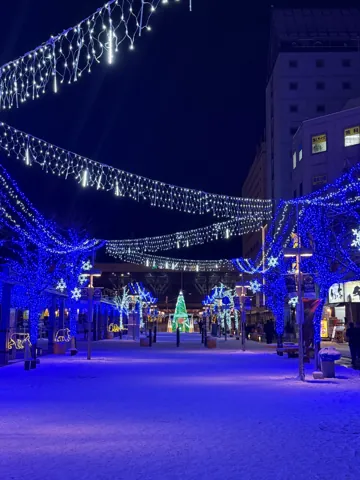
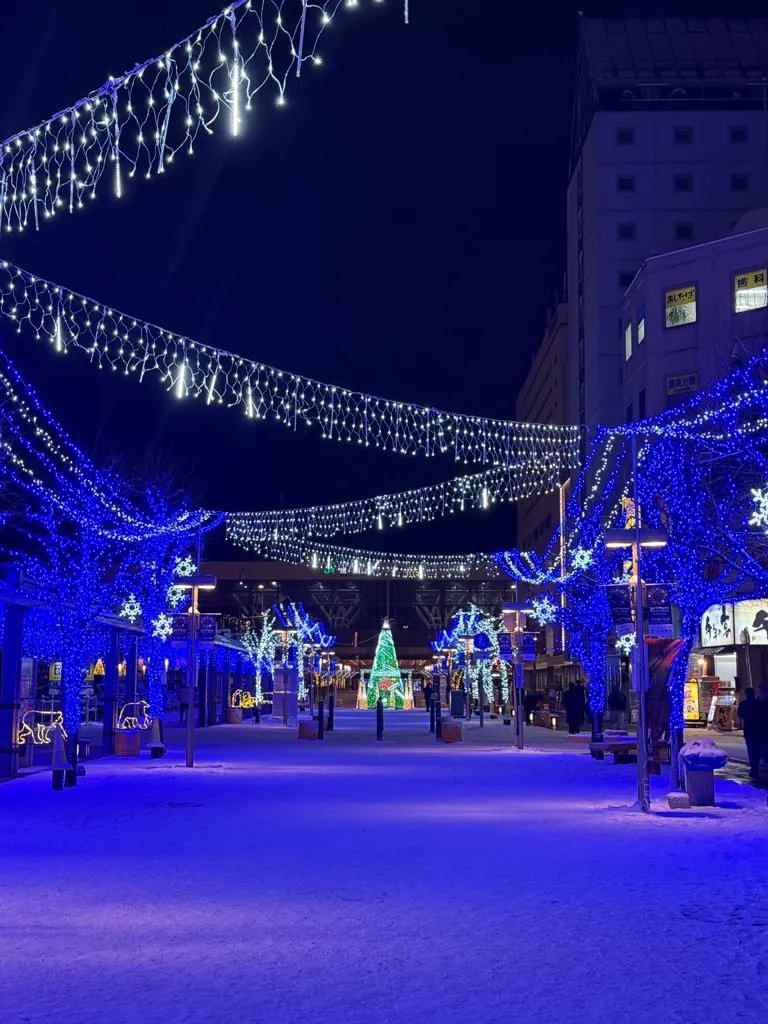
| Yukinowa Asahikawa (ユキノワアサヒカワ) · town-center illuminations | Late November–March | Winter light displays in the city center42 |
Traditions and institutions
- Shrines: Kamikawa Shrine (上川神社), Nagayama Shrine (永山神社), founded in 1892 as the first shrine in the Kamikawa area23, and Hokkaido Gokoku Shrine (北海道護國神社), which holds a memorial festival (慰霊大祭) every June6.
- Performing arts: traditional Ainu dance is a nationally designated Important Intangible Folk Cultural Property. In Asahikawa it is kept alive by the Asahikawa Chikap-ni Ainu Cultural Preservation Society (旭川チカップニアイヌ民族文化保存会)6.
- Literature and sculpture: the city awards two arts prizes: the Oguma Hideo Prize for poetry (from 1968) and the Nakahara Teijirō Prize for sculpture (from 1970)1. Outdoor sculptures stand all over the city6. The novelist Miura Ayako is the city's best-known literary figure. Her novel Hyōten (氷点, "Freezing Point") is set in the Foreign Tree Species Sample Forest20.
- Museums: the city museum, the Nakahara Teijirō Memorial Sculpture Museum, Hokkaido Asahikawa Museum of Art (1982), the Miura Ayako Literature Museum, the Inoue Yasushi Memorial Hall and others (see Sights & activities)1.
Ainu heritage
- Kamikawa Ainu and the Chikabumi kotan: the Kamikawa Ainu lived and fished along the upper Ishikari and its tributaries, and traded with Japanese merchants from the mid-Edo period624. When Meiji settlement began in 1891, the Ainu around Asahikawa were concentrated at Chikabumi (近文). Ten years later the 7th Division moved in next door. The Chikabumi Ainu fought another attempt to move them, but were left with free use of only one-fifth of the land set aside for them, on flood-prone ground by the Ishikari. They turned to selling souvenirs to soldiers and their families, and the carved wooden bear was born there. In the postwar tourist booms, the Chikabumi kotan (Ainu village) was the center of Asahikawa tourism24.
- Chiri Yukie (知里幸恵): the young Ainu writer lived in Asahikawa around the time the Kawamura museum opened. She left one book, Ainu Shin'yōshū (アイヌ神謡集), a collection of Ainu sacred songs whose preface is dated 1 March 1922, and died at 1951. Her manuscript notebooks are a city-designated cultural property kept at the Asahikawa City Museum6. The Kawamura museum holds a birthday event for her, "The Day the Silver Drops Fall" (銀の滴降る日), in June44.
- Kawamura Kaneto Ainu Memorial Museum (川村カ子トアイヌ記念館): opened in 1916, it calls itself Japan's oldest Ainu museum, and has been kept going privately for more than a century. It became a general incorporated association in 201951. The exterior was designed by the Ainu sculptor Bikky Sunazawa (砂沢ビッキ). A traditional chise house thatched with bamboo grass (kumazasa) stands in the grounds, and the curator lights its hearth every day18. Workshops (booking required) include playing or making the mukkur mouth harp (¥3,000), Ainu embroidery and Ainu cooking (¥4,000 each), and traditional dance (¥2,000)52. The address is Hokumon-chō 11-chōme (北門町11丁目). Hours are 9:00–17:00, open every day May–November and closed Tuesdays December–April. Adults pay ¥80018.
- Asahikawa City Museum (旭川市博物館): in the Taisetsu Crystal Hall49, it is one of the Ainu culture facilities listed in the Hokkaido Government's Ainu culture guide53. Its branch, the Ainu Culture Forest "Denshō no Kotan" (アイヌ文化の森 伝承のコタン), has three rebuilt chise houses and a display on how the Ainu used plants. Admission is free. It sits in Arashiyama Park, just across the city boundary in Takasu, but is run by the city museum54. At JR Asahikawa Station, an Ainu culture information corner called "Ru-siros" (ル・シロシ) is part of a digital stamp rally with the museum49.
- Place names and legends: since FY2003 the city has put up bilingual Ainu–Japanese place-name signs, 42 by December 2025, including Chiw-pet, Chikap-ni, Kamuy-kotan and Kut-ne-sir (神居岩, "Kamui Rock")17. According to Kamuikotan legend, the hero-god Samaykur (サマイクル) built a fort on Kamui Rock, and rocks known as the "demon's head and body" (魔神の頭・胴体) are linked to a tale of an evil god55.
- Living ceremonies: events are held through the year. Chinomishir Kamuynomi on Arashiyama honors the ancestors, including Kuchinkure, and prays for the community. Kamuycheppnomi (カムイチェプノミ) is held in September. Nupurikor Kamuynomi, a prayer to the mountain gods, is held at the opening of the Daisetsuzan climbing season in Higashikawa442129.
- Support: donors to the city's furusato-nozei program can direct their money to Ainu culture37. Since 2024, Takasago's Asahi Kamui sake label has carried Ainu patterns drawn by Kawamura Hisae, deputy director of the Kawamura museum39.
Districts
The city office runs branch offices (支所) in the old municipalities that merged into Asahikawa between 1955 and 197115:
- Central Asahikawa: the original 42.7 km² city on the river plain. It includes the station and the Kitasaito area, the Heiwa-dori mall, the Sanroku nightlife district, Tokiwa Park and Asahibashi52.
- Kamui (神居) and Etanbetsu (江丹別), merged 1955: the hilly west and northwest, together over 320 km². This is where to find Kamuikotan and the very cold Etanbetsu valley51732.
- Nagayama (永山), 1961: the first farmer-soldier village. Today it holds the Kamikawa Joint Government Building, Ramen Village, the Otokoyama brewery and Asahikawa Design Center13541.
- Higashi-Asahikawa (東旭川), 1963: the second farmer-soldier settlement and the home of Asahiyama Zoo and the Heison Memorial Museum15763.
- Kagura (神楽), 1968: south of the Chūbetsu River, with the Michi-no-Eki, Taisetsu Crystal Hall and the Sample Forest1249.
- Higashi-Takasu (東鷹栖), 1971: the northern district, including the Chikabumi upland and Tosshōzan617.
Sister & friendship cities
| City | Country | Relationship | Established |
|---|---|---|---|
| Bloomington & Normal, Illinois (ブルーミントン市・ノーマル市) | USA | Sister cities | Bloomington 11 October 1962; Normal joined in 1987751 |
| Yuzhno-Sakhalinsk (ユジノサハリンスク市) | Russia | Friendship city | 10 November 196775 |
| Suwon (水原市), Gyeonggi Province | South Korea | Sister city | 17 October 198975 |
| Harbin (哈爾濱市), Heilongjiang Province | China | Friendship city | 21 November 199575 |
| Minamisatsuma (南さつま市), Kagoshima Prefecture | Japan | Domestic sister city (also a disaster-support partner) | 3 May 201575 |
| Kitanagoya (北名古屋市), Aichi Prefecture | Japan | Disaster-support agreement | —75 |
Notable people
- Inoue Yasushi (井上靖): novelist (The Blue Wolf, Hyōheki). He was born in Asahikawa, and the Inoue Yasushi Memorial Hall opened here in 199361.
- Miura Ayako (三浦綾子): novelist (Hyōten, Shiokari Pass). She is honored by a citizen-run literature museum in the Sample Forest662.
- Victor Starffin (ヴィクトル・スタルヒン): the first pitcher in Japanese professional baseball to win 300 games. The city's Hanasaki baseball stadium is nicknamed "Starffin Stadium"6.
- Tamaki Kōji (玉置浩二): singer of the rock band Anzen Chitai6.
- Kitaguchi Haruka (北口榛花): javelin thrower and Paris 2024 Olympic gold medalist. She received Asahikawa's Citizens' Honor Award6.
- Machida Rui (町田瑠唯): basketball player who played in the WNBA. She also received Asahikawa's Citizens' Honor Award6.
Sources
Numbers in the text link to these sources. Figures as of 23 September 2026
- 2026年度 旭川市市勢要覧[資料編] (ASAHIKAWA CITY MUNICIPAL TRENDS) — Asahikawa City JA accessed 2026-09-23
- 旭川市の概要 — Asahikawa City JA accessed 2026-09-23
- 令和7年国勢調査速報 北海道の人口・世帯数(要計表に基づく人口・世帯数の集計) — Hokkaido Government, Statistics Division JA accessed 2026-09-23
- 旭川市の世帯・人口 — Asahikawa City JA accessed 2026-09-23
- 旭川市の位置・面積 — Asahikawa City JA accessed 2026-09-23
- 旭川市 — Wikipedia JA accessed 2026-09-23
- 旭川市のシンボル — Asahikawa City JA accessed 2026-09-23
- あさっぴーのプロフィール — Asahikawa City JA accessed 2026-09-23
- 旭川冬まつり公式サイト — Asahikawa Winter Festival Executive Committee JA accessed 2026-09-23
- 旭山動物園とは — Asahikawa City Asahiyama Zoo JA accessed 2026-09-23
- 旭川市旭山動物園 — Wikipedia JA accessed 2026-09-23
- あさひかわ(道の駅詳細ページ) — 北の道の駅 (Hokkaido Michi-no-Eki official site) JA accessed 2026-09-23
- 各地の北海道遺産 — 北海道遺産 official site (Hokkaido Heritage) JA accessed 2026-09-23
- 過去の気象データ検索:旭川(上川地方)観測史上1~10位の値 — Japan Meteorological Agency JA accessed 2026-09-23
- 旭川家具とは - 旭川家具ブランドサイト — Asahikawa Furniture Industry Cooperative JA accessed 2026-09-23
- 冬まつりの歴史 — Asahikawa Winter Festival official site JA accessed 2026-09-23
- アイヌ語地名表示板について — Asahikawa City Museum JA accessed 2026-09-23
- お問い合わせ(アクセス・入館料・営業時間) — 川村カ子トアイヌ記念館 (Kawamura Kaneto Ainu Memorial Museum) JA accessed 2026-09-23
- Asahikawa — Wikipedia EN accessed 2026-09-23
- 旭川八景 — Asahikawa City JA accessed 2026-09-23
- 2011.5. チノミシリ・カムイノミ — 川村カ子トアイヌ記念館 JA accessed 2026-09-23
- 屯田兵 — Wikipedia JA accessed 2026-09-23
- 永山 (旭川市) — Wikipedia JA accessed 2026-09-23
- 木彫熊の世界展(旭川 近文アイヌたちの木彫熊の世界) — 川村カ子トアイヌ記念館 JA accessed 2026-09-23
- 来場者数、入場券販売枚数のご報告 — あさひかわ菓子博2025 / 第28回全国菓子大博覧会・北海道 JA accessed 2026-09-23
- 【市内宿泊事業者の皆様へ】旭川市宿泊税制度の導入について — Asahikawa City JA accessed 2026-09-23
- 旭川市の魅力 — Asahikawa City JA accessed 2026-09-23
- 男山とは — 男山株式会社 (Otokoyama Co.) JA accessed 2026-09-23
- ヌプリコロ カムイノミ(アイヌ伝統行事;ページ題名なし) — 川村カ子トアイヌ記念館 JA accessed 2026-09-23
- 旭川市の気候 — Asahikawa City JA accessed 2026-09-23
- 過去の気象データ検索:旭川(上川地方)平年値(年・月ごとの値) — Japan Meteorological Agency JA accessed 2026-09-23
- 過去の気象データ検索:江丹別(上川地方)観測史上1~10位の値 — Japan Meteorological Agency JA accessed 2026-09-23
- 旭川市宿泊税について — Asahikawa City JA accessed 2026-09-23
- 食べる — Asahikawa City JA accessed 2026-09-23
- あさひかわラーメン村 — あさひかわラーメン村 (Asahikawa Ramen Village) JA accessed 2026-09-23
- メニュー(店舗紹介) - あさひかわラーメン村 — あさひかわラーメン村 JA accessed 2026-09-23
- 北海道旭川市のふるさと納税 お礼の品ランキング — ふるさとチョイス (Furusato Choice) JA accessed 2026-09-23
- 酒造り資料舘 — 男山株式会社 JA accessed 2026-09-23
- 髙砂酒造の歩み — 髙砂酒造株式会社 (Takasago Shuzo) JA accessed 2026-09-23
- 直売店・工場見学(明治酒蔵) — 髙砂酒造株式会社 JA accessed 2026-09-23
- 旭川家具ブランドサイト — Asahikawa Furniture Industry Cooperative JA accessed 2026-09-23
- 旭川イベントカレンダー — Asahikawa City JA accessed 2026-09-23
- これまでの旭川冬まつり — Asahikawa Winter Festival official site JA accessed 2026-09-23
- 川村カ子トアイヌ記念館公式ホームページ (HOME) — 川村カ子トアイヌ記念館 JA accessed 2026-09-23
- 北海道音楽大行進(第94回 終了の御礼) — 北海道音楽大行進 事務局(旭川観光コンベンション協会) JA accessed 2026-09-23
- 令和8年旭川夏まつり 市民舞踊パレードの中止について — Asahikawa Tourist & Convention Association JA accessed 2026-09-23
- 旭川夏まつり・さんろく祭り・旭川観光顕功賞授与式が開催されます!(令和8年7月30日(木)~8月1日(土)) — Asahikawa Tourist & Convention Association JA accessed 2026-09-23
- 北の恵み あさひかわ食べマルシェ2026が開催されます!(令和8年9月19日(土)~21日(月・祝)) — Asahikawa Tourist & Convention Association JA accessed 2026-09-23
- 博物館(旭川市博物館トップページ) — Asahikawa City Museum JA accessed 2026-09-23
- 一般財団法人道北地域旭川地場産業振興センターWebサイト — 道北地域旭川地場産業振興センター JA accessed 2026-09-23
- 記念館の歴史 — 川村カ子トアイヌ記念館 JA accessed 2026-09-23
- 体験プログラム — 川村カ子トアイヌ記念館 JA accessed 2026-09-23
- 旭川市博物館 | 道北圏 | アイヌ文化情報検索 — 赤れんが庁舎 展示ガイド(北海道) JA accessed 2026-09-23
- アイヌ文化の森伝承のコタンについて(施設案内) — Asahikawa City Museum JA accessed 2026-09-23
- 神居古潭Webマップ — Asahikawa City JA accessed 2026-09-23
- 観る・遊ぶ — Asahikawa City JA accessed 2026-09-23
- 旭川観光物産情報センター — Asahikawa Tourist & Convention Association JA accessed 2026-09-23
- 令和8年度夏期開園について — Asahikawa City Asahiyama Zoo JA accessed 2026-09-23
- 開園期間・入園料・チケット — Asahikawa City Asahiyama Zoo JA accessed 2026-09-23
- 旭山動物園入園料の改定について — Asahikawa City Asahiyama Zoo JA accessed 2026-09-23
- 博物館観覧料等の改定について(令和8年10月1日改定) — Asahikawa City Museum JA accessed 2026-09-23
- 三浦綾子記念文学館 | MIURA AYAKO LITERATURE MUSEUM — Miura Ayako Literature Museum JA accessed 2026-09-23
- 東旭川町 — Wikipedia JA accessed 2026-09-23
- 道の駅あさひかわ観光案内所 — Asahikawa City JA accessed 2026-09-23
- 地場産業振興(道の駅あさひかわ) — 道北地域旭川地場産業振興センター JA accessed 2026-09-23
- 道の駅あさひかわ売店・フードコート営業時間の案内 — 道北地域旭川地場産業振興センター JA accessed 2026-09-23
- お土産・買う — Asahikawa City JA accessed 2026-09-23
- 道の駅あさひかわ — Wikipedia JA accessed 2026-09-23
- 【道の駅あさひかわ】2026年売店及びフードコート営業時間(夏期)のお知らせ — 北の道の駅 JA accessed 2026-09-23
- 道の駅一覧 — 北の道の駅 JA accessed 2026-09-23
- アクセス — Asahikawa Tourist & Convention Association JA accessed 2026-09-23
- 旭山動物園・旭川市内バスのお得なチケット情報! — Asahikawa Tourist & Convention Association JA accessed 2026-09-23
- 観光情報 — Asahikawa Tourist & Convention Association JA accessed 2026-09-23
- 令和8年度ヒグマの出没状況 — Asahikawa City JA accessed 2026-09-23
- 他都市とのつながり — Asahikawa City JA accessed 2026-09-23