Biei 美瑛町
びえいちょう
A farming town at the foot of the Tokachidake volcanic range. Crop rotation turns its rolling hills into the "patchwork" landscape that photographers made famous. The volcano also gave it the Shirogane Blue Pond and the hot springs of Shirogane Onsen.
- Population (2020 Census)
- 9,668
- Area
- 676.78 km²
- District
- Kamikawa District (上川郡)
- Official website
- town.biei.hokkaido.jp
Known for
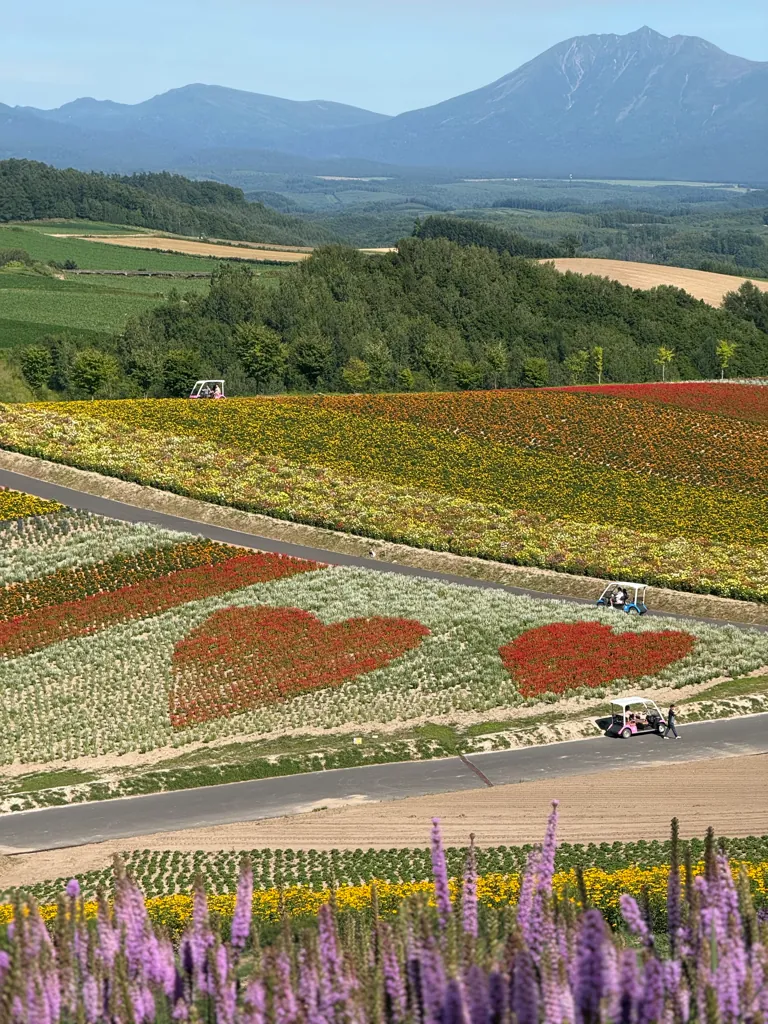
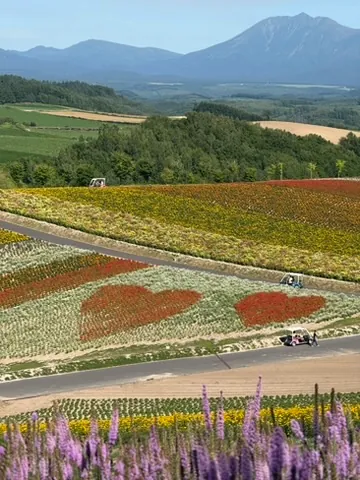
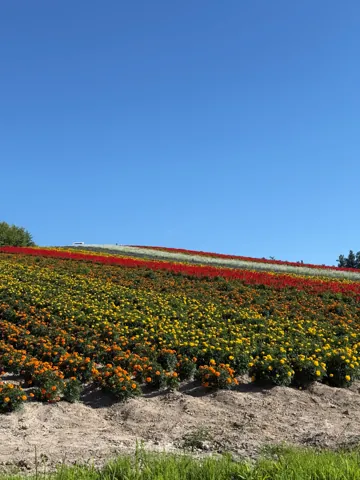
- The "Hill Town" (丘のまち) patchwork landscape: Farmers rotate wheat, sugar beet, beans and potatoes, so each field grows a different crop from year to year. This creates the famous "patchwork" hills. The two main touring routes are the Patchwork Road (パッチワークの路) and the Panorama Road (パノラマロード)71.
- Trees from TV ads and packaging: The Ken and Mary Tree (ケンとメリーの木) appeared in a 1972 Nissan Skyline commercial8. The Seven Star Tree (セブンスターの木) was on a 1976 Seven Stars cigarette package9.
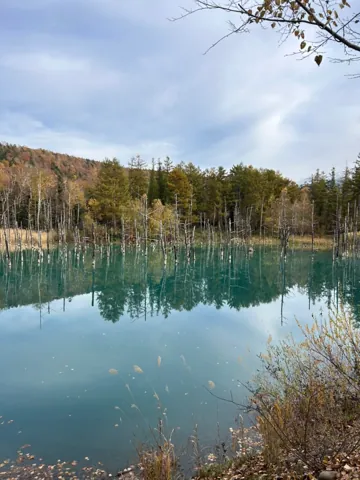
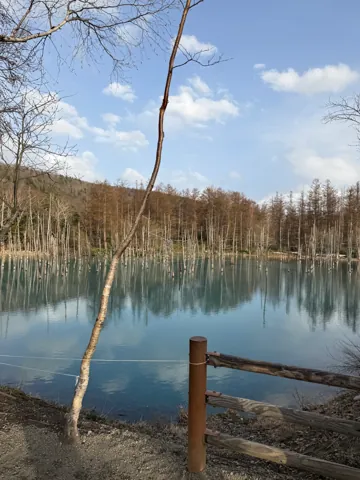
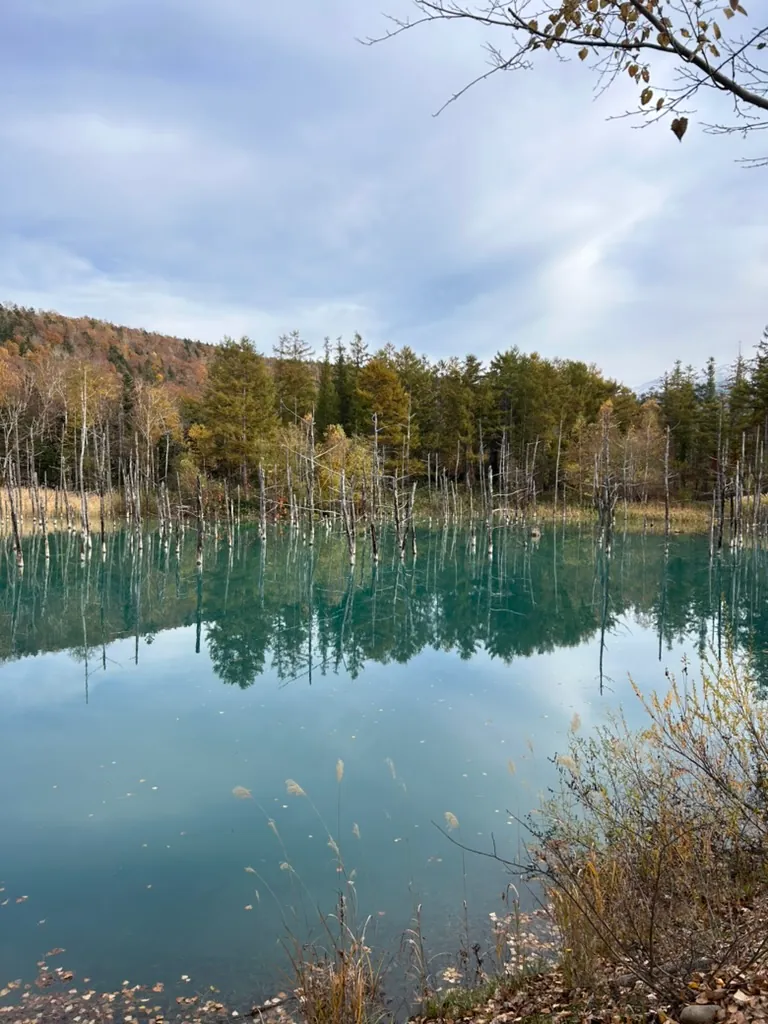
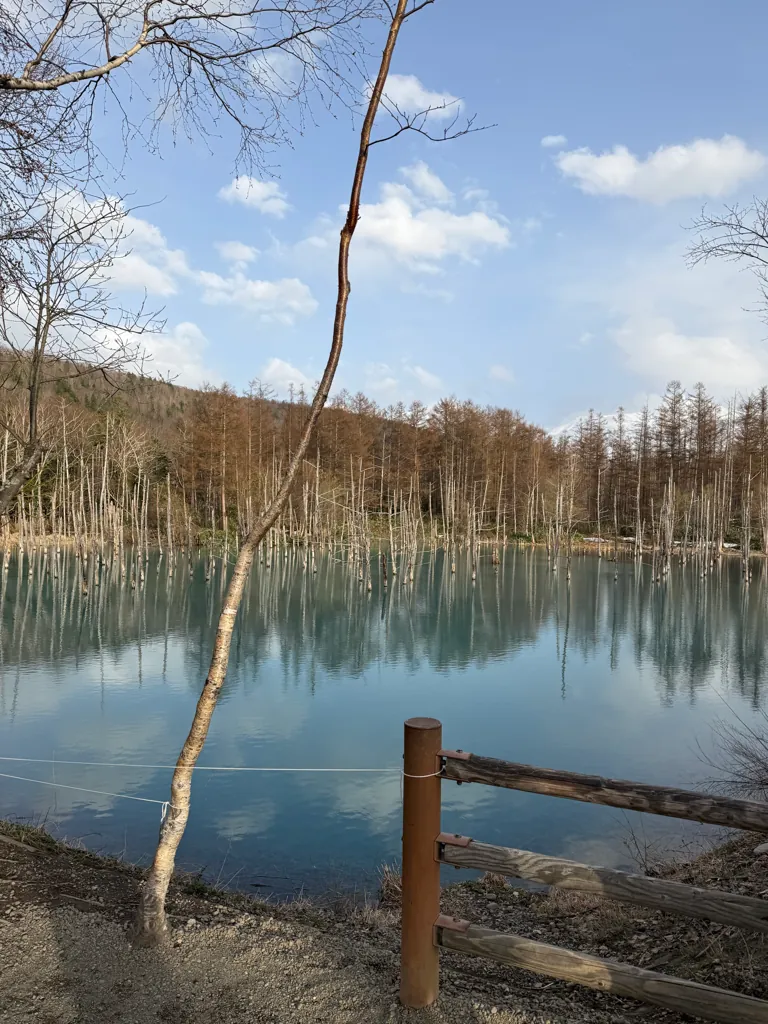
- Shirogane Blue Pond (白金青い池): Water collected behind an erosion-control dam, turning cobalt blue among dead larch trees. It became world-famous after Apple used it as a Mac wallpaper1011.
- Shirogane Onsen (白金温泉) and Shirahige Falls (白ひげの滝): A hot-spring village first drilled in 1950. Next to it is a 30 m spring-fed waterfall that pours into the blue Biei River1213.
- Landscape photography: Maeda Shinzō (前田真三) first came here in 1971. His photographs turned an ordinary farming district into a tourist destination. His gallery, Takushinkan (拓真館), opened in 19871415.
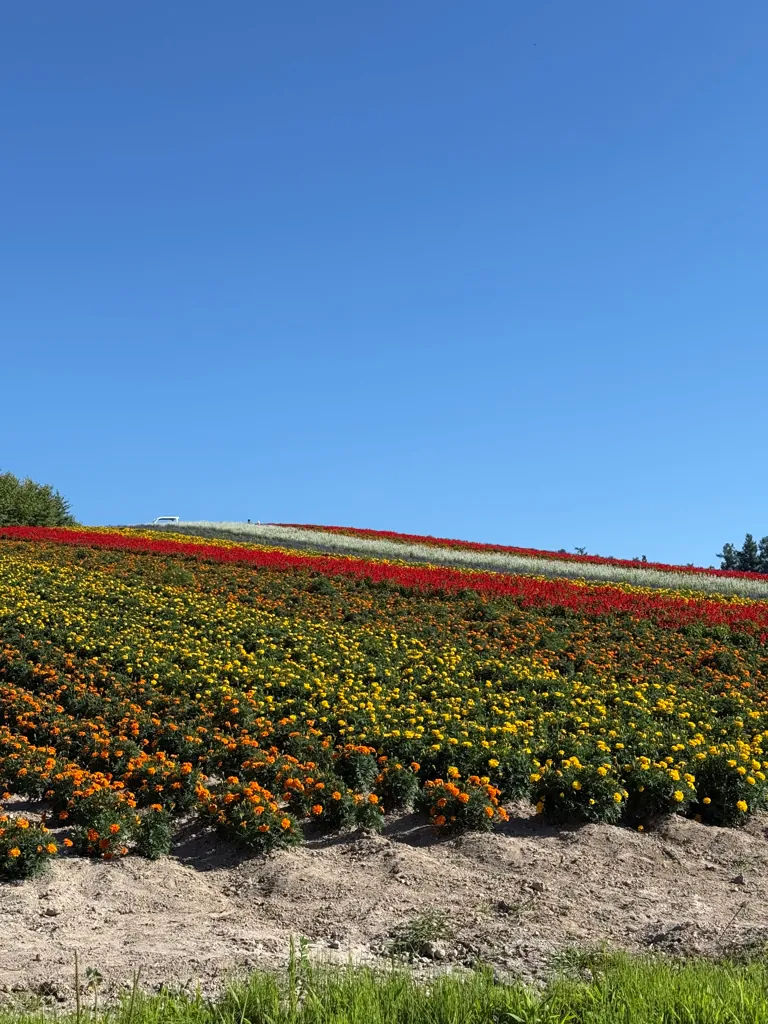
- Flower fields: The hilltop flower gardens of Shikisai-no-Oka (四季彩の丘) and Zerubu-no-Oka (ぜるぶの丘)1617.
- Tokachidake (十勝岳): An active volcano. Its eruptions shaped the landscape and still shape life in the town. The alert level was raised to 3 on 12 September 202618.
- "Most Beautiful Villages in Japan" (日本で最も美しい村): Biei was a founding member of this association in 2005519.
Sights & activities
Nature & scenery
- Patchwork Road (パッチワークの路), northwest of the town center:
- Ken and Mary Tree (Ōkubo Kyōsei; about 5 minutes by car from Biei Station)8
- Seven Star Tree (Hokuei; parking for 10 buses and 14 cars)9
- Oyako-no-Ki (親子の木, "Parent-and-Child Trees"), trees standing side by side among the fields62
- Hokusei-no-Oka Observation Park (北西の丘展望公園), with its pyramid-shaped lookout and a tourist information office open May–September. Admission is free63
- Zerubu-no-Oka flower fields (ぜるぶの丘)16
- Most of the larch grove on "Mild Seven Hill" (マイルドセブンの丘) was cut down in 2018; five trees were left1
- Panorama Road (パノラマロード), south toward Bibaushi:
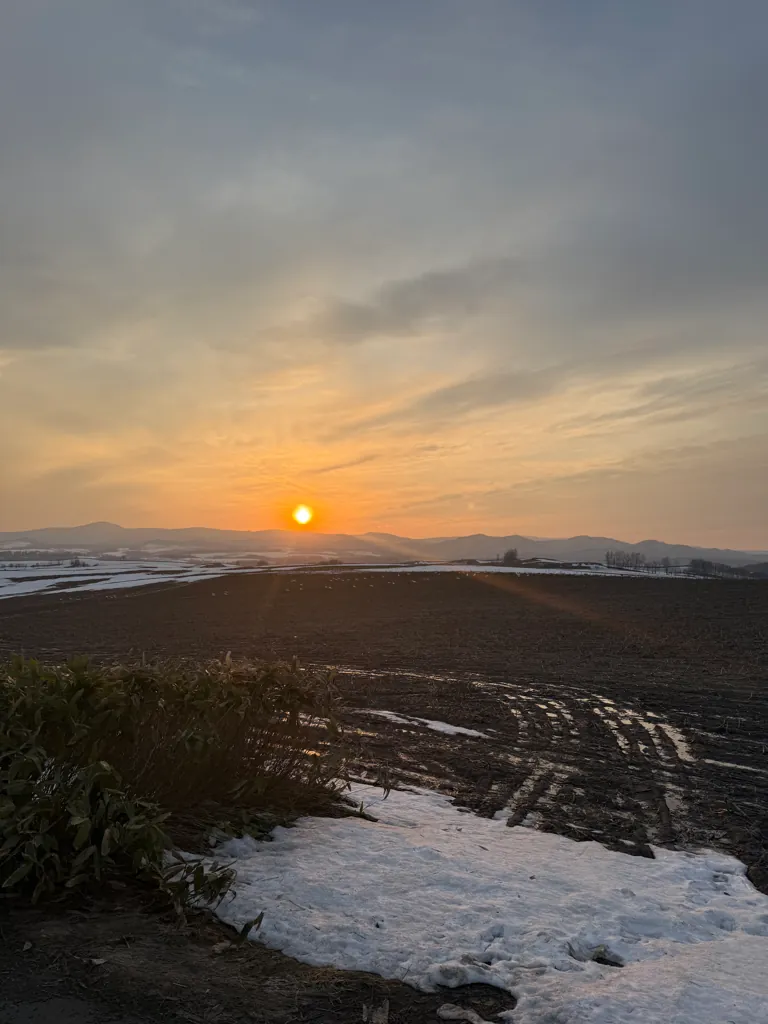
- Shinei-no-Oka Observation Park (新栄の丘展望公園) has 360° views and is known for its sunsets. It is free and closed when snow covers it64.
- Shikisai-no-Oka (四季彩の丘, Shinsei Daisan) is about 15 ha of flower fields. It has a tractor-bus ride and an alpaca farm (both extra charge)10. Admission is ¥800 for adults in July–September and free from October to June. Parking costs ¥500 from June to September17.
- San-ai-no-Oka Observation Park (三愛の丘展望公園)16
- Shirogane area:
- Blue Pond: about 20 minutes by car or Dōhoku Bus from Biei Station. It is most crowded 13:00–15:00 on sunny days. After snowmelt or heavy rain the water can turn cloudy53.
- Shirahige Falls: 30 m high, and one of Japan's rare waterfalls fed by groundwater seeping from the cliff. The best view is from the Shirogane Bridge, nicknamed the "Blue River Bridge"1013. Public toilets in the Shirogane Kankō Center are open 24 hours13.
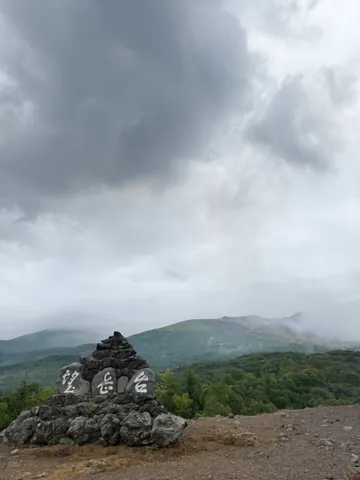
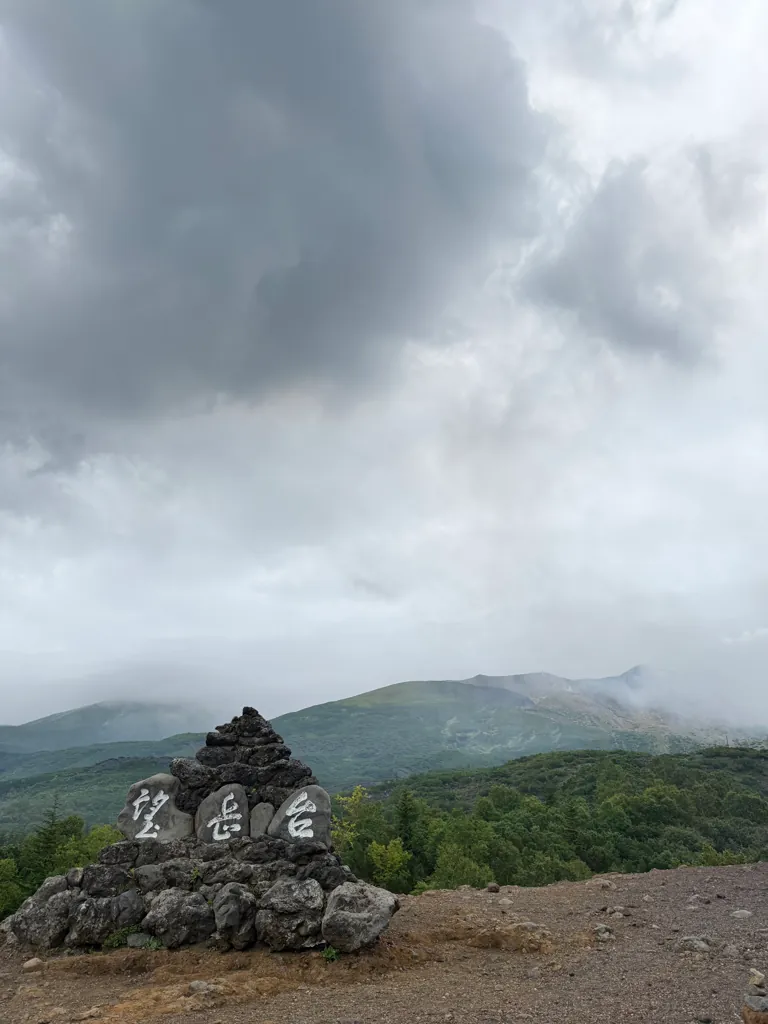
- Tokachidake Bōgakudai (十勝岳望岳台), at 930 m: 360° views, and autumn colors from late September, peaking in early October. It is closed for part of the winter65. Check current volcanic restrictions before going up (see Practical tips).
- Seidai Dam Park (聖台ダム公園): A park at the reservoir built in the 1930s161.
Onsen
- Shirogane Onsen's water is a sodium-calcium-magnesium sulfate-chloride spring at 46–55 °C. It is nicknamed "the bath where you forget your cane" (杖忘れの湯)12.
- Day bathing (adult prices as listed by the tourism association)12:
- Mori no Shizuku RIN (森の雫 RIN, formerly Daisetsuzan Shirogane Kankō Hotel): ¥1,200
- Aoi no Bi Yuyu (碧の美 ゆゆ, formerly Yumoto Shirogane Onsen Hotel): ¥1,200
- Hotel Park Hills: ¥1,530
- Mori no Ryotei Biei (森の旅亭びえい): ¥1,200, 11:00–14:00 only
- The small Yudokoro Tsuewasure no Yu (湯処 杖忘れの湯): ¥800
Museums & heritage
- Takushinkan (拓真館, Takushin): Maeda Shinzō's "hills" series and work by his son Maeda Akira. The gallery occupies the former Chiyoda Elementary School, and its grounds include a 250 m avenue of 2,300 birches. Admission is free15.
- Biei Station (1952), built of Biei soft stone25.
- Misora museum and observatory58.
- Shiki-no-Tō tower (四季の塔) at the town hall: 44 m tall, with a lookout at 32.4 m1.
- Tokachidake Volcanic Erosion Control Information Center (VOLGA)16.
Outdoor & seasonal activities
- Cycling is popular on the hill roads (Fun Ride, Century Ride)561.
- When volcanic conditions allow, Tokachidake is climbed from the Bōgakudai trailhead26. A trailhead near Shirogane Onsen leads up to the Biei-Fuji hut and on to Optateshike60.
- Winter options: the Blue Pond illumination, cross-country skiing (the Miyasama marathon) and snow activities at Shirogane Birke535654.
- Farms Chiyoda has a petting farm, campground and dog run50.
Food experiences
- Biei Senka: the produce market, the Senka Kōbō counter for soft-serve, pudding, cakes and croquettes, the Biei Komugi Kōbō bakery, and the French restaurant Asperges (アスペルジュ). Senka Kōbō and Asperges close from 5 November until 8 April36
- Curry udon and Biei pork in town restaurants4446
- Farm restaurant at Farms Chiyoda50
- Kōmugi Shokudō at Oka-no-Kura (see below)66
Roadside stations (Michi-no-Eki)
Biei "Oka-no-Kura" (道の駅びえい「丘のくら」)
- Location:
- Hours (as of September 2026 — check before visiting):
- Shops & products:
- Food:
- Kōmugi Shokudō (香麦食堂) shares its name with Biei's Kōmugi wheat. Its two signature dishes are served in limited numbers:
- "Curry starring Biei vegetables," served in a sizzling skillet
- Biei corn-butter ramen, with more than a whole cob of Biei corn66
- Snacks include soft-serve and croquettes made with Biei ingredients66.
- The house soft-serve is Biei Milk Soft, made from Biei Holstein milk. From 24 July to 31 August 2026 the station held a "favorite soft-serve contest," letting visitors compare three soft-serves made from single-farm Biei milk49.
- Kōmugi Shokudō (香麦食堂) shares its name with Biei's Kōmugi wheat. Its two signature dishes are served in limited numbers:
- Facilities:
- Parking: 2 large, 21 standard and 1 accessible space.
- Toilets with warm-water seats. The accessible toilet and ostomate facility are not available 24 hours.
- EV charger, Wi-Fi and a diaper-changing table.
- Credit cards and other cashless payment accepted66.
- The Hotel L'Avenir (ホテルラヴニール, tel. 0166-92-5555) is upstairs. Its restaurant, Terrasse de Saison, serves breakfast 7:00–9:0066.
- Notes:
- Registered on 1 March 2007 as Hokkaido No. 9766. It opened as a Michi-no-Eki on 28 April 200767.
- The building is a warehouse of Biei soft stone, re-lined with Biei larch. It has a second-floor gallery for photo and art exhibitions66.
- Sources disagree on when the warehouse was built:
- The stamp is available during opening hours only66.
- The Snow Play Park is set up in front of the station each January56.
Biei "Shirogane Birke" (道の駅びえい「白金ビルケ」)
- Location:
- Address: Aza Shirogane (上川郡美瑛町字白金); tel. 0166-94-3355.
- It stands on Hokkaido Route 966 (Tokachidake Onsen–Biei Line) at the gateway to Shirogane Onsen and the Blue Pond54.
- Hours (as of September 2026 — check before visiting):
- Station and shop: 9:00–17:00 in March–May and September–November; 9:00–18:00 in June–August; 10:00–17:00 in December–February. Closed 31 December–1 January, and open mornings only on 30 December.
- BETWEEN THE BREAD and the North Face corner: 9:00–17:00 from 21 November to 20 April, otherwise the station's hours. Both close on Wednesdays and from 29 December to 2 January54.
- Parking and toilets can be used 24 hours69.
- Shops & products:
- Food: BETWEEN THE BREAD sells takeaway hamburgers made with plenty of Biei ingredients54.
- Facilities:
- Parking: 5 large, 229 standard and 4 accessible spaces.
- Toilets with warm-water seats and an accessible toilet.
- EV charger, Wi-Fi, tourist information for the whole town, and a diaper-changing table.
- Shower room54. Changing rooms with showers are set up for cyclists70.
- Camping-car (RV) sites54.
- Dog run, open spring to autumn54.
- Notes:
- Registered on 25 April 2018 as Hokkaido No. 12254. It opened on 12 May 201870.
- It is the former Shirogane Birke-no-Mori Information Center. Birke is German for "birch"54.
- It is the starting point of the Miyasama International Ski Marathon each February56.
- The stamp is available during opening hours only54.
Getting there & around
- Rail: The JR Furano Line has three stations in Biei: Kita-Biei (北美瑛), Biei (美瑛) and Bibaushi (美馬牛)1.
- The Biei Station building (1952) is made of Biei soft stone. The station opened on 1 September 189971.
- From Sapporo, take a limited express to Asahikawa (about 90 minutes), then a local train to Biei (about 32 minutes). From Furano, a local train takes about 36 minutes72.
- The summer-only Furano-Biei Norokko train (富良野・美瑛ノロッコ号), which had run since 1998, ended service on 23 September 202633.
- Air: Asahikawa Airport, in Higashikagura, is about 16 minutes from Biei Station by Furano Bus72.
- Road:
- National Route 237 links Biei with Asahikawa (26 km, about 40 minutes) and Furano (34 km, about 40 minutes)72. National Route 452 also passes through the town6.
- From Sapporo, drive the Dō-Ō Expressway to Asahikawa-Takasu IC, then take Routes 12 and 237. The trip is about 166 km and takes about 2 hours 30 minutes72.
- From New Chitose Airport, allow about 3 hours by car72.
- Bus:
- Dōhoku Bus (道北バス) runs from Asahikawa Station via Biei Station to Shirogane Onsen128. The Blue Pond is about 20 minutes from Biei Station and Shirahige Falls about 30 minutes5313. A one-day free pass covers the Biei–Shirogane area53.
- Furano Bus runs the "Lavender" rapid service: Asahikawa – Asahikawa Airport – Biei – Furano721.
- Tours: The tourism association runs the Biyū Bus (美遊バス) from the Shiki no Jōhōkan next to Biei Station10:
- Morning course: Blue Pond, Shirahige Falls and Shikisai-no-Oka (9:40–12:45).
- Afternoon course: the same three stops in a different order (14:10–17:10).
- Price: from ¥5,000 per adult in July–September and from ¥4,500 in June and October.
- Book online at least 4 days ahead.
- Park and ride: Visitors arriving by car are asked to leave it in the free public car parks near Biei Station and continue by bus or train40.
Practical tips
- Best seasons:
- Early summer to midsummer for flowers and ripening wheat9.
- September for yellow mustard (kigarashi) fields39.
- Late September to early October for autumn colors at Bōgakudai65.
- Winter for snowy hills and the Blue Pond illumination (late October–late April)53.
- Biyū Bus seats can be booked online from 90 days ahead until 17:00 four days before departure10.
- The fields are private farmland:
- Blue Pond:
- Volcano:
- As of 21 September 2026, Tokachidake was at alert level 3 (entry restricted). Large volcanic bombs are possible within about 3 km of the 62-2 crater32.
- The town says the restriction covers only the crater area. Shirogane Onsen is open as usual18.
- Check the JMA and town pages before hiking. The town also publishes evacuation-route maps for the Shirogane Onsen area18.
- Wildlife:
- Winter roads: Snowfall averages over 7 m a season34. Hokkaido Route 966 between Shirogane and Tokachidake Onsen is closed in winter, so you must drive around via Kamifurano28.
- Visitor centers:
Photos
-
 Aug 2026
 -
 Oct 2024
 -
 Mar 2026
 -
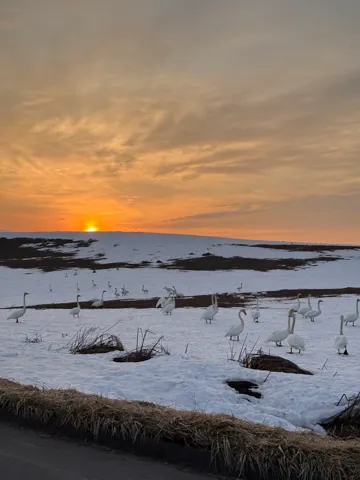 Mar 2026
 -
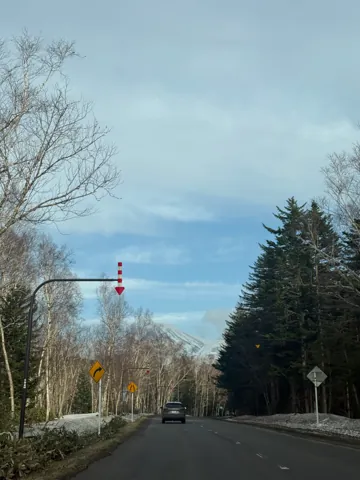
 Apr 2026
 -
 Apr 2026
 -
 Jul 2026
 -
 Aug 2026
More about Biei
At a glance
| Field | Details |
|---|---|
| Type | Town (町) |
| Subprefecture | Kamikawa (上川総合振興局) |
| District | Kamikawa District (上川郡), historically part of Ishikari Province1 |
| Population | 9,668 (2020 National Census, 令和2年国勢調査)2. The preliminary 2025 census counted 9,337, down 3.4%2. The resident register listed 9,077 people in 4,863 households on 31 August 20263 |
| Area | 676.78 km²4. The town compares this to the size of Tokyo's 23 wards. More than 70% is forest and about 15% is upland fields5 |
| Density | ≈13.4 people/km² (9,077 ÷ 676.78 km², calculated) |
| Municipal history | Split from Kagura Village (神楽村) as Biei Village in 1900 (Meiji 33). Became a second-class village in 1915 and a first-class village in 1921. Became Biei Town in 194051. There have been no mergers since1 |
| Neighboring municipalities | Asahikawa, Higashikagura, Higashikawa, Kamikawa, Kamifurano, Nakafurano (a short border), Ashibetsu (Sorachi) and Shintoku (Tokachi)6 |
| Symbols | Tree: white birch (しらかば). Flower: lily of the valley (すずらん)5. No town bird was found. The town emblem, adopted in 1963, depicts Tokachidake combined with the hiragana 「び」5 |
| Mascot | No official town mascot could be confirmed (unverified) |
| Official website | https://town.biei.hokkaido.jp/ |
Name origin
- Ainu piye ("oily, greasy"): The town is named after the Biei River. The river's name comes from the Ainu word piye, meaning "oily" or "greasy." Place-name scholar Yamada Hidezō (山田秀三) explains that the river rises in volcanic country. Sulfur in the water made it cloudy, so it looked greasy20.
- Variant form: The Britannica Japan entry gives the Ainu form as Piiepetsu (ピイエペツ), "greasy river"6.
- The kanji: The characters 美 ("beautiful") and 瑛 ("jewel-like") were chosen for their sound.
- Other Ainu names in the town:
- Bibaushi (美馬牛) comes from pipa-us-i, "where there are many freshwater pearl mussels"21.
- Ubakubetsu (宇莫別) comes from u-pak-pet, "a river as large as the other." It is a tributary nearly equal in size to the Bebetsu River22.
- Bebetsu (辺別) is usually explained as pe-pet, "water river"23.
- The Chūbetsu River (忠別川) is often explained as ciw-pet, "river of waves." Other explanations exist24.
History
- Prehistory and the Ainu era: Stone tools and pottery from the Jōmon period or earlier suggest that people lived here about 10,000 years ago. According to the Biei Tourism Association, Ainu people came to the area to hunt, but no village (kotan) was recorded here14.
- Late Edo period: In 1857 (Ansei 4), the shogunate official Matsuda Ichitarō (松田市太郎) and the explorer Matsuura Takeshirō (松浦武四郎) surveyed the area14. The town dates the first survey of the Biei River to the same year5. Japanese Wikipedia dates Matsuura's survey to 18581.
- Meiji settlement:
- 1887: The government began selecting land for settlement on the Kamikawa plain1. Colonial survey lots were laid out in 18936.
- 1894: The first settler, Kobayashi Naosaburō (小林直三郎) from Hyōgo Prefecture, founded the Asahi Farm at Hebetsubuto (辺別太, today's Asahi district) with three hired hands145.
- 1899: The Tokachi Line (today's JR Furano Line) opened between Asahikawa and Biei14.
- 1900: The Tanaka Farm (today's Mita, 美田) and the Hanzawa Farm (today's Hokuei, 北瑛) were founded. Biei became a village independent of Kagura14.
- Farming the hills: Settlers built houses near water. They turned the flat valley floors into rice paddies and the hill slopes into fields. Horses did the farm work and pulled sleds until the 1960s14. Biei soft stone (美瑛軟石), a welded tuff, was quarried in town from 1906 to around 1969. It was widely used for building and civil engineering25.
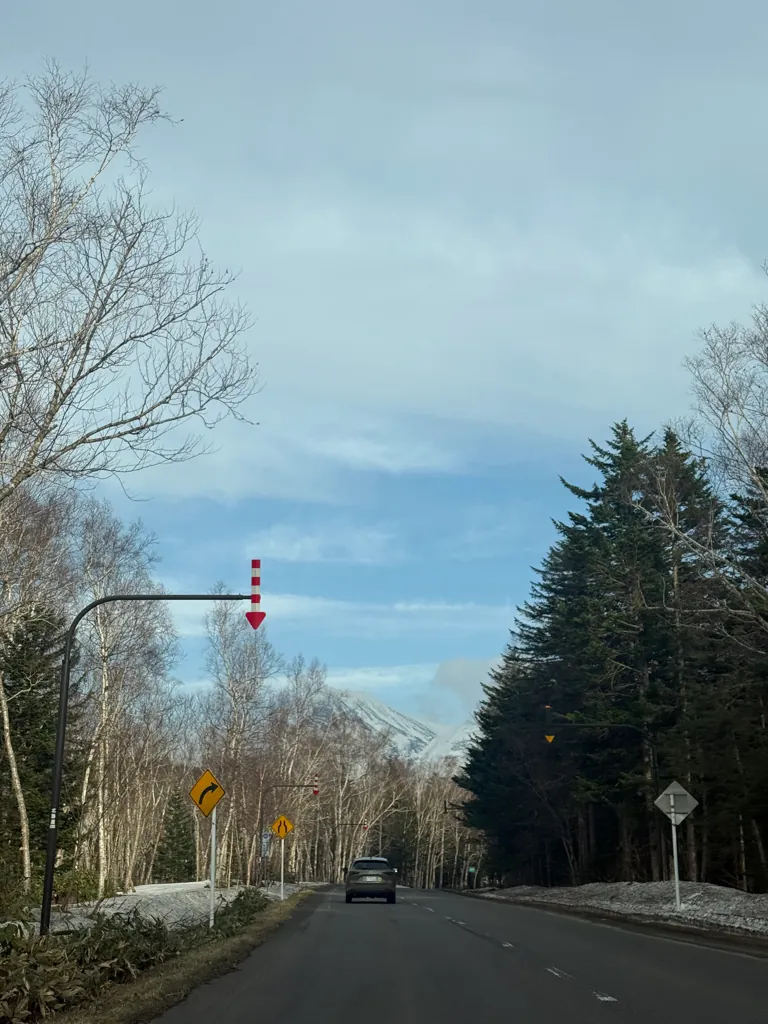
- 1926 Tokachidake eruption: On 24 May 1926, a snowmelt mudflow (lahar) rushed down the Biei and Furano rivers. It reached the Kamifurano town area, about 25 km away, within about 20 minutes according to Japanese Wikipedia's cited reconstruction26; the Tokachidake Geopark gives 30–50 minutes after the explosion27. It damaged Biei as well, and 144 people were killed or went missing2627. It also buried the Maruya and Hatakeyama hot springs on the Biei side28. The white birches that line the road to Shirogane, today's "Shirakaba Kaidō" (白樺街道), grew up on the mudflow deposits1227.
- 1930s–1950s:
- 1932: Construction began on the Biei reservoir (today's Seidai Dam, 聖台ダム). Convicts from the Asahikawa prison branch were used as laborers1.
- 1940: Biei became a town5.
- After World War II, former army land and imperial land were released for farming, and the area under cultivation grew6.
- 1947: An agricultural cooperative was founded14.
- 1950: Mayor Kōgami Kakuichi (鴻上覚一) had a well drilled 399 m deep and struck 48 °C water. He called it "platinum" (白金, shirogane) from underground, which gave Shirogane Onsen its name12.
- 1951: The Biei Tourism Association was founded14.
- 1962 eruption: Volcanic bombs destroyed sulfur-mine buildings near the crater, killing five people26.
- The photography boom:
- 1971: Maeda Shinzō first visited Biei14.
- 1972 and 1976: The Ken and Mary Tree and the Seven Star Tree appeared in advertising89.
- 1983: Crop rotation began, and the hills started changing color from year to year14.
- 10 July 1987: Takushinkan opened in the former Chiyoda Elementary School15. The town says it went on to draw as many as 400,000 visitors a year5.
- 1988–89 eruption: About 300 residents of Biei and Kamifurano were temporarily evacuated26. An erosion-control dam built on the Biei River in 1989 accidentally created the Blue Pond11.
- Protecting the landscape:
- 2003: Biei passed an ordinance to protect and nurture its landscape5.
- 2005: Biei and six other municipalities founded the "Most Beautiful Villages in Japan" association5.
- 2007: Michi-no-Eki Oka-no-Kura opened5.
- July 2012: A photo of the Blue Pond became one of the desktop wallpapers in Apple's OS X Mountain Lion11.
- 2013: The Blue Pond's winter illumination began5.
- Recent years:
- 2016: The Misora local-history museum and the Tokachidake Bōgakudai disaster shelter opened5.
- 2018: Michi-no-Eki Shirogane Birke opened5.
- 2022: The Tokachidake Geopark was certified as a Japanese Geopark14.
- 2023: UN Tourism (UNWTO) named Biei a "Best Tourism Village"14. A sustainable-tourism ordinance took effect on 1 April 202329.
- 2026:
- The town marks 70 years of asparagus growing30.
- Blue Pond parking fees rose on 1 July31.
- Very small eruptions occurred at Tokachidake's 62-2 crater on 22 July and 6 August. On 12 September, the eruption alert level was raised from 2 to 3 (entry restricted)18. Level 3 was still in force on 21 September32.
- JR's Furano-Biei Norokko sightseeing train, which had run since 1998, made its last trips on 23 September33.
Geography & climate
-
Setting: Biei lies near the center of Hokkaido, roughly halfway between Asahikawa and Furano5. It sits between the Tokachidake range of Daisetsuzan National Park (大雪山国立公園) to the east and the Yūbari Mountains to the west1.
-
How the hills formed: Huge pyroclastic flows from 3 million to 1 million years ago buried the land in ash and pumice. Cycles of freezing and thawing then wore it into gentle slopes. Settlers cleared the forest about 130 years ago and turned the slopes into farmland27. Biei soft stone comes from one of these flows. It is a rhyolitic welded tuff about 2 million years old, with quartz visible to the naked eye2725.
-
Mountains: The east of the town reaches into the Daisetsuzan and Tokachidake ranges. Peaks on or near the town's border include:
- Shirakumo-dake (白雲岳), 2,230 m
- Tomuraushi (トムラウシ山), 2,141 m
- Tokachidake, 2,077 m
- Biei-dake (美瑛岳), 2,052 m
- Optateshike (オプタテシケ山), 2,013 m
- Biei-Fuji (美瑛富士), 1,888 m
Tokachidake itself is shared with Kamifurano and Shintoku126. It is listed among Japan's 100 Famous Mountains (日本百名山)26.
-
Rivers: The Biei River is 67.6 km long. It rises on Tsurigane-yama in the Tokachidake range, flows past Shirogane Onsen and the town, and joins the Chūbetsu River in Asahikawa20. Its tributaries include the Bebetsu, Ubakubetsu and Okikineushi rivers6. The Chūbetsu River rises on Chūbetsu-dake, on the town's eastern border with Kamikawa24.
-
Parks and geopark: The mountainous east is inside Daisetsuzan National Park1. The Tokachidake Geopark (十勝岳ジオパーク) has sites in both Biei and Kamifurano. Its theme is "colors woven by hills and volcanoes"27.
-
Climate: The Biei weather station (美瑛アメダス) is at Genya 5-sen, 250 m above sea level1. Its 1991–2020 normals are34:
- Annual mean temperature: 5.9 °C (January −8.7 °C, August 20.0 °C)
- Precipitation: 988.8 mm a year
- Total snowfall: 708 cm a season; average deepest snow cover 81 cm
-
Records: 37.1 °C on 7 August 2021 and −33.2 °C on 24 January 1985. The deepest snow cover was 125 cm, on 3 March 199935. Biei is designated a special heavy-snow area (特別豪雪地帯)1.
Economy & industry
-
Farming:
- Farmland covers 12,600 ha: 2,200 ha of paddy and 10,400 ha of upland fields. About 40% of it is sloping land that qualifies for hill-farming subsidies7.
- In 2025 the town's farm output totaled ¥15.79 billion7.
- Wheat covers the largest area, 3,263.5 ha. Next come fodder crops, sugar beet, rice, potatoes and soybeans7.
Value of farm output in 20257:
Product Value (2025) Raw milk (34,486 t) ¥4.09 billion Rice ¥2.14 billion Meat animals (24,601 head) ¥1.95 billion Tomatoes (from only 37.4 ha) ¥1.81 billion Potatoes ¥1.34 billion Sugar beet ¥0.97 billion Wheat ¥0.97 billion Onions ¥0.58 billion -
Farm households: Biei had 357 commercial farm households in 2025, down from 2,419 farm businesses in 1955. The average farm is 32.2 ha, slightly below the Hokkaido average of 33.6 ha. Three new farmers started in 2025. The town trains newcomers for two years at its training center for new farmers7.
-
Companies and cooperatives:
-
Forestry: About 70% of the town is forest. Roughly a third of the forest is privately owned, and most of that is plantation1.
-
Tourism:
- Visitors rose from 800,000 in FY1990 to 1.79 million in FY201437.
- Hokkaido's count for FY2025 (April 2025–March 2026) was 2.60 million. That was 3.1% below FY2024's 2.69 million38.
- Visitors from outside Hokkaido rose 20% to 1.66 million38.
- There were 180,300 overnight guests38.
- Foreign overnight guests numbered 46,993, up 65%. South Korea was the largest source (14,377), followed by Taiwan and Hong Kong38.
-
Problems caused by tourism: Visitors trespass on fields, litter, park illegally and cause traffic jams3739. The town's tourism master plan responds by shifting from the number of visitors to the quality of the experience37. Measures include:
-
Population and aging:
-
Revitalization:
Local specialties
| Specialty | Category | Details & where to get it |
|---|---|---|
| Biei curry udon (美瑛カレーうどん) | Local dish | Created in 200514. Udon made from Biei's "Kōmugi" (香麦) wheat is served separately from the curry for dipping (tsukemen style)44. The rules also call for Biei meat and vegetables, Biei milk served on the side, and a price of ¥1,000 or less45. Several restaurants in town serve it, some only in winter46 |
| Biei wheat bread and baked goods | Wheat / bakery | Wheat is Biei's largest crop by area7. At the 2026 "Biei Bread Festival" (びえいのパンまつり, first held in 2025), bakeries using Biei wheat gathered at Oka-no-Kura, among them Mugikōsha, Ferme La Terre Biei, bi.ble and Biei Senka's Biei Komugi Kōbō47. Biei Komugi Kōbō (opened 2013) sells Biei rusks and "Yumechikara" bread36 |
| Asparagus | Vegetable | 2026 marks 70 years of asparagus growing in Biei. The BIEI ASPARA FES (planned for 22 May–22 June 2026) sold fresh spears daily at both Michi-no-Eki30. After a poor harvest, Shirogane Birke ended its part of the festival early, on 10 June; Oka-no-Kura kept selling48. The town is reviving its own variety, Rasu Noble (ラスノーブル), whose seed supply stopped after 2010. Crowdfunding raised ¥8.33 million for the effort1 |
| Potatoes, corn, tomatoes, onions | Vegetables | Among the town's largest crops by value7. Biei Senka (美瑛選果, Ōmachi 2-chōme) opened in 2007 as a showroom for Biei produce14. It sells local vegetables and rice36. Tomato growing began in 196746 |
| Biei milk and soft-serve | Dairy | Biei milk soft-serve at Oka-no-Kura. Jersey soft-serve at Farms Chiyoda. Fūmisha's soft-serve, made from its own farm's milk (celebrating its 30th anniversary in 2026)49 |
| Biei wagyu and Jersey milk | Meat / dairy | Farms Chiyoda (ファームズ千代田, Kasugadai) breeds and raises its own "Biei wagyu" and serves it, with Jersey milk, at its farm restaurant. Its petting farm is open all year50. It has charged admission since 1 June 2026 (¥500 from junior-high age, ¥300 for ages 4 to elementary school, free under 4), but entry stays free in winter (1 November–19 April)51 |
| Biei pork (美瑛豚) | Meat | Served in town restaurants as set meals, hamburg steak, sausages and croquette sandwiches46 |
| Biei rice | Rice | Rice brought in ¥2.14 billion in 20257. Nanatsuboshi rice subscriptions are among the top furusato nōzei gifts52 |
| Blue Pond goods | Souvenirs | Ramune-flavored "Blue Pond soft-serve," Blue Pond soda, Jersey milk in Blue Pond bottles, and miniature "Blue Pond" bottles53. Shirogane Birke sells Blue Pond goods found nowhere else54 |
| Furusato nōzei (ふるさと納税) gifts | Gifts | Top gifts on Furusato Choice include butter-cheese sandwich cookies (with a Biei-only flavor), Nanatsuboshi rice subscriptions, morning-picked sweet corn and Kitaakari potatoes52. Vouchers for stays at Biei inns are also offered. The program has been run by Biei&Company since April 202355 |
Culture & festivals
| Event | When | Highlights |
|---|---|---|
| Biei Snow Play Park (びえい雪遊び広場) | Late January, for about 3 weeks (from 24 January in 2026) | An open snow-play area in front of Oka-no-Kura. The opening day has mochi-pounding and free amazake, hot milk and pork soup56 |
| Prince Tomohito Memorial Biei Miyasama International Ski Marathon (寬仁親王記念 宮様国際スキーマラソン) | Third Sunday of February | A cross-country ski race through birch and larch forest and over the hills. It starts at Shirogane Birke. It began in 1978 as a Hokkaido cross-country ski gathering565 |
| Biei Bread Festival (びえいのパンまつり) | May (9–10 May in 2026) | Bakeries using Biei wheat gather at Oka-no-Kura. First held in 202547 |
| BIEI ASPARA FES | Late May–June | Daily asparagus sales and tastings at both Michi-no-Eki, and asparagus dishes such as asparagus tempura rice bowls30. In 2026 Shirogane Birke stopped on 10 June because of a poor harvest48 |
| Biei Healthy Marathon (丘のまちびえいヘルシーマラソン) | Mid-June (14 June in 2026) | Starts at Shirogane and runs down the white-birch road over the hills. First held in 1988, according to the town565. English Wikipedia gives 199257 |
| Nachi–Biei Fire Festival (那智・美瑛火祭) | 24 July every year | Began in 1989, based on the Nachi Fire Festival of Kumano Nachi Taisha in Wakayama. About 40 men in white carry twelve 40 kg torches from Maruyama Park to Biei Shrine. They pray for the town's prosperity and for Tokachidake to stay calm56 |
| Biei Dokanto Farm Festival (びえいどかんと農業まつり) | Mid-August | Held at the Biei Station square. Local produce, stage shows, costume bon-odori, Shirogane taiko drumming and fireworks56 |
| Biei Fun Ride (丘のまちびえいファンライド) | September (first held 21 September 2025) | A cycling event through the autumn hills56 |
| Blue Pond illumination | Late October–late April (24 October 2025–22 April 2026) | The pond is lit from sunset to 21:00. On 31 December–3 January the lights stay on until 2:0053 |
- Shrines: Biei Shrine (美瑛神社, Higashi-machi 4-chōme) is the destination of the fire festival561. Smaller shrines stand in farming districts such as Bibaushi, Misawa and Okikineushi1.
- Museums:
- Misora (丘のまち郷土学館「美宙」) opened in 20165. It is the base for "Biei studies" (美瑛学), covering the town's history, culture, nature and astronomy. Its observatory has a 400 mm reflecting telescope nicknamed "Pikari" (ぴかり). Admission is free. Since April 2026 it has been open 10:00–18:00 and is closed on Tuesdays58.
- Takushinkan (拓真館) is Maeda Shinzō's photo gallery15.
- Seibi-no-Mori (西美の杜), an art space in the former Seibi Elementary School, closed in 2021 and has since reopened. It now shows 54 replicas of Banksy works. In 2026 it is open 1 May–30 November, Friday to Monday, and admission is ¥1,00059.
- Biei soft stone (美瑛軟石): The 1952 stone station, shop fronts on Hondōri and Oka-no-Kura use this local stone. It is one of Biei's registered assets in the "Most Beautiful Villages" association, together with the hills and the Blue Pond2519.
- On screen: Biei's hills have appeared in the drama Kita no Kuni kara '98 Jidai, the films Gakkō II and Ai o Tsumu Hito (2015), and GLAY's "Winter, again" music video15.
Ainu heritage
Little Ainu history specific to Biei is documented. The Biei Tourism Association says Ainu people came to Biei mainly to hunt and that no kotan was recorded here14. Their language lives on in place names: Biei (piye), Bibaushi (pipa-us-i), Ubakubetsu (u-pak-pet), Bebetsu (pe-pet) and Chūbetsu (ciw-pet)2021222324. An Ainu legend tells of Optateshike on the eastern border. It says the mountain was once married to Meakandake, and after a violent quarrel they threw spears at each other. Meakandake's crater is the wound60. No Ainu cultural facility in Biei was found. The Kamikawa Ainu heritage is presented at the Asahikawa City Museum, which also runs Ainu place-name walking tours61.
Sister & friendship cities
Notable people
- Maeda Shinzō (前田真三, 1922–1998): landscape photographer from Tokyo, known as "the magician of color." His photographs of the Biei hills put the town on the tourist map, and he founded the Takushinkan gallery7415.
- 31st Kimura Shōnosuke (木村庄之助, 1940–2026): born in Biei. A sumo tate-gyōji (top-rank referee) from 2001, he held the senior title Kimura Shōnosuke from May 2003 to November 2005. He died on 26 February 202675.
- Abiko Satoru (安彦諭): born in Biei. Won silver in the 5 km classical cross-country race at the 1998 Nagano Paralympics. He was Japan's first Paralympic medalist with an intellectual disability76.
- Niki Kenta (二木健太, b. 1984): born in Biei. Former volleyball player77.
Sources
Numbers in the text link to these sources. Figures as of 23 September 2026
- 美瑛町 — Wikipedia JA accessed 2026-09-23
- 令和7年国勢調査速報 北海道の人口・世帯数(令和2年の人口を併記) — Hokkaido Government, Statistics Division JA accessed 2026-09-23
- 美瑛町の行政区別人口動態(令和8年8月31日現在) — Biei Town JA accessed 2026-09-23
- 令和8年全国都道府県市区町村別面積調(4月1日時点) — Geospatial Information Authority of Japan JA accessed 2026-09-23
- まちの概要 — Biei Town JA accessed 2026-09-23
- 美瑛町(日本歴史地名大系・ブリタニカ国際大百科事典 小項目事典・事典 日本の地域遺産) — Kotobank JA accessed 2026-09-23
- 美瑛の農業2026(令和8年) — Biei Town JA accessed 2026-09-23
- ケンとメリーの木 — Biei Tourism Association JA accessed 2026-09-23
- セブンスターの木 — Biei Tourism Association JA accessed 2026-09-23
- 2026年 夏 美遊バスのご案内 — Biei Tourism Association JA accessed 2026-09-23
- 青い池 — Wikipedia JA accessed 2026-09-23
- 温泉 — Biei Tourism Association JA accessed 2026-09-23
- 白ひげの滝 — Biei Tourism Association JA accessed 2026-09-23
- 歴史(5分でわかる美瑛) — Biei Tourism Association JA accessed 2026-09-23
- 拓真館 — Wikipedia JA accessed 2026-09-23
- 観光スポット一覧 — Biei Tourism Association JA accessed 2026-09-23
- 四季彩の丘 — Biei Tourism Association JA accessed 2026-09-23
- 十勝岳について — Biei Town JA accessed 2026-09-23
- 美瑛町 — Association of the Most Beautiful Villages in Japan JA accessed 2026-09-23
- 美瑛川 — Wikipedia JA accessed 2026-09-23
- 美馬牛駅 — Wikipedia JA accessed 2026-09-23
- 北美瑛駅 — Wikipedia JA accessed 2026-09-23
- 辺別川 — Wikipedia JA accessed 2026-09-23
- 忠別川 — Wikipedia JA accessed 2026-09-23
- 美瑛軟石 — Biei Town JA accessed 2026-09-23
- 十勝岳 — Wikipedia JA accessed 2026-09-23
- 十勝岳ジオパーク — Japanese Geoparks Network JA accessed 2026-09-23
- 白金温泉 — Wikipedia JA accessed 2026-09-23
- 美瑛町持続可能な観光目的地実現条例 — Biei Town JA accessed 2026-09-23
- 【道の駅びえい「丘のくら」】BIEI ASPARA FES 2026 — Hokkaido Michi-no-Eki Liaison Council JA accessed 2026-09-23
- 青い池駐車場の利用料金が令和8年7月1日(水)から変更となります — Biei Tourism Association JA accessed 2026-09-23
- 火山活動の状況(十勝岳) — Japan Meteorological Agency JA accessed 2026-09-23
- ありがとう!「富良野・美瑛ノロッコ号」~ラストランの運転概要・おもてなしについて~ — JR Hokkaido, Asahikawa Branch JA accessed 2026-09-23
- 美瑛(上川地方) 平年値(年・月ごとの値) — Japan Meteorological Agency JA accessed 2026-09-23
- 美瑛(上川地方) 観測史上1~10位の値(年間を通じての値) — Japan Meteorological Agency JA accessed 2026-09-23
- 美瑛選果について — Biei Senka JA accessed 2026-09-23
- 美瑛町観光マスタープラン — Biei Town JA accessed 2026-09-23
- 北海道観光入込調査報告書(R7_資料編) — Hokkaido Government, Tourism Bureau JA accessed 2026-09-23
- 観光客の皆様へのおねがい — Biei Tourism Association JA accessed 2026-09-23
- 美瑛町パーク・アンド・ライド — Biei Town JA accessed 2026-09-23
- 観光業 — Biei Town JA accessed 2026-09-23
- 『持続可能な観光税』及び『宿泊税』の導入に係る町外者アンケート — Biei Town JA accessed 2026-09-23
- 美瑛町の年令別人口動態(令和8年8月31日現在) — Biei Town JA accessed 2026-09-23
- 美瑛カレーうどん - 北海道美瑛町の新しいご当地グルメ — Biei Curry Udon Kenkyūkai JA accessed 2026-09-23
- 美瑛カレーうどん — Wikipedia JA accessed 2026-09-23
- 「美瑛豚」の検索結果(トマト・カレーうどん提供店の記事を含む) — Biei Tourism Association JA accessed 2026-09-23
- びえいのパンまつり2026開催!(道の駅びえい「丘のくら」) — Hokkaido Michi-no-Eki Liaison Council JA accessed 2026-09-23
- 『BIEI ASPARA FES 2026』開催期間短縮の【お知らせとお詫び】 — Hokkaido Michi-no-Eki Liaison Council JA accessed 2026-09-23
- 【期間限定】びえい推しソフトクリーム選手権 — Hokkaido Michi-no-Eki Liaison Council JA accessed 2026-09-23
- ファームズ千代田 | 北海道美瑛町にある牧場 — Farms Chiyoda JA accessed 2026-09-23
- 【ふれあい牧場 入場料導入のお知らせ】 — Farms Chiyoda JA accessed 2026-09-23
- 北海道美瑛町のふるさと納税 お礼の品ランキング — Furusato Choice JA accessed 2026-09-23
- 白金青い池 — Biei Tourism Association JA accessed 2026-09-23
- びえい「白金ビルケ」 — Hokkaido Michi-no-Eki Liaison Council JA accessed 2026-09-23
- ふるさと納税(丘のまちびえいまちづくり寄附) — Biei Town JA accessed 2026-09-23
- イベント(5分でわかる美瑛) — Biei Tourism Association JA accessed 2026-09-23
- Biei, Hokkaido — Wikipedia EN accessed 2026-09-23
- 丘のまち郷土学館「美宙」 — Biei Town JA accessed 2026-09-23
- 美瑛町 西美の杜 — Biei Tourism Association JA accessed 2026-09-23
- オプタテシケ山 — Wikipedia JA accessed 2026-09-23
- 博物館 — Asahikawa City JA accessed 2026-09-23
- 親子の木(丘のまちびえい通信) — Biei Tourism Association JA accessed 2026-09-23
- 北西の丘展望公園 — Biei Tourism Association JA accessed 2026-09-23
- 新栄の丘展望公園 — Biei Tourism Association JA accessed 2026-09-23
- 十勝岳望岳台 — Biei Tourism Association JA accessed 2026-09-23
- びえい「丘のくら」 — Hokkaido Michi-no-Eki Liaison Council JA accessed 2026-09-23
- 道の駅びえい「丘のくら」 — Wikipedia JA accessed 2026-09-23
- 道の駅びえい「丘のくら」【9月~11月】営業時間について — Hokkaido Michi-no-Eki Liaison Council JA accessed 2026-09-23
- 道の駅びえい「白金ビルケ」【9月~11月】営業時間について — Hokkaido Michi-no-Eki Liaison Council JA accessed 2026-09-23
- 道の駅びえい「白金ビルケ」 — Wikipedia JA accessed 2026-09-23
- 美瑛駅 — Wikipedia JA accessed 2026-09-23
- アクセス — Biei Tourism Association JA accessed 2026-09-23
- 熊の出没情報について — Biei Town JA accessed 2026-09-23
- 前田真三 — Wikipedia JA accessed 2026-09-23
- 木村庄之助 (31代) — Wikipedia JA accessed 2026-09-23
- 安彦諭 — Wikipedia JA accessed 2026-09-23
- 二木健太 — Wikipedia JA accessed 2026-09-23