Kamikawa 上川町
かみかわちょう
Kamikawa is a large, mostly forested mountain town at the headwaters of the Ishikari River. It is the northern gateway to Daisetsuzan National Park. The town takes in Sōunkyō Gorge and its onsen resort, the Kurodake ropeway and some of Japan's earliest autumn colours, and in town it is known for ramen, a young sake brewery and a string of ski-jump champions.
- Population (2020 Census)
- 3,500
- Area
- 1,049.47 km²
- District
- Kamikawa District (上川郡)
- Official website
- www.town.hokkaido-kamikawa.lg.jp
Known for
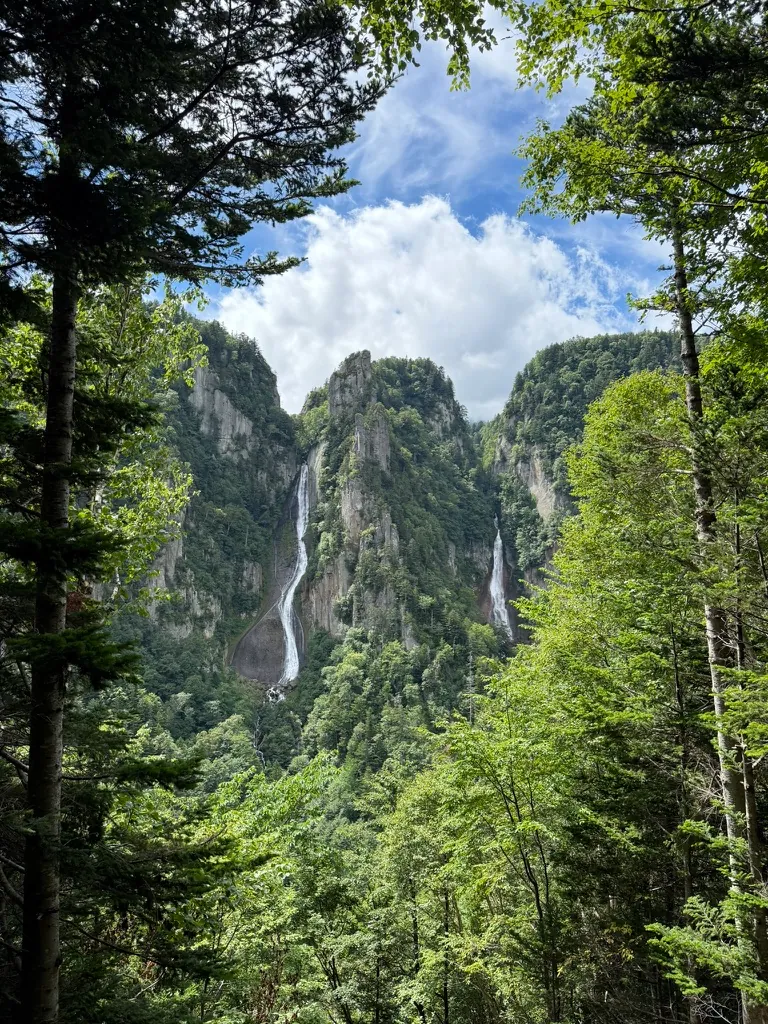
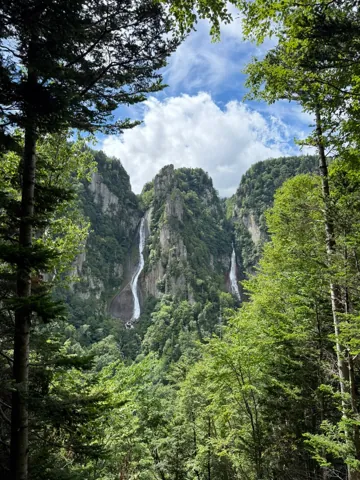
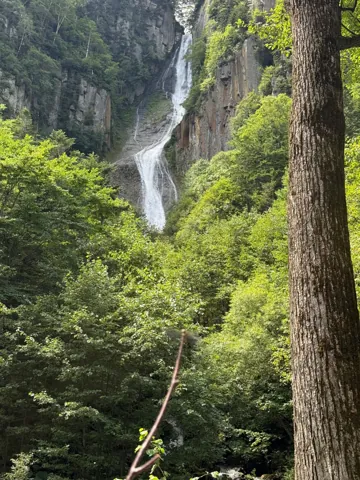
- Sōunkyō Gorge (層雲峡): Sheer cliffs line the Ishikari River for about 24 km. Ryūsei and Ginga, twin waterfalls in the gorge, are listed among Japan's 100 best waterfalls11.
- Sōunkyō Onsen (層雲峡温泉): The town calls it the largest base in Daisetsuzan National Park, and a 2017 town page says the resort draws about 2 million visitors a year12. That figure is out of date: the latest prefectural count for the whole town is about 1.49 million (see Economy & industry).
- Gateway to Daisetsuzan: The Kurodake Ropeway and a chairlift carry visitors from 670 m to 1,520 m on Kurodake (黒岳, 1,984 m)13. Ginsendai (銀泉台) and the Taisetsu Kōgen marsh trail are famous for autumn colour, which starts near the summits in early September and is promoted as "Japan's earliest autumn leaves" (日本一早い紅葉)11413.
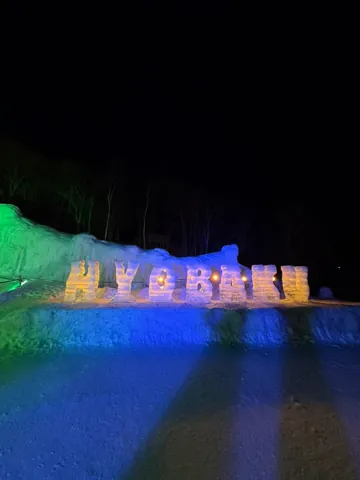
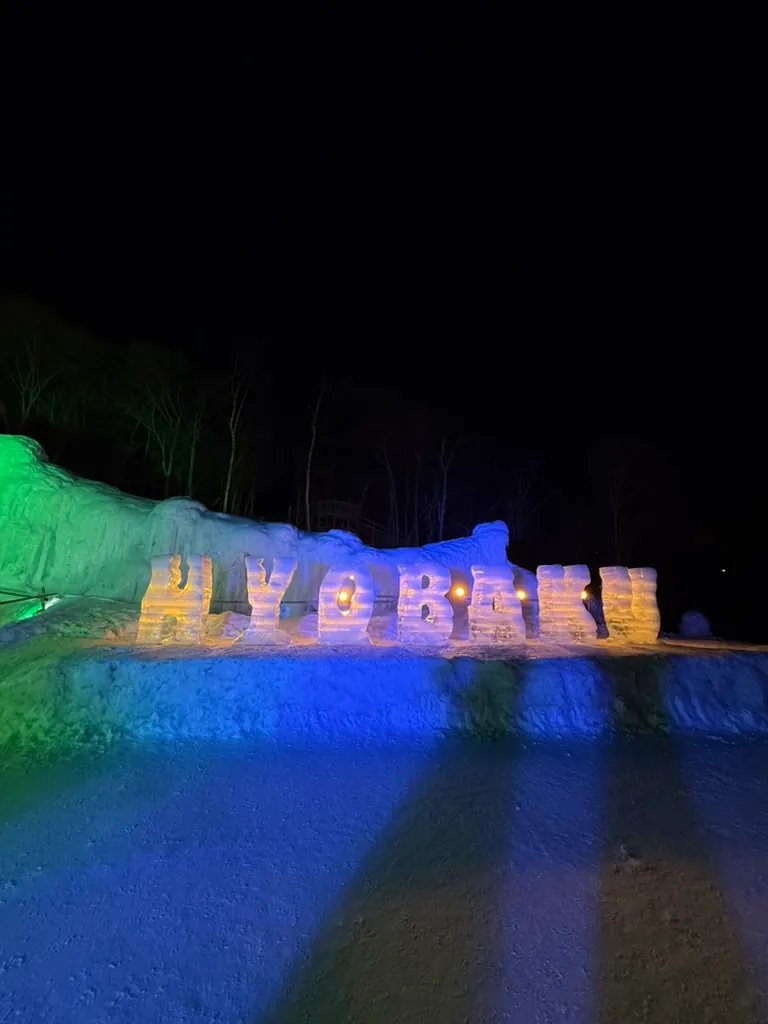
- Sōunkyō Onsen Ice Festival (層雲峡温泉氷瀑まつり): An ice-sculpture festival held every winter since 19767. February is the town's busiest month for visitors15.
- Kamikawa ramen (上川ラーメン): The town calls itself "the town with Japan's most delicious ramen" (日本一ラーメンのおいしい町)16.
- Kamikawa Taisetsu Sake Brewery (上川大雪酒造): A dormant sake company from Mie Prefecture moved here in 2016–2017. It calls itself a "regional-revitalization brewery" and won the 2024 Hokkaido Shimbun Culture Prize for that work1718.
- Daisetsu Mori-no-Garden (大雪 森のガーデン): A hilltop garden with a restaurant run by chef Mikuni Kiyomi (三國清三)19. It is one of the nine gardens on the Hokkaido Garden Path, which links Daisetsu, Furano and Tokachi20.
- Ski-jump hometown: Masahiko Harada, a 1998 Olympic team gold medallist, and Sara Takanashi both grew up here2122.
Sights & activities
Nature & scenery
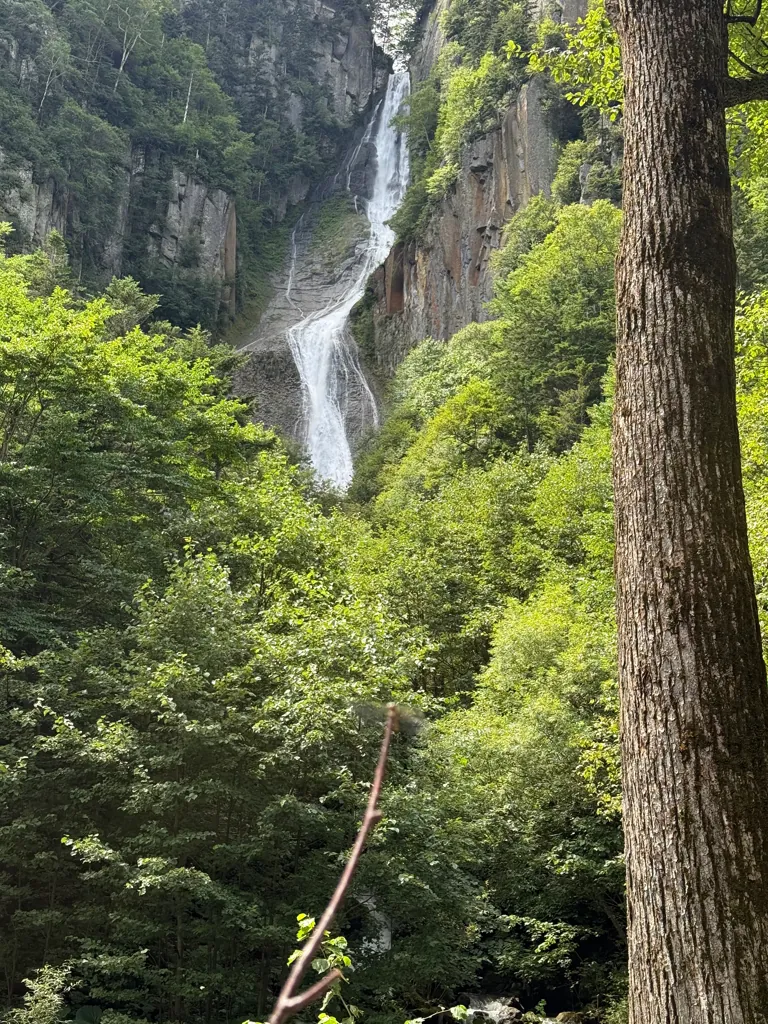
- Ryūsei and Ginga falls (流星・銀河の滝): Twin "husband and wife" falls in Sōunkyō, 90 m and 104 m high according to Wikipedia (the Japan Heritage site gives Ginga as 120 m). There is parking and the Taki Mintara rest house with souvenirs, off the old Route 39 by the Ginga Tunnel. A climb of about 20 minutes behind the car park leads to the Sōbakudai (双瀑台) lookout, where you can see both falls at once112458. The promenade is closed for works 1–11 September and 1–31 October 202659.
- Ōbako (大函): Broad cliffs of columnar joints about 6 km beyond the onsen on Route 39 toward Kitami, past the Taisetsu Tunnel60.
- Kurodake Ropeway (黒岳ロープウェイ): A 101-passenger gondola climbs from 670 m to the 5th station (1,300 m) in about 7 minutes. A chairlift continues to the 7th station (1,520 m), about 1.5 hours' walk below the summit13.
- Ginsendai and Akadake (銀泉台・赤岳, 2,078 m): A trailhead famous for autumn colour1.
- Taisetsu Kōgen numa (大雪高原沼): A loop of about 4 hours past some 10 ponds. Everyone must attend a bear lecture at the Brown Bear Information Center first61. From 6 July to 18 September 2026, walkers had to go in guided groups, with a voluntary contribution of ¥1,000 or more62.
- Taisetsu Lakesite (大雪レイクサイト): A day-use picnic area by Taisetsu Dam, about 10 km from the onsen toward Obihiro. Overnight camping is not allowed because of bears63.
- Espoir Bell (エスポワールの鐘): On the Daisetsu Observatory in Koshiji. The town calls it the largest bell in Japan. It rings every three hours from 9:00 and is lit 17:00–21:00. Open early May to late October64.
- Daisetsu Mori-no-Garden (大雪 森のガーデン): At Asahigaoka (菊水841-8). Flower gardens and forest play areas are open 25 April – 12 October 2026, 9:00–17:00, with free entry until 15 May65. It is one of the nine gardens on the 250 km Hokkaido Garden Path (北海道ガーデン街道), which links Daisetsu, Furano and Tokachi20.
Onsen
- Sōunkyō Onsen (層雲峡温泉): Simple and sulphur springs27.
- Kurodake-no-Yu (黒岳の湯): The public bathhouse in the onsen town (opened 1998), with an open-air bath facing the gorge. Adults ¥800. Open 10:00–22:30 from May to October and 11:00–21:30 from November to April66.
- Taisetsu Kōgen Onsen (大雪高原温泉): A milky, acidic spring at about 1,260 m (pH 2.7, 71.2 °C at the source)35. Its only inn, Taisetsu Kōgen Sansō, is closed for 202632.
- Aizankei Club (愛山渓倶楽部): An eco-lodge at Aizankei Onsen that makes all its own electricity from river water, about 20 km up Prefectural Road 223 with no public transport. Day bathing cost ¥700 through FY2025. The town sought a new operator from April 2026, so check whether it is open67.
Museums & heritage
- Sōunkyō Visitor Center (層雲峡ビジターセンター): The Ministry of the Environment's nature centre in the onsen town27. Open 9:00–17:00, daily from June to October and closed Mondays from November to May. It runs seasonal guided walks68.
- Sōunkyō–Daisetsuzan Photo Museum: Open 1 May – 31 October, 9:00–17:00, closed Tuesdays. Admission ¥600 (town listing last updated 2023)51.
- Hokkaido Ice Pavilion (北海道アイスパビリオン): Sakae-machi 40. Visitors can experience −41 °C, Japan's lowest recorded temperature, in ice grown here every day since 1991. Adults ¥1,500. Open 9:00–17:00 (currently shortened hours), closed 1 January69.
Outdoor & seasonal activities
- Hiking: Kurodake is the northern end of the Daisetsuzan traverse. A return bus for the Kurodake–Asahidake traverse has run since 25 July 20263324. On summer weekends in 2026, a reservation-only shuttle ran between Sōunkyō and Ginsendai (¥2,500 one way)70.
- Skiing: The Kurodake ski area runs from early December to Golden Week13. Japanese Wikipedia places it in Hokkaido's "Powder Belt" and notes that it draws overseas skiers. The town-run Nakayama ski area is on the hill above the townsite1.
- Other: The tourism association promotes rafting in summer and dog-sledding in winter26.
Food experiences
- Ramen shops in town: Kuidokoro Akashi (中央町78), Asahi Shokudō (南町135), Kiyoshi Shokudō and Nidaime Tetsujin Takahashi. The town last listed their hours in 2023, so check before going41.
- Fratello di Mikuni (フラテッロ・ディ・ミクニ): Chef Mikuni Kiyomi's restaurant and villa at Asahigaoka. Lunch 11:30–14:00, dinner 18:00–20:00, closed Tuesdays44.
- Black Mountain Coffee by Columbia: On the 3rd floor of the ropeway station71.
Roadside stations (Michi-no-Eki)
No Michi-no-Eki is located in Kamikawa. The official Hokkaido roadside-station list registers no station in the town72. Drivers can use the public car park and toilets at the Kamikawa Road Management Station (上川管理ステーション) beside Kamikawa-Sōunkyō IC as an informal rest area30.
The nearest Michi-no-Eki:
- Shirataki (道の駅しらたき): At Okushirataki, Engaru. It is beside the Shirataki parking area (Okushirataki IC) on the Asahikawa–Monbetsu Expressway (National Route 450) east of Kamikawa. It has a shop, a restaurant and a 24-hour rest space73.
- Tōma (道の駅とうま): Uenbetsu 2-ku, Tōma, on National Route 39 at the entrance to the town centre. It sells Tōma specialties such as Densuke watermelon74.
- Onneyu Onsen (道の駅おんねゆ温泉): At Rubeshibe, Kitami, on Route 39 over the Sekihoku Pass. Its landmark is a 20 m cuckoo-clock tower75.
- Kaori no Sato Takinoue (道の駅香りの里たきのうえ): Takinoue, on Route 273 north toward Monbetsu. It sells cheese, herb goods and woodcraft76.
- Kamishihoro (道の駅かみしほろ): Kamishihoro, on Route 241. Reach it via Route 273 south over the Mikuni Pass77.
- The former Michi-no-Eki Maruseppu in Engaru had its registration cancelled on 19 December 202572.
Getting there & around
- Rail: JR Sekihoku Main Line, Kamikawa Station (上川駅, A43). It is the only station left in the town. East of it lies a 37.3 km gap to Shirataki, the longest distance between stations on any JR conventional line123.
- Bus: Dōhoku Bus (道北バス) runs Asahikawa – Kamikawa Station – Sōunkyō, about 110 minutes from Asahikawa and 35 minutes from Kamikawa. Timetables changed in July 202678.
- Intercity buses also stop in the town1:
- "Sunrise" (Kitami, Kushiro)
- "North Liner" (via the Mikuni Pass to Nukabira Onsen and Obihiro)27
- "Tokkyū Okhotsk" (Takinoue, Monbetsu)
- In the townsite, the "Kamikuru" community bus runs on weekdays. You can board or get off anywhere on the route, and a day ticket costs ¥10079.
- Intercity buses also stop in the town1:
- Car: The main roads are National Routes 39, 273 and 333, and the Asahikawa–Monbetsu Expressway (Kamikawa-Sōunkyō IC and Ukishima IC)1. Distances to Sōunkyō78:
- Sapporo: about 205 km, via the Dō-Ō Expressway, Pippu JCT and Kamikawa-Sōunkyō IC
- Asahikawa: 66 km
- Kamikawa townsite: 25 km
- Kitami: 90 km
- Obihiro: 122 km, via Route 273
- The Ice Pavilion in the townsite is about 50 minutes' drive from Asahikawa on Route 39, and about 25 minutes from Sōunkyō Onsen69
- Air: Asahikawa Airport, in Higashikagura, is about 50 km (about 1 hour) from the town6. Tokyo–Asahikawa flights take about 95 minutes78.
Practical tips
- Best seasons:
- Autumn car restrictions (マイカー規制): In peak foliage season, private cars need advance reservations, and a contribution of ¥2,000 per car:
- Brown bears: Daisetsuzan has many brown bears, especially along the Kōgen numa trail. Before any hike, check the Daisetsuzan brown-bear information site linked from the town's website8262. Taisetsu Lakesite allows day use only because of bears63.
- Seasonal closures:
- Snow and cold: Winter lows can drop below −25 °C, and the town is a special heavy-snowfall area. At the Ice Festival, wear serious winter clothing and footwear with good grip146.
- Information: Sōunkyō Tourism Association (層雲峡観光協会), 中央町605 "Mori no Terrace Nupuri", tel. 01658-2-181146. Sōunkyō Visitor Center, tel. 01658-9-440068. Sōunkyō has convenience stores: Seicomart and 7-Eleven58.
Photos
-
 Aug 2025
 -
 Jul 2025
 -
 Jul 2025
 -
 Aug 2025
 -
 Feb 2026
 -
 Feb 2026
 -
 Apr 2026
 -
 May 2026
More about Kamikawa
At a glance
| Field | Details |
|---|---|
| Type | Town (町) |
| Subprefecture | Kamikawa (上川総合振興局) |
| District | Kamikawa District (上川郡), the Ishikari-province district of that name1 |
| Population | 3,500 (2020 National Census, 令和2年国勢調査, final figure)2; 3,170 in the 2025 census preliminary count2; 3,001 (1,448 men, 1,553 women) in 1,879 households on the resident register as of 31 August 20263 |
| Area | 1,049.47 km²4 (English Wikipedia gives an older 1,049.24 km²5). About 87% of the land is forest6 |
| Density | ≈2.9 people/km² (3,001 ÷ 1,049.47 km², calculated) |
| Municipal history | Settlement began in 1895. The area split from Aibetsu Village as Kamikawa Village (上川村) in January 1924, and became a town in September 195267. No mergers since |
| Neighboring municipalities | Asahikawa, Shibetsu, Aibetsu, Tōma, Higashikawa, Biei (Kamikawa); Kitami, Takinoue, Engaru (Okhotsk); Kamishihoro, Shintoku (Tokachi)1 |
| Symbols | Tree: Sakhalin spruce (アカエゾマツ), which makes up over half of the trees planted in the town. Flower: Ezo azalea (えぞつつじ), an alpine shrub of Daisetsuzan. Both were adopted on 13 August 19748. No town bird was found |
| Mascot | Kamikki (かみっきー), a shy brown-bear cub (male) who wears the town's Espoir Bell as a hat. He was chosen from 168 entries in 2013 for the town's 120th settlement anniversary in 2014. His favourite foods are Kamikawa ramen and rainbow-trout sashimi9 |
| Official website | https://www.town.hokkaido-kamikawa.lg.jp/10 |
Name origin
- Kamikawa (上川, "upper river"): The name is Japanese. It was chosen because the village lay on the upper reaches of the Ishikari River1.
- When the area was preparing to split from Aibetsu Village around 1920–1921, the railway was also being built to the townsite. Railway officials first proposed "Ishikari-Rubeshibe" for the station, to avoid confusion with Rubeshibe Station (留辺蘂駅), which had opened in 1912. Residents found this too long and pushed for their own name123.
- Other candidates were Ishigami (石上), Kiyokawa (清川), Kami-Aibetsu (上愛別), Asahiyama (旭山) and Aikawa (合川). The Aibetsu village assembly chose "Kamikawa", and the station took the same name123.
- Rubeshibe (留辺志部): This was the townsite's older name, taken from the Rubeshibe River that joins the Ishikari here. It comes from Ainu ru-pespe ("road–descend–thing", a mountain-pass trail), according to the place-name scholar Yamada Hidezō1.
- A common misreading: "Kamikawa" is often explained as a translation of Ainu peni-un-kur-kotan ("village of the upstream people"). That phrase was what downstream Ainu called the Ainu of the Kamikawa Basin above Kamuikotan. It is the source of the district and subprefecture name, not the town's. The man who proposed the village name himself denied this origin1.
- Sōunkyō (層雲峡): The writer Ōmachi Keigetsu (大町桂月) named the gorge in 1921. He is thought to have based it on the Sōunbetsu River at the gorge entrance, from Ainu so-un-pet ("waterfall–be at–river")1124.
History
- Ainu era: The Kamikawa Ainu (peni-un-kur) lived in the upper Ishikari basin. They followed the river on hunts up into the high Daisetsuzan mountains, which they revered as Kamuy Mintar, "the garden where the gods play"2526. None of the sources consulted document archaeological sites in the town.
- 1857: Matsuda Ichitarō (松田市太郎), a foot-soldier at the shogunate's Ishikari office, and the explorer Matsuura Takeshirō (松浦武四郎) were the first Japanese recorded exploring the Daisetsuzan range. They found hot springs there127.
- 1895–1921: Honda Kiichi (本田喜市) settled at Koshiji in 1895, the start of settlement7. Shioya Mizujirō (塩谷水次郎) found a hot spring in the gorge in 1900 and opened a bathhouse there in 1915277. The writer Ōmachi Keigetsu named Sōunkyō in 192111. The sources consulted do not record which prefectures the settlers came from.
- 1923–1934: The railway arrived on 15 November 192323. Kamikawa Village split from Aibetsu in January 1924 with 4,112 people in 750 households6. Daisetsuzan National Park was designated in 19347; it was Japan's largest national park until 202428.
- 1952–1960: Kamikawa became a town in September 19526. In September 1954, Typhoon No. 15 (the Tōyamaru Typhoon) flattened old-growth forest across the back country of Sōunkyō. Clearing the timber took more than five years and brought a boom: the population peaked at 15,289 in the 1960 census, then fell steadily once the work ended6.
- 1957–1976: Route 39 over to Rubeshibe opened in 1957, the Sōunkyō ropeway in 1967 and Route 273 in 1972. Taisetsu Dam was completed in 1975, and the first Ice Festival was held in 197676. The dam is the only one on the Ishikari's main stream, and it supplies Asahikawa with water29.
- 1984: The Espoir Bell was completed, and the town signed its two sister ties7.
- 1987–2004: On 9 June 1987, about 11,000 m³ of the Amagi-iwa cliff fell onto Route 39 in the gorge, killing three people. The road now runs through the 3,388 m Ginga Tunnel (1995), and the old road beyond the waterfalls has been closed since 200411.
- 1987–2001: The "Plan 65" redevelopment rebuilt Sōunkyō Onsen with matching colours and a "Canyon Mall" modelled on Canadian mountain resorts. It won a national Tezukuri Kyōdo Shō (手づくり郷土賞) award in FY1999627.
- 2001–2021: Stations in the town closed one by one; since Higashikumo (東雲) closed in March 2021, Kamikawa Station is the only one left1. The Asahikawa–Monbetsu Expressway reached Kamikawa-Sōunkyō IC in 200630.
- 2014–2018: Daisetsu Mori-no-Garden opened in 20146, and Kamikawa Taisetsu Sake Brewery began brewing in May 201717. The "Kamikawa Ainu in Coexistence with Kamuy" story was recognized as Japan Heritage on 24 May 201831.
- 2025–2026: Taisetsu Kōgen Sansō, the only inn at Taisetsu Kōgen Onsen, stayed closed in both years32. The Kurodake Ropeway reopened after renewal on 27 June 202633. The national Geothermal Frontier Project chose the town as a candidate site, and a Sōunkyō geothermal council first met on 13 July 202634.
Geography & climate
- Setting: Kamikawa lies among the Kitami Mountains, the Ishikari Mountains and Daisetsuzan. The town contains the uppermost reaches of the Ishikari River. Apart from the slightly basin-shaped townsite, it is almost all mountains and forest1.
- In the 2016 land-use figures, forest (山林) covered 914.51 km² (87.2%). Paddy and upland fields together covered only about 13.6 km² (1.3%)6.
- Mountains: Japanese Wikipedia lists 19 peaks of 2,000 m or more in or on the edge of the town. The highest is Hokuchin-dake (北鎮岳, 2,244 m). Others include Hakuun-dake (2,230 m), Akadake (2,078 m) and Kurodake (1,984 m)1.
- Sōunkyō: The gorge was formed when welded tuff from a Daisetsuzan eruption about 30,000 years ago was cut by the Ishikari River. Its columnar-jointed cliffs are about 200 m high at Ōbako and Kobako11.
- Lakes and wetlands: Lake Taisetsu (大雪湖, the reservoir behind Taisetsu Dam) and the Ukishima Marsh (浮島湿原)1. The Taisetsu Kōgen numa, a group of ponds above Taisetsu Kōgen Onsen (1,260 m), lie behind Asahidake3524.
- Parks: Much of the town lies within Daisetsuzan National Park (大雪山国立公園, designated 1934). Daisetsuzan is also a national Special Natural Monument (特別天然記念物) as a natural protected area17.
- Climate: The town has a humid continental climate (Dfb) and is a designated special heavy-snowfall area (特別豪雪地帯)1. The JMA Kamikawa station is in Sakae-machi, at 324 m1. Its 1991–2020 normals36:
- Annual mean temperature 5.4 °C
- Precipitation 1,088.3 mm
- Snowfall 816 cm a year
- Normal deepest snow 95 cm
- Records: The highest temperature recorded is 35.1 °C (7 August 2021) and the lowest −28.6 °C (7 February 1998). The deepest monthly snow on record is 137 cm (10 March 2013)37.
- Sōunkyō: The Sōunkyō station, at 540 m, gets more precipitation (1,418.1 mm) and more snow (907 cm a year)1.
Economy & industry
- Tourism is the core industry. In FY2025 the town recorded 1,485,200 visits, up 1.8% on FY202415:
- Foreign visitors: The town counted 184,897 foreign overnight guests in FY2025, slightly fewer than in FY2024. The largest groups came from Taiwan (90,888) and South Korea (51,789)15.
- Agriculture: Small in scale:
- Fish farming: Cold spring water from Daisetsuzan supports rainbow trout and yamabe (masu trout) farming. Until recent years, the town's rainbow trout production ranked first in Hokkaido by both volume and value. The fish supply Sōunkyō hotels and souvenirs such as trout simmered in sweet soy (甘露煮)16. Ōji Salmon Road (王子サーモンロード) farms trout at Higashikumo38.
- Forestry and power:
- Demographics:
- Revitalization: Recent efforts include:
- Japan Heritage status, and an AI route-planning and multilingual audio-guide pilot for Ainu cultural sites, announced in January 2026 under a Japan Tourism Agency scheme39
- The Geothermal Frontier Project candidacy34
- A lodging tax under study (a survey of lodging operators was published in September 2026)40
- The furusato nozei brand "Daisetsuzan Label" (大雪山レーベル)10
Local specialties
| Specialty | Category | Details & where to get it |
|---|---|---|
| Kamikawa ramen (上川ラーメン) | Local dish | Many shops serve pork-bone-only soup with miso or salt tare, unlike Asahikawa's soy-sauce double soup. The "Japan's No. 1 Ramen" society (上川町ラーメン日本一の会) began in December 1986 with 15 shops and was down to 5 by 2018–2019, according to Hokkaido Shimbun reports cited by Wikipedia. Its charter promises soup served at 90 °C and makes the 1st of each month "Ramen Day". Kuidokoro Akashi (喰い処あかし) dates from 1934. At Asahi Shokudō (あさひ食堂, 1970), actor Ken Watanabe ate bowl after bowl while filming Unforgiven16. Both are in the town centre41 |
| Sōunkyō dried ramen, "Nihon-ichi Ramen" (層雲峡乾燥ラーメン・日本一ラーメン) | Packaged noodles and souvenirs | Made by Miwa Shōji (三輪商事) in Shin-machi with spring water from the Ishikari headwaters38. Ramen makes up 26 of the town's listings on the Furusato Choice gift site42. The town also sells ramen-themed sweets, "Nihon-ichi Rāmen" manjū and sablé (日本一らぁめん饅頭・サブレ)1 |
| Kamikawa Taisetsu sake (上川大雪) and "Kamikawa" junmai (神川) | Sake | Ryokkyū-gura brews only junmai-type sake (junmai, ginjō, daiginjō) from Hokkaido sake rice (Suisei, Ginpū, Kitashizuku) and Daisetsuzan spring water at about 7 °C43. The gift shop next to the brewery (旭町25-1) is open 10:00–16:00 in summer and 10:00–15:00 in winter, with irregular closures44. "Kamikawa" junmai is also a furusato nozei gift3842 |
| Kurodake soba shōchū (そば焼酎「黒岳」) and Taisetsu soba (大雪そば) | Spirits / noodles | Made from Kamikawa-grown buckwheat by JA Kamikawa Chūō's Kamikawa branch38 |
| Taisetsu Kōgen beef (大雪高原牛) | Meat | Angus cattle raised on pasture at the foot of Daisetsuzan (JA Kamikawa Chūō)38. Some Sōunkyō restaurants serve it along with rainbow trout and wild vegetables27 |
| Rainbow trout (にじます) | Freshwater fish | Farmed by Ōji Salmon Road at Higashikumo38 |
| Ham and sausage (ハム・ソーセージ) | Processed meat | Handmade by Sanroku no Shiki (山麓の四季), Kiyokawa, with one-seventh of the colour-fixing additive the guideline allows38 |
| Yomogi mochi (よもぎもち) | Sweets | Made with local mugwort by Himeya Bakery (ひめや製パン菓子舗), Shin-machi. It is said to sell out quickly at Asahikawa's Tabe-Marche food festival3845 |
| Kumazasa chai (くま笹Chai) | Tea | A caffeine-free chai made with Daisetsuzan bamboo grass by Sun Earth Taisetsu (サンアース大雪), Nittō38 |
| Highland vegetables and "Gold Rush" corn (大雪高原野菜・ゴールドラッシュ) | Vegetables | Grown with large day–night temperature swings38. Sweet corn is a summer furusato nozei gift42. The seasonal farm stand Asamogi Ichiba "Fukuru" (朝もぎ市場「ふくる」, 旭町25) sells tomatoes, cucumbers, asparagus, mushrooms, corn, soft-serve and more. It closes November–April (town listing last updated 2020, so check before going)45 |
| Honey (はちみつ) | Honey | Collected in the town by Tateshina Yōhō (蓼科養蜂), a beekeeping company from Nagano, based in Nishi-machi38 |
| Furusato nozei overall | Gifts | Categories include ramen (26 listings), sake, trout and salmon, beef, venison, mochi, spring water and hotel vouchers42 |
Culture & festivals
| Event | When | Highlights |
|---|---|---|
| Sōunkyō Onsen Ice Festival (層雲峡温泉氷瀑まつり) | Late January to early March (51st: 24 January – 8 March 2026) | Ice sculptures and icicle structures, lit up at night, with fireworks during the festival. Open weekdays 17:00–21:30 and weekends and holidays 11:00–21:30. Visitors of junior-high age and older are asked for a ¥1,000 contribution. Park in the free multi-storey car park at the entrance to the onsen town46 |
| Sōunkyō Onsen Gorge Fire Festival (層雲峡温泉峡谷火まつり) | Late July to mid-August (64th: 25 July 2026; nightly fireworks 26 July – 15 August; "Kyōkoku Honō no Enbu" fire dance 31 July – 15 August) | The summer festival of the onsen town47. Its programme includes a condensed version of the Kamikawa Ainu owl-sending ceremony, together with Ainu dance2548 |
| Kamikawa Furusato Matsuri (上川町ふる里まつり) | Usually the last weekend of August (49th: 29–30 August 2026) | The townspeople's festival at a special site by JR Kamikawa Station. It has neighbourhood contests, food stalls and fireworks49 |
| Sōunkyō Onsen "Kiseki no Illuminate" (奇跡のイルミネート) | Mid-September to mid-October (13 September – 12 October 2026, 18:00–21:00) | Held since 2018 as the first autumn-leaf light-up in Daisetsuzan National Park, in the Momijidani valley. It adds interactive digital art. Visitors pay a ¥1,000 conservation contribution and can borrow an umbrella for photos14 |
| Ryokkyū-gura Kura Matsuri (緑丘蔵 蔵まつり) | 21–22 November 2026 (2nd edition, the brewery's 10th anniversary) | The brewery's festival, with the first new sake of the season50 |
- Museums:
- Sōunkyō–Daisetsuzan Photo Museum (層雲峡・大雪山写真ミュージアム): In the former Sōunkyō Elementary School. It shows about 200 works by Daisetsuzan photographer Ichinei Kōetsu (市根井孝悦)51.
- Furusato Taisetsu-kan (郷土資料館「ふる里たいせつ館」): The local history museum in Sakae-machi, with Ainu books and paintings25.
- Kamingu Hall (かみんぐホール): Its corridor has a display of Ainu household tools25.
- Film: The 2013 Japanese remake of Unforgiven (許されざる者) was shot mainly on an open set built in the town in October–November 20121.
Ainu heritage
-
Kamikawa Ainu: Downstream Ainu called the people of the upper Ishikari peni-un-kur ("people upstream")1. They saw rivers as living beings that climb from the sea to the mountains, and the Ishikari as flowing toward Daisetsuzan52. They called Daisetsuzan Nutapkaus-pe ("the thing above the wide marshes") and revered it as Kamuy Mintar, "the garden where the gods play"24.
-
Place names:
-
Japan Heritage: In 2018 the story "Kamikawa Ainu in Coexistence with Kamuy" was recognized as Japan Heritage31. Its components in Kamikawa are:
- Sōunkyō, the Ginga and Ryūsei falls, Kurodake, Taisetsu Kōgen numa, Ōbako and Goshiki-ga-hara24
- The Ishikari River52
- Alpine plants such as komakusa (高山植物〜コマクサ等〜) and alpine butterflies (高山蝶), both shared with other towns around Daisetsuzan5354
- The owl ceremony (フクロウ神事)55
- Wood-carving skills (木彫技術), such as carved bears, which the council's site lists under Kamikawa56
The promotion council's office is in Kamikawa Town Hall57.
-
Owl ceremony: In this ritual the Blakiston's fish owl, revered as kotan-kor or mosir-kor kamuy (the village or land guardian god), is sent back to the gods. It was once the most formal of the sending ceremonies (iomante). A condensed version is performed each summer at the Sōunkyō Gorge Fire Festival5548.
-
Living culture:
- The Kamikawa Ainu Association (上川アイヌ協会, founded 1976) and the general incorporated association Peniunkur (ペニウンクル, founded 2021) carry on local Ainu culture25.
- A bamboo-grass-thatched chise (traditional house) first stood at the tourist facility Ponmoshiri, built in 1968. It was rebuilt in February 2016 on the same site, now listed as Sakae-machi in the former Kita-no-Mori Garden (旧北の森ガーデン). It is used to teach and share Ainu culture25.
- The town's Ainu policy plan notes that culture bearers are ageing and have few successors. It funds mukkuri (mouth harp) and dance workshops25.
Sister & friendship cities
Notable people
- Masahiko Harada (原田雅彦, b. 1968): Ski jumper from Kamikawa. He won individual world championship gold in 1993 and 1997, and team gold at the 1998 Nagano Olympics21.
- Sara Takanashi (髙梨沙羅, b. 1996): Ski jumper, born in Kamikawa. She went to school in the town, and her family ran the 7-Eleven in Sōunkyō22.
- Yuka Setō (勢藤優花, b. 1997): Ski jumper from Kamikawa. She was Takanashi's classmate from kindergarten through junior high83.
Sources
Numbers in the text link to these sources. Figures as of 23 September 2026
- 上川町 — Wikipedia JA accessed 2026-09-23
- 令和7年国勢調査速報 北海道の人口・世帯数(要計表に基づく人口・世帯数の集計) — 北海道総合政策部計画局統計課 JA accessed 2026-09-23
- 人口・世帯数一覧(上川町の人口) — 上川町 JA accessed 2026-09-23
- 令和8年全国都道府県市区町村別面積調(4月1日時点) — 国土地理院 JA accessed 2026-09-23
- Kamikawa, Hokkaido — Wikipedia EN accessed 2026-09-23
- 第10次上川町総合計画 — 上川町 JA accessed 2026-09-23
- まちづくりのあゆみ — 上川町 JA accessed 2026-09-23
- 上川町のプロフィール — 上川町 JA accessed 2026-09-23
- 上川町マスコットキャラクター「かみっきー」 — 上川町 JA accessed 2026-09-23
- 北海道上川町 - Welcome to Town of KAMIKAWA — 上川町 JA accessed 2026-09-23
- 層雲峡 — Wikipedia JA accessed 2026-09-23
- 層雲峡温泉 — 上川町 JA accessed 2026-09-23
- ロープウェイ・リフトについて — 大雪山層雲峡・黒岳ロープウェイ(りんゆう観光) JA accessed 2026-09-23
- 奇跡のイルミネート — 上川町 JA accessed 2026-09-23
- 北海道観光入込客数調査報告書(R7_資料編) — 北海道経済部観光局観光振興課 JA accessed 2026-09-23
- 上川ラーメン — Wikipedia JA accessed 2026-09-23
- 上川大雪酒造 — Wikipedia JA accessed 2026-09-23
- トップページ - 上川大雪酒造株式会社 — 上川大雪酒造 JA accessed 2026-09-23
- 大雪 森のガーデン — 上川町 JA accessed 2026-09-23
- ホーム|北海道ガーデン街道 — 北海道ガーデン街道 JA accessed 2026-09-23
- 原田雅彦 — Wikipedia JA accessed 2026-09-23
- 高梨沙羅 — Wikipedia JA accessed 2026-09-23
- 上川駅 — Wikipedia JA accessed 2026-09-23
- 大雪山 〜カムイミンタラ〜 — 大雪山麓上川アイヌ日本遺産推進協議会 JA accessed 2026-09-23
- 上川町アイヌ施策推進地域計画 — 上川町 JA accessed 2026-09-23
- 層雲峡観光協会 公式サイト(北海道上川大雪山のふもと層雲峡温泉) — 層雲峡観光協会 JA accessed 2026-09-23
- 層雲峡温泉 — Wikipedia JA accessed 2026-09-23
- Daisetsuzan National Park — Wikipedia EN accessed 2026-09-23
- 大雪ダム — Wikipedia JA accessed 2026-09-23
- 上川層雲峡インターチェンジ — Wikipedia JA accessed 2026-09-23
- 日本遺産認定『カムイと共に生きる上川アイヌ~大雪山のふところに伝承される神々の世界〜』 — 上川町 JA accessed 2026-09-23
- 1年が123日の温泉宿 大雪高原山荘(お知らせ:令和8年度 休業となります) — 大雪高原山荘 JA accessed 2026-09-23
- 【公式】大雪山層雲峡・黒岳ロープウェイ — りんゆう観光 JA accessed 2026-09-23
- 地熱フロンティアプロジェクトの候補地として北海道上川町が選定されました。 — 上川町 JA accessed 2026-09-23
- 大雪高原温泉 — Wikipedia JA accessed 2026-09-23
- 上川 平年値(年・月ごとの値) — 気象庁 JA accessed 2026-09-23
- 上川 観測史上1~10位の値(年間を通じての値) — 気象庁 JA accessed 2026-09-23
- 特産品紹介 — 上川町 JA accessed 2026-09-23
- AIルート提案 × 音声ガイド で深まるアイヌ文化の観光体験 — 上川町 JA accessed 2026-09-23
- 宿泊税の導入に係る事業者アンケート結果について — 上川町 JA accessed 2026-09-23
- 上川町エリア 食べ処 — 上川町 JA accessed 2026-09-23
- 北海道上川町|自治体・ふるさと納税情報 — ふるさとチョイス JA accessed 2026-09-23
- 緑丘蔵 — 上川大雪酒造 JA accessed 2026-09-23
- ショップ&レストラン&ホテル — 上川大雪酒造 JA accessed 2026-09-23
- 上川町エリア 買い物処 — 上川町 JA accessed 2026-09-23
- 層雲峡温泉氷瀑まつり — 上川町 JA accessed 2026-09-23
- 第64回 層雲峡温泉峡谷火まつり/峡谷炎の演舞 — 層雲峡観光協会 JA accessed 2026-09-23
- アイヌの伝統行事フクロウ神事 — 大雪山麓上川アイヌ日本遺産推進協議会 JA accessed 2026-09-23
- 上川町ふる里まつり — 上川町 JA accessed 2026-09-23
- 第2回 緑丘蔵 蔵まつり開催決定 — 上川大雪酒造 JA accessed 2026-09-23
- 層雲峡・大雪山写真ミュージアム — 上川町 JA accessed 2026-09-23
- 石狩川 — 大雪山麓上川アイヌ日本遺産推進協議会 JA accessed 2026-09-23
- 高山植物 〜コマクサ等〜 — 大雪山麓上川アイヌ日本遺産推進協議会 JA accessed 2026-09-23
- 高山蝶 — 大雪山麓上川アイヌ日本遺産推進協議会 JA accessed 2026-09-23
- フクロウ神事 — 大雪山麓上川アイヌ日本遺産推進協議会 JA accessed 2026-09-23
- 木彫技術(木彫り熊) — 大雪山麓上川アイヌ日本遺産推進協議会 JA accessed 2026-09-23
- Kamikawa Ainu in Coexistence with Kamuy ~ Traditional World of the Gods at the Foot of Mt. Daisetsu ~ — Japan Heritage Council for the Promotion of Kamikawa Ainu at Daisetsu Sanroku EN accessed 2026-09-23
- 層雲峡温泉街 買い物処 — 上川町 JA accessed 2026-09-23
- 銀河流星の滝 園地遊歩道の工事について — 上川町 JA accessed 2026-09-23
- 大函 — 上川町 JA accessed 2026-09-23
- 大雪山高原温泉沼めぐりコース — 上川町 JA accessed 2026-09-23
- 大雪高原温泉ヒグマ情報センター — 大雪高原温泉ヒグマ情報センター JA accessed 2026-09-23
- 大雪レイクサイト — 上川町 JA accessed 2026-09-23
- 大雪展望台 エスポワールの鐘 — 上川町 JA accessed 2026-09-23
- 大雪 森のガーデン|北海道上川町 — 大雪 森のガーデン JA accessed 2026-09-23
- 層雲峡 黒岳の湯 — 上川町 JA accessed 2026-09-23
- 愛山渓温泉 愛山渓倶楽部 — 上川町 JA accessed 2026-09-23
- 層雲峡ビジターセンター — 層雲峡ビジターセンター JA accessed 2026-09-23
- 氷の王国へ|日本最低気温−41℃体験|北海道アイスパビリオン — 北海道アイスパビリオン JA accessed 2026-09-23
- 層雲峡~銀泉台 登山シャトルの運行について【期間限定】 — 上川町 JA accessed 2026-09-23
- 層雲峡温泉街 食べ処 — 上川町 JA accessed 2026-09-23
- 住所等一覧 — 北の道の駅(北海道道の駅公式総合情報サイト) JA accessed 2026-09-23
- しらたき — 北の道の駅 JA accessed 2026-09-23
- とうま — 北の道の駅 JA accessed 2026-09-23
- おんねゆ温泉 — 北の道の駅 JA accessed 2026-09-23
- 香りの里たきのうえ — 北の道の駅 JA accessed 2026-09-23
- かみしほろ — 北の道の駅 JA accessed 2026-09-23
- アクセス — 層雲峡観光協会 JA accessed 2026-09-23
- 上川町コミュニティバス「かみくる」 — 上川町 JA accessed 2026-09-23
- 【予約開始】令和8年度紅葉期の車両交通規制(マイカー規制) — 上川町 JA accessed 2026-09-23
- 沼めぐりニュースNo.9 — 層雲峡観光協会 JA accessed 2026-09-23
- 大雪山ヒグマ情報 — 上川町 JA accessed 2026-09-23
- 勢藤優花 — Wikipedia JA accessed 2026-09-23